Catalogue > Faire une recherche
Résultats pour : Tout le catalogue
Roy Samaha
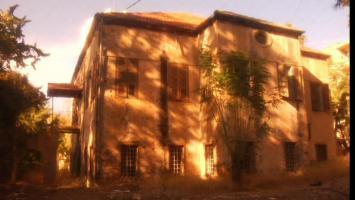
Please rewind me later
Doc. expérimental | dv | couleur | 30:0 | Liban | 2007
Cette oeuvre se veut un outil de recherche dans son propre passé. Il s'agit de relier les lieux d'enfance, les rêves et les enregistrement VHS. Comment réaliser un autoportrait sans s'adonner aux clichés des archives historiques? Il a été dit : "Vous devez comprendre: la mémoire des objets enregistre et retient les actions humaines... de sorte que les générations futures en héritent... Mais on vous a aussi demandé de partir, de tout laisser derrière vous comme si vous n'étiez jamais venu. Les choses, les lieux possèdent une sorte de mémoire. Quand vous entrez dans un espace fermé, une partie de vous y reste attachée, vous perdez quelque chose. Vous devez apprendre à partir sans abandonner une parcelle de votre être... Apprendre à circuler sans laisser de trace."
Roy Samaha est né à Beyrouth en avril 1978. Il y vit et travaille comme vidéographe à ses heures. Il est diplômé en cinéma de la Holy Spirit University of Kaslik (USEK), au Liban.

Roy Samaha
Transparent Evil
Vidéo | | couleur | 27:0 | Liban, Allemagne | 2011
Late 2010, I got commissioned by Leica to follow in the footsteps of James Bruce and document the Nile river from Alexandria to Aswan. I invited my friend Gheith El-Amine to join me on this trip. it was his first time in Egypt. December 10, 2010: we made plans to leave on February 1, 2011. He contacted two Egyptian friends of his, and we were supposed to meet them as soon as arrived there. January 25. The revolution started in Egypt. the only incoming images so far were made by protesters with cellular phones and uploaded on the net. They were much more efficient than the state-owned television station which was still doing the pro-regime propaganda in high definition resolution.

Rajee Samarasinghe
Misery Next Time
Doc. expérimental | mp4 | noir et blanc | 4:58 | Sri Lanka | 2021
This associative stream of visuals, culled from the past, reflect on the roles of art, labor, and journalism in contemporary Sri Lanka, facing a dubious future ahead. Memory and ethnographic deconstruction cascade in an obliterated form, forging a dire and prescient assemblage.
Rajee Samarasinghe was born and raised amidst the decades-long civil war in Sri Lanka. He later left for the United States where he is now based. He received his BFA from the University of California San Diego and his MFA from the California Institute of the Arts. His filmmaking practice was born out of a desire to understand the circumstances around his childhood and his work often navigates the terrain of memory, migration, and impermanence within the framework of deconstructing the ethnographic image and the colonial gaze in contemporary media. Rajee is currently working on his debut feature film, "Your Touch Makes Others Invisible," which explores post-civil war Sri Lanka—the project has received support from the Sundance Institute, Berlinale Talents' Doc Station, Field of Vision, and True/False Film Festival’s inaugural PRISM program. Rajee was also named one of Filmmaker Magazine’s 25 New Faces of Independent Film in 2020, and had solo shows at the Museum of Modern Art (MoMA) and the Berwick Film & Media Arts Festival in 2021. His short films have been exhibited at venues internationally including the Tiger Short Competition at the International Film Festival Rotterdam, New Directors/New Films presented by Film Society of Lincoln Center & MoMA, MoMA Doc Fortnight, BFI London Film Festival, FIDMarseille, Festival du nouveau cinéma, Internationale Kurzfilmtage Oberhausen, Slamdance, SFFILM Festival, REDCAT, CROSSROADS at SFMOMA, Vancouver International Film Festival, Guanajuato International Film Festival, Media City Film Festival etc. He’s received the Tíos Award for Best International Film at the Ann Arbor Film Festival, the Film House Award for Visionary Filmmaking at the Athens International Film + Video Festival, and an Honorable Mention Award at the Thomas Edison Film Festival among others.
Rajee Samarasinghe
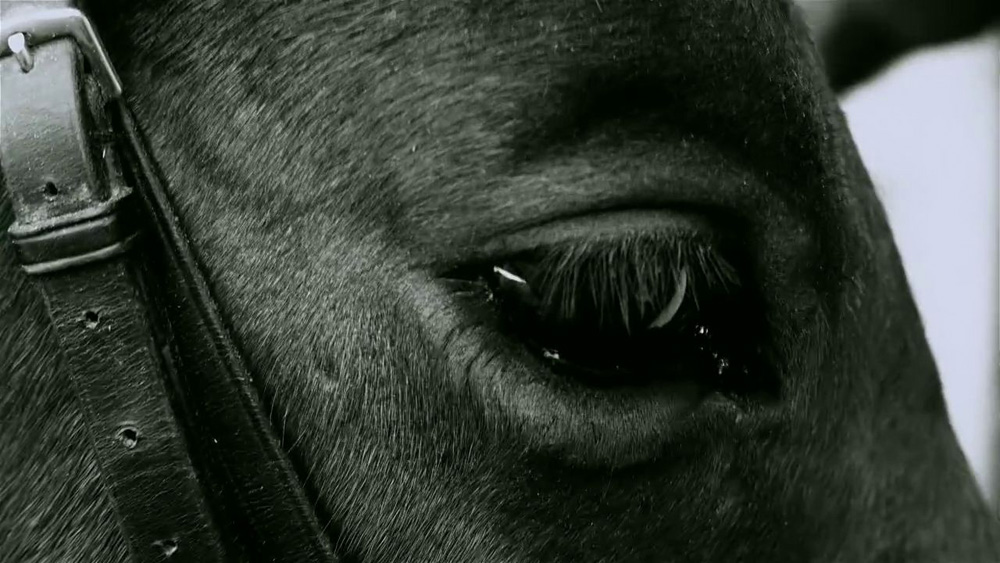
Untitled (Horse)
Doc. expérimental | hdv | noir et blanc | 4:23 | Sri Lanka, USA | 2014
A symbiotic collaboration in movie motion. After Muybridge.
Rajee Samarasinghe is a relatively young imagemaker, once upon a time Sri Lankan. He makes fake narratives and destructive formal experiments. He aspires to make videos of a respectable length and standard. Rajee attended the University of California, San Diego and is currently an MFA candidate at the California Institute of the Arts.
Keith Sanborn
Oh, David, you know what colors I like...
Vidéo expérimentale | | couleur et n&b | 1:34 | USA | 2011
This video was produced for an exquisite corpse project by Jason Simon to be screened on Bastille Day, 2012 in Narrowsburgh, NY. I added a title to my segment and kept the first second of picture from the previous video, the starting point for my work. The title was inspired by a remark of Paul Sharits. One of his assistants had just screened a test for him of an elaborate optical printer film. The title was his response. Also, the Stones played several times on the David Frost Show. Also James Brown was Black and Proud. Also I?m going to dye my hair black and you can?t stop me.
Keith Sanborn is a media artist, theorist, curator and translator based in New York.

Vanja Sandell Billström, Lucia Pagano
Diskret Matematik
Fiction expérimentale | 4k | couleur | 15:20 | Suède | 2024
A passage between two buildings, a nail salon, a stairwell, a badminton hall, an atrium, a hospital culvert. Life takes place. With the small details of existence in focus, rather than the larger narratives and conflicts, fragments are connected to a possible outcome. In mathematics, the word discrete is used to describe objects that are not continuous and separated from each other. Discrete mathematics is applied in a number of different areas such as encryption, databases, game theory, graph theory and algorithms.
Lucia Pagano and Vanja Sandell Billström were educated at the Lodz Film School and at the Royal Institute of Art in Stockholm. Discrete Mathematics is their second film as a duo which further explores methods developed in their previous film Park. Park was nominated to the Best Swedish Short at Göteborg Film Festival 2020, Tempo Short Award, 1KM Film Award, and winner of the Tempo Sound Award the same year. Previously they have shown their work at festivals and art venues around the world.

Vladlena Sandu
No Nation Without Culture
Doc. expérimental | hdv | couleur | 16:0 | Russie, Pays-Bas | 2022
Tchétchénie, Grozny, printemps 2021. Les paysages de la ville sont remplis de portraits de Poutine, de Kadyrov père et de Kadyrov fils. Ils me surveillent de tous les coins, s’infiltrent dans mes pensées. C’est presque impossible à croire et à accepter. Je ressens le totalitarisme que ces portraits dégagent, les observant délibérément à travers un objectif déformé. Je filme les rues de ma ville natale, Grozny, depuis les vitres teintées d’une voiture, consciente que de tels actes m’exposent au risque de persécution. Je documente un moment où le fascisme commence à s’enraciner en Russie—un temps où, après trente ans de lutte du peuple tchétchène pour l’indépendance, l’accent est mis sur l’endoctrinement des enfants. En 2022, plus de 12 000 soldats de l’armée de Kadyrov sont envoyés en guerre en Ukraine.
Vladlena Sandu est née en Crimée, en Ukraine (URSS), en 1982 et a grandi à Grozny, en Tchétchénie, où elle est restée pendant quatre années de guerre. Elle est diplômée du VGIK en 2016 avec un diplôme en réalisation cinématographique. En 2019, elle a obtenu un diplôme de troisième cycle en art au VGIK, spécialisé en esthétique, et a publié plusieurs articles académiques. La même année, elle a également terminé sa formation en mise en scène théâtrale au Studio de Boris Yukhananov. Ses œuvres ont été présentées dans des festivals internationaux tels que le Festival du film de Rotterdam, la Berlinale, DocLisboa, GoEast, Movies That Matter, ZagrebDox, le Festival international du film de Genève, DOK Leipzig, et bien d’autres, remportant des prix internationaux. Au début de la guerre de la Russie contre l’Ukraine, en mars 2022, Sandu a fui la Russie et s’est installée à Amsterdam. Là, elle a réalisé No Nation Without Culture, un film sur le régime en Tchétchénie, qui a remporté le prix du Meilleur court-métrage au GoEast IFF 2023. En 2023, elle a également mis en scène la performance autobiographique The Rainbow Cinema et a reçu le prix du Meilleur spectacle d’Amsterdam Fringe 2023.
Fette Sans
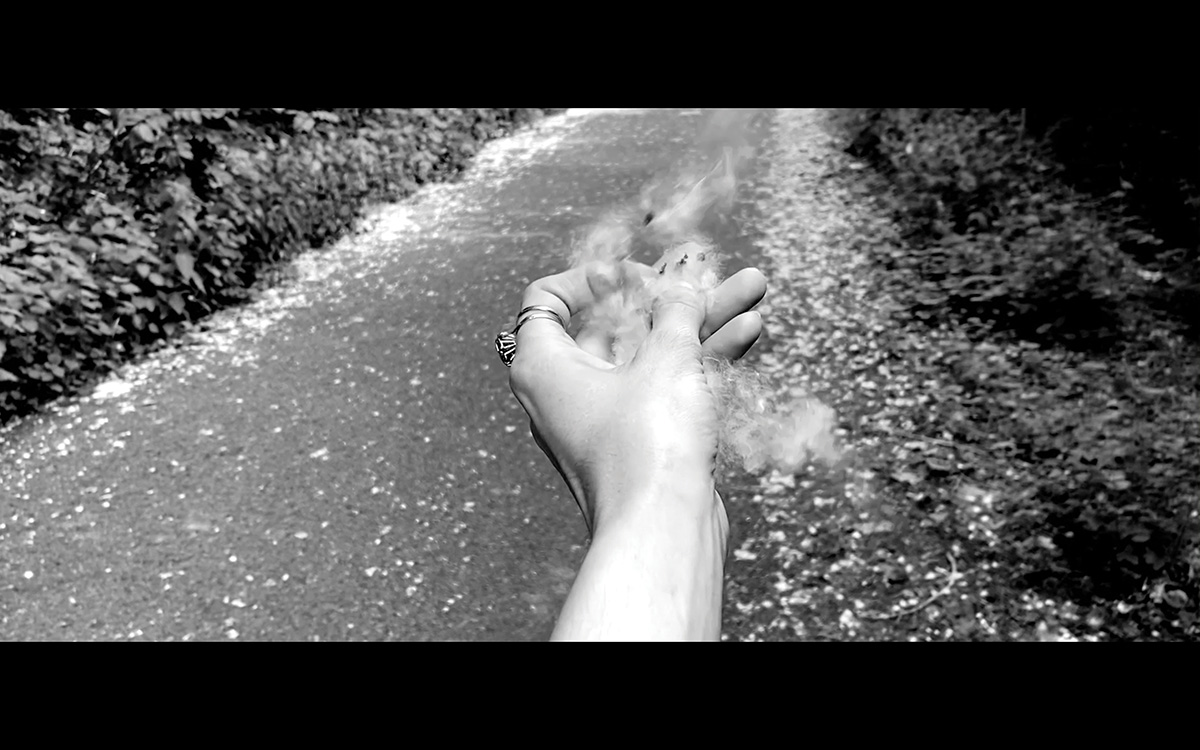
La Reprise (Dérive) [extrait]
Vidéo expérimentale | mp4 | noir et blanc | 15:0 | France, Allemagne | 2022
La Reprise (Dérive) is an exercise in continuity and distortion. This experimental film began on June 20, 2020. As of September 3, 2023, it is 168 min / weeks long. Every week, a subsequent minute is produced by combining scenes shot that week with archival material from the past years. Footage and sound are consistently recorded with the same single device (an iPhone). The film may distort, but there is always a presumption that something exists, or did exist, which is what was recorded. The sequences are neither true nor false, they integrate various degrees of theatricality and authenticity. They become portraits of an agitated immersion in the perpetual process of being, of this unpredictable yet systematic gathering and indexing. They are the record of close observations. I am a passenger, a witness to recurrences and patterns. This continuous collage of archives is the tension. The narrative is disconnected from the sum of its parts and elaborates on successes and failures. In this regard, the film is in a constant state of being finished, rather than interminably in progress. While its length progressively evolves, it also always is its final duration. This work is meant to continue until my death.
Fette Sans is based in Zagreb and in Berlin. She has a conceptual and interdisciplinary practice that includes the production of images, writing, performances, online gestures, film-making, discussions, and installations. Games of dissociative identities and the stories we tell ourselves to collect evidence of what has happened are recurring components in her work. She is interested in the ambiguity of what constitutes an image’s residue. Concerned with social systems, representation, and technology, she develops obsessive rituals, collaborations, and speculative narratives to question these issues. Rituals are interesting because there are ways of expressing repetition and the longing for security while accepting the risks associated with the very act of ceremonial reiterations: boredom itself.

Larissa Sansour, Søren Lind
al Mukhtabar
Vidéo expérimentale | 4k | noir et blanc | 28:0 | Palestine, Royaume-Uni | 2019
"In Vitro" (Al Mukhtabar) se déroule après une catastrophe écologique. Sous la ville biblique de Bethléem, un réacteur nucléaire abandonné a été transformé en un énorme verger. À l'aide de graines de variétés anciennes, récoltées pendant les derniers jours précédant l'apocalypse, un groupe de scientifiques se prépare à replanter le sol à la surface. Dans l'infirmerie du complexe souterrain, la fondatrice du verger, Dunia, 70 ans, est étendue sur son lit de mort, tandis qu'Alia, 30 ans, lui rend visite. Alia est née sous terre, dans le cadre d'un programme de clonage complet, et n'a jamais vu la ville qu'elle est destinée à reconstruire.
Larissa Sansour est palestinienne. Elle est artiste et réalisatrice, et le tiraillement entre la fiction et la réalité est un élément central de son travail. Dans ses œuvres récentes, elle utilise la science-fiction pour aborder des questions sociales et politiques. Travaillant principalement le film, Larissa Sansour crée également installations, photographies et sculptures. Son travail est présenté dans des festivals de cinéma et des musées du monde entier. En 2019, elle représente le Danemark à la 58e Biennale de Venise (Italie). Elle a montré son travail à la Tate Modern, Londres (Royaume-Uni); au MoMA – Museum of Modern Art, New York (USA); au Centre Pompidou, Paris (France); à la Biennale d'Istanbul (Turquie); à la Berlinale, Berlin (Allemagne); au Festival international du film de Rotterdam (Pays-Bas); et au BFI London Film Festival, Londres (Royaume-Uni). Parmi ses récentes expositions personnelles, citons la galerie Bluecoat, Liverpool (Royaume-Uni); le musée Dar El-Nimer, Beyrouth (Iran); et le Nikolaj Kunsthal à Copenhague (Danemark). Larissa Sansour vit et travaille à Londres (Royaume-Uni). Søren Lind est né en 1970 et est d’origine danoise. Il est auteur, réalisateur et scénariste. Formé en philosophie, il a écrit des livres à propos de l'esprit, du langage et de la compréhension, avant de se tourner vers le cinéma et la fiction. Il a publié des romans, des recueils de nouvelles et plusieurs livres pour enfants. Søren Lind projette et expose ses films dans des musées, des galeries et des festivals de cinéma du monde entier, notamment à la 58e Biennale de Venise (Italie); au MoMA – Museum of Modern Art, New York (USA); au Barbican Centre, Londres (Royaume-Uni); au Nikolaj Kunsthal, Copenhague (Danemark); à la Berlinale, Berlin (Allemagne), au Festival international du film de Rotterdam (Pays-Bas); et au BFI London Film Festival, Londres (Royaume-Uni). Il vit et travaille à Londres (Royaume-Uni).

Larissa Sansour, Søren LIND
In The Future, They Ate From the Finest Porcelain
Fiction expérimentale | hdv | couleur | 28:30 | Palestine, Danemark | 2015
In the Future They Ate From the Finest Porcelain resides in the cross-section between sci-fi, archaeology and politics. Combining live motion and CGI, the film explores the role of myth for history, fact and national identity. A narrative resistance group makes underground deposits of elaborate porcelain – suggested to belong to an entirely fictional civilization. Their aim is to influence history and support future claims to their vanishing lands.
Larissa Sansour Larissa Sansour was born in 1973 in East Jerusalem, Palestine, and studied fine arts in London, New York and Copenhagen. Her work is interdisciplinary, immersed in the current political dialogue and utilises video, photography, installation, the book form and the internet. Central to her work is the tug and pull between fiction and reality. Recent solo exhibitions include Turku Art Museum in Finland, Photographic Center in Copenhagen, Galerie Anne de Villepoix in Paris, Kulturhuset in Stockholm, Lawrie Shabibi in Dubai, Sabrina Amrani in Madrid and DEPO in Istanbul. Sansour’s work has featured in the biennials of Istanbul, Busan and Liverpool. She has exhibited at venues such as Tate Modern, London; Centre Pompidou, Paris; LOOP, Seoul; Al Hoash, Jerusalem; Queen Sofia Museum, Madrid; Centre for Photography, Sydney; Cornerhouse, Manchester; Townhouse, Cairo; Maraya Arts Centre, Sharjah, UAE; Empty Quarter, Dubai; Galerie Nationale de Jeu de Paume, Paris; Iniva, London; Institut du Monde Arabe, Paris; Third Guangzhou Triennial, Guangzhou , China; Louisiana Museum of Contemporary Art, Denmark; House of World Cultures, Berlin, and MOCA, Hiroshima. Sansour currently lives and works in London, UK. Soren Lind Soren Lind (b. 1970) is a Danish author. He writes children’s books and literary fiction. With a background in philosophy, Lind wrote books on mind, language and understanding before turning to fiction. He has published a novel and two collections of short stories as well as four children’s books. In addition to his literary production, Lind is also a visual artist and writes short film scripts. Lind lives and works in London, UK. Sansour/Lind Larissa Sansour and Soren Lind have worked together on numerous occasions. Lind usually provides the scripts for Sansour’s films, just as he contributed a sci-fi story for Sansour’s 20
Ruben Santiago
Daily
Vidéo expérimentale | dv | couleur | 2:41 | Portugal, Espagne | 2006
Ruben Santiago 1974 born in Sarria (galicia), Spain Lives and works in Barcelona, Spain
Ruben Santiago
Future
Vidéo expérimentale | dv | couleur | 3:3 | Portugal, Espagne | 2005
Sous des couches de poussière et de souvenirs oubliés, je cache une époque qui arrive. Je la cache ? Je ne le sais toujours pas. Je retrouve peut-être seulement ces choses qui n'arriveront jamais.
Ruben Santiago est né en 1974 en Espagne. Son travail est varié puisqu'il comprend des installations à grande échelle, des projets Internet, des interventions artistiques dans des endroits publics, des travaux basés sur le développement, des enregistrements et des publications. durant ces dernières années, l'utilisation d'images et de sons mobiles a été le fil conducteur de sa recherche artistique, soit en les combinant à d'autres disciplines, soit en les concevant de manière autonome. Son travail a été exposé dans plusieurs galeries et institutions internationales. Il est actuellement artiste en résidence au Hangar Centre de Producció de Barcelone. 'Exception', 'mémoire' et 'crime' sont les mots-clé de son travail.
Ruben Santiago
Monogamy home edit
Art vidéo | dv | couleur | 3:7 | Portugal, Espagne | 2004
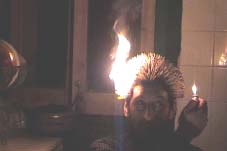
De mon ancienne cuisine, je me mets face à toi 1800 allumettes dans la tête.
Ruben Santiago est né en Galice (Espagne) en 1974. Il travaille et vit entre Barcelone et Porto (Portugal). Formé à la base comme sculpteur grâce à des études à la Universidad Complutense, à Madrid et la Escola Massana de Barcelone, la carrière de Rubben Santiago a évolué avec des projets qui ont dérivés vers les images en mouvements, avec la vidéo et la projection de films.
Ruben Santiago
Monogamy outdoors
Art vidéo | dv | couleur | 2:24 | Portugal, Espagne | 2004
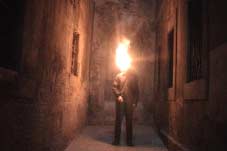
Une petite rue étroite de Barcelone. C'était mon quartier pendant un moment. 1800 allumettes dans ma tête. Ainsi fut ma première monogamie.
Ruben Santiago est né en Galice (Expagne) en 1974. Il travaille et vit en Barcelone et Porto (Portugal). Formé à la base comme sculpteur grâce à des études à la Universidad Complutense, à Madrid et la Escola Massana de Barcelone, la carrière de Rubben Santiago a évolué avec des projets qui ont dérivés vers les images en mouvements, avec la vidéo et la projection de films.
Mauro Santini
cosa che fugge
Vidéo expérimentale | dv | noir et blanc | 5:0 | Italie | 2008
Le corp d`une femme devient un voyage, paysage qui coule; le temps marque et transforme un visage: une vie se passe et s`enfuit.
Mauro Santini est né à Fano (Italie) en 1965. Après avoir achevé des études artistiques , il se consacre à la photographie et la vidéo. Depuis 2000, il a composé une série de vidéos-journal intime, sans scénario, qui parlent à la première personne du temps, de la mémoire et de la recherche de lui-même. Ces vidéos ont participé à de nombreux festivals à Locarno, Jeonju (Corée du Sud), Oberhausen, Montpellie, Pesaro, Bellaria (Italie), aux Rencontres Paris/Berlin/Madrid, à Cinémas Différents de Paris, à Doclisboa de Lisbonne.
Mauro Santini
Desalento
Vidéo expérimentale | dv | couleur | 50:0 | Italie | 2006
`Desalento` is the story of a love lost in a Lisbon hotel and of a journey to Rio de Janeiro. It`s a diary about absence and solitude; about something that is missing, always and everywhere.
Mauro Santini was born in Fano in 1965. Since 2000 he has composed a series of video-diaries ? without any screenplays, narrated in the first person, that deal with time, memory and the search for self ? that have participated at numerous festivals (Locarno, Jeonju, Oberhausen, Torino, Rencontres Paris/Berlin/Madrid, Montpellier, Annecy, DocLisboa, Pesaro).
Mauro Santini
Alkaid (Vaghe stelle)
Vidéo expérimentale | 4k | couleur | 6:12 | Italie | 2017
“ Vaghe stelle ” is a seven-chaptered film, conceived as a musical album and composed of seven movements, which can be watched singly (like songs), or in the established order (like a record) or also mixing the films creating new combinations or possible narrations. The “ songs ” are seven as the principal stars of the Ursa Major. It will be a nocturnal wandering with the starry sky as a reference: an earthly pilgrimage looking for epiphanies or the drift of a hypothetical interstellar trip.
Since 2000, Mauro Santini (Fano, Italy, 1965) has composed a series of video diaries, stories told in the first person about time, memory and the search for oneself. One of these, “ Da lontano ”, won the Italian competition at the 2002 Torino Film Festival. He has participated at the international film festivals of Locarno, Venezia, Oberhausen, Jeonju, Annecy, Rencontres Paris/Berlin, DocLisboa, Cinémas Différents Paris, Montpellier, Pesaro etc In 2006, he made the feature film Flòr da Baixa and participated in 2008 with different works at “ La cité des yeux, une saison italienne ”, about Italian avant-garde cinema from 1968 to 2008, which was organized by the Cinémathèque Française in Paris and curated by Nicole Brenez and Federico Rossin.

Mauro Santini
Megrez (Vaghe stelle)
Vidéo | 4k | couleur | 7:20 | Italie | 2019
“Vaghe stelle” is a seven-chaptered film, conceived as a musical album and composed of seven movements, which can be watched singly (like songs), or in the established order (like a record) or also mixing the films creating new combinations or possible narrations. The ‘songs’ are seven as the principal stars of the Ursa Major. It will be a nocturnal wandering with the starry sky as a reference: an earthly pilgrimage looking for epiphanies or the drift of a hypothetical interstellar trip.
Since 2000, Mauro Santini (Fano, Italy, 1965) has composed a series of video diaries, stories told in the first person about time, memory and the search for oneself. One of these, ‘Da lontano’, won the Italian competition at the 2002 Torino Film Festival. He has participated at the international film festivals of Locarno, Venezia, Oberhausen, Jeonju, Annecy, Rencontres Internationales Paris/Berlin, DocLisboa, Cinémas Différents Paris, Alchemy, Montpellier, Pesaro etc In 2006, he made the feature film Flòr da Baixa and participated in 2008 with different works at “La cité des yeux, une saison italienne”, about Italian avant-garde cinema from 1968 to 2008, which was organized by the Cinémathèque Française in Paris and curated by Nicole Brenez and Federico Rossin.
Mauro Santini
Vaghe Stelle - Mizar
Vidéo expérimentale | 4k | couleur | 11:0 | Italie | 2017
“Vaghe stele” is a seven-chaptered film, conceived as a musical album and composed of seven movements, which can be watched singly (like songs), or in the established order (like a record) or also mixing the films creating new combinations or possible narrations. The “songs” are seven as the principal stars of the Ursa Major. It will be a nocturnal wandering with the starry sky as a reference: an earthly pilgrimage looking for epiphanies or the drift of a hypothetical interstellar trip.
Since 2000, Mauro Santini (Fano, Italy, 1965) has composed a series of video diaries, stories told in the first person about time, memory and the search for oneself. One of these, “Da lontano”, won the Italian competition at the 2002 Torino Film Festival. He has participated at the international film festivals of Locarno, Venezia, Oberhausen, Jeonju, Annecy, Rencontres Paris/Berlin, DocLisboa, Cinémas Différents Paris, Montpellier, Pesaro etc In 2006, he made the feature film Flòr da Baixa and participated in 2008 with different works at “La cité des yeux, une saison italienne”, about Italian avant-garde cinema from 1968 to 2008, which was organized by the Cinémathèque Française in Paris and curated by Nicole Brenez and Federico Rossin.
Mauro Santini
Notturno
Film expérimental | dv | couleur | 7:0 | Italie | 2009
An indefinite image appears: a journey begins, a drift in the dark, in an unknown sea, waiting for a landing at the end of the night. ?I have always tried to use shaky shots, unusable leaders or time dilation of fragments to find testimony of a past that has been lived. In Notturno, this search continues within the image, penetrating it, running the pleasurable risk of getting lost inside it.? Mauro Santini
Mauro Santini (Fano, Italy, 1965) since 2000 has composed a series of video diaries, stories told in the first person about time, memory and the search for oneself. One of these, ?Da lontano?, won the Italian competition at the 2002 Torino Film Festival. He has participated at the international film festivals of Locarno, Oberhausen, Jeonju, Annecy, DocLisboa, Cinémas différents in Paris, Rencontres Paris/Berlin/Madrid, Montpellier, Pesaro and Bellaria. In 2006, he made the feature film Flòr da Baixa and in 2008 he participated with different works at the festival La cité des yeux, une saison italienne, about Italian avant-garde cinema from 1968 to 2008, which was organized by the Cinémathèque française of Paris and curated by Nicole Brenez.
Mauro Santini
Rio de Janeiro
Vidéo expérimentale | dv | couleur | 32:0 | Italie | 2005
Avec "Rio de Janeiro" nous nous trouvons dans les limites du video-art et du video quotidien. Petits scenes hors focus, tremblantes, presque avec texture, nous montrent perspectives d'une ville qui pourrait être n'importe lequelle.
Mauro Santini est né en 1965 dans la ville de Fano. Après des études d?Art en graphisme et photographie, il a fait de la vidéo pendant dix ans et en 2000, il a commencé ??Dove sono stato??, une série de carnets de voyages, une archive personnelle d?images et de sons où l?aspect carnet et voyage s?entrelacent et la narration par les images se mélange avec la vidéo artistique. ??Da lotano?? a remporté le premier prix du festival du film de Turin en 2002, dans la section Compétition italienne. ??Fermo net Tempo?? et ??Petite mémoire?? (présenté lors du festival de Locarno en 2003) continue à suivre la recherche de la mémoire. Dans ??Da qui, sopra il mare??, le temps devient un élément et la recherche ne font plus qu?un, sans distinction entre la mémoire et le présent.