Catalogue > Search
Results for : Tout le catalogue
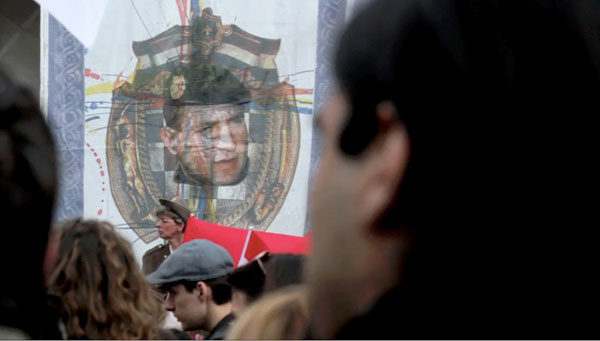
Đuro Gavran
Presuda
Documentary | hdv | color | 11:20 | Croatia | 2013
Sixteen years after the war, in the main square of Zagreb several thousand people gathered to watch a live broadcast of the verdict to Croatian generals. Through a series of close-ups, the film documents the eruption of emotions caused by the verdict.
Đuro Gavran (Bjelovar - Croatia, 1982.) Đuro Gavran was born in 1982 in Bjelovar. He graduated from the Academy of Dramatic Arts in Zagreb MA film and television directing. He graduated also from the Faculty of Graphic Arts at the University of Zagreb. He is the author of five documentary features (Bojan; Kelts; We Wanted Workers and All We Got Were People; The Big Day; The Verdict) and two experimental films (Glassballetdancer and Our Beautiful Homeland). As a cinematographer he worked on documentary films Above average (dir. Igor Bezinović; Restart prod, 2008), Irreversible (dir. Igor Bezinović, Restart, 2009) and The Blockage (dir. Igor Bezinović, Factum and Restart, 2012). In addition to film, he is involved in other forms of visual art (photography, graphics and installations). He has held three individual and about thirty collaborative national and international exhibitions. Since 2008 he is a member of ULUPUH (Croatian Association of Artists in Applied Arts), multimedia department. Together with Miljenka Čogelja and Boris Vido?ević, in 2012 he started Pipser d.o.o., a film production company and a design studio.
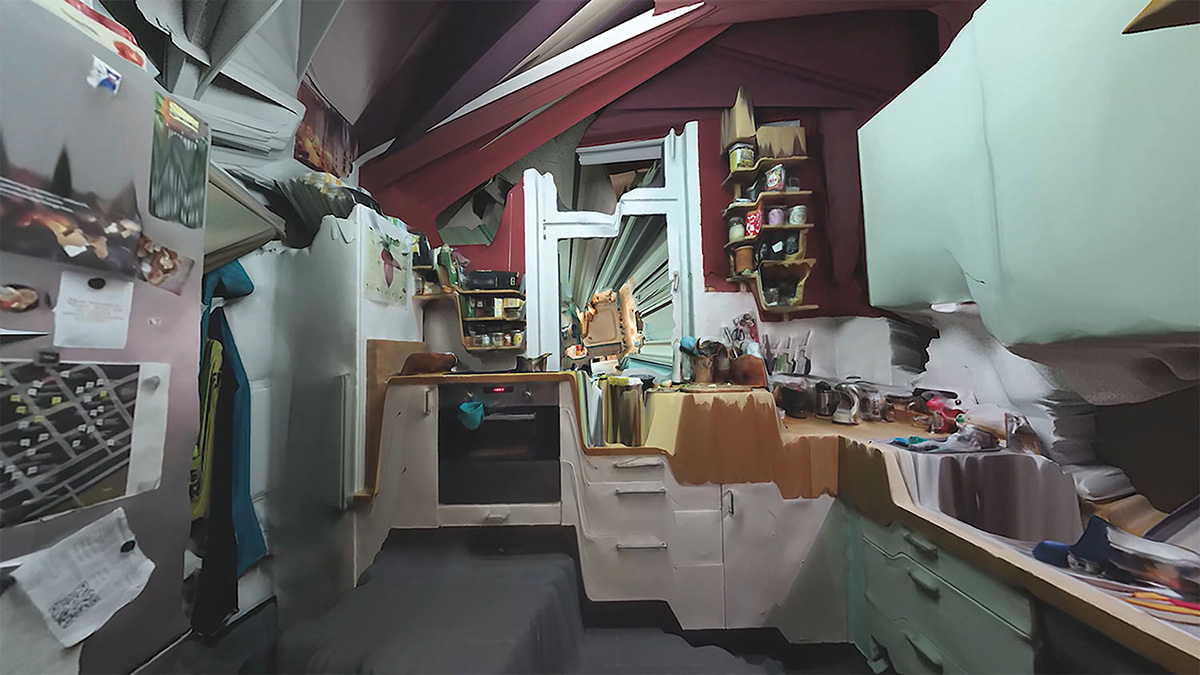
Nicolas Gebbe
Lockdown Dreamscape VR
VR 360 video | 0 | color | 7:0 | Germany | 2021
When spending a lot of time at home in isolation, the walls begin to move. The sense of time fades, the days pass quietly, everything seems to repeat itself endlessly. Spaces, conversations, visual impressions and sounds merge and make everything seem like a long dream.
Nicolas Gebbe was born in London in 1986. He currently lives and works in Frankfurt am Main / Germany as a 3D artist, filmmaker and sound designer. 2018 he receives his art diploma at Hochschule für Gestaltung Offenbach with a film major. He focuses on experimental 3D animation and hybrid film formats. Since graduation, his animated short films have been screened on a variety of festivals such as Locarno Film Festival, Festival du Nouveau Cinèma Montreal and Ann Arbor Film Festival.
Pieter Geenen
atlantis
Video | dv | color | 11:0 | Belgium | 2008
The construction of the controversial Three Gorges Dam on the Chinese Yangtze River has been completed in 2009. In the context of a general research on the landscape as a bearer of meaning Pieter Geenen explores the ?sunken? universe of the flooded Three Gorges Reservoir behind the dam in his video `atlantis`.
Pieter Geenen (°1979) lives and works in Brussels, Belgium. After his Master Photography he studied at Transmedia Postgraduate Program in Brussels. In his audio and video works he examines the landscape as a bearer of meaning, the way landscape and man relate to each other, and how we experience time and space via the landscape. His work has been presented, amongst others, at the International Film Festival Rotterdam (NL), Argos (Brussels, BE), MuHKA_media (Antwerp, BE), Azad Art Gallery (Tehran), Art Rotterdam (NL), All Art Now International Video Art Festival (Damascus, SY), Images Festival (Toronto, CA), EMAF (Osnabrück, DE), Media City Festival (Windsor, CA) and at the Venice Biennial.

Ugnius Gelguda
A Paradise Tree
0 | 0 | color | 6:40 | Lithuania | 2011
The video work by Ugnius Gelguda titled A Paradise Tree documents the rise of a new neighbourhood of artists in Vilnius, Lithuania, which is often artificially compared to the New York?s SoHo. A Paradise Tree explores the boundaries of documentary and tells about the first forced steps of a new urban community. The story is ?told? through a hypertext link with the less known video work A Walk by Jonas Mekas created in 1990. During this one hour walk across the rainy SoHo neighbourhood, Mekas gives an intimate and chaotic recital of neighbourhood creation, tells about the first tree planted in the then industrial area by himself and his colleague Machiunas, and notes the transformation of SoHo streets and their inhabitants. Ugnius Gelguda?s video work revisits a community sustained by the relationship of an urban space and a uniting idea, and the inevitable change of this relationship under the influence of time and strong commercial mechanisms. The video camera slowly follows the shapes of lofts that are being set up on Shevchenkos Street as well as the carcass of a former factory which still exists but has already changed its function, combining the views of rough and dull buildings with the hopes of future settlers and thus transplanting real spaces into a fictional or potential story.
Ugnius Gelguda (born 1977, Vilnius) was granted a degree of art licentiate by Vilnius Art Academy in 2010, but he has been active in exhibitions since 2000. He has participated in many shows in Lithuania (Lithuanian Art 2000?2010: Ten Years, Contemporary Art Centre, Vilnius, 2010; ARTscape: Italy, Vartai gallery, Vilnius, 2009; Lithuanian Art 08. Photography, Contemporary Art Centre, Vilnius, 2008, etc.) and other countries (Gender check, Zachęta National Gallery of Art, Warsaw, 2010; Three, Fotohof gallery, Salzburg, Austria, 2010; Gender check, MUMOK, Vienna Kunsthalle, Vienna, 2009; Prague biennale 3, Baltic Mythologies programme, Prague, Czech Republic, 2007, etc.) He has received various awards and recognitions: two awards from the Ministry of Culture of the Republic of Lithuania ? one for the audiovisual installation Zalgiris in 2010 and one for the Best Professional Artist?s Debut Award in 2006, Moscow International Art Festival Prize in 2007 for the installation ?Zalgiris?. Since 2000, Ugnius Gelguda is successfully working as an individual artist and collaborating with other artists in various interdisciplinary projects. Photography and video is the primary media that Ugnius Gelguda uses to express his ideas; however his artistic portfolio audio-visual installations as well.
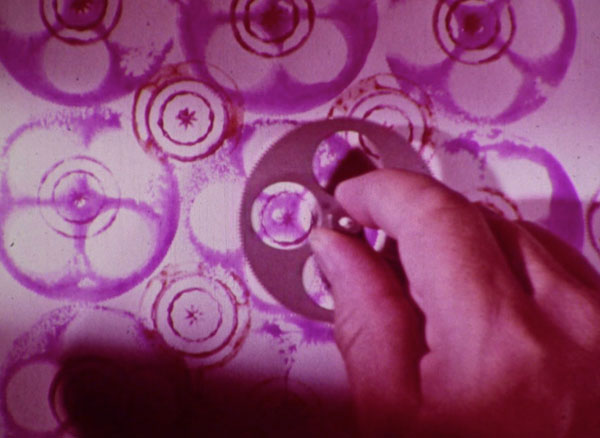
Ugnius Gelguda, Ugnius Gelguda and Neringa Cerniauskaite
Patterns
Experimental doc. | 16mm | color and b&w | 10:56 | Lithuania | 2013
Punctuated Vasarely paintings could not be more perfect for a cover of a candy box on a coffee table. Rasters stand for poppy-seeds. ?Patterns? is a 10 min. film from the perspective of patterns telling about the search, appropriation and translocation of various patterns and fonts by artists that worked in the first Experimental Bureau of Artistic Construction in Soviet Union. In 1964, the first Experimental Office of Artistic Construction in Soviet Union was established in Vilnius, Lithuania, and worked until the collapse of the Communist regime in 1991. Photographers, graphic designers, artists and printing-house worked under one roof creating logos and graphic design for different parts of the Union. The artists (unconsciously) appropriated works of other artists in West in order to use parts of the ornaments and patterns they liked for the applied graphic design they created. The project tells this social life of the patterns ? their appropriation and displacement from the Western high art to applied arts in Soviet Union. Fragments of op-art painting by Vasarely became patterns for candy boxes, and entire meaningful texts were deconstructed and re-constructed enjoying only the formal beauty of a linear character. However, the constant search of patterns in the film flips ? the ornaments and underlying geometric shapes start to haunt the viewer eventually taking over the film itself. Artist looking for patterns: Juozapas Antanas Gelguda
Ugnius Gelguda and Neringa Cerniauskaite started collaborating in 2009. They are represented by gallery VARTAI, Vilnius. Since their first project, the artists have been interested in visual memory and how it can be manipulated through usage of certain mediums. Their latest works include 16 mm films, photo slides, neon objects, vinyl, and are strongly influenced by material history and language of cinema. Both artists are based in Vilnius and Brooklyn, New York. Ugnius Gelguda?s (born 1977, Lithuania) artistic portfolio includes photography, time-based media art projects. Neringa Cerniauskaite (born 1984, Lithuania) is an art critic, curator, editor. She contributes texts for Lithuanian cultural press, exhibitions? catalogues and international magazines (Flash Art, Mousse Magazine, Parkett, ARTMargins.com, MAP). She is a M.A. candidate, 2014, at Bard College Center for Curatorial Studies, NY. Artists will present their latest solo projects at NADA NEW YORK 2014, ART BRUSSELS 2014, Contemporary Art Centre (CAC, Vilnius), Contemporary Art Centre kim? (Riga).
Susannah Gent, Tom SALMON
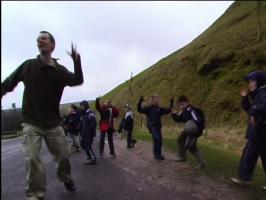
The Dance Project - Sheffield
Documentary | dv | color | 4:50 | United Kingdom | 2005
A short documentary about individuals dancing outdoors, primarily recruited from the free party scene in Yorkshire. The film looks at how the participants feel about dancing, anti-dancing legislation and dance as physical human expression.
Susannah Gent studied film & TV production at the Northern Media school before writing and directing a string of award winning short films and most recently a feature film entitled JELLY DOLLY (winner of best film award at Britspotting; British Council showcase for new British & Irish film, Beriln 2004).

Sylvain George
L'Impossible - Pages Arrachées -
Experimental doc. | | color and b&w | 131:0 | France | 2009
L?IMPOSSIBLE ? Pages Arrachées ? Placé sous les auspices de Rimbaud, Lautréamont, Dostoievski et Benjamin, ce film s`attache à témoigner des politiques iniques qui façonnent notre temps, du caractère "infernal" de certaines vies politiques (celles des migrants/des immigrés, des travailleurs, des chômeurs, des étudiants...). Il opère, minoritaire, une stase critique des réalités mythiques et majoritaires : vie nue, état d?exception?; et travaille au corps la question de la révolte et de l`insurrection: débordement, désidentification, reconfiguration indécidable... Se donnent ainsi à voir, par renversement dialectique, des "hors-lieux" inassimilables: des corps-impossible. I. NIGGERS WOOD (Je brûle comme il faut !) 2009, Super 8, Noir et Blanc et Couleur, 15 mn, prod : Noir Production. Calais, ville désolée. Blancheur de la neige qui recouvre la ville. Ombres noires et tutélaires, croix et Beffroi, qui la dominent. Feux écarlates qui l?enveloppent et la brûlent. Figures et visages de personnes qui re-viennent de loin. Migrants. Parias. Variation sur des paysages et vies politiques calcinés et infernaux : les corps-nègres. II. BALLAD FOR A CHILD (On ne te tueras pas plus que si tu étais cadavre) 2009, Super 8, Couleur, 26 mn, prod : Noir Production. Calais, ville désolée. Invocation : Dans un petit bois, la « jungle », un jeune homme qui vient de loin, d?un moyen-orient en guerre, est mort assassiné. C?était en Décembre 2008. Et c?est un monde entier, politique, à qui l?on fera rendre l?âme, qui rend l?âme. Evocation : Un jeune homme passe qui vient de loin. Et ses paroles, traces et survivances, comme un chant, viennent de plus loin encore: des gouffres, de la mer et des déserts, de l`oubli, des lisières infinies. Un jeune homme passe qui vient de loin, comme un nouvel Orphée, politique, noir et révolté. Un jeune homme impossible que plus rien ni personne ne saurait désormais arrêter... III JE ME SUIS ARME CONTRE LA JUSTICE (Burn ! Burn ! Burn !) 2009, vidéo, Noir et blanc et Couleur, 43 mn, prod : Noir Production Paris. Manifestation du 19 mars 2009. Fonctionnaires, étudiants, précaires, immigrés sans-papiers, chômeurs, retraités, battent le pavé. Jusqu`à ce que celui-ci brûle, entre rage et colère; et que des voix se délivrent en s`inscrivant dans le temps. Jusqu`à ce que l`Etat réprime, avec violence et arbitraire; et que soient condamnés des corps-innocents. IV LE TEMPS DES ASSASSINS (Fire Music) 2009, vidéo, Noir et blanc et Couleur, 23 mn, prod : Noir Production Paris. Manifestation du 1er Mai 2009. Poursuite, répétition de la geste insurrectionnelle: "Paix aux chaumières, Guerre aux châteaux". Et c`est, après quelques siècles, l`Hôtel de Ville de Paris qui est de nouveau occupé, le Conseil de Paris qui est de nouveau réinvesti par une assemblée révolutionnaire. Invocation: la Commune de Paris. Evocation : le peuple qui vient. Voici le temps, re-venu... V. TU RESTERAS HYENE ETC. (The book of the damned) 2009, 17mm, Noir et Blanc et Couleur, 17 mn, prod : Noir Production. Comme un cercle infernal. Variation sur la traîtrise et le reniement, le crachat du renégat comme médaille, les "fonds de pension" comme devenir, à partir du livre "Lettres à ceux qui sont passés du col Mao au Rotary" de Guy Hocquenghem (Nous rajouterons "... et à la cour Sarkozy..."), et des films de Lionel Soukaz et de/ou avec Guy Hocquenghem. Avec la participation de Lionel Soukaz et Tripak.
Sylvain George est un cinéaste et un activiste politique. Après des études en philosophie, il réalise depuis quatre ans des films-essais poétiques, politiques et expérimentaux, sur la thématique de l?immigration notamment. Son travail, influencé par la pensée de Walter Benjamin, placé sous le signe du réveil et de l?émancipation, allie recherche formelle exigeante et engagement politique. Il réalise aussi bien des ciné-tracts radicaux (la série des Contre-feux) au service de collectifs informel ou de sans-papiers, que des films plus personnels, engagés contre les politiques iniques qui traversent et modèlent notre société. Parmi ceux-ci les courts-métrages "No Border (Aspettavo che scendesse la sera)", "N`entre pas sans violence dans la nuit", "Ils nous tueront tous...", et le long-métrage "L`Impossible -Pages Arrachées-". Ses films sont projetés dans les réseaux militants et alternatifs tout comme dans des grands festivals nationaux et internationaux (Cinémathèque française, Musée du Jeu de Paume, Cinémathèque de Copenhague, de Milan...). Il termine actuellement une fresque composée de trois longs-métrage, sur les politiques migratoires en Europe et les mobilisations sociales. « Un travail indispensable, qui porte très haut une certaine idée des droits et des devoirs du cinéma. » Nicole Brenez pour la Cinémathèque Française, 29 février 2008.
Karoline Georges
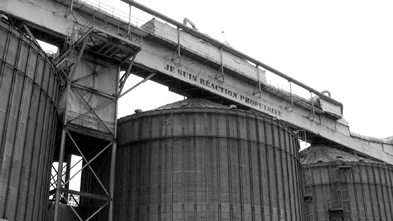
Repères #18-39
Video | hdv | black and white | 8:36 | Canada | 2011
Repères #18-39 est une suite de 22 tableaux, réalisés à Toronto et Vancouver, en 2011, au Canada. Chaque séquence propose un paysage architectural auquel est intégré un fragment poétique. La première phase de ce projet, Repères #1-17, a été créée à Montréal en 2011. Une troisième phase, réalisée à Paris en 2012, est en postproduction. À une époque où les traces médiatiques d?un événement se substituent à l?événement lui-même, où l?observation du monde passe par la lunette déformante de l?image, qu?elle soit documentaire ou fictive, le projet Repères s?articule à même ce flou entre la réalité et la fiction afin de proposer une présence poétique là où on ne l?attend pas.
Karoline Georges est née à Montréal en 1970. Après des études de cinéma (Université du Québec à Chicoutimi) et d?histoire de l?art (Université du Québec à Montréal), elle amorce une démarche artistique interdisciplinaire où se rencontrent la vidéo, l?art audio, la photographie, la performance, la littérature et, plus récemment, la modélisation 3D. Elle explore les concepts et les processus de transformation et de sublimation. Elle s?intéresse aux manifestations virtuelles, aux devenirs possibles, au déploiement de la conscience à travers le dédale technologique et à l?accumulation des savoirs. Ses ?uvres littéraires ont été publiées au Canada et en Europe. Elle a performé à de nombreux festivals (Festival Voix d?Amériques; Manifestation internationale d?art de Québec; Festival International de littérature; Montréal en Lumières). Son travail photographique et vidéographique a été présenté lors de multiples événements et expositions (Moving Image Film Festival of Toronto; Biennale Internationale des poètes en Val de Marne; Orange, l?événement d?art actuel; LAB NT2; Québec en toutes lettres; Printemps des poètes de Québec).
Ger Ger
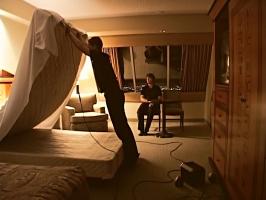
Luxor 22.145
0 | dv | color | 3:0 | Austria, Germany | 2006
Luxor 22.145 [SOUND NOMADS Performance #7] A m/hotel performance went down in Vegas. Luxor: rooms 4455, employees 4000, casino 120,000 square feet, 250 miles visible Xenon light shot. Room No. 22.145: sensor equipped bending matresses, sound generating moving chairs, pitch shifting ironing and flickering lights. Technology: Lamps become sound triggers and pitch shifters by means of light sensors, irons turn into turntables through pressure sensors, chairs become free-moving VST instruments through sensor combinations. Mattresses (bend it over), drawers (open/close), closet doors, curtains (movements) and the TV set (light intensity of a selected channel) become a sampler ... This performance consists of seven essentially different superstructures and interactive scenarios. A night in the luxury hotel becomes a performance night. Ger Ger`s SOUND NOMADS project is comprised of a combination of sound art, music, public art, performance, interactive installations as well as video. The constant search for noises, sounds and rhythms lies as central to SOUND NOMADS as the creation of interactive sensor based playgrounds. Entire squares, hotspots, fields, meadows, ponds and patterns from day to day life are instrumentalized, and played. Surrounding objects get networked. Manholes become recording studios; hot tubs, resonating objects; the movements of persons, time bases; lampposts or mailboxes take the place of instrument strings and keys. The actual noises of objects lose their meaning and get replaced by triggered melodies/samples or generated tones. SOUND NOMADS ventures to artistically reflect on situations of everyday life and site-specific impressions as directly as possible; acoustically, aesthetically, and in respect of content. The first SOUND NOMADS performances took place on the US West Coast in 2006, followed by actions in Germany, Italy, France and Spain in 2007. http://personal.gerger.com/?view=blog&item=961#h2:1 http://www.soundnomads.com
Ger Ger, media artist, born in Vienna/A 1981, currently lives and works in Berlin/D. He feels drawn to art and digital media early on in life, receives his first honors and awards aged fourteen. M.A. in Digital Arts and Visual Media Design. Study with Karel Dudesek, Peter Weibel and Tom Fürstner at the University of Applied Arts, Vienna. Scholarship in Visual Communication with Joachim Sauter at the University of Arts in Berlin. His work has been presented in solo and group exhibitions at Ars Electronica (Linz), Electrohype (Malmö), Open (London), FILE (Sao Paulo/Curitiba City), MUMOK (Vienna), Kunst Haus (Dresden), Kunsthalle (Vienna), O.K Centrum (Linz), Diagonale (Graz). His awards include the Prix Ars Electronica, CYNETart, Rheingold Award and Prix MultimediaArt.

Gerard & Kelly
E for Eileen
Fiction | 4k | color | 23:35 | USA, France | 2024
An enigmatic character spends her last day in the house she designed and built. Her solitude is interrupted by the arrival of old friends who threaten to drown her in the past. A speculative fiction, E for Eileen is shot entirely at Eileen Gray’s villa E-1027 — one of three French national monuments of the modern era, and the only one built by a woman.
Gerard & Kelly are visual artists and filmmakers whose interdisciplinary practice spans film, performance, and installation, incorporating choreography, writing, printmaking, drawing, and sculpture. Based in Paris since 2018, they are known for conceptually rigorous and research-based projects that address questions of memory and history, sexuality and the formation of subjectivity. Gerard & Kelly have collaborated since the early 2000s to develop a distinctive body of work that situates movement, narrative, and critical theory in direct conversation with architecture and site. Their projects often unfold in iconic modernist spaces and have been presented by leading institutions across Europe and the United States. Hailing from the farms of Ohio and the coal country of Pennsylvania, Brennan Gerard and Ryan Kelly met in New York and launched a collaboration that led them to the Whitney Museum Independent Study Program, where they were Van Lier Fellows from 2009-2010, and then to the University of California, Los Angeles (UCLA), where they earned their MFAs in 2013 from the Interdisciplinary Studio under the direction of artist Mary Kelly. Ruins, their first solo show in a European institution, was presented by the Carré d’Art – Musée d’art contemporain de Nîmes in 2022–2023. Solo exhibitions and performances of their work have been presented by Marian Goodman Gallery, Paris (2025), Fondation Maeght, Saint-Paul de Vence (2024), Centre Pompidou, Paris (2023), Marian Goodman Gallery, New York (2022), MAMCO, Geneva (2020), MOCA, Los Angeles (2020), Festival d’Automne, Paris (2017 and 2019), The Getty Museum, Los Angeles (2019), Pioneer Works, New York (2018), Palais de Tokyo, Paris (2016), New Museum, New York (2014), and The Kitchen, New York (2014). They participated in the 2023 NGV Triennial at the National Gallery of Victoria, Melbourne, the 2023 and 2017 Chicago Architecture Biennials, and the 2014 Made in L.A. Biennial at the Hammer Museum, Los Angeles. Their work has been included in group exhibitions at Château La Coste, Le Puy?Sainte?Réparade (2025), Collection Lambert, Avignon (2024), Le Commun, Geneva (2024), High Line, New York (2023), FRAC Franche-Comté, Besançon (2022), and Solomon R. Guggenheim, New York (2015), among others. Gerard & Kelly have received numerous awards and grants, including the VIA Art Fund (2024), Mondes nouveaux program of the French Ministry of Culture (2023), Graham Foundation (2014), and Art Matters (2013). Their works are held in the permanent collections of the Carré d’Art, Nîmes; FRAC Franche-Comté, Besançon; Solomon R. Guggenheim Museum, New York; LACMA – Los Angeles County Museum of Art; Hammer Museum, Los Angeles; National Gallery of Victoria, Melbourne; Serralves Museum of Contemporary, Porto; and Whitney Museum of American Art, New York.
Simon Gerbaud, X
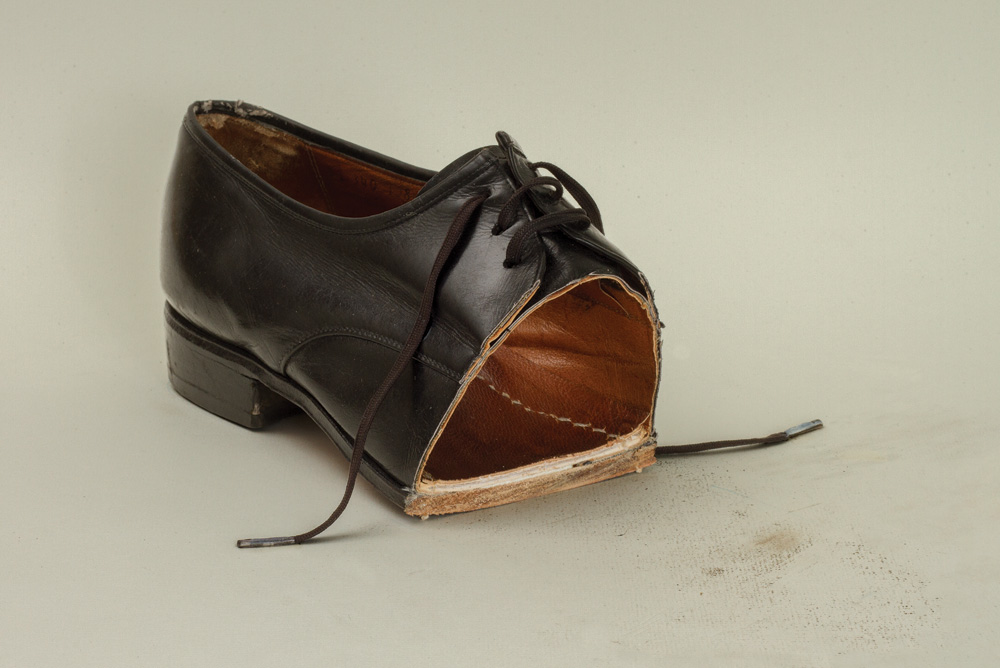
saVer
Video | hdv | color | 5:0 | France, Mexico | 2014
Le projet saVer se compose de 10 vidéos, il se présente sous différentes formes (vidéos, installations interactives, sérigraphies et sculptures) qui sont aussi bien simultanées que discossiées. saVer commence avec la fabrication d`animations courtes dans lesquelles on peut voire des objets disparaître peu à peu (chaussure, ordinateur, chaise, réfrigérateur, crâne animal…). Pour réaliser les séquences animées, une photographie est prise à chaque étape de destruction de l`objet (entre 60 et 900 photographies) qui est découpé ou poncé afin de retirer de la matière. Chaque découpe est un tracé, une façon de dessiner et il en résulte une forme singulière, une invention par laquelle l`objet adopte une silhouette qui était potentiellement en lui: on dit d`ailleurs d`un archéologue qui découvre un site qu`il "l`invente", par la mise au jour d`une figure enfouie. Si ce travail de destruction ne respecte pas un schéma ou un mode d`emploi préétablie, il permet pourtant de voire les traces du mode de conception et de fabrication des objets (coutures, assemblages, solutions techniques et mécaniques, idées et gestes). Le verbe savoir (saVer en espagnol) est le titre de ce projet, verbe double (sa/voir) qui met en lumière le rapport de la connaissance et de la vue.
Simon Gerbaud ( Auxerre, France, 1976) est artiste visuel. Après des études théoriques en Arts Appliqués à la Sorbonne, il explore le dessin et l’animation de manière autodidacte en réalisant des courts métrages, des flipbooks et des installations interactives. Il a entre autres participé à des expositions et des festivals au Mexique, en Espagne, en France, en Hollande, en Russie, en Chine et en Iraq. Son court métrage LIBER a reçu plusieurs récompenses: Meilleure animation mexicaine au CutOut Fest (Querretaro, Mexique, 2014) et au festival Animasivo (Mexico DF, 2015); son projet saVer a reçu le Prix de l`oeuvre d`art numérique de l`année de la SCAM (Paris, France, 2015). Il vît et travaille à México depuis 2005.
Werther Germondari
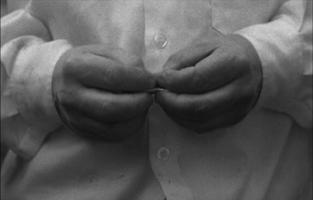
Per versum
Fiction | 35mm | black and white | 2:30 | Italy | 2005
A man try to roll himself a cigarette...
WERTHER GERMONDARI Born in Rimini (Italy), in 1963. Graduated in cinematography at Centro Sperimentale di Cinematografia in Rome and in direction at the University of Bologna; visual artist and performer, he realized many personal exhibitions and takes part in a lot of group exhibitions. His works in film and video were selected in hundreds festivals (Cannes, Rotterdam, Venice, etc.) and won many prizes.
Akos Gerstner
Die Liebenden und die Toten
Experimental fiction | | color | 16:0 | Germany | 2009
Sci-Fi Liebesessay über drei Menschen, die sich in der Utopie Crystal Palace begegnen und ineinander verlieben. Aber wer in Crystal Palace lebt, muß seine Erinnerungen aufgeben, oder die Stadt wieder verlassen. So geht auf dem Weg zur Hoffnung das Glück verloren.
1979 geboren in Budapest 2001/2008 Studium der Soziologie Fernuni Hagen seit 1999 Studium an der HFF München, Abteilung Dokumentarfilm und Fernsehpublizistik
Gethan&myles
L'Arrêt
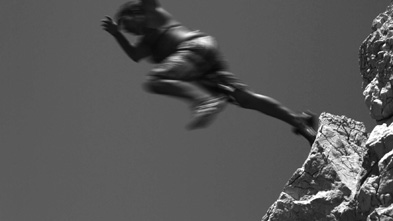
Experimental doc. | hdv | black and white | 15:26 | Ireland, France | 2012
L?arrêt is an experimental documentary about suspense and (im)balance, indecision and the choreography of fear. Shot in the Parc National des Calanques with a group of young adults from the Cité de la Bricarde, a housing project in Marseille?s troubled Quartiers Nord, L?arrêt explores the uncertainty we all face in the no-man?s-land between child and adult. L?arrêt is a film in which five young adults jump from vertiginous limestone cliffs into the Mediterranean 20 meters below. However, the spectacle is not the scenery, or the drama of the fall ? but the moments before? The mixture of bravado and unease, the switch between the hard stare and the too-relaxed grin, the waves of tension and uncertainty, and the struggle to overcome them that unite their bodies in a strange, beautiful, shared language of fear. At the Centre Sociale in La Bricarde, the youthwork coordinator told us that, ?Ici, les jeunes ont du mal a se projeter?? But here at least ? slowly, painfully, joyously ? they do.
gethan&myles are a creative partnership lving and working in Marseille since 2011. As an artistic double-act, collaboration is at the heart of everything they do: not only with each other, but also with the spaces in which they work and the people who occupy them. Giving a voice to communities who are misunderstood or ignored, and expressing the richness of their experience underpins many of gethan&myles? projects. Whether working in film, photography, text, sculpture or performance, ?the sublime? is of little interest to them - what inspires them is the real world and the human beings they share it with.
Nadia Ghanem
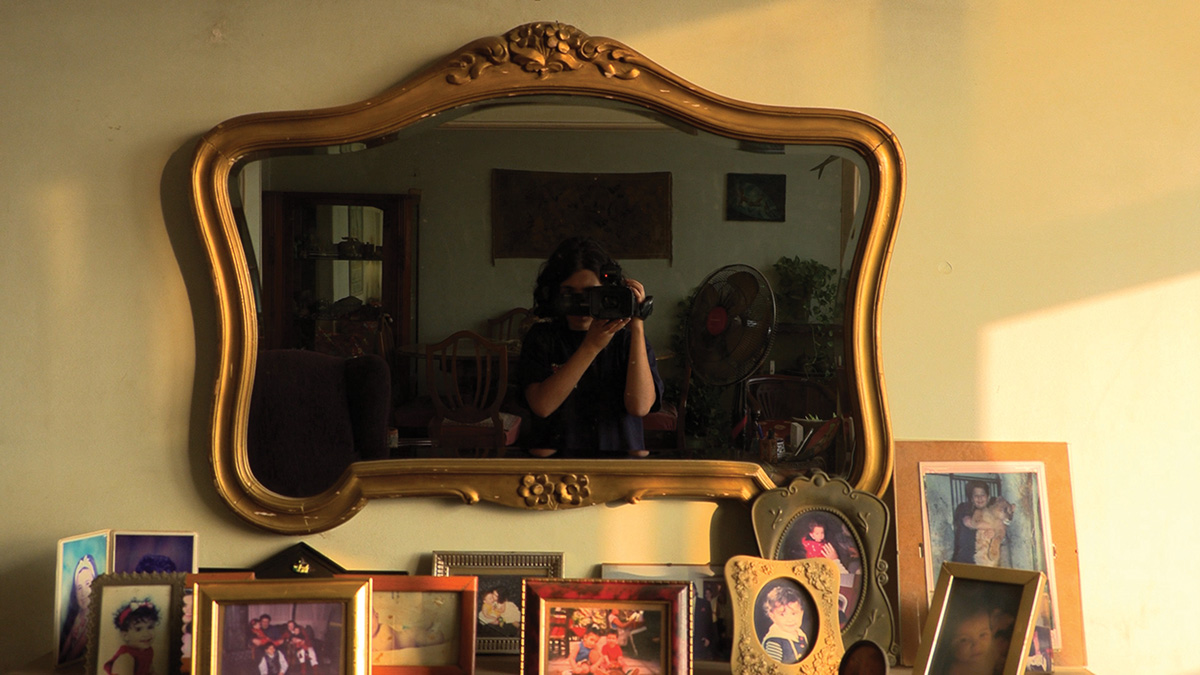
Three Disappearances and a Song
Experimental film | 4k | color | 27:6 | Egypt | 2021
As my grandfather's presence in the country becomes increasingly problematic, my mother gradually decides to never touch a camera again, my father becomes obsessively convinced of his own disappearance, and something almost miraculous happens in 1976 in Montreux: Nina Simone comes back from retirement. In Three Disappearances and a Song, I revisit the family archive, pick up my camera, and film 3 people struggling to find new ways to be: my mother, my father, and myself.
Nadia Ghanem is a filmmaker who lives and works in Cairo. She recently finished her first short film as a director Three Disappearances And A Song (2021) which premiered at the 43rd edition of the Cairo International Film Festival, Images Festival, Cinema Árabe Feminino in Brazil and received the best short film award at Gabes Cinema Fen (Tunisia) as well as the audience and Jury awards for best short film at Manassat Film Festival in Cairo. Nadia is currently working on her first feature Looking for Spiderman which received development awards from A Kiss in the Desert, Rawiyat film collective, Two Stories Production, Dox Box and is part of the Studio Seen program. In parallel to being a filmmaker, Nadia Ghanem curated film programs for the 24th edition of the Videoex festival in Basel and since 2022 is a programmer for the Panorama of the European Film organized by Zawya Arthouse Cinema in Cairo. She also works as a Program Manager at Medrar for Contemporary Art where she coordinated the 10th edition of the Cairo Video Festival.
Mariam Ghani
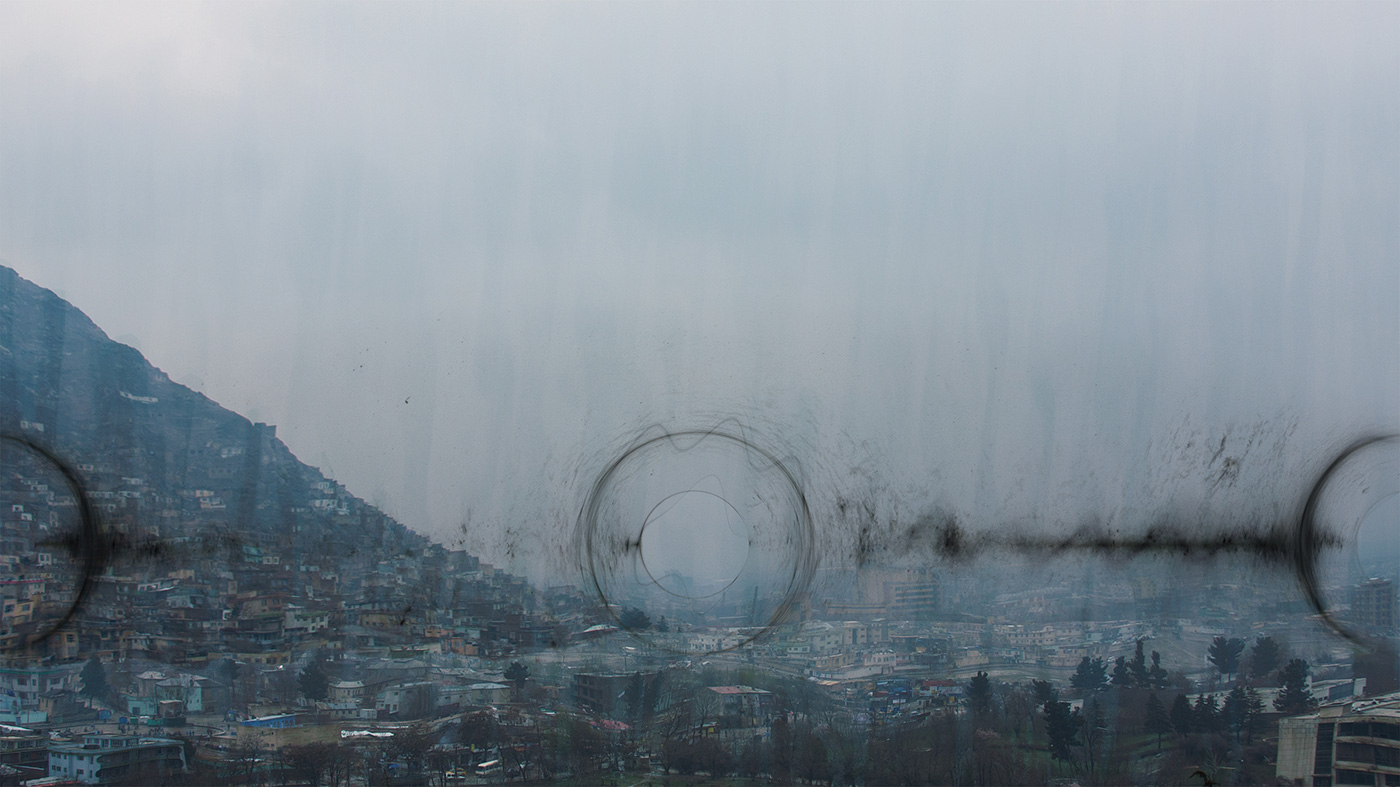
There S A Hole In The World Where You Used To Be
Video | 35mm | color and b&w | 15:31 | USA, Afghanistan | 2025
THERE'S A HOLE IN THE WORLD WHERE YOU USED TO BE is a short film about memory and mourning. It departs from the premise that both grief and black holes are so dense and intense that they bend space and time around their specific gravity - each absence both a wound in the heart and a hole in the world.
Mariam Ghani is an artist and filmmaker. Her films, public projects, and installations have been presented worldwide, notably in Times Square and LaGuardia Airport; the Tate Modern, Guggenheim, MoMA, Smithsonian, Secession, CCCB, and Metropolitan Museums; Documenta 13 and the Liverpool, Lahore, Yinchuan, and Sharjah Biennials; the Berlinale, Rotterdam, CPH:DOX, SFFILM, DOC NYC, Jih.lava, BlackStar, and Ann Arbor film festivals; theatrically and streaming on Ovid, Criterion and Docuseek.
Saurav Ghimire
Songs Of Love And Hate
Experimental fiction | hdv | black and white | 16:52 | Nepal | 2024
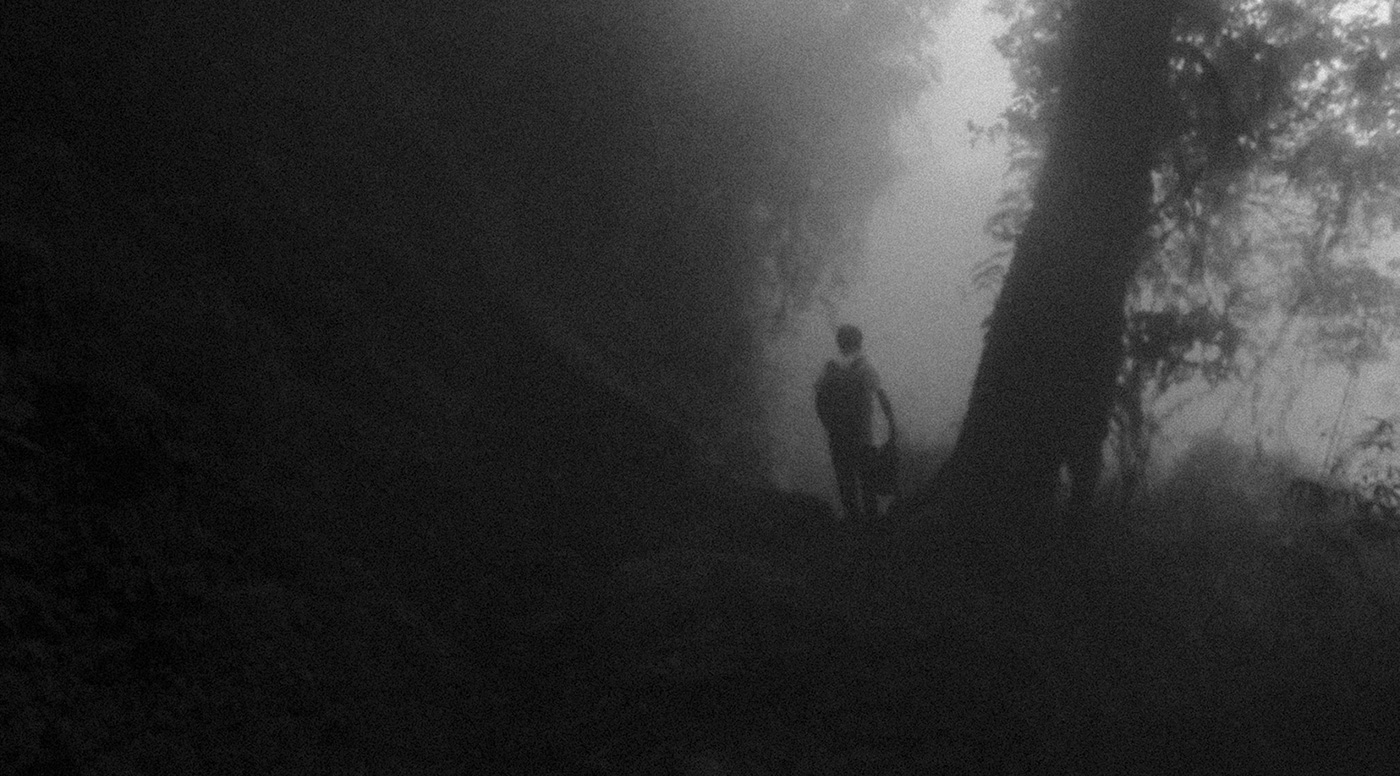
Prem, the charismatic host of a popular radio show offering advice on matters of the heart, is himself plagued by heartache. He seeks solace in the rugged mountains. As he goes through his own emotional upheaval, desperate calls from listeners asking him for advice echo through the wilderness. Both Prem and his audience try to navigate their way through the treacherous terrain of love. A gripping tale of emotional turmoil and self-discovery.
Saurav Ghimire is a Nepali audiovisual artist whose work explores boundaries in storytelling between fiction and documentary. His projects are edited using a mix of archival and live action footage, personal interviews, and collection of songs & poetry. Ghimire has been awarded the Visiting Artist Fellowship from the Laxmi Mittal South Asia Institute at Harvard University His short film, Songs of Love and Hate (17 mins, 2024), had its world premiere at the 74th Berlin International Film Festival where it was awarded Special Jury Mention. Similarly, his first short film, Barking Dogs (14 mins, 2021), was awarded Best Experimental Film at Tasveer South Asian Film Festival (USA) and Best Student Film at Pame Film Festival (Nepal). In addition to this, he has attended training programmes including the Locarno Basecamp Academy (Switzerland), the Odense Talent Camp (Denmark) and the Fantastic Film School BIFAN (South Korea).

Wasim Ghrioui
Military Blanket
Experimental doc. | hdv | black and white | 3:50 | Syria, Germany | 2017
“Military Blanket” is going back to the memory of the day when my father died. It describes the bureaucracy of death, in a military hospital. Growing up is basically we slowly witness people we know dying around us. After my father died and the war started, I lost many people I know, but I chose to talk about the story of my father?s death, because death was still holy back then, death was capable of teaching me, death was the most incredible proof of life.
Wasim Ghrioui (b. 1981 Damascus, Syria) is a multidisciplinary artist working within visual art, writing, music, directing and filmmaking. Between 1998 - 2011 he worked full-time with mosaic art and participated in group and solo exhibitions in Syria, the Arab world and internationally. His current artistic emphasis lies on autobiographical writing, taking the shape of experimental theater as well as filmmaking. Ghrioui lives and works in Berlin since 2013.

Riccardo Giacconi
Ekphrasis
Experimental doc. | mov | black and white | 19:0 | Italy, Austria | 2019
The film takes its cues from the events between 1939 and 1943, when the native German-speaking people of South Tyrol were given the option of either emigrating to neighbouring Nazi Austria (and other Third Reich territories) or remaining in Fascist Italy and being forcibly integrated into the mainstream Italian culture, thereby losing their language and cultural heritage. This system, enforced after an agreement between Mussolini and Hitler, was called the “Option Agreement”. The film also evokes the aftermath of the Option Agreement, including episodes of tension, conflict and terrorism between ethnic communities. As in a session of hypnosis, a voice describes a series of situations in second person. Devoid of any references to dates, names or locations, the voice describes a set of images connected to pivotal moments in the conflictual genealogy of the South Tyrolean territory. An exploration of a series of photographs from different archives, the film composes a visual study on the history and landscape of a territory in-between.
Riccardo Giacconi has studied fine arts at the IUAV University of Venezia. His work has been exhibited in various institutions, such as Grazer Kunstverein (Graz), ar/ge kunst (Bolzano), MAC (Belfast), WUK Kunsthalle Exnergasse (Vienna), FRAC Champagne-Ardenne (Reims), tranzitdisplay (Prague), Fondazione Sandretto Re Rebaudengo (Turin) and the 6. Moscow International Biennale for Young Art. He was artist-in-residence at the Centre international d'art et du paysage (Vassivière, France), lugar a dudas (Cali, Colombia), MACRO Museum of Contemporary Art of Rome, La Box (Bourges, France) and Künstlerhaus Büchsenhausen (Innsbruck, Austria). He presented his films at several festivals, including the New York Film Festival, Venice International Film Festival, International Film Festival Rotterdam, Visions du Réel and FID Marseille, where he won the Grand Prix of the International Competition in 2015. He co-founded the collective listening festival ‘Helicotrema’ and the audio storytelling studio ‘Botafuego’.
Riccardo Giacconi
Il corpo nero
Experimental doc. | hdv | color | 5:37 | Italy | 2018
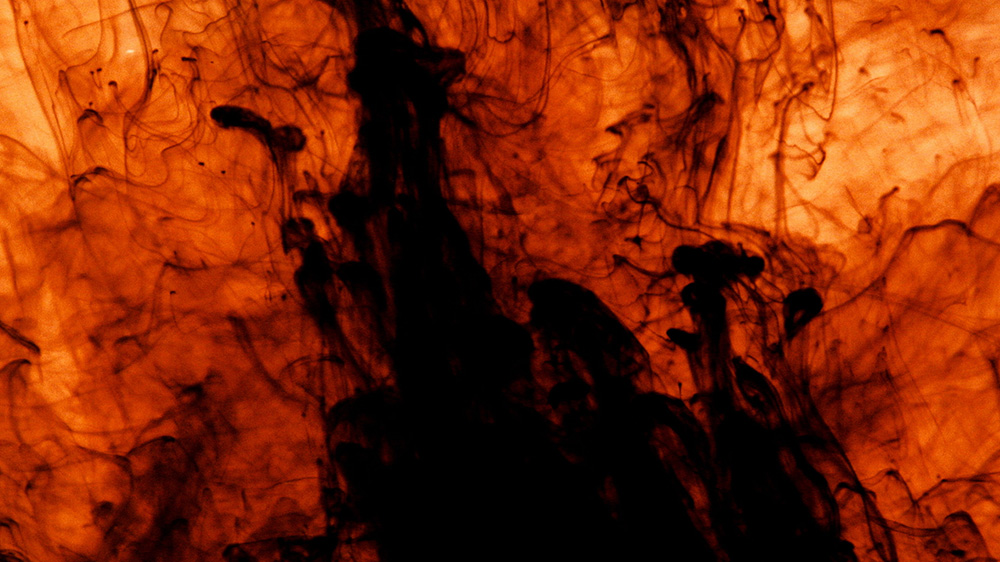
In physics, a "black body" is an idealized physical body that absorbs all incident electromagnetic radiation, regardless of frequency or angle of incidence. An approximate depiction of a black body is a hole in the wall of a large cavity. Any light entering the hole is reflected indefinitely or absorbed inside and is unlikely to re-emerge, making the hole a nearly perfect absorber. The film has been edited as a palindrome, and it is composed of fragments from a conversation with particle physicist Alessio Del Dotto. The scientist outlines the concept of "black body" by narrating anecdotes about it: ultraviolet catastrophes, the first moments of the universe, Borges' Aleph and the double meaning of the Italian word "spettro".
Riccardo Giacconi has studied fine arts at the University IUAV of Venezia. His work has been exhibited in various institutions, such as ar/ge kunst (Bolzano), MAC (Belfast), WUK Kunsthalle Exnergasse (Vienna), FRAC Champagne-Ardenne (Reims), tranzitdisplay (Prague), MAXXI (Rome), Fondazione Sandretto Re Rebaudengo (Turin) and at the 6. Moscow International Biennale for Young Art. He was artist-in-residence at the Centre international d`art et du paysage (Vassivière, France), lugar a dudas (Cali, Colombia), MACRO Museum of Contemporary Art of Rome and La Box (Bourges). He presented his films at several festivals, including the New York Film Festival, Venice International Film Festival, International Film Festival Rotterdam, Visions du Réel and FID Marseille, where he won the Grand Prix of the international competition in 2015.
Riccardo Giacconi
Due (Two)
Experimental doc. | 16mm | color | 16:55 | Italy, France | 2017
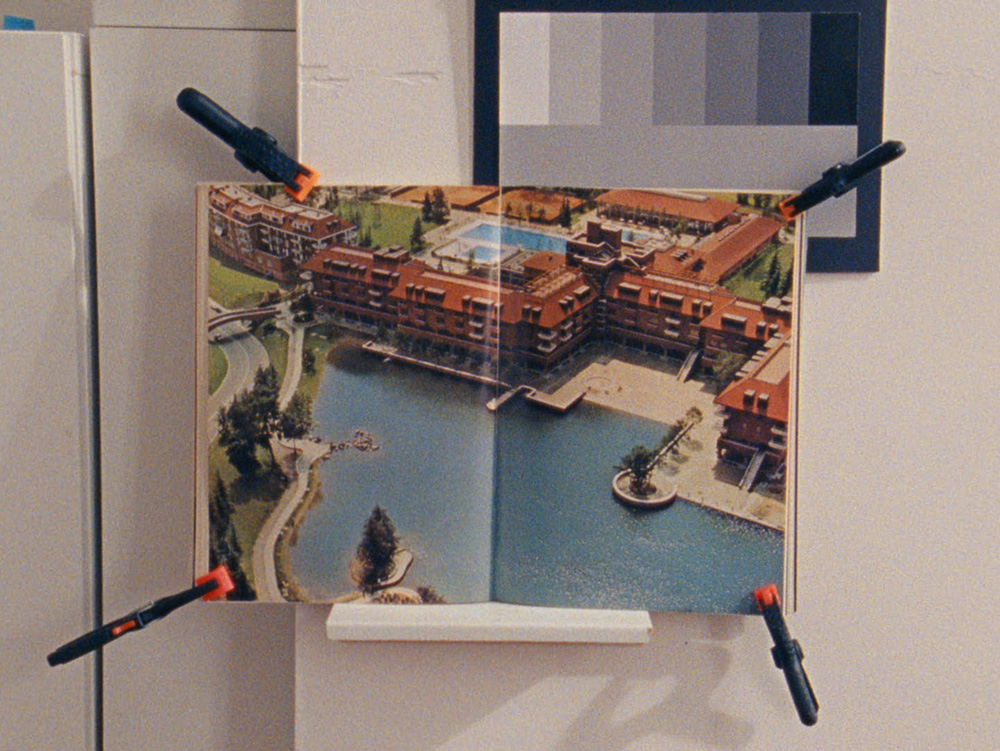
"Due" was shot in Milano 2, a residential neighbourhood located just outside Milano. Built as a utopian city between 1970 and 1979, Milano 2 was Silvio Berlusconi`s first ambitious project. It was in Milano 2 that TeleMilano, the first private Italian TV channel, started to broadcast, which made the area the bridgehead of the media and, later, political empire of Berlusconi. Milano 2, which nowadays may seem an ordinary suburban area, has functioned as a laboratory for a form-of-life which, in the decades of the Berlusconismo’s, spread nationally and left a long-lasting mark on Italian culture. The film includes an interview with Enrico Hoffer, the architect that designed the landscaping of the neighbourhood, as well as fragments from a 1974 publicity brochure advertising the real estate project.
Riccardo Giacconi has studied fine arts at the University IUAV of Venezia, at UWE in Bristol and at New York University. His work has been exhibited in various institutions, such as ar/ge kunst (Bolzano), MAC (Belfast), WUK Kunsthalle Exnergasse (Vienna), FRAC Champagne-Ardenne (Reims), tranzitdisplay (Prague), MAXXI (Rome), Fondazione Sandretto Re Rebaudengo (Turin). He was artist-in-residence at: Centre international d`art et du paysage (Vassivière, France), lugar a dudas (Cali, Colombia), MACRO Museum of Contemporary Art of Rome and La Box (Bourges). In 2016 he was awarded the ArteVisione video production prize, curated by Sky Arte and Careof. He presented his films at several festivals, including the New York Film Festival, the Venice International Film Festival, the International Film Festival Rotterdam, the Rome Film Festival, the Torino Film Festival, Visions du Réel and the FID Marseille International Film Festival, where he won the Grand Prix of the international competition in 2015. In 2007 he co-founded the collective Blauer Hase, with which he curates the periodical publication “Paesaggio” and the “Helicotrema” festival.