Catalogue > Search
Results for : Tout le catalogue
Shahar Marcus, Daniel Landau
Seeds
Experimental video | hdv | color | 5:3 | Israel | 2012
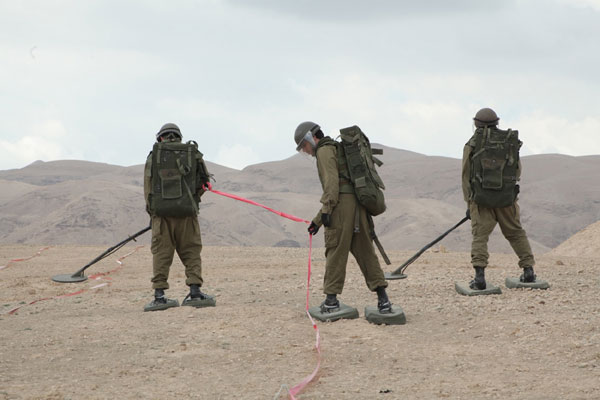
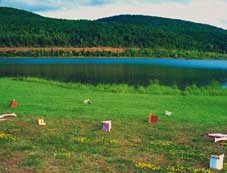
The work ?Seeds? explores the phenomenon of the buried mines that exist in Israel and the world over, exposing how these areas still carry the consequence of the war within their soil while supporting the new populations who must inhabit the conflict area. It examines the power of the present moment in these places where efforts are beginning to shift these death zones into places that consciously affirm life, embracing continuity in the very place where it once was blocked.
Shahar Marcus (b. 1971) is an Israeli based artist who primary works in the medium of performance and video art. His initial works dealt with the exploration of his own body and its limitations‐ incorporating various perishable materials, such as dough, juice and ice. His body served as an instrument, a platform on which various ?experiments? took place: lying on the operating table, set on fire, dressed in a ?bread suit? and more. Food is also a major theme in Marcus?s works. For instance, his recurrent use of bread as a symbol of essentiality and survival is juxtaposed with military symbols. By working with food, a perishable, momentary substance and by turning it into a piece of clothing or a set, Marcus also flirts with art history; transforming arbitrary objects and materials into something immortal and everlasting. His early video‐performances feature himself along with other artists, with whom he had collaborated in the past. However, in his recent works, Marcus appears by himself, while embodying different roles and characters. ?The man with the suit? is a personage that was born from an intuitive desire to create a ?clean‐cut? version of an artist, juxtaposed to the common visual stereotype of the artist as a laborer. Drawing influence from Magritte?s familiar figure‐ the headless suit, a symbol of Petite bourgeoisie, Marcus embodies this man with a suit as an artist who is in charge, a director. His most recent works deal with local political issues, by approaching iconic Israeli landmarks with a critical and humorous point of view. Thus, Marcus reflects on his own heritage, environment and the creation of local historical narratives. His works are influenced by the visual language of cinematography along with familiar themes and tributes to art ? history and artists, such as Ives Klein, Paul McCarthy, Peter Greenway and Jackson Pollack. *Shahar Marcus is an active artist for over a decade and has exhibited at various art‐ institutions, both in Israel and around the world, including: The Tate Modern ,The Israel Museum, Tel Aviv Museum of Art, Petach Tikva Museum of Art , Charlottenburg, Copenhagen‐ Kunsthalle , Moscow Biennale, Poznan Biennale, Moscow Museum of Modern Art and at other art‐ venues in Poland, Italy, Germany, Georgia, Japan, the USA and Turkey. Many of his works are a part of various important collections, such as The Israel Museum, Tel Aviv Museum of Art, Petach Tikva Museum of Art as well as art‐ intuitions in Poland and Italy.
Elke Marhöfer
prendas - ngangas - enquisos - machines {each part welcomes the other without saying}
Experimental doc. | 16mm | color | 25:50 | Germany, Cuba | 2014
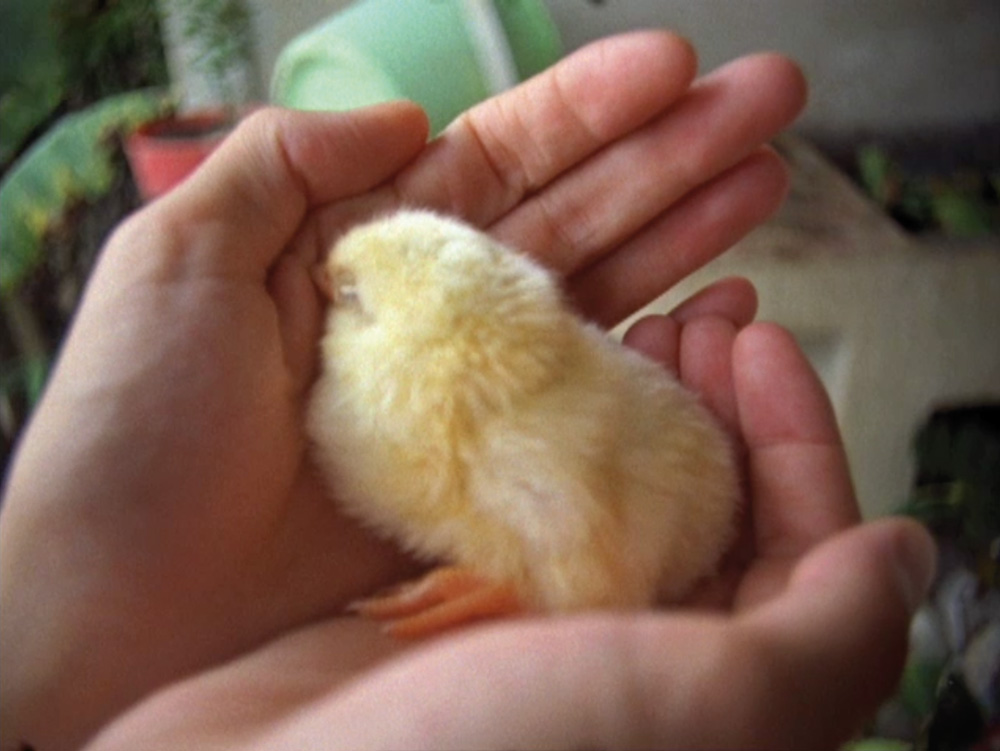
A film shot in Cuba. Not an anthropological film, nor a narrative documentary or a film essay, but certainly a film concerned with foreignness and difference. Mostly shot in the hilly communes of Yateras, searching for long disappeared clandestine settlements, so-called palenque, where African slaves, Taínos and Chinese forced laborers, freed themselves from colonial violence, the film narrates a sense of place, which is real and imaginary at the same time. It questions, if it possible to communicate something of the soul of a place, steeped in histories of revolution and dissidence, without relying on didacticism or storytelling, without taking recourse on hierarchical distinctions between the ordinary and the extraordinary, the animate and the inanimate, the macro and the micro? Wondering what heritage (colonial) anthropology leaves behind, or rather, if it is possible to escape from the systems of signification that constitute foreignness, without getting detached from the palpable realities of the world? What if there was a way to approach the foreign by relying on the affects of the world that pass through us, giving way to perceptive cartographies, mapping out nameless intensities and collective sensitivities, leaving space for the non-human, including vegetables and animals that colonized the New Land? In this film, Cuba does not appear as an “outside” to a “Western” inside, but as a sensible texture without anchor or vanishing point, where humans are a part of the composition rather than the principal element.
Elke Marhöfer, born in the year of the goat in Baracoa/Cuba, studied Fine Art at the University of the Arts in Berlin, at the School of the Art Institute of Chicago and at the Whitney Independent Study Program in New York City. Via the potentialities of moving image and suppositious writing Marhöfer works with notions of self-admitted foreignness, radical othering, heterogeneous perceptions of time, the ahistorical and disorientations of narratives. She revises notions of animal, vegetal and object relations. Since 2010 she pursues a PhD at the University of Gothenburg. Projects have received fellowships, grants, and generous support from Courtisane Festival Ghent, Images Film Festival Toronto, IASPIS Residency, Whitney Independent Study Program, Cité des Art International Paris. Art exhibitions include the Manufactura`s Studio Wuhan, FCAC Shanghai, the Houston Museum of Fine Arts, Museum für Gegenwartskunst Siegen and The Showroom, London.

Pablo Marin
Materia vibrante
Experimental film | 16mm | black and white | 6:45 | Argentina | 2024
In search of traces and imprints of an absence, this film examines the coexistence between nature and man-made structures or artifacts, to deliver a formal object of commemoration. An obscure celebration of the surface of a fractured and exhausted world, what could have been a city symphony evokes instead the feeling of a mausoleum for our present existence.
Pablo Marín is a filmmaker and writer. As an independent researcher and curator, he has presented programmes on Argentinean cinema in the United States, Canada, Spain, Austria, Finland and Switzerland. He has translated books by Jonas Mekas, Stan Brakhage and John Waters, among others, and his volume on Argentine experimental cinema, Una luz revelada. El cine experimental argentino, was published in both Argentina and Spain by La Vida Útil in 2022. His film Resistfilm (2014) won the best Avant-Garde Film at Filmadrid, and his latest, Trampa de luz (2021), was awarded the Principal Online Prize of the International Short Film Festival Oberhausen.

Ivan Marino
Five pictures of a Seated Woman
Experimental doc. | dv | color and b&w | 23:0 | Argentina, Spain | 2005
"This poetic documentary, a powerful reflection about time and death, retraces the 5 last years of the life of a woman. We can see her in everyday-life situations, knitting, eating, sleeping." International Festival of Electronic Video Art, Brazil
Iván Marino, a video director and multimedia artist, was born in Argentina in 1968. In his professional activity he was a docent at different national and international universities. In 1997, he was invited to the Filminstitut (HDK - Hochshule der Künste, Berlin) as a Visiting Scholar, to study the documentary form. From 1997 to 1998 he was a Visiting Scholar at the University of California at Los Angeles (Film and TV Department), where he specialized in Digital Art. In 1999 he received a grant from the MECADMedia Centre of Art and Design (Escuela Superior de Diseño, Universidad Ramón Llull) for media art research and production. Since then he lives in Barcelona. At the present time he is in charge of several courses of Electronic Art and Digital Design (ESDIUniversidad Ramón LLull). He also gives classes in the International Master program of Interactive Design Systems, and carries out docent collaborations with the Pompeu Fabra University in Barcelona (IUA). Iván Marino has also been in charge of seminars and continuing education training sessions at universities in Argentina (Universidad Nacional 3 de Febrero, Universidad Blas Pascal), in Colombia (Universidad Nacional de Cali, Universidad de Caldas), as well as other academic centres. During his professional career, he has created work for cinema, video and for interactive mediums, such as the Web or internet in general. His work has been exhibited in different international events and received prizes in the festivals of Hanover (International Film Festival, Germany, 1997), BHZ Brazil (Belo Horizonte, Brazil, 1995), Videobrasil (San Pablo, Brazil, 1997), Buenos Aires Film Festival (Sueños Cortos, Argentina, 2003), among others. He has received funding from the Rockefeller foundation, MacArthur (USA), Fundación Antorchas (Argentina), Goethe Institute (Berlin), and received a grant from the ZKM (Centre for Art and Media, Karlsruhe, Germany) and the University of California, Los Angeles (UCLA). source: la Caixa

Franco Marinotti
PLAY Gallery
0 | 0 | | 0:0 | Switzerland, Germany | 2007
PLAY is a gallery and a showroom for artistic projects, revealing to what extent film, video, and art reciprocally influence one another. Far beyond classical gender distinctions, new narrative and visual languages form an alternative to the flood of images and their latent subliminal advertising divulgated by traditional mass media. The gallery's goal and main interest is primarily focused on the changing of the visitor's and contemplator's visual patterns as well as reception channels, in order to invite and fascinate him in a positive way. In order to do so, Play invites artists, directors, and cameramen to present their project ideas that will subsequently be realized for the space. Production know-how and theoretical background of the projects are considered equally important. This is why a particular emphasis is given to cooperation with universities and academies in order to elaborate such new conceptions during workshops with the participation of students and professors. In this very context, the best Offs coming from festivals are presented in screenings and moderated by experts.
Franco Marinotti founded Fine Arts Unternehmen Ag. in 1999. Fine Arts Unternehmen is a film production and artist books publishing company in Zug, Switzerland. In 2000 he Opened Artinprogress, an exhibition space in Berlin, and in 2002 he opened PLAY_gallery for still and motion pictures in Berlin to focus on video and film. In 2003 he started Fair Play yearly video and film festival in Berlin. In 2007 he started the project "Mera Coincidencia" in Lisbon with the artist Javier Penafiel.
Jenny Marketou
DE_LETE
Experimental doc. | dv | color | 2:0 | Greece, USA | 2006
Jenny MARKETOU (Author) Courtesy Anita Becker Gallery, Frankfurt, Germany DE_LETE (2006) /dv/color/2m.10" The border is an artificially constructed place that gets materialized by the crossing of people. We are used to seeing media images of the border that are violent and aggressive in nature, and which are used to manipulate the public opinion about illegal immigration and national security. DE_LETE was filmed along the border line between Tijuana and San Diego, US in the backdrop of the small fishing village Las Playas at the Gulf of Mexico. DE _LETE takes a look at the border from an alternate perspective. It is shot from a combination of formal, documentary and philosophical genres. The camera captures the human activity along the wired fence of the border in anticipation of the crime. To our surprise, the border materializes itself only when people of all ages come from both sides of the border to perform intimate human communication. By so doing, the fence is transformed into a meeting point, and no attempt to cross it is made. As this performance of everyday experience unfolds and repeats itself in slow motion, "the border" vanishes and suddenly becomes an ambivalent place at the fringe of two cultures; a new social space with discreet relationships. It is a remote space, controlled by invisible powers.
Short Biography Jenny Marketou, born in Athens, Greece, is a Brooklyn-based artist who works with video, video installations, internet performance, photography and public dialog. Her work is influenced by a varied amount of music, art, and new media. Her primary inspiration is in relationship with a multitude of readings]which can be viewed in a culture of landscape. Her work has been shown in museums and galleries nationally and internationally and has been awarded numerous grants and artists residencies worldwide. She holds a Master of Fine Arts from Pratt Institute in Brooklyn and she has been teaching as adjunct professor Photography and Interdisciplinary studio art at The Cooper Union School of Art and Science in New York City. She is the author of the book with photographs and interviews? The Great Longing: The Greek Immigrants of Astoria ,Queens. www.jennymarketou.com .

Filip Markiewicz
Ultrasocial Pop
Performance | mov | color | 30:0 | Luxembourg | 2020
Ultrasocial Pop is Filip Markiewicz’s latest experimental audio visual project. Creating a performative dialogue between his visual and filmic work and his musical compositions as Raftside. The live performance is always a unique experience that includes a comment on actual social events. The idea is to question the link between pop culture and populism and to create a videographic moving painting. The work in progress of Ultrasocial Pop will lead to the release of a visual book with vinyl Lp (Label Grzegorzki Records) in the frame of his solo show at Haus am Lützowplatz in Berlin (D) in May 2021. Ultrasocial Pop is supported by the Bourse Bert-Theis.
Filip Markiewicz was born in Esch-sur-Alzette (L) in 1980. His solo shows have been hosted by institutions such as the MNAC National Museum of Contemporary Art in Bucharest (RO), NN Contemporay Art in Northampton (UK), Kunsthalle Osnabrück in Osnabrück (D), CCA Derry -Londonderry (UK) an the Casino Luxembourg - Forum d'Art Contemporain (L). He represented Luxembourg at the 56th Biennial in Venice. Markiewicz follows a theatrical and musical performance route, which has led him to create shows at the Staatstheater Cottbus for the Lausitz Festival (D), Theater Basel in Basel (CH) and the Expo in Shanghai (CHN), to his work in the visual arts field. He lives and works in Hamburg (D) and Luxembourg (L)

Filip Markiewicz
Fake Fiction
Experimental fiction | hdv | color | 26:7 | Luxembourg, Switzerland | 2018
Fake Fiction is initially a theater play that became a film produced in 2017 by the Theater Basel. Filip Markiewicz wrote the dialogues in reference to the events that happened during the period of time, the terror attacks, the European mirgant crisis and the rise of populist movements and fake news...
Filip Markiewicz (born in 1980) is a multidisciplinary Luxembourg artist of Polish origin, who expresses himself through different mediums, including drawing, video and installation. Always seeking explanations for our daily lives, he explores the omnipresence of images and puts into perspective the message they convey. He submits current issues to a critical and political approach, and thus emphasizes the emptiness of our world submerged by visual overproduction where information becomes reality rather than the opposite. In 2015, Markiewicz represented Luxembourg at the 56th Venice Biennale with Paradiso Lussemburgo.
Filip Markiewicz
Celebration Club
Experimental fiction | hdv | color | 23:10 | Luxembourg, United Kingdom | 2017
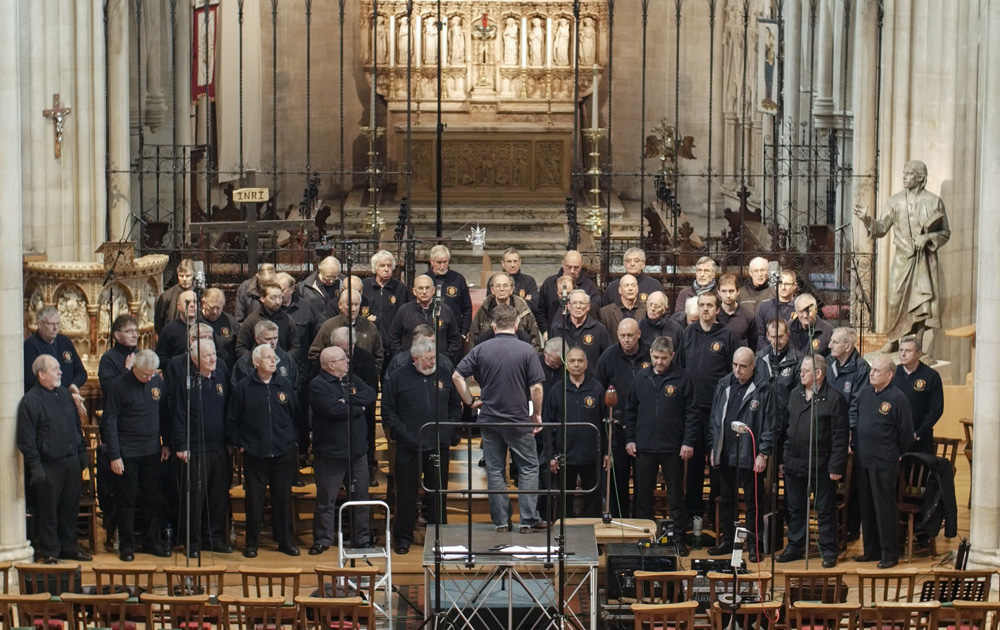
Celebration Club (2017) is a film made over the course of one week in Northampton following the Brexit referendum.The film captures musicians of different generations and origins talking about the changing society and making music, including punk scholar Roy Wallace, rapper Phundo Art, avant-garde black metal band Denigrata and the Northampton Male Voice Choir performing Robbie William’s Angels in a local church.
Luxembourger of Polish origin, Filip Markiewicz (born in 1980) is a multidisciplinary artist expressing himself through drawing, video, music, theatre and installations thereby creating a visual body of work using diversified media. His work is not intending to be a kind of political activism, but rather to develop an almost surreal language consolidating different expressions. In 2015 Filip Markiewicz represented the Grand Duchy of Luxembourg at the 56th Venice Biennale with his project "Paradiso Lussemburgo". In 2017 he produced his first theater play "Fake Fiction" at the Theater Basel. In 2018, he will present his monographic exhibition "Celebration Factory" at the Casino Luxembourg - Forum d`Art Contemporain.
Filip Markiewicz
Euro Hamlet
Experimental fiction | mov | color | 20:0 | Luxembourg, Germany | 2021
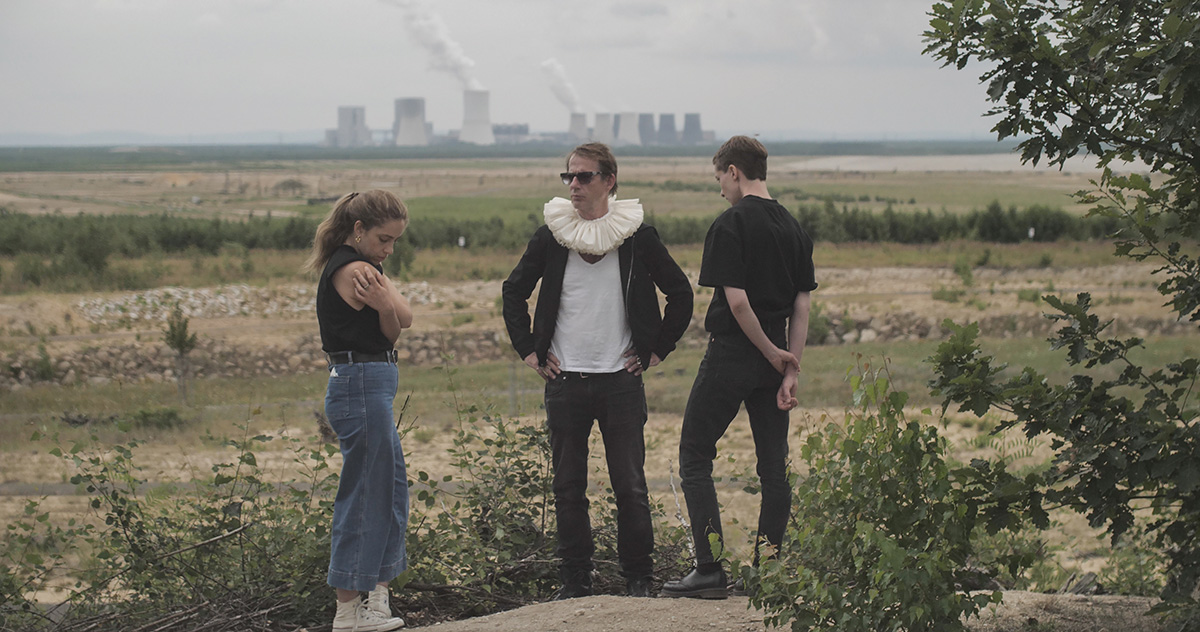
Euro Hamlet is the latest project of theatrical creation directed by Filip Markiewicz in August 2021 in the immense Hall of the Telux site in Weisswasser in Germany, in collaboration with playwright Katrin Michaels, Working from the original text of Hamlet, Shakespeare's most popular and disturbing play, Filip Markiewicz creates a sort of concept with Euro Hamlet. He subverts the established rules of classic theatre and combines them with different artistic forms. The result proves to be a veritable performance, both in terms of the artists appropriating the original text and the visual and audio presentation of its content in space. In this contemporary tableau, Filip Markiewicz reflects certain references from the history of art and uses the concept of the «Play Within the Play» to engage with issues in the social and political realities of today's Europe, It raises the question: how to communicate the truths of everydav life in a context that is subject to codes of appearance? The preparation for the staging of Euro Hamlet included a shooting in July 2021 with the actors Leila Lallali, Marie Jung, Luc Feit and Joran Yonis in the region of East Germany and in Zgorzelec in Poland. A "mise en abyme" of Shakespeare's text in an organic setting that bears witness to European history, where the artist adresses the notion of territory beyond the experimental nature of this reading.
Filip Markiewicz (born in 1980, Esch / Alzette, Luxembourg) is a visual artist who expresses himself through various media such as drawing, painting, music, video and installation. Filip Markiewicz represented Luxembourg at the 56th Venice Biennale 2015 with the Paradiso Lussemburgo project. His long-term project Celebration Factory on contemporary Europe began in 2016 at the NN Contemporary Art Northampton and at the Theater Basel before it was continued in 2018 at the Casino Luxembourg - Forum d'Art Contemporain and in 2019 at the Center for Contemporary Art Derry-Londonderry and the Kunsthalle Osnabrück. In 2017 Markiewicz staged his performance Fake Fiction with diary texts by Oskar Schlemmer (publication Hyde Éditions) at Theater Basel for the official Art Basel program. Markiewicz received the Art Prize Bourse Bert-Theis in 2019 for his art music project Ultrasocial Pop. In 2020 Markiewicz shows his monographic exhibition Ultraplastik Rhapsody at the National Museum of Contemporary Art in Bucharest. For the Lausitz Festival 2020, Markiewicz directed, created the scenography and composed the music for the play ANTIGONE NEUROPA (Sophocles) in collaboration with the Staatstheater Cottbus. In february 2021 Filip Markiewicz presented the performance Ultrasocial Pop in the frame of the Rencontres Internationales Paris / Berlin. In August 2021 Markiewicz directed, created the scenography and composed the music for the installation and theater performance Euro Hamlet at the Lausitz Festival. Filip Markiewicz has been composing music for film, theater and installation under the name RAFTSIDE since 1999, with which he has also appeared in several international festivals.

Ivan Markovic
Similar to Ourselves
Video installation | 4k | color | 12:20 | Serbia | 2023
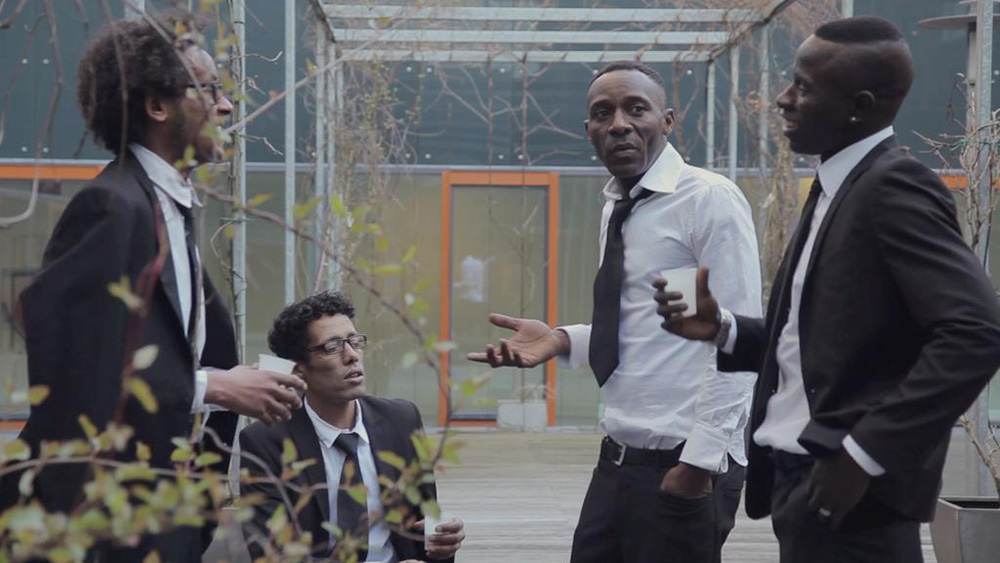
Like a glass vault that contains traces and gifts from distant countries, the headquarters of Energoprojekt, the former Yugoslavian construction company merges geographically distant places. Walls are pannelled with faded photographs of Energoprojekt’s conscturctions in fellow Non-Aligned countries, from 1960's until late 1980’s. Across Africa, South America, the Middle East and South Asia, the distinctive modernist constructions built by Energoprojekt formed an independent post-colonial architectural identity, beyond the Eastern and Western Bloc polarity. Abundant plants and trees, different species brought from afar 50 years ago, still grow together under the glass roof. The space is gradually revealed in choreographed sequences of the people who take care of the plants, forming an inseparable sense of belonging.
In his films, photography and video works, Ivan Markovi? observes space and the relationship between labour, architecture and ideology. With Linfeng Wu, he co-directed the short film “White Bird”, that had its premiere at Berlinale 2016. His experimental documentary “Centar” had its premiere at Doclisboa in 2018, won the “Best Newcomer” award at Dokufest. “From Tomorrow on, I Will”, a feature he co-directed with Linfeng Wu, had its premiere at Berlinale Forum 2019. The film received the Grand Prize at 2019 Jeonju IFF. It was shown in numerous festivals, including Belfort, Viennale, Zinebi and Mar del Plata. As a cinematographer collaborated on several feature films including “You Have the Night” by Ivan Salatic (Venice Film Festival), “Landscapes of Resistance” by Marta Popivoda (IFF Rotterdam) and “I Was at Home, But...” and “Music” by Angela Schanelec (Berlinale). His work was shown in numerous solo or group exhibitions internationally, in institutions including Institute of Contemporary Arts London, Bethanien in Berlin, Austrian Kulturforum Berlin, Museum of Contemporary arts Belgrade. Since 2020, a member of the European Film Academy.
Randa Maroufi
Stand-by Office
Experimental doc. | hdv | color | 13:0 | Morocco, Netherlands | 2017
The camera enters an office. The receptionist answers the telephone, her co-workers drink coffee during their break and talk about their plans. Later, there is a meeting. The stiffness of the situation reveals a hidden story. What exactly took place from June 2015 to September 2016 in the government building in Amsterdam?
Born 1987, Casablanca, works and lives in Paris. As a Fine Arts graduate from the University in Tetouan, Angers and Le Fresnoy, Randa Maroufi belongs to this generation that grew up in an era dominated by images. She collects them with as much eagerness as suspicion, and ceaselessly questions their veracity. The field of her ambiguous fiction and experimentation encompasses the occupation of public space and gender issues in a continuous search to highlight its founding mechanisms. Randa Maroufi's work has been presented at art events and film festivals such as The Marrakech Biennale, the Arab World Institute in Paris, the International Film Festival Rotterdam, the MOMA, etc.

Randa Maroufi
L’mina
Documentary | dcp | color | 26:0 | Morocco, France | 2025
Jerada is a mining town in Morocco where coal extraction, although officially halted in 2001, continues informally to this day. "L’mina" recreates the current work in informal mining pits using a set design created in collaboration with the town’s residents, who perform in their own roles.
Born in 1987 in Casablanca (Morocco), Randa Maroufi is a visual artist and filmmaker. She graduated from the Institut National des Beaux-Arts in Tétouan, the École Supérieure des Beaux-Arts d’Angers, and Le Fresnoy – Studio National des Arts Contemporains. In 2018, she became a fellow at the Académie de France à Madrid, Casa de Velázquez and the Villa Médicis in Rome in 2025. Her films Le Park (2015) and Bab Sebta (2019), awarded at several festivals, mark the beginning of a trilogy dedicated to three Moroccan cities. L’mina (2025) is the final chapter of this trilogy.
Siyanda Marrengane
Go Slow, You'll See Better
Experimental video | mp4 | color | 3:8 | Swaziland, South Africa | 2022
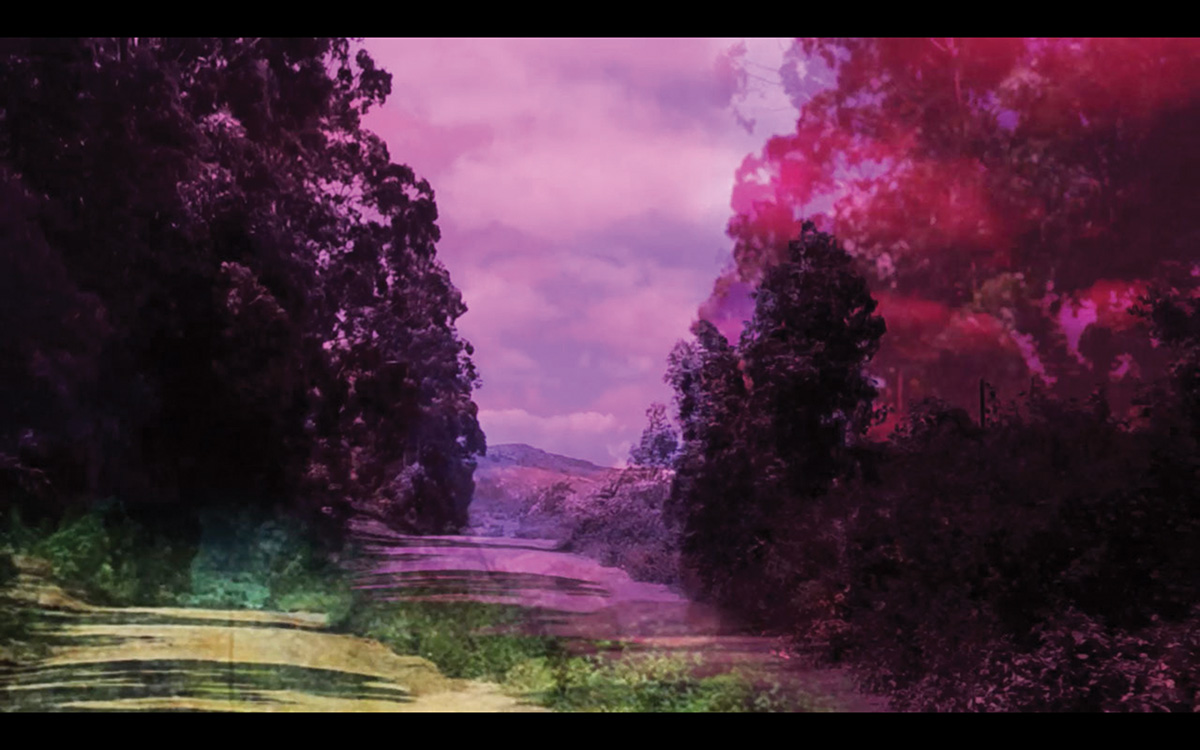
go slow, you’ll see better is a journey of contemplation and transitioning between opposing states (of being). Revealing a landscape interspersed with vibrant colours of magenta and pink, this represents a bridge between excitement and calmness, chaos, and order. The shift in saturation mirrors the ever-changing nature of emotions, experiences, and personal narratives. Driving by and shooting out the window, the landscape becomes blurred and unblurred, evoking the sense of in-betweenness, which can prompt the feelings of familiarity and unfamiliarity, clarity, and vagueness. go slow, you’ll see better is everywhere and nowhere, collapsing both the temporal and the spatial.
Siyanda Marrengane is a Eswatini-born visual artist based in Johannesburg, South Africa. Kuba semkhatsini is a SiSwati phrase that can be translated as being caught in the middle of conflicting states of being, situations, conditions and more. Siyanda is interested in the notion of the in-between (kuba semkhatsini), a central component in her practice that encompasses personal and collective narratives and experiences. These are subsequently explored as ways of questioning, challenging and falsifying existing hegemonies. Unpacking and translating these through video, sound and installation, to create ambiguous spaces that are both imagined and real.

Lynne Marsh
Plänterwald
Art vidéo | dv | color | 18:15 | Canada, Germany | 2010
Plänterwald is filmed on the site of a former GDR amusement park built in 1969 and abandoned after unification. Its rollercoaster and ferris wheel sit motionless at the edge of the city of Berlin. After being closed to the public for almost a decade the rides and fairground structures ? once providing a distraction from everyday realities ? are left to a gradual process of decay and overgrowth. Paradoxically this derelict site is patrolled and protected by security guards who on the one hand attempt to maintain its separation from the public sphere and contemporary life yet at the same time position it in the present social and economic conditions. The video stages a journey in, over and through this bordered off park evoking the exceptional conditions of its persistent existence. Positioning the security guards as the guardians of a ?dead? space, the work plays on the absurdity of the use of force and notion of property in relation to the decay and obsolescence of the site. Plänterwald pursues an exploration of a world held together by an internal logic, and quietly, yet relentlessly - like the defunct rollercoaster - echoes the rumbles of deep social and political fault lines and their explosive potential.
Lynne Marsh is a Canadian artist who divides her time between Montréal, Berlin and London where she teaches at the University of Hertfordshire. Working predominately with video, installation and sound her practice explores the cultural and social concerns that operate at the convergence of performance, choreography, speculative fiction and staged events. Her most recent works, shot respectively in a sports stadium, a TV studio and an abandoned amusement park investigate the inscription of individual bodies in architectural environments built for mass consumption. Her works present conceptual and visual experimentations that create a space for us to speculate on the present concept of the individual and its contemporary exertion of pressure as a political subject. Marsh?s video installations have been exhibited in solo exhibitions including Kunstlerhaus Bethanien, Berlin, Steve Turner Contemporary, Los Angeles, the Musée d`art contemporain de Montréal and Danielle Arnaud contemporary art, London and group exhibitions including Catastrophe, the Québec City Biennial and There is no audience, at Montehermoso, Vitoria-Gasteiz, Spain. A monograph on her works entitled Lynne Marsh, was produced by the Musée d`art contemporain de Montreal and the Musée régional de Rimouski.
Richard Martin
Abcam
Video | hdv | color | 7:54 | Canada | 2015
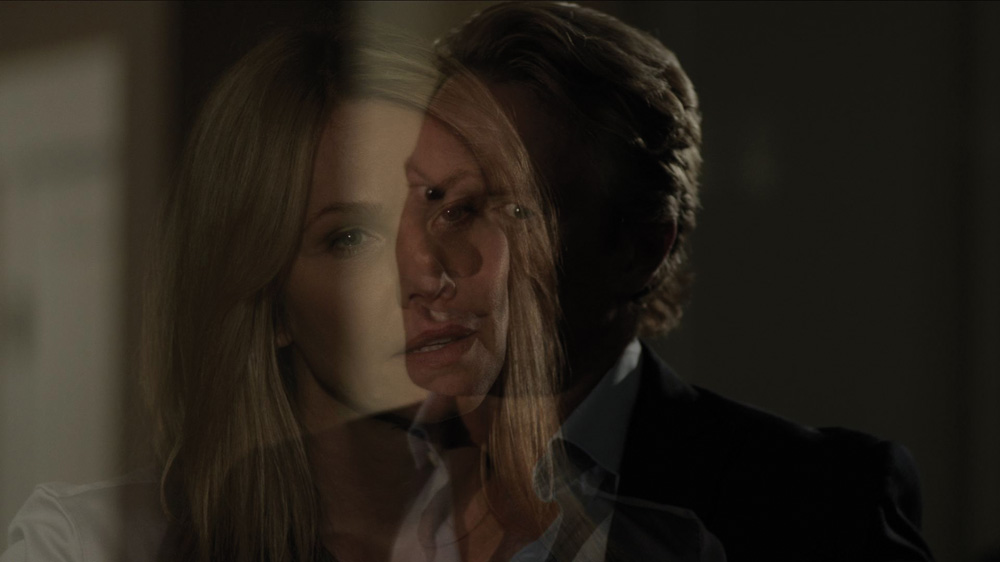
A B C A M (or A & B Cam) explores a scene from a TV movie where the angles have been superimposed to reveal filmic conventions. It reveals the narrative, angles as well as the adjustments in performance to observe the process in its rawness and mesmerizing predictability. In conventional cinema we are only allowed to see what is presented and manipulated through the process of editing. This is a process as old as the medium itself. It is the essence of cinema. In the case of A B C A M, that process has been subverted and exposed to allow the audience to experience the conventions simultaneously and in real time. The manufactured certainty of the experience is undermined as we are encouraged to review both sides of the narrative, follow the narrative or perhaps, find a new narrative.
Richard Martin (MFA 2013 University of British Columbia) is a media artist living in Vancouver Canada. His short film work has appeared as official selections in prestigious venues such as Berlin International Film Festival, Oberhausen, Rencontres (Paris), Toronto International, EXiS (Korea), Ann Arbor, Athens (Ohio), and many more. He has also worked as a mainstream film and TV director and in that his work straddles conventional and experimental cinema, blending and upending convention with abstract intention, playfulness and occasionally, personal trauma.
Richard Martin
Mixed Signals
Experimental video | dv | color | 7:45 | Canada | 2004
A pixelated sea of televised images blends evangelical Christian rhetoric with the gospel of George W Bush.
Richard Martin is a professional film and television director who lives in Vancouver Canada. Mixed Signals marks his return to experimental cinema... a return with a vengence.
Cécile Martin
Débat
| | | 0:0 | France, Canada | 2005
L?organisme Champ Libre (fondé en 1992) qui ?uvre maintenant dans les domaines de l?image en mouvement, des arts électroniques, de l?architecture et de l?urbanisme a emprunté son nom à l?histoire récente du Québec. En effet au moment de la fondation de l?organisme en 1992, François Cormier l?un des co-fondateurs, cherchait un nom à donner à ce nouvel espace de réflexion et de diffusion artistique qui émergeait à partir de l?effervescence de rencontres avec d?autres co-fondateurs issus du milieu de l?architecture, des arts visuels, de la philosophie, de la littérature et de l?urbanisme. À cette époque ce collectif définissait son action entre autres par le besoin de regrouper les forces de ses co-fondateurs et proposer de nouvelles façons de voir, d?entendre et de comprendre. C?est au hasard d?une visite dans une librairie de livres usagés du plateau Mont-Royal à Montréal en 1991 que fut découverte une édition ancienne et originale de la revue de cinéma québécoise CHAMP LIBRE ayant existé dans les années soixante-dix le temps de quelques numéros. L?édition no 1 de cette revue clamait en 1971 que : ?il consiste à donner aux colonisés que sont les Québécois les images d?eux-mêmes qui leur manquent, à reconquérir un reflet volé et à proposer des schémas d?analyse et de lutte. Inutile de dire que CHAMP LIBRE participe à ce combat. C?est la force éditoriale de ces propos et le désir, la volonté de faire revivre le nom inspirant de cette revue de cinéma d?auteur qui a fait naître dans sa continuité le nom de l?organisme CHAMP LIBRE que l?on connaît aujourd?hui.
CHAMP LIBRE (fondé en 1992) est un diffuseur et un laboratoire artistique nomade qui présente des événements in situ, s`insérant dans la communauté et mettant en relation les pratiques contemporaines de l`art, de l?architecture, de l?urbanisme et des nouvelles technologies.
Darrin Martin
Monograph in Stereo
Experimental video | dv | color | 17:20 | USA | 2005
Monograph in Stereo employs documentary and experimental strategies to convey a struggle with congenital and operational hearing loss and tinnitus, a continual ringing in the ear; a phantom auditory perception.
Darrin Martin?s videos and performances have exhibited internationally at festivals and museums including the Museum of Modern Art and the DIA Center for the Arts in New York, the Los Angeles Museum of Contemporary Arts, and the European Media Art Festival in Germany. His installations have exhibited at venues such as the Kitchen in New York, WRO Media Arts Biennale in Poland, and Pacific Switchboard in Portland, OR. He frequently collaborates with Torsten Zenas Burns. Their collaborations have exhibited at venues including The New York Video Festival, The Oberhausen Short Film Festival, Cinematexas, The Madrid Museum of Contemporary Art, The Paris/Berlin International and Eyebeam in New York. They have also launched a hi-band net art project titled Lesson Stalls: learning nets, http://www.eai.org/lessons, which was commissioned by Electronic Arts Intermix.

Ruben Martinez
Hamaca
0 | 0 | | 0:0 | Spain | 2007
HAMACA is a distributor of video art and electronic art. It was established by the initiative of AAVC and is directed by YP. The name HAMACA refers to the operative system under which we aim to work: as a horizontal net joined together at various points. Our main objective is to make works in video format available to the greatest number of individuals and institutions, and in this way promote their circulation and screenings. The distributor is a non-for-profit organisation at the service of both authors and users, whose aim is to promote the circulation of the works and to generate an economic flow for the artists' productions. We hereby continue in the line of the kind of activities led by AAVC throughout the past few years. HAMACA works as an intermediary that promotes and guarantees the presence of contemporary and historical video productions in audiovisual screenings and programs at a national and an international level. In addition, it opens up the market for new communication and information media. The works contained in the catalogue have been previously selected by a selection committee comprising professionals and experts in the field, such as Susana Blas, Eugeni Bonet, Juan Guardiola, Esther Regueira, Fito Rodríguez, Jorge Luis Marzo, Lola Dopico, and Virginia Vilaplana. The catalogue contains a varied selection of works and encompasses all genres, from historical productions and pieces in documentary format, to works of fiction, animation pieces, etc... always including the most current and risk taking pieces being created in video. Their starting point is a selection of artists that have produced most of their work within the Spanish state. It is the group's aim to expand the catalogue on a regular basis in response to different demands and criteria. Once the HAMACA catalogue has been designed and compiled, it is digitalized in order to make it accessible on line, and thus encourage research of its contents, as well as its promotion and circulation. All the works in distribution can be checked at Hamaca's web platform. The distributor is physically located in Barcelona; those interested can visit the premises by appointment and consult the catalogue in person.

Lucia Martinez
Mirador
Fiction | hdv | color | 14:0 | Switzerland | 2016
From a mirador, Lucas is observing, touching upon a world growing around himself. The time of an escape from his shelter, he navigates between several gangs. This mysterious character reveals his fragility and innocence within his complex and ambiguous relationships. His passive state is an armor against this youth looking for a reality that Lucas doesn’t want to reach.
Born in 1994, Lucia Martinez is a young Swiss director whose films explore the deferments linked to the passage from childhood to adulthood. Using no professional actors, the fictions created stem from her immediate reality. A sibling, a neighbor, friends become performers for the span of a tale. For Lucia, fiction often blends with reality, creating fictions as minimal as they are essential.