Catalogue > Faire une recherche
Résultats pour : Tout le catalogue

Dan Mihaltianu
Divided Cities
Film expérimental | super8 | noir et blanc | 3:44 | Roumanie, Allemagne | 2013
Divided Cities, 2013, 03:44 min, 8mm film transfer on Full HDV, camera / editing: Dan Mihaltianu A film based on fragmented views of Berlin and Bucharest, divided between east and west, past and present, left and right, centre and periphery, rich and poor, hip and precarious, in and off. The footage is covering the laps-time between 1992-2013 in the attempt to catch the rapid transformations of the two metropoles.
Dan Mihaltianu (born 1954 in Bucharest, Romania, based in Bucharest, Berlin and Bergen) has studied at the Institute of Fine Arts Bucharest (1975-1983). He was cofounder of subREAL, Bucharest (1990); Professor at Bergen Academy of Art and Design (2001-2007), Guest Professor at Université du Québec á Montréal (2008-2009); Editor / Associate Editor of Arta Magazine, Bucharest (1990-1993 / 2011- to present). Since the 1980s his work has been exhibited in major international art events, museums, art centres and galleries in Europe, Asia, North and South America.
Dan Mihaltianu
In the Skin of a Srtay Dog
Film expérimental | super8 | couleur | 5:19 | Roumanie | 2014
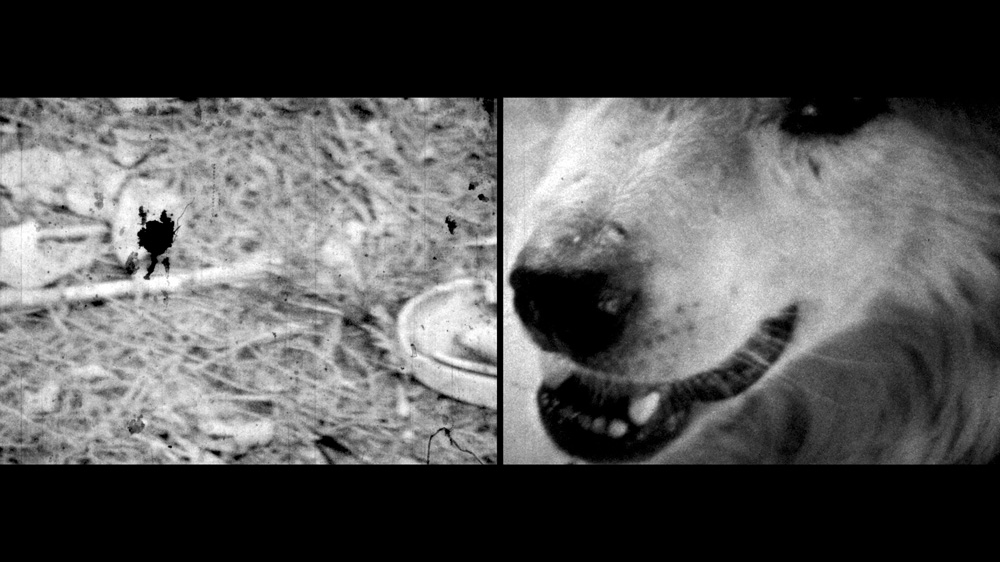
In the Skin of a Stray Dog Of dogs and men, black and white film material shot between 1992-1994 and edited twenty years later, depicting the decay of the urban environment after the collapse of Communism in Bucharest and the alternative living in Berlin after the fall of the Wall.
Dan Mihaltianu is a cross-media artist, born 1954 in Bucharest, Romania, based in Bucharest, Berlin and Bergen. His artistic approach is concern with social, political and trans cultural aspects related to the permanent changes occuring in our society, by developing long term process-oriented-projects, among others: Field Archive (1979-1989), Nature of Light (1980-1989), Official History / Personal History (1984-1994), Liquid Matter (1993-2014), Divided Files (2001-2014), Plaques tournantes (2004-20014), Celluloids (1992-2014). Since the 1980s his work has been exhibited internationally in various art events, biennials,, museums, art centres and galleries from Europe, Asia, North and South America.

Mikomikona
Mikomikona Live
Performance | 0 | | 30:0 | Allemagne | 2007
Mikomikona explore de manière expérimentale la capacité de transformation dynamique du son en image, de l'image en son et les effets de rencontre sur l'interface médiatique. Nous développons des dispositifs qui nous permettent de connecter et de transformer des signaux visuels en signaux acoustiques et vice versa. Nous explorons ces dispositifs au sein de différents contextes audio-visuels créant un environnement synesthésique. Les modules de performance qui en résultent partagent tous l'idée d'un nouveau codage symbolique de l'information médiatique et sont aussi utilisés pour faire du Vjing. Pour réaliser ces performances, nous travaillons avec des outils analogiques tels les rétroprojecteurs, les projecteurs de film super-8, les projecteurs vidéo utilisés comme dispositifs visuels et sonores. Mikomikona utilise la simultanéité et la vitesse des circuits électroniques analogiques. Notre intérêt s'inscrit plus à l'intérieur du champ des synthétiseurs (soumis à des modulations), que dans le paradigme des séquenceurs (sériels, chronométrés et programmés comme dans les environements digitaux). L'approche théorique : le bruit de la transformation En transformant l'information dans différents formats de médias nous recevons le bruit de la transformation -bruit parasite- qui reflète lui-même notre utilisation instable de la technologie des médias. Le bruit de la transformation est un moyen apte à révéler la structure même du média. En termes de performances acoustico-visuelles, Mikomikona explore la capacité de transformation dynamique des images techniques en son et vice versa. Ainsi les détours synesthésiques sont compressés et le contenu médiatique est codé de manière nouvelle. L'expérience de l'ordinnateur rend transparente l'échangeabilité du code : l'utilisation d'un codage binaire pour représenter image, texte et son. Le code binaire semble être la référence omnipotente au sein de laquelle presque tout contenu peut être sauvegardé et reproduit.

Tihomir Milovac
Zagreb Contemporary Art Museum
0 | 0 | | 0:0 | Croatie | 2007
Le Musée d'Art Contemporain à Zagreb a été fondé en 1954 comme la City Gallery of Contemporary Art, dans le souci de suivre, d'analyser et de promouvoir les événements, les styles, les phénomènes relatifs à l'art contemporain. A travers près d'un demi-siècle d'existence, le Musée_ selon son appellation admise_ a connu un certain nombre de changements : son appellation mais aussi l'espace disponible, le nombre de collections et leurs contenus. Cela dit ses principaux engagements sont restés les mêmes : présenter la création contemporaine dans des conditions favorables à la compréhension et à la jouissance de l'art croate et international et faire en sorte que l'échange entre l'expérience créative et herméneutique soit le plus dynamique possible. Des travaux d'artistes croates et d'artistes internationaux ont été exposés depuis, des travaux qui, du temps de leur création, étaient preuves de qualité, d'une volonté artistique et pertinente ou encore des travaux qui inauguraient un langage artistique différent. Les collections du Musée comprennent des accrochages qui montrent les débuts et le développement logique des tendances artistiques individuelles aussi bien que leur impact direct ou indirect sur la production qui leur a succédé dans le temps. Les collections incarnent à la fois la réalité de la production artistique croate en cette période spécifique de synchronie avec le développement de l'Art européen ou Art Global. La constitution de la collection du Musée commença immédiatement reprenant le principe de la City Contemporary Art Gallery en 1954. La majeure partie de la collection d'art contemporain du musée est composée de travaux d'auteurs croates ou étrangers créés après 1950 alors qu'une plus faible part date de la première partie du vingtième siècle, oeuvres dont la présence est nécessaire pour illustrer le concept de l'art et moderne et contemporain. Les collections du Musée Contemporain comprennent aujourd'hui 9000 oeuvres d'art moderne et contemporain qui devraient finalement être accessibles au public dans le nouveau Musée en construction. Après des tentatives multiples pour placer le musée dans un espace adapté, il a été décidé de créer un autre Musée dans la partie nouvellement construite de Zagreb. Un nouveau Musée s'érige dans la nouvelle ville de Zagreb, il est en construction depuis 2003. Le bâtiment occupe un espace total de 14500 mètres carrés dont 4800 sont prévus pour les expositions. Le volume divisé géométriquement en cinq étages devrait devenir un emblème de la ville dans un futur proche. www.msu.hr
Tihomir Milovac is a senior curator at the Museum of Contemporary Art in Zagreb, and is the head of the Experimental-Research Department at the Museum. As a curator and art critic he has curated many exhibitions and other visual arts projects in Croatia and abroad, most often engaged in new, contemporary phenomena in visual arts, especially new media, but also the phenomena of historical avant-garde. He had edited numerous publications and catalogues, and curated exhibitions like Kasimir Malevich, Retrospective, 1990; Ukrainian Avant-garde 1910?1930, 1990/91; Andres Serrano: Buapest/Morgue, 1996; Jan Fabre: Passage, 1997/98; The Future is Now ? Ukrainian Art in the Nineties, 1999?2000; The Baltic Times ? Contemporary Art from Latvia, Lithuania and Estonia, 2002; Misfits: Conceptual Strategies in Croatian Contemporary Art, 2002; Sanja Iveković: Women's House 1998-2002, 2002; System of Coordinate ? Russian Art Today, 2004; Zlatko Kopljar: Compassion +, 2005; Insert ? Retrospective of Croatian Video Art, 2005.
Dina Mimi
The Melancholy of this useless afternoon II
Film expérimental | mov | noir et blanc | 13:0 | Palestine | 2022
The Melancholy of this Useless Afternoon, chapter 2 (2023, 11:25) explore les gestes partagés entre le fugitif et le passeur, ainsi que leur rapport au regard porté sur eux. The Melancholy of this Useless Afternoon enquête sur les liens entre le fugitif et le passeur, leurs gestes communs et leurs relations à la visibilité. Par la fuite, l’évasion, au risque de la capture ou de la mort, le fugitif œuvre à se maintenir caché. Le passeur, quant à lui, se déplace avec discrétion, utilisant des gestes pour dissimuler des choses, souvent tout contre son propre corps.
Dina Mimi est une artiste visuelle et cinéaste palestinienne, basée entre la Palestine et les Pays-Bas. Mimi travaille à partir du film expérimental et de performances-conférences qui explorent la question de savoir comment et quand les corps deviennent des lieux de résistance. Cette question trouve une matérialité dans les images en mouvement, en particulier des images trouvées, rejetées et donc considérées comme dépourvues de valeur. En comprenant le montage comme un terrain de jeu, Mimi explore l’opacité dans les images en mouvement, en cherchant à frôler des fragments qui souhaitent rester insaisissables ou qui sont en train de disparaître. Cela constitue une tentative continue de narration non linéaire, comme une manière de défigurer la sienne.

Jaro Minne
Da-Dzma
Fiction expérimentale | hdv | couleur | 17:25 | Belgique | 2019
L'hiver dans un village géorgien. Une fille de 15 ans tente de se rapprocher de son frère avant qu'il ne quitte le pays dans l'espoir de trouver du travail.
Jaro Minne (b. 1992) is a Belgian writer/director who frequently works on the East-West crossover. He studied at KASK Ghent, Helsinki Film School before completing a master degree at LUCA School of Arts in Brussels in 2015. His work combines intimacy with distance, often exploring rootlessness and family dynamics.
Ariel Mioduser
Reality TV
Animation | dv | noir et blanc | 2:6 | Israel | 2006
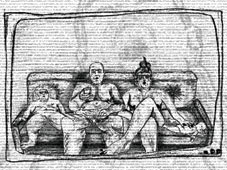
Comme le titre le suggère, "Reality TV" confronte le spectateur avec les faux concepts de la réalité donnés à voir par les médias. Ces médias qui déterminent à leur tour de faux concepts de réalité et définissent les comportements dans ce qu'on appelle la 'vraie vie'. Cette réalité supposée est représentée par des extraits de publicités et d'émissions télévisées ne montrant que les moments d'extase feinte, le tout hors-contexte. Par exemple, on peut voir une mannequin décrire avec emphase comment un certain shampoing a radicalement changé sa vie, ou une autre mannequin brandir une boite en carton (contenant des céréales? de la lessive? à vous de choisir) avec une expression de quasi-jouissance. Par opposition à ces séquences, on commence à distinguer, dans la pénombre, l'image d'une famille bourgeoise typique , assise devant le (ou bien à l'intérieur du) téléviseur : il s'agit bien de la seule image de "réelle réalité" ici. Mais que dire? Cette réalité de zombies en captivité, les yeux rivés sur les publicités, est bien moins excitante... Reste le bébé, le seul (pour l'heure) à manifester la moindre réaction. La structure du film soutient son message, aussi bien d'un point de vue visuel que musical : chaque extrait de publicité forme un module, qui peut être diffusé de manière aléatoire avant ou après n'importe quel autre module. Chacun de ces modules contient sa propre musique. Agencée de manière aléatoire, la séquence de ces modules résulte en un flux monotone de bruit blanc, entrecoupé de fragments extatiques.
Né à Buenos Aires, en Argentine, Ariel Mioduser vit à Jaffa, en Israël. Il obtient une licence à la 'Bezalel Academy of Art and Design' à Jérusalem, puis un mastère à l'université d'Alcala en Espagne. Il enseigne au département d'art numérique et au département de communication visuelle du 'Technology Education College' à Tel-Aviv en Israël. Après avoir travaillé pendant presque vingt ans dans le domaine commercial, Ariel Mioduser a commencé à travailler sur de mini-animations personnelles, à cheval entre animation et art. Le travail de Mioduser s'intéresse de près à des thèmes sociaux tels que la pauvreté et la culture de la pauvreté, les formes d'oppression basées sur l'appartenance ethnique ou sexuelle, la mondialisation et la protection de l'environnement. Dans un monde où l'image est utilisée pour manipuler, il 'crée' à l'intérieur de ce monde, tout en posant sur lui un regard critique.
Victor Missud
La forêt de l'espace
Doc. expérimental | hdv | couleur | 30:0 | France | 2019
Des hommes, envoyés sur la Lune pour la végétaliser, attendent l’arrivée des terriens. Au milieu de la forêt qu’ils ont fait grandir, ils racontent leurs souvenirs de leurs vies sur Terre et le monde dans lequel ils aimeraient pouvoir vivre. Mais qui sont ces hommes ? Sont-ils réels ? Ont-ils été oubliés ?
Originaire de Toulouse, Victor Missud se forme au cinéma à l’université Sorbonne Nouvelle de Paris et à la Escola Superior de Teatro e Cinema de Lisbonne, où il réalise des courts-métrages documentaires expérimentaux autoproduits. Son dernier film, À qui le monde (en production, coréalisé avec Marina Russo Villani), est lauréat de la bourse Brouillon d’un rêve documentaire de la SCAM, de la Résidence d?écriture de Saint-Quirin et du nouvel Accompagnement aux VFX du CNC.

Victor Missud, Marina Russo Villani
A qui le monde
Doc. expérimental | 4k | couleur | 45:0 | France | 2024
Au Bénin, les gens de l'eau, qui autrefois ont lutté contre la Colonisation, font face à la jacinthe d'eau, une plante colonisante qui se reproduit à une vitesse vertigineuse en étouffant le lac. Réalisme et imaginaire se mêlent alors, comme si l’un n’était compréhensible ou tolérable qu’en raison de l’autre.
Italienne et diplômée en Économie de l’Art à l’Université Bocconi, Marina Russo Villani s’est formée en cinéma et en scénario en France, à la Sorbonne Nouvelle et à Paris Nanterre. Scénariste et réalisatrice de fiction et de documentaire, elle co-signe avec "À qui le monde" une fable politique fantastique qui dresse un portrait fantasmé et ironique de la manière dont fonctionne le monde. En parallèle de son travail d'auteure, elle fonde en 2023 sa société de production, Filibusta. Le travail de Victor Missud s’intéresse de manière poétique à des personnes marginalisées d’un territoire et de la société, qui deviennent acteurs et actrices non-professionnel·le·s de ses œuvres. Mêlant documentaire, fiction et cinéma de genre, ses travaux ont été présentés et primés en France et à l’étranger - Visions du Réel, IFF Rotterdam, Hors Pistes - Centre Pompidou, Rencontres Internationales Paris/Berlin, Etats Généraux du Documentaire de Lussas. En 2024, il intègre le Fresnoy - Studio national des arts contemporains.

Magdalena Mitterhofer
Corte
Fiction expérimentale | 4k | couleur | 24:3 | Italie | 2024
Six millennials meet renowned writer Noel Riccardi at a former workers' holiday settlement in the Italian Alps. Intrigued by the younger generation, Noel invites them for an evening of food, drinks, and debate. But as political disagreements arise, a generational clash ensues, leading Noel to respond with a cowardly act of violence. The following morning, another friend of the group arrives and joins Maria, who has developed an affinity for the aging intellectual. Together, they pay him a visit.
Magdalena Mitterhofer (1994, Italy) is a director and artist living in Berlin. In her site-specific, narrative works, she explores the relationships between surrounding architectural, socio-political structures and their inhabitants. Magdalena received a Master's degree in Fine Arts from the class of Hito Steyerl at the University of the Arts Berlin and studied New Media at Tama University in Tokyo. 2021 she co-founded the nomadic performance project "lament.tv". Her work was shown, amongst others, at Volksbühne Berlin, Julia Stoschek Foundation, KW Institute for contemporary art Berlin, Tanzquartier Vienna.

Mochu
Groteskkbasiliskk! Mineral Mixtape
Vidéo expérimentale | mov | couleur | 26:0 | Inde, Allemagne | 2022
GROTESKKBASILISKK! MINERAL MIXTAPE looks at online subcultures premised on rapid technological acceleration and imperialist nostalgia, and their weird affinities with anti-rationalist ideas in the public sphere.
Mochu (b. India, 1983) works with video and text arranged as installations, lectures and publications. Techno-scientific fictions feature prominently in his practice, often overlapping with instances or figures drawn from art history and philosophy. Recent projects have explored cyberpunk nostalgia, corporate horror, mad geologies, psychedelic subcultures and Indian modernist painting. He is the author of the books Bezoar Delinqxenz (Edith-Russ-Haus / Sternberg Press, 2023), and Nervous Fossils: Syndromes of the Synthetic Nether (Reliable Copy / KNMA, 2022). His works have been exhibited at Edith-Russ-Haus für Medienkunst, Home Works Forum, 9th Asia Pacific Triennial, Sharjah Biennial 13, 4th Kochi-Muziris Biennale and transmediale:BWPWAP.
Matej Modrinjak
Upwards
Art vidéo | dv | couleur | 6:48 | Slovénie | 2005
Toujours vers le haut. Parfois il avance lentement, parfois il s'arrête. Mais jamais il ne déscend.
Je suis né en 1980 à Maribor, en Slovénie. En 1999, j?ai fini l?école de design et de photographie de Ljubljana comme photographe professionnel. Entre 1999 et 2002, j?ai travaillé pour SNG Monitor (le théâtre national Slovène) comme photographe de théâtre. Pendant l?été 2002, j?ai pris part au programme d?artiste en résidence Unidee, Cittadellarte-Fondazione Pistoletto à Bielle n Italie. En juin 2005, j?ai fini mes études en art et média numériques à l?Académie des Beaux Arts de Vienne avec un diplôme de Magister Artium. En novembre 2005, j?ai commencé le programme d?artiste en résidence au AIRantwerp Antwerpen en Belgique.
Lauren Moffatt
Image Technology Echoes
VR expérimental | 0 | couleur et n&b | 5:30 | Australie, Irlande | 2021
In the immersive experimental fiction Image Technology Echoes by Lauren Moffatt, we enter a quiet gallery inside a cavernous museum space. The gallery is empty, except for an older man and a younger woman. The pair are having a stilted conversation about the painting they are looking at: a large expressionist canvas depicting a stormy ocean. This odd exchange seems to circulate indefinitely… unless we step inside the body of one of the two figures and are transported to their mental space. Each interior is a messy room with its own life. In this place, the person’s doppelgänger homunculus is reciting their stream of consciousness that the artist generated with a neural network, and the painting appears very different from what we just saw in the gallery.
Lauren Moffatt is an Australian artist working between video, performance and immersive technologies. Her works, often presented in multiple forms, explore the paradoxical subjectivity of connected bodies and the friction at the frontiers between digital and organic life. Lauren's works usually take the form of speculative fictions and environments, which are conceived using a mixture of obsolete and pioneering technologies and often occupy both physical and virtual space. Lauren completed her studies at the College of Fine Arts (AU), Université Paris VIII (FR), and at Le Fresnoy Studio National des Arts Contemporains. Lauren's works have been screened and exhibited most recently at Le Centre Pompidou (FR), Le Grand Palais Éphémère (FR) Hartware MedienkunstVerein (DE) Palais de Tokyo (FR), Villa Medici (IT), UNSW Galleries (AU), Daegu Art Museum (KOR), Museum Dr. Guislain (BE), SAVVY Contemporary (DE), FACT Liverpool (UK) The Sundance Film Festival (US) ZKM (DE), Q21 Freiraum (AT) and at La Gaïté Lyrique (FR). She lives and works between Berlin (DE) and Valencia (ES).
Frédéric Moffet
Goddess of Speed
Vidéo expérimentale | 16mm | couleur et n&b | 8:0 | Canada, USA | 2023
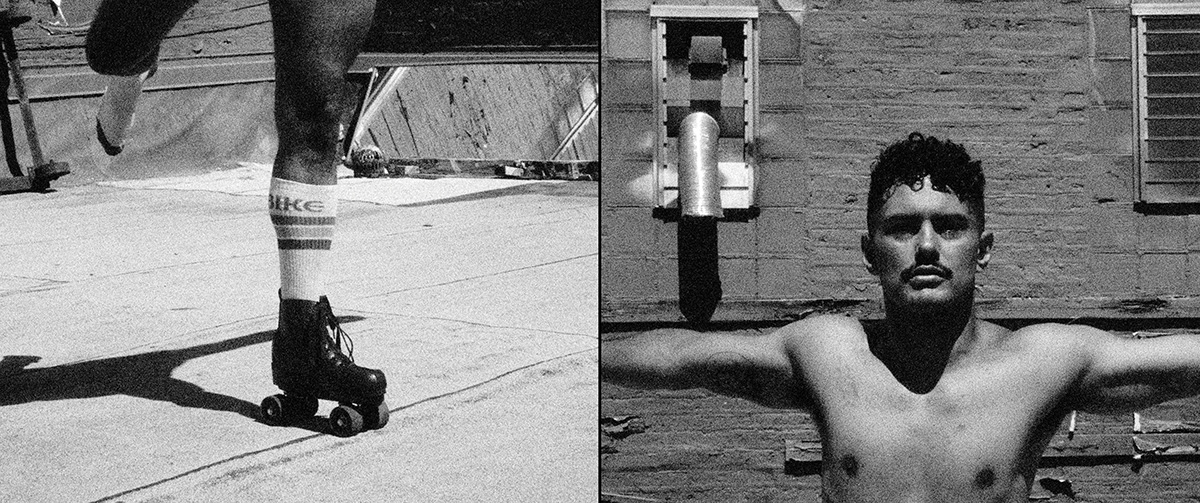
A film titled Dance Movie (aka Rollerskate) appears in many Warhol filmographies, but no work with this title can be found in the Collection. The lost film, starring dancer Fred Herko gliding on a single roller skate, was shot in 1963. Herko was a talented dancer and choreographer who cofounded and performed with the Judson Dance Theater. Herko was also associated with the Mole People, a group of queer men and women who came together to get high on speed and listen to opera. In October 1964, unhoused and strung out on drugs, Herko leapt out of an open window while dancing naked to Mozart’s Coronation Mass in C Major. Although the current location of Dance Movie is unknown, accounts of it do exist, including Warhol’s evocative description in POPism of Herko “gliding in dance attitudes and looking as perfect as the ornament on the hood of a car.” Goddess of Speed poetically reimagines the missing film.
Frédéric Moffet is a media artist, educator, video editor, and cultural worker. He lives in Montreal and Chicago. His work explores the slippery territory between history, lived experience and fantasy. His projects include: Horsey, Fever Freaks, The Magic Hedge, Adresse Permanente, The Faithful, POSTFACE, Jean Genet in Chicago and Hard Fat.
Avi Mograbi
Details 11, 12, 13
Vidéo | dv | couleur | 12:0 | Israël, Israel | 2009
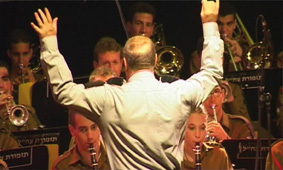
2 scenes shot in a car driving in the occupied territories. Israeli Human Rights journalists on their way to a story. In one scene they ask themselves if they should continue driving down the road because the locals say there is an Israeli tank shooting at whoever comes near it. In the second scene they detect the Istraeli military post where they were shot at from a few months earlier. In the third scene the IDF orchestra plays a happy march.
Avi Mograbi, filmmaker and video artist. He is the director of: Details 11-13 (2009), Z32 (2008), Mrs. Goldstein (2006), Avenge but one of my two eyes (2005), Detail (2004), August (2002), Wait, it?s the soldiers, I`ll hang up now (2002), At the back (2000), Will you please stop bothering me and my family (2000) Relief, (1999), Happy Birthday Mr. Mograbi (1999), How I learned to overcome my fear and love Arik Sharon (1997), The reconstruction (1994), Deportation (1989).
Naeem Mohaiemen
Abu Ammar is Coming
Vidéo | hdv | couleur et n&b | 6:0 | Bangladesh, Royaume-Uni | 2016
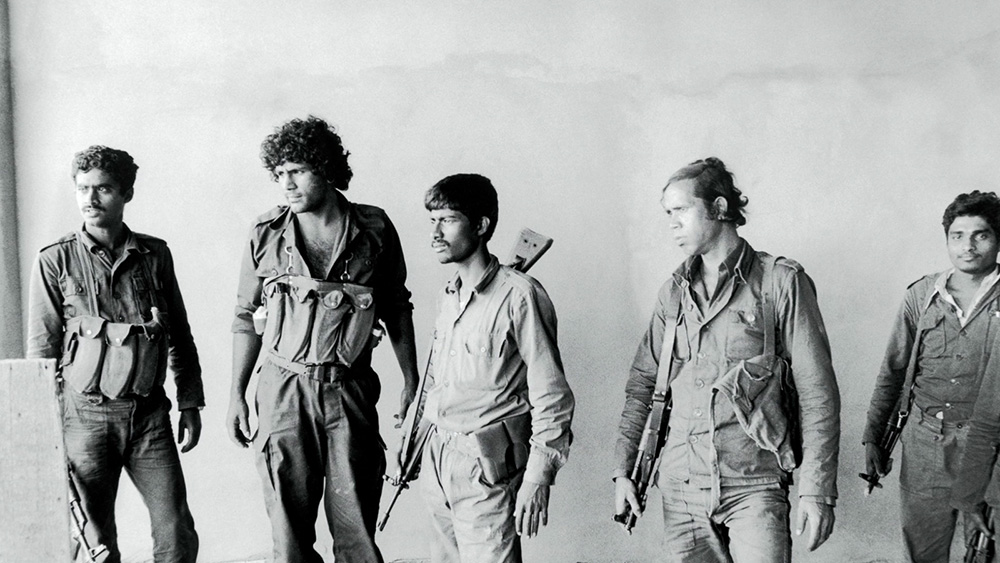
A photograph circulates, showing five men staring out of a window. Actually, only four look out; the last man breaks protocol and looks at the camera. The light has a soft glow. The stage is a bombed building. All five men wear military fatigues; the color must have been olive green.Snapped by a Magnum photographer in 1982, the image is a teasing enigma. Arabic newspapers claim it as evidence of Bangladeshi fighters in the PLO (Fatah faction). Go a little deeper into the memory hole and sediments will darken the third world international. Still, the light was beautiful. Abu Ammar is Coming continues The Young Man Was project’s exploration of the 1970s revolutionary left as a form of tragic utopia. Previous chapters have shown at the 2015 Venice Biennale, the Museum of Modern Art (New York), and the 2011 Sharjah Biennial.[Abu Ammar was the nom de guerre of Yasser Arafat. His Fatah faction of PLO fascinated Bangladesh JSD (National Socialist Party) leader Major Jalil, despite the sharper Marxist tendencies of the George Habash faction.] Picture credit: Volunteers from Bangladesh fighting with Palestinians, 1982 © Chris Steele-Perkins / Magnum Photos The Young Man Was project examines the failures of radical, armed leftist movements of the 1970s. The protagonists often display misrecognition, ending up as an “accidental trojan horse” carrying tragic results to the countries in question (from Japanese hijackers commandeering Dhaka airport for “solidarity,” to migrant labor pipelines transformed into PLO “volunteers”). In spite of its failures, Mohaiemen’s reading of the potential of international left solidarity is still, always, one of hope. The first part (United Red Army, 2011) reconstructs the 1977 hijacking of Japan Airlines Flight 472 through a series of crisply polite negotiation tapes. The second film (Afsan’s Long Day, 2014) addresses the misrecognition of Marxist ideologies from the perspective of a young historian (Afsan Chowdhury, whose diary entry gives the series its name), slaloming between Bangladesh’s summer of tigers, and the German Autumn associated with the Rote Armee Fraktion. The third film (Last Man in Dhaka Central, 2015) traces, in reverse, the journey of Peter Custers, a Dutch journalist jailed in Bangladesh in 1975, accused of belonging to an underground armed Maoist group. A more recent short film, Abu Ammar is Coming (2016), digs into the illusions of a press photograph of “PLO fighters” taken by Chris Steele-Perkins for Magnum. In the form of Peter Custers, who unfortunately passed away in 2015, many of the questions of The Young Man Was project take a personal form. What lies behind utopian hope, especially within the idea of socialism, against the weight of history and experience? What also of the men who survived those terrible times, unlike so many of their comrades, and now spend their waning days in solitary apartments, writing down memories? What was such a man then, and how does he remember himself today? Was he John Reed, recording the Russian Revolution, in the last free moment before the Thermidor? What does it mean to be a survivor and witness—the last man standing on the eve of another collapse, surveying the wreckage of the socialist dream in the middle of a horrific present that teeters on the cusp of the Anthropocene?
Naeem Mohaiemen is a writer and visual artist. Since 2006, he has worked on "The Young Man Was," a series of projects on the 1970s radical left. The first two films in this sequence are "United Red Army" (2012), which premiered at Sharjah Biennial, IDFA, and Hot Docs, and "Afsan`s Long Day" (2014), which premiered at MoMA, New York, and Oberhausen. He is researching the third installment, "Last Man In Dhaka Central" (2015). The project has been supported by grants from Creative Capital, Creative Time, Franklin Furnace, Rhizome, Puffin Foundation, and Arts Network Asia. He is a 2014 Guggenheim Fellow. The works are also in private collections, as well as the permanent collection of the Tate Modern and the British Museum.
Maria Mohr
Cousin cousine
Doc. expérimental | super8 | couleur et n&b | 19:32 | Allemagne | 2005
Cousin et cousine, un espace sans paroles. Une voix au piano. Au bout des doigts, le sens. Un pont, trop haut. Cousin Cousine est un film personnel entre témoignage et poésie. Sur un amour impossible.
Maria Mohr est née en 1974 à Mainz, en Rhénanie. Elle a étudié le français et l'architecture à Paris et à Darmstadt. Depuis 1998 Maria Mohr vit à Berlin. Elle a contribué à divers projets indépendants de théâtre et de danse et a travaillé en parallèle dans le domaine du cinéma, de la vidéo et de la photographie. De 2002 à 2005 elle étudie le film expérimental à l'université des arts de Berlin. Son film de fin d'études "Cousin Cousine" est présenté depuis dans des festivals nationaux et internationaux et a remporté de nombreux prix, dont le prix du court-métrage allemand en 2005. Actuellement Maria Mohr travaille sur un film documentaire long.
Thomas Mohr
Impact-9.2
Vidéo | hdv | couleur et n&b | 10:44 | Pays-Bas | 2016
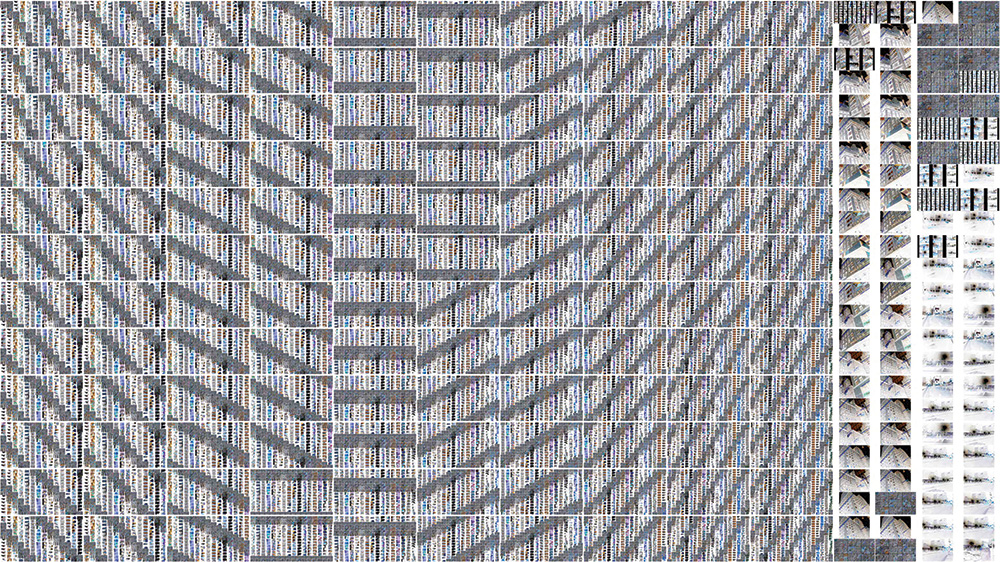
After a moment of brightness, a memory unit containing 59.049 images is explored from the totality to its individual images, creating connections on various levels in various directions in a shifting dynamic system. Beginning with a sudden and rough recall of memories the information merges with increasing compression in several cycles and repetitive feedback to transform in an almost ad infinitum expanding time space topology of intense subtlety. The visual composition is inverted and disrupted several times by visual blanks of bright white. The original images were taken handheld in 2002/3 when the experience of 9/11 still was present. The composition is made frame by frame using “contact sheets” (6, 5 fps). The integration of the outdated format SD in the more contemporary HD leaves empty space in the memory levels and in the processing levels. The memory unit used in this video is the second out of nine units, which will become one total memory at a later stage covering 30 years from 1985 to 2015. The music composed by Michael Bonaventure (organ sounds) and René Baptist Huysmans (electronic sounds) is inspired by the poem “The Comet at Yalbury” by Thomas Hardy ?
Born in Mainz, Living and working in Amsterdam. Since the late 1980ties systematically exploring processes of perception and experience in installations and "films" referring inter alia to conceptual and minimal art, to the history of early cinematography , the transformation of information, the evolution of (new) media. Working with computer-generated processes combined with manual execution based on a growing photo archive containing at this moment more then 500000 pictures taken from 1985 regarding important moments of modern history as to major and minor personal events.
Thomas Mohr
St. Marien
Vidéo expérimentale | mov | couleur | 10:58 | Pays-Bas, Allemagne | 2023
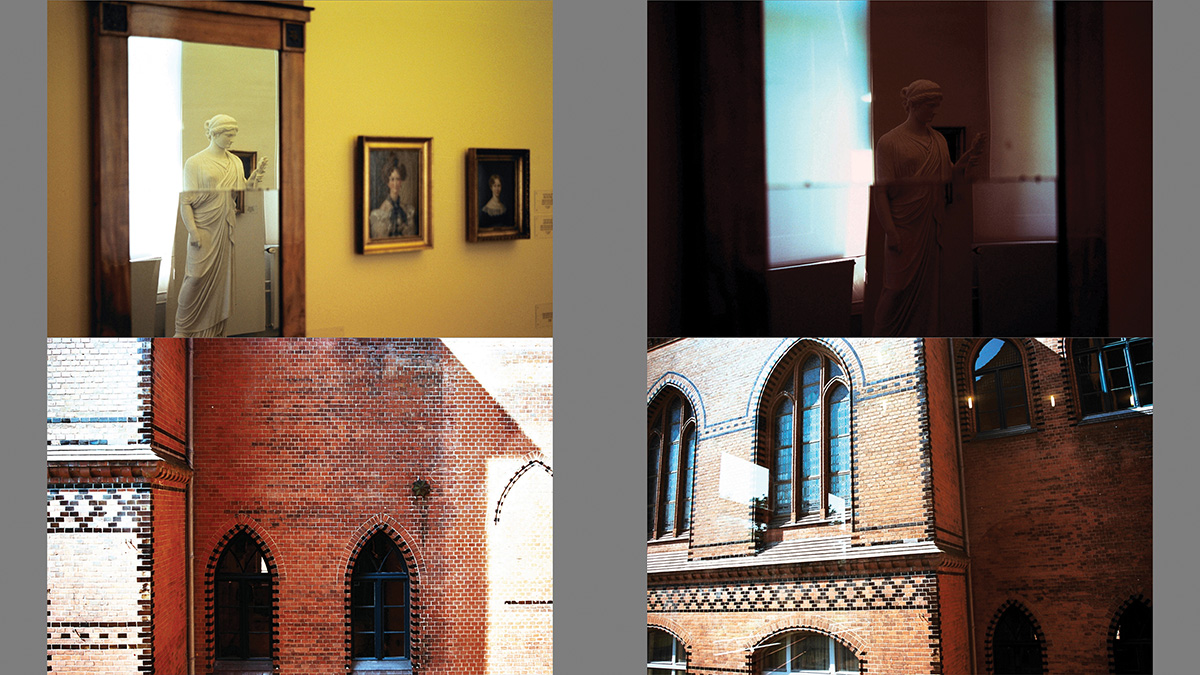
What role does childhood play in developing experience? How are personal present and past connected in the process of aging? The longing for the places of the personal past was the reason for a trip to Flensburg in 2001 a few weeks before 9/11. More than 2000 photos were taken in just a few days. It was only many years later that the negatives were digitized and it was only more than 20 years later that the need to process these recordings into a composition arose. The turbulent German-Danish history on both sides of today's border and the places of childhood come together in a whole where the past merges into one experience in the now. 3636 images are processed frame by frame in the first 3 movements. Each movement is containing 24 sequences of stills. The amount of images in the stills increases from 4 to 625 images simultaneously. After the first 3 movements the process is repeated towards the infinite to end in structures similar to the layers one would find in rock formations.
Thomas Mohr is exploring processes of perception and memory systematically in performance, painting, video, installations. From 1985 onwards a growing archive containing more then 600000 pictures regarding a wide range of events of transition from a collective meaning to very personal moments. Distributed by LIMA. Sreenings at various festivals since 2009: IFFR/Rotterdam, JMAF/Tokio, Ars Electronica, Transmediale Berlin, IFF Japan, NeMaf/Seoul, IKFF/Hamburg, Jihlava IDFF, HAFF/Utrecht, Media Art Biennale Wro, Rencontres Paris/Berlin, EMAF, Atonal Berlin, Projects with music at Stedelijk Museum, Orgelpark Amsterdam, Edith Russ Haus Oldenburg, CCAM / Scène Nationale de Vandœuvre. Michael Bonaventure , based in Edinburgh & Amsterdam, is composer, organist and collaborator in new and experimental music projects; Extended cyclic works predominate in his output including huge body of electronic and electro-acoustic pieces as well as instrumental and organ music. From a sonic universe deriving its inspiration from mysticism and ritual, natural and imaginary worlds, astronomical and supernatural phenomena.

Thomas Mohr
Matters of Time
Vidéo | hdv | couleur | 12:35 | Pays-Bas | 2019
From Berlin to Hiroshima, from Hiroshima to Berlin. From Past to Now, from Now to Past. Connecting events, remembering the suffering of war and new beginnings. Observations. 7 identical defined time units each containing a series of 24 progressing intervals of shifting box systems descending from 25x25=625 to 2x2=4 images. The construction of each unit is exactly the same, the content of each unit is entirely individual. Walking through a winter night in Berlin, going from Miyajima island to Hiroshima, the experience of My Facebook Timeline Having devastating destruction in mind and reconstruction. Straight forward, up side down, rotating. Positive, negative. Complex layers, more complex layers. Text, subtext.
Biografy: Moving, changing, transformation, experience. Exploring processes of perception and memory systematically since the late 1980ties. From 1985 onwards a growing archive containing more then 500000 pictures and thousands screenshots regarding a wide range of events of transition from a collective meaning to very personal moments. Living and working in Amsterdam. Distributed by LIMA. Sreenings at various festivals since 2009: IFFR/Rotterdam, JMAF/Tokio, Ars Electronica/LInz, Transmediale Berlin, IFF Japan, NeMaf/Seoul, IKFF/Hamburg, Jihlava IDFF, HAFF/Utrecht, Media Art Biennale Wro, Rencontres Paris/Berlin, EMAF, Atonal Berlin

Thomas Mohr
Zu Hanne Darboven
Vidéo | hdv | couleur | 8:27 | Pays-Bas | 2014
Is it possible to understand the work of the artist and composer Hanne Darboven (1941 - 2009) famous for her large scale installation containing thousands of drawings and notes? The project Zu / On Hanne Darboven is an exploration of herless known music in relation to her visual oeuvre. Abschliessend (In conclusion) is based on 1853 pictures handheld taken- as meticolous as possible - very close to the details of the works in the last space of the exhibition “The order of time and things. The home studio of Hanne Darboven” organised by the Museo Nacional Centro de Arte Reina Sofía and the Deichtorhallen Hamburg - Sammlung Falckenberg in collaboration with the Hanne Darboven. The music is the last part of Hanne Darbovens Requiem recorded in eleven volumes. The pictures are processed in still compositions frame by frame in a series of cycles increasingly compressing the original information.
Living and working in Amsterdam. Since the late 1980ties systematically exploring processes of perception and experience in installations and "films" referring inter alia to conceptual and minimal art, to the history of early cinematography , the transformation of information, the evolution of (new) media. Working with computer-generated processes combined with manual execution based on a growing photo archive containing at this moment more then 500000 pictures regarding major and minor personal and historic events. Main themes recently the reverberation of historic incidents and and the intertwined relations of culture. Thomas Mohr’s particular way of composing films since 2008 begins with smallest elements - taking single images. This material is processed in repetitive steps to higly compressed structures where the visual properties are almost dissolved. Since 2010 works specifically related to the body of work of Hanne Darboven. Now working on constructing an episodic memory covering the information of 30 years (1985-2015).