Catalogue > List by artist
Browse the entire list of Rencontre Internationales artists since 2004. Use the alphabetical filter to refine your search. update in progress
Catherine Dalfin
Catalogue : 2011L'âge du Bronze | Experimental doc. | dv | color | 6:20 | France | 2009
Catherine Dalfin
L'âge du Bronze
Experimental doc. | dv | color | 6:20 | France | 2009
Sur une petite île au large de la Baltique, une idylle douce-amère entre l?homme qui tente de se faire une place et la nature qui n`en a cure.
"Dans le désordre, Catherine Dalfin a fait des études de lettres et d'histoire de l'art, s'est glissée à la radio pendant un certain temps, a croisé la route d'un collectif d'artistes, a été critique d'art pensant que ça valait la peine, a cru pouvoir participer à la création d'une revue et a finalement persévéré dans la vie après avoir touché une caméra." (Catherine Dalfin, juin 2009).
Charlotte Dalia
Catalogue : 2026Speechloss | Experimental film | 4K | color | 15:0 | France | 2023
Charlotte Dalia
Speechloss
Experimental film | 4K | color | 15:0 | France | 2023
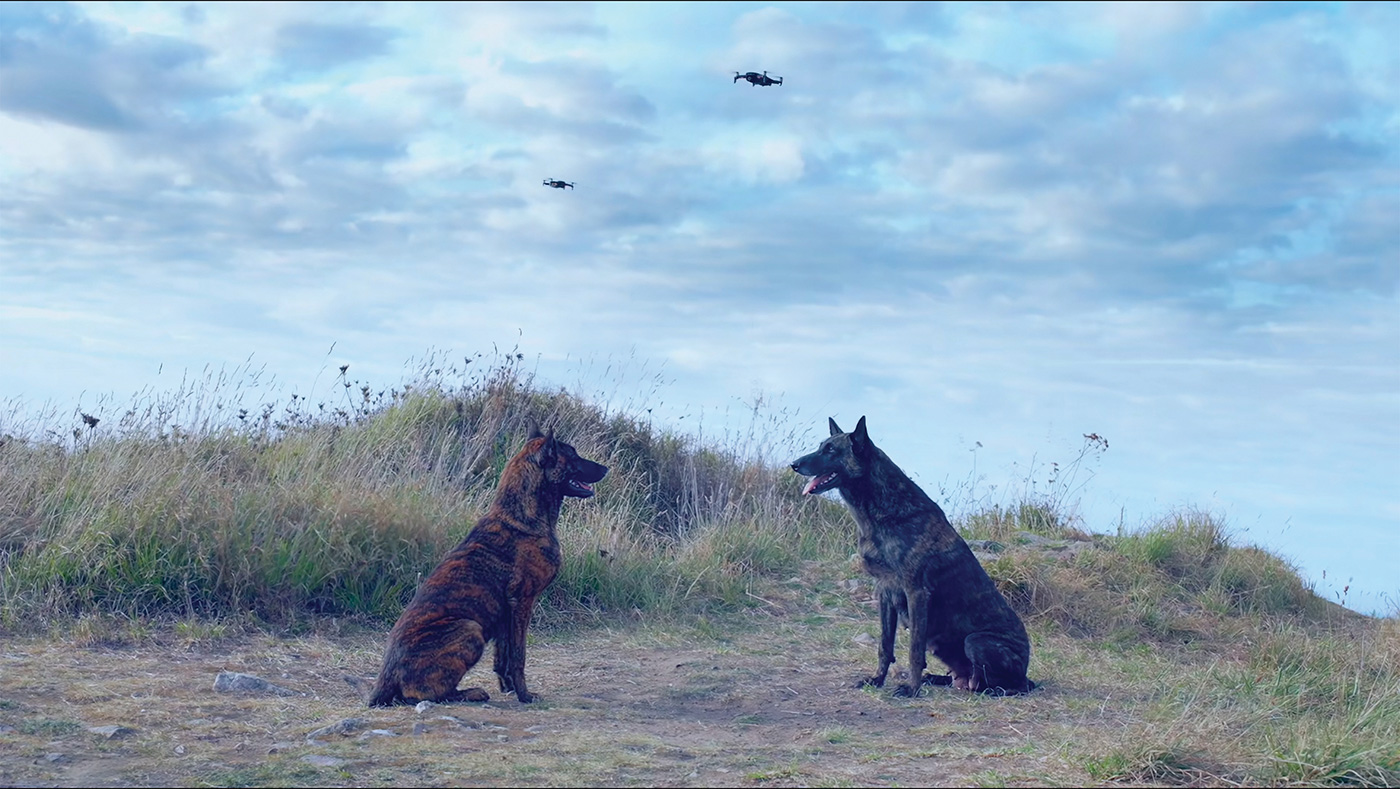
SPEECHLOSS is a film inhabited by isolated characters, out of sync and searching for direction. In an eerie seaside atmosphere, we come across a jogger, a bodybuilder, dogs and a strange giant organ. Speechloss is a progression of four scenes in which both the wind and a powerful desire to feel alive blow. For each of them is an abandoned AI, waiting to be activated.
Charlotte Dalia was born in 1993. She graduated from the Institut Supérieur des Arts de Toulouse. A visual artist, video maker and film director, her research focuses on both the formal and narrative effects of cinema. Steeped in the principle of the “cinémonde” theorised by Jean-Luc Nancy, she uses cinema as a repertoire of signs that “opens the inside onto itself.” She has taken part in numerous group exhibitions and has been invited to produce two solo shows. Continuing her investigations into the writings of reality through the forms of fiction, she trained in documentary writing with Ty Films and Films en Bretagne. She is currently developing ALMERICA, a project combining climate crisis and film sets, as well as writing a medium-length film following on from SPEECHLOSS, in order to pursue and expand its universe.
Walwin Dan
Catalogue : 2012Second Unit | Experimental video | hdcam | color | 9:0 | Netherlands, United Kingdom | 2010
Walwin Dan
Second Unit
Experimental video | hdcam | color | 9:0 | Netherlands, United Kingdom | 2010
The title refers both to a fictional unit of soldiers and their role in detaining the men standing on the stones in the field, and also to the role of a team in commercial film production to the role of shooting material without the requirement of the main cast and crew. The presence of the camera in observing events, and the characters awareness of it, in front of and behind the camera, lends the video a functional aesthetic that suggests it is made for tactical or intelligence purposes, but is made complicated by the soundtrack, where all the extraneous sounds of the surroundings are audible apart from the dialogue, which further obscures its reading.
Dan Walwin studied Fine Art at Goldsmiths College, London, and begins a residency at the Rijksakademie van Beeldende Kunsten, Amsterdam in 2012. Recent presentations include European Media Art Festival, Osnabruck in 2011, Rencontres Internationales in 2010/11 and Festarte Video Art Festival (Museum of Contemporary Art, Rome) in 2010. A solo exhibition of his, tele-, begins in November 2011 at ZAAL5, Filmhuis Den Haag, Netherlands. More information can be found at www.danwalwin.co.uk
Catalogue : 2011Water is a burned body | Video | dv | color | 11:45 | Netherlands, United Kingdom | 2009
Walwin Dan
Water is a burned body
Video | dv | color | 11:45 | Netherlands, United Kingdom | 2009
Water is a burned body is an attempt to evoke a dystopia by economic means. A couple wake to find a boat colliding with wall of the flooded house they are in. The man goes to investigate, only to find the body of a woman, which he discards into the water. They set off in the boat into the open water, coming across an obstruction that puts an end to their attempts.
Dan Walwin is an artist working primarily in video, having studied Fine Art at Goldsmiths College, London, graduating in 2007. Recent shows include For the sake of the image at Jerwood Space, London, 2010, Verena Klary, Iwan van`t Spijker, Dan Walwin at Walden Affairs, The Hague, 2009, and Nature Untouched at Tou Vindu, Stavanger, 2007.
Levy Dana
Catalogue : 2016Eden Without Eve | Documentary | hdv | color | 5:2 | Israel, USA | 2014
Levy Dana
Eden Without Eve
Documentary | hdv | color | 5:2 | Israel, USA | 2014
A short documentary about life in the Everglades National Park’s with it’s few residents. Living in the midst of a national park, they learn to exist with the the wild. As a woman filmmaker I observe these men almost like an anthropologist, observing how they interact with their surroundings. The only women that appear in the film are as still images in Lucky`s photographs, . He believes that women like having themselves put in a romantic, exotic, dangerous setting to be photographed.
Dana Levy was born in Tel Aviv and Lives and works in New York. She completed her Post graduate in Electronic Imaging at the Duncan of Jordanston College of Art Dundee University, Scotland, and holds a BA from Camberwell Art College London Awards include 2013 Beatrice Kolliner Young Artist Award from the Israel Museum, 2010 Dumbo Arts Festival best studio award, 2008 Young Israeli Artist Award, 2006 Hamburg Short Film festival jury award. Solo shows include at The Israel Museum, CCA Tel Aviv, Nicelle Beauchene Gallery New York . Her work has been screened at Tate London, Tribeca Film Festival,Oberhausen Film Festival and more. group shows include at the Biennial of Contemporary Art of Cartagena 2013, Bass Museum, Miami, Florida, Invisible Exports Gallery NYC , MOCA Cleveland, EVA International Bienniel , Israel Museum Jerusalem, Harn Museum of Art ,OK Contemporary Art, Linz Au and more Artist Residencies include AIRIE Everglades National Park, Wave Hill Workspace residency New, LMCC Workspace NYC, Le Havre/ New York. Regards croisés Art Omi NY, I-park, Connecticut, Triangle Arts Association NY and more
Sharon Daniel
Catalogue : 2025Reasonable Doubt(s) | Experimental doc. | 4k | color and b&w | 71:0 | USA | 2024
Sharon Daniel
Reasonable Doubt(s)
Experimental doc. | 4k | color and b&w | 71:0 | USA | 2024
Reasonable Doubt(s) is a multi-part, multi-media examination of the role of police and prosecutorial misconduct in the wrongful convictions of Black people focused on the relation between race, place, identity, and systemic injustice in the US criminal legal system. Reasonable Doubt(s): Chapter One “Central Valley,” is an immersive, three-channel video installation documenting the history of official misconduct that led to the wrongful conviction of Timothy James Young, an innocent, Black, death row prisoner currently incarcerated in California’s Pelican Bay State Prison. Young’s death penalty conviction in predominantly white Tulare County, California, depended on police misconduct (including suborning the false testimony of a jailhouse informant, witness intimidation, and evidence tampering), prosecutorial misconduct (withholding exculpatory evidence and racially biased jury selection), judicial abuse of discretion, and false or misleading interpretation of forensic evidence. The 40,000-page case file and over 12,000-page transcript of Young’s trial, provide a startling account of a ten-year-long investigation and prosecution riddled with racist abuses. Reasonable Doubt(s): Chapter One “Central Valley,” delves deeply into this massive set of documents to investigate the investigation and trial, interlacing archival media based on transcripts, case files, and forensic evidence, newly recorded and performed ‘readings’ of transcripts and reports and original interviews with legal experts and case participants. Set in the Central Valley of California, Reasonable Doubt(s): Chapter One also draws a connection between the history of Black migration from the Jim Crow South to the area in the 1930s and 40s, the rise of mass incarceration and the prison building boom in California’s agricultural communities in the 1980s and 90’s, and their disproportionate rates of arrest, conviction, and imprisonment of people from their relatively small and marginalized Black communities. The video installation introduces a media-rich digital archive in which Young’s case history provides a narrative through-line linking stories of official misconduct and racial bias in the cases of five other wrongfully incarcerated Black men from southwestern Ohio and Chester, PA. These Black men, like thousands of others, have been wrongfully imprisoned because of who they are and where they were from - because they lived within a history of racism and economic struggle in which place, race, poverty, and gender predetermine their encounters with police and courts. The correspondences drawn between their case narratives in Reasonable Doubt(s) demonstrate how racism, corruption, official impunity, and indifference to innocence undermine the credibility of the criminal legal system in the United States.
Sharon Daniel is a media artist and scholar who creates interactive and participatory documentary artworks, builds digital archives and writes essays addressing issues of social, racial and environmental injustice, with a particular focus on mass incarceration and the criminal legal system. Her documentary-based art works have been exhibited in museums and festivals internationally such as CPH:DOX, Copenhagen (April-May 2021), in Electronic Literature Organization’s COVID E-Lit exhibition, Bergen, Norway (April 2021), in Barring Freedom, San Jose Museum of Art, San Jose, CA (Oct – May 2021), in the Museum of Capitalism, Anna-Maria and Stephen Kellen Gallery, Sheila C. Johnson Design Center, Parsons School of Design, NYC, NY (Oct – Dec 2019) in a solo exhibition Secret Injustices, at the Schmidt Center (US, FL, 2017), as an official selection in the Alternate Realities exhibition at Sheffield Doc|Fest (UK, 2016), and in a solo exhibition titled Convictions at STUK Kunstencentrum, (Belgium, 2013). Daniel’s works have also been shown in museums and festivals such as WRO media art biennial 2011 (Poland), Artefact 2010 (Belgium), Transmediale 08 (Germany), the Dutch Electronic Arts Festival DEAF03 (Netherlands), Ars Electronica (Austria), the Lincoln Center Festival (NY/USA), the Corcoran Biennial (Washington DC) and the University of Paris I (France). Her essays have been published in books, including Female Authorship and the Documentary Image (Oxford University Press, in press), Context Providers (Intellect Press 2011), Database Aesthetics (Minnesota University Press 2007) and the Sarai Reader05, as well as in professional journals such as ASAP, Cinema Journal, Leonardo, Studies in Documentary Film and Springerin. Her writings and projects have also been published in online journals such as Stretch, Thresholds and Vectors. Daniel was honored by the Webby Awards in 2008 and the Rockefeller/Tribeca Film Festival New Media Fellowship in 2009. In 2015-16 She was named in the Yerba Buena Center for the Arts “YBCA 100” – a list of “the creative minds, makers, and pioneers that are asking the questions and making the provocations that will shape the future of American culture”. She was a 2017 Fulbright Scholar at Ulster University in Art, Design and the Built Environment. Daniel was recently awarded a 2023-24 Guggenheim Fellowship in Fine Arts.
Daniel & Clara
Catalogue : 2020Notes from a Journey | Experimental fiction | hdv | color | 72:30 | United Kingdom | 2019
Daniel & Clara
Notes from a Journey
Experimental fiction | hdv | color | 72:30 | United Kingdom | 2019
"Notes From A Journey" uses images and sound captured whilst on a journey through the British landscape as the material for an exploration of the acts of looking/seeing listening/hearing. More than simply mapping a journey across the country, this film presents a map of the filmmakers' engagement with the images of the landscape. By reducing them to impressions, fragments, fictions and forms, the recorded images/sounds are transformed into “artefacts” which, when presented in the sequence of a film, activate narratives, ideas and sensations in the viewer. Central to the film are scenes shot at the Neolithic mound and stone circle of Avebury, motifs that speak of the long and complex relationship humans have to their environment and how through art and ritual we seek to understand our place in relation to it. Ultimately this film is a journey in itself – a first person encounter with the limits of perception, it exists in a place where both the recording device and the human senses are tested.
Daniel & Clara, two humans one artist on a journey of exploration of dimensions real and imagined, the results of which consist of moving image, photography and performance. In their current work they have been exploring the British landscape as a site for encounters with the mysterious, the eerie, the otherworldly and the unknown. As they say, “we seek to see with one eye open and one eye closed, sight turned simultaneously out towards the world and inward to the depths of the human experience.” In their work, images and sounds of the landscape become activators of narratives where past, present and the imagination intermingle. Their work has been exhibited and screened internationally at galleries and film festivals including Whitechapel Gallery, Kettle’s Yard, Fabrica Gallery, Close-up Cinema, BFI, Alchemy Film & Moving Image Festival, Doclisboa, Microcinema Artist Moving Image, Museu de Arte Moderna Rio de Janeiro, Black Box Farnham, Film Mutations Zagreb. In 2019 they launched Moving Image Artists (MIA), an organisation dedicated to supporting and cultivating contemporary moving image art and experimental film. This includes an online magazine, screenings and the Moving Image Salon, a monthly gathering for artists to meet, share and discuss their work. The Moving Image Salon takes place at Film and Video Umbrella, London. Several of their films are distributed online by Tao Films and Kinoscope. Films by Daniel & Clara are also included in the BFI National Archive.
Chris Paul Daniels
Catalogue : 2019Northern Lights | Experimental video | super8 | color and b&w | 13:44 | United Kingdom | 2018
Chris Paul Daniels
Northern Lights
Experimental video | super8 | color and b&w | 13:44 | United Kingdom | 2018
An inquisitive voice from the far future, or "visitor from another place", interrogates the traditions and artefacts of the Blackpool Illuminations, the annual light festival first established in 1879. The disembodied voice seeks to understand, but often confuses, Northern English vernacular and traditions against the current shifting political dialogue surrounding Britain's future; misunderstanding Blackpool's unique fantastical imagery as totemic remnants of a former era. Daniels presents his own contemporary 16mm and super-8 film observations as a found archive, and a script littered with word-play related to the local landscape and other seaside end-of-the-pier resorts. Co-comissioned by Grundy Art Gallery and ICA Art and Screen Network.
Chris Paul Daniels is an Artist and Filmmaker, based in Manchester. His work is characterised by experimental documentation of communal perspectives and memories regarding geographical location .He graduated from the Royal College of Art in 2010 and co-won the Deutsche Bank Award for Art with Maria Anastassiou for Unravel, the longest hand painted ?lm in Britain. This project resulted in one hundred public events across the UK including Tate Britain, BFI Southbank, Turner Contemporary and IKON Gallery. In December 2016, Unravel undertook a residency at the Whitney Museum of American Art in New York. His recent commissions include `SAFE` at HOME in Manchester, "A Tigers Skin" at CFCCA, and "One Square Mile" for Quays Culture (with Sam Meech). Screenings include the ICA, Hong Kong Arts Centre, Maxxi, Winnipeg Underground Film Festival and Flatpack Film Festival. His most recent film "Northern Lights" is a co-commission between ICA Art and Screen Network and Grundy Art Gallery. Chris is a Lecturer at Manchester School of Art.
Jérémie Danon
Catalogue : 2021Plein Air | Experimental doc. | hdv | color | 26:30 | France | 2020
Jérémie Danon
Plein Air
Experimental doc. | hdv | color | 26:30 | France | 2020
Surrounded by landscapes extracted from video games, people in rehabilitation testify. In front of the camera, they talk about their hopes, doubts and difficulties since leaving prison.
Aurélie Darbouret, Jeff Silva
Ariani Darmawan
Catalogue : 2007A City of Desire | Fiction | dv | color | 4:0 | Indonesia | 2006

Ariani Darmawan
A City of Desire
Fiction | dv | color | 4:0 | Indonesia | 2006
An interpretation of Italo Calvino's Zobeide: a tale of a city where the inhabitants constantly build their places upon their dreams... which never come true. Calvino names it 'an ugly city', we call it 'a reality'.
Ariani Darmawan is a video artist/filmmaker who lives and works in Bandung, Indonesia. She studied Fine Arts at the School of the Art Institute of Chicago after finishing her bachelor degree in Architecture at the Parahyangan Catholic University in her hometown. Most of her works comment on power/identity and language along with its construction of meanings, where she constantly erases and re-draws the lines of actuality. Ariani has participated in numerous film festivals and art exhibitions in North America, Europe, Australia, and Asia. She recently finished her short film called "The Anniversaries" after receiving a special mention at the Jakarta International Film Festival Script Competition.
Kenan Darwich
Catalogue : 2006Do the Bambi | Animation | dv | color | 2:15 | Syria, Germany | 2005
Kenan Darwich
Do the Bambi
Animation | dv | color | 2:15 | Syria, Germany | 2005
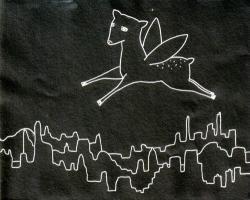
"Do the Bambi" est une vidéo musicale expérimentale sur la chanson du groupe Stereo Total. Le film se compose de 2000 images individuelles, dessinées à la main, et relie ainsi des ambiances au visuel poétisé en se basant sur une ancienne technique de dessin animé et en utilisant les nouveaux médias.
Kenan Darwich est né en 1982 à Damas, Syrie. Il vit depuis 2001 à Hambourg. En 2003 il commence ses études à la Kunsthochschule de Kiel, section design de la communication.
Adheep Das
Catalogue : 2025Half-Portrait of Dadu | Experimental film | hdv | color | 5:15 | India | 2023
Adheep Das
Half-Portrait of Dadu
Experimental film | hdv | color | 5:15 | India | 2023
Like many people in their later years, my grandfather had a set of oft-repeated stories. Towards the last few months of his life, a brand new person,'Chetan' started populating his life. This poem-film is an attempt to understand the feeling.
Adheep Das likes mixing various mediums and finding out what comes of them. Fascinated by science and arts alike, his interests take him to places that merge the two. As part of a 3 person collective, he got the ThinkArts Grant for Children in 2022. 'Moonless', a film he directed and animated, has competed at DokLeipzig and Dharamshala Intl. Film Festival, amongst others. His documentary 'Khaalti Kaay Varti Kaay' competed at IDSSFK, Kerala. Some of his work has also been exhibited as part of the Kochi-Muziris Students' Biennale and the Wrong Biennale. He has worked on a live shadow puppetry production called ‘Zig Zags to Earth’, and has performed at venues such as Max Muller Bhawan, Delhi, and Kiran Nadar Museum of Arts, Delhi. He has also been part of the Serendipity Arts Foundation Residency 2024.
Bhaskar Jyoti Das, Waribam Dorendra
Catalogue : 2020I Don't Want to Be Born Again for Poem | Experimental doc. | hdv | color | 22:0 | India | 2019
Bhaskar Jyoti Das, Waribam Dorendra
I Don't Want to Be Born Again for Poem
Experimental doc. | hdv | color | 22:0 | India | 2019
During 1970’s and 80’s there were many revolutionary uprising happening, near and far, all around the world. In this period, amidst this protest and revolutionary uprising, a poet symbolically expresses his feelings to capture the complexity of human existence. Constant financial pressure in his family life is also evident in his words. At one point, words become distorted and absurd. One evening, the poet, Abani Chakravarty disappears and left many confusions.
we are two Directors 1. Bhaskar Jyoti Das, I am currently based in Assam. I’m an independent film maker and Screenplay writer. Recently two of my scripted feature films got Best film award, one, in Los Angeles Indian Film Festivals 2017, “SONAR BORON PAKHI”, another in MAMI 2016, india,”HANDUK” and National Film Award 2016. Last 10 yrs I worked for 3 UCLA projects under a professor from University of California, LA, USA. 2. Waribam Dorendra, studied basic film making in his native state of Assam in India. He explored film making process for some years with a mini DV camera. He has edited few short and long, video and documentaries of his fellow native filmmakers. He has worked with a new media group called Desire Machine Collective from 2007 till 2010 on a project called "periferry" in Guwahati city. He has made many short and long videos and documentaries since the year 2007. He finds cinema as a tool to reflect upon life as well as playful desire.
Bhaskar Jyoti Das
Catalogue : 2025An Unknown Summer | Experimental doc. | digital | color | 24:0 | India | 2023

Bhaskar Jyoti Das
An Unknown Summer
Experimental doc. | digital | color | 24:0 | India | 2023
On 4TH March 2009, security forces came to Phoubakchao Makha Leikai in Imphal valley, in the Northeast Indian state of Manipur, looking for a militant ostensibly named, “Azad.” They dragged Azad Khan, just 12yrs and studying for school exams, out of his home, and shot him dead in front his parents. The draconian Armed Forces (Special Powers) Act. 1958, in force in large parts of several states of NE India, offers unbridled impunity to security forces for such gross lapses. Azad’s parents are still waiting for justice. In recent years AFSPA has been withdrawn from some parts of Manipur. Civil rights groups have been demanding its complete abrogation for many years now.
Bhaskar Jyoti Das is a writer and filmmaker from Assam, India. He is best known for "I Don't Want To Be Born Again For Poem" (2019), ‘Where is my Home’ (2021). He loves working in experimental and research-based projects.
Silvia Das Fadas
Catalogue : 2020A casa, a verdadeira e a seguinte, ainda está por fazer | Experimental doc. | 16mm | color | 35:52 | Portugal | 2018
Silvia Das Fadas
A casa, a verdadeira e a seguinte, ainda está por fazer
Experimental doc. | 16mm | color | 35:52 | Portugal | 2018
A travelogue to places which defy the surface of the world. In order of appearance: an ideal palace built by a postman after each of his daily rounds; a red house designed by a socialist agitator; a pacifist tower erected against the movements of History; an exuberant garden engendered in the feminine; and a merry cemetery, which conjures a community of equals in the outskirts of Europe. To ensure we risk our joy for those who act in their own time.
Short Bio: Sílvia das Fadas is a filmmaker, a researcher, a teacher, a wanderer. She is interested in the politics intrinsic to cinematic practices and in cinema as a way of being together in restlessness and brokenness. Long Bio: Sílvia das Fadas is a filmmaker, a researcher, a teacher, a wanderer. She studied cinema and aesthetics, committing herself to the material learning of film at The Portuguese Moving Image Archive and the Portuguese Cinematheque in Lisbon. Driven by a militant nostalgia, she moved to Los Angeles where she continued to craft her personal films in 16mm, at the California Institute of the Arts. She worked as a visual history researcher for the Academy of Motion Picture Arts and Sciences and collaborated with Los Angeles Filmforum until her visa expired and she moved to Vienna in search of a lively film culture. There she worked as a film projectionist for the Austrian Film Museum, while teaching at the Academy of Fine Arts, where she is currently a participant in the PhD in Practice program. She is the recipient of a Fundação Calouste Gulbenkian/ FLAD Scholarship, a CalArts School of Film/Video Scholarship, an Akademie Schloss Solitude Cooperation Fellowship with Staatliche Akademie der Bildenden Künste Stuttgart, and a FCT Doctoral Fellowship. Her films have been shown at numerous festivals, cinematheques and minor cinemas. She is interested in the politics intrinsic to cinematic practices and in cinema as a way of being together in restlessness and brokenness.
Fabian Daub, Andreas Gräfenstein
Catalogue : 2010Was übrig bleibt | Documentary | dv | color | 13:5 | Germany, Poland | 2008
Fabian Daub, Andreas Gräfenstein
Was übrig bleibt
Documentary | dv | color | 13:5 | Germany, Poland | 2008
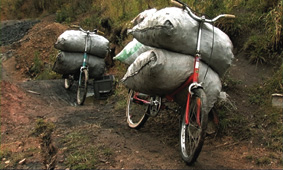
In Waldenburg, situated in the Lower Silesian Coalfield, all mines are closed down. Lukasz and his elder friend Jacek have been digging coal at their own risk for several years now. Like hundreds of other former miners, they are illegally digging for the black gold on the outskirts of their city. The local police are constantly after them. The miners have also been trapped in the tunnels several times. But they keep going.
CV FABIAN DAUB born 03.09.1972 in Aachen/Germany STUDIES 2003?2005 HOCHSCHULE FÜR BILDENDE KÜNSTE HAMBURG Postgrade studies film and tv 1999?2001 ECOLE SUPERIEURE D?ART VISUEL GENEVE Studies film 1995?2002 HOCHSCHULE FÜR BILDENDE KÜNSTE HAMBURG Studies visual media/film Diploma 06/1992 FREIE WALDORFSCHULE ULM/DONAU High school diploma CAREER FILMPRODUCTIONS: Documentaries und short movies Movies for tv-mags Imageclips und imagedokus Animations for international theater productions CV ANDREAS GRÄFENSTEIN born 06.11. 1975 in Bernburg STUDIES 01/06?12/06 DREHBUCHSCHULE BERLIN/Wolfgang Pfeiffer School of sreenplay Screenplay thriller ?Im Netz? 10/00?02/06 HOCHSCHULE FÜR BILDENDE KÜNSTE HAMBURG Studies visual media/film Diploma 10/98?09/00 TU DRESDEN Studies philosophie und history of the arts 10/95?01/98 UNIVERSITÄTSBUCHHANDLUNG HALLE/SAALE Apprenticeship bookseller 06/94 THOMAS-MÜNTZER-GYMNASIUM HALLE/SAALE High school diploma CAREER seit 06/07 DEUTSCHE WELLE TV Author seit 08/02 NDR FERNSEHEN HAMBURG line producer 08/02?03/03 ARTE TV-MAGAZIN line producer
Marta Dauliute, Viktorija ŠIAULYTE
Catalogue : 2023Good Life | Documentary | dcp | color | 72:0 | Lithuania, Sweden | 2022
Marta Dauliute, Viktorija ŠIAULYTE
Good Life
Documentary | dcp | color | 72:0 | Lithuania, Sweden | 2022
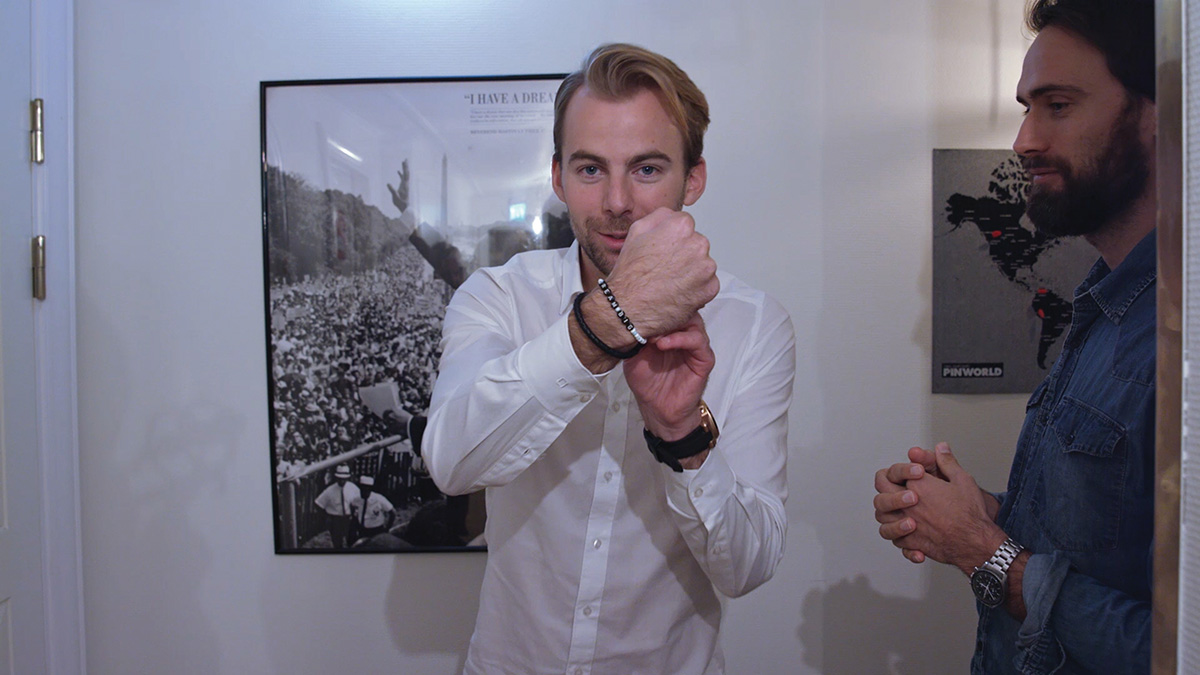
Good Life lets you in behind the curtain of a co-living start-up inspiring its tenants to run their entire life as a business operation. What happens when corporate storytelling becomes part of one’s innermost self and community becomes a commodity?
Viktorija Šiaulyt? (1985, Kaunas, Lithuania) is a curator and filmmaker based in Berlin. She holds an MFA in Critical Writing and Curatorial Practice at Konstfack, University of Arts, Crafts and Design in Stockholm, Sweden. Marta Dauli?t? (1984, Šiauliai, Lithuania) is film director and producer based in Stockholm. She holds an MFA in film directing at Valand Academy of Art, Sweden. Along with partner Elisabeth Marjanovi? Cronvall, she runs the film production company MDEMC.
Nina Davenport
Catalogue : 2006Parallel Lines | Documentary | dv | color | 98:0 | USA | 2001
Nina Davenport
Parallel Lines
Documentary | dv | color | 98:0 | USA | 2001
Parallel Lines chronicles the filmmaker`s journey in the fall of 2001 from California back home to New York, where her apartment once overlooked the World Trade Center. Driving along back roads as she winds her way to Ground Zero, she stops to talk with strangers about September 11th, which unexpectedly provides a unique window into the inner lives of Americans. The people she encounters at random inevitably want to share their own personal stories of loss: a woman tells of losing custody of her children, a veteran describes his battle with Post Traumatic Stress Disorder, a cowboy reveals his mother murdered his father. These poignant glimpses along the open road of an America in mourning reveal heartache, humor, surprise and above all, the drive to endure.
PARALLEL LINES is Nina Davenport?s third film. Her second film, ALWAYS A BRIDESMAID, also a feature-length documentary, premiered in 2000 on HBO?s Cinemax Reel Life and on Channel Four?s True Stories and is available on video from Docurama/New Video. Her first film HELLO PHOTO premiered at Rotterdam and won numerous awards at festivals, including ?Best Documentary? from Melbourne, Australia, ?Outstanding Independent Film? from the New England Film & Video Festival and ?Best Cinematography? from Cork, Ireland. Davenport is the recipient of many grants, including from the National Endowment for the Arts. Her films have been broadcast on television and shown at festivals throughout the world, garnering numerous awards. She works part-time as a producer and camera person on television shows, and she was a teaching assistant in the filmmaking program at Harvard College, her alma mater. Davenport shoots and edits her films. She is currently finishing two new films: LOS PERICOS, a 16mm film about a mariachi duo in Mexico and GRAND DELUSIONS, a feature documentary about a young Iraqi aspiring filmmaker. Davenport grew up in Bloomfield Hills, Michigan and currently lives in New York City.
Franck David
Catalogue : 2019pendant / during | Experimental film | hdv | color | 9:41 | France | 2017
Franck David
pendant / during
Experimental film | hdv | color | 9:41 | France | 2017
Pendant que la voix de la SNCF fait des annonces sur le droit d`auteur, nous rencontrons guy Debord. Pendant que guy Debord disparait, nous expérimentons plusieurs niveaux de temps, façonnant la notion de création en un motif récurrent : un disque.
franckDavid est né le 13 août 1966 à Montreuil /s bois, est artiste, vit et travaille avec et depuis un 13", aime passionnément les chaussures, il voit et regarde au travers des verres rosés de ses lunettes de soleil qu`il ne quitte pas et se laisse souvent tenter par le silence..
Jaime Davidovich
Catalogue : 2011Reality Properties : Fake estates | Experimental doc. | 16mm | black and white | 7:0 | USA | 1975
Jaime Davidovich
Reality Properties : Fake estates
Experimental doc. | 16mm | black and white | 7:0 | USA | 1975
Gordon Matta-Clark's Fake Estates project, which dates from 1973-74, addresses issues of property, ownership, and urban spaces. For this project, Matta-Clark purchased fifteen small, unusable odd lots ? termed "gutterspaces" ? that were being auctioned off by the city of New York. Although the artist collected extensive archival documents relating to the properties, his plans for using them were never realized; after his death the lots reverted to the city. This recently rediscovered footage, shot by video artist and cable television pioneer Jaime Davidovich, documents Matta-Clark as he visits one of the sites in Queens.
Jaime Davidovich is a conceptual, video and installation artist, as well as a pioneering activist for the potential of artist-run, local cable television programming. Davidovich was a founding member of Cable SoHo (1976) and president of the Artists' Television Network (1978). His own cable access show, a weekly variety program called The Live! Show, aired on Manhattan Cable Television from 1979 until 1984. In the guise of his alter-ego, Dr. Videovich, Davidovich hosted the show, which featured performances by and interviews with art world personalities, live phone-ins and a home-shopping segment from which he sold his collection of TV-related kitsch.
Katie Davies
Catalogue : 2018The Separate System | Experimental doc. | hdv | color | 23:9 | United Kingdom | 2017
Katie Davies
The Separate System
Experimental doc. | hdv | color | 23:9 | United Kingdom | 2017
At the end of 2014 the Ministry of Justice released an announcement stating that from January 2015, “ every prisoner coming into custody will be asked if they have been a member of the armed forces ” and that “ prisons will be given new guidance about helping them during their sentence”. The announcement followed wide debate over the percentage of veterans in prison. Behind these policy contexts there also sits a wider public perception of the identity of the “ veteran ” which exists in tension with the notion of the “ offender ”. The Separate System was collaboratively produced by veterans through workshops at two local prisons with artist Katie Davies. The piece investigates the spaces of the military, custody and “ civilian ” life through the notion of work, an everyday activity that unites these worlds and is familiar to us all. The film communicates what we, as a civilian audience, perhaps do not understand about the unique set of relations, actions and responsibilities held by the people within these spaces. Created through FACT`s Adults Learning Programme, our work within the criminal justice system aims to approach the context of the prison system from a critically engaged position.
Katie Davies is a video artist exploring the construction of identities, their reflections and manipulations. Nationalism, violence and democracy form a central critique for her videos and installations, often focusing upon individuals and communities whose identities are dictated by the state; their agency to self-identify snared between political agendas and Sovereign violence. Katie is a Royal West of England Academician and was nominated for the 2016 Paul Hamlyn Award. She is a Jury member for the International competition, Short Film Festival Oberhausen, 2018 and has exhibited nationally and internationally including FACT Liverpool 2018, Kassel Dokfest, Bratislava International Film Festival and Oberhausen International Film Festival 2017 & 2015, Sarajevo Film Festival 2015, Border Visions, Connecticut, USA 2012 and The Istanbul Biennial 2009. She has contributed to several publications and her writing on practice-led research has been included in US and British publications. Katie is Senior Lecturer in Media & Cultural Production at The University of The West of England.