Catalogue > List by artist
Browse the entire list of Rencontre Internationales artists since 2004. Use the alphabetical filter to refine your search. update in progress
Michael Hanna
Catalogue : 2015three short films about learning | Video | hdv | color and b&w | 8:57 | Ireland | 2014
Michael Hanna
three short films about learning
Video | hdv | color and b&w | 8:57 | Ireland | 2014
The Belfast Exposed photography archive contains over half a million images produced by community groups, amateur and professional photographers over the past 30 years. It represents a valuable historical document recording political, cultural and social change in Northern Ireland over these 3 decades. Since 2001 Belfast Exposed have been commissioning artists to produce work using this archive as raw material, previous artists include Duncan Campbell and Broomberg & Oliver Chanarin. Three Short Films about Learning is a latest project to be commissioned in this series. The work juxtaposes a selection of images taken from the archive with excerpts from a lecture series outlining theories of social and environmental psychology. The lecture series is Introduction to Psychology by Paul Bloom, made available by Yale University through the free online learning platform Academic Earth. The archive imagery includes marches, masked gunmen at funerals, and paramilitary punishments. The rhythm of the speech varies throughout from carefully measured statements to free flowing thoughts, and the images are timed to mirror this rhythm.
Michael Hanna completed his MFA at the University of Ulster in 2012 and recently undertook residencies at the Millennium Court Arts Centre and Digital Art Studios, Belfast. He graduated with BA (Hons) in Sculpture at Edinburgh College of Art in 2009. Hanna was shortlisted for the Converse / Dazed Emerging Artist Award with the Whitechapel Gallery, London. He has been involved in exhibitions in the UK and internationally including Interplanetary Revolutions at Golden Thread Gallery, Belfast and Instances of Agreement at the Kao Yuan Arts Centre in Taiwan. Most recently Hanna took part in Multiplicity - an exhibition curated by NURTUREart and shown across four galleries in New York. It was an international survey of artworks sharing an interest in the politics and poetic potential of contemporary urban environments.
Mike Hannon
Catalogue : 2017An Illustrated Guide to Lighthouse Spotting | Experimental doc. | 0 | black and white | 27:47 | Ireland | 2016
Mike Hannon
An Illustrated Guide to Lighthouse Spotting
Experimental doc. | 0 | black and white | 27:47 | Ireland | 2016
Framing the activities of a group of lighthouse spotters against the uncertain future faced by Irish lighthouses, An Illustrated Guide to Lighthouse Spotting idles with common documentary conventions in a kind of epistemological dilettantism, whereby the diseased triumvirate of rhetorical development, drama and realism is inoculated by mild incoherence, mundanity and idiosyncratic fancy.
Mike Hannon works as an independent artist, and as a freelance documentor for creative sectors and the visual arts. His previous pieces have included both conventional, TV documentary and experimental work.
Vincent Hannwacker, Mara Pollak, Marie Jaksch, Dominik Bais, Julian Rabus
Catalogue : 2022Musarion | Fiction | 4k | color | 29:39 | Germany | 2020
Vincent Hannwacker, Mara Pollak, Marie Jaksch, Dominik Bais, Julian Rabus
Musarion
Fiction | 4k | color | 29:39 | Germany | 2020
Musarion adapts the eponymous work by German writer Christoph Martin Wieland and transfers the love story into the present day. Phanias withdrew from the city of Athens to the countryside to leave his old life behind. But one day he encounters his former girlfriend Musarion who tries to bring him back to reason. The art film follows their struggle to find an enlightened form of love that can overcome philosophical and political fanaticism. Musarion was directed by a collective of five young artists and mixes elements of the original text, opera, theatre, video art and narrative film.
Vincent Hannwacker was born in 1997 in Munich, Germany. Since 2016 he studies Media Art at Julian Rosefeldt's class at the Academy of Fine Arts Munich. Since 2017 he studies Screenwriting at the University of Television and Film Munich (HFF).
Julieta Hanono
Catalogue : 2014Circunvalación | | | | 8:44 | France | 0
Julieta Hanono
Circunvalación
| | | 8:44 | France | 0
"Circunvalasion" fait partie de un working in progres - Barrio Godoy -que je commençais il y a deux ans. Un ensembles de travaux auteurs de la périphérie. Circunvalasion est le nom de une autoroute que entoure Rosario, una ville a 300k de Buenos Aires, en Argentina. Il y a des usines métallurgiques, le port est a quelques kilometres. Les camions viennent des diferentes provinces du pays. Av. circunvalacion 8,54 ?Film Numérique Dans la périphérie à Rosario, sur la Nationale A008 les camions passent sans interruptions. Marga et Mariela nous parlent au bord de la route.
Au commencement des années 70, adolescente engagée au côté des montoneros, Julieta Hanono est enlevée et incarcérée par la dictature argentine. Après un effacement de près de trois décennies durant lesquelles son expérience de la disparition semble s?être prolongée, cet épisode aura une influence profonde sur son travail. Au commencement des années 2000, installée en France depuis les années 80, Julieta Hanono renoue avec la pratique artistique, à laquelle elle avait dû brutalement renoncer. Ses pièces, teintée de psychanalyse et de marxisme, associant sculpture, dessin et film, sont traversées par son expérience de la disparition et se présentent comme une répétition de ses souvenirs, une conceptualisation méditative qui tend à la réconcilier avec son passé. Simultanément, les pièces se tournent vers l?extériorité : un mouvement qui correspond au souci de l?artiste de reconstituer son lien à l?autre et d?explorer, à travers celui-ci, les fondements de la socialité.
Catalogue : 2010En me tirant par les bras | Video | betaSP | color and b&w | 2:4 | France, Argentina | 2009
Julieta Hanono
En me tirant par les bras
Video | betaSP | color and b&w | 2:4 | France, Argentina | 2009
Catalogue : 2010Le bout des arbres | Video | dv | color | 2:12 | France, Argentina | 2009
Julieta Hanono
Le bout des arbres
Video | dv | color | 2:12 | France, Argentina | 2009
S?installer en France a d?abord signifié pour Julieta Hanono prendre de la distance avec sa langue maternelle. Puis revivre l?exil de ses arrières grands parents, d?Alep, d?Alexandrie, de l?Espagne à l?Argentine. Julieta Hanono souhaite redessiner leur parcours, elle parcourt Buenos Aires, puis arrive en France. A son arrivée à Paris, elle entreprend des ?uvres à partir de portes et de planches, des objets jetés, qu`elle récupère. Elle comprend plus tard le lien avec sa propre histoire : le 11 novembre 1977, à l?âge de seize ans, durant la dictature militaire en Argentine elle fût portée disparue. A Paris surgissaient les reliefs d?un récit enfoui, celui de sa propre histoire qu?en Argentine elle ne pouvait voir. Sa ligne d?horizon s?épaississait et son cheminement la conduisait à construire de nouvelles séries de travaux : des « bijoux », des ?uvres photographiques élaborés à partir d?instruments médicaux et des images numériques.
Catalogue : 2009intime | Experimental video | dv | color | 2:11 | France | 2008
Julieta Hanono
intime
Experimental video | dv | color | 2:11 | France | 2008
Intimate is crossing of France from winter to summer from North to South. The sequences are enchained with her camera that flies almost without touching reality, as through deep in a dream: the lights and song of the night, cold haze of the dawn, the call of the animals, tears falling into space ending up in the desolation of the snow. ?Intimate? is also the idea that isolation develops on a journey through life till death. The artist wishes to be completely subjective when shooting. The film is in the first person and it can be seen as an homage to her father who disappeared and understanding that someone else?s life can be seen as a closed cycle only when that person is gone.
Coming to live in France first meant for Julieta Hanono that she was distanced from her mother tongue.Then to relive the exile of her great-grand parents, from Alep, Alexendria, went from Spain to Argentina. Julieta Hanono wanted to outline their journey, she went to Buenos Aries, then arrived in France. On her arrival in France she began her work with doors and planks of wood, things that were thrown out, which she retrieved. She understood later on, the link with her own history: on the 11th of November 1977, at the age of sixteen, during the military dictatorship in Argentina, she was reported missing. In Paris bits of her buried story began to emerge, her own story in Argentina which she wasn`t able to see. Her horizon expanded and her journey led her to construct a new series of work: "Jewels" is elaborate photographic work about medical instruments and digital images.
Catalogue : 2008El Pozo | Experimental video | dv | color | 5:30 | France, Spain | 2007
Julieta Hanono
El Pozo
Experimental video | dv | color | 5:30 | France, Spain | 2007
"Caméra au point, Julieta Hanono arpente le gouffre et s?avance jusqu?à la lisière de l?insondable territoire, celui où l?homme n?est plus l?homme. A l?image, des filets de lumière, des entrefilets de paroles, le tissage d?une pensée matière, épaisseur sans laquelle ne pourrait éclore un quelconque partageable. El Pozo, non lieu d?une histoire insensée ; « El Pozo », l??uvre de Julieta Hanono, « lieu-dit » constitué sur fond de ténèbres, masque rapporté sur une histoire demeurée hors du monde, sur une histoire sans visage. El Pozo n?existe pas, il est trou noir, anti-pensée comme l?on parlerait d?anti-matière. A l??uvre, nous ne le voyons pas. A l??uvre s?expose son exact envers, la raison reconquise. Le sujet doit s?exprimer sans ruser ; le Je doit prendre ici la parole. Je refuse de prétendre que quoi que ce soit du vécu de Julieta Hanono en tant que « disparue » puisse devenir pour moi compréhensible. Rien n?y fait, pas même cette ?uvre qui ne saurait rendre palpable l?inouï qui en est le creuset. Je refuse l?empathie qui semble être de rigueur ? de bienséance ? face à ce que d?aucuns nomment un « témoignage ». L?empathie ne peut être ici que feinte ; forme sommaire d?entente, elle demeure sourde au fond de l?histoire folle traversée par Julieta Hanono. L?inhumanité me restera inaccessible par la pensée, car elle en est son strict négatif. Ce que je vois, ce que je pense face à « El Pozo » est tout autre : il s?agit du chemin que parcourt Julieta Hanono pour renaître à la vie ; il s?agit du secret constitutif de « l?humanité de l?humain » dont parle Georg Lukacs. C?est précisément cette histoire que rapporte Julieta Hanono de son propre gouffre ; c?est précisément là que réside le partageable de son aventure. « El Pozo » expose, vive, l?histoire qui me constitue. « El Pozo » est le récit de la (re)conquête du sujet par lui-même, de la (re)naissance du Je. Voir « El Pozo » dans El Pozo éclaire d?un feu plus brûlant encore le secret dont cette ?uvre nous parle. Cette exposition boucle en quelque sorte la démonstration de vie. Placé (tout) contre les murs du gouffre, l??uvre affirme la conquête de l?artiste. Placé entre l?homme et l?espace de sa négation, l??uvre rend active de manière performative sa propre nécessité : elle recrée le sol même de la pensée en mettant à distance l?inhumain par les images et les mots. Jamais El Pozo n?aura été plus éloigné qu?au moment où « El Pozo » irradiera ces lieux ; jamais El Pozo n?aura été plus terrassé en tant que politique d?anéantissement que lorsque « El Pozo » s?y dressera. L??uvre de Julieta Hanono nous rend El Pozo habitable par la pensée, et sans doute rend-elle habitable par la pensée à l?artiste elle-même sa propre histoire insensée. ?uvre politique par excellence, « El Pozo » se comprend comme le récit de la lutte du sujet contre les machines qui dans l?histoire ont visé son éradication. Dans cette affaire ? constituer et entretenir le monde par les armes de la parole ? , l?artiste se situe en première ligne. Il est celui qui traverse les gouffres pour nous en donner l?image renversée, et donc habitable. Il est celui qui porte à bout de bras, à l?instar de Julieta Hanono arpentant El Pozo caméra au point, « l?humanité de l?humain » jusqu?à nous. Sébastien Thiery
Julieta Hanono Venir m?installer en France a d?abord signifié prendre de la distance avec ma langue maternelle. Traverser un autre idiome et réinventer à partir de ce détour mes propres mythes. C?est aussi revenir au point de départ, revivre l?exil de mes arrières grand parents, d?Alep, d?Alexandrie, de l?Espagne à l?Argentine. Et dans une spirale ascendante, je veux redessiner leurs parcours. Je pars de Buenos Aires et je débarque en France. A mon arrivée à Paris, j?ai entrepris des ?uvres à partir de portes et de planches que je récupérais. Je ramenais dans mon atelier des objets jetés ; après je compris que faire apparaître ce qu?étais disparus étais en relation a ma propre histoire : le 11 novembre 1977, à l?âge de seize ans, durant la dictature militaire en Argentine je fus portée disparue.( j?étais enlevée de la vie et jetée hors du monde) Ainsi, à Paris surgissaient les reliefs d?un récit enfoui, celui de ma propre histoire qu?en Argentine je ne pouvais voir. Trop proche, elle demeurait là-bas un point aveugle. Tunnel? Loupes / serrures. Ma ligne d?horizon s?épaississait et mon cheminement me conduisait à construire de nouvelles séries de travaux : des « bijoux » et des ?uvres photographiques élaborés à partir d?instruments médicaux. Notamment, je produisais des images numériques prises à travers un spéculum et constituais ainsi la série « Le tunnel ». Ambiguïté du spéculum réunissant en lui-même deux principes : loupe et serrure. Objet à double tranchant peut-être permettant de se rapprocher, de voir en vue d?un savoir scientifique et neutre ; mais aussi permettant d?épier, de se faire le voyeur d?une intimité secrète. « Le tunnel » se compose de différents tableaux. Il s?agit d?une série de déclinaisons, mais aussi d?instantanés que l?on peut approcher indépendamment de la série dans laquelle ils s?inscrivent. Images agrandies, avec une certaine pixellisation, ces « portraits féminins » de dimension identique varient néanmoins selon l?intensité de la lumière et de la couleur. La séquence se lit comme un kaléidoscope à travers lequel se scande le fond de l?affaire, l?énigme de l?origine démultipliée. Toutefois, en chacune de ces compositions l?intérieur ouvre sur ma propre ligne de fuite, mon propre passé noué à ce moment douloureux de l?Argentine, ces années de plomb de la dictature ; en chacune de ces compositions, un temps immobile, celui de mon propre enfermement, l?objet perdu.
Inger Lise Hansen
Catalogue : 2008Proximity | Experimental film | 35mm | color | 4:0 | Norway | 2006
Inger Lise Hansen
Proximity
Experimental film | 35mm | color | 4:0 | Norway | 2006
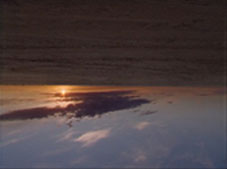
An upside-down time-lapse camera is moved frame by frame on a track along a beach inverting the ground and the sky. The camera moves through four shots recorded in different weather conditions. The result is a mysterious and disorienting space in accelerated time, where the originally solid ground at the top of the frame appears to be sliding past like a lava-stream. Proximity was shot on Super16mm film, on location in North Jutland, Denmark.
Inger Lise Hansen was educated at North East London Polytechnic, St. Martin's College of Art, London, and received a Masters of Fine Art Filmmaking from San Francisco Art Institute. She has made a number of experimental animation films with support from Arts Council England, Film London, and the Norwegian Film Institute, and has won several international prizes such as Gold Prize for animation at the Bilbao Festival of Documentary and Short Films, and the Chris Frayne Award for Best Animation at Ann Arbor International Film Festival. Her earlier films have been screened at Tate Modern, London; Institute of Contemporary Art, London; Centre Georges Pompidou, Paris; Museum of Modern Art, Stockholm; and Hiroshima Animation Festival.
Inger Lise Hansen
Catalogue : 2019Tåke | Experimental film | 16mm | color and b&w | 14:57 | Norway | 2018
Inger Lise Hansen
Tåke
Experimental film | 16mm | color and b&w | 14:57 | Norway | 2018
TÂKE is a landscape film capturing mysterious natural and man-made fog-obscured scenes in Beijing, Oslo, Azores and Newfoundland. The film observes the spectacle of fog through several different film- and video formats. It explores the behaviour of Super-8 and 16mm film alongside digital video against a visual obstacle. The variable formats are also used to create spatial shifts on the screen and work with ideas of obscured or filtered visions. Associations can be made between the grain in the film material and the tiny particles, or condensation nuclei, needed to form both fog and smog, such as pollen, sea salt, dust and particle pollution. In parallel to the image the soundtrack attempts to create an auditory fog. It compares the loss of visibility to the loss of audible frequencies. During the process of making the film the artist discovered that the way sound gets filtered in fog is similar to her own loss of hearing, where the high frequencies are no longer perceived. In the fog the tiny water droplets block the high frequencies from passing. The soundtrack is composed of sirens and signals, hearing tests samples and environmental sounds.
Inger Lise Hansen (b. 1963) is a visual artist with background in experimental film and animation. She studied Fine Art at University of East London (1989) and Central-St. Martin’s College of Art and Design (1991) and received a Master of Fine Art Filmmaking from San Francisco Art Institute in 1996. Since the nineties her film works has been screened in international institutions and galleries such as Tate Modern, National Gallery London, RI at Jeu de Paume Paris, Tokyo Photographic Art Museum and Malmö Konsthall. She has received a number of prizes from film festivals including Vienna Independent Shorts, Videoex, Ann Arbor and Oberhausen. Inger Lise lives and works in Oslo.
Mette Hansen
Catalogue : 2007Twosome | Animation | dv | black and white | 4:8 | Sweden | 2004
Mette Hansen
Twosome
Animation | dv | black and white | 4:8 | Sweden | 2004
The meeting of two people and a growing relationship is very seldom an uncomplicated matter. When dealing with the twosome aspect in this particular storyline, the focus is set on communication, dependence, trust, and integrity. It is a challenge to keep a balance between one and the other.
Artist Mette Hansen started of as a painter in the beginning of 1990. His studies of art caused him to be interested in different media and he started working with room installations and other sculptural objects besides photo. He eventually started to work with video and has doing so ever since. His first videos were about films that I studied and recut. Most recently he has only been using text and sometimes animated pictures in video.
Nanna Elvin Hansen
Catalogue : 2025Groundings | Experimental doc. | 4k | color | 43:22 | Denmark | 2024
Nanna Elvin Hansen
Groundings
Experimental doc. | 4k | color | 43:22 | Denmark | 2024
For her first grand-scale institutional show, Hansen has created the major new film and sound installation Groundings, collaborating with sound artist Eliza Bo?ek, among others. Based on long-term research on the quartzite quarry at the Giemaš mountain in the Sápmi region of northern Norway, Hansen’s investigation digs into questions of the manmade structures that control Earth’s raw materials and ground—hence the title Groundings. How technology amplifies the mapping, analysis, extraction, and profitability of natural resources and how the core resources employed in these new technologies and shifting geopolitics are the Earth’s raw materials themselves (just think of the chip in your smartphone).
The artistic practice of Nanna Elvin Hansen (b. 1989, DK) moves in the murk between art and activism. Building audio and film projects via local, collaborative processes, her works unveil structural violence that impacts on human rights and displacement.
Inger Lise Hansen
Catalogue : 2012Travelling Fields | Video | hdv | color | 8:40 | Norway | 2009
Inger Lise Hansen
Travelling Fields
Video | hdv | color | 8:40 | Norway | 2009
Travelling Fields focuses on a particular phenomenon occurring through a change of perspective and animated camera movements, as a way of redefining a place and its geography. Sections of the landscape are documented by moving the camera upside/down, one frame at the time, along a track. The film moves between different topographies and locations in the Kola Peninsula, Northern Russia. Shot in Northern Russia, Travelling Fields is the third film in Inger Lise Hansen's inverted perspective trilogy, following Proximity (2006) and Parallax (2009). The films focus on a particular phenomenon occurring through a change of perspective and animated camera movements, as a way of redefining a place and its geography. In these films sections of the landscape are documented by moving the camera one frame at the time, along a track. As each of the earlier films focus on one particular location, Travelling Fields offers a more complex viewing as it moves between different topographies and locations in the Kola Peninsula.
Inger Lise Hansen (b. 1963) was educated at North East London Polytechnic, St. Martin's College of Art, London and holds a Master of Fine Art in Filmmaking from San Francisco Art Institute. She has made a number of experimental animation films with support from Arts Council England, Film London and the Norwegian Film Institute, and has won several international awards such as Gold Prize for animation at the Bilbao Festival of Documentary and Short Films and the Chris Frayne Award for Best Animation at Ann Arbor International Film Festival. Her earlier films have been screened at Tate Modern, London, Institute of Contemporary Art, London, Centre Georges Pompidou, Paris, Museum of Modern Art, Stockholm and Hiroshima Animation Festival.
Mathieu Johan Hans Hansen
Catalogue : 2019Le Monde Perdu | Experimental doc. | mov | color | 19:11 | Denmark | 2018
Mathieu Johan Hans Hansen
Le Monde Perdu
Experimental doc. | mov | color | 19:11 | Denmark | 2018
In Le Monde Perdu time is slowed down as the camera moves through a local Zoo, the childhood home and a Planetarium. Merging these man-made sceneries into one setting the film comes to offer a reflection on personal and collective memory as well as our longing for belonging.
Mathieu J.H. Hansen is a Master student at the Royal Danish Academy of Fine Arts. In his work, he often merges larger cinematic constructions and fictional elements with smaller personal stories and documentary film archives, dealing with themes such as nostalgia, time and man-made nature.
Hantédemos
Catalogue : 2026Theremespare | Experimental fiction | 0 | color | 23:16 | France | 2024

Hantédemos
Theremespare
Experimental fiction | 0 | color | 23:16 | France | 2024
Haunted is a young queer artist caught up in a narcotic consumption of the contemporary world’s escape routes. Theremespare is an esoteric legend invented by an influencer with whom he becomes obsessed. Theremespare is a point of geolocation, which he pursues through layers of illusions and fantasies. Theremespare is a treasure hunt towards a reality always escaping down rabbit holes.
Hantédemos lives in Marseille and graduated from ENSAPC in 2015 and Le Fresnoy in 2025. They construct fictional worlds manifested in films and performances. Before 2022, sometimes in collaboration with the poet Gorge, they created multimedia and queer performances revisiting ancient or technological myths. Between 2022 and 2024, they contributed to the narrative foundation of a body of work called Velaraiqa, comprising a performance, a TikTok account, and two films opening up esoteric extensions into capitalist realism. One was shot in residence at the 40m cube arts centre in Rennes, the other during their first year at the Studio National du Fresnoy. During the rest of their studies, they created a multimedia performance on the non-human and embodiment. Their work has been shown at Point Ephémère in Paris, FRAC Aquitaine (MECA), Mains d’Oeuvres in Saint Ouen, A Around Video in Lille, A Ugly Duck in London, and elsewhere.
Hapaxmedia.net, colectivo ZEMOS98
Felice Hapetzeder
Catalogue : 2015Yesterday Was No Good Day (Lost Monuments) | Video | hdv | color | 6:0 | Sweden | 2014
Felice Hapetzeder
Yesterday Was No Good Day (Lost Monuments)
Video | hdv | color | 6:0 | Sweden | 2014
An explorer in projects has reached the end of the road in search for creative meaning. The desire is to travel, the search for The Project and historical mystery. Is the artist a postcolonial tourist of sorts, a self-imposed challenger of cultural frontiers?
Born in Stockholm 1973. Studied at Konstfack, University College of Arts Crafts and Design, art department, MFA in 2002. Postgraduate video project Royal Institute of Art 2002-03. Part of art organization Local A. (with Jenny Berntsson since 2009). Co-founder of artist initiative ak28 (2003-2008) in Stockholm. Working with video, photography and workshops. Exhibitions and screenings include Oberhausen Short Film Festival 2014, Norrköping Art Museum, Acting in the City 2013. 5th Cairo Video Festival, Medrar, Cairo 2013. Struck Haninge konsthall 2012. Istanbul European Capital of Culture 2010. Uppsala Art Museum 2009. Istanbul Art Biennial, nightcomers 2007. La ciudad y el Barrio, 2a parte, Fundación Proa, Buenos Aires 2006. Blick new Nordic cinema and video 2001-2002.
Farheen Haq
Matti Harju, Joakim Pusenius
Catalogue : 2020Elä naura rakasta | Experimental doc. | hdv | color | 7:10 | Finland | 2019
Matti Harju
Elä naura rakasta
Experimental doc. | hdv | color | 7:10 | Finland | 2019
Connections, directions and boundaries blurred and reorganized. Bitten cake, flames, vodafone, compression, concrete and unassuming round shapes.
Matti Harju (b. 1978, Finland) has screened at the Rotterdam, Locarno, Torino, BFI London, Edinburgh, AFI FEST Los Angeles and Clermont-Ferrand festivals and elsewhere. He studied at National Film and Television School, UK and Academy of Fine Arts in Finland.
Catalogue : 2019Nueva Era | Experimental fiction | mov | color | 70:0 | Finland | 2018
Matti Harju
Nueva Era
Experimental fiction | mov | color | 70:0 | Finland | 2018
Nueva era examines how the shapes of suffering have mutated beyond recognisable and how the junctions where that suffering appears have been mystified.
Matti HARJU (1978, Finland) was educated in Film Directing at the National Film and Television School, UK. At the Academy of Fine Arts in Helsinki, Finland he learned about contemporary art. His short films have been shown in a variety of film festivals including Rotterdam, Locarno, Torino, BFI London, Edinburgh, AFI Fest Los Angeles and Clermont-Ferrand. Nueva era is his first feature-length film.
Catalogue : 2017New Age | Video | hdv | color | 9:58 | Finland | 2016
Matti Harju
New Age
Video | hdv | color | 9:58 | Finland | 2016
Speculative video essay about accelerationist pastel hues and semi-paranoid trademarks at the time when everything is nearing the end of the World.
Matti HARJU (b. 1978, Finland) is working in the rubbish bin of contemporary art including video, narrative cinema, text, drawing, installation, life as a jpeg performance. He has screened work at the International Film Festival Rotterdam, Festival del film Locarno, Torino Film Festival, BFI London Film Festival, Edinburgh International Film Festival, AFI FEST Los Angeles and Clermont- Ferrand International Short Film Festival among others. Solo exhibitions include Gallery Sinne (collaboration with Joakim Pusenius) in March 2015 and Exhibition Laboratory Project Room in February 2016, both in Helsinki. Currently an MFA candidate at the Academy of Fine Arts, FI. He also studied film directing (MA in Directing Fiction) at the National Film and Television School, UK.
Catalogue : 2016Tomorrow was Magnificent | Experimental fiction | 4k | color | 15:25 | Finland | 2015
Matti Harju, Joakim Pusenius
Tomorrow was Magnificent
Experimental fiction | 4k | color | 15:25 | Finland | 2015
We hear the past like a sentimental echo from times when we came together, the future like an answer to our needs, and the present like a silence in which we alone are standing still. Tomorrow was Magnificent was born out of this silence, as an end and a new beginning of nothing – apeiron.
Joakim Pusenius (b. 1984) graduated with an MFA from the Academy of Fine Arts in 2014. He also holds a BA in theoretical philosophy. Pusenius has exhibited in various galleries in Finland and his works have been shown at film screenings. Matti Harju (b. 1978) took his BA at the Institute of Design and Fine Arts in Lahti, studied at the National Film and Television School in the UK, and is now on the Master’s programme at the Academy of Fine Arts in Helsinki. His previous works have been shown at for example Rotterdam, Locarno, Edinburgh, BFI London and Torino film festivals.
Catalogue : 2012Afrikka | Experimental fiction | 16mm | color | 9:3 | Finland | 2011
Matti Harju
Afrikka
Experimental fiction | 16mm | color | 9:3 | Finland | 2011
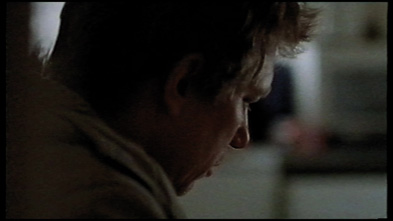
Glenn is in a state of acute psychosis.
Matti Harju (b. 1978, Finland) studied filmmaking at the National Film and Television School in the UK. His previous short films have been shown in numerous film festivals around the world including Clermont-Ferrand, Locarno, Rotterdam and Edinburgh.
Matti Harju
Catalogue : 2023Ekstaasi | Experimental fiction | mov | color | 9:48 | Finland | 2022
Matti Harju
Ekstaasi
Experimental fiction | mov | color | 9:48 | Finland | 2022
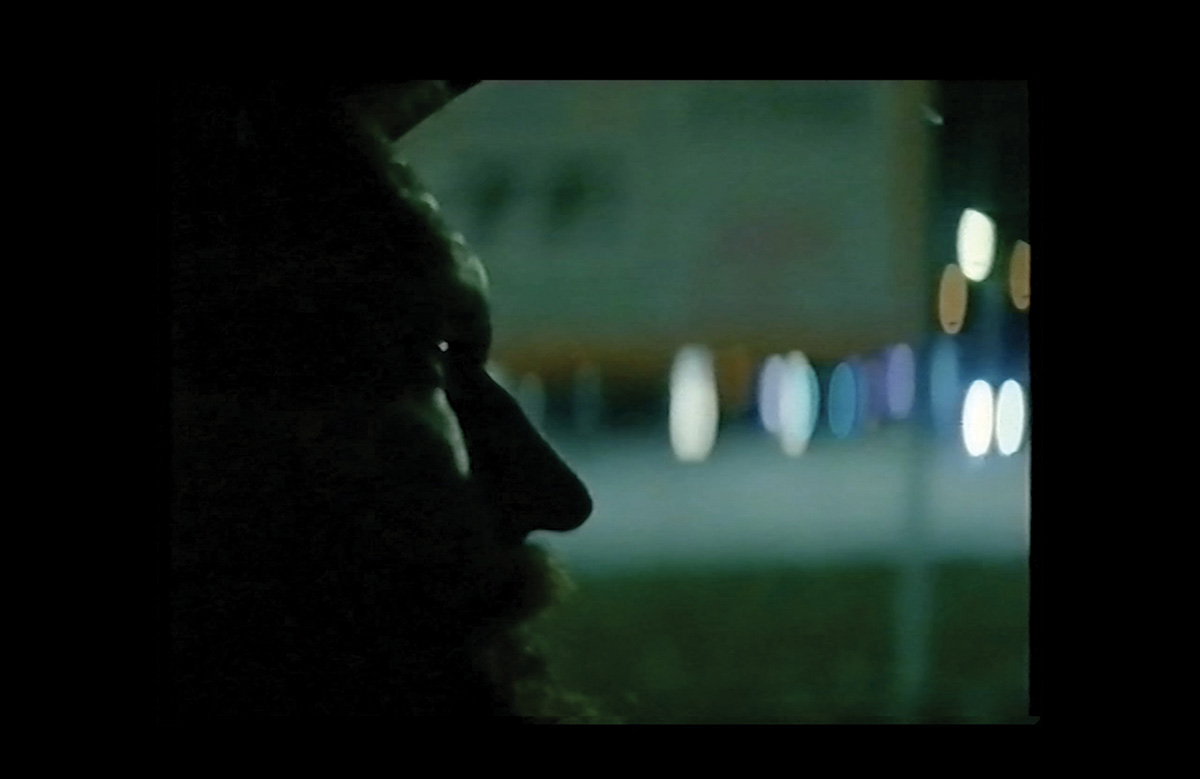
Set in the darkest time of the year, a feverish and delirious film about a small and ever-shrinking island – the Ecstasy – located somewhere between the search for pleasure and the inherently destructive powers of capitalism.?
Matti Harju has screened work at the Rotterdam, Locarno, Kurzfilmtage Oberhausen, Torino, BFI London, Edinburgh, AFI FEST Los Angeles and Clermont-Ferrand film festivals among others. He studied film directing at the National Film and Television School (NFTS) in the UK and holds an MFA from the Finnish Academy of Fine Arts. His second feature, Fury, is currently in post-production.
Catalogue : 2022Kolme päivää sadetta | Experimental fiction | mov | color | 14:3 | Finland | 2021
Matti Harju
Kolme päivää sadetta
Experimental fiction | mov | color | 14:3 | Finland | 2021
Part time Twitch streamer, part time drug courier; both low level. Slithering between life and death, online and offline. The carefree summer of global progress seems to be over - are these the final days of both, the illusion of overarching narrative, and of Jerome the Saint.
Matti Harju has screened work at the Rotterdam, Locarno, Oberhausen, Torino, BFI London, Edinburgh, AFI FEST Los Angeles and Clermont-Ferrand film festivals among others. He studied film directing at the National Film and Television School (NFTS) in the UK and holds an MFA from the Finnish Academy of Fine Arts.
Matti Harju
Catalogue : 2020Elä naura rakasta | Experimental doc. | hdv | color | 7:10 | Finland | 2019
Matti Harju
Elä naura rakasta
Experimental doc. | hdv | color | 7:10 | Finland | 2019
Connections, directions and boundaries blurred and reorganized. Bitten cake, flames, vodafone, compression, concrete and unassuming round shapes.
Matti Harju (b. 1978, Finland) has screened at the Rotterdam, Locarno, Torino, BFI London, Edinburgh, AFI FEST Los Angeles and Clermont-Ferrand festivals and elsewhere. He studied at National Film and Television School, UK and Academy of Fine Arts in Finland.
Catalogue : 2019Nueva Era | Experimental fiction | mov | color | 70:0 | Finland | 2018
Matti Harju
Nueva Era
Experimental fiction | mov | color | 70:0 | Finland | 2018
Nueva era examines how the shapes of suffering have mutated beyond recognisable and how the junctions where that suffering appears have been mystified.
Matti HARJU (1978, Finland) was educated in Film Directing at the National Film and Television School, UK. At the Academy of Fine Arts in Helsinki, Finland he learned about contemporary art. His short films have been shown in a variety of film festivals including Rotterdam, Locarno, Torino, BFI London, Edinburgh, AFI Fest Los Angeles and Clermont-Ferrand. Nueva era is his first feature-length film.
Catalogue : 2017New Age | Video | hdv | color | 9:58 | Finland | 2016
Matti Harju
New Age
Video | hdv | color | 9:58 | Finland | 2016
Speculative video essay about accelerationist pastel hues and semi-paranoid trademarks at the time when everything is nearing the end of the World.
Matti HARJU (b. 1978, Finland) is working in the rubbish bin of contemporary art including video, narrative cinema, text, drawing, installation, life as a jpeg performance. He has screened work at the International Film Festival Rotterdam, Festival del film Locarno, Torino Film Festival, BFI London Film Festival, Edinburgh International Film Festival, AFI FEST Los Angeles and Clermont- Ferrand International Short Film Festival among others. Solo exhibitions include Gallery Sinne (collaboration with Joakim Pusenius) in March 2015 and Exhibition Laboratory Project Room in February 2016, both in Helsinki. Currently an MFA candidate at the Academy of Fine Arts, FI. He also studied film directing (MA in Directing Fiction) at the National Film and Television School, UK.
Catalogue : 2016Tomorrow was Magnificent | Experimental fiction | 4k | color | 15:25 | Finland | 2015
Matti Harju, Joakim Pusenius
Tomorrow was Magnificent
Experimental fiction | 4k | color | 15:25 | Finland | 2015
We hear the past like a sentimental echo from times when we came together, the future like an answer to our needs, and the present like a silence in which we alone are standing still. Tomorrow was Magnificent was born out of this silence, as an end and a new beginning of nothing – apeiron.
Joakim Pusenius (b. 1984) graduated with an MFA from the Academy of Fine Arts in 2014. He also holds a BA in theoretical philosophy. Pusenius has exhibited in various galleries in Finland and his works have been shown at film screenings. Matti Harju (b. 1978) took his BA at the Institute of Design and Fine Arts in Lahti, studied at the National Film and Television School in the UK, and is now on the Master’s programme at the Academy of Fine Arts in Helsinki. His previous works have been shown at for example Rotterdam, Locarno, Edinburgh, BFI London and Torino film festivals.
Catalogue : 2012Afrikka | Experimental fiction | 16mm | color | 9:3 | Finland | 2011
Matti Harju
Afrikka
Experimental fiction | 16mm | color | 9:3 | Finland | 2011
Glenn is in a state of acute psychosis.
Matti Harju (b. 1978, Finland) studied filmmaking at the National Film and Television School in the UK. His previous short films have been shown in numerous film festivals around the world including Clermont-Ferrand, Locarno, Rotterdam and Edinburgh.
Rim Harrabi, Rim Harrabi, Rua Osman, Salimata Bâ, Yosra El-Gazzar
Catalogue : 2023DO FLOWERS BLOOM AFTER THE SPRING? | Documentary | mov | color | 26:0 | Tunisia | 2021
Rim Harrabi, Rim Harrabi, Rua Osman, Salimata Bâ, Yosra El-Gazzar
DO FLOWERS BLOOM AFTER THE SPRING?
Documentary | mov | color | 26:0 | Tunisia | 2021
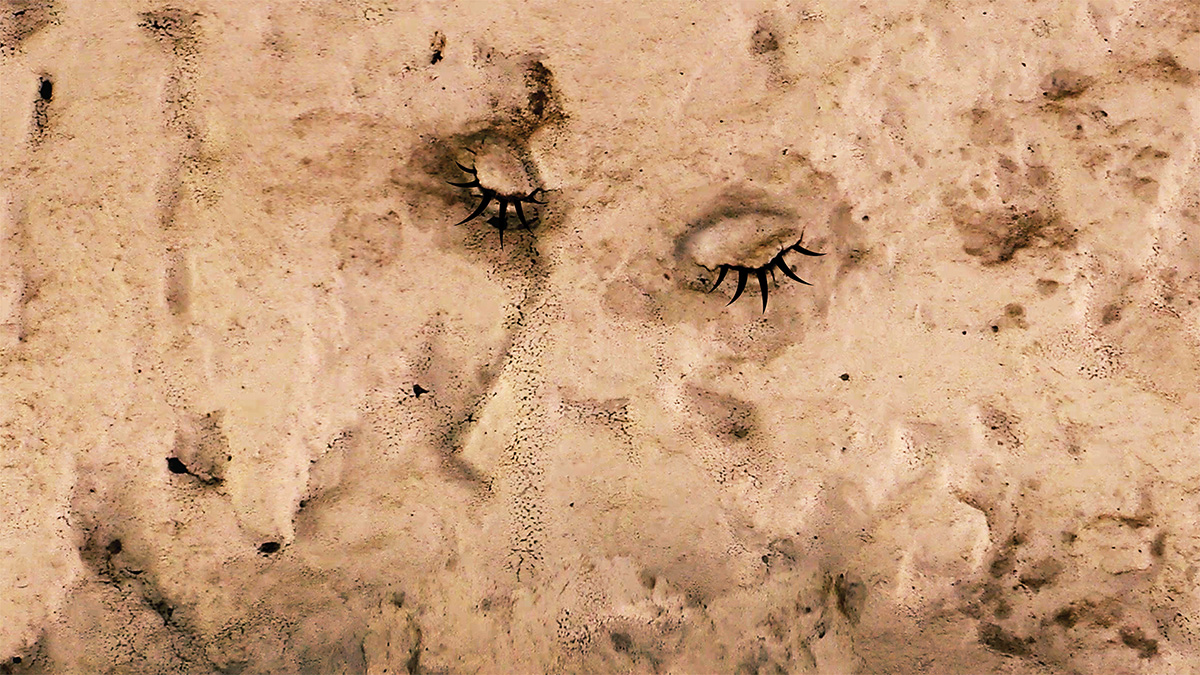
Tunis’ abandoned structures are part of the urban fabric, like ghosts from the past they demand to be heard – promising memories desperately needed for this generation to reconstruct its future from the rubble. Although Tunisia has been hailed triumphant in bringing down an oppressive regime in 2011, the alienation of an entire generation is more palpable than ever. Why is it that some monuments and buildings are reckoned as heritage and others of similar importance are left abandoned and in ruins, and who decides? Through experiencing the memory of abandoned spaces told through a building inhabited by books, the film exposes the soul of the city, and a historical narrative that is often left omitted.
Rim Harrabi (Tunisian), Rua Osman (Sudanese), Salimata Ba (Mauritanian), Lina Alabed (Jordanian Palestinian), and Yosra El-Gazzar (Egyptian) form an Afro-Arab female collective. This collective was born during the first cycle of the Mouatheqat/Women in Dox fellowship, hosted by DOX BOX in 2021. The fellowship is designed to connect and cross-pollinate intergenerational, interdisciplinary, and intercultural visions of women who are eager to convey their voices to a global audience. Mouatheqat's inaugural cycle took place in Tunisia in 2021, where these fellows met and collectively acquired and exchanged the necessary skills to write, research, direct, produce, and edit a documentary film. Their exploration and experimentation encompassed various forms of storytelling stemming from individual perspectives, reflecting the filmmakers' unique voices and experiences. By the end of their time together, the collective delivered two documentaries: "Do Flowers Bloom After Spring?" and "The Dream Continues.
Sabrina Harri
Christopher Harris
Catalogue : 2006Reckless Eyeballing | Experimental film | 16mm | black and white | 13:35 | USA | 2004
Christopher Harris
Reckless Eyeballing
Experimental film | 16mm | black and white | 13:35 | USA | 2004
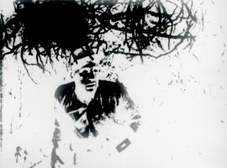
Taking its name from the Jim-Crow-era prohibition against black men looking at white women, this hand-processed, optically-printed amalgam is a hypnotic inspection of sexual desire, racial identity, and film history. (Eric Crosby, Wisconsin Film Festival)
Harris’s award winning films have exhibited widely across North America and Europe including at the International Film Festival Rotterdam, New York Underground Film Festival, San Francisco Cinematheque, Huesca Film Festival and the Vienna International Film Festival, among many others.
Nate Harrison
Catalogue : 2011Aura Dies Hard | Experimental doc. | dv | color | 14:10 | USA | 2010
Nate Harrison
Aura Dies Hard
Experimental doc. | dv | color | 14:10 | USA | 2010
Aura Dies Hard (Or: How I Learned to Stop Worrying and Love the Copy) joins the artist after having just returned from a museum survey exhibition of video art. Through the course of the following video essay, the artist reflects on the rhetoric of "dematerialization" often linked with early video (and conceptual and performance art more generally). Proposing an alternative, "materialist" read, in which the (often unauthorized) duplication and circulation of artist video paradoxically help perpetuate its mythic beginnings, the artist ultimately reveals that copying technologies and art world protocol have made it possible for him to obtain all the videos encountered at the museum show, clips of which are played throughout the narration.
Nate Harrison is an artist and writer working at the intersection of intellectual property, cultural production and the formation of creative processes in electronic media. He has produced projects and exhibited for The American Museum of Natural History, The Whitney Museum of American Art, The Los Angeles County Museum of Art, The Kunstverein in Hamburg and The Museum of Contemporary Art, Denver, among others. He has also lectured at the University of Glasgow, Experience Music Project, Seattle and Volunteer Lawyers for the Arts, New York, among others. Nate co-directed the project space ESTHETICS AS A SECOND LANGUAGE from 2004-2008. He earned a Bachelor of Fine Arts from the University of Michigan, a Master of Fine Arts from California Institute of the Arts and is a doctoral candidate, Art and Media History, Theory and Criticism in the Visual Arts Department at the University of California, San Diego. Currently Nate is on the faculty at the School of the Museum of Fine Arts, Boston, and lives in Brooklyn, New York with a lovely wife and two pesky cats.
Catalogue : 2008Stock Exchange | Experimental doc. | dv | color | 12:30 | USA | 2006
Nate Harrison
Stock Exchange
Experimental doc. | dv | color | 12:30 | USA | 2006
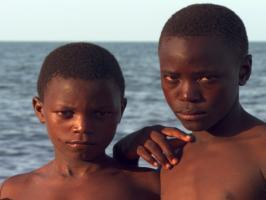
Stock Exchange takes the form of a video `letter` written to the Footage Acquisitions Department at Artbeats Software, Inc. An American company, their main business is to provide high quality and royalty-free stock film and video clips for use in public service announcements, television commercials and even feature films produced by any media client who purchases them. In his letter to the company, the artist theorizes how the they might go about accepting (or not accepting) footage shot by freelance videographers (which is later repurposed for client use), eventually asking Artbeats to define their selection criteria. The response, during which a representative of the company lists a set of `shooting tips and guidelines` is juxtaposed with actual video clips from the Artbeats catalog. The work as a whole seeks to meditate on the construction and transformation of visual meaning in today`s very fluid (and increasingly template-driven) image economy.
Nate Harrison is an artist and writer working at the intersection of intellectual property, cultural production and the formation of creative processes in electronic media. He has produced projects for The American Museum of Natural History, The Whitney Museum of American Art, The Los Angeles County Museum of Art, and The Kunstverein in Hamburg, among others. He has also lectured at the Experience Music Project, Seattle and the University of Glasgow, among others. Currently Nate co-directs ESTHETICS AS A SECOND LANGUAGE (www.eslprojects.org). He earned a BFA from the University of Michigan, a MFA from California Institute of the Arts and is a doctoral student, Media Theory at the University of California, San Diego.