Catalogue > List by artist
Browse the entire list of Rencontre Internationales artists since 2004. Use the alphabetical filter to refine your search. update in progress
Davor Kanjir
Catalogue : 2016Limb | Documentary | hdv | color | 41:0 | Croatia | 2015
Davor Kanjir
Limb
Documentary | hdv | color | 41:0 | Croatia | 2015
The experimental documentary film Limbo is a portrayal of a space and life in a newly built neighbourhood on the outskirts of the Croatian capital. Structured around four, so to speak, narrative unities and with a total of 33 static shots, six of them portraits of the neighbourhood inhabitants, reduced to a sort of photographic models, this film idiosyncratically speak about life in a large urban environment. As a parable of modern civilisation, Kanjir’s topographic study of an urban limbo is the first part of the tetralogy about the Croatian capital, whose other parts (Purgatory, Paradise and Hell) are based on an identical aesthetic principle: formalist restriction and compositional precision of the frame which, in combination with the use of ambience sound and subtle social commentary, create a hypnotic, meditative journey across the Croatian metropolis.
Davor Kanjir was born in 1974 in Zagreb. He attended the European Film College in Ebeltoft, Denmark. He holds a bachelor’s degree in production and a master’s in film and TV directing (documentary film) from Zagreb’s Academy of Dramatic Art. He wrote, produced and directed documentary films Monk (ZagrebDox, 2010) and My Good and Beautiful Friends (ZagrebDox, 2011). He has published film reviews in Kinoteka and the Croatian version of the British film magazine Total Film. Limbo is his latest documentary film
Shiho Kano
Catalogue : 2006Wave | Art vidéo | dv | color | 18:0 | Japan | 2005
Shiho Kano
Wave
Art vidéo | dv | color | 18:0 | Japan | 2005
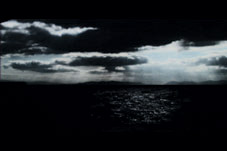
Numinous tracings of beautiful light on the sea, augmented by the artifice of video.
Born 1974, Tokyo, Japan. Graduate from Musahino Art University (Tokyo, Japan) in 1997. Studied at the institute of Image Forum in 1997-1999. Making films, video and video installations since 1996.
Gautam Kansara
Catalogue : 2008Grandma, Gautam, and Ghalib | Art vidéo | dv | color | 8:12 | United Kingdom, USA | 2006
Gautam Kansara
Grandma, Gautam, and Ghalib
Art vidéo | dv | color | 8:12 | United Kingdom, USA | 2006
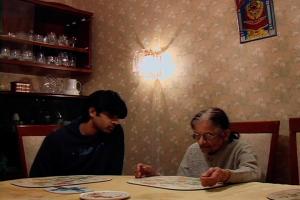
In Grandma, Gautam, and Ghalib, the artist?s Grandmother translates classic Hindi and Urdu love songs. Using the first person to utter a passionate rendition of the lyrics, she often addresses Gautam as though he were her lover, weaving together the realities of memory and lived experience. The viewer bears witness to an emotional outpouring of love and loss where the boundaries of fiction and reality become blurred, confused and ultimately irrelevant.
Gautam Kansara was born in London in 1979 and is currently based in New York. His Videos and Photographs have been shown at the Centro Nacional de las Artes in Mexico City, The Bronx Museum of the Arts, the Rotterdam Film Festival, Platform Garanti in Istanbul, Smack Mellon Gallery and Goliath Visual Space in Brooklyn, The Museo Nacional de Arte in La Paz, Bolivia, Gallery Demain and Dukwon Gallery in Seoul, Korea, and LMAK Projects in Manhattan among others. In 2006 Gautam was a Fellowship Artist at Smack Mellon in Brooklyn, and also received a Swing Space award from the Lower Manhattan Cultural Council. Most recently Gautam was awarded a solo exhibition from Real Art Ways in Hartford, Connecticut as part of their GO! series that will be on view in 2008. Gautam is also a faculty member at Manhattan College?s Department of Fine Arts teaching Digital Photography and Video Art.
Catalogue : 2007I'm Leaving | Experimental video | dv | color | 5:51 | United Kingdom | 2005
Gautam Kansara
I'm Leaving
Experimental video | dv | color | 5:51 | United Kingdom | 2005
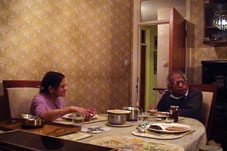
"I'm Leaving" revolves around the fusion of humour and sentiment as the viewer is confronted with the repeated perspective of Gautum Kansara's Grandfather, who goes on and on stating his displeasure, disbelief, and pain concerning Kansara's impending departure. Having greater and greater difficulties hearing, his grandfather's is very much stuck in his own world, engulfed in a cycle of his inability to come to terms with the inevitable. Seemingly good intentions turn confused and irrational, and highlight the eccentricities of family.
Gautam Kansara was born in London in 1979 and is currently based in New York. His videos and photographs have been shown at the Bronx Museum of the Arts, the Rotterdam Film Festival, Platform Garanti in Istanbul, Goliath Visual Space in Brooklyn, The Museo Nacional de Arte in La Paz, Bolivia, Gallery Demain and Gallery The Space in Seoul, Korea, and Transplant Gallery in Manhattan, among others. Most recently Gautam's video work has been included as part of the inaugural exhibition of Mumbo Jumbo Gallery in New York City. Gautam is also a faculty member at New York University's Department of Art and Art Professions.
Alain Kantarjian
Catalogue : 2018Antépénultième Daoura | Experimental fiction | hdv | color | 13:20 | France, Lebanon | 2014
Alain Kantarjian
Antépénultième Daoura
Experimental fiction | hdv | color | 13:20 | France, Lebanon | 2014
Like the title indicates ANTÉPÉNULTIÈME (DAOURA) – loosely translated “antepenultimate time” –, the documentary narrative of the emerging film project, despite its socio-political embedding in today’s Beirut, makes it difficult to exactly determine the film’s historical period. “I perceive reality as fiction, and fiction is for me more real.” – Alain Kantarjian. Alain Kantarjian allows a gliding sphere between documentary and fiction, not only to examine the play of reality in the film but also to deal with the harsh merciless social conditions in today’s Lebanon. He does this without attempting to make and deliver the persons concerned only as objects of a distant socio-political discourse.
2016 grant winner for “Video Works Ashkal Alwan” Beirut, Alain Kantarjian is a photographer and filmmaker based in Beirut and Paris. In 2005, he founded LRAK, a video and event company in Paris, and in 2010, Fanar Projects, an independent cultural space in Beirut. His work is collected by the Maison Européenne de la Photographie (Paris), Burger Collection (Hong Kong) and private collectors.
Eginhartz Kanter
Catalogue : 2026misdirected impulse | Experimental film | 16mm | color | 2:50 | Germany, Austria | 2025
Eginhartz Kanter
misdirected impulse
Experimental film | 16mm | color | 2:50 | Germany, Austria | 2025
Misdirected Impulse shows deserted natural and park landscapes in long, static shots. Picturesque arrangements of trees and bushes unfold quietly, until the sudden appearance of a smoking light ruptures the calm. The following staccato of short shots, in which the light is directed equally at the camera and the viewer, is an attack on gaze and perspective, dissolving romanticized notions of nature.
Eginhartz Kanter (*1984, Leipzig) studied Fine Arts, Cultural Studies and Photography at the University of Arts and Design Linz, the Academy of Fine Arts Vienna and the E?cole Nationale Superieure des Beaux-Arts in Lyon. In his artistic approach he questions the boundaries and conventions of everyday life and living environments. His (sub)urban interventions negotiate aspects of the public and often have a direct relation to architecture. Previous films: Conveyor (2025); Prelude (2022); Taking Away (2018); Aufstieg (2016); Transient II (2013) Downloads
Payal Kapadia
Catalogue : 2019And What is the Summer Saying | Experimental doc. | hdv | color and b&w | 23:0 | India | 2018
Payal Kapadia
And What is the Summer Saying
Experimental doc. | hdv | color and b&w | 23:0 | India | 2018
Namdeo has learnt to live off the forest from his father. He stares at the treetops, searching for honey. The wind blows and afternoon descends on the small village by the jungle. Women of the village, whisper little secrets of their lost loves. Never seen, and only heard. A strange smoke emits from the ground, like a dream of a time gone by.
Payal Kapadia is a Mumbai based filmmaker and artist. She studied Film Direction at the Film & Television Institute of India. Her work deals with that which is not easily visible, hidden somewhere in the folds of memory and dreams. It is between minor, ephemeral feminine gestures where she tries to find the truth that makes up her practice. Her much acclaimed short film Afternoon Clouds was India’s sole official selection in Cannes film Festival, 2017. This year, her experimental short And what was the Summer Saying had its world premiere at the prestigious Berlin International Film Festival (2018). It also received the prestigious Special Jury Prize at the International Documentary Film Festival of Amsterdam (2018). Kapadia’s experimental short The Last Mango Before Monsoon was premiered at Oberhausen International Film Festival (2015), where she was awarded FIPRESCI award and Special Jury Prize. The film got her acclaims around the world including awards like Best Film and Best Editing at Mumbai International Film Festival (2016), Toto Award for Young Indian Artist, and Special Mention at Filmadrid.
Catalogue : 2018The last Mango Before the Monsoon | Experimental fiction | hdv | color | 18:31 | India | 2015
Payal Kapadia, Kapadia
The last Mango Before the Monsoon
Experimental fiction | hdv | color | 18:31 | India | 2015
Two technicians set up cameras in a forest to capture animal activity at night. A woman moved away from the forest a long time ago. She yearns for her late husband and the forest.
Born in Mumbai, India in 1986, she is a filmmaker who initially studied economics and worked in advertising before, in 2012, taking up a degree in film directing at the Film and Television Institute of India (FTII) in Pune. Her short films have already screened at various festivals including the Cinéfondation at the 2017 Festival de Cannes.
Payal Kapadia, Kapadia
Catalogue : 2019And What is the Summer Saying | Experimental doc. | hdv | color and b&w | 23:0 | India | 2018
Payal Kapadia
And What is the Summer Saying
Experimental doc. | hdv | color and b&w | 23:0 | India | 2018
Namdeo has learnt to live off the forest from his father. He stares at the treetops, searching for honey. The wind blows and afternoon descends on the small village by the jungle. Women of the village, whisper little secrets of their lost loves. Never seen, and only heard. A strange smoke emits from the ground, like a dream of a time gone by.
Payal Kapadia is a Mumbai based filmmaker and artist. She studied Film Direction at the Film & Television Institute of India. Her work deals with that which is not easily visible, hidden somewhere in the folds of memory and dreams. It is between minor, ephemeral feminine gestures where she tries to find the truth that makes up her practice. Her much acclaimed short film Afternoon Clouds was India’s sole official selection in Cannes film Festival, 2017. This year, her experimental short And what was the Summer Saying had its world premiere at the prestigious Berlin International Film Festival (2018). It also received the prestigious Special Jury Prize at the International Documentary Film Festival of Amsterdam (2018). Kapadia’s experimental short The Last Mango Before Monsoon was premiered at Oberhausen International Film Festival (2015), where she was awarded FIPRESCI award and Special Jury Prize. The film got her acclaims around the world including awards like Best Film and Best Editing at Mumbai International Film Festival (2016), Toto Award for Young Indian Artist, and Special Mention at Filmadrid.
Catalogue : 2018The last Mango Before the Monsoon | Experimental fiction | hdv | color | 18:31 | India | 2015
Payal Kapadia, Kapadia
The last Mango Before the Monsoon
Experimental fiction | hdv | color | 18:31 | India | 2015
Two technicians set up cameras in a forest to capture animal activity at night. A woman moved away from the forest a long time ago. She yearns for her late husband and the forest.
Born in Mumbai, India in 1986, she is a filmmaker who initially studied economics and worked in advertising before, in 2012, taking up a degree in film directing at the Film and Television Institute of India (FTII) in Pune. Her short films have already screened at various festivals including the Cinéfondation at the 2017 Festival de Cannes.
Maria Kapajeva
Catalogue : 2023The Enforced Memory | Video | 0 | color | 13:0 | Estonia | 2023
Maria Kapajeva
The Enforced Memory
Video | 0 | color | 13:0 | Estonia | 2023
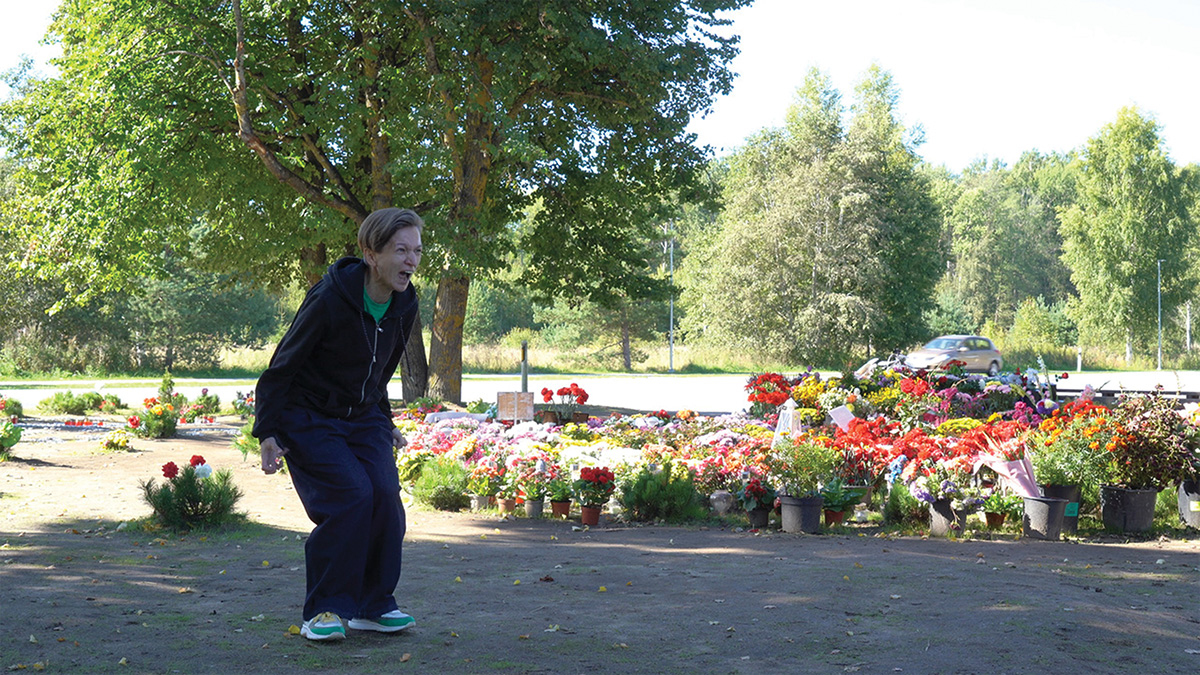
The video is an artist’s momentary personal reaction on the events of August 2022, which took place in Estonia, in Narva, Maria’s home town. Since the war in Ukraine escalated, the removal of Soviet monuments in Estonia became intensively debated topic followed by the government’s decision to demolish any Soviet attributes and monuments from the public spaces. The tank monument in Narva became a stumbling block between the views of different communities within the country. It has especially became symbolic and problematic because it stood right at the border with Russia, on a riverbank of Narva river, facing Estonia. In the final scene the artist stands on that riverbank facing Russia. As Kapajeva grew up on that border, she felt an urge to speak up about the situation with the monument. As the artist states, the video helped her not just to scream out everything what accumulated for the first half a year of the war, but, also, it helped her to regain meaningfulness in her own art practice that she lost since the full invasion of Ukraine by Russia.
Born in the Soviet Union, raised in an independent Estonia and educated in the UK, Maria Kapajeva has found herself in an involuntary position of ‘the other’ everywhere. A position, she has embraced and employs as datum in her artistic practice, leads her to explore a diverse spectrum of cultural identity and gender issues within historical and contemporary contexts. Being originally from a borderland region, border within postcolonial and post-Soviet geopolitical conditions becomes to be the core in her work. She uses various mediums, such as video, photography, textile and installations, to bring to the focus what is often left invisible or stays in peripheral vision. Kapajeva’s works exhibit internationally including some of the solo exhibitions at Estonian National Archive (2013), Estonian Museum of Art KUMU (2022), Finnish Museum of Photography (2021), Lithuanian Gallery of Photography (2020) and Tallinn Art Hall (2020). Her video works were screened at various venues and festivals including Art Viewer (2023, Spain), VAFT: Visual Art Festival (2020, Finland), Luminocity Video Art Festival (2018, Canada), Berlin Feminist Film Week (2017, Germany) and others. Her video work ‘Test Shooting’ received Runner-Up Award at FOKUS Video Art festival (2018, Denmark). Kapajeva is a member of Estonian Artists’ Association.
Philippos Kappa
Catalogue : 2007A-05 | Art vidéo | dv | black and white | 0:44 | Greece | 2006
Philippos Kappa
A-05
Art vidéo | dv | black and white | 0:44 | Greece | 2006
In the video A-05 the artist worked with the footage from a home video filmed in a coffee shop, when a kamikaze blew himself up. The images before and after the explosion were removed, only the sound being kept, and presenting only the crucial seconds of the explosion. Like a lamp that suddenly turns on and off in the dark, like a flash.
Philippos Kappa was born in 1977 in Athens, Greece. He earned a B.A in Fine Art from Middlesex University, London, England in 1999, and a M.A in Fine Art from Central Saint Martins College of Art and Design, London, England in 2000.
Christophe Karabache
Catalogue : 2012Wadi khaled | Experimental doc. | super8 | color | 15:0 | France, Lebanon | 2008

Christophe Karabache
Wadi khaled
Experimental doc. | super8 | color | 15:0 | France, Lebanon | 2008
Jason Karaïndros
Catalogue : 2008Figures | Experimental video | dv | color | 4:0 | Greece, France | 2007
Jason KaraÏndros
Figures
Experimental video | dv | color | 4:0 | Greece, France | 2007
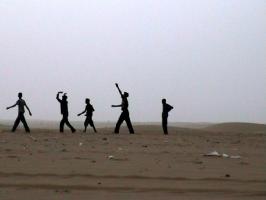
Synopsis Figures Dans ?Figures? on assiste à une danse de silhouettes qui évoluent lentement dans un espace dont les repères se perdent dans la brume de sable et de poussière du Sahara mauritanien. Des gamins s?agitent ; ils apparaissent et disparaissent du cadre sans nous dévoiler vraiment la raison de leur présence ou de leur rencontre. Vont-ils quelque part ? s? amusent-ils ? se disputent-ils ? ou jouent-ils tout simplement une pièce de théâtre d?ombres? Jason Karaïndros 2007
Né en 1963 à Athènes, il vit et travaille à Paris. Il a étudié l'art à l'E.N.S.B.A. de Paris dans l'atelier multimédia de Piotr Kowalski et il est également diplômé de l'École du Louvre où il a suivi une formation en histoire de l'art. Jason Karaïndros a obtenu de nombreux prix, bourses et commandes publiques, et plusieurs de ses ?uvres ont été acquises par de importantes institutions (Fond national d'art contemporain, Cité des sciences et de l'industrie, FRAC Haute Normandie). Durant cette dernière décennie, il a réalisé plusieures expositions personnelles et a participé à un grand nombre d'expositions collectives à travers le Monde (Kunstmuseum, Bergen, Norvège ; Reykjavik Art Museum, Island ; Centre d'Art Contemporain, Bunkamura, Tokyo, Japon ; Centre d'Art Contemporain de Sète ; Musée des Arts Décoratifs, Paris ). Plusieurs publications rendent compte de son travail (dont le catalogue personnel " Take Your Time ", Éd. De la Direction des Affaires Culturelles de la Mairie de Paris, textes St. Carrayrou et D. Truco, 2001). Son intérêt pour une pratique artistique prenant largement en compte les domaines de la science et de la technologie l'a amené à travailler avec les techniques multimédias et à enseigner depuis 5 ans à l'École Régionale des Beaux-Arts de Rouen.
Irini Karayannopoulou
Catalogue : 2007My room | Animation | dv | color | 2:27 | Greece | 2006
Irini Karayannopoulou
My room
Animation | dv | color | 2:27 | Greece | 2006
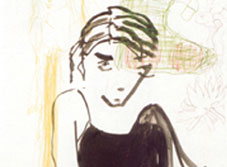
I sing and I shout and I do what I want in the haven of my room this is my room its fascinating treasures would seduce you sucker this is my room and I won't let you in.
Irini Karayannopoulou lives and works in Athens, Greece.
Irini Karayannopoulou
Catalogue : 2011immaterial: 1 film 22 soundtracks | Animation | dv | color and b&w | 2:0 | Greece | 2010
Irini Karayannopoulou
immaterial: 1 film 22 soundtracks
Animation | dv | color and b&w | 2:0 | Greece | 2010
In Immaterial, sharp angled stars, magicians? hats and supernatural landscapes transform perpetually into fantastic abstractions. Based entirely on works on paper, IK s manic animation reveals disparate elements thrown together as if they were meant to be. Like a vision emerging from the mist, this dazed mix of enigmatic scenes engages the spectator in a particularly addictive way. The film s aggressively seductive, constantly changing forms can be compared to a succession of suspended dreams. Yannis Saxonis? music (1 film, 22 soundtracks) envelopes into a familiar yet surprisingly improbable environment with its own unique, undefined logic. As well as, it determines and transforms in a mysterious, almost alchemical way, the impact of images, enriching it at the same time with a metaphysical notion; -as if it was all exercised in a cosmic dimension, in 22 different ways.
Irini Karayannopoulou (born 1973 in Thessaloniki) lives and works in Athens, Greece. Her work consists of video animation, painting, drawings and music (that is, of course, when Yannis Saxonis -who composes the music for most of her video works- allows her to. IK is represented by Ileana Tounta Contemporary Art Center and Lola Nikolaou gallery.
Catalogue : 2008Boys | Animation | dv | color | 3:45 | Greece | 2007

Irini Karayannopoulou
Boys
Animation | dv | color | 3:45 | Greece | 2007
For her video BOYS, Irini Karayannopoulou sticks to her Old -Skool- DIY- Drawings- Only- Animation- Method in an attempt to illustrate her own cover version of Sabrina s 80 s hit "Boys". In the video, the heroine,- a little girl with a murderous desire for love- drinks cocktails in a swimming pool, takes her bikini off, rides a crocodile, wets her 18 th century bed, flirts with super hero Joseph Beuys and after all "she`s looking for a good time..."A copy of BOYS was stolen during Athens Artfair, most probably by a group of ultra conservative let`s say art lovers who were extremely shocked by its content.....
Irini Karayannopoulou is a visual artist;she studied Fine Arts in Saint Etienne, France. Her work has been shown in solo shows and major art fairs in Greece, Italy, France, Germany, Sweden, Switzerland, Egypt, USA... She lives and works in Athens and Skopelos island.
Ernst Karel, Pawel Wojtasik, Toby Lee
Catalogue : 2015Single Stream | Documentary | hdv | color | 23:18 | USA | 2014
Ernst Karel, Pawel Wojtasik, Toby Lee
Single Stream
Documentary | hdv | color | 23:18 | USA | 2014
SINGLE STREAM takes a close look at the problem of waste, through a visual and sonic exploration of a recycling facility. The title refers to the “single stream” method of recycling in which all types of recyclables are initially gathered together, and sorted later at a specialized facility. With SINGLE STREAM, viewers enter one of the largest of these materials recovery facilities in the US. Inside a cavernous building, a vast machine complex runs like clock-work, sorting a steady stream of glass, metal, paper and plastic carried on conveyor belts criss-crossing the space, dotted with workers in neon vests. The interwoven movements of human and machine produce sounds and images that are overwhelming, but also beautiful, and even revelatory. Blurring the line between observation and abstraction, SINGLE STREAM is a meditation on our society's culture of excess and its consequences.
Paweł Wojtasik (b. 1952, Łódź, Poland) creates poetic reflections on cultures and ecosystems in the form of short films and large-scale installations. His investigations into the overlooked corners of the environment have led him to pig farms, sewage treatment plants, wrecking yards and autopsy rooms. His work has shown in venues such as PS1/MoMA, Reina Sofia Museum, Berlinale and New York Film Festival. www.pawelwojtasik.com/ Toby Lee (b. 1980, Los Angeles) is an artist and scholar based in New York, working across video, installation, drawing and text. She holds a PhD in Anthropology and Film & Visual Studies from Harvard University, and she is Assistant Professor of Cinema Studies at NYU’s Tisch School of the Arts. Ernst Karel (b. 1970, Palo Alto) works between experimental nonfiction sound and electroacoustic music. He composes and performs with location recordings and/or analog electronics, often for multichannel environments. As a Lecturer on Anthropology at Harvard University, he teaches a production course in sonic ethnography. http://ek.klingt.org/
Ernst Karel, KUSUMARYATI Veronikia
Catalogue : 2021Expedition Content | Experimental doc. | dcp | color and b&w | 78:0 | USA | 2020
Ernst Karel, KUSUMARYATI Veronikia
Expedition Content
Experimental doc. | dcp | color and b&w | 78:0 | USA | 2020
In 1961, filmmaker Robert Gardner organized the Harvard Peabody Expedition to Netherlands New Guinea (current day West Papua). Funded by the Dutch colonial government and private donations, and consisting of several of the wealthiest members of American society wielding 16mm film cameras, still photographic cameras, reel-to-reel tape recorders, and a microphone, the expedition settled for five months in the Baliem Valley, among the Hubula (also known as Dani) people. It resulted in Gardner's highly influential film Dead Birds, two books of photographs, Peter Matthiessen's book Under the Mountain Wall, and two ethnographic monographs. Michael Rockefeller, a fourth-generation member of the Rockefeller (Standard Oil) family, was tasked with taking pictures and recording sound in and around the Hubula world. Expedition Content is an augmented sound work composed from the archive’s 37 hours of tape which document the strange encounter between the expedition and the Hubula people. The piece reflects on intertwined and complex historical moments in the development of approaches to multimodal anthropology, in the lives of the Hubula and of Michael, and in the ongoing history of colonialism in West Papua.
Ernst Karel (1970, Palo Alto, USA) works with sound, including electroacoustic music, experimental nonfiction sound works for multichannel installation and performance, and postproduction sound for nonfiction vilm, with an emphasis on observational cinema. His work often focuses on the practice of location recording and composing with unprocessed location recordings. In the Sensory Ethnography Lab at Harvard, Karel has collaborated with filmmakers and taught courses in reality-based audio. In fall 2019 he was the visiting fellow at the Center for Experimental Ethnography at the University of Pennsylvania. Veronika Kusumaryati (Bantul, Indonesia) is a political and media anthropologist working in West Papua. Her scholarship engages with the theories and historiography of colonialism, decolonization, and postcoloniality. She has worked as a curator and produced documentaries that were screened at the Jakarta International Film Festival, Oberhausen International Short Film Festival, and Tampere Film Festival. She received her bachelor degree from the Jakarta Institute of Arts majoring in Film and Media Studies. She was a member of the Sensory Ethnography Lab and currently a postdoctoral fellow at Georgetown University Edmund A. Walsh School of Foreign Service.
Alexandra Karelina
Catalogue : 2023Dva | Experimental fiction | 16mm | color | 33:0 | Russia | 2022
Alexandra Karelina
Dva
Experimental fiction | 16mm | color | 33:0 | Russia | 2022
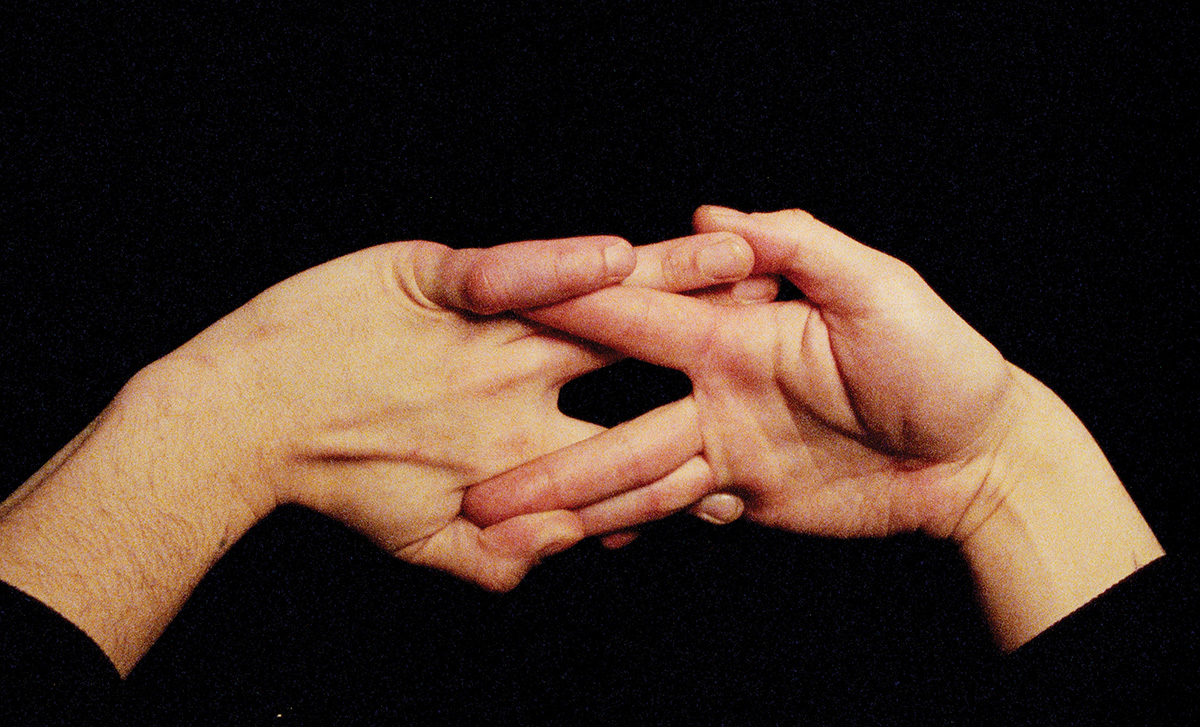
During the inexplicable state of emergency in Moscow, a lonely young man is trying to find his missing dog and to figure out what is truly going on. Eventually, he finds himself in a parallel world where the dead and the living are inseparable, but the word "death" is strictly prohibited.
Since 2015 Alexandra Karelina (b. 1988, Moscow) has been working as a director of documentaries and experimental films. Her films have participated in international film festivals: IFFR, ISFF Oberhausen, Image Forum Tokyo, Le Guess who?, MIEFF etc. “How to behave” was awarded at LUFF 2018 (Switzerland) as ‘Best short fiction’ and ”Bobok” had ‘Special jury mention’ at NHIIDFF 2021 (Russia). Alexandra currently is based in Nancy, France.
Sahraa Karimi
Catalogue : 2008Simona medzi 20. a 21. Marca | Fiction | dv | color and b&w | 11:0 | Afghanistan, Slovakia | 2007
Sahraa Karimi
Simona medzi 20. a 21. Marca
Fiction | dv | color and b&w | 11:0 | Afghanistan, Slovakia | 2007
Simona is a thief, who is living alone. She lost her boyfriend in a car accident. We show a short period of her life between the 20th and 21th of March. During this time she accidently steals a part of somebody?s intimity.
Sahraa Karimi is a young afghan film director. She was born in Kabul- Afghanistan in 1981. She immigrated to Iran, when she was only 15. After 5 years living in Iran she decided to immigrate again. Now she lives in Slovakia, where she has been granted asylum, she had been attending Slovak language course for the entry exam to the university. She is studying at The Academy of Music and Performing Arts, Film and TV Faculty (FTF V?MU) in Bratislava at Art Master Degree. She starred in ?Daughters of the Sun? (1999, Mariam Shahriar), the winning film at film festivals in Montreal, Canada and Bratislava, Slovakia; in ?White Dream? (2000), a film directed by Hamid Jebeli, and in ?Who is Sahraa??(2002), a documentary directed by Hossein Fazeli. Sahraa has directed several short films and documentaries herself, which won many prizes at the different film festivals around the world. Now she is shooting her debut film ?AFGHAN WOMEN BEHIND THE WHEEL?, which is a documentary film and takes place in Kabul- Afghanistan This documentary film will be a collage-edited film depicting the place of a woman in the Afghan society. The film will endeavor to retell this reality through short stories of individual women behind the wheel. The document wants to show that an Afghan woman strives to be active and wants to be useful and beneficial for the society.
Sahraa Karimi
Catalogue : 2006Hladanie Iluzil | Documentary | betaSP | black and white | 26:0 | Afghanistan | 2005
Sahraa Karimi
Hladanie Iluzil
Documentary | betaSP | black and white | 26:0 | Afghanistan | 2005
"The film is about asylum seekers who are leaving in Gabcikovo refugee camp in Slovakia and their every day life, which is passing unused. The most of them are there more than three years, but still did not get asylum. The only contact is phone, by what they can contact with the world of out side. Phone, which makes them happy or angry. Phone, which gives them a new hope. Film is trying to show relationship between refugees and phone and place where they are already there. I choose this place, maybe for this reason that the Gabcikovo refugee camp is a very special place for me too. 3 years ago, I came there and I spent there several months of my life, which were full of sorrows. By this film, I have tried at least to speak with myself and believe it that we did not born because of world, the world created because of us."
Sarah Karimi was born in 1981 in Kabul. In 2004, she enters at The Academy of Music and Performing Arts(major documentary 1997-2000) and takes course of camera 1998-1999, course of singing 1999-2000 and Creative writing.
Sahraa Karimi
Catalogue : 2008Dernière | Experimental video | dv | color | 3:30 | Afghanistan | 2007
Sahraa Karimi
Dernière
Experimental video | dv | color | 3:30 | Afghanistan | 2007
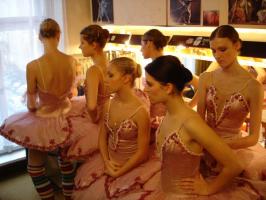
The story is about a photography and the story behind it. There is an old ballerina who has her last performance - derniere. She tries to remember how it was when she was a young beginner balerina. It is a story of a picture in motion ...
Biography: Sahraa Karimi is a young afghan film director. She was born in Kabul- Afghanistan in 1981. She immigrated to Iran, when she was just 15 years old. After 5 years living in Iran she decided to immigrate again. Now she lives in Slovakia, where she has been granted asylum, she had been attending Slovak language course for the entry exam to the university. She is studying at The Academy of Music and Performing Arts, Film and TV Faculty (FTF V?MU) in Bratislava at Art Master Degree. She starred in ?Daughters of the Sun? (1999, Mariam Shahriar), the winning film at film festivals in Montreal, Canada and Bratislava, Slovakia; in ?White Dream? (2000), a film directed by Hamid Jebeli, and in ?Who is Sahraa??(2002), a documentary directed by Hossein Fazeli. Sahraa has directed several short films and documentaries herself, which won many prizes at the different film festivals around the world. Now she is shooting her debut film ?AFGHAN WOMEN BEHIND THE WHEEL?, which is a documentary film and takes place in Kabul- Afghanistan This documentary film will be a collage-edited film depicting the place of a woman in the Afghan society. The film will endeavor to retell this reality through short stories of individual women behind the wheel. The document wants to show that an Afghan woman strives to be active and wants to be useful and beneficial for the society.
Jackie Karuti
Catalogue : 2018There Are Worlds Out There They Never Told You About | Animation | hdv | color and b&w | 1:6 | Kenya | 2016
Jackie Karuti
There Are Worlds Out There They Never Told You About
Animation | hdv | color and b&w | 1:6 | Kenya | 2016
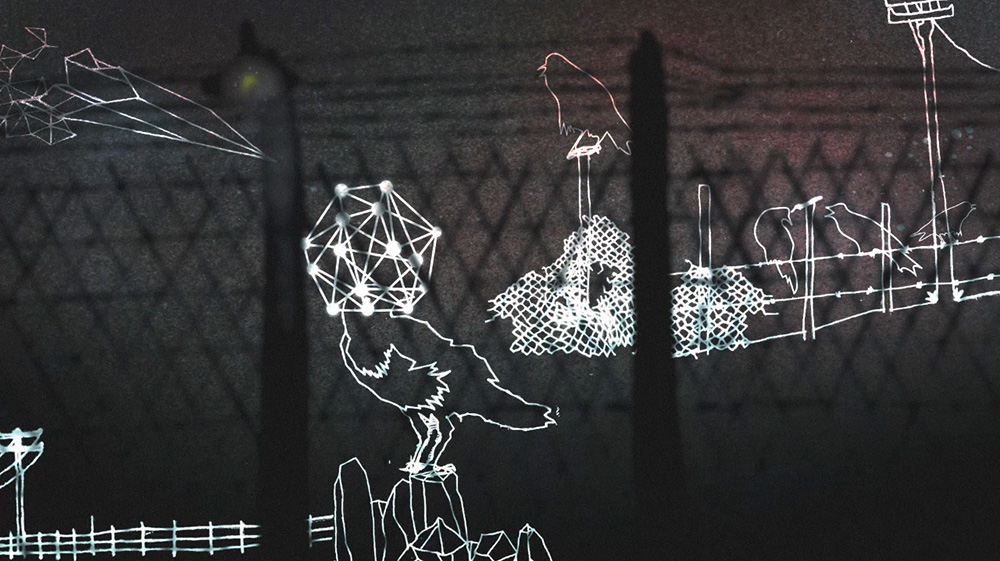
There are worlds out there they never told you about, 2017 is a video that is part of a larger body of work under the same title. While rightfully addressing tragic stories of migration through water, the work viewed collectively through drawings and new media is also about reimagining freedom through the imagination and creation of fantastic worlds. Worlds that are less about occupying physical space but more about cultivating ways that one can be free in a place where home and freedom remain elusive.
Jackie Karuti is an artist based in Nairobi. Her practice is largely experimental and employs the use of new media through drawings, video, installations and performance art. Her work is founded on ideas around knowledge production & accessibility as well as the depths of possibility enabled by radical imagination. Karuti is the 2017 recipient of the Young Artist Award at the Cape Town Art Fair, an alumna of the Gasworks residency program in London as well as Asìko, a roaming Pan African art school designed to redress the frequently outdated or non-existent artistic and curatorial curricula at tertiary institutions across Africa. In 2017 she was shortlisted for the residency program at The Rijksakademie. Karuti has participated in several exhibitions & residencies, both locally & abroad as well as multidisciplinary projects such as curating the Out Film Festival-Nairobi (2016-2018). In 2017 she established the online platform, I’ve Been Working on Some MAGIC which seeks to engage Nairobi based visual artists in critical writing, collective curatorial projects as well as sharing audiovisual material. In 2018 Karuti’s work will debut at the 13th edition of the Dak’Art Biennial in Dakar, Senegal.
Dagmar Kase
Catalogue : 2007E-Media Centre, Estonian Academy of Arts | 0 | 0 | | 0:0 | Estonia | 2007

Dagmar Kase
E-Media Centre, Estonian Academy of Arts
0 | 0 | | 0:0 | Estonia | 2007
Incorporated in 1994 and re-organized in 2000, E-Media Centre (EMC) focuses on research and instruction and promotion of digital culture and art in Estonia. The EMC is open to students for the acquirement of information and multimedia skills, as well as the realization of study projects. The centre offers the possibility to create different projects with the techniques of digital media, and organizes equipment rental and lectures in the framework of the Estonian Academy of Arts. The Master's programme in Interactive Multimedia (IMM) has been available since the 2000/2001 academic year. The two-year MA programme is organized in modules to offer theoretical and practical skills in digital media. Study takes place in the form of traditional lectures/workshops, as well as online lectures/seminars, using several international specialists as lecturers. Besides teaching, the EMC regularly hosts smaller events: special workshops, courses and symposiums, providing essential practical skills for students, teachers, artists, as well as the public at large. The centre participates in various joint projects, research, residencies and cooperation networks. It has collaborated with Hypermedia Research Centre from University of Westminster, London; Electronic Music Studio of Estonian Academy of Music; Contemporary Art Centre; thealit, Bremen; Estonian Museum of Art; and m-Cult from Helsinki, to mention just a few. Currently the EMC is an active member of TMC (Tallinn Media Cluster) and NICE network. In 2003 NICE offered a common ground for new media culture initiatives in the Baltic region. Additionally, the E-Media Centre has been actively involved with artist-in-residency programs like NIFCA and MapXXL.
Dagmar Kase earned a BA in Scenography in 2001 from the Estonian Academy of Arts (EAA); a MA in Interactive Multimedia in 2004 from the EAA; and since 2005 is a PhD candidate in Theory of Culture at the Estonian Institute of Humanities, Tallinn University. She is a member of The Estonian Artists' Association and Estonian Media Artists Union, as well as head of the E-Media Centre at the Estonian Academy of Arts. She works mainly with video, photography, text, sound, and (interactive) installation. Her work discusses our contemporary society which is a global playful organ that functions as a whole of the components of the era. The central questions are time, space/place, memory, and identity. She finds that it is important to meditate on the world that surrounds us and to grow deeper to see the importance of simple things/events, combining theory and practice in order to create interdisciplinary works.