Catalogue > List by artist
Browse the entire list of Rencontre Internationales artists since 2004. Use the alphabetical filter to refine your search. update in progress
Gregor Kasper, Elom 20ce, Musquiqui Chihying
Catalogue : 2025The Currency - Sensing 1 Agbobloshie | Experimental film | 4k | color | 16:12 | Germany | 2023
Gregor Kasper, Elom 20ce, Musquiqui Chihying
The Currency - Sensing 1 Agbobloshie
Experimental film | 4k | color | 16:12 | Germany | 2023
A landscape of electronic equipment leftovers, embedded in biting clouds of smoke, burnt earth and dirty water. In Agbogbloshie - one of the world's largest e-waste recycling sites in the middle of Accra - they were dismantled and burnt in order to return their metals to the industrial recycling cycles. In between, an observer who, by means of acoustic field research, investigates this place as a contact zone of complex global economic, social, power-political and technological processes and questions this from a spiritual perspective.
Elom 20ce is a musican and filmmaker based in Togo, West Africa. He uses art as a vessel to excavate the past, questioning the present and archiving the future. The link between the intimate, the spiritual and the political is at the heart of his work. He called himself a ”knocker of the invisible”. Musquiqui Chihying is a filmmaker based in Taipei and Berlin. Specialising in the use of multimedia such as film and sound, he investigates the human condition and environmental system in the age of global capitalisation and engages in the inquiry of and research on issues of subjectivity in contemporary social culture in the Global South. Gregor Kasper is an artist and filmmaker based in Berlin. Using a variety of media such as film / video, sound and installation, often in collaborative and participatory constellations, his artistic practice focuses on the construction and mediation of history and remembrance, social contemporary analyses in the context of global capitalism, and emancipative futures, pursuing the interrelations between personal approaches and social counter/hegemonic narratives and power relations.
Wojciech Kasperski
Catalogue : 2007Nasiona | Documentary | dv | color | 27:9 | Poland | 2005
Wojciech Kasperski
Nasiona
Documentary | dv | color | 27:9 | Poland | 2005
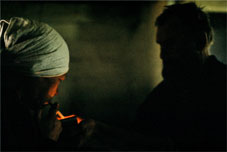
A small village in the beautiful mountains of southern Siberia. A family living out of the way, not accepted by the society. They have their own secrets. Step by step, we get involved in their mysterious world. Strong characters, complicated relationships, and an uncovered story in the background. No fiction. Real world, no matter how surrealistic it appears to be. Real people. Real life. Real story.
Katharina Kastner
Catalogue : 2020Villa Empain | Experimental doc. | 16mm | color and b&w | 24:30 | Austria, Belgium | 2019
Katharina Kastner
Villa Empain
Experimental doc. | 16mm | color and b&w | 24:30 | Austria, Belgium | 2019
A unique blend of Bauhaus and Art Déco, the marvellous Villa Empain has had many different lives since it opened in 1934. A story of survival. ____ VILLA EMPAIN draws a mental map of a space, as it goes through time. Concrete marble, brick and steel: little else made by human hands seems as stable, as immutable, as a building. Yet the life of any structure is neither fixed nor timeless. Outliving their original contexts and purposes, buildings are forced to adapt to each succeeding age. To survive, they must become shapeshifters. VILLA EMPAIN compares the life of Louis Empain and his creation. It bears witness to how a fixed idea, an architect’s dream, has disappeared in favour of a living architecture. The work is activated.
Katharina Kastner is an Austrian filmmaker working in Vienna and Brussels. She studied directing at TISCH School of the Arts in NYC and LUCA, Brussels. Her experimental short film about a museum of contemporary art, VILLA EMPAIN, builds upon the concept of psychogeography and draws a mental map of a space as it goes through time. Katharina Kastner’s films combine documentary, essayistic and experimental elements. She is interested in fragile environments and the people behind these, using the camera to explore inner and outer transformations. Time and memory are recurring themes in her work.
Katharina Kastner
Catalogue : 2021VILLA EMPAIN | Experimental doc. | 16mm | color and b&w | 24:0 | Austria, Belgium | 2019

Katharina Kastner
VILLA EMPAIN
Experimental doc. | 16mm | color and b&w | 24:0 | Austria, Belgium | 2019
Villa Empain was a passion, a vision, a plan, a home, an artwork. It is a heartfelt dream that was abandoned. Villa Empain, today, looks like it did in the 1930s, but it has turned into another entity held by the same fundament. Villa Empain exists between past and present, comprised of pieces of contemporary art within a single, unique piece of Art Déco and Bauhaus. It is a humble and enduring architectural body. It is a dichotomy of private mansion and public space. It is a conversation between a family’s history and an architect's dream, between a father's travelogue and an artist's performance, an encounter of water on stone, of charcoal on paper and of light on film. Concrete, marble, brick and steel: little else made by human hands seems as stable, as immutable as a building. Yet, the life of any structure is neither fixed nor timeless. Outliving their original purposes, buildings are forced to adapt to each succeeding age. To survive, they must become shapeshifters. Villa Empain's atmosphere is strange and full of wonders. The camera touches gently upon textures, as if to glimpse the moments they witnessed. There is a secret to unveil, but as with every good secret it evades us, it is elusive, we can never grasp it. This experimental short film is an attempt to find out about something that we cannot put our fingers on. So we put our fingers on wood, water, marble instead, and feel.
My interest in personal and political transformations led me to gain a Bachelor in Psychology and International Relations, before graduating from Doc Nomads, a travelling film school based in Lisbon, Budapest and Brussels. Throughout my career I was working as production manager and assistant director in documentary, fiction and advertising, and I was lucky that the projects took me to inspiring places in Africa, Australia, the US and Europe. My work is influenced by fragile environments and the people behind these. Drawing upon the idea of psychogeography, I am searching for traces, using analogue film to document and explore inner and outer transformations.
Kyoko Kasuya
Catalogue : 2026Diary of Eve's Land | Documentary | 4k | color | 40:5 | Japan | 2025

Kyoko Kasuya
Diary of Eve's Land
Documentary | 4k | color | 40:5 | Japan | 2025
Diary of Eve’s Land draws from a series of video interviews Kyoko Kasuya, Japanese artist, filmmaker conducted in Jeddah, Saudi Arabia, in 2023. Through social media, she invited women to participate in the project, ultimately bringing together five individuals from diverse backgrounds: a doctor, a psychologist, a medical student, an IT professional, and an immigrant studying at an online university. Against the backdrop of Saudi Arabia’s sweeping societal transformation under the Vision 2030 government initiative, the work captures candid testimonies and everyday footage of women navigating the tensions between societal expectations and their personal aspirations. At the same time, Kasuya’s perspective as a Japanese woman—shaped by her own confrontations with society—traces the figures of Saudi women from behind, creating a documentary of intersecting gazes.
Kyoko Kasuya is a Japanese visual artist and filmmaker based between Paris (France) and Tokyo (Japan). After studying African American literature at Aoyama Gakuin University in Tokyo and gaining brief experience in the corporate sector, she moved to France. Marked by her grandfather’s accounts of the Second World War, she developed an interest in the wartime diaries of two student soldiers, Hachir? Sasaki and Tokumitsu Takushima, published under the title Listen to the Voices from the Sea (Kike Wadatsumi no Koe). This research inspired her films Listen to the Voices of the Sea (2019) and Silence Bleu (2022), which were screened notably at WIELS in Brussels and at Kino 35 of the Institut Français in Prague. During the first lockdown in France in 2020, Kasuya joined The Crown Letter, an international women artists’ collective, with which she exhibited in Paris, at BIENALSUR in Argentina and Uruguay and at KYOTOGRAPHIE (KG+) in Kyoto. In 2023, she received the Allotment Travel Award for her film Diary of Eve’s Land, shot in Jeddah and premiered at MEM Gallery in Tokyo and the Yebisu International Festival for Art & Alternative Visions 2025.
Eszter Katalin
Catalogue : 2019Mária Vörösben | Experimental video | hdcam | color | 28:39 | Hungary, Austria | 2018
Eszter Katalin
Mária Vörösben
Experimental video | hdcam | color | 28:39 | Hungary, Austria | 2018
A woman visits a prison in the village of Márianosztra (Hungary) to find out more about the ongoing production of barbed wire by the inmates of the institution for various European border fences. Subsequently, she engages in a research about those women who were imprisoned there for being communists and antifascists between 1920 and 1944 at a time when it was run by nuns as a place to "re-discipline" the sentenced person through labor and prayer. The voice of a ghost belonging to a female political prisoner follows her as she is trying to connect past and present through gestures of mourning.
Eszter Katalin (born 1991, Budapest) is an artist based in Vienna. She has recently finished her master`s degree in Critical Studies at the Academy of Fine Arts in Vienna (2015-2018). In her works she focuses on the tensions between political struggles and their representation within a so-called critical artistic practice, departing frequently, but not solely, from Hungary’s social context as marked through its politics of memory and exclusion. Her latest works include her film MEGSZAKÍTÁS* Civil Aktivizmus Magyarországon (MEGSZAKÍTÁS* Civil Activism in Hungary, video in four parts, 76 min, 2017), Versammlung (Coming together, audio piece, 9 min, 2017) and Mária Vörösben (Mary in Red, video, 28:39 min, 2018).
Julia Kater
Catalogue : 2017Breu | Video | hdv | color | 4:0 | Brazil | 2016
Julia Kater
Breu
Video | hdv | color | 4:0 | Brazil | 2016
In Breu (Pitch black), the recorded images present, in a non-linear montage, the semi-artisanal paving process of a rectangle arbitrarily drawn in the middle of a vacant lawn. The soundtrack brings a circular text that overflows in modal adverbial adjuncts (mainly right and wrong),without defining any clear object, the text builds the speech in an endless cycle, onto which the ideas of progress and evolution cannot be applied.
JULIA KATER | 1980 ‘ Paris, France Lives and works in Sao Paulo, Brazil. Graduated in Photography from the School of Advertising and Marketing - ESPM (Sao Paulo - Brazil). The research of the artist Julia Kater is guided in the elaboration of a body of work that can treat it from its visual improbability. Whether by the collage brought about by different overlaid photographic prints, which announces a watchful sky ‘ despite its invisible character ‘ or by videos that bring about the rearrangement of a set of actions and phrases, each work in its own way prioritizes the elaboration of bodies from everyday scenes that suggest simultaneous shared experiences with the persistent memory together with its struggle with forgetfulness, its ally and the cause of the gradual loss of a large part of the truths. Kater regularly participates in exhibitions in Brazil and abroad, in countries like France, USA, Belgium and Portugal.
Vytautas Katkus
Catalogue : 2021Kolektyviniai sodai | Fiction | 16mm | color | 15:0 | Lithuania | 2019
Vytautas Katkus
Kolektyviniai sodai
Fiction | 16mm | color | 15:0 | Lithuania | 2019
Patriarchal masculinity seems to catch its last breath in the sun. A story about a cold relationship between a father and his son. Their bond, plagued by indifference, disintegrates completely.
Born in 1991 in Vilnius, Lithuania, Vytautas Katkus graduated with a Bachelor's Degree in cinematography from the Lithuanian Academy of Music and Theatre. He works as cinematographer in movies as well in video art projects. He won best young cinematographer award by Lithuanian Association of Cinematographers in 2014 and 2015. Since 2016 he is a member of Lithuanian Association of Cinematographers. ?Kolektyviniai sodai (Community Gardens), his debut short film, is selected at the 58th Semaine de la Critique.
Timo Katz
Catalogue : 2007Whirr | Experimental video | dv | color | 3:0 | Germany | 2006
Timo Katz
Whirr
Experimental video | dv | color | 3:0 | Germany | 2006
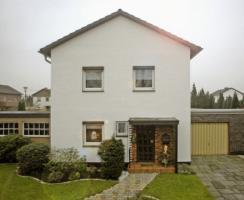
The modifications that the inhabitants of a housing estate have brought to the standardized model of their house are revealed in a rhythmic way. The video camera opens a space of multiplicity and constant variability, using the schematic organization of the buildings. The architectural surface changes are depicted as swings. What is concrete dances - on the dance floor of the abstract.
Timo Katz was born in 1977 in Siegen. From 1999 to 2006 he has studied film design and photography at the College of Bielefeld, and graduated as a designer in February 2006. He lives in Bielefeld and works on experimental films projects as well as commissions.
Timo & Jan Katz & Fuchs
Catalogue : 2009die Welt | Video installation | dv | color | 5:0 | Germany | 2008
Timo & Jan Katz & Fuchs
die Welt
Video installation | dv | color | 5:0 | Germany | 2008
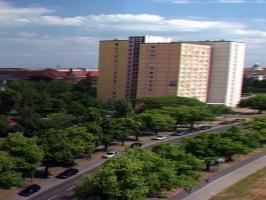
The experimental video work ?Die Welt? concerns space-time perception in our visual experiment of the world. Our perception is not only defined by photography, but especially by the rules of the main perspective. This one shows and explains the visible world through a diagrammatic simplification. This work is interested in the widened use of the camera like prosthesis of observation for the discovery and the recognition of the visible one. The main perspective here is broken and disintegrated. The piece, under consideration through this process of disintegration, undergoes a shift in time and space. The edition, and only the edition, makes it possible to make visible an alternated Space-Time-Vision. It raises the question of the significance of technical widening growth of our tool of observation, and its consequences at the present and in the future. It underlines moreover our tendency to depend more and more on models of perception already built.
Timo Katz was born in 1977 in Siegen. He studied the photo and film graphic design at the Higher School of Bielefeld where he obtained his diploma in 2006. He has been working since 2002 in the field of videos and experimental films. He currently lives and works in Leipzig. He started with Jan Fuchs the independent group of visual research Katz&Fuchs. Jan Fuchs was born in 1976 in Hamburg. He studied photo-and film graphic design at the Bielefeld School and obtained his diploma in 2004. HE has been working since 2002 in the field of videos and experimental films. He lives and works in Kassel. He started the independent group of visual research Katz&Fuchs with Timo Katz.
Yuki Kawamura
Catalogue : 2006Sekainoaté | Fiction | dv | color | 53:0 | France | 2005
Yuki Kawamura
Sekainoaté
Fiction | dv | color | 53:0 | France | 2005
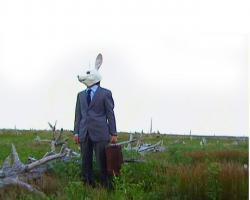
Haruto is driving around on the desert roads of Hokkaido and picks up a rabbit man hitch hiker who offers him a mask. Tetsu is looking for the part of himself he has lost. Sona is ignoring Tetsu?s bad feelings.Miwa is hesitating whether to follow the rabbit man in an unknown world. Some lives, blurred paths that connect and disconnect between the real world and an imaginary one.
Yuki Kawamura is born in Kyoto, Japan. After filming studies, he directs his first film in 1999 NUMERO 2 which is still sold at the Georges Pompidou museum in Paris and at the Hara museum in Tokyo. He begins a real approach on the light, the real and the imaginary world but also on the colors and the frame.
Naomi Kawase
Catalogue : 2007Naissance et maternité | Documentary | dv | color | 60:0 | Japan | 2005
Naomi Kawase
Naissance et maternité
Documentary | dv | color | 60:0 | Japan | 2005
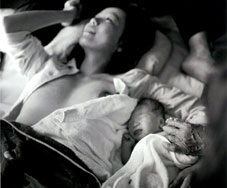
In this documentary film, the filmmaker Naomi Kawase, having becoming a mother, pursues her personal work of the interrogation of the world. Her son Mitsouki was born on April 24, 2004, at 10:40. His birth was a traditional one, without medicine, with only the assistance of a midwife in an old Japanese house on a tatami surrounded by her family. As the umbilical cord was cut, Naomi recorded this highly symbolic moment, as well as all the people that had affectionately been present. Day by day since then, she sees and films her son and her ninety year old grandmother in their old house of Nara. The film develops on two dimensions: one with the child growing up under the attentive watch of his mother and great-grandmother, and one of the artist's own infancy told in the first person.
Shoichiro Kawashima
Catalogue : 2025You Must Believe in Spring | Fiction | mov | color | 51:0 | Japan | 2024
Shoichiro Kawashima
You Must Believe in Spring
Fiction | mov | color | 51:0 | Japan | 2024
One Saturday afternoon at an art school, Tania is immersed in preparations for a crucial exhibition. She anxiously awaits the arrival of visitors, especially Nathalie—her late brother's fiancée. Reconnecting after years apart, their conversations sway between the mundane and the intimate, tension and relief. Loosely inspired by Natsume S?seki’s novel "Light and Darkness", the film explores the subtle power of words that shape our emotions.
Born in 1993 in Miyazaki, Japan, Shoichiro Kawashima currently lives and works in Tokyo. A graduate of Beaux-Arts de Paris, the National School of Fine Arts in France, under the guidance of Clément Cogitore and Angelica Mesiti, he has been working as a director and producer in Japan since 2023.
George Kazazis
Catalogue : 2006Mickey, Mickey where are you? | Art vidéo | dv | color | 3:25 | Greece | 2004
George Kazazis
Mickey, Mickey where are you?
Art vidéo | dv | color | 3:25 | Greece | 2004
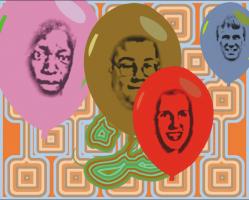
We are constantly inundated by images of violence, and at the same time by images of lifestyle. The contrast is certainly great. Sentiments vary, but whichever way we look at it, both kinds exist so vividly as to be indispensable. In the morning of April 20, 1999 two young Americans, 15-year-old Eric Harris and 18-year-old Dylan Klebal, went to their school, the Columbine High School in Littleton, USA carrying guns and hand-grenades. They killed 14 of their fellow students and one teacher. Most of the victims were in the cafeteria of the school. The whole incident was recorded on closed-circuit TV. This event is so important in itself as to eclipse even the shine of a global symbol. The video starts with Mickey and Minnie Mouse at various poses, running and twirling amidst flashing colours. Is this a party or a bloodbath? The music form the song "My Cat Fell In The Well" (1983) by Manhattan Transfer accompanies them, carefree yet also persistent at the same time. The song tells in a cheerful way the dramatic story of a glamorous star-cat that fell down a well, and its owner"s distress until it was found. Suddenly, the music stops and the video shows the faces of the unfairly killed children, those who believed in the carefree innocence of Mickey Mouse or any other Mickey Mouse. For the rest of us relief does come in the end, as Mickey reappears and the music starts playing again. The issue is no longer our concern. This could never happen to us.
George Kazazis was born in Athens in 1958, where he lives and works. He has been teaching at the Athens School of Fine Arts since 1990. Was member of the Project Space, Athens, (artist -run space founded in 2000-2001)
Leonie Kellein
Catalogue : 2026Stupor | Experimental fiction | 4k | color | 16:35 | Germany | 2024

Leonie Kellein
Stupor
Experimental fiction | 4k | color | 16:35 | Germany | 2024
In the short film Stupor a traumatizing attack —recounted by a voice off-scree — is anticipated and thereby narrowly averted. The film is set in a dark, eerie ice rink where several people come into view via slow-motion camera movements. Video and audio seem to run on separate tracks.
Berlin-based artist and filmmaker Leonie Kellein works across moving image, sculpture and installation to explore how perception is shaped, and at times unsettled, by the technologies that frame it. Her practice examines the tension between bodily awareness and mechanical recording, creating moments where seeing becomes an embodied and uncertain act. Through this focus on the filmic gaze, she investigates how acts of looking reveal the politics and material operations of the image itself. Kellein’s current research extends into the areas of trauma, memory and spatial disorientation. Her recent works consider how the body registers imbalance, translating psychological and sensory states into cinematic form. Using techniques such as the Vertigo effect, she transforms optical distortion into a means of sensing the unstable connections between body, machine and world. Leonie Kellein holds an MA Artists’ Film and Moving Image degree from Goldsmiths, University of London (2022), as a DAAD scholarship holder, as well as a BA in Fine Art (2020) from the Academy of Fine Arts Hamburg. She has recently presented her work at the Falckenberg Collection of the Deichtorhallen Hamburg, Kunsthalle Basel, Art Basel, Kunsthalle Wilhelmshafen, Kunstverein Freiburg and the International Filmfestival FID Marseille, amongst others.
David Kelley
Catalogue : 2026African Union | Experimental film | mp4 | color | 4:4 | USA | 2025
David Kelley
African Union
Experimental film | mp4 | color | 4:4 | USA | 2025
African Union responds to 2018 reports of Chinese surveillance at the African Union Headquarters in Addis Ababa. Made with generative AI, commercial stock imagery, and documentary footage, the film explores digital imperialism, data extraction, and the ideological entanglements of AI within the evolving dynamics of China–Africa political and technological relations.
David Kelley’s work traces the hidden ecologies of global infrastructure—from deep-sea mining and the Silk Road to Alberta’s oil sands and the extraction of rare earth elements in China. Working across film, photography, installation, and sculpture, he explores how technology, modernity, ecology, and memory operate as interwoven systems of mediation. His practice draws on essay film, experimental ethnography, and experimental theater, using form as a site for affective experience, ambiguity, and transgression. Kelley approaches research as an aesthetic process, privileging sensorial and speculative modes over purely discursive ones. His projects often involve site-specific production, archival research, and the integration of everyday objects and theatrical constructions within immersive environments. Scientific specimens—borrowed from natural history collections or reimagined in glass, ceramic, and stone—anchor his installations in material history while opening space for surreal and speculative encounters. His work has been exhibited internationally at the Museum of Modern Art, New York; Rencontres Internationales Paris/Berlin; and The Bank, Shanghai. Upcoming presentations include LACMA in Los Angeles and the Global Visions FotoFest Biennial 2026 in Houston. Kelley holds an MFA from UC Irvine and was a 2010–11 Whitney Independent Study Program fellow.
Catalogue : 2019Spiritual Myopia | Experimental film | hdv | color | 15:0 | USA | 2018
David Kelley, Patty Chang
Spiritual Myopia
Experimental film | hdv | color | 15:0 | USA | 2018
Spiritual Myopia is a film dealing with the invisible labor and desire of the residents of the oil industry boom towns of Fort McMurray in the Canadian Tar Sands and the refining town of Port Arthur Texas. The two cities are terminal nodes of the proposed Keystone XL oil pipeline which would span the United States. Fort McMurray is the third largest oil deposit in the world. Its rapid pace of growth has meant a dearth of housing for its migrant workers. Port Arthur boasts the world’s largest concentration of oil refineries and its town center has nearly disintegrated from economic decline. These twin cities are related spatially as nodes in the same energy infrastructure, and temporally in their different stages of a boom or bust economy. Borrowing its title from Alfred Stieglitz’s photo Spiritual America, Spiritual Myopia speaks to the nearsightedness innate to hypercapitalism.
Spiritual Myopia is a collaboration between artists David Kelley and Patty Chang Patty Chang (Lives and works in Los Angeles, CA) Patty Chang is an artist working in performance, video, writing, and installation. Her work has a capacity to explore complex subjects nearly simultaneously, as does life. Her work has been exhibited nationwide and internationally at such institutions as the Museum of Modern Art, New York; Solomon R. Guggenheim Museum, New York; New Museum, New York; BAK, Basis voor actuele Kunst, Utrecht, the Netherlands; the Hammer Museum, Los Angeles; Fri Art Centre d’Art de Freibourg, Fribourg, Switzerland; Chinese Arts Centre, Manchester, England David Kelley (Lives in Los Angeles California, CA.) David Kelley’s work is a hybrid of experimental documentary and ethnographic practices that make use of imaginary, choreographic and performative strategies. His work has been shown in galleries throughout the world. Recently, he has had exhibitions at the Museum of Modern Art in New York, White Box in Portland Oregon, and Commonwealth and Council in Los Angeles. Other recent exhibitions include The Bank in Shanghai, New Art Center, the de Cordova Biennial in Boston, BAK in Utrecht, MAAP space in Brisbane Australia.
David Kelley, Patty Chang
Catalogue : 2026African Union | Experimental film | mp4 | color | 4:4 | USA | 2025
David Kelley
African Union
Experimental film | mp4 | color | 4:4 | USA | 2025
African Union responds to 2018 reports of Chinese surveillance at the African Union Headquarters in Addis Ababa. Made with generative AI, commercial stock imagery, and documentary footage, the film explores digital imperialism, data extraction, and the ideological entanglements of AI within the evolving dynamics of China–Africa political and technological relations.
David Kelley’s work traces the hidden ecologies of global infrastructure—from deep-sea mining and the Silk Road to Alberta’s oil sands and the extraction of rare earth elements in China. Working across film, photography, installation, and sculpture, he explores how technology, modernity, ecology, and memory operate as interwoven systems of mediation. His practice draws on essay film, experimental ethnography, and experimental theater, using form as a site for affective experience, ambiguity, and transgression. Kelley approaches research as an aesthetic process, privileging sensorial and speculative modes over purely discursive ones. His projects often involve site-specific production, archival research, and the integration of everyday objects and theatrical constructions within immersive environments. Scientific specimens—borrowed from natural history collections or reimagined in glass, ceramic, and stone—anchor his installations in material history while opening space for surreal and speculative encounters. His work has been exhibited internationally at the Museum of Modern Art, New York; Rencontres Internationales Paris/Berlin; and The Bank, Shanghai. Upcoming presentations include LACMA in Los Angeles and the Global Visions FotoFest Biennial 2026 in Houston. Kelley holds an MFA from UC Irvine and was a 2010–11 Whitney Independent Study Program fellow.
Catalogue : 2019Spiritual Myopia | Experimental film | hdv | color | 15:0 | USA | 2018
David Kelley, Patty Chang
Spiritual Myopia
Experimental film | hdv | color | 15:0 | USA | 2018
Spiritual Myopia is a film dealing with the invisible labor and desire of the residents of the oil industry boom towns of Fort McMurray in the Canadian Tar Sands and the refining town of Port Arthur Texas. The two cities are terminal nodes of the proposed Keystone XL oil pipeline which would span the United States. Fort McMurray is the third largest oil deposit in the world. Its rapid pace of growth has meant a dearth of housing for its migrant workers. Port Arthur boasts the world’s largest concentration of oil refineries and its town center has nearly disintegrated from economic decline. These twin cities are related spatially as nodes in the same energy infrastructure, and temporally in their different stages of a boom or bust economy. Borrowing its title from Alfred Stieglitz’s photo Spiritual America, Spiritual Myopia speaks to the nearsightedness innate to hypercapitalism.
Spiritual Myopia is a collaboration between artists David Kelley and Patty Chang Patty Chang (Lives and works in Los Angeles, CA) Patty Chang is an artist working in performance, video, writing, and installation. Her work has a capacity to explore complex subjects nearly simultaneously, as does life. Her work has been exhibited nationwide and internationally at such institutions as the Museum of Modern Art, New York; Solomon R. Guggenheim Museum, New York; New Museum, New York; BAK, Basis voor actuele Kunst, Utrecht, the Netherlands; the Hammer Museum, Los Angeles; Fri Art Centre d’Art de Freibourg, Fribourg, Switzerland; Chinese Arts Centre, Manchester, England David Kelley (Lives in Los Angeles California, CA.) David Kelley’s work is a hybrid of experimental documentary and ethnographic practices that make use of imaginary, choreographic and performative strategies. His work has been shown in galleries throughout the world. Recently, he has had exhibitions at the Museum of Modern Art in New York, White Box in Portland Oregon, and Commonwealth and Council in Los Angeles. Other recent exhibitions include The Bank in Shanghai, New Art Center, the de Cordova Biennial in Boston, BAK in Utrecht, MAAP space in Brisbane Australia.
David Kelley
Catalogue : 2023The Book of the Dead | Experimental doc. | 4k | color | 19:42 | USA | 2023
David Kelley
The Book of the Dead
Experimental doc. | 4k | color | 19:42 | USA | 2023
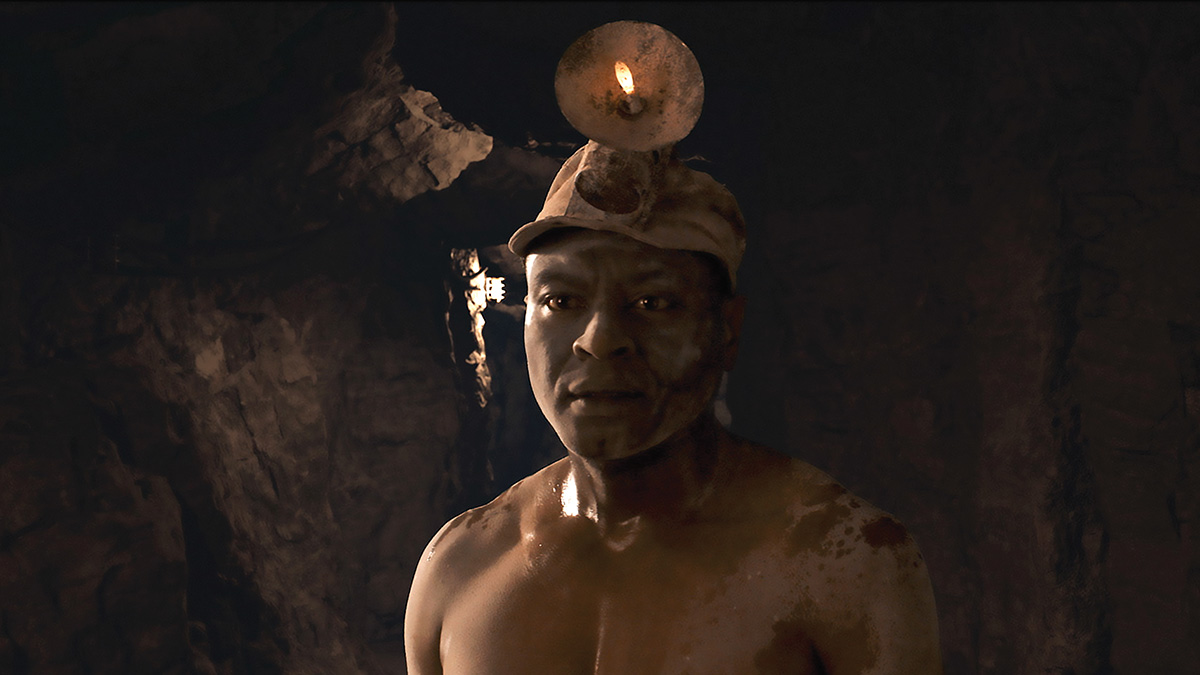
The Book of the Dead is an experimental documentary meditating on the American poet Muriel Rukeyser’s poem about the Gauley Tunnel tragedy. In the 1930s in West Virginia, nearly 2,000 primarily Black migrant workers were sickened or killed by silicosis, a lung disease caused by breathing silica dust. Rukeyser travelled to West Virginia to meet workers and their families, in some cases, appropriating their words directly. The film revises her white characters to a predominately Black cast — more accurately reflecting the insidious racism prevalent in American society at the time. The film appropriates interviews with the poet, her unfinished screenplay, and worker’s testimony to U.S. Congress. Using actors, theatrical sets, and 3D generated backgrounds, the film produces a multisensory experience of Rukeyser’s process and the industrial tragedy. Unable to travel during the Covid-19 pandemic, Kelley designed the West Virginia mining sets in Unreal, a 3D gaming software and filmed actors at a green screen studio near his home in Los Angeles. The work's theme of failure to breathe poignantly resonates with the Covid-19 pandemic, and the final words turned protest chant of George Floyd: I can't breathe.
David Kelley (Born in Portland Oregon. Lives in Los Angeles California.) Kelley is an artist working with photography, video, and installation. His recent projects draw attention to the effects of global capitalism, resource extraction, and shifting physical and political landscapes. Influenced by a range of visual traditions, Kelley draws upon elements of experimental documentary, ethnography, performance, and avant-garde cinema. By working at the intersection of these strategies, he encourages an understanding of his subjects that is simultaneously direct and speculative. His work has been shown in galleries and museums nationally and internationally. Recent exhibitions include the Museum of Modern Art in New York and Fotofest Biennial, Houston. Other exhibitions include Commonwealth and Council in Los Angeles, The Bank in Shanghai, the de Cordova Biennial in Boston, BAK in Utrecht, MAAP space in Australia, and the Jim Thompson Art Center in Bangkok. Kelley received a Master of Fine Art from the University of California, Irvine, and was a 2010 -11 resident at the Whitney Museum of American Art Independent Study Program. He is currently based in Los Angeles, California, and is an Associate Professor of the Practice at the Roski School of Art and Design, University of Southern California.
David Kelley
Catalogue : 2025Non Human | Video | 4k | color | 10:34 | USA | 2022
David Kelley
Non Human
Video | 4k | color | 10:34 | USA | 2022
NON HUMAN is a film made from poems written in collaboration with an Artificial Intelligence (recurrent neural network) and five artists — York Chang, Marcus Civin, Tia-Simone Gardner, Viet Le, and Yvonne Rainer. Inspired by poet Muriel Rukeyser’s technique for writing The Book of the Dead (1937), a poem in which she directly quotes workers’ voices from congressional testimony about the Hawk’s Nest mining catastrophe that killed nearly 2000 miners, 80% of whom were Black workers. NON HUMAN was filmed in rural Vermont in disused marble, quarries, hospitals, and local artists’ studios and it presents leisure time and creative space as conditions to excavate the unwritten histories of labor, racism, and environmental destruction in local American communities. The generative AI used to write the script was trained with Rukeyser’s Collected Poems, the congressional testimony of workers that she quoted, and contemporary critical race and eco-feminist theories of Kathryn Yussof, Tavia Nyong’o, Saidiya Hartman, and Hortense Spillers. In Hartman’s essay The Dead Book Revisited she asks “how do we attend to black death? How do we find life where only the traces of destruction remain?” NON HUMAN’s critical AI writing machine, fed by historic documentary materials, poetry that witnesses to extractive capitalism and anti-black racism, speculates on Hartman’s question. Live performers in NON HUMAN include: sound engineer Ben Arindell, singer/song-writer Patrick Sargent, physician Jeffrey Yucht, critic Marcus Civin, sculptor Fred X Brownstein, and sound technician Jack Schlandt.
David Kelley is an artist working in photography, video, and installation. His recent projects explore the impacts of global capitalism, resource extraction, and evolving landscapes, combining elements of experimental documentary, ethnography, and avant-garde cinema to offer a perspective that is both grounded and speculative. His work has been shown nationally and internationally at venues such as the Museum of Modern Art in New York, Rencontres Internationales Paris/Berlin, Fotofest Biennial in Houston, Commonwealth and Council in Los Angeles, The Bank in Shanghai, and the Jim Thompson Art Center in Bangkok. Kelley holds an MFA from the University of California, Irvine, and was a resident of the Whitney Museum Independent Study Program. He is based in Los Angeles, where he is an Associate Professor of Fine Arts at the University of Southern California.
Graham Kelly
Catalogue : 2022Skull Island Part III | Video | 4k | color | 34:46 | United Kingdom, Netherlands | 2020
Graham Kelly
Skull Island Part III
Video | 4k | color | 34:46 | United Kingdom, Netherlands | 2020
Skull Island is an ongoing series of lectures, films and installations that examine a hypothetical image environment as an introspective space that reflects the sociopolitical contexts of its audience. Using the fictional island from King Kong as an analogy, cultural and technological developments define a relative position from which the viewer can view and question their surroundings. Part III is structured around two artefacts found in the visual effects archive of Berlin’s Deutsche Kinemathek Museum of Film and Television. A cast of the skull of the original armature for the stop-motion model of King Kong (Merian C. Cooper and Ernest B. Schoedsack, 1933) and a silicone mask constructed for Kevin Bacon’s computer-generated invisible character in Hollow Man (Paul Verhoeven, 2000) create a framework in which to discuss the surfaces and armatures or the skin and bones of moving images. The film examines the inherent hidden material and socio-political properties of moving images, the perpetuation of insidious ideological constructs in cinematic remakes or reboots, and traumas encapsulated in the sites and systems of moving image production.
Graham Kelly is a visual artist and filmmaker. His practice is situated in the interfaces between contemporary forms of images, physical bodies, and environments. By considering these interactions as engulfing and continuous states or effects, his work seeks to expose and dissect power structures that are cast, distorted or enforced within them. His works have been screened and exhibited in a number of international contexts that include: Haus der Kulturen der Welt, Kino der Kunst, EYE Filmmuseum, TENT, Transmission, NEST, Recontres Internationales, and LUX. He was a resident at the Jan van Eyck Academy in 2015/16 and at AIR Berlin Alexanderplatz in 2018.
Catalogue : 2018Hello Joe | Video | hdv | color | 18:40 | United Kingdom, Netherlands | 2017
Graham Kelly
Hello Joe
Video | hdv | color | 18:40 | United Kingdom, Netherlands | 2017
Hello Joe was covertly produced overnight in a series of rented Airbnb accommodations. It is constructed entirely from elements found and filmed within a number of private homes that were accessed through the online service. Furnishings, ornaments and extracts from various personal book, CD and DVD collections act as a singular workable archive. The resulting film is comprised of a series of vignettes that examine the objects and media that we intimately live with and the ideologies that they preserve. Domestic spaces are merged together in this portrait of an emerging corporate territory within the declining value of privacy.
Graham Kelly is an artist, filmmaker and writer. His practice is situated in the interface between contemporary forms of image, the physical body and environment. By considering this interaction as an engulfing and continuous state or effect, his work seeks to expose and dissect power structures that are cast, distorted or enforced within it. His works have been screened and exhibited in a number of international contexts that include: Recontres Internationales, Kino der Kunst, Lo schermo dell’arte, EYE Filmmuseum, TENT, Transmission, Intermedia, Generator Projects and The Moscow Biennale for Young Art. He was a resident at the Jan van Eyck Academy in 2015/16.
Catalogue : 2017Skull Island | Experimental doc. | hdv | color and b&w | 18:7 | United Kingdom, Netherlands | 2016
Graham Kelly
Skull Island
Experimental doc. | hdv | color and b&w | 18:7 | United Kingdom, Netherlands | 2016
Skull Island is an ongoing series of video works, lectures and installations that use the fictional island from the various versions of King Kong as analogies for hypothetical image environments. Each island provides a means of manifesting and examining an introspective image space that reflects the sociopolitical contexts of its audience. The cultural and technological developments displayed within each version of the film define relative positions from which the viewer can question their current perceived surroundings. After being captured by a camera crew within this otherwise inaccessible territory, Kong escapes into the physical context to confront the audience with their internal fears and shared cultural constructs.
Graham Kelly (b. 1982, Ayr, Scotland) is an artist and writer based in Rotterdam and Brussels. Previous exhibitions, screenings and lectures include: Transmission Gallery (Glasgow), Intermedia (Glasgow), Generator Projects (Dundee), Kino der Kunst (Munich), TENT (Rotterdam), EYE Film Museum (Amsterdam) and the 2016 Moscow International Biennale for Young Art. He graduated from the Glasgow School of Art in 2009 with a Masters in Research and with a Masters in Fine Art in 2014 from the Piet Zwart Institute, Rotterdam. He was a resident at the Jan van Eyck Academy in Maastricht between 2015 and 2016 and is the recipient of the Mondriaan Fonds Werkbijdrage Jong Talent and Centrum Beeldende Kunst O&O subsidies and a Scottish Arts Council Creative and Professional Development Award.
Jean-paul Kelly
Catalogue : 2007The Lie in Wait | Experimental video | dv | color | 30:56 | Canada | 2005
Jean-paul Kelly
The Lie in Wait
Experimental video | dv | color | 30:56 | Canada | 2005
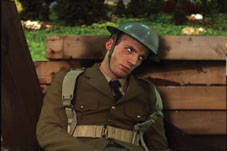
"The Lie in Wait" incorporates digital compositing and home video documentary in a linked, episodic narrative that examines family stories. The work is comprised of animated scenarios and interviews with the artist?s parents that, when combined, often mark convergences between mythologies that are produced in the vernacular traditions of family storytelling and myths that are mediated by more widely recognized cinematic codes. Many of the anecdotes used in the telling of these stories incorporate metaphor to create meaning and a shared history. These stories are meant to be told and repeated, witnessed, and watched again. In the process, these tales become metaphoric in their own telling. Between each episode in the video, visual and linguistic metaphors repeat and reveal themselves as symptoms of what is repressed by the storytellers. In lie and wait beyond these symptoms is often something traumatic. When the metaphors in "The Lie in Wait" become unrecognizable, through both slippages in the storytellers? memory and the uncanny qualities of the animation, trauma returns to appear and reappear.
Jean-Paul Kelly, born in 1977, in London, Ontario, Canada, is an artist based in Toronto, Ontario, Canada. The primary focus of his practice is single-channel video and video-based installation, but his work also includes drawing, photography, and print-media. His most recent videos, "Give Up the Ghost" (2004) and "The Lie in Wait" (2005), incorporate a hybrid vernacular of digital compositing, animation, onscreen performance, and home video documents that examine anticipation, anxiety, and loss in storytelling. His work has been exhibited in galleries and festivals in North America, Europe, and Japan.