Catalogue > Liste par artiste
Parcourez la liste complète des artistes présentés dans le cadre des Rencontres Internationales depuis 2004. Utilisez le filtre alphabétique pour affiner vos recherches.
Sebastián Diaz Morales
Catalogue : 2026One Glass Eye Melting | Vidéo expérimentale | mov | couleur | 13:0 | Argentine, Pays-Bas | 0
Sebastián Diaz Morales
One Glass Eye Melting
Vidéo expérimentale | mov | couleur | 13:0 | Argentine, Pays-Bas | 0
One Glass Eye Melting convoque l’imaginaire collectif de la dystopie pour le réarticuler en quête de nouvelles possibilités. En très gros plan, un œil en rotation fixe le spectateur, sa pupille reflétant un montage de désastres — guerre, catastrophes naturelles, accidents du quotidien — juxtaposés à des scènes de régénération : vie microbienne, expansion cosmique, évolution technologique. Tourné dans la rudesse d’un plan unique, avec un minimum de postproduction, l’œil devient à la fois miroir et « conteneur de mémoire » fracturé, perturbé par les glitches, les rayures, le bruit analogique et numérique. L’œuvre interroge l’acte de regarder lui-même, transformant le réel en quelque chose de surréel, mais étrangement familier. Tandis que l’œil accomplit une rotation complète à 360 degrés, le reflet dans la pupille demeure fixe, ancrant le chaos et le renouveau comme des forces cycliques et interdépendantes. One Glass Eye Melting reformule le désastre comme inséparable de la renaissance, suggérant que l’effondrement porte en lui la possibilité de réinventer — et de reconstruire — nos récits. Plutôt que de rejouer sans cesse la catastrophe, l’œuvre demande : que faisons-nous de ces images du désastre ? L’œuvre convoque ainsi l’imaginaire dystopique pour en redistribuer les motifs, à la recherche de possibles encore inexplorés. Elle fait partie de la série Bajo el cielo cayendo (Sous le ciel en chute), qui explore la tension entre catastrophe systémique et fragile espérance.
Sebastián Díaz Morales est né en 1975 à Comodoro Rivadavia, en Argentine, et vit et travaille à Amsterdam. Il a étudié à la Universidad del Cine de Antín en Argentine (1993–1999), à la Rijksakademie van Beeldende Kunsten à Amsterdam (2000–2001) et au Fresnoy – Studio national des arts contemporains à Roubaix (2003–2004). L’examen que Díaz Morales mène sur la perception et la réalité repose sur l’idée que la réalité elle-même est, par nature, hautement fictionnelle. Ainsi, ses films ne transportent pas simplement le spectateur dans un ailleurs surréel ou fantasmagorique : ils dépouillent la réalité de sa familiarité, la déforment, la font apparaître comme autre. Chez Díaz Morales, l’imagination du spectateur ne fonctionne pas comme un simple contrepoint au réel. Elle agit plutôt comme une force capable d’évoquer l’espace et de le produire diégétiquement, une force qui, au-delà de l’impression visuelle directe, comble les lacunes de la vision et, au fil du film, révèle progressivement au spectateur la construction de ce que nous appelons « réalité ». Celle-ci se présente comme un phantasme, quelque chose qui échappe toujours à sa définition par les images — toujours « un peu en avance » sur l’image et sur le regard. Son œuvre a été largement exposée, notamment à la Tate Modern (Londres), au Centre Pompidou, au Stedelijk Museum et à De Appel (Amsterdam), au Fresnoy (Roubaix), au CAC (Vilnius), à Art in General (New York), au Ludwig Museum (Budapest), à la Biennale de São Paulo, à la Biennale de Sydney, à la Fondation Miró (Barcelone), au MUDAM (Luxembourg), à la Fondation Calouste Gulbenkian (Lisbonne), ainsi qu’à la Biennale de Venise et à Documenta Fifteen.
Catalogue : 2020Talk with Dust | Fiction expérimentale | 4k | couleur | 16:0 | Argentine | 2019
Sebastián Diaz Morales
Talk with Dust
Fiction expérimentale | 4k | couleur | 16:0 | Argentine | 2019
The serie Talk with Dust is composed of 8 video works and explores the idea of the fantastic or extraordinary. This fantastic is not the one that interrupts the ordinary course of things but rather that which is at once strange and present, at the same time its contradiction and its confirmation. The protagonist of a last sequence is a dog. Wandering through a semi deserted landscape, it encounters different situations that leads him to question what he sees, understands or knows. The sequence never completes a narrative. It is also fragmented into parts, which seem disconnected from a story. Therefore the script also pictures only fragments of what could be the entire movie or narrative.
Sebastian Diaz Morales (Comodoro Rivadavia, Argentina, 1975) studied both in Argentina and at the Rijksakademie in Amsterdam. Morales’s video work blurs fiction and documentary genres and has been screened extensively at in museum, gallery and festival context and his work has been supported by a number of grants and awards including the Guggenheim Fellowship in 2009. With its spliced footage and stills and jumbled observations, his work follows the tradition of Latin-American narrative film. Morales plays with the structure of narrative within his work, typically documenting and constructing journeys that explore social and political concerns.
Catalogue : 2019Multiverse | Vidéo | hdv | couleur | 10:0 | Argentine, Pays-Bas | 2018
Sebastián Diaz Morales
Multiverse
Vidéo | hdv | couleur | 10:0 | Argentine, Pays-Bas | 2018
1-channel video / 2k format / 10min / 2018 Soundscore Berend Dubbe & Gwendolyn Thomas / Photography Niels Boon / Special effects Arjan van Drunen / Production Bart van Dam Produced with financial support of the Mondriaan Fonds The multiverse (or metaverse) is a hypothetical group of multiple universes including the universe in which humans live. Together, these universes comprise everything that exists: the entirety of space, time, matter, energy, the physical laws and the constants that describe them. The different universes within the multiverse are called the "parallel universes", "other universes", or "alternative universes". #3 Multiverse is part of a series of videos which are ultimately sequences of a whole. Both a concept and a blurred narrative. The latter is not explicitly delineated in the course of the series but it is intuited. The sequences generate, rather than a narrative, a concept. All these sequences are thought to be shown on separate screens. In large and small shapes, vertically and horizontally they spread into one or various spaces in different combinations resembling an aleatory puzzle which ultimately takes a more clear and narrative shape in one last sequence/installation. The serie Talk with Dust is composed of 8 video works and explores the idea of the fantastic or extraordinary. This fantastic is not the one that interrupts the ordinary course of things but rather that which is at once strange and present, at the same time its contradiction and its confirmation. For something to be fantastic, it is not enough to be different from the real: also (and above all) it is necessary to mix inexplicably with the real thing. In more philosophical terms we can say that the fantastic is not the other of the same but its alteration: not the contradiction of the real, but its subversion. That is why the cinematic condition of the fantastic, which on the other hand can serve as an exact definition, is not at all in the production of real or supernatural beings, but in the fact that they affect what is recognized as real and natural through a contagion of the other who comes to seize the same in person. The feat made by the fantastic cinema does not consist only in this visible manifestation of the real as another. These are duplicated, in fact, and apparently paradoxically, by the work of an invocation of the Real as such, considered in its effective and singular existence; and in a way that is in itself quite strange. 1 The effects on this and the rest of the works had been recreated entirely on stage without the use of postproduction editing. 1 Clement Rosset, El Objeto Singular, Editorial Sexto Piso, 2007
Sebastián DÃaz Morales was born in Comodoro Rivadavia, Argentina, in 1975 and lives and works in Amsterdam. He attended the Universidad del Cine de AntÃn in Argentina from 1993-1999, the Rijksakademie van Beeldende Kunsten in Amsterdam from 2000-2001, and Le Fresnoy Studio des Arts Contemporains in Roubaix, France from 2003-2004. His work has been exhibited widely, including solo shows and presentations at Venice Biennale; Tate Modern, London; Center Pompidou, Paris; Miro Fundation, Barcelona; Stedelijk Museum Bureau Amsterdam; CAC, Vilnius; Le Fresnoy, Roubaix, France; Museum für Gegenwartskunst Siegen, Germany and group shows at De Appel, Amsterdam; Art in General, NY; Ludwin Museum Budapest, Bienale Sao Pablo; Biennale of Sydney; MUDAM, Luxemburg; Calouste Gulbenkian Foundation in Lisbon. His work is represented in numerous collections, including Center Pompidou, Paris; Tate modern, London; Fundacion Jumex, Mexico; Sandretto Foundation, Torino; Sammlung-Goetz, Munich; Fundacion de Arte Moderna, Museo Berardo, Lisboa; Kadist Foundation, San Francisco. He was a recipient of the Guggenheim Fellowship in 2009
Catalogue : 2018Pasajes IV | Vidéo | mov | couleur | 25:0 | Argentine | 2017
Sebastián Diaz Morales
Pasajes IV
Vidéo | mov | couleur | 25:0 | Argentine | 2017
In Pasajes IV the idea follows the same narrative, concept and structure as in the other videos from the series. In the previous three Pasajes video works a formula repeats on different backdrops: a character unites places through gateways, doors, stairs and roads which are otherwise spatially disconnected from each other. This is the geography of a story expressed in an alteration of normalcy. In this formulation of Pasajes IV, the video explores the landscape of Patagonia. Crisscrossing this territory in search for differences within the landscape, a character as a guide, unites different territories disconnected in their geography, as essential pieces of a puzzle to understand this region’s present topography and history.
Sebastián Díaz Morales was born in Comodoro Rivadavia, Argentina, in 1975 and now lives and works in Amsterdam, The Netherlands. He attended the Universidad del Cine de Antin in Argentina from 1993-1999, the Rijksakademie van Beeldende Kunsten in Amsterdam from 2000-2001 and Le Fresnoy Studio des arts contemporains in Roubaix, France from 2003-2004. He has had solo exhibitions in the USA, Mexico, and numerous cities in Europe, and his work has been supported by a number of grants and awards. Díaz Morales uses a number of different formal strategies to create his videos, ranging from the digital manipulation of appropriated news clips to lengthy, film-like narrative works made from footage filmed by himself. Díaz Morales explores the relationship between large-scale socio-political power dynamics and individual action in works which create a sense of uneasiness for the viewer. His films are often somewhat surreal, establishing a tension between a depicted social reality and its representation in a visually abstract or fantasy-inflected way. Throughout his works, multiple forms of dependence are explored, including dependent relationships between people, the environment, and social structures.
Catalogue : 2017The Lost Object | Vidéo | hdv | couleur | 13:29 | Argentine, Pays-Bas | 2016
Sebastián Diaz Morales
The Lost Object
Vidéo | hdv | couleur | 13:29 | Argentine, Pays-Bas | 2016
The Lost Object is the final video in a trilogy that examines the complex mechanisms of how we perceive the constructed nature of reality?and how this construction is performed, both in the realm our imagination and the one of film. As curator Cuauhtémoc Medina notes in a recent monograph dedicated to Diaz Morale’s work, the artist approaches film as a “factory of simulacra” a conceptual thread that carries throughout his trilogy, which began with Insight (2012) and was followed by Suspension (2014). A slow, steady shot travels into the set of The Lost Object, accompanied by the din of a whirring film reel that seems to methodically introduce the viewer into a world of artifice: a soundstage containing the set of a curiously dated, yet nonetheless anonymous room. The scenario slowly begins to unravel, disarticulating both the language and apparatus of filmmaking. Following Jean Baudrillard?s notion that the world has disappeared behind its own representation and therefore its impossible to return to it, The Lost Object proposes a new world in which fiction and reality merge into one single element. In this universe, fiction is autonomous and auto-generates itself.
Sebastiàn Díaz Morales was born in Comodoro Rivadavia, Argentina, in 1975 and lives and works in Amsterdam. He attended the Universidad del Cine de Antón in Argentina from 1993-1999, the Rijksakademie van Beeldende Kunsten in Amsterdam from 2000-2001, and Le Fresnoy Studio des Arts Contemporains in Roubaix, France from 2003-2004. His work has been exhibited widely, including solo shows and presentations at Tate Modern, London; Center Pompidou, Paris; Miro Fundation, Barcelona; Stedelijk Museum Bureau Amsterdam; CAC, Vilnius; Le Fresnoy, Roubaix, France; Museum für Gegenwartskunst Siegen, Germany and group shows at De Appel, Amsterdam; Art in General, NY; Ludwin Museum Budapest, Bienale Sao Pablo; Biennale of Sydney; MUDAM, Luxemburg; Calouste Gulbenkian Foundation in Lisbon. His work is represented in numerous collections, including Center Pompidou, Paris; Tate modern, London; Fundacion Jumex, Mexico; Sandretto Foundation, Torino; Sammlung-Goetz, Munich; Fundacion de Arte Moderna, Museo Berardo, Lisboa; Kadist Foundation, San Francisco. He was a recipient of the Guggenheim Fellowship in 2009
Sebastian Diaz Morales
Catalogue : 2015Insight | Vidéo | hdv | couleur | 11:31 | Argentine | 2012
Sebastian Diaz Morales
Insight
Vidéo | hdv | couleur | 11:31 | Argentine | 2012
Insight is the total abstraction. A carefully assembled film-crew appears like a tableau vivant facing the viewer. Then suddenly, they shatter- an analogy of breaking through the surface to expose the simulation - a mirror slowly explodes into a thousand pieces. Filmed in beautifully rendered high definition Insight is a tribute to the camera obscuras of old mingled with a critical spirit directed towards the mass media today. Regarded as a phenomenon brought about by a world lacking distinction between real and simulacra, Diaz Morales borrows media industry tactics to expose and undermine. Revealing rather than concealing his methods allows for a moment of realisation to occur. As the pieces of glass crumble into tiny galaxies, context is deconstructed and the universalising tendency of Diaz Morales' practise literally portrayed. With timeless grace the artist contemplates the nature of existence. (text Nathalie Levi) We look at a film crew; the film crew is watching us. Cinema as a mirror of reality that becomes fiction. Or is it vice versa? A world with a mirror image, one that can be accessed by crossing the mirror’s surface. Indeed, within the realm of fiction, mirrors provide characters and readers alike with a gateway to a different world. Interaction with that new environment, be it purely fantastic or disturbingly didactic, pushes one to expand one’s horizons and reconsider the concept of a real world.
Teresa Maria Diaz Nerio
Catalogue : 2008Hommage à Sara Bartman | Vidéo expérimentale | dv | couleur | 5:0 | Dominicaine (Rép.), Pays-Bas | 2007
Teresa Maria Diaz Nerio
Hommage à Sara Bartman
Vidéo expérimentale | dv | couleur | 5:0 | Dominicaine (Rép.), Pays-Bas | 2007
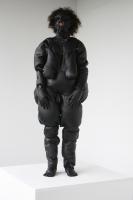
Sara Bartman, plus connue sous le nom de Venus Hottentot, était une femme sud-africaine Khoisan qui fut ramenée en Angleterre pour être exhibé en 1810. Ses génitales et son derrière étaient bien au delà de la compréhension que les européens avaient d'un corps humain à cette époque, compréhension basée seulement sur leurs corps. Elle fut considérée comme un animal et exposée comme un objet. Après sa mort, ses génitales et son cerveau, tout comme un model de cire de son corps et son squelette furent exposés dans un musée Parisien. Cette performance est le résultat d'une investigation sur les corps de noirs dans le spectacle et comment le fait d'être noir était un acte en soi. Le fait de porter son corps comme une peau était une manière de me déguiser mais aussi de devenir moi à travers l'autre. La raison pour laquelle Sara Bartman est devenu cette icône pour le peuple africain en Afrique et dans la diaspora mais aussi pour le peuple européen, est une réaction contre le viol scientifique et voyeuriste mais aussi légitime et documenté de son corps. La verticalité des sculptures et monuments qui glorifient les actes héroïque de l'homme n?est maintenant que le simple corps d'une femme africaine, silencieuse, droit, éveillé.
Née à Santo Domingo, République Dominicaine, le 9 Avril 1982, vivant à Amsterdam et faisant un Master en Fine Arts à la Dutch Art Institute à Enschede, Hollande. Je finis mes études de la Gerrit Rietveld Academie, Amsterdam oû je fit mes derniers travaux, tous des performances, Hommage à Sara Bartman 2007, Throne of Gold 2007, Trujillo's Island 2007, Trujillo, 2006.
Die Nacht / La Nuit
Catalogue : 2006# 25 | Vidéo expérimentale | betaSP | couleur | 52:0 | France | 2004
Die Nacht / La Nuit
# 25
Vidéo expérimentale | betaSP | couleur | 52:0 | France | 2004
"Die Nacht" est une émission sur Arte, présentée par Paul Ouazan. Participent à la 25ème édition Marianne Müller, Bernard Rouget, Hiraki Sawa et Marina Abramovic
_
Michael Dietrich
Catalogue : 2026zone of silence (scream machine) | Film expérimental | hdv | couleur | 9:30 | Autriche | 2025
Michael Dietrich
zone of silence (scream machine)
Film expérimental | hdv | couleur | 9:30 | Autriche | 2025
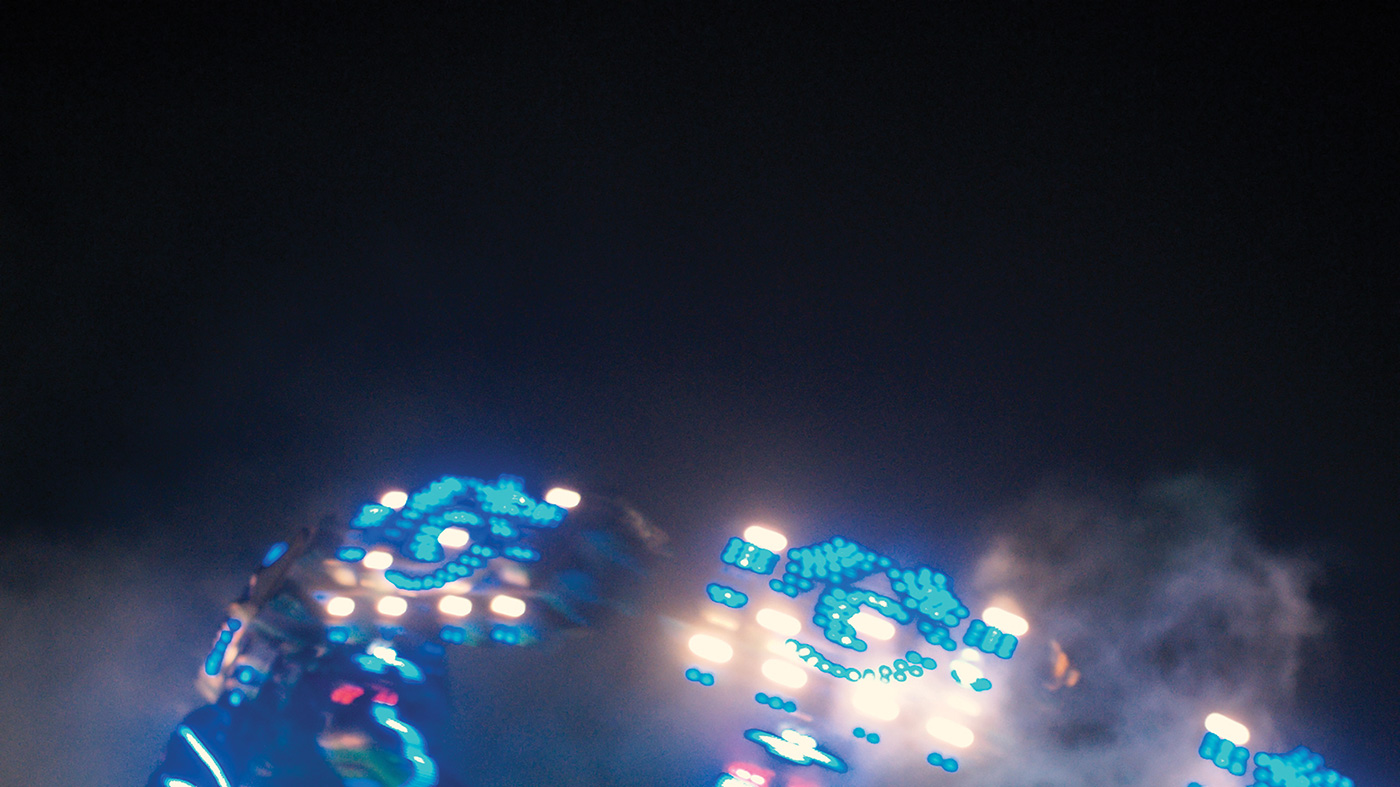
Le film expérimental Zone of Silence (Scream Machine) explore l’interaction entre lumière, brouillard et résonance pour évoquer l’isolement intérieur et la désorientation psychique. La ville est enveloppée d’une atmosphère dense ; reflets lumineux et sons étouffés composent une « zone de silence » où l’orientation comme la communication commencent à se dissoudre. Inspiré des problèmes historiques de navigation maritime — lorsque les signaux de brume devenaient inaudibles dans certaines conditions météorologiques — le film transpose ce phénomène dans le domaine de l’inconscient humain. Le concept psychanalytique de « zone de silence » formulé par Theodor Reik devient un motif central, désignant les émotions refoulées et la difficulté à les traverser. La séquence finale montre l’inscription « EUROPA » s’effaçant peu à peu, sombre reflet du futur politique du continent. Par son atmosphère saturée, sa composition mêlant enregistrements de terrain et sons synthétisés, et son usage de métaphores visuelles, le film propose une exploration profonde du vide intérieur et de la quête d’orientation.
Michael Dietrich (*1985, Vienne, Autriche) a étudié le social design à la HfbK de Hambourg ainsi que la photographie à l’Académie des beaux-arts de Vienne. Son travail explore l’impact des interventions humaines sur la nature, déployant souvent, à travers la vidéo et l’acousmatique, des scénarios troublants.
Vincent Dieutre
Catalogue : 2025This is the end | Documentaire | digital | couleur | 108:37 | France | 2022
Vincent Dieutre
This is the end
Documentaire | digital | couleur | 108:37 | France | 2022
Sur Facebook, je l’ai reconnu tout de suite. 40 ans après notre rencontre, nous ne savons même plus si c’est un bon souvenir. Malgré le virus, j’ai pu rejoindre Dean à Los Angeles. Ici tout est fermé, et de Malibu à Watts, nous nous laissons traverser par l’immensité de la ville, dans l’élan de la Mustang. Tiens-moi bien la main, mon aimé, la fin a déjà eu lieu, tout le monde le sait à Hollywood, mais désormais seuls la poésie peut le révéler.
Après des études d'Histoire de l'art, Vincent Dieutre entre à l'IDHEC (Fémis) en 1983. Lauréat en 1989 de la Villa Médicis hors les murs à New York, il séjourne ensuite à Rome et à Berlin. Après ces années de dérive, il rentre en 1990 à Paris et y écrit son mémoire de DEA (« Esthétique de la confusion » Paris III) avant de se tourner définitivement vers la réalisation avec Rome Désolée. Cinéaste, critique (la Lettre du cinéma, les Lettres Françaises), il enseigne aussi régulièrement dans les écoles de cinéma et d’art en France et en Europe (Paris VIII, la HEAD, Fresnoy, la Cambre, etc). À la fois documentaires et autofictions nourries de musique, de peinture, de culture Queer, son travail interroge les liens entre l’intime et le collectif mais aussi les formes du cinéma. Ses films ont reçu plusieurs prix dans les festivals internationaux.
Adam Diller
Catalogue : 2026PROJECT 02 | Doc. expérimental | 4k | couleur et n&b | 67:40 | USA | 2025
Adam Diller
PROJECT 02
Doc. expérimental | 4k | couleur et n&b | 67:40 | USA | 2025
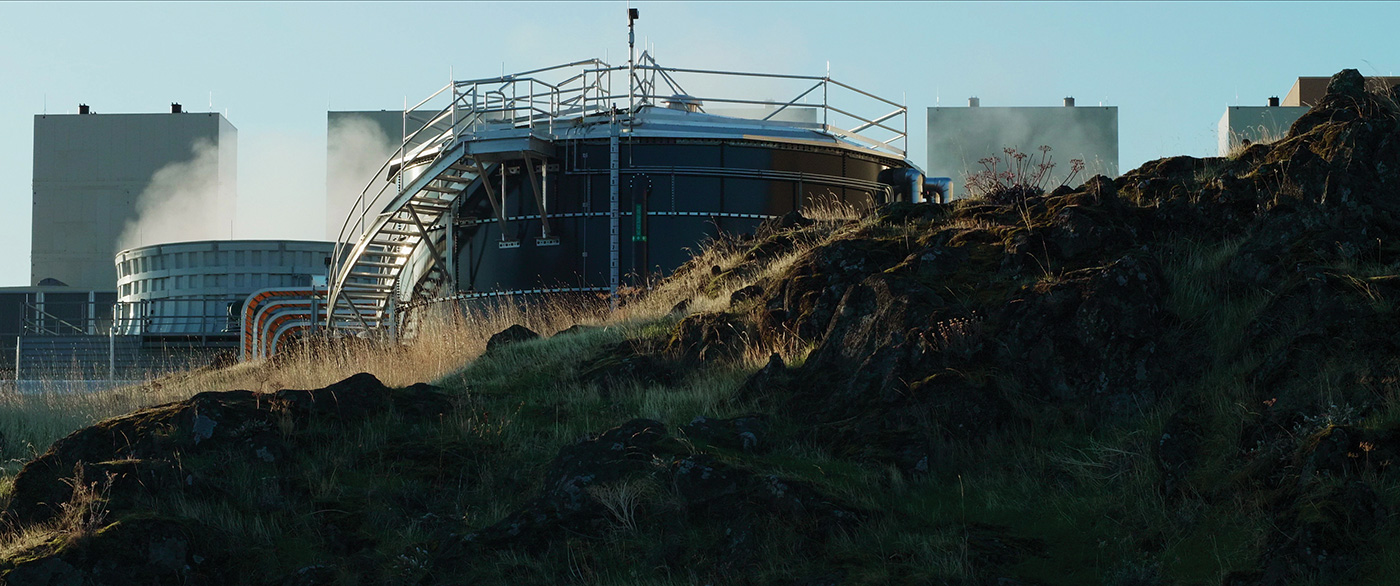
Interweaving archival audio, photographs, and films; eight years of visits to Google’s first hyperscale data center in The Dalles, Oregon; Google’s promotional videos; and encounters with local residents, PROJECT 02 untangles layers of power that underlie this Internet.
Adam Diller’s film and media works challenge our understandings of the ecologies, cultures, and media within which we live. He has exhibited internationally at venues including Anthology Film Archives, Big Sky Documentary Film Festival, Center on Contemporary Art, Susquehanna Museum of Art, Kassel Documentary Film and Video Festival, Athens International Film and Video Festival, Northwest Film Forum, Knitting Factory, Roulette, Issue Project Room, Sugar Refinery, and D-22. He has released music on labels including Line (12K), Locust Music, Gruenrekorder, DRAFT, Gift Tapes, and Present Sounds.
Igor Dimitri
Catalogue : 2022Salsa | Fiction expérimentale | 16mm | couleur | 13:0 | Portugal | 2020
Igor Dimitri
Salsa
Fiction expérimentale | 16mm | couleur | 13:0 | Portugal | 2020
One Buenos Aires afternoon in the dominican hairdresser saloon, in which characters from different origins reunite around the musical feeling of the place. From dancers to performers and actors, clients and reggaeton singers.
MA in Documentary Cinema and Profesor Assistant at Universidad del Cine, Buenos Aires. PhD Candidate at University NOVA, Lisboa. Currently working on my first feature film. I'm interested in the notions of displacement, ritual and longing. In color, rhythm, body and mixing genres in a surrealist way.
Alice Diop
Catalogue : 2016Vers la Tendresse | Documentaire | 4k | couleur | 39:0 | France | 2015
Alice Diop
Vers la Tendresse
Documentaire | 4k | couleur | 39:0 | France | 2015
Vers la tendresse est un film documentaire qui explore l`intime du territoire masculin d’une cité de banlieue. En suivant l’errance d’une bande de jeunes hommes, nous arpentons un univers où les corps féminins ne sont plus que des silhouettes fantomatiques et virtuelles. Les déambulations des personnages nous mènent à l’intérieur de lieux quotidiens (salle de sport, hall d’immeuble, parking d’un centre commercial, appartement squatté) où nous traquerons la mise en scène de leur virilité ; tandis qu’en off des récits intimes dévoilent sans fard la part insoupçonnée de leurs histoires et de leurs personnalités.
Née en 1979 à Aulnay-sous-Bois (France), Alice Diop est tombée dans le documentaire malgré elle "c`est le fruit d`une heureuse rencontre avec un documentaire d`Eliane de Latour", rencontre qui lui permet de réaliser la force des messages pouvant être véhiculés dans les documentaires et la possibilité de croiser un regard sociologique à un traitement cinématographique. Alice s`intéresse à ceux que l`on ne voit pas, elle raconte la diversité culturelle. Pour Alice Diop, réaliser un bon documentaire consiste à "raconter des choses intelligentes en utilisant un biais artistique et humain. « Combattre les idées reçues pour faire avancer la société. » Alice Diop passe un DESS Image et société et intègre un atelier d`écriture à la Fémis. Réalisatrice pour L`Oeil et la Main (France 5), elle est auteure de documentaires. Alice Diop est lauréate de la Bourse "Auteur de documentaire" de la Fondation Jean-Luc Lagardère. Elle réalise en 2006 deux 52 minutes, Clichy pour l`exemple et La tour du monde. En 2007, Les sénégalaises et les sénégauloises. En 2011, son film La mort de Danton lui vaut plusieurs sélections en festivals et récompenses.
Art Collective Disnovation.org
Catalogue : 2026A BESTIARY OF THE ANTHROPOCENE | Installation vidéo | 4k | couleur | 15:0 | France | 2025

Art Collective Disnovation.org
A BESTIARY OF THE ANTHROPOCENE
Installation vidéo | 4k | couleur | 15:0 | France | 2025
Que se passe-t-il lorsque les conséquences des actions humaines deviennent si profondes et omniprésentes que tout sur Terre devient, à un certain degré, artificiel ? Ce nouvel essai vidéo de 15 minutes explore les spécimens les plus emblématiques issus du livre et de la recherche A Bestiary of the Anthropocene, en combinant des images tournées à travers le monde. Cette vidéo à deux canaux expose les êtres hybrides avec lesquels les humains cohabitent désormais à l’ère de l’Anthropocène, fusionnant sous diverses formes et à divers degrés le naturel et l’artificiel. Cette nouvelle œuvre vidéo a été commandée par le Max Ernst Museum et sera présentée aux côtés d’une installation à grande échelle réunissant l’ensemble de notre collection de spécimens physiques. D’APRÈS LE LIVRE “A BESTIARY OF THE ANTHROPOCENE” (2021). Une compilation illustrée des créatures hybrides de notre époque, inspirée à la fois des bestiaires médiévaux et de l’observation de notre planète endommagée. Conçu comme un manuel de terrain, l’ouvrage vise à nous aider à observer, naviguer et nous orienter dans le tissu du monde devenu de plus en plus artificiel. Plastiglomérats, chiens-robots de surveillance, fordite, gazon synthétique, arbres-antennes, Sars-Covid-2, montagnes décapitées, aigles chasseurs de drones, bananes standardisées… chacun de ces spécimens est symptomatique de l’ère « post-naturelle » en rapide transformation dans laquelle nous vivons. Souvent, sans même que nous en soyons conscients, ces créatures se multiplient et coexistent avec nous. A Bestiary of the Anthropocene cherche à capturer ce moment précis où la biosphère et la technosphère se fondent en un nouveau corps hybride. Que se passe-t-il lorsque les technologies et leurs conséquences non intentionnelles deviennent si omniprésentes qu’il devient difficile de définir ce qui est « naturel » ou non ? Que signifie vivre dans un environnement hybride, composé à la fois de matière organique et synthétique ? Quels nouveaux spécimens peuplent aujourd’hui notre planète au début du XXI? siècle ?
DISNOVATION.ORG fusionne art contemporain, recherche et hacking pour transformer des débats éco-sociaux complexes en expositions opérationnelles et provocantes. Leurs œuvres radicales, mises en scène telles de grandes expériences de laboratoire axées sur l’énergie, l’écologie et l’économie, servent de catalyseurs pour créer des avenirs divergeant des récits dominants. Leurs expositions, livres et vidéos ont imprégné le paysage culturel mondial, favorisant ainsi un dialogue critique entre la recherche artistique, politique et scientifique. Ils ont récemment co-dirigé les ouvrages A Bestiary of the Anthropocene, un atlas des créatures hybrides d’origine anthropique, et The Pirate Book, une anthologie sur le piratage de contenus culturels. Leur travail a été présenté dans des expositions et festivals internationaux : Palais de Tokyo, Centre Pompidou, Jeu de Paume (Paris), Museum of Art and Design (New York), Fonderie Darling (Montréal), HMKV (Dortmund), Haus der Kulturen der Welt (Berlin), ZKM (Karlsruhe), Ars Electronica (Linz), MU (Eindhoven), Strelka Institute (Moscow), China Museum of Digital Arts (Beijing), Chronus Art Center (Shanghai), Polytechnic Museum (Moscow), ISEA (Paris, Hong Kong), Elektra (Montréal), HEK (Basel)... Leur travail a été représenté dans Forbes, Wired, Vice, Motherboard, Libération, Die Zeit, Arte TV, Next Nature, Hyperallergic, Le Temps, Neural.it, Digicult, Gizmodo et Filmmaker Magazine parmi d’autres.
Sebastian Díaz De León, Katherine Ball
Catalogue : 2025Contaminations, Bodies between Nature and Culture | Installation vidéo | mp4 | couleur | 21:49 | Allemagne | 2023
Sebastian DÍaz De LeÓn, Katherine Ball
Contaminations, Bodies between Nature and Culture
Installation vidéo | mp4 | couleur | 21:49 | Allemagne | 2023
Twenty performing artists and dancers embedded themselves in sites with different dynamics between nature and culture: the Berlin Botanical Garden, a cultural site focused on nature; a power plant, where nature is burned to make culture; a landfill and recycling center where the detritus of culture re-enters nature; a spy station built on a hill of rubble from the second world war; and a nature paradise impacted by climate change. Contaminations is an outdoor, experimental educational programme for people who want to work with their bodies (floating-berlin.org/contaminations). This short film shows scenes from Contaminations 2022. In this film, you see roads washed out by floods induced by climate change, with their guardrails floating in midair. There are metal structures newly constructed to prevent landslides in a forest impacted by forest fires worsened by climate change. When trees burn, their roots no longer hold the soil, and landslides further destroy the forest and homes.
Sebastian Díaz de León lives in Berlin with a spatial practice at the interface of architecture, film, photography and research. He examines existing structures to imagine a social and climate-just future, combining a variety of disciplines to address contemporary spatial challenges. As part of the collective ufoufo - urban fragment observatory they edited and published the book „VISITING - inken baller & hinrich baller, berlin 1966-89" (2022), including the accompanying exhibition at DAZ berlin (2022), Freie Akademie der Künste in hamburg (2023) and Kunsthochschule Kassel (2024). With ABRISSSTOP! (2023) they fight against the demolition of buildings in Berlin through film, performance and exhibitions. IVRY-AFFAIRES (2023) is a 3-channel video installation displayed in the public spaces of Ivry-sur-Seine and berlin. It shows the stories of Ivry-sur-Seine’s inhabitants and unfolds collective imaginaries emerging from the multi level terrace housing by Renée Gailhoustet and Jean Renaudie. After teaching architectural design at the chair of Jean-Philippe Vassal, he is currently teaching at the chair of Stéphanie Bru at Universität der Künste berlin. Katherine Ball is a habitat for fungi and bacteria located on planet Earth. Katherine is a member of Floating University e.V., runs the program Contaminations, and is part of the Hybrid Infrastructure Working group there. Their art practice includes things like: living in an off-grid floating island building mushroom filters to clean a polluted lake and coordinating a national day of action to halt business at banks and corporations influencing state laws. Katherine has a Master of Environmental Management from Yale University School of the Environment (2022), a Master’s in Fine Arts in Social Practice from Portland State University (2012), and studied at the School of Walls and Space in Copenhagen (2011, 2015). Katherine has exhibited and performed at Smackmellon (NY), apexart (NY), Kampnagel Hamburg (DE), Schauspiel Dortmund Theater (DE), Wien Woche (AT), Wiener Festwochen (AT) and their work is in the collection of the Museum of Modern Art in New York (MoMA, NY). Their books include Not Broken Yet: Life in the Mojave Desert (High Desert Test Sites, 2014) and Utopia Walks Away: Infrastructure in Copenhagen, Denmark (LikeLichen Press, 2014). Katherine has been a Fulbright Fellow in Copenhagen, a German Chancellor Fellow (Bundeskanzler-Stipendium), a Macdowell Fellow, an artist in residence at Andrea Zittel's High Desert Test Sites in the Mojave Desert, an observer delegate at the United Nations Climate Change Summit in Mexico, and a member of the inflatable sculpture collective Tools for Action (2014-2017). Originally from Detroit, Katherine lives between Colorado, Berlin and Hawaii.
Dj Nasri
Catalogue : 2015Popopop | Performance | | | 120:0 | Liban | 2015
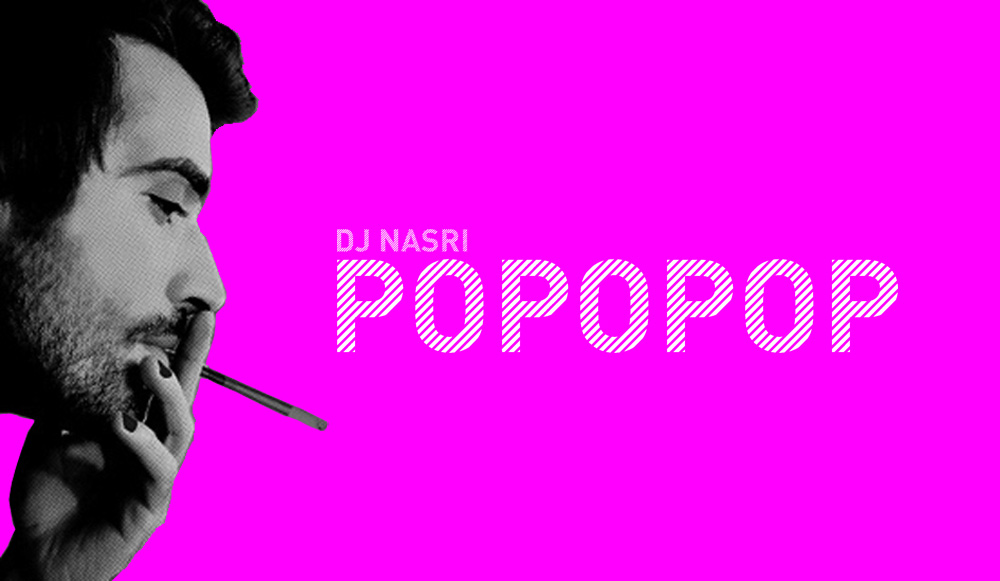
Dj Nasri
Popopop
Performance | | | 120:0 | Liban | 2015
When Oum Kalthoum meets Serge Gainsbourg meets Billie Holliday meets Aisha Al Marta meets Sabah meets Taxi Girl meets Esther Phillips meets Yasmine Hamdan meets Souad Abdallah meets Jeanne Moreau meets Dina Washington meets PJ Harvey meets Marylin Monroe meets Astrud Gilberto meets Sara Vaughan meets Catherine Deneuve meets Mohamad Mounir meets Madonna meets Delphine Seyrig meets Soapkills meets Ahmad Adawiya meets Eartha Kitt meets Mirwais meets Bandali Family meets Feyrouz meets Asmahan meets Cheikh Imam meets Marguerite Duras meets Nina Simone meets Cole Porter meets Omar Zeini meets Fleetwood Mac meets Tarab meets Kitsch meets Choubi meets you.
Acteur de cinéma (dirigé notamment par Christian Merlhiot, Jocelyne Saab, Georges Hachem, Roy Samaha, Omar Fakhoury, Jad Youssef…) et journaliste, Nasri officie en tant que DJ depuis plus de 8 ans à Beyrouth et à Berlin où il est actuellement basé. Une pop sans frontière de genre, sans frontière de goûts - bons ou mauvais. Une pop décomplexée qui fait se côtoyer les grands noms du répertoire classique arabe et ceux de la pop américaine, émiratie, égyptienne, libanaise et bien au - delà à ceux aussi des grands noms du cinéma et de la littérature française. Amoureux fou des grandes dames du Jazz, Nasri fait par ailleurs se rencontrer Asmahan et Delphine Seyrig, Grace Jones et Jeanne Moreau et le plus kitsch des sons arabes aux dialogues acérés d’une Bettes Davis entre autres grandes du cinéma mondial.
Rachid Djaïdani
Catalogue : 2008Sur ma ligne | Documentaire | dv | couleur et n&b | 49:0 | France | 2006
Rachid DjaÏdani
Sur ma ligne
Documentaire | dv | couleur et n&b | 49:0 | France | 2006
Rachid Djaïdani, un jeune auteur, se filme pendant l?écriture de son deuxième roman, et nous emmène avec lui dans les différentes étapes de sa création. A travers ces images très brutes se dessine la vie de cet artiste autodidacte, doué d?une étonnante capacité à parler de lui tout en parlant de son monde?
Je suis un compétiteur depuis ma plus tendre enfance l'école de la rue le ring et la culture hip hop ont fait de moi un être authentique sans particules ni courbettes, j'aime la création qu'elle soit proche de mon univers ou à des années lumiéres du beat de mon myocarde. J?ai affûté mes arts dans les domaines de l'écriture, trois romans parus au Seuil ( Boumkoeur 1999-Mon Nerf 2004- Visceral 2007 ) et un prochain, en écriture dans un residence de Culture France au Canada et a New york ( Mission Stendhal:mars-octobre 2008). L'autre corde à mon arc: La comédie, j'aime bluffer au cinéma comme sur les planches, trois ans de tournée théatrale à travers le monde avec Peter Brook, m'ont fait comprendre ce qu'était un sentiment loin des caricatures grotesques de la comédie française et enfin la troisième corde de mon "art balette" : la réalisation, depuis plus de 10 ans je braque avec ma caméra les vagabondages de mes potes, ma famille et autres freestyles ; J'ai réalisé un documentaire "Sur Ma Ligne" qui a ete primé a Paris en Juillet 2006, le sujet traite du processus de création, un journal intime en pixel color frais, et pas prise de tête. Actuellement ,je fini la réalisation de mon premier long métrage :" 40 FRERES" et pour cette création sans bankébeul ni particule du fils de... Je recherche un producteur. Voilà ce qui fait battre mon coeur la création faire et aller de l'avant sans attendre l'assistanat ou un signe du ciel..
Daniel Nicolae Djamo, Daniel Nicolae DJAMO
Catalogue : 2016Territorial marking | Vidéo | hdv | couleur | 19:44 | Roumanie | 2014
Daniel Nicolae Djamo, Daniel Nicolae DJAMO
Territorial marking
Vidéo | hdv | couleur | 19:44 | Roumanie | 2014
I’m marking the area surrounding the home of my mother in Nogent-sur-Vernisson (Loiret, France) with the flag of Romania. I marked a Romanian territory in France. My mother left the country when I was 20, being one of those who left in the first waves of immigration after the acceptance in the EU. She works as a doctor and has her own private business close to Montargis, France. The sound represents my mother’s reaction to a work I had planned to do in Paris, on July 14th, 2014. I wanted to take yellow graffiti spray and transform all of the French flags from Champs Elysee into Romanian ones.
Daniel Djamo (b.1987, Bucharest) is a young Romanian artist and film director, interested in personal and group histories and stories and in themes such as the national identity. He combines film with video art and installation with photography in order to evoke the past and to underline “the now.” Winner of the 2013 ESSL award CEE (offered by the ESSL museum), the 2013 Henkel Art.Award. Young artist prize CEE (given by mumok - Museum Moderner Kunst Stiftung Ludwig Wien - and KulturKontakt Austria) and the 2011 Grand Prize of the National University of Fine Arts from Bucharest. In 2015 he won Premio Combat’s Video art award at Museo Giovanni Fattori, in Livorno, Italy. Also, in 2015, Djamo won the Special Award for Documentary Film given by the Romanian Filmmakers Union, while also being nomineed for the 2015 Best Debut for a feature film (Opera Prima award) by the Romanian Filmmakers Union. Daniel had solo exhibitions in Glasgow (Briggait, 2014), Leipzig (KunstKraftWerk, 2015), Kassel (tokonoma, 2012), Vienna (Schleifmuhlgasse 12-14 Gallery, 2014), Bucharest (Anca Poterasu Gallery – 2014 and 2015, Victoria Art Gallery – 2013 and 2015), Timisoara (Calina Gallery, 2012) and Kuala Lumpur (WOLO and Wei-Ling Gallery, 2015).
Catalogue : 2015Pasari | Vidéo | hdv | couleur | 7:32 | Roumanie | 2014
Daniel Nicolae Djamo
Pasari
Vidéo | hdv | couleur | 7:32 | Roumanie | 2014
The work is based on fragments from interviews taken from Romanian immigrants living in Paris in 2011, 2013 and 2014. Shot in Nogent sur Vernisson. Loiret, on December 28th, 2013. 2013 had a warm autumn and an even warmer winter debut. "I think that this is one of the reasons why the birds that live along the Loire chose to rest longer. Some rested even until late December. I filmed this material when they started preparing to fly away. ”Birds” presents 7 minutes of French sunset, on continuous shooting, with the migratory birds preparing to leave. It presents the sunset of the West, with governments taking measures belonging to the right. I chose to draw a paralel between this story and statements that I had previously recorded in Paris, belonging to Romanian immigrants."
Daniel Djamo (b.1987, lives and works in Bucharest) is a young Romanian artist and film director, being interested in personal and group histories. He combines film with video art and installation with photography in order to evoke the past and to underline “the now.” Winner of the ESSL award, Henkel Art.Award. Young artist prize CEE, Startpoint Prize Romania and the Grand Prize of the National University of Fine Arts from Bucharest. Daniel benefited from residencies in Paris, Kassel, Chemnitz, Bruxelles, Vienna and Liege. He exhibited at the Museum of Moscow, Kunsthaus Dresden, Moscow Museum of Modern Art (MMOMA) and the ESSL museum from Vienna, while also presenting his works in Germany, Italy, Canada, Netherlands, USA, Russia, Portugal, Czech Republic, Estonia etc. His video artworks have been screened in numerous video art and film festivals. He is a PhD candidate at the National University of Fine Arts from Bucharest.
Daniel Nicolae Djamo
Catalogue : 2016Territorial marking | Vidéo | hdv | couleur | 19:44 | Roumanie | 2014
Daniel Nicolae Djamo, Daniel Nicolae DJAMO
Territorial marking
Vidéo | hdv | couleur | 19:44 | Roumanie | 2014
I’m marking the area surrounding the home of my mother in Nogent-sur-Vernisson (Loiret, France) with the flag of Romania. I marked a Romanian territory in France. My mother left the country when I was 20, being one of those who left in the first waves of immigration after the acceptance in the EU. She works as a doctor and has her own private business close to Montargis, France. The sound represents my mother’s reaction to a work I had planned to do in Paris, on July 14th, 2014. I wanted to take yellow graffiti spray and transform all of the French flags from Champs Elysee into Romanian ones.
Daniel Djamo (b.1987, Bucharest) is a young Romanian artist and film director, interested in personal and group histories and stories and in themes such as the national identity. He combines film with video art and installation with photography in order to evoke the past and to underline “the now.” Winner of the 2013 ESSL award CEE (offered by the ESSL museum), the 2013 Henkel Art.Award. Young artist prize CEE (given by mumok - Museum Moderner Kunst Stiftung Ludwig Wien - and KulturKontakt Austria) and the 2011 Grand Prize of the National University of Fine Arts from Bucharest. In 2015 he won Premio Combat’s Video art award at Museo Giovanni Fattori, in Livorno, Italy. Also, in 2015, Djamo won the Special Award for Documentary Film given by the Romanian Filmmakers Union, while also being nomineed for the 2015 Best Debut for a feature film (Opera Prima award) by the Romanian Filmmakers Union. Daniel had solo exhibitions in Glasgow (Briggait, 2014), Leipzig (KunstKraftWerk, 2015), Kassel (tokonoma, 2012), Vienna (Schleifmuhlgasse 12-14 Gallery, 2014), Bucharest (Anca Poterasu Gallery – 2014 and 2015, Victoria Art Gallery – 2013 and 2015), Timisoara (Calina Gallery, 2012) and Kuala Lumpur (WOLO and Wei-Ling Gallery, 2015).
Catalogue : 2015Pasari | Vidéo | hdv | couleur | 7:32 | Roumanie | 2014
Daniel Nicolae Djamo
Pasari
Vidéo | hdv | couleur | 7:32 | Roumanie | 2014
The work is based on fragments from interviews taken from Romanian immigrants living in Paris in 2011, 2013 and 2014. Shot in Nogent sur Vernisson. Loiret, on December 28th, 2013. 2013 had a warm autumn and an even warmer winter debut. "I think that this is one of the reasons why the birds that live along the Loire chose to rest longer. Some rested even until late December. I filmed this material when they started preparing to fly away. ”Birds” presents 7 minutes of French sunset, on continuous shooting, with the migratory birds preparing to leave. It presents the sunset of the West, with governments taking measures belonging to the right. I chose to draw a paralel between this story and statements that I had previously recorded in Paris, belonging to Romanian immigrants."
Daniel Djamo (b.1987, lives and works in Bucharest) is a young Romanian artist and film director, being interested in personal and group histories. He combines film with video art and installation with photography in order to evoke the past and to underline “the now.” Winner of the ESSL award, Henkel Art.Award. Young artist prize CEE, Startpoint Prize Romania and the Grand Prize of the National University of Fine Arts from Bucharest. Daniel benefited from residencies in Paris, Kassel, Chemnitz, Bruxelles, Vienna and Liege. He exhibited at the Museum of Moscow, Kunsthaus Dresden, Moscow Museum of Modern Art (MMOMA) and the ESSL museum from Vienna, while also presenting his works in Germany, Italy, Canada, Netherlands, USA, Russia, Portugal, Czech Republic, Estonia etc. His video artworks have been screened in numerous video art and film festivals. He is a PhD candidate at the National University of Fine Arts from Bucharest.
Nazim Djemai
Catalogue : 2008Nawna (Je ne sais pas...) | Doc. expérimental | dv | | 113:0 | France | 2007
Nazim Djemai
Nawna (Je ne sais pas...)
Doc. expérimental | dv | | 113:0 | France | 2007
Cambride Bay est une Ville de l`arctique Canadien où vit une communauté Inuit. Passée récemment du nomadisme à la sédentarisation suite à l`implantation de la Hudson Bay Company, qui a drainé avec elle les forces de l`ordre, les représentants religieux, etc., cette population a subi de profondes mutations. L`écart, notamment, entre les générations se creuse, et rend improbable la transmission. Une telle description ne représente pourtant que l`arrière fond d`une situation pour un film qui s`emploie à un exercice autre qu`éthnographique ou sociologique.
Expositions 2006 :-Exposition à la Cité internationale des arts dans le cadre du mois de la photographie à Paris. 2005:-Exposition des diplômés avec félicitations du jury : «Plus que vrai », ayant pour commissaire Henry Meyric Hugues. 2003 :-Présentation de vidéos à « La Vitrine » - Galerie de l?Ecole des Beaux-Arts de Cergy, (Paris 11ème). -Projection de la vidéo « il n?y a plus rien », La nuit du cinéma expérimental, Cinéma Le Balzac. 2001 :-Exposition en appartement, « On passe la soirée chez qui ? » n°6, avec Pierre Dumonthier et Liliane Vialat. -Exposition collective à Emily Carr, Ecole des Beaux-Arts de Vancouver. 1998 :-Exposition en appartement, « On passe la soirée chez qui ? », n°2, à Suresnes. 1998 :-Exposition à la « Belle époque », rue de Charenton, (Paris 11ème ). 1998 :-Exposition à la Mairie de Vanves, obtention du prix de la photographie. 1997 :-Exposition en appartement, « On passe la soirée chez qui ? », n°1, (Paris 19ème ) avec Liliane Vialat, Pierre Dumonthier, Rémy Hyrsberg 1997 :-Exposition « Pique-nique » au parc de la Villette (Paris, 19ème arrondissement). 1999 :-Exposition collective à la galerie du forum Saint Eustache (Paris 1er ) avec Liliane Vialat,Pierre Dumonthier et Pierre Fichefeux. Cinéma, Vidéo 2001-2007:- Différentes vidéos dont: La Scène, Pas moi, Vanité, Cafézoïde, Remontée d`image ... 2005-2007:-Repérages et début de tournage préparatoire au film La parade de Taos, traitant de la sexualité dans les jardins publics à Alger : le jardin d`essai comme lieu mythique de plaisir (en cours de financement, commission plénière du CNC, France 2, Région Loire-Atlantique. Ce film est produit par Capricci Films. Le rôle principal féminin est interprêté par Nadia Kaci. 2007 :-Réalisation d`un documentaire tourné (en 2001) à Cambridge-Bay (Arctique Canadien) sur la création du Nunavut (gouvernement autonome Inuit crée en avril 1999), séléctionné au FID Marseille2007 -Tournage et montage de Cafézoïde, histoire d`une enfance et de celle du cinéma muet. 2004 :-Tournage d`une adaptation filmique de « L`attente, l`oubli » de Maurice Blanchot, à La Ciotat. 2001 :-Assistant de production sur un documentaire réalisé par David Rimmer (Vancouver). 1998 :-Réalisation d?un cours métrage sur le Mandapa (théâtre et école de danse classique indienne), dans le cadre d?une étude universitaire en anthropologie avec J.L Paudrat (Paris I Sorbonne). Prix 2007 :-Prix National Georges de Beauregard et une mention spéciale du jury du GNCR au FID Marseille 2007. 2005 :-Séléctionné au prix de la photographie Gilles Dusein 2005 par Eric Mangion, directeur du FRAC Paca. -Obtention du prix de la photographie des Beaux-Arts de Paris lors de l?exposition des diplômés avec félicitation du jury « plus que vrai », commissaire Henry Meyric Hugues. 1999:-Prix de la photographie remis par le Maire de Vanves lors d`une exposition collective. Bibliographie 2006 :-Publication de la photographie "Tempête au Musée d`art russe", 2001. Portfolio de l`ouvrage « La photographie en France 1970- 2005" par Christian Gattinoni, aux Editions CULTURESFRANCE/ Ministère des Affaires Etrangères. 2005 :-Publication du catalogue de l`exposition des diplômés avec félicitation du jury « Plus que vrai ». Publication d`une photographie pour la couverture du livre de Maïssa Bey Surtout ne te retourne pas, aux éditions Barzakh, Alger. Autres activités 1999 :-Réhabilitation et gestion de la galerie du forum Saint Eustache avec le collectif « Servez-vous ! », avec la collaboration du père Beneteau et de l?Ecole Nationale Supérieure des Beaux-Arts de Paris. -Création de couvertures de livres pour les éditions Barzakh à Alger. Formation 1999?2004 :-Diplôme de l?Ecole National Supérieur des Beaux-Arts de Paris, avec félicitations du jury. 1997-1998 :-Licence d?Arts Plastiques, Paris I ? Sorbonne, UFR Saint Charles.
Stefan Djordjevic
Catalogue : 2014Putovanje | Documentaire | hdcam | couleur | 4:40 | Serbia | 2012
Stefan Djordjevic
Putovanje
Documentaire | hdcam | couleur | 4:40 | Serbia | 2012
Shwan Dler Qaradaki
Catalogue : 2021The Golden Wish | Vidéo | mov | couleur | 5:29 | Norvège, Iraq | 2019
Shwan Dler Qaradaki
The Golden Wish
Vidéo | mov | couleur | 5:29 | Norvège, Iraq | 2019
L'histoire de "The Golden Wish" est liée à la proposition du gouvernement de gauche danois d’autoriser la police à saisir les bijoux et les objets de valeur des demandeurs d'asile à leur arrivée dans le pays. Ces bijoux et objets de valeur serviraient à financer le logement et la nourriture des nouveaux arrivants. Dans le cadre de ce projet, je me suis rendu en Irak, et ai visité deux grands camps de réfugiés à l'extérieur de Sulaymaniya. Ces camps s'appellent Arbar et Barika, et sont situés à 29 km au sud-est de la ville de Sulaymaniya. Ils comptent 32 000 réfugiés au total. J'ai exploré leurs marchés locaux, et j'ai contacté des bijoutiers et particuliers dans la région. J'ai ensuite acheté leurs bijoux en or, les ai fondus et moulés pour en faire une installation textuelle, sous la forme de la phrase: "Everything will be ok" ("Tout ira bien").
Je suis artiste et travaille dans les domaines du dessin, de la peinture, de l'installation, de la vidéo, et du film. Dans plusieurs de mes œuvres, j'ai travaillé sur mes propres expériences en tant que réfugié kurde, ces expériences pouvant fournir des connaissances à propos de questions universelles liées à la situation d'un être humain en fuite. Originaire du Kurdistan irakien, j'ai suivi une formation artistique de cinq ans avant de fuir à cause des persécutions en 1997. Après une fuite difficile à travers 11 pays, je suis arrivé en Norvège en décembre 1999, et j'y ai terminé mes études d'art.
Alexei Dmitriev
Catalogue : 2008Dubus | Vidéo expérimentale | dv | noir et blanc | 4:9 | Russie | 2005
Alexei Dmitriev
Dubus
Vidéo expérimentale | dv | noir et blanc | 4:9 | Russie | 2005
Un "slow" du cinéma classique sur la musique de Zelany Rashoho.
AV = deux artistes vidéastes de Saint-Petersbourg, en Russie. "Dubus" est un début.
Patrick Doan
Catalogue : 2006Density 1 | Vidéo expérimentale | dv | couleur | 4:7 | Canada | 2005
Patrick Doan
Density 1
Vidéo expérimentale | dv | couleur | 4:7 | Canada | 2005
"DENSITY 1" est une vidéo sensorielle sur le déplacement, le temps et l'espace. Elle tente de saisir l'essence des espaces temporels que l'on chasse si souvent avec insouciance. La relation entre audio et vidéo est intensifiée par sa transmission flatteuse et subconsciente des ses caractéristiques fondamentales. Dans l'ensemble, cette ?uvre pose une réflexion sur la nature éphémère de la mémoire à long terme, et sur la manière dont ses représentations sont déformées à travers l'environnement, l'expérience et le tempérament d'un individu.
Patrick Doan réside actuellement à Montréal, Canada, et étudie le design à l'Université de Concordia. Se spécialisant dans l'animation numérique, son travail se caractérise par une étude de la relation existant dans l'information numérique, l'espace et le paysage urbain. Ayant beaucoup travaillé dans le graphisme, son travail cumule compositions cinématographiques et traitement typographique. Depuis 2001, il réalise des ?uvres chez DEFASTEN, un débouché créatif et une réserve d'?uvres de clients.
Sarah Dobai
Catalogue : 2016Hidden in Plain Sight (Cache en Evidence) | Film expérimental | hdv | couleur | 14:41 | Royaume-Uni | 2015
Sarah Dobai
Hidden in Plain Sight (Cache en Evidence)
Film expérimental | hdv | couleur | 14:41 | Royaume-Uni | 2015
Hidden in Plain Sight was commissioned by the Centre d’art et photographie de Lectoure. The film is based on fragments of Robert Bresson’s acclaimed film Pickpocket (1959). The work re-enacts short scenes from Bresson’s film in which the protagonists rehearse and perform the techniques that pickpockets use to avoid being caught. Accompanied by a voiced script written from the intimate perspective of one of the characters, the work was shot in the studio with a small group of non-professional actors. The film reflects on the position of the actor and the thief both of who rely on the arts of mimicry and deception. My interest in the figure of the pickpocket as represented by Bresson’s film was partly informed by about thinking about the banking industry and its routine use sleight of hand and misdirection to acquire what rightly belongs to us. Hidden in Plain Sight was originally conceived to be screened alongside a voice over performed live by an actor standing by the screen. It can also be shown as a projection work only where the voice over is made integral to the soundtrack of the film.
Sarah Dobai is an artist based in photography and film. Over recent years her production has also extended into publication and performance. The work engages with realism, artifice and illusion in relation to pictorial or cinematic conventions. Recent exhibitions and projects include the artist’s book The Overcoat, (Four Corners Books, Raven Row), The Vanishing Point in History, Centre d’art et photographie de Lectoure with Matthew Buckingham, Lina Selander and Eric Baudelaire. Her performance Study was commissioned by Whitechapel Art Gallery, London and Spike Island, Bristol. The film Twenty Second Hold will be shown next year at Bristol Museum and Art Gallery. The fixed frame 16mm work Nettlecombe showed both as an installation and projected work at multiples venues internationally including Tate Modern, FACT Liverpool, Site Gallery (Sheffield), Dundee Contemporary Arts, Kamloops Art Gallery, Canada, Kuandu Museum of Fine Art, Taipei. Other exhibitions include Theatres of the Real, Antwerp FotoMuseum, Darkside II, FotoMuseum Winterthur, Sarah Dobai: Photographs & Film works, Kettles Yard, and Above the City, Artist’s Space (solos), New York. Dobai completed a Masters in Fine Art at the University of British Columbia studying under Jeff wall and Mark Lewis. She lives and works in London.