Catalogue > List by artist
Browse the entire list of Rencontre Internationales artists since 2004. Use the alphabetical filter to refine your search. update in progress
Adam Chodzko
Catalogue : 2015Knots | Experimental fiction | hdv | color | 8:5 | United Kingdom | 2013
Adam Chodzko
Knots
Experimental fiction | hdv | color | 8:5 | United Kingdom | 2013
In Knots, Adam Chodzko focuses on the remote but important relationship between the artist Kurt Schwitters, in the final years of his life in the late 1940’s, living in poverty and exile in England’s Lake District, and J. Edgar Kaufmann, the wealthy owner of the Kaufman Department Store in Pittsburgh, USA. Kaufmann had arranged for money to be wired to Schwitters so that he could develop a new Merz structure. Chodzko plays with the desire to conclude and tie up the loose and disparate ends of this narrative. He imagines the now empty Merzbarn (Schwitters final work having been removed to a Newcastle museum in 1965) as a vacuum, sucking in thoughts, desires and matter; all caught up in the vortex of a dream-like surreality. Kaufmann had commissioned Frank Lloyd Wright to design his Pittsburgh office, a structure that itself was also later displaced from its source when donated to the Victoria & Albert Museum, London. Chodzko sees the interior spaces that Schwitters and Kaufmann worked within as unstable, flowing, collaged together, as though becoming a Merz themselves, whilst the form of the video also echoes this process of construction and deconstruction. Knots is a mesmerizing combination of fact and fiction, text and moving image building a story about longing, creation and fragmentation, endings and beginnings, networks of people and isolated individuals, separations and notions of home. It was commissioned by Tate Britain in 2012.
Adam Chodzko’s art explores the interactions and possibilities of human behaviour by investigating the space between how we are and how we could be. Working across media, from video installation to subtle interventions, with a practice that is situated both within the gallery and the wider public realm, his work investigates and invents the possibilities of collective imagination through using a poetics of everyday life. By wondering how, through the visual, we might best engage with the existence of others he reveals the realities that emerge from the search for this knowledge. Chodzko's art proposes new relationships between our value and belief systems, exploring their effect on our communal and private spaces and the documents and fictions that control, describe and guide them. Working directly with the networks of people and places that surround him, often using forms of anthropology, Chodzko focuses on the relational politics of culture's edges, endings, displacements, transitions and disappearances through a provocative looking in the 'wrong' place; a search for knowledge through instability. His art is catalysed by imagining a collapse of the category of Art, requiring not only a new audience but also a new status for the art object. Chodzko’s practice operates in the tight, poetic spaces he evolves between documentary and fantasy, conceptualism and surrealism, and public and private space, often engaging reflexively and directly with the role of the viewer. Intimate collections and ephemeral communities are frequently generated through his works; assemblies of owners of a particular jacket and a reunion of the children 'murdered' in a Pasolini film; a god look-alike contest; lighting technicians asked to advise on the light in heaven; a London gallery's archive given to a group of Kurdish asylum seekers to edit and hide outside the capital; the multi-faceted Design for a Carnival, the evolution of a ritual event for the future including Settlement, the legal purchase of a square foot of land as a gift to a stranger, Nightshift, a late night parade of nocturnal animals to the Frieze Art Fair, London and M-path, the collection and distribution of perception-changing footwear for gallery visitors. More recently a trilogy science fiction video and mixed media works, Hole, Around and Pyramid, have all explored, the idea of art becoming a vehicle for a community’s collective mythology, whilst Echo, The Pickers and Ghost elaborate these themes through excavating processes of memory, empathy and the imaginary. Because, 2013 (at Tate Britain) and We are Ready for your Arrival, 2013 (at Raven Row) further develop these ideas through manifestations of the unconscious relationships between individuals and groups; their excesses and disappearances. Born in 1965. Lives and works in Whitstable, Kent, UK. Since 1991 Chodzko has exhibited extensively in international solo and group exhibitions including: Raven Row, London; Tate Britain; Tate, St Ives; Museo d'Arte Moderna, Bologna (MAMBo); The Benaki Museum, Athens; Athens Biennale, Istanbul Biennale, Venice Biennale; Royal Academy, London; Deste Foundation, Athens; PS1, NY; Ikon Gallery, Birmingham, Kunstmuseum Luzern etc. Recent projects include commissions by Creative Time, New York, The Contemporary Art Society, Frieze Art Fair, and Hayward Gallery. In 2002 he received awards from the Hamlyn Foundation and the Foundation for Contemporary Art, New York, and in 2007 was awarded an AHRC Research Fellowship in the Film Department at the University of Kent, Canterbury. His work is in the collections of the Tate, The British Council, The British Film Institute, The Arts Council, APT, Auckland City Art Gallery, Contemporary Art Society Collection, The Creative Foundation, Frac Languedoc-Rousillon, GAM - Galleria d’Arte Moderna, Turin, Grizedale Arts, MAMBo - Museo d’Arte Moderna di Bologna, Plains Arts Museum, North Dakota, USA, Saatchi Collection, South London Gallery, Towner Gallery Eastbourne, and international private collections.
Ahram Choi
Catalogue : 2026Ice | Video | 0 | color | 6:2 | Korea, South, Germany | 2024

Ahram Choi
Ice
Video | 0 | color | 6:2 | Korea, South, Germany | 2024
“Ice” follows a woman walking along a riverside before she quietly kneels and releases a block of ice into the flowing water. The work moves slowly, allowing the small gestures surrounding this action to surface with clarity. As the ice drifts and dissolves, the scene becomes a meditation on everything and nothing. It reflects on what is carried, what is left behind, and what quietly disappears without resistance. This work moves between documentation and metaphor. The physical melting of the ice mirrors the gradual fading of thoughts, emotions, and states of being that once felt solid but eventually lose their form. What seems like a minor act begins to echo larger questions about attachment, cultivation, and the invisible residue left by moments of departure. “Ice” does not aim to narrate a story, but rather to offer a space of deceleration, where time stretches and the viewer can lean into subtle shifts. These include the weight of the ice, the coldness of the air, and the sound of water carrying something away. Within this quiet event, the work invites contemplation on how a small, dissolving object can hold the fullness of something once considered everything, even though it is now becoming almost nothing.
Ahram Choi is a visual artist working with video, installation, photography, and text. Her practice focuses on subtle emotional states, temporal fragility, and the quiet traces that remain around moments of departure or transition. Through minimal gestures and slow, observational structures, she explores how small actions can reveal internal landscapes that are rarely spoken but deeply sensed. Born in South Korea and trained in time-based media art in Germany, she creates works that move between documentation and metaphor. Her videos often unfold gradually, offering a space where viewers can sense shifting atmospheres and disappearing elements. She approaches each work as a quiet inquiry into perception, memory, and the transient qualities of experience.
Agnieszka Chojnacka
Chris Chan Fui Chong
Catalogue : 2025Heaven Hell (1ch) | Experimental film | mov | color and b&w | 11:18 | Malaysia, Japan | 2024
Chris Chan Fui Chong
Heaven Hell (1ch)
Experimental film | mov | color and b&w | 11:18 | Malaysia, Japan | 2024
A collaboration with and a commission by NPO Koganecho Area Management Center as part of Chong’s residency at the Koganecho Bazaar, which is located in the former red-light district of Koganecho, Yokohama, Japan. Koganecho was the conceptual reference for ‘hell’ in Akira Kurosawa’s 1963 film High and Low. However, because of the district’s notoriety, shooting on location became far too dangerous for the cast and crew. HEAVEN HELL looks to restage the past and present representations of the red-light district by shooting the slum scene on the same street that Kurosawa had initially intended but was unable to do so. Chong referred to the film scenes that Kurosawa shot in the studio in order to re-create the eerie and hyper-theatrical mood of the infamous street in both the traditional and contemporary periods; recruiting local youth in the now gentrified neighbourhood of Koganecho. HEAVEN HELL takes the point of view of the kidnapper/villain, using his entire dialogue in the film compressed into a single moment through the slums, past and present, expressing the toll it has taken on him and the class he was relegated to.
CHRIS CHONG CHAN FUI is a filmmaker and artist who works between Southeast Asia and Canada. From digital and analog moving images to fabricated and organic objects, Chong works to reveal unfamiliar narratives. His work layers the social and natural sciences with transnational circuits of globalization and manufactured cultures and landscapes. With a rigorous research methodology and a formalist aesthetic, he uses structure and constraints as a creative path toward expressive innovation. Chong has exhibited at such venues as the Hirshhorn Museum & Sculpture Garden, Palais de Tokyo, EYE Film Institute Netherlands, and the Gwangju Biennale, while premiering films at the Cannes Film Festival's Directors’ Fortnight, BFI London, and TIFF’s Wavelengths, where he won back-to-back awards for Best Canadian Short Film. He is a Smithsonian Institute fellow (National Museum of Natural History), a Ford Foundation fellow, and a Rockefeller Foundation's Bellagio Arts Fellow. Chong holds an MFA (film) from York University and is an Assistant Professor (film) at Simon Fraser University’s School for the Contemporary Arts on the unceded territories of the S?wx?wú7mesh Úxwumixw (Squamish), s?l?ilw??ta?? (Tsleil-Waututh) and x?m??k??y??m (Musqueam) Nations.
Isaac Chong Wai
Catalogue : 2021Rehearsal of the Futures: Police Training Exercises | Video | mp4 | | 18:14 | Hongkong | 2018
Isaac Chong Wai
Rehearsal of the Futures: Police Training Exercises
Video | mp4 | | 18:14 | Hongkong | 2018
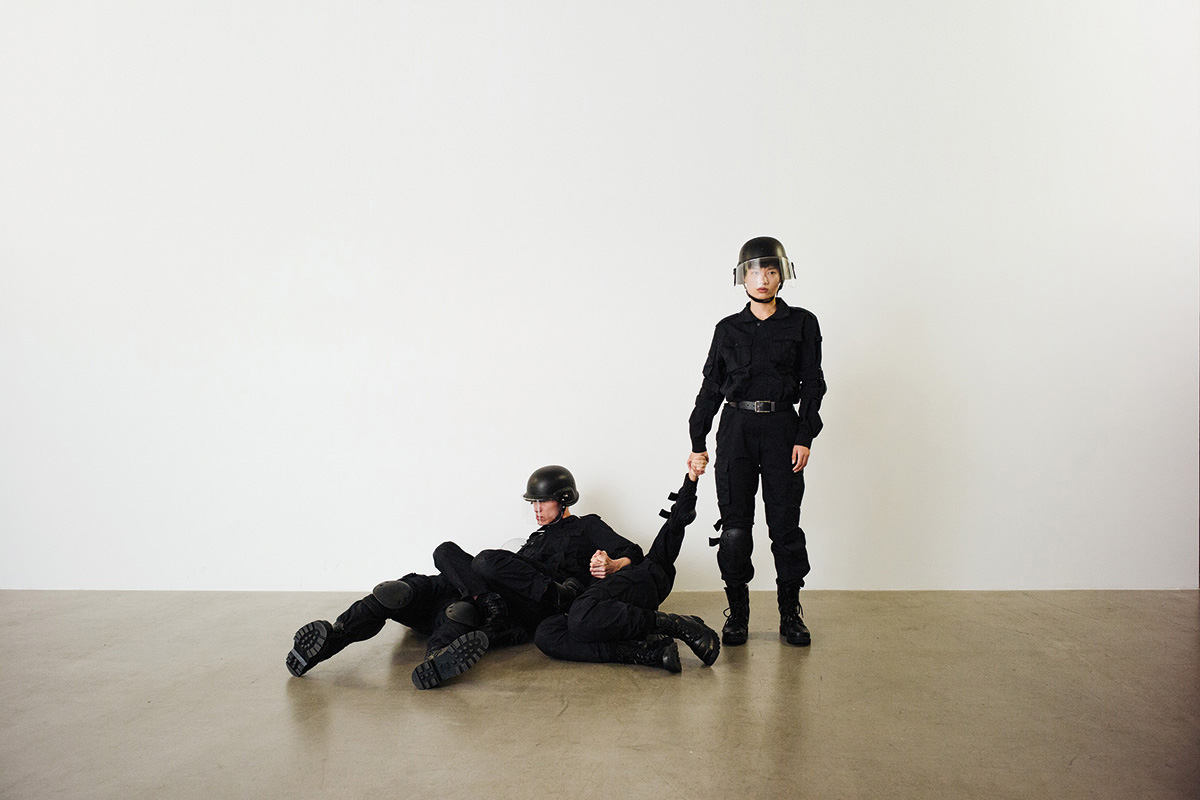
In Rehearsal of the Futures: Police Training Exercises (2018), Isaac Chong Wai choreographs the movement of uniformed riot police in a tortuously slow motion, imbuing their originally violent intentions with a paradoxical gentleness. Slowing down the aggressive attack and the collision of bodies, the posturing and movements struggle in between touching and hitting. These decelerated actions visualise the violence inflicted upon individuals by the collective power structures.
ISAAC CHONG WAI is a Berlin-based artist from Hong Kong. He works across a range of media, including performance, installation, painting, video, photography and multimedia. Influenced by personal events and global phenomena, he engages themes of collectivism and individualism, geopolitics, migration, historical trauma, identity politics and public spheres. Dealing with societal shifts, global tensions and collective wounds, he endeavors to transform the powerlessness—the unanswered demands, the suppression from authority and the denial of individual freedom—into resistance, rebellion and criticism of social systems. He had solo exhibitions at Bilsart, commissioned by Kulturakademie Tarabya and Zilberman (2021); Blindspot Gallery, Hong Kong (2019); Zilberman, Berlin (2019); Kunstraum München, Munich (2018); Goethe Institut Hongkong, Hong Kong (2018); Bauhaus Museum, Weimar (2016). His work has been shown at National Museum of Modern and Contemporary Art, Seoul, Innsbruck Biennial and IFFR, Rotterdam (2020); Museum of Contemporary Art in Taipei and Guangdong Times Museum in Guangzhou (2019); M+ Museum and Para Site in Hong Kong (2018); Stiftung Brandenburger Tor and Haus der Kulturen der Welt in Berlin (2017); Deutsche Kuenstlerbund, Berlin and Gwangju Media Art Festival (2016); Kunstfest Weimar and Macura Museum, Serbia (2015); Moscow Biennale for Young Art in Museum of Moscow (2014). He graduated from Academy of Visual Arts at Hong Kong Baptist University with a BA in Visual Arts and Bauhaus-Universität in Weimar, Germany, with a MFA in Public Art and New Artistic Strategies.
Oleg Chorny, Gena KHMARUK
Catalogue : 2006Pershe Karaoke | Experimental doc. | dv | black and white | 3:0 | Ukraine | 2005
Oleg Chorny, Gena KHMARUK
Pershe Karaoke
Experimental doc. | dv | black and white | 3:0 | Ukraine | 2005
The true story about the first karaoke invention.
OlEG CHORNY. W.b. in 1963. Graduated from the film director`s department of the Kiev State Institute of Theatre and Cinema in 1985. Worked at number of governmental and non-governmental film and video studios. Together with Gena Khmaruk founded the non-governmenatal creative unit "Sampled Pictures". GENA KHMARUK. W.b. in 1972. Graduated from the director`s department of the Ukrainian State Academy of Culture in 1996. Worked as an editor at different TV studios. Also works as a vj and computer graphics designer.
Oleg Chorny
Catalogue : 2025Kyiv in the Days of War | Documentary | 4k | color | 3:9 | Ukraine | 2022
Oleg Chorny
Kyiv in the Days of War
Documentary | 4k | color | 3:9 | Ukraine | 2022
On the 24th of February 2022 Russia launched a large-scale invasion of Ukraine. In the beginning of April the first massive attack of Russian troops was repulsed, but Kyiv is still suffering by air strikes. There are traces of war on the streets of the city. Defensive structures are ready, because the enemy could attempt to occupy the capital of Ukraine again. Despite this the residents of Kyiv are trying to maintain habits of peaceful life, but the war continues.
Born in 1963. Graduated from the film director’s department of the State Institute of Theatre and cinema in 1985. Worked at the Olexander Dovzhenko State Film Studio in Kyiv, various governmental and non-governmental film and video studios. Shot a number of feature shorts, documentaries, ecological and promo films and musical video clips. He is member of the Ukrainian Filmmakers Union. His short feature movies and documentaries participated at the programs at the Ukrainian and international festivals. In 1996 Oleg Chorny and Gennady Khmaruk (w.b. 1972) has founded the non-profit creative unit “SAMPLED PICTURES”. A number of videos created by “SAMPLED PICTURES” were presented at the various film and video festivals, exhibitions and club screenings.
Vera Chotzoglou
Catalogue : 2021Monstera | Video | hdv | color | 8:24 | Greece | 0
Vera Chotzoglou
Monstera
Video | hdv | color | 8:24 | Greece | 0
monstera deliciosa; an originally tropical plant, which is now very popular as an indoor plant, used as an aesthetic, decorative object. Inside our houses, they claim for their space, their freedom, their existence. In this work, monstera becomes a comparison with and the symbol of our very own internment experience, deriving from the recent lockdown. A state, for which we have not been prepared for, that brought a destabilization in various aspects, deviating us from our familiar course and directions. As if the world was blown away in a delirious drift and suddenly or better, violently, derailed, but in terms of a shocking, unexpected pause. In this narration video, the consecutive scenes of indoor life, shown in a back and forth motion, eliminate the perception of time and connote a disarray process, a state of turbulence or surprise, with the parallel narration, consisting in the protagonist plant’s features; inertia bodies, the monstera in an indoor tropical storm, wild animals in captivity, lighting bolts, along with an orgasm scene, a Luchador* getting prepared, footage from an athenian balcony during the lockdown period. The strobe lights used, tent to reveal the party echo and intensify the feeling that something is about to start. In this field of desire, reality, struggle, memory and expectation, a whole new perception of being developed. The accumulated tension that the state of hold has brought, leads to the persistent bodies’ preparation for wrestling and crash. Through the way we perceive the body, how we contemplate its inner rhythm, our physical beingness, this work aims to trace layers of now, potential and future options of (co) existence, as an “expedition chronicle”, about what is getting prepared and about the totally new emerging context, culture and daily life. *Luchador is the term used in Mexico for the professional wrestlers. Text Credits: Pavlina Kyrkou
Vera Chotzoglou is a Visual artist working with time based media. They are an Athens School of Fine arts’ BA & MFA graduate, Department of Visual Arts, Fine Arts & Art Education (2013-2018). They had studied in Academy of Fine Arts in Munich with an Erasmus+ scholarship. They was awarded with audience award for the shortfilm S W E A T at 22th Thessaloniki International GLAD Film Festival (2021) , SNF Artist Fellowship Award by Stavros Niarchos Foundation(2019) Scholarship to cover Degree Expenses from Athens School of Fine arts(2018) and audience award for the short film “Munich almost killed me ½” at 2th Piraeus Film Festival in Athens(2018). They has exhibited internationally at 22th Thessaloniki International GLAD Film Festival Thessaloniki-Greece (2021), Interface video art festival, Zagreb-Croatia (2020), 26th Athens International Film Festival (2020), Centrum Berlin, Berlin, Germany (2020), Eos Gallery (2019), Athens, A.Antonopoulou Gallery, Athens (2019), GRRL HAUS CINEMA, Berlin (2019), Hacker Porn Film Festival, Rome (2019), Platforms project, Athens (2019), Foto Wien, Austria (2019), 6th Athens Biennale, Athens, Greece,(2018) Inshort Film Festival, Lagos, Nigeria (2018), Action Field Kodra, Thessaloniki (2018), 2th Pireus Film Festival,Athens (2018), Bellevue di Monaco, Munich (2016), TAF Gallery, Athens (2013) et al. ?hey work may be found in private collections. Vera Chotzoglou lives and works between Athens & Berlin
Isoje Chou
Catalogue : 2008anne (the assumption) | Experimental video | dv | color | 3:0 | Nigeria, Canada | 2006
Isoje Chou
anne (the assumption)
Experimental video | dv | color | 3:0 | Nigeria, Canada | 2006
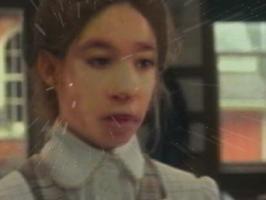
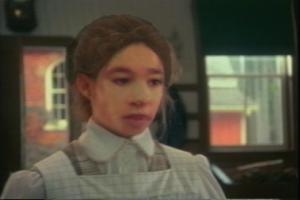
In "Anne (The Assumption)", found footage is an act of remembering, death and bodily elevation. By inserting my "native" face onto that of the character "Anne" of the quintessentially Canadian movie, "Anne of Green Gables", the mild pleasure of the made for television movie/nation is transformed into disconcerting memory that is as fictional as it is historical.
Isoje Chou was born in Kano, Nigeria to a mixed Chinese Manchurian/Nigerian Cape Verdian heritage. She received her Masters of Arts from York University, Toronto.
Davy Chou
Catalogue : 2015Cambodia 2099 | Experimental fiction | hdv | color | 21:0 | France | 2014
Davy Chou
Cambodia 2099
Experimental fiction | hdv | color | 21:0 | France | 2014
Phnom Penh, Cambodia. On Diamond Island, the country`s pinnacle of modernity, two friends tell each other about the dreams they had the night before.
Davy Chou is a French filmmaker. His first documentary feature film, Golden Slumbers, was selected at Forum Berlinale 2012 and at Busan International Festival 2011. Cambodia 2099 premiered in Directors’ Fortnight at Cannes 2014, and received the best prize at Curtas Vila do Conde 2014. He is now developping a feature film entitled Diamond Island.
Ijosé Chou
Catalogue : 2006Bullfight (acts of war) | Experimental video | dv | color | 1:0 | Western Sahara, Liberia | 2004
Ijosé Chou
Bullfight (acts of war)
Experimental video | dv | color | 1:0 | Western Sahara, Liberia | 2004
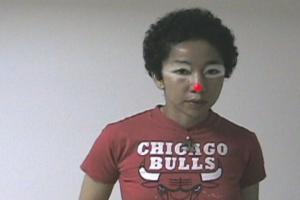
"Bullfight" touches into spaces that are psychic, personal, private, /displaced ?where the body is at once raw and mediated, and as clown, matador and bull...
Born and raised across West Africa. Lives in North America.
Catalogue : 2006Anne | Experimental video | dv | color | 1:25 | Western Sahara, Canada | 2003
Ijosé Chou
Anne
Experimental video | dv | color | 1:25 | Western Sahara, Canada | 2003
In "anne", found footage is an act of remembering. By inserting my face (and as such, ?my body?), onto that of the character in the movie, "Anne of Green Gables", I start a process of memory that is as fictional as it is historical.
Born and raised across West Africa, lives currently in North America. Practice included painting, drawing and video and video performance.
Saddie Choua
Catalogue : 2025The Chouas #Episode 5 Am I the Only One Who Is Like Me? | Video | mov | color and b&w | 48:0 | Belgium | 2018
Saddie Choua
The Chouas #Episode 5 Am I the Only One Who Is Like Me?
Video | mov | color and b&w | 48:0 | Belgium | 2018
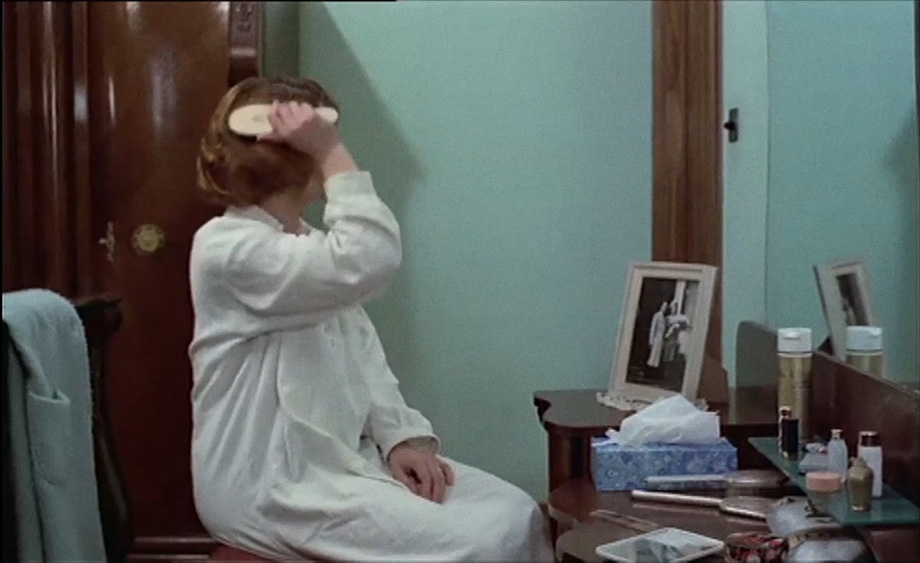
The Chouas #Episode5 Am I the only one who is like me? (’45) The Chouas started from an old photograph of Saddie Choua’s father and his four brothers. Three of them emigrated to Belgium. One turned back. Two stayed in Morocco. Who made the best choice? The Chouas are an ongoing lifework in episodes, an artwork in which the alienation of the immigrant families in Europe, the self-portraits in the Diaspora, the specters of the homeland are explored in multiple narrative threads and media. It will e.g. refer to soap series and other popular formats and will invite the viewer to discover the structures of stereotypical image-formation, dominant codes and partial histories. Am I The Only One Who Is Like Me? is the fifth episode of The Chouas, through which Saddie Choua depicts her own family, expertly mixing autobiography with fiction and personal and political considerations. With this fifth episode, made up of archive images, film extracts and television sequences, the artist prolongs her interrogation of self, hierarchical systems, the desire to dominate, and power games. Saddie Choua connects her Belgian grandfather with The Bluest Eye, a novel by Toni Morrison. The video reflects her political criticism of inequality. That inequality is rooted in our culture and our economics, whether it is about the situation in a Citroën factory or in the arts. We are governed by people who do not love us. Audre Lorde has said that anger is a force and from it can be drawn knowledge. It is not this anger that disrupts collaboration between ethnicities, between genders, between social classes but rather the refusal to listen to it. Saddie Choua translates this anger into a visual format.
Am I the only one who is like me? This is a question characteristic of Saddie Choua’s life and work. It problematizes the position of the solitary I that is also never disconnected from the other. The power order that conditions the solitary “I”, is another central subject. Where does this otherness sit in the hierarchy of power? Where is her oppression and exploitation concealed or exoticed? Saddie Choua asks us to think about how we consume images and dialogues about the other and how they affect our self-image and historical consciousness. How can we intervene in the images that write our history and conceal social struggle? She uses meta-documentary tactics, collage, own (material, re-appropriation of popular intercultural formats and autiobiographical elements to put racism, discrimination against women and class and her cats in the spotlight. It is her way of undermining the (visual) language of our media and sharpening the critical and political gaze of her audience. Saddie Choua's work questions the relationship between maker and image. “How to speak and depict differently from a subalternal position, or is it just the concept of ‘the other’ that confines me in dominant images and narratives?” Saddie Choua lives and works in Brussels, Ostend and Lychnaftia. She is a doctoral researcher at RITCS Brussels and a lecturer at Sint Lucas Antwerp and RITCS. She is part of the artist collective ROBIN. She is one of the laureates of the Belgian Art Prize 2020 that was cancelled by the organization because the artists asked to go in dialogue concerning the ethics of the prize.
Catalogue : 2020Today is the Shortest Day of the Year But Somehow Hanging Around With You All Day Makes it Seem Like the Longest | Video | super8 | color | 11:45 | Belgium, Germany | 2018
Saddie Choua
Today is the Shortest Day of the Year But Somehow Hanging Around With You All Day Makes it Seem Like the Longest
Video | super8 | color | 11:45 | Belgium, Germany | 2018
Dans ses films, Saddie Choua combine son propre matériel cinématographique avec des images trouvées, des documents d’archives visuels et textuels, provenant de diverses sources, telles que la télévision nationale, des programmes de loisirs, des vidéos musicales et des magazines. Dans sa pratique, Saddie Choua se concentre sur le rôle de l’image en mouvement dans les loisirs et la politique et leur influence sur l’image commune de l’Autre. Dans certains de ses projets, elle introduit du matériel autobiographique pour rechercher le rôle entre elle et cet Autre. Dans ses films et installations, Saddie Choua simule la conception des médias de masse vus du salon, créant ainsi une situation familière pour transmettre de nouvelles images qui suggèrent les complexités de l’Autre. Saddie Choua montre les structures de pouvoir derrière l’industrie de l’image actuelle et les préjugés et malentendus qu’elles provoquent.
Saddie Choua a étudié la sociologie à la VUB de Bruxelles. Elle participe actuellement au projet international de recherche et de discussion intitulé “Décolonisation perverse”, à l’Akademie der Künster der Welt à Cologne. Saddie Choua a été invitée pour les expositions personnelles suivantes (une sélection) : Le Joli Mois de Mai, Ten Weyngaert, Bruxelles, 2017 ; The Chouas - Work in Progress, MU.ZEE, Ostende, 2016 ; Great News. J’ai été élu félin de l’année, WIELS, 2014. Ses œuvres ont également été présentées dans les expositions de groupe, festivals et projections suivants (une sélection) : Festival Concreto, Fortaleza, 2017 ; Montrez-moi vos archives et je vous dirai qui est au pouvoir, KIOSK, Gand, 2017 ; Je crois qu’il y a une confusion chez vous. Vous croyez que moi je veux vous imiter, Kaaistudio’s, Bruxelles, 2017 ; The Chouas - A work in progress Episode #3, Human(art)istic festival, Beursschouwburg, Bruxelles, 2016 ; L’acte de fixer le soleil, Zwart Wild, Gand, 2016 ; Biënnale de Marrakech, Marrakech, 2016 ; Festival d’égalité, Vooruit, Gand, 2015 ; Été de la photographie, BOZAR, Bruxelles, 2014.
Omar Chowdhury
Catalogue : 2016The Colonies at Dusk | Video | hdv | color | 12:49 | Bangladesh, Australia | 2014
Omar Chowdhury
The Colonies at Dusk
Video | hdv | color | 12:49 | Bangladesh, Australia | 2014
To make the moving-image work for Means the recently returned Australian-Bangladeshi artist Omar Chowdhury headed out into the Australian bush seeking a form of simple and focused sensing. Carrying stills and cinematic cameras, he ventured into the Southern Highlands of New South Wales, crossed the Great Dividing Range, and wandered out to the remnant Victorian gold towns, searching. Haunted by the ‘weirdness’ of the trees, the totemic termite mounds, the warbling creeks and dirt packed roads, he felt himself and his thinking seep into the darkening landscape. The traces of this spiritual ethereality inhere in his strange and occult video footage of animals, rocks, branches, burnings, machines and the silence of the isolate people. In it, somewhere, lie the means of his being.
Bangladeshi-Australian artist Omar Chowdhury makes moving-image, photographic, conceptual and textual installations based on immersions into contested spaces and their histories. Often mixing notions of ontology, political economy, and the spirit, they hold in uneasy tension various polarities: facts and the surreal, humour and melancholia, rhythm with chaos, weakness and power, and memory with forgetting. Out of these cohesions and frictions he produces densely woven languages and environments of moral and psychic inquiry. In 2016 he has an upcoming solo presentations at Bengal Gallery (Dhaka) and Dhaka Art Summit 2016 and screenings at the Queensland Gallery of Modern Art (Brisbane) for Asia Pacific Triennial 8. Recently he has had solo exhibitions at 4A Centre for Contemporary Asian Art (Sydney), ALASKA Projects (Sydney) and MOMENTUM (Berlin). He was a finalist in the 2015 John Fries Award (Sydney) and the 2015 and 2016 Blake Prize Award (Sydney). He is the recent recipient of a Bengal Foundation Practice Grant, Keir Foundation/4A Commission, Australia Council Skills and Development Grant, Edward M. Kennedy Grant for the Arts, and an Australian Cinematographer`s Society Gold Award. He also founded and often programs the Bengal Cinematheque in Dhaka.
Thanos Chrysakis
Catalogue : 2007Errant waves | Création sonore | 0 | | 40:9 | Greece, United Kingdom | 2006

Thanos Chrysakis
Errant waves
Création sonore | 0 | | 40:9 | Greece, United Kingdom | 2006
"Errant Waves" is part of the "Inscapes" series, consisting of compositions based on the timbral affinities of sounds. The articulated micro-sonorities and their micro-modulations within their textural counterpoint create dynamic aural spaces.
Thanos Chrysakis is a London-based composer. After studying Timpani & Percussion and classical music, and at the same time working as a musician (for a short period) in theatres in Athens, he continued his studies in Sonic Arts and electronic music, and is now a candidate in MPhil/PhD in composition at Goldsmiths College, University of London. His musical output consists of microacousmatic compositions, instrumental music, and generative installations/environments. His music and sound work has appeared on various independent labels and events such as CYNETart - Dresden, Complexités -Chateâu de Linardie, Senouillac, Maison Populaire ?Art Numériques [Pulsations] ? Paris, ArtPool - Budapest. His work «Inscape 5» was amongt the selected works at the International Competition de Musique et d`Art Sonore Electroacoustiques de Bourges 2005 in the category '?uvre d`art sonore électroacoustique'. Even though his main interests are music & sound, writing poetry and independent experimental moving image making are also equally practiced by him. His poetry can be found in Greek journals and on the Internet, and his moving images have been shown in festivals such as Island Art Film & Video Festival - London, 2nd Biennale Internazionale di Ferrara and SynchCinema Festival ? Athens, La Casa Encendida ? Madrid, Image Forum Festival -Tokyo.
Danaya Chulphuthiphong
Catalogue : 2017Demos | Video | hdv | color | 13:0 | Thailand | 2016
Danaya Chulphuthiphong
Demos
Video | hdv | color | 13:0 | Thailand | 2016
By the time the zoo is closing, detained animals feeling frustrated and confused. The only thing they can do is retaining a slight degree of consciousness, waiting for the changing of time. `Demos` is a lyrical assemblage of the observational footage collecting from various places. The film is an attempt to depict the gloom, the oppression and the surreal reality under the military regime since the coup in 2014.
Danaya Chulphuthiphong lives and works in Bangkok, Thailand. She holds a BA in Archaeology and MFA in Visual Arts. She started her career as a documentary photographer for a newspaper and a magazine. She is interested in lens-based arts and works with both still and moving images. In 2014, Danaya made her first short film `Night Watch` which has been selected for participation in the International Competition of the 61st International Short Film Festival Oberhausen, Experimenta India and won the Special Jury Prize from Fronteira, The International Documentary and Experimental Film Festival. The film was also screened as part of the 28th Images Festival, Hors Pistes Tokyo, Arkipel, KLEX, Pori Film Festival and the 26th Singapore International Film Festival. In 2016, Danaya released her second short film, `Demos` which has been selected for participation in Southeast Asian Short Film Competition of the 27th Singapore International Film Festival and won the BACC award from the 20th Thai Short Film and Video Festival.
Mathías Chumino, Pablo Villasuso
Catalogue : 2020Attractor - Repeller | Multimedia performance | hdv | black and white | 20:0 | Uruguay | 2018
Mathías Chumino, Pablo Villasuso
Attractor - Repeller
Multimedia performance | hdv | black and white | 20:0 | Uruguay | 2018
ATTRACTOR REPELLER is an audiovisual piece created by AUTOPOL (Pol Villasuso) & C03RA (Mathías Chumino) It explores the tension and duality of the aggregation and disaggregation phenomena; continous – discontinous of visual and sound particles. These dualities are easier to imagine if we think tof the valley – mountain topography. The energy attraction is in the valley and the energy repelling is at the top of the mountains. This piece intepellates the flat and striated fields through noise, rumors, whispers, silence, buzzing and trembling, as a path and audiovisual texture.
C03RA (Mathías Chumino) is a multimedia artist and musician, specialized in image post-processing, editing and visual art. His visual work is the result of continuous experimentation and bold image manipulation rendered through the minimal filter of polished aesthetics, His technical expertise and proficiency using state of the art software and hardware are put to the service of a poetic vision of the world to deliver dark and mysterious visual landscapes, always dwelling on primal and metaphysical concepts. The result is a synesthetic journey through new worlds, an experience that defy and cautivates the viewer. AUTOPOL (Pol Villasuso) is a self-taught musician, sound artist - investigator and Architect. He has been known as AutoPol since 2010, conducting research and presentations in the experimental sound field. AutoPol explores the analogical and digital synthesis in an environment of noise, a-synchrony and poly-morphic sound superposition, designing complex, confusing sound atmospheres and austere and shocking moments. His live performances are always different. Based almost exclusively on improvisation the categories and musical limits of (dis) harmony, (a) rhythm and tempo are often confused and fade into the sound/visual air. When the architecture waits for the event, sound and light appear.
Wang Chun-hong
Jasmina Cibic
Catalogue : 2018Nada: Act II | Experimental film | 4k | color | 13:1 | Slovenia, United Kingdom | 0
Jasmina Cibic
Nada: Act II
Experimental film | 4k | color | 13:1 | Slovenia, United Kingdom | 0
NADA: Act II restages a reimagined performance of Béla Bartók’s pantomime ballet The Miraculous Mandarin - as performed inside the Yugoslav Pavilion at the Brussels EXPO in 1958. With its scope to represent the country’s new aesthetic direction on Nations Day almost sixty years ago, the ballet score is here traced through scarce archives and re-invented and overwritten with new purpose in collaboration with the choreographer Lea Anderson. Based on a story by Melchior Lengyel, The Miraculous Mandarin constituted a peculiar choice for the National Day given that it possessed something of a scandalous reputation owing to its prurient narrative: three pimps make use of a prostitute to lure passing men into a room with the intention of robbing them. The titular Mandarin arrives, doomed to be the next victim. His « miraculousness » stems from his ability to withstand beating, suffocation, and stabbing without perishing, persisting always in his lust for the woman. Finally, she embraces him and he dies, sated. Bartók’s original characters, the pimps, prostitute and exotic Mandarin are replaced with the archetypes of politicians, the ideal of Mother Nation, and that most easily abused of Modern practitioners: the Architect. In doing so, the ballet becomes an allegorical proposition through which to view European history: the thugs cast as the state’s bureaucrats and politicos, who deceive and enslave, destroying the desires of those who produce for the benefit of the nation or artistic idealism. Shot in the iconic Arne Jacobsen’s Aarhus City Hall NADA: Act II links across time and space various European models of statecraft, soft power and its framing.
Jasmina Cibic (b. Ljubljana 1979) is a London based artist who works in performance, installation and film, employing a range of activity, media and theatrical tactics to redefine or reconsider a specific ideological formation and its framing devices such as art and architecture. Her work draws a parallel between the construction of national culture and its use value for political aims, encouraging the viewer to consider the timelessness of psychological and soft power mechanisms that authoritarian structures utilise in their own reinsertion and reinvention. Jasmina represented Slovenia at the 55th Venice Biennial with her project « For Our Economy and Culture ».
Jasmina Cibic
Catalogue : 2025Beacons | Experimental doc. | 4k | color | 23:0 | Slovenia, United Kingdom | 2023
Jasmina Cibic
Beacons
Experimental doc. | 4k | color | 23:0 | Slovenia, United Kingdom | 2023
Beacons is a cinematographic journey portraying eight women who distil the archive of cultural workers from countries of the Non-Aligned Movement into a musical score. They translate and decipher words into sounds and choreography and meet within a proposition for an address recasting the unrealised promises of the past into a sonic address a rehearsal for our present. Filmed on isolated architectures steeped in nature that once served the awakening of transnational solidarity, the project aims to re-inscribe the missing female voice into the history of world-building.
Cibic represented Slovenia at the 55th Venice Biennial with her project “For Our Economy and Culture”. She was the winner of the Film London Jarman Award (2021), the B3 Biennial of the Moving Image Award (2020) and has screened her films at the Whitechapel Gallery, London Film Festival, HKW Berlin, the Louvre, Dokfest Kassel and the Copenhagen International Documentary Festival among others. Cibic’s recent exhibitions include solo shows at the Museum of Contemporary Art Zagreb, The High Line New York, Museum der Moderne Salzburg, macLyon, Museum Sztuki Lódz, CCA Glasgow, Phi Foundation Montreal and BALTIC Centre for Contemporary Art Gateshead. Cibic’s work recently been presented at group exhibitions including IMMA Dublin, Biennale Jogja, Innsbruck Biennial, MAXXI Rome, Mac Belfast, MOMA New York, the Chicago Architectural Biennial and the Museum of Contemporary Art Belgrade.
Catalogue : 2023The Gift | Experimental fiction | 4k | color | 27:56 | Slovenia, France | 2021
Jasmina Cibic
The Gift
Experimental fiction | 4k | color | 27:56 | Slovenia, France | 2021
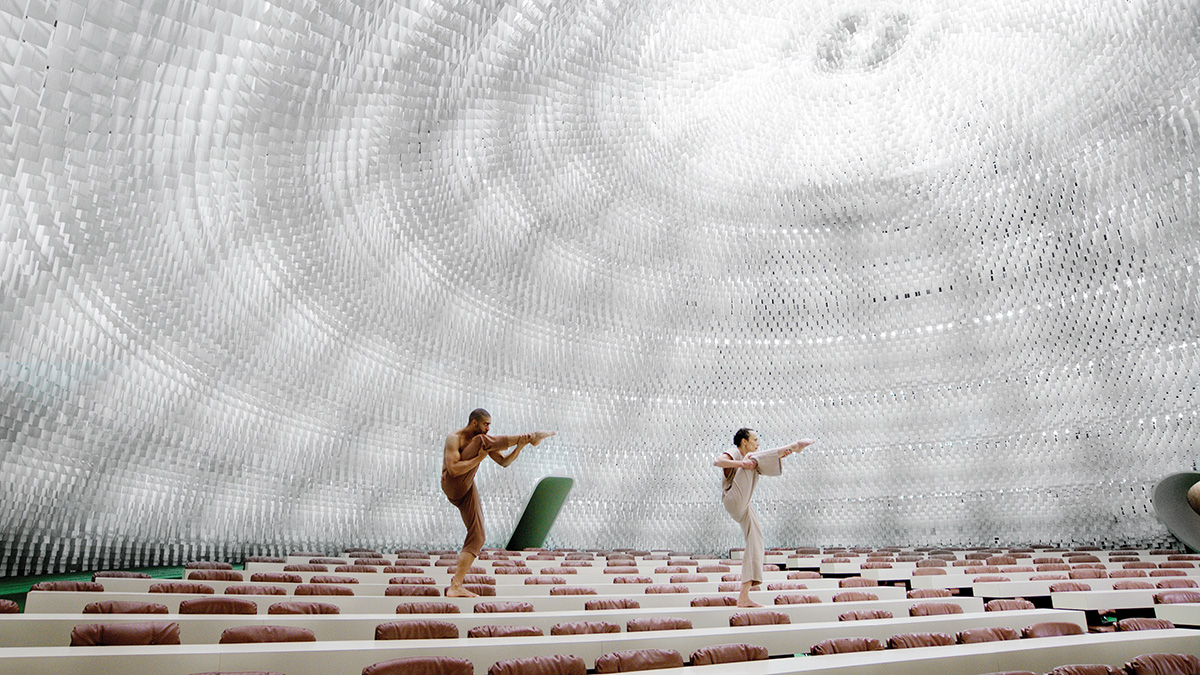
The Gift is a film about the use and abuse of culture in times of political and ideological crisis. It tells the story of a competition for a perfect gift that could heal a broken nation. The Gift is composed entirely of historical ready-mades that include some of the most perturbing examples of art, music and architecture deployed as trojan horses of political powers. The film’s locations include iconic buildings which were all political gifts themselves - including Oscar Niemeyer’s French Communist Party HQ in Paris, the Palace of Nations in Geneva, Mount Buzludzha in Bolgaria and the Palace of Culture and Science in Warsaw.
Jasmina Cibic is a Slovenian artist currently based in London, who works in film, performance and installation. She represented Slovenia at the 55th Venice Biennial with her project “For Our Economy and Culture”. Her recent exhibitions include solo shows at: Museum der Moderne Salzburg, The Highline New York, macLyon, Museum Sztuki ?ód?, Museum of Contemporary Art Ljubljana, CCA Glasgow, Phi Foundation Montreal, BALTIC Centre for Contemporary Art Gateshead, Ludwig Museum Budapest, Kunstmuseen Krefeld along with group exhibitions at MAXXI Rome, Steirischer Herbst ‘19, MOMA NY, Marta Herford and Guangdong Museum of Art China. Cibic’s films have been screened at the Barbican London, Whitechapel Gallery, CCA Montreal, Pula Film Festival, HKW Berlin, Louvre, Les Rencontres Internationales Paris, Aesthetica, Berwick Film and Media Arts Festival, BFI London Film Festival, Dokfest Kassel and Copenhagen International Documentary Festival. Cibic was the winner of the MAC International Ulster Bank and Charlottenborg Fonden awards (2016), the B3 Biennial of the Moving Image Award (2020) and the Film London Jarman Award (2021).
Catalogue : 2019NADA: Act III - The Exhibition | Video | 4k | color | 16:20 | Slovenia, Germany | 2017
Jasmina Cibic
NADA: Act III - The Exhibition
Video | 4k | color | 16:20 | Slovenia, Germany | 2017
Composed of quotes drawn from political discussions on German national representation at 20th Century’s World Expositions, The Exhibition creates an original conversation between three allegorical positions. The Curator, the Artist and Germania become a reflection of ideological deliberation facing a practical scruple: how to create an exhibition of the nation’s best artworks in order to affect society. Including words drawn from the opening address at the German Pavilion at Barcelona EXPO 1929, Goebbels’ ideas on casting out women from politics and post 2WW soft power deliberations, The Exhibition merges political rhetoric to arrive at what seems to be the only solution that guarantees the success of capital: banning the audience. Filmed within the villas Haus Esters and Lange, that Ludwig Mies van der Rohe built for the Krefeld silk barons in 1920s, The Exhibition uses the architecture which itself served as soft power realised: a theatrical frame and pedestal that went on to establish Mies as the architect that paved way for the theatricality of the concept of nation state and its visual branding.
Jasmina Cibic (b. Ljubljana 1979) is a London based artist who works in performance, installation and film, employing a range of activity, media and theatrical tactics to redefine or reconsider a specific ideological formation and its framing devices such as art and architecture. Jasmina represented Slovenia at the 55th Venice Biennial with her project “For Our Economy and Culture”. Her recent exhibitions include solo shows at: DHC/Art Montreal, BALTIC Centre for Contemporary Art Gateshead, Museum Haus Esters Krefeld, Aarhus 2017, Esker Foundation Calgary, Museum of Contemporary Art Zagreb, Museum of Contemporary Art Belgrade, Museum of Contemporary Art Vojvodina, MGLC Ljubljana and Ludwig Museum Budapest along with group exhibitions at MOMA NY, MUMA Monash Museum, CCS BARD, Guangdong Museum of Art China, Pera Museum Istanbul, La Panacee Montpellier, City Gallery Wellington, MSUM Ljubljana, MNHA Luxembourg, Joanneum Museum Graz and California College of the Arts. Cibic’s films have been screened at FIAC Paris, Pula Film Festival, HKW Berlin, CCA Laznia, Les Rencontres Internationales Paris, Dokfest Kassel and Copenhagen International Documentary Festival. Jasmina Cibic has been shortlisted for the Jarman Award (2018) and was the winner of the MAC International Ulster Bank and Charlottenborg Fonden awards (2016).
Catalogue : 2017Nada: Act I | Video | hdv | color | 10:9 | Slovenia, United Kingdom | 2016
Jasmina Cibic
Nada: Act I
Video | hdv | color | 10:9 | Slovenia, United Kingdom | 2016
Jasmina Cibic’s film trilogy NADA draws parallels between the construction of national culture and its use-value for political aims. The first chapter Nada: Act I fans out from a biographical thread of architect and artist Vjenceslav Richter, one of the key figures in charge of the visual representation of the Yugoslav state and his first and unrealized design for the Yugoslav Pavilion at the 1958 EXPO in Brussels. Cibic traced this architecture through archives and recreated the pavilion’s initial design as a musical instrument. In the film, a violinist constructs and continually tunes the instrument according to the Miraculous Mandarin, a musical composition for ballet written by Béla Bartók. This artwork was the one chosen to represent Yugoslavia at the most important dates of the pavilion itself “its National Days” whose role was to maximise the attention and the number of visitors. Paradoxically, this work was since its conception in 1917 marred by state censorship due to its explicit subject matter: a plot of a prostitute, her pimps and the client’s roles which Cibic recasts in the following chapters of Nada into characters of Mother Nation, politicians and the artist in charge of national presentation.
Jasmina Cibic works in performance, instalation and film, employing a range of activity, media and theatrical tactics to redefine or reconsider a specific ideological formation and its framing devices such as art and architecture. She represented Slovenia at the 55th Venice Biennial with the project “For Our Economy and Culture”. Her recent solo exhibitions include Esker Foundation Calgary, Museum of Contemporary Art Zagreb, Museum of Contemporary Art Belgrade, Museum of Contemporary Art Vojvodina, MGLC Ljubljana and Ludwig Museum Budapest along with group exhibitions at Hessel Museum, Pera Museum Istanbul, Museum of Modern Art Ljubljana, La Panacee Montpellier, City Gallery Wellington, MSUM+ Ljubljana, MNHA Luxembourg. Her films have recently been screened at Biennial of Moving Image Buenos Aires, Pula Film Festival, HKW Berlin, CCA Laznia, Les Rencontres Internationales Paris, Dokfest Kassel and Copenhagen International Documentary Festival. Cibic has been nominated for the Jarman Award (2016), Golden Cube Award (Dokfest 2016) and won the MAC International Ulster Bank Award (2016) and best International Artist at the Kunsthalle Charlottenburg(2016). Cibic’s upcoming solo exhibitions include NN Contemporary, Crawford Art Gallery Cork, Aarhus 2017, BALTIC Gateshead, Krefeld Museum and DHC Art Montreal.
Catalogue : 2016Tear Down and Rebuild | Experimental fiction | 4k | color | 15:28 | Slovenia, United Kingdom | 2015
Jasmina Cibic
Tear Down and Rebuild
Experimental fiction | 4k | color | 15:28 | Slovenia, United Kingdom | 2015
Composed of various quotes - belonging to political speeches, debates and proclamations that extract and emphasize the iconoclasm of architecture, art and monuments – the film creates an original conversation between four characters. A Nation Builder, a Pragmatist, a Conservationist and an Artist/Architect become a reflection of ideological deliberation facing a practical scruple. Including words drawn from Regan’s speech on the Berlin Wall, Prince Charles’s 1984 address at RIBA and Isis bloggers’ proclamation on the demolishment of temples, the film’s storyline uses language that endorses demolition and redesign, which were to aid the creation of new displays for ensuing nation-states or ideological positions throughout the 20th and 21st centuries. As the film’s narrative unfolds, the viewer is a witness to the final decision to demolish the fictitious building, the image of which is constructed in the spectator’s imagination through a collage of quotations on diverse, ideologically contrived and historically charged buildings, monuments, walls etc. that were to be or were knocked down - pointing to the universality and timelessness of the paradox of national and ideological representation and its icons.
1979, Ljubljana A London based artist working in installation, performance and photography. Cibic has begun making films in 2012 for her solo presentation of the Slovenian Pavilion at the 55th Venice Biennial. Cibic`s work is site and context specific, performative in nature and employs a range of activity, media and theatrical tactics to redefine or reconsider an existent environment and its politics. The basic gesture in Cibic’s artistic explorations is the dismantlement and careful analysis of the work of art, its representation, and its relationship to the viewer as she tries to operate inside the system she is investigating. The mechanisms and structures of the system thus often become integral parts of the practice, allowing the work to transcend the plane of art and the language of form. Her film works have been shown at Ludwig Museum Budapest, MSUB Belgrade, MGLC Ljubljana, Dokfest Kulturbahfhof – Kassel, Haus der Kulturen der Welt Berlin, Les Rencontres Internationales - Gaîté Lyrique Paris, Copenhagen International Documentary Festival, Art Brussels Cinema Program and Nassauischer Kunstverein Wiesbaden. Her upcoming solo screenings include MSUM Ljubljana, Crawford Art Gallery Cork, the Artist Cinema at the Museum of Contemporary Art Zagreb.
Catalogue : 2014Framing the Space | | | | 11:31 | Slovenia | 0
Jasmina Cibic
Framing the Space
| | | 11:31 | Slovenia | 0
?Framing the Space? was shot at the summer residency of former Yugoslavia`s president Tito. The Vila underwent numerous redesigns concurrent with national cultural and political imperatives throughout its life, culminating in its 1950s redesign by Tito?s official state architect, who had the task of translating the existing Austro Hungarian castle into a new, modernist architecture, fit to illustrate a new national formation. The film presents philosophical and architectural theories of purpose, form, function and aesthetic priorities through a staged interview between the architect and a journalist questioning his possible successes and failures. The script is based on documents from Slovenian Parliament?s archives from 1950s. The theoretical debate around ideological vision lies in opposite to the period/melodrama-style delivery and aesthetic and points to the exoticism that historical and geopolitical revisitations are subjected to in the eyes of the contemporary viewer. The recontextualising of issues around the ideas of national representativeness, dramatises not only the power paradigms inherent in systems of authority, but also the explicit contradictions present in the transmutation of a national identity from past to present, place to place. Framing the Space was produced specifically for Cibic?s project ?For Our Economy and Culture? representing Slovenia at the 55th Venice Biennial.
Jasmina Cibic was born in Ljubljana, Slovenia in 1979. She completed her MA in Fine Art at Goldsmiths College in London in 2006. She has taught at the Accademia di Belle Arti in Venice and regularly holds artist talks and lectures internationally. Jasmina Cibic?s recent projects and exhibitions include ?For Our Economy and Culture?, Slovenian pavilion, 55th Venice Biennial, ?Disturbances?, Musée national d`histoire et d`art, Luxembourg, 3oth International Graphics Biennial Ljubljana, ?October Salon?, Belgrade, ?U3 ? 7TH Triennial of Contemporary Art?, MSUM, Ljubljana, ?Monitoring?, Dokfest, Kassel, ?Borderline?, Joanneum Museum Graz, ?The Secret of the Ninth Planet?, California College of the Arts, San Francisco, ?Museum on the Street?, Museum of Modern Art Ljubljana, ?The Object of the Spectacle?, Galerija ?kuc, Ljubljana, ?Present State?, Five Years Gallery, London, ?Tourists Welcome?, Ljubljana International Airport and ?Landescape?, Künstlerhaus Graz. Her upcoming exhibitions include ?Fruits of Our Land?, LMAKprojects, New York and Ernst Museum (Capa Contemporary Photography Center), Budapest. Jasmina Cibic? s moving image work has recently been screened at Copenhagen International Documentary Film Festival, Museum of Modern Art Ljubljana and KORO, Oslo. Her upcoming screenings include 14th GOEAST - FESTIVAL OF CENTRAL AND EASTERN EUROPEAN FILM, Wiesbaden, ?Art and Power?, Museum of 25th of May, Belgrade.
Mariangela Ciccarello
Catalogue : 2019Battleground | Video installation | hdv | color | 5:25 | Italy, USA | 2017
Mariangela Ciccarello
Battleground
Video installation | hdv | color | 5:25 | Italy, USA | 2017
The existence of a battleground implies a larger war going on and an inherent lack of a resolution. Even within a single battle, the balance can shift, things can change or evolve, and be regarded from a different perspective. Rules and roles can be surpassed. Gesture is crucial in this regard as "the process of making a means visible as such" (Agamben).
Mariangela Ciccarello is a moving image artist and filmmaker whose work has been exhibited at the Festival del film Locarno, Torino Film Festival, Edinburgh International Film Festival, The Film Society of Lincoln Center's "Art of the Real" and Harvard Art Museum. In 2017 she participated in the Mediterranea 18 Biennale. Her work has been supported by the Roberto Cimetta Fund, New York State Council on the Arts, and the Valletta 2018 Foundation.
Mariangela Ciccarello, Philip Cartelli
Catalogue : 2016Lampedusa | Experimental fiction | hdv | color and b&w | 13:44 | Italy, USA | 2015
Mariangela Ciccarello, Philip Cartelli
Lampedusa
Experimental fiction | hdv | color and b&w | 13:44 | Italy, USA | 2015
Combining high definition and Super 8 footage, Lampedusa is composed of interwoven narratives based on a series of real events. In late 1831, a volcanic island suddenly erupted from the sea a few kilometers off the southern coast of Sicily. An international dispute ensued, during which a number of European powers laid claim to this newfound “land.” The island receded below sea level six months later, leaving only a rocky ledge under the sea...
Philip Cartelli Philip Cartelli is a filmmaker, critic, researcher, and doctoral candidate in Harvard University’s Sensory Ethnography Lab. His film and video works have been shown in international festivals, conferences, and installation settings. Mariangela Ciccarello After studies in philosophy and visual art, Mariangela Ciccarello pursued a career as a curator in galleries and museums between Europe and South Africa. She has made a series of films over the past few years, most recently during a fellowship at the UnionDocs Center for Documentary Art in Brooklyn.