Catalogue > List by artist
Browse the entire list of Rencontre Internationales artists since 2004. Use the alphabetical filter to refine your search. update in progress
Christopher Messina
Catalogue : 2006Nightlight | Experimental video | dv | color | 9:30 | USA | 2005
Christopher Messina
Nightlight
Experimental video | dv | color | 9:30 | USA | 2005
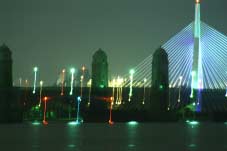
An experiment using digital photography, Nightlight is a study of the nights and lights along the Charles River in Boston, Massachusetts. This piece is made up entirely of still photographs, sequenced together to appear in motion. By making subtle adjustments between each photograph taken, the lights of the city seem to come to life.
Born in New York State, Chris is currently living and making films in Boston, Massachusetts.
Mathilde Mestrallet
Catalogue : 2007La règle du jeu | Experimental video | dv | color | 3:50 | France | 2006
Mathilde Mestrallet
La règle du jeu
Experimental video | dv | color | 3:50 | France | 2006
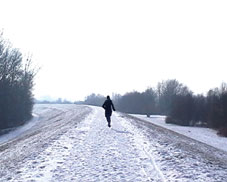
"La règle du jeu" is part of a series of 8 videos called "Errances". These videos examine the relationship between man and landscape. Each project takes as a starting point a physical displacement, the discovery of a place previously unknown. The artist uses his body as a subject, a silhouette evolving in space, deciding on precise centring, fixed shots, and landscapes to be crossed. We could say that these videos revolve around nothing, a void, and that each video is the result or the narration of the encounter, the experience of these foreign spaces. A young woman is running along some bushes, then hides, as if being pursued. She is attempting to escape, a shot rings out and makes her stop. Playful slaughter, child's game, the camera shoots its victim.
Mathilde Mestrallet, studied Decorative Arts in Strasbourg, France. Her video projects examines man's place in landscape and his relationship to it. She is interested in the different routes that a given site proposes. The videos develop around simple scenarios and productions: a repetition of an action in a place; steps; strolls; and games. The lived experience, the real encounter with the landscape, the relationship to the space as an unknown piece of land, as a foreign place, and territories of possibility are the starting points of each video project. Between 'no man's land' and labyrinthine architecture, the various actors evolve in these oversized spaces.
Toni Mestrovic
Catalogue : 2025Tisina | Experimental film | 4k | color | 22:42 | Croatia | 2024
Toni Mestrovic
Tisina
Experimental film | 4k | color | 22:42 | Croatia | 2024
Silence is the period between two compositions in the space of shipbuilding heritage with an uncertain future. Due to the long-standing process of restructuring and privatization, political interventions and the governing structures' corrupting malfeasances, the workers of the 3. maj (3rd of May) shipyard stayed at home without pay for a full year, and the production facility went silent. That moment of silence in a facility that is usually filled with sound is the starting point for the portrayal of a specific space and time. Revealing the beauty of the spatial and auditory narratives of an industrial space, in the absence of workers and work processes, contextualizes the frightening socio-economic consequences of the “silence” and “emptiness” phenomena. After months-long negotiations in the fall of 2019, production continues with an uncertain future.
Toni Meštrovi?, graduated with a Graphic Arts degree from the Academy of Fine Arts in Zagreb, where he produced graphic arts, sculpture and installation. Due to his interest in electronic audiovisual media, he studied Video/Digital Imaging at the International Summer Academy for Contemporary Art in Salzburg, and completed postgraduate diploma in Media Art at the Academy of Media Arts, Cologne. Since 1992, he has taken part in group and solo shows, as well as video/film festivals. He lives in Rijeka and Kaštela, and teaches at the Arts Academy in Split.
Barbara Meter
Catalogue : 2006Ariadne | Experimental film | 35mm | color | 12:0 | Netherlands | 2004
Barbara Meter
Ariadne
Experimental film | 35mm | color | 12:0 | Netherlands | 2004
Constant moving of wheels, threads and sprockets in a homage to the medium of film.
Barbara Meter (1939) attended the Dutch Film Academy in 1963. She makes films since the 70s: documentaries, feature films - mainly experimental. Meter was co-founder of Electric Cinema, in the early 70s a bastion of Dutch experimental cinema; and Stichting Lighthouse in the 80s. At present she also works as a curator of film programs, teacher and free-lance lecturer on film.
Barbara Meter
Catalogue : 2009A Touch | Experimental film | 16mm | color | 13:30 | Netherlands | 2008
Barbara Meter
A Touch
Experimental film | 16mm | color | 13:30 | Netherlands | 2008
,,,So it all passes, like wind, like shadows and smoke.
Barbara Meter started filmmaking in the late seventies. She has made mainly experimental films but also documentaries and narratives. She has taught film in Groningen, Holland, and at the San Francisco Art Institute. She has curated many screenings of experimental films which were unique for Holland, where she lives and works up till now.
Henrike Meyer, Thérèse Nylén
Catalogue : 2009Still Leben | Video installation | | color | 4:56 | Germany | 2008
Henrike Meyer, Thérèse Nylén
Still Leben
Video installation | | color | 4:56 | Germany | 2008
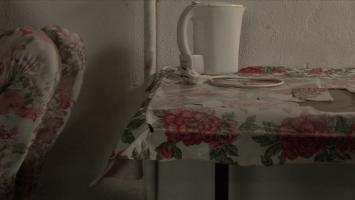
?Still Leben? is the fruit of a coproduction between the video artist Henrike Meyer and the choreographer Therese Nylén. The two artists are leaning on the cellar of an asparagus restaurant in Brandenburg. During the three months of the season, the restaurant offers lodging to 150 Polish workmen. The remainder of the year, the 30 rooms remains empty and abandoned. They produce the effect of a time capsule. Plastic flowers in large boxes, scribbled pages from the calendar, graffiti on the wall, cloths on the tables leaving many traces of the passing through of the workmen. Arrangements full of memories. The vision of these arrangements and the dancer is face to face in a 2-Channel-Projection, and are mutually motivated in their movements in a mimetic exchange.
Henrike Meyer was born in 1984 in Hoya in Weser. From 2003 to 2006, he studied theatre, the history of art and literature in Freie University of Berlin, followed on by visual communication at the University of Arts of Berlin up to 2008 and is currently working on experimental creation and media at the same university. He lives and works in Berlin. Therese Nylén was born in 1976 in Malmö, in Sweden. She obtained a degree in modern theatrical dance at the Higher School of Arts of Amsterdam in 2001. In 2005, she was chosen to reside in Scuol, in Switzerland, with the NAIRS Kuturzentrum, and again in 2007, this time with Werkbeitrag Tanz of the canton of Luzerne. From 2001 to 2007, she collaborated in projects with, Martin Butler (Netherlands), Suzanne Marx (Netherlands), Kyle Bukhari (Swiss), and Nina F.Schneider (Swiss) among others. She lives and works in Berlin.
Agnes Meyer-brandis
Catalogue : 2023Have A Tea With A Tree - a video conference with trees | 0 | 0 | color | 0:0 | Germany | 2021
Agnes Meyer-brandis
Have A Tea With A Tree - a video conference with trees
0 | 0 | color | 0:0 | Germany | 2021
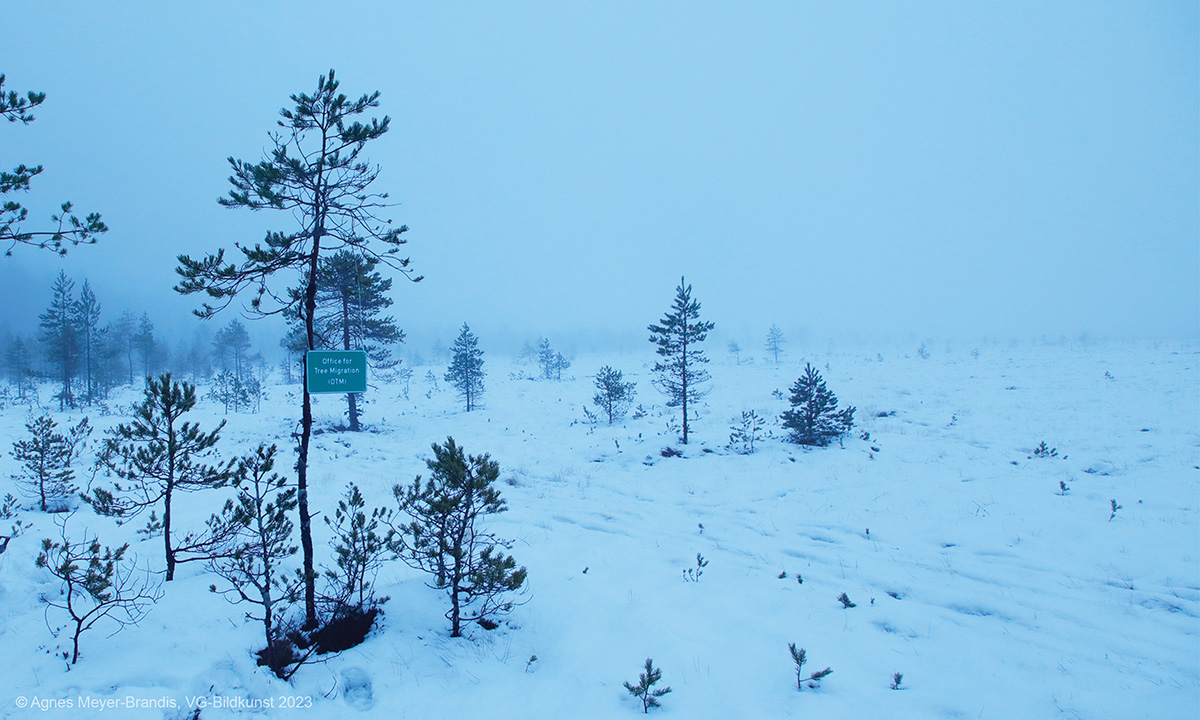
"Have a Tea with a Tree" is an online platform of the "Office for Tree Migration" where anyone can book an appointment for a video conference with 1-10 trees of different countries & climates for free. The trees will also participate live in the stream. The conferences are scheduled with one hour each. Besides the meeting with trees, these meetings can be extended and e.g. guests can be invited or scenes staged can be added. The OTM online platform thus becomes a hybrid field of experimentation between digital and analog worlds, humans, nature and technology. It can become stage, exhibition space, film, performance, reading, conference, and exchange between different forms of communication as well as life, play, explore.
Agnes Meyer-Brandis is a Berlin based artist with a background in sculpture and new media, She creates works on the fringes of science, fiction and fabulation. Educated first in mineralogy, followed by studies at the art academies in Maastricht, Düsseldorf and KHM Cologne, she has been the founder and director of the Research Raft, an „Institute for Art and Subjective Science“ that purposefully ‘is asking questions but gives no answers’ in fields such as climate research, environmental studies, meteorology, as well as synthetic and artistic biology. Meyer-Brandis’ work has been exhibited worldwide and awarded many prizes, including a Prix Ars Electronica Award of Distinction, and the European Kairos prize. Please find further info under the following link: www.ffur.de
Sebastian Mez
Catalogue : 2022DIE GROßE LEERE | Experimental doc. | mov | color | 86:0 | Germany | 2021
Sebastian Mez
DIE GROßE LEERE
Experimental doc. | mov | color | 86:0 | Germany | 2021
On a mysterious crackling magnetic tape, a “viewer” discovers shaky, low-definition images, which seem to have been shot during a moon landing. It is as if we had just landed on another planet, the desert—or rather deserted—landscapes of which, filmed in static shots, seem nonetheless familiar to us and encircled by a worry-ing strangeness. Traces of the past remain: rusty machines, pylons, human artefacts that multiply as the cameraman approaches what were towns, now plunged into absolute and silent desolation. Although Sebastian Mez (Metamorphosen, VdR 2013) shot the images of his new film before the pandemic that immobilised a large part of the world last spring, The Great Void is inevitably enshrined within the dystopic imagination disseminated across consciences by this global event. Composing a series of magnificently framed scenes, emptied of all living presence, the German filmmaker observes without blinking the agony of our civilisation. No more, no less.
Sebastian Mez is a filmmaker, video- and soundartist. His work has been shown at countless festivals worldwide and have won numerous awards. He studied film directing at Filmakademie Baden-Württemberg in Ludwigsburg, Germany. His short film CLEAN UP was shown at more than 40 international film festival and won several prices. Among others EIN BRIEF AUS DEUTSCHLAND won best middle length competition at Visions du Réel in Nyon in 2011. METAMORPHOSEN was his first feature length film, which premiered at the Berlinale 2013, followed by numerous festivals and awards worldwide. His experimental work SUBSTANZ was nominated for the Filmpreis für Filmkunst of the Neue National Gallerie in Berlin 2015. Sebastian lives and works in Berlin.
Catalogue : 2017Remains from the Desert | Experimental doc. | 4k | black and white | 21:10 | Germany | 2016
Sebastian Mez
Remains from the Desert
Experimental doc. | 4k | black and white | 21:10 | Germany | 2016
A cinematic examination trying to approach the experiences of Osman, a young Eritrean refugee, who survived seven months in one of the „torture camps“ in the Sinai desert.
Sebastian Mez is a filmmaker, video- and soundartist. He studied at FILMAKADEMIE BADEN-WÜRTTEMBERG in Ludwigsburg, Germany specializing in directing. His experimental film ‘Clean Up‘ was shown at more than 40 international film festival and won several prices. ’Ein Brief aus Deutschland’, which takes a special approach onto the subject of modern slavery and prostitution in Europe, won the international middle length competition at VISION DU RÉEL in Nyon in 2011. ‘Metamorphosen‘ was his first feature lenght film, which premiered at the Berlinale 2013, followed by numerous festivals and awards worldwide. His experimental work `Substanz` was nominated for the Filmkunstförderpreis of the National Gallery in Berlin 2015. Sebastian lives and works in Berlin.
Gitlin Michael
Catalogue : 2025The Night Visitors | Experimental doc. | mov | color | 72:22 | USA | 2023
Gitlin Michael
The Night Visitors
Experimental doc. | mov | color | 72:22 | USA | 2023
The Night Visitors is a movie about moths. In large and small fragments, looking both inward and out, through a critical lens that is by turns social and personal, the film closely examines these underknown creatures. While The Night Visitors is interested in moths as organisms, with fascinating life histories, staggering biodiversity, and a functional importance as indicators of climate change and habitat degradation, its engagement with them is not primarily entomological. Instead, the film looks at moths as aesthetic beings and as carriers of meaning, aiming for a deep encounter with the beauty and incommensurability of the profoundly other. The small hours of the night are threaded through with a sense of mortality and loss. Moths, with their trembling and exquisite impermanence, provide both a kind of solace and, in their diversity and difference, a focal point around which the desire to know can be organized.
Michael Gitlin makes work about some of the intricate conceptual and ideological systems out of which ways of knowing the world can be constructed. His films have screened at numerous venues, including the Museum of Modern Art in New York, the Toronto International Film Festival, the Full Frame Documentary Festival, the London Film Festival and the Whitney Biennial Exhibition. Gitlin’s experimental documentary, The Night Visitors, premiered at the 2023 New York Film Festival. His 2015 feature documentary, That Which Is Possible, screened at The Museum of the Moving Image in New York, the Museum of Fine Arts in Boston, and at the Pacific Film Archive in Berkeley, among other venues. His short film project, A Disaster Forever, was in the 2015 New York Film Festival. His 16mm film, The Birdpeople, is in the collection of the Museum of Modern Art. Gitlin was the recipient of a Guggenheim Fellowship in 2006. His work has also been supported by the Jerome Foundation, the New York State Council on the Arts, and the New York Foundation for the Arts. Gitlin received an M.F.A. from Bard College. He teaches at Hunter College in New York City.
Alice Michaud
Catalogue : 2023Au Pays des Morts Debout | Fiction | digital | color | 67:5 | France | 2022
Alice Michaud
Au Pays des Morts Debout
Fiction | digital | color | 67:5 | France | 2022
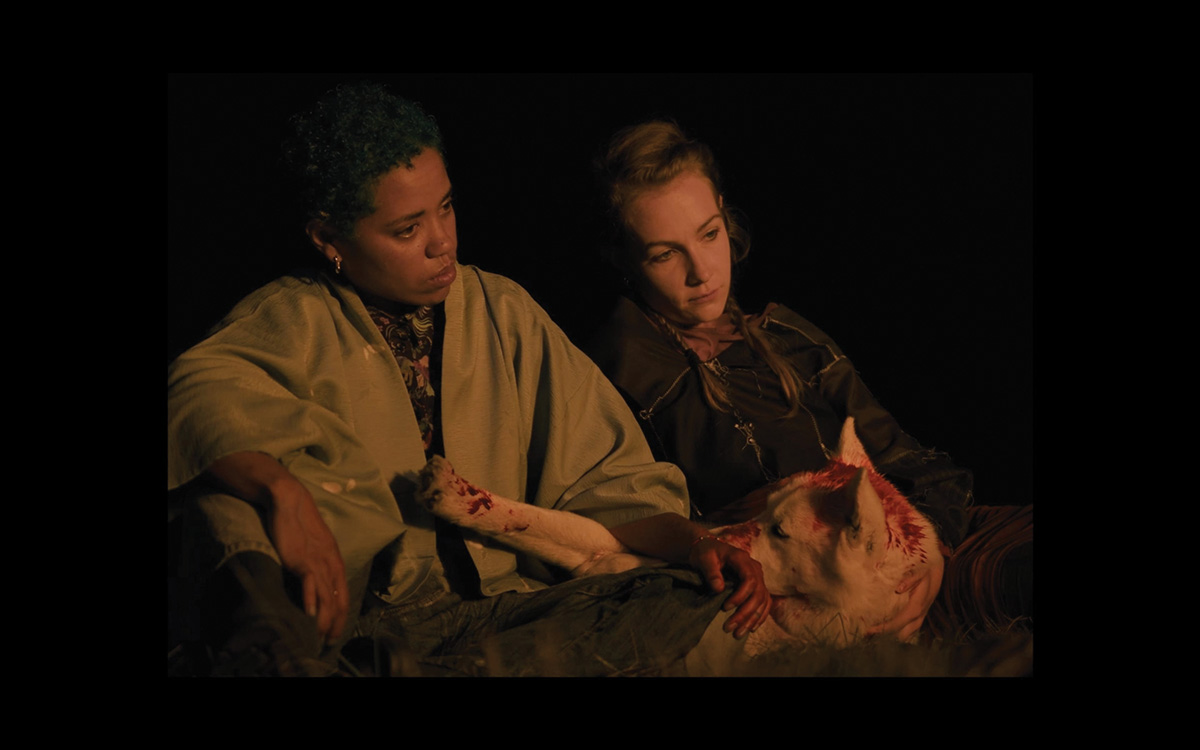
This is the dystopian commune we are all dying to visit. Living gleefully in the French countryside, the characters are sent spiralling when a newbie arrives. The film grapples with the myths of queer utopia by tearing it apart. Echoing post-horror aesthetics and manipulating genre tropes in meaty ways, this is a poetic joyride to the underworld that never loses its glamour amid plenty of gore.
Philippe-alain Michaud
Catalogue : 2007Anthony Mccall | 0 | 0 | | 60:0 | France | 2007

Philippe-alain Michaud
Anthony Mccall
0 | 0 | | 60:0 | France | 2007
Movies are not this projected image that dig fictitious depth into the wall's surface anymore, but truly a constituted surface that blends with the very event of the projection. That is how the beams of light cut out in Anthony McCall's smoke, developing the specifically plastic proprieties of the movie, cross the borders of the history of cinema to join the minimalist propositions of the sculptors of the 70's.
Born in 1961, art historian and critic Philippe-Alain Michaud has been curator and head of the cinema department at the National Museum of Modern Art (MNAM), where he has been supervising the exhibition "Le mouvement des images - Art et Cinéma", since 2003. The exhibition was an original presentation of the permanent exhibition at the MNAM, in which he proposed a rereading of the history of the twentieth century based on the history of cinema. His attention is aimed at the territories situated between plastic arts and the cinema, and he questions himself about the contemporary artistic forms and their history. In 2004 he was the instigator of "Hollywood Déconstruit : remontages, remises en scène, resucées", a cycle that witnesses the manner in which experimental filmmakers and artists have revisited the universe of Hollywood Cinema, at the MNAM cinema. As an author he has written numerous articles and books, including "Le peuple des images", and "Sketches. Histoire de l?art, cinéma". He is a member of the editing board of MNAM's books and is in charge of the "La littérature artistique" collection from Macula editions.
Ariane Michel
Catalogue : 2014Le dernier voyage | | | | 14:58 | France | 0
Ariane Michel
Le dernier voyage
| | | 14:58 | France | 0
Ariane Michel
Catalogue : 2010LA CAVE | Video | | color | 13:0 | France | 2009
Ariane Michel
LA CAVE
Video | | color | 13:0 | France | 2009
Dans une cave gelée, un homme travaille à la lueur d`une lampe. Il dégèle patiemment un grand bloc de terre qui renferme le corps intact d`un Mammouth.
Ariane Michel vit et travaille à Paris, ou elle est née en 1973. Depuis ses études à L`ENSAD, un passage au Fresnoy et une résidence au Pavillon - cellule de recherche au Palais de Tokyo, Ariane Michel réalise des travaux en vidéo qui s`inscrivent le plus souvent dans des dispositifs d`installation ou de performance. On a pu les voir à l`Atelier du Jeu de Paume à Paris, à la foire de Bâle, en centres d`art ou dans des festivals de cinéma (FRAC de Reims, CRAC de Sète, MoMA NY, Festival de Rotterdam). Si son long-métrage Les Hommes, (Grand Prix de la Compétition Française, FID Marseille 06), est sorti en salles de cinéma en France en 2008, il s`inscrit dans une même recherche : offrir au visiteur-spectateur une expérience perceptive. En 2010, on pourra voir le travail d`Ariane Michel dans des expositions personnelles à la Fondation d`Entreprise Ricard (Paris) et à l`Espace Croisé de Roubaix. Ariane Michel est représentée par la galerie Jousse Entreprise à Paris. Plus d`infos sur: www.ariane-michel.com
Audrius Mickevicius
Catalogue : 2018Pavyzdingas elgesys_2 (Exemplary Behaviour_2) | Video installation | 4k | color | 10:0 | Lithuania | 2017
Audrius Mickevicius
Pavyzdingas elgesys_2 (Exemplary Behaviour_2)
Video installation | 4k | color | 10:0 | Lithuania | 2017
A few years ago my elder brother was killed by two men. One of the murderers escaped punishment while the second, who alone took the blame for the crime, was later released from prison for an exemplary behaviour. This made me decide to start a socio-artistic research regarding what “exemplary behaviour” means in the case of a murderer, when and how killers behave exemplarily. In summer 2014 I started to develop feature-length creative documentary “Exemplary Behaviuor”. Logline of the documentary says: The documentary explores the paradox of exemplary behaviour in murderers currently serving life sentences in Vilnius’ Lukišk?s prison and hoping to return to society. “Exemplary Behaviour” is a journey of transformation for the author, the murderers, and society who are searching for tolerance among humans. Now the documentary developed into a big scale socio-artistic transmedia project. “Exemplary Behaviour” is a project that seeks to create an emotionally and visually strong, thoughts provoking spaces that are meant to encourage tolerance to murderers. Tolerantia in Latin means ability to bear hardship, to be patient. Today many Europeans still tend to lack tolerance towards other ethnicities, immigrants, prisoners, unorthodox thinking, etc. In this project, the prisoner becomes a metaphor for “the other”. The main goal is to encourage tolerance of “others”. Video installation “Exemplary Behaviour” is an extended format of the documentary of the same title. It concentrates on a film element called healing sequence. Film’s healing sequences are hypnotic episodes, that are meant to awaken viewers’ imagination and are related to scientific phenomenon called “Prisoner’s Cinema”. Prisoner’s cinema is mainly reported by prisoners kept in dark cells for long periods of time. It’s an experience of seeing light without light actually entering the eye. It is a visual hallucination of light created by human brain that tries to compensate for lack of stimuli and the resulting monotony
Audrius Mickevi?ius is a Lithuanian film director, interdisciplinary artist (video art, photography, architecture, installations, graphics, sound, writing), and a professor in the Department of Media Art at the Vilnius Academy of Fine Arts, a guest lecturer in European universities. He completed his architectural sudies in Vilnius (1988) and visual communication studies in Copenhagen (1996). Audrius became obsessed with cinema at a young age. In 1983 he made his first 8 mm film “Requiem for Quartet”. Since then Audrius has made 17 more films. In recent years he created several experimental, documentary, and fiction films, which were screened in various international film festivals and MoMA, New York. Since 2010 the film director has been a member of the Lithuanian Filmmakers Union. He works and lives in Vilnius, Lithuania.
Coppens Mieriën, Elie Maissin
Catalogue : 2020La maison | Documentary | hdv | black and white | 25:0 | Belgium | 2019
Coppens MieriËn, Elie Maissin
La maison
Documentary | hdv | black and white | 25:0 | Belgium | 2019
If the house is merely a dormitory, just a place to eat and sleep then this is no longer the embodiment of our struggle
Ildefonso Miguel
Catalogue : 2012Engine | Experimental video | dv | color | 5:54 | Portugal | 2010
Ildefonso Miguel
Engine
Experimental video | dv | color | 5:54 | Portugal | 2010
Man and Nature. Man and Machine. When we cross realities, something new emerges. A voice from the future is announcing a new world.
Born in 1985. He studied scriptwritting and editing. Engine is his first film.
Mitlag Miguel
Catalogue : 2021Carrots Movie Tape | Experimental doc. | super8 | color | 3:22 | Germany | 2020
Mitlag Miguel
Carrots Movie Tape
Experimental doc. | super8 | color | 3:22 | Germany | 2020
Carrots Movie Tape is an experimental film about Carrots Tapes: a music cassette label based in Berlin run by a Poet and a Visual Artist. Tasks at the headquarters involve stamping, printing the covers, dubbing blank tapes, planning new projects, organizing the archive and discussing ideas. Filmed in the Spring of 2020 in Super 8.
Miguel Mitlag 1969, Buenos Aires, Argentina Lives and works in Berlin, Germany Film studies at the Universidad del Cine, Buenos Aires, and Photography at I.C.P. New York. Mitlag is also a Visual Artist and shows his work frequently in solo and group exhibitions.
Aurelia Mihai
Catalogue : 2011City of Bucur | Experimental doc. | 0 | color | 21:42 | Romania, Germany | 2010
Aurelia Mihai
City of Bucur
Experimental doc. | 0 | color | 21:42 | Romania, Germany | 2010
City of Bucur is a film about the foundation myth of Bucharest set in the present. Next to the hill which the legendary Bucur the Shepherd chose to settle down on, the People?s Palace now stands, the architectural embodiment of Ceausescu?s megalomaniac dictatorship and today the seat of the Romanian Parliament. In the ?making-of? format, the film tells the story of ?? a short movie production about the foundation myth in this historic location. The shepherd, the film director, and the flock of sheep all begin their parallel journeys towards the location, the place where the legend originated. The movie, which has not yet been shot, has actually been recounted indirectly before the film crew has even reached the set. We know about this projected film which will tell the tale of the city?s development in a single shot ? from its foundation myth to the present. One shot that transports a ?fiction? into contemporary reality.
Aurelia Mihai?s video work has been the recipient of numerous prizes and scholarships that include the Video Art Awards Bremen (1997), the E STAR Scholarship from the Institut for Electronic Arts, Alfred, New York and the Villa Aurora Scholarship, Los Angeles (2001) the EMARE Scholarship Hull Time Based Arts UK (2004) the Villa Massimo Rome Scholarship (2007) the Schloss Balmoral Scholarship (2009) and IASPIS, Stockholm, Sweden (2010). Her works have been exhibited internationally at the K21 Düsseldorf, Gropius Bau, Berlin, Hamburger Kunsthalle, Germany, at the Chelsea Art Museum, New York, USA , Centre International d`Art Contemporain de Pont Aven/ France, Museo Nacional Centro de Arte Reina Sofia, Madrid, Spanien, Periferic 8 - Biennial for Contemporary Art, Iaºi, Romania and at the Centre of Contemporary Art and the Nature World, in Plymouth, UK
Catalogue : 2010CINEMATOGRAFUL ROSU / Rotes Kino | Video | | color | 6:52 | Romania, Germany | 2009
Aurelia Mihai
CINEMATOGRAFUL ROSU / Rotes Kino
Video | | color | 6:52 | Romania, Germany | 2009
Rotes Kino ein Projekt von Aurelia Mihai Die Arbeit ist als filmische Episode in zwei Szenen angelegt, sie baut auf einem Zeitsprung auf von 1610 zum 1969 und zurück. Konzipiert ist sie als filmische Schleife - (ein Loop in der Narration), je nachdem wo man in die Geschichte einsteigt, bekommt man sie chronologisch oder als Rückblende erzählt. In diesem Projekt benutze ich die Figur der Gräfin Elisabeth Báthory als bekannte Serienmörderin der Geschichte, und weibliches Pendant des transsilvanischen Mythos Dracula. Der Legende nach hat Elisabeth Báthory in Jungfrauenblut gebadet, in dem Glauben dadurch jung und schön zu bleiben. Da es sich um eine Hybridfigur handelt (zwischen Mythologie und Historie) bleibt sie auch in meiner Arbeit eine rätselhafte Gestalt, was durch die Verschiebung in ein andere Zeit in der zweiten Szene verstärkt wird. Hier sehen wir sie als Patientin in einer Psychiatrischen Anstalt 1969, in der Sozialistischen Republik Rumänien. Das Verhältnis von Täter und Opfer wird in Frage gestellt. Thematisiert wird hier die Problematik, die die Frauen unter dem Ceausescu Regime erlebt haben. Im Gegensatz zur sexuellen Befreiung im Westen, wurde 1966 in Rumänien per Gesetz die Einfuhr von Verhütungsmitteln verboten, um die Geburtenrate zu steigern, sowie die Abtreibung unter Strafe gestellt.
Aurelia Mihai Geboren 1968 in Bukarest, Rumänien, lebt und arbeitet in Hamburg. Studium an der Kunstakademie Bukarest, Kunstakademie Düsseldorf (DAAD Stipendium `94-`96), und an der Kunsthochschule für Medien Köln . Auszeichnungen, u.a. Villa Aurora Stipendium, Los Angeles (2001), E STAR Stipendium IEA, Alfred, N. Y. (2001), Spiridon-Never-DuMont Preis (2002), Euregio Kunstpreis / Germany / NL (2005), Hamburger Arbeitsstipendium für Bildende Kunst (2005), Deutsche Akadremie Rom - Villa Massimo (2007), Projektstipendium - Schloss Balmoral (2009). Einzelausstellungen u.a. im National Museum of Contemporary Art - MNAC, Bukarest, Rumänien (2009) Museum Goch (2007), Kunstverein Hildesheim, Marburger Kunstverein (2004), im Kunstraum Düsseldorf (2001) und in der Bremer Kunsthalle (1998). Gruppenausstellungen und Screening u.a. im Museo Nacional Centro de Arte Reina Sofia, Madrid (2005), PAN-Screening bei der 52. Biennale Venedig, Tryingtoland 2 im MACRO, Rom (beide 2007), Martin-Gropius-Bau, Berlin, Chelsea Art Museum, N. Y. und Wallraf-Richartz-Museum, Köln (alle 2006), Museum voor Moderne Kunst Arnhem, Niederlande (2005), Kunsthalle Hamburg (2004) Periferic 8 - Biennial for Contemporary Art, Iaşi, Rumänien/ RO, Robert Else Gallery, Sacramento, Californien/ USA , CIAC - Centre International d`Art Contemporain de Pont Aven/ FR (2008), K21 Düsseldorf, Kunsthalle Hamburg, Centre of Contemporary Art and the Nature World, Plymouth/ UK , Neue Gesellschaft für Bildende Kunst (NGBK), Berlin, Galerie Commune, Tourcoing, Frankreich und Städtische Galerie Ravensburg. (2009).
Aurelia Mihai
Catalogue : 2013CENTO PIEDI | Experimental fiction | hdv | color and b&w | 11:7 | Romania, Germany | 2012
Aurelia Mihai
CENTO PIEDI
Experimental fiction | hdv | color and b&w | 11:7 | Romania, Germany | 2012
CENTO PIEDI (A Hundred Steps) deals with recent themes of the Romanian society: identity, image and immigration for work purposes. Immigration has become a widespread phenomenon in the last couple of years. The location of the movie centers around one of the kernels of the Romanian exodus ?Rome, the capital of Italy. The Eternal City, has played a crucial role in the history of the formation and establishment of the Romanian tongue and nation (through the conquest of Dacia in 105-106 the emperor Trajan has Latinized the Dacian people around the Danube river leading to the formation of the Romanian language). In Rome, on the site of Trajan?s Forum, we can nowadays find ?Trajan?s Column? who described through exceptional relieves the two Dacian wars. This monument is not only a masterpiece of ancient Rome but also the symbol of the birth of the Romanian people. The structure of the narrative in this movie unfolds on two parallel grounds of action through which two spaces will be defined: the Internal one (inside the column of Trajan) and the Exterior one (outside the column and on the forum).
Aurelia Mihai is an artist and filmmaker born in Bucharest, Romania who lives and works in Bucharest and in Hamburg, Germany. She is professor at the Braunschweig University of Art, Germany since 2009. Aurelia Mihai?s video work has been the recipient of numerous prizes and scholarships that include the E STAR Scholarship from the Institut for Electronic Arts, Alfred, New York and the Villa Aurora Scholarship, Los Angeles, USA (2001), the EMARE Scholarship Hull Time Based Arts, UK (2004), Prize for young artists of Düsseldor (2001), Prix Spiridon-Never-DuMont (2002), Euregio Kunstpreis / Germany / NL (2005), Hamburger Arbeitsstipendium für Bildende Kunst, Scholarship Schloss Ringenberg (2005), Project scholarship for short films, BBRKM, Künstlerhaus Schloß Balmoral, Germany (2009) , German Academy in Rome, - Villa Massimo (2007), Italy, and IASPIS, International Artist Studio Programme Stockholm, Sweden (2010). Her works have been exhibited internationally at the Städtische Galerie Wolfsburg, K21 Düsseldorf, Kunsthalle Mainz, Martin Gropius Bau, Berlin, Hamburger Kunsthalle, Germany, at the Chelsea Art Museum, New York, The Cheekwood Art Museum, Nashville Tennessee, USA , Centre Pompidou, Paris, Centre International d`Art Contemporain de Pont Aven/ FR, Cobra Museum in Amstelveen, NL.
Dan Mihaltianu
Catalogue : 2015In the Skin of a Srtay Dog | Experimental film | super8 | color | 5:19 | Romania | 2014
Dan Mihaltianu
In the Skin of a Srtay Dog
Experimental film | super8 | color | 5:19 | Romania | 2014
In the Skin of a Stray Dog Of dogs and men, black and white film material shot between 1992-1994 and edited twenty years later, depicting the decay of the urban environment after the collapse of Communism in Bucharest and the alternative living in Berlin after the fall of the Wall.
Dan Mihaltianu is a cross-media artist, born 1954 in Bucharest, Romania, based in Bucharest, Berlin and Bergen. His artistic approach is concern with social, political and trans cultural aspects related to the permanent changes occuring in our society, by developing long term process-oriented-projects, among others: Field Archive (1979-1989), Nature of Light (1980-1989), Official History / Personal History (1984-1994), Liquid Matter (1993-2014), Divided Files (2001-2014), Plaques tournantes (2004-20014), Celluloids (1992-2014). Since the 1980s his work has been exhibited internationally in various art events, biennials,, museums, art centres and galleries from Europe, Asia, North and South America.
Catalogue : 2014Divided Cities | Experimental film | super8 | black and white | 3:44 | Romania, Germany | 2013
Dan Mihaltianu
Divided Cities
Experimental film | super8 | black and white | 3:44 | Romania, Germany | 2013
Divided Cities, 2013, 03:44 min, 8mm film transfer on Full HDV, camera / editing: Dan Mihaltianu A film based on fragmented views of Berlin and Bucharest, divided between east and west, past and present, left and right, centre and periphery, rich and poor, hip and precarious, in and off. The footage is covering the laps-time between 1992-2013 in the attempt to catch the rapid transformations of the two metropoles.
Dan Mihaltianu (born 1954 in Bucharest, Romania, based in Bucharest, Berlin and Bergen) has studied at the Institute of Fine Arts Bucharest (1975-1983). He was cofounder of subREAL, Bucharest (1990); Professor at Bergen Academy of Art and Design (2001-2007), Guest Professor at Université du Québec á Montréal (2008-2009); Editor / Associate Editor of Arta Magazine, Bucharest (1990-1993 / 2011- to present). Since the 1980s his work has been exhibited in major international art events, museums, art centres and galleries in Europe, Asia, North and South America.
Bielka Mijoin-némirovsky
Catalogue : 2007Romani bakht | Documentary | betaSP | color | 32:0 | France | 2005
Bielka Mijoin-nÉmirovsky
Romani bakht
Documentary | betaSP | color | 32:0 | France | 2005
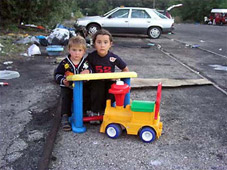
Montreuil. Summer 2005. Romanian families are being evicted from a squat. Among them Sorina, attempting to live in the street with dignity, with her husband and two children.
Bielka Mijoin Némirovsky developed an artistic and educational activity around artistic expression, as a actress, singer, and ethno-musicologist. She created a space of development for artistic expression and reflection around questions that are posed by the time and the societies in which we live. Projects around world songs as arousal of the culture of the "other", at the heart of elementary schools. She produced "Romani Bakht" within the framework of the training in Varan's workshops. It is her first documentary film. She has projects in progress.