Catalogue > List by artist
Browse the entire list of Rencontre Internationales artists since 2004. Use the alphabetical filter to refine your search. update in progress
Bogdan Smith
Catalogue : 2017Traum | Fiction | hdv | color | 24:0 | France | 2016
Bogdan Smith
Traum
Fiction | hdv | color | 24:0 | France | 2016
Indeterminate epoch and country. At 21, Yevgueni is a young astronaut-technician. If he dreams of traveling in space, his employment consists of working at the heart of a launching base for space travel, as a spacecraft launching operator. At the particularly critical launch of an inhabited Soyouz shuttle, Yevgueni abruptly loses consciousness, which causes loss of contact with the team in orbit and the explosion of the spacecraft. Haunted by this catastrophe, Yevgueni progressively loses grip with reality and becomes contaminated by the trauma.
Frank Smith
Catalogue : 2026LE FILM DU NON-LIEU | Experimental film | mov | | 20:0 | France | 2025
Frank Smith
LE FILM DU NON-LIEU
Experimental film | mov | | 20:0 | France | 2025
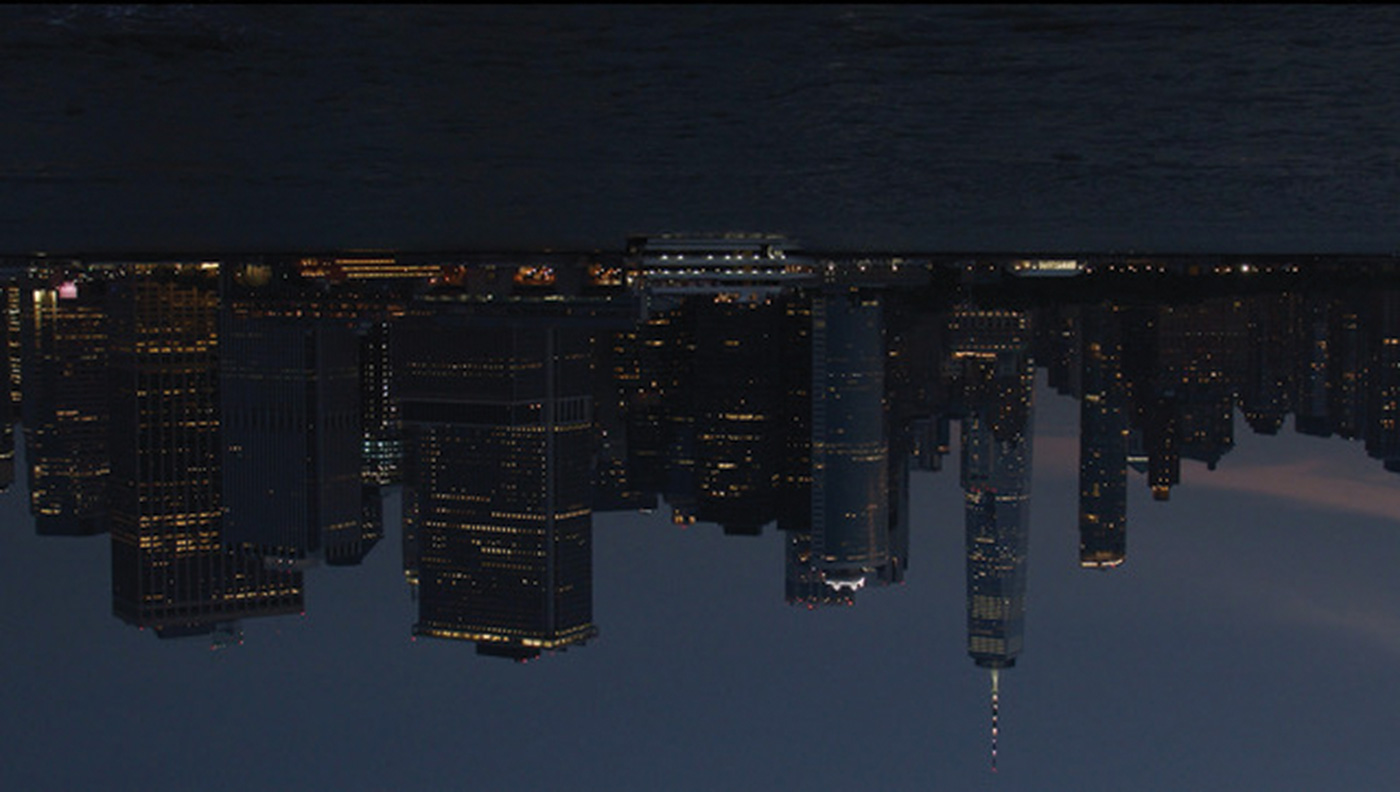
Le Film du non-lieu 20 minutes, 2025 Un film de Frank Smith Voix et présence Rodolphe Perez Image Arnold Pasquier & Frank Smith Montage Frank Smith & Arnold Pasquier Son, partition et création musicale originale Philippe Langlois Mouvement chorégraphique Mylène Benoit Production Même si & Sans Production Comment nous représenter ce monde qui nous échappe, non parce qu’il est insaisissable, mais parce qu’au contraire il y a peut-être trop à saisir. A partir d’une série de plans fixes (tournés sur les bords de Salton Sea, Californie, et aux confins de Malaga) pour tenter d’épuiser des lieux abandonnés, la réapparition pleinement visible d’une pluralité de dehors désertés les plus lointains coexiste ici avec le dedans le plus profond d’une présence humaine au sein d’une image audio-visuelle qui prend forme dans un dédoublement. Un texte est dit en surimpression avec les images. Parfois l’acteur qui n’agit rien, figure et dit ce qui ne peut être vu. Alors quoi ? On le revoit à la fin dans la même position que dans les milieux du film mais dans un ailleurs et là on danse et c’est la danse du non-lieu, et là on danse ce qui ne peut plus coller au sol et qui ne peut plus coller à la terre pour recommencer ailleurs, peut-être sur une autre terre et sur un autre sol. Un film de « cinéma primitif », à la recherche de ses propres règles, en quête d’une nouvelle orientation, à partir de la voix et du corps et non plus de l’image seule.
Hors pistes (Centre Pompidou, Paris) Frank Smith est écrivain et réalisateur. Il a longtemps été producteur à France Culture où il a dirigé l’Atelier de création radiophonique (2001-2011). Travaillant les notions de « poésie forensique » et de « cinéma de poésie », Frank Smith est le créateur du Bureau d'Investigations Poétiques depuis lequel il explore les jonctions s’exerçant entre Poésie, Politique et Image au moyen de livres, de films, d’installations, d’expositions. Auteur d’une trentaine de livres, il a réalisé une douzaine de films présentés dans de nombreuses institutions et festivals dans le monde (Collection Lambert Avignon, Louvre-Lens, CAC La Maréchalerie Versailles, Musée des arts déco. Bourges, Pera Museum Istanbul, Station Beyrouth, Steven Kasher Gallery New York, Centre de la photographie Genève, Fondation Boghossian Bruxelles, Fondation Michalski Lausanne, MOCA Los Angeles, États généraux du film documentaire Lussas, Côté Court Pantin, Festival de Sapporo Japon, de Jaipur Inde, etc.) et tous montrés au Centre Pompidou, Paris. Dernières publications : Irak 24 heures, Créaphis, et Deleuze Memories, LanSkine, 2025. Dernier film : Un Film sans autrui, commande du Centre Pompidou dans le cadre de L’Inventaire Deleuze.
Catalogue : 2022LES FILMS DU MONDE / 70 CINÉTRACTS | Experimental film | mp4 | color | 189:0 | France | 2021
Frank Smith
LES FILMS DU MONDE / 70 CINÉTRACTS
Experimental film | mp4 | color | 189:0 | France | 2021
Les Films du monde constituent une série inédite de 70 cinétracts, qui sont, à l’origine, des films de banc-titre réalisés à la prise de vue à partir de documents photographiques de l’actualité nationale, une initiative lancée en mai 1968 par Chris Marker. L’ensemble renoue avec cette expérience cinématographique, tant poétique que politique, en se concentrant sur les failles du monde contemporain. Selon leur protocole, les cinétracts devaient « contester-proposer-choquer-informer-interroger-affirmer-convaincre-penser-crier-rire-cultiver » afin de « susciter la discussion et l’action ». « Utilisant les moyens facilités d’appropriation qu’offrent les médias contemporains, les Cinétracts de Frank Smith sont autant de messages d’urgence, de réflexions sur le devenir d’un monde, celui de notre début de 21e siècle, devenu violent et chaotique. Il s’agit ici d’estampiller un devenir global, planétaire, « un état du monde » où une situation de tension politique au Venezuela, au fin fond du Texas ou sur la Méditerranée, est « un coup de couteau dans notre destin », comme l’aurait formulé le Sartre de Qu’est-ce que la littérature ? Portés par une réflexion profonde mêlant considérations politiques, humanistes, philosophiques et esthétiques, ces quelques 70 addenda rajoutés par Frank Smith au jet original de 1968 continuent le combat, dans un esprit de synthèse complexe — une complexité à la mesure de ce que l’on appelait naguère, au temps où l’on entendait encore changer l’Histoire, la « représentation du monde », à ce jour fuyante, démultipliée et multipolaire. » Paul Ardenne
Né en 1968, Frank Smith est écrivain et poète, vidéaste et réalisateur. Il vit à Paris et Los Angeles. Il est représenté par la Galerie Analix Forever (Genève). Frank Smith est le créateur du Bureau d'Investigations Poétiques depuis lequel il explore les jonctions/disjonctions actuelles s’exerçant entre Poésie, Politique et Image au moyen de livres, de films, d’installations, d’expositions et de performances. Sont ainsi délivrés « des protocoles d’expérimentation qui interrogent la possibilité, l’efficience, la performativité de la littérature et du film. Prolongeant le Pour en finir avec le jugement d’Artaud dans un "Pour en finir avec le régime de la représentation et de la narration", Frank Smith pose des dispositifs mettant en scène la question de l’émergence de la parole ou de l’image. » (Véronique Bergen, art press, déc. 2017). Frank Smith a publié à ce jour une vingtaine de livres et dans le prolongement de ces publications, il réalise des films et des installations vidéo à partir desquels est notamment mis en pratique le non-rapport entre Voir et Parler et sont développés les arcanes d’un nouveau « cinéma de poésie ». Tous ses films ont notamment fait l'objet d'une présentation au Centre Pompidou-Paris.
Adam James Smith
Catalogue : 2026Phantoms Of The Rising Sun | Experimental doc. | mov | color | 8:20 | United Kingdom, Japan | 2025
Adam James Smith
Phantoms Of The Rising Sun
Experimental doc. | mov | color | 8:20 | United Kingdom, Japan | 2025
The abandoned spaces of a Wild West theme-park, a love hotel, and a billionaire's mansion are brought to life with plant overgrowth and animals, late-summer rain, and the haunting remnants of past human habitation.
Adam James Smith is a British-American filmmaker based in New York. His filmmaking practice spans rural and urban environments across China, Japan, and the United States. Adam was educated in film at Stanford and anthropology at Cambridge, the latter of which he is currently affiliated with the university’s Visual Anthropology Lab.
Smith
Catalogue : 2020Les Apocalyptiques | Experimental fiction | hdv | black and white | 20:0 | France | 2019
Smith
Les Apocalyptiques
Experimental fiction | hdv | black and white | 20:0 | France | 2019
Paris - temps incertain, temps de la fin. Une cycliste, cavalière d'une possible apocalypse, erre autour de la ville éteinte, déserte, muette - guettant d'hypothétiques survivances. La Samaritaine, cube blanc, désaffecté, semble s’offrir comme un refuge ; mais elle se révèle le théâtre d’univers parallèles où se décide, avec les quatre derniers vivants, le sens de l'effondrement en cours. Les personnages qui y vivent sont en “arrêt de mort”, suspendus entre deux états, traversant les possibles, pris dans une fin du monde sans cesse imminente, et pourtant sans cesse différée, et encore sans cesse recommencée. C’est le bâtiment même qui va incarner de manière vivante cet interstice travaillant toutes les apparitions qui semblent traverser le lieu. Ce sont les modalités fluctuantes de cet espace de la Samaritaine qui vont se déployer, amenant d’oracles SM en chansons nihilistes, de danses de séduction désespérées en rituels de mutation, la révélation claire qu’il n’y aura pas de révélation. Les fins du mondes et les croyances sont défaites. Il n'est plus question de fin du monde, mais de commencements d'autres mondes - par la métamorphose. Apocalypse nous-autres.
SMITH ?http://www.fillesducalvaire.com/artiste/smith/ Le travail de SMITH s’appréhende comme une observation des mues de l’identité humaine. La photographie y côtoie le cinéma, la vidéo, la chorégraphie, le bio-art, la sculpture et l’utilisation des nouvelles technologies, dans une exploration des combinaisons des approches scientifique et philosophique, ouvertes sur les potentiels de la fiction. Après l’obtention d’un Master de Philosophie à la Sorbonne, du diplôme de l’Ecole Nationale Supérieure de Photographie d’Arles, et du Fresnoy - Studio National des Arts Contemporains, SMITH engage l’écriture d’une thèse de doctorat, à l’UQAM (Montréal). Ses travaux furent présentés sous la forme d’expositions personnelles aux Rencontres internationales de la photographie d’Arles, à la galerie les Filles du Calvaire et au Palais de Toyko à Paris, au musée de la Photographie d’Helsinki en Finlande, mais aussi dans de nombreux pays d’Europe (Suisse, Suède, Autriche, Luxembourg, Allemagne, Espagne, Italie...), d’Asie (Chine, Cambodge, Corée du Sud) et d’Amérique Latine (Mexique, Chili, Uruguay) et aux USA. Sa première monographie, «Löyly», est parue aux éditions Filigranes en 2013, suivie de « Saturnium » aux éditions Actes Sud en 2017, et d’un livre d’entretien avec l’historienne de l’art Christine Ollier en 2017 aux éditions André Frère. Paraissent en 2018 puis 2019 deux autres livres de photographie : "Astroblème" (Filigranes) et "Valparaiso" (André Frère). Son premier et son second moyen-métrages, "Spectrographies" et "TRAUM", furent diffusés en festivals et cinémas en Europe. Ses performances artistiques et chorégraphiques furent présentées au Centre Pompidou, au Théâtre de la Cité Internationale avec le soutien de la Fondation Hermès – New Settings, au CND (Pantin), au Musée de la Danse (Rennes) et au CCN de Montpellier. SMITH travaille actuellement à l’élaboration de son nouveau projet-monde "Désidération", avec la Cellule Cosmiel (Lucien Raphmaj, Jean-Philippe Uzan, SMITH) et le studio DIPLOMATES, qui explore les liens entre l’humanité contemporaine et son cosmos originaire : http://www.desideration.space ** Lucien Raphmaj https://lucienraphmaj.wordpress.com/ Lucien Raphmaj, écrivain né d’une œuvre élaborée avec SMITH, a écrit avec lui le scénario de ses films, depuis "Spectrographies" (2015) jusqu’aux "Apocalyptiques" (2019) en passant par leurs projets multidisciplinaires tels que "TRAUM" (film, exposition, textes, vidéos, spectacle de danse). C’est cette écriture à mille voix, fruit d’un travail personnel, mais aussi expérience d’une spectralisation de l’écriture qui se laisse traverser par d’autres voix, qui est celle qu’il mène encore à travers l’univers des « Apocalyptiques ». Il participe, en tant que critique, à la revue culturelle en ligne Diacritik et tient un blog sur la latérature. Son premier ouvrage, "Blandine Volochot", paraît aux éditions Abrüpt en Janvier 2020.
Dorothée Smith
Catalogue : 2016Spectrographies | Experimental fiction | 4k | color | 59:0 | France | 2015
Dorothée Smith
Spectrographies
Experimental fiction | 4k | color | 59:0 | France | 2015
Au fil d’une nuit fantastique, un personnage arpente sans fin des avenues froides et nues, des institutions désertes, des non-lieux inhabités, en marche, en quête, solitaire - guettant les apparitions de fantômes venant se glisser dans son sillage. Suspendu aux télé-technologies (téléphone, puce électronique) de l’intime, il semble se nourrir de l’absence d’un être aimé, ailleurs, loin, intouchable, dont l’absence hante sa déambulation.
Dorothee Smith est une photographe née au milieu des années 80, c’est une enfant de la chute du mur de Berlin, cet évènement qui marque la fin d’une ère, celui de la guerre froide du capitalisme républicain contre le communisme soviétique, et le début d’une autre, celui de la guerre informelle entre l’occident judéo-chrétien et les extrémistes islamiques (Palestine, Irak, Iran, Afghanistan). C’est aussi l’enfant du mouvement queer, avec ses identités fleurissantes et sa nouvelle philosophie du corps. C’est encore et enfin l’enfant de la catastrophe de Tchernobyl, d’une planète maltraitée car trop polluée, d’une terre nucléaire menacée de destruction. C’est un peu ce court morceau d’histoire, qui a un peu plus de vingt ans maintenant, que l’on retrouve dans le sampling visuel de la photographe plasticienne.
Yelizaveta Smith
John Smith
Catalogue : 2022Covid Messages | Experimental doc. | hdv | color | 22:16 | United Kingdom | 2020
John Smith
Covid Messages
Experimental doc. | hdv | color | 22:16 | United Kingdom | 2020
'Covid Messages' is a video work in six parts, based around broadcasts of British Prime Minister Boris Johnson’s COVID-19 press conferences. The work focusses on the British government’s attempts to eliminate the virus through the use of magic spells and rituals. While the pandemic spreads and the death toll rises, the Prime Minister makes repeated errors of judgement. Exasperated by his many mistakes, the spirits of the dead rise up and intervene.
John Smith was born in Walthamstow, London in 1952 and studied at the Royal College of Art, after which he became an active member of the London Filmmakers' Co-op. Inspired in his formative years by conceptual art and structural film, but also fascinated by the immersive power of narrative and the spoken word, he is renowned for a diverse body of work that subverts the perceived boundaries between documentary, fiction, representation and abstraction, playfully exploring and exposing the language of cinema. Since 1972 he has made over sixty film, video and installation works that have been shown in museums, galleries and independent cinemas around the world. Smith’s solo exhibitions include Kestnergesellschaft, Hanover; Museum of Contemporary Art, Leipzig; Centre d'Art Contemporain de Noisy-le-Sec, Paris; Ikon Gallery, Birmingham; Kunstmuseum Kloster Unser Lieben Frauen, Magdeburg; Turner Contemporary, Margate; Weserburg Museum for Modern Art, Bremen; Uppsala Art Museum, Sweden and Royal College of Art Galleries, London. His work is held in public collections that include Tate Gallery; Arts Council England; Museum of Modern Art, New York; Muzeum Sztuki, Lodz; FRAC Île de France, Paris and Kunstmuseum Kloster Unser Lieben Frauen, Magdeburg.
Gregg Smith
Catalogue : 2014Backstage of my life | Experimental fiction | hdcam | color | 8:41 | South Africa, France | 2013
Gregg Smith
Backstage of my life
Experimental fiction | hdcam | color | 8:41 | South Africa, France | 2013
Catalogue : 2011Love, jealousy and wanting to be in two places at | | dv | color | 12:2 | South Africa, Argentina | 2010
Gregg Smith
Love, jealousy and wanting to be in two places at
| dv | color | 12:2 | South Africa, Argentina | 2010
Synopsis ? Love, jealousy and wanting to be in two places at once Like a nighthawk at the diner, a young man recounts his story of love gone wrong. His marriage has been quietly growing lifeless, when his wife proposes that they attempt to rekindle their passion through, the dance which first brought them together, the tango. But not any old tango, rather a more risqué partner swapping form of the dance, with different partners in separate venues.
Gregg Smith: biography Gregg Smith is an artist from Cape Town, South Africa. He completed his studies at the Michaelis School of Fine Art, University of Cape Town, in 1991 and since then has been active in a range of contemporary art and theatre projects in South Africa and abroad. With origins in painting, performance, and art in public space, his present work incorporates aspects of all these practices in the development of video installations. Until 2000, he lived in Cape Town, where he was active as an artist and also a professor of painting at the Michaelis School of Fine Art. In 2001-02, Gregg was a participant at the Rijksakademie van beeldende kunsten in Amsterdam, and following this moved to France where he studied film-making at Le Fresnoy studio national des arts contemporains (2002-04). His work is equally accepted in contemporary art and film festival circuits; recent projects have been shown at the Rotterdam International Film Festival, Le Centre Georges Pompidou (Paris, France), La Biennale de Dakar (Senegal) and Galerie Krinzinger (Vienna, Austria). He is at present based in Paris, France and is a professor in the Master of Arts in public sphere program (MAPS) at ECAV.
Catalogue : 2010UNDEREXPOSED | Experimental fiction | | color | 23:0 | South Africa | 2009
Gregg Smith
UNDEREXPOSED
Experimental fiction | | color | 23:0 | South Africa | 2009
A young man (Hubert Brown) arrives in a quiet rural location in order to present his candidature for job there. As the interview procedures are to take place over several days, he has traveled together with his wife (Christine), so that they might both benefit from a few days in the countryside. Though he has little working experience as yet, he has been recommended for the post by the wife of an acquaintance, who seems to have some influence. The project involves the redevelopment of a piece of land previously used as a nature reserve. As the day unfolds a precarious web of power relations becomes evident as various individuals struggle to find a firm footing in a scheme which at this stage remains highly speculative. It becomes evident that there are several forces already at play in this seemingly empty landscape. For one thing, it is inhabited by residents who have a strong bond with the land, and are resistant to the development plans. The area seems also to physically affect all those who move through it, animating their gestures with sporadic dancelike movements. These movements are never noticed or remarked upon. The film takes the dance-musical form as a point of departure, but eliminates the element of music. The issue of land is remains a charged and unresolved issue in South Africa. In the video project Underexposed, notions of ownership and empowerment are taken a level further. The film questions the dynamics at play in daily exchanges which determine who has the means to exploit their own resources : their body, their ideas and beliefs. The loose fiction follows the redevelopment of a large piece of seemingly vacant land. A precarious web of power relations becomes evident as various individuals struggle to find a firm footing in a scheme which at this stage remains highly speculative. It becomes evident that there are several forces already at play. For one thing, it is inhabited by residents who have a strong bond with the land, and are resistant to the development plans. The area seems also to physically affect all those who move through it, animating their gestures with sporadic dancelike movements. These movements are never noticed or remarked upon.
Gregg Smith is an artist of South African origin, born in Cape Town and currently living and working in Paris, France. with origins in the traditions of painting and performance his video works experiment with the narrative form as means to question the relation between personal perceptions and social interactions. His work is equally traverses the realms of cinema of contemporary art traditions Recent exhibitions and screenings include : Fondation Espace Ecureuil (Toulouse), Rotterdam International Film Festival, FIDMarseille International Documentary Film Festival, Galeria dels Angels - Carmelitas Gallery, LOOP `07 (Barcelona), Fundació Joan Miró, (Barcelona), Le Plateau, Espace Experimantal (Paris) et Musé du Jeu de Paume (Paris).
Catalogue : 2009Le Courant | Experimental fiction | betaSP | color | 17:11 | South Africa, France | 2008

Gregg Smith
Le Courant
Experimental fiction | betaSP | color | 17:11 | South Africa, France | 2008
The loose narrrative follows the progress of a young man who has arrived in a small provincial town in order to present his candidature for job there. The job at hand entails the overseeing of the redevelopment of a piece of land. As agriculture has declined in the area, there are those who would like to see the land used more profitably, through the construction of a dormitary suburb for a nearby city. In order to expediate such a project however, there would need to be someone put in charge of its management who would tolerate some fairly unorthodox procedures. The young man is seen to be suitable for this post. It soon becomes evident that there are other forces at play in this territory. The area seems to physically affect all those who move through it, with various forms of movement. It seems that the body of those affected becomes charged by a rhythmic force, moving them to sporadic and involuntary dance, during everyday activities. These movements are never noticed or remarked upon.
Gregg Smith is originally from Cape Town. He obtained a degree from the Michaelis School of Fine Arts in Cape Town, and after having studied at the National Studio of Contemporary Arts in Fresnoy, he has since, put on art projects and theatre in South Africa and abroad, blending performance, painting and art in public space. His work has recently been shown in different places: Biennale of Dakar, Musée de Jeu de Paume, the Rotterdam Film Festival, etc. Among other remarkable projects in the domain of art in public places, we have "The Lovephones" (Cape Town, 2000) and "The Lovephones in London" (London, é//&), "The Long Street Baths Mural Project (Cape Town, 1994-98), and his project coming to Cape Town "very Real Time". Recently , the Contemporary Art Space of Castille in Spain commissioned a new work for the exhibition "Our Hospitality" directed by Rodrigo Alonso.
Catalogue : 2008The End | Art vidéo | | color | 13:45 | South Africa, Belgium | 2006

Gregg Smith
The End
Art vidéo | | color | 13:45 | South Africa, Belgium | 2006
The End (duration: 14 minutes, DVD from HDV) video installation with digital prints and other elements. Two men circulate around an office space, they are engaged in a common project, the purpose of which is unclear. Their work drives them at a constant rate of activity to which they seem to have become so accustomed, that they barely seem conscious of their actions; sorting through papers, filing documents, making small notes, passing documents to one another. To occupy their thoughts they talk of other things, they have clearly known each other for a long time. Operating in such close proximity to each other over an extended period, they have developed a kind of intimacy. They know each others strengths and weaknesses, perhaps as a way to break the monotony they explore this terrain, moving into the vulnerable territories, in a way which is at once tender and manipulative, revealing a personal power struggle which preoccupies their existence. The film is shot on a constructed set and in an abandoned coal mine in Genk, Belgium.
Gregg Smith: biography www.greggsmith.co.za Gregg Smith is an artist from Cape Town, South Africa. He completed his studies at the Michaelis School of Fine Art, University of Cape Town, in 1991 and since then has been active in a range of contemporary art and theatre projects in South Africa and abroad. With origins in painting, performance, and art in public space, his present work incorporates aspects of all these practices in the development of video and film projects. In 2001-02, Gregg was a participant at the Rijksakademie van beeldende kunsten in Amsterdam, and following this moved to France where he studied film-making at Le Fresnoy studio national des arts contemporains (2002-04). His work has recently been exhibited at the Dakar Biennale (Senegal, 2004), Le Musé de Jeu de Paume (Paris), and the Rotterdam Film Festival (Holland), Hidden Rhythms (Nijmegen, NL), Hilchot Schschenim C at the Digital Art Lab (Tel Aviv, Israel), Model Missed Opportunities, Brandenburger Kunstverein, Berlin, Videobrazil, Sao Paulo and the Rotterdam International Film Festival (2004, 2005), Le Plateau, Espace Experimantal, Paris, France, 2006, and Architecture au corps, Galerie Anton Weller, une proposition d?Alexandra Fau, Paris, France. Other notable projects in the field of art in public space include The Lovephones (Cape Town, 2000) and The Lovephones in London (Gasworks Gallery, London, 2001), The Long Street Baths Mural Project (Cape Town, 1994-98), and his ongoing Cape Town based project and discussion series, Very Real Time (www.veryrealtime.co.za). Present projects include the comission of a new work by Espai d`Art Contemporani de Castellon in Castellon, Spain as part of the exhibition, Our Hospitality, curated by Rodrigo Alonso.
Catalogue : 2007Should we never meet again | Experimental fiction | betaSP | color | 25:0 | South Africa, France | 2005

Gregg Smith
Should we never meet again
Experimental fiction | betaSP | color | 25:0 | South Africa, France | 2005
A young man is traversing Paris, using his mobile, and talking to himself. He has problems and is looking for shelter for the night. In his mind, he runs through his whole circle of friends, but in reality he does not dare approach any of them. He would like to blame everyone and everything for this uncomfortable and narrow life where all good opportunities seem to have been squandered. From time to time, he stops and is then pulled into another dimension - a dimension where no boundaries and formalities exist and where, very briefly, he makes contact with total strangers. The very simple and functional design of this 'fourth dimension' makes its existence plausible. Everyone could flee to it from time to time. The film is shot in the busy neighbourhoods of Barbès, Château Rouge, and Gouttes d`Or, in Paris, and against a blue screen in Le Fresnoy. With Mireille Abadi, Manon Querelle, Feyçal Bagriche, Gérard Abela, and Gregg Smith.
Gregg Smith is an artist from Cape Town, South Africa. He completed his studies at the Michaelis School of Fine Art, University of Cape Town, in 1991 and since then has been active in a range of contemporary art and theatre projects in South Africa and abroad. With origins in painting, performance, and art in public space, his present work incorporates aspects of all these practices in the development of video and film projects. In 2001-02, Gregg was a participant at the 'Rijksakademie van Beeldende Kunsten' in Amsterdam, and following this moved to France where he studied film-making at Le Fresnoy studio national des arts contemporains (2002-04). His work has recently been exhibited at the Dakar Biennial (Senegal, 2004); Le Musée de Jeu de Paume (Paris); the Rotterdam Film Festival (Holland); Hidden Rhythms (Nijmegen, NL); Hilchot Schschenim C at the Digital Art Lab (Tel Aviv, Israel); Model Missed Opportunities, Brandenburger Kunstverein, Berlin; Videobrazil, Sao Paulo; the Rotterdam International Film Festival (2004, 2005); and Le Plateau, Espace Experimantal, Paris, France, 2006. Other notable projects in the field of art in public space include The Lovephones (Cape Town, 2000); The Lovephones in London (Gasworks Gallery, London, 2001); The Long Street Baths Mural Project (Cape Town, 1994-98); and his ongoing Cape Town based project and discussion series, "Very Real Time".
Adam James Smith
Catalogue : 2023Frontier Phantom | Experimental doc. | 0 | color | 24:37 | United Kingdom, USA | 2023
Adam James Smith
Frontier Phantom
Experimental doc. | 0 | color | 24:37 | United Kingdom, USA | 2023
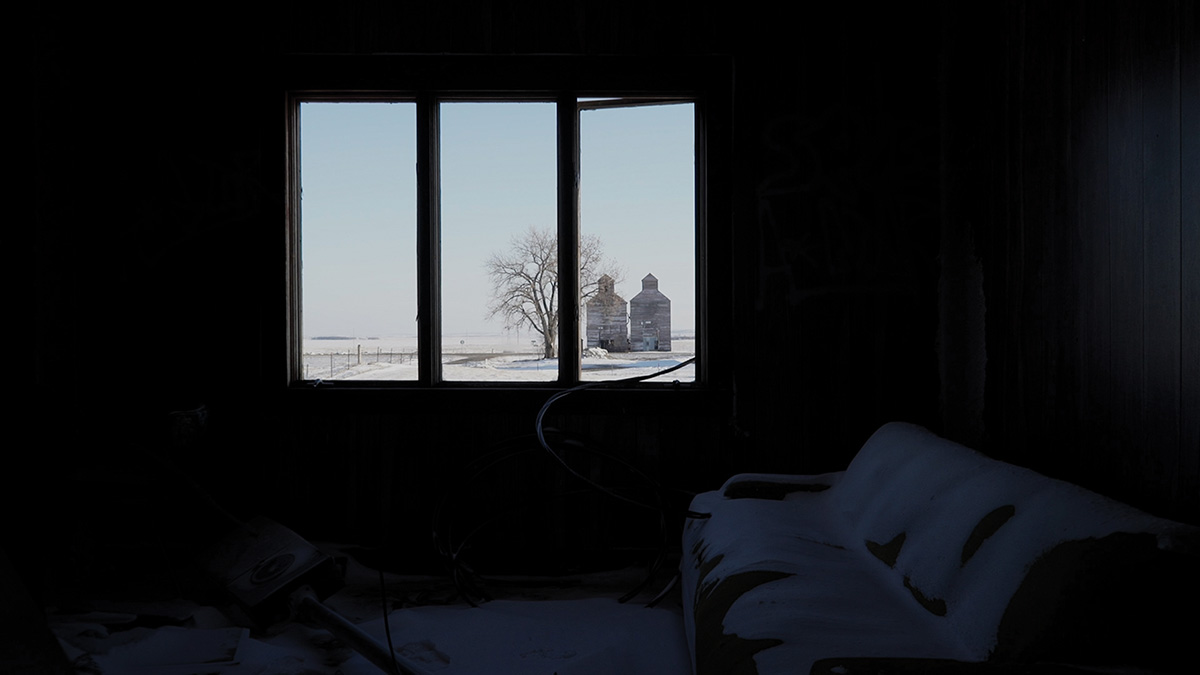
In the dead of winter, the gas flares and spectral sounds of an oil boom awaken the long-abandoned prairies and ghost towns of North Dakota.
Adam James Smith is a British filmmaker based in New York. His filmmaking practice spans rural and urban environments across China, Japan, and the United States. His first feature film, The Land of Many Palaces, on the Chinese "ghost city" of Ordos, participated in the Sundance Institute workshop and premiered at the 2015 Santa Barbara International Film Festival. The film then went on to screen at festivals and on television around the world, picking up awards in Moscow, Rome, and Kyoto. His follow-up film, Americaville, on the Chinese replica of Jackson Hole, Wyoming was sponsored by the Whicker's Foundation and the Asian Cinema Fund. The film was released in 2020 and has since been screened around the world at festivals and universities. Adam is currently completing a series of films documenting the diversity of the rural experience throughout the American heartland, including the country’s oldest Black rodeo in Okmulgee Invitational, the oil boom awakening the abandoned homesteads of North Dakota in Frontier Phantom, and Native American cowboys in Arapaho Pasture. Adam was educated in film at Stanford and anthropology at Cambridge, the latter of which he is currently an Affiliated Filmmaker at the university’s Visual Anthropology Lab.
John Smith
Catalogue : 2014Dad's Stick | | | | 5:0 | United Kingdom | 0
John Smith
Dad's Stick
| | | 5:0 | United Kingdom | 0
Dad?s Stick features three objects that my father showed me shortly before he died. Two of these were so well-used that their original forms and functions were almost completely obscured. The third object seemed to be instantly recognizable, but it turned out to be something else entirely.
Born 1952 - London, England John Smith was born in London in 1952 and studied film at the Royal College of Art. Since 1972 he has made over 40 film, video and installations works. His films have been shown in cinemas, art galleries and on television throughout the world and awarded major prizes at film festivals in Leipzig, Oberhausen, Hamburg, Cork, Geneva, Palermo, Graz, Uppsala, Bangkok, Ann Arbor and Chicago. One-person presentations of his work include exhibitions at Ikon Gallery (Birmingham), Pearl Gallery (London), Open Eye Gallery (Liverpool), Kunstmuseum Magdeburg (Germany) and retrospectives at the Venice Biennale and Oberhausen, Cork, Tampere, Uppsala, Regensburg and Winterthur international film festivals. John Smith is Professor of Fine Art at the University of East London. "The films of John Smith conduct a serious investigation into the combination of sound and image, but with a sense of humour that reaches out beyond the traditional avant-garde audience. His films move between narrative and absurdity, constantly undermining the traditional relationship between the visual and the aural. By blurring the perceived boundaries of experimental film, fiction, and documentary, Smith never delivers what he has led the spectator to expect." ?Mark Webber, Leeds International Film Festival, 2000 "The popularity of John Smith?s films can be explained by his wry sense of humour, his play on language, and the elegance of his visual style. His understated humour thinly conceals a darker layer of meaning in his films. John Smith?s skill as both narrator and composer of visual narratives leaves us discomforted even as we smile." ?Catherine Elwes, UK/Canadian Video Exchange, 2000 "These films can be enjoyed as stories; films for everyone, especially in their humour. They comprise a personal topography of East London, blighted but alive. Viewers are enticed to interrogate the very illusions that films construct in front of their eyes?and behind their backs." ?A.L. Rees, A Directory of British Film and Video Artists, 1996
Catalogue : 2006Throwing Stones | Experimental doc. | dv | color | 10:55 | United Kingdom | 2004

John Smith
Throwing Stones
Experimental doc. | dv | color | 10:55 | United Kingdom | 2004
As the camera looks out through a barred window and the clock strikes four in a Swiss city, the death of Yasser Arafat provides the starting point for a journey back in time. "Throwing Stones" is the third video in the "Hotel Diaries" series, a collection of late night recordings made in foreign hotel rooms which relate personal experiences to contemporary world events.
John Smith was born in London in 1952 and studied film at the Royal College of Art. His film, video and installation works have been shown in cinemas, art galleries and on television throughout the world and have been awarded major prizes at film festivals in Leipzig, Oberhausen, Hamburg, Cork, Palermo, Graz, Uppsala, Bangkok, Ann Arbor and Chicago. Recent exhibitions include one-person shows at Pearl Gallery (London), Open Eye Gallery (Liverpool), Kunstmuseum Magdeburg and retrospectives at Oberhausen, Cork, Tampere, Uppsala and Winterthur international film festivals. John Smith is Professor of Fine Art at the University of East London.
Ula Sniegowska
Catalogue : 2007Centre for Contemporary Art in Varsaw | 0 | 0 | | 0:0 | Poland | 2007

Ula Sniegowska
Centre for Contemporary Art in Varsaw
0 | 0 | | 0:0 | Poland | 2007
The Centre for Contemporary Art is a place for the creation and documentation of art in all its forms. The Centre achieves its goals through exhibitions, performances, presentations of visual theatre, concerts of contemporary music, the showing of experimental films, video art, shows and creative workshops, as well as various interdisciplinary events. Twelve years have passed since the Centre for Contemporary Art began its systematic and comprehensive activity in the public domain. A unique feature of this process is the way the developing art program is correlated with the reconstruction and organisation of the architectural spaces of the Castle in which the Centre is housed.
Michael Snow, -
Catalogue : 2007Wavelength For Those Who Don't Have the Time | Experimental video | dv | color | 15:0 | Canada | 2003
Michael Snow
Wavelength For Those Who Don't Have the Time
Experimental video | dv | color | 15:0 | Canada | 2003
WVLNT ("Wavelength For Those Who Don't Have the Time") is a reworking of Michael Snow's ground-breaking 45 minute experimental film Wavelength (1967). One of the most influential works of structuralist film, the original has been literally cut in three, with each section's visual and sound superimposed upon the others, resulting in a shortened yet intense video version.
Michael Snow is considered one of Canada's most important living artists, and one of the world's leading experimental filmmakers. His wide-ranging and multidisciplinary work explores the possibilities inherent in different media and genres, and encompasses film and video, painting, sculpture, photography, writing, and music. Snow's practice comprises a thorough investigation into the nature of perception. While Snow early established himself as a successful painter and musician in his native Toronto, it was his 1962 move to New York City that marked the beginning of his rise to international prominence. He entered into a long-lasting and fruitful dialogue with downtown Manhattan's artistic avant-garde, exchanging ideas with figures such as Yvonne Rainer, Philip Glass, Sol LeWitt, and Richard Foreman, and developing some of his most ambitious and influential works to date. Snow would continue to pursue improvised music, both on his own and in ensembles such as Toronto's CCMC. The generation and reception of sound in the broader sense emerged as one of his main concerns, reflected in performance and tape works that share qualities with contemporaneous experiments by composers like Steve Reich. At the same time, Snow made alliances within the underground film scene centered around Jonas Mekas 'Filmmakers' Cinematheque. He created his most famous experimental film "Wavelength" in 1967, which notoriously includes a 45-minute camera zoom within a fixed frame. Snow's other films of this period, including "Back and Forth" (1969), and "La Région Centrale" (1971), similarly explored the mechanics of filmmaking to simultaneously investigate the functional processes of cinema and of thinking itself. In the 1970s and 1980s Snow, responding to a growing institutional commitment to his work, experimented more with large-scale installations, including public sculptures such as "Flightstop" (1979) and "The Audience" (1988-89). In recent years he has focused on the specific nature and potential of digital media, yielding works like the video-film "Corpus Callosum" (2002). Regardless of artistic genre, Snow consistently engages in an analytical discourse on the nature of consciousness and experience, and language and temporality.
Catalogue : 2006Sheeploop | Art vidéo | dv | color | 17:0 | Canada | 2000
Michael Snow
Sheeploop
Art vidéo | dv | color | 17:0 | Canada | 2000
Sheeploop est un plan fixe, un paysage qui évolue lentement. Sheeploop offre un drôle d`instantané bucolique. Regarder des moutons mastiquer graduellement leur passage dans un pâturage, encore et encore, force le spectateur à reconsidérer la beauté de décors aussi idylliques. Typique des stratégies cinématographiques de Snow, cette oeuvre nous sensibilise au regard que nous portons sur un paysage, et sur la nature même de notre perception.
Michael Snow (né en 1929 à Toronto) est considéré comme l`un des plus importants artistes canadiens. En mars 2000, il recevait pour l`ensemble de son oeuvre cinématographique l`une des plus hautes distinctions au Canada, le Prix du Gouverneur général en arts visuels et arts médiatiques. Artiste multidisciplinaire, il est peintre, photographe, cinéaste et musicien. En 1956, il réalisait son premier film. Son film Wavelength (1967) le consacre comme l`un des cinéastes importants de « l`avant-garde américaine » (sic). À la fin des années 1960, pour la réalisation de son film La Région Centrale (1971), il collabore avec un ingénieur canadien à la conception et à la réalisation d`un bras mécanique qui permet à la caméra de tourner dans tous les sens et à des vitesses de rotation contrôlées par l`artiste. Au cours des dix dernières années, Snow a participé à toutes les expositions importantes ayant trait aux images dans le monde contemporain : Passages de l`image, réalisée par le Centre Pompidou; Projections, les transports de l`image, d`abord présenté au studio national des arts contemporains, Le Fresnoy; La Biennale d`art contemporain de Lyon, qui célébrait en 1995 les cent ans du cinéma, intégrait Snow à l`exposition. Enfin, le Musée des beaux-arts de l`Ontario et le Power Plant lui consacraient conjointement une grande rétrospective, Michael Snow Project. Encore récemment, on présentait en Europe une grande rétrospective de ses travaux filmiques et photographiques intitulée Panoramique : oeuvres photographiques et films=Photographic Works and Films : 1962-1999 et la Arnolfini Gallery de Bristol en Angleterre présentait en 2001 une exposition intitulée Michael Snow: almost Cover to Cover. Il est membre de l`Ordre du Canada et Chevalier de l`Ordre des arts et des lettres (France).
Michael Snow
Catalogue : 2019Reverberlin | Experimental video | 0 | color | 55:0 | Canada | 2006
Michael Snow
Reverberlin
Experimental video | 0 | color | 55:0 | Canada | 2006
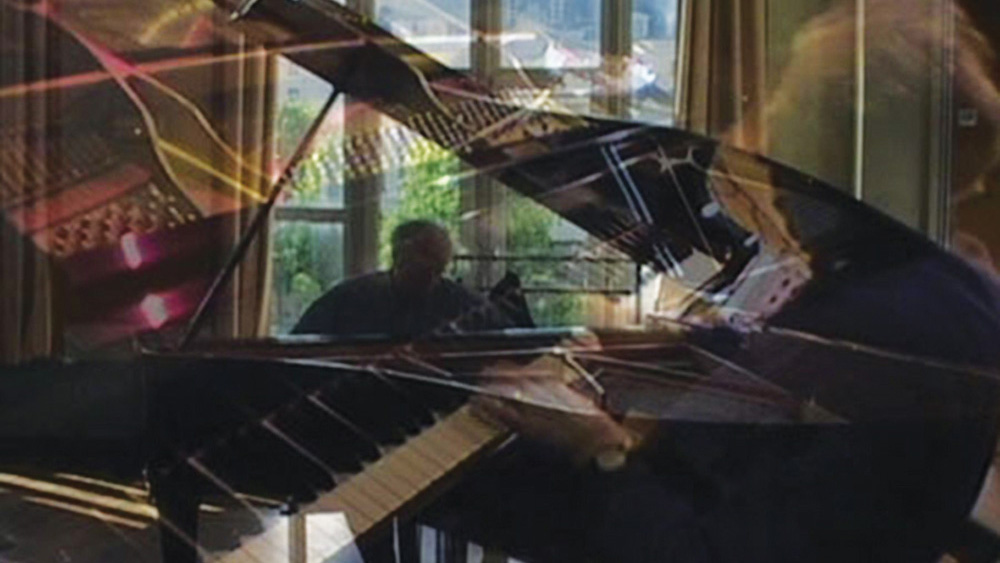
Based on a concert Michael Snow performed with his improvisatory ensemble CCMC at Kunst-Werke in 2002, Reverberlin is the first work for which Snow, both an esteemed filmmaker and musician, co-composed both sound and image. Using digital video images of CCMC playing all over the world, Snow creates counterpoints and juxtapositions to the unedited live recording (only sound) of 2002.
Michael Snow
Catalogue : 2007Wavelength For Those Who Don't Have the Time | Experimental video | dv | color | 15:0 | Canada | 2003
Michael Snow
Wavelength For Those Who Don't Have the Time
Experimental video | dv | color | 15:0 | Canada | 2003
WVLNT ("Wavelength For Those Who Don't Have the Time") is a reworking of Michael Snow's ground-breaking 45 minute experimental film Wavelength (1967). One of the most influential works of structuralist film, the original has been literally cut in three, with each section's visual and sound superimposed upon the others, resulting in a shortened yet intense video version.
Michael Snow is considered one of Canada's most important living artists, and one of the world's leading experimental filmmakers. His wide-ranging and multidisciplinary work explores the possibilities inherent in different media and genres, and encompasses film and video, painting, sculpture, photography, writing, and music. Snow's practice comprises a thorough investigation into the nature of perception. While Snow early established himself as a successful painter and musician in his native Toronto, it was his 1962 move to New York City that marked the beginning of his rise to international prominence. He entered into a long-lasting and fruitful dialogue with downtown Manhattan's artistic avant-garde, exchanging ideas with figures such as Yvonne Rainer, Philip Glass, Sol LeWitt, and Richard Foreman, and developing some of his most ambitious and influential works to date. Snow would continue to pursue improvised music, both on his own and in ensembles such as Toronto's CCMC. The generation and reception of sound in the broader sense emerged as one of his main concerns, reflected in performance and tape works that share qualities with contemporaneous experiments by composers like Steve Reich. At the same time, Snow made alliances within the underground film scene centered around Jonas Mekas 'Filmmakers' Cinematheque. He created his most famous experimental film "Wavelength" in 1967, which notoriously includes a 45-minute camera zoom within a fixed frame. Snow's other films of this period, including "Back and Forth" (1969), and "La Région Centrale" (1971), similarly explored the mechanics of filmmaking to simultaneously investigate the functional processes of cinema and of thinking itself. In the 1970s and 1980s Snow, responding to a growing institutional commitment to his work, experimented more with large-scale installations, including public sculptures such as "Flightstop" (1979) and "The Audience" (1988-89). In recent years he has focused on the specific nature and potential of digital media, yielding works like the video-film "Corpus Callosum" (2002). Regardless of artistic genre, Snow consistently engages in an analytical discourse on the nature of consciousness and experience, and language and temporality.
Catalogue : 2006Sheeploop | Art vidéo | dv | color | 17:0 | Canada | 2000
Michael Snow
Sheeploop
Art vidéo | dv | color | 17:0 | Canada | 2000
Sheeploop est un plan fixe, un paysage qui évolue lentement. Sheeploop offre un drôle d`instantané bucolique. Regarder des moutons mastiquer graduellement leur passage dans un pâturage, encore et encore, force le spectateur à reconsidérer la beauté de décors aussi idylliques. Typique des stratégies cinématographiques de Snow, cette oeuvre nous sensibilise au regard que nous portons sur un paysage, et sur la nature même de notre perception.
Michael Snow (né en 1929 à Toronto) est considéré comme l`un des plus importants artistes canadiens. En mars 2000, il recevait pour l`ensemble de son oeuvre cinématographique l`une des plus hautes distinctions au Canada, le Prix du Gouverneur général en arts visuels et arts médiatiques. Artiste multidisciplinaire, il est peintre, photographe, cinéaste et musicien. En 1956, il réalisait son premier film. Son film Wavelength (1967) le consacre comme l`un des cinéastes importants de « l`avant-garde américaine » (sic). À la fin des années 1960, pour la réalisation de son film La Région Centrale (1971), il collabore avec un ingénieur canadien à la conception et à la réalisation d`un bras mécanique qui permet à la caméra de tourner dans tous les sens et à des vitesses de rotation contrôlées par l`artiste. Au cours des dix dernières années, Snow a participé à toutes les expositions importantes ayant trait aux images dans le monde contemporain : Passages de l`image, réalisée par le Centre Pompidou; Projections, les transports de l`image, d`abord présenté au studio national des arts contemporains, Le Fresnoy; La Biennale d`art contemporain de Lyon, qui célébrait en 1995 les cent ans du cinéma, intégrait Snow à l`exposition. Enfin, le Musée des beaux-arts de l`Ontario et le Power Plant lui consacraient conjointement une grande rétrospective, Michael Snow Project. Encore récemment, on présentait en Europe une grande rétrospective de ses travaux filmiques et photographiques intitulée Panoramique : oeuvres photographiques et films=Photographic Works and Films : 1962-1999 et la Arnolfini Gallery de Bristol en Angleterre présentait en 2001 une exposition intitulée Michael Snow: almost Cover to Cover. Il est membre de l`Ordre du Canada et Chevalier de l`Ordre des arts et des lettres (France).
Daniel Soares
Freja Sofie Kirk
Catalogue : 2022B Plots | Video | hdv | color | 6:30 | Denmark | 2020
Freja Sofie Kirk
B Plots
Video | hdv | color | 6:30 | Denmark | 2020
Joanna is a singer who performs in a bar six nights a week, inside a hotel where she lives a few floors below. Her voice guides us through her work routine and the circular route between her room and the stage, all while the video continuously interrupts itself, disrupting the linearity of her story. 'B Plots' looks into the connection between images and physical spaces and how they mirror and affect each other. The mechanic movements of the camera are not hidden, but amplified, directing ones attention towards the camera as a medium and the materiality of the video.
Freja Sofie Kirk works within video, photography and installation, often in connection with one another. Through her ongoing work with two-dimensional representations, Kirk’s practice investigates how images generate meaning in contemporary society. Her work takes the form of a continuous study of spatial and medial constructions, the violence they perform and the architecture they manifest. By utilizing the camera, Kirk attempts to renegotiate the power relations inherent in both architecture and image production.
Adnan Softic
Catalogue : 2022Schiffe mit Waren und Stoffen aus aller Welt stoßen mit ihren Wellen die Bibby Challenge an | Experimental doc. | mov | color | 12:25 | Germany | 2020
Adnan Softic
Schiffe mit Waren und Stoffen aus aller Welt stoßen mit ihren Wellen die Bibby Challenge an
Experimental doc. | mov | color | 12:25 | Germany | 2020
The “Bibby Challenge” – a cross between a cruise ship and container ship – is a kind of improvised home on the water that German authorities in Hamburg set up to accommodate refugees from the Yugoslav Civil Wars. Adnan Softi? lived on this ship, which was anchored in the middle of the city on the river Elbe.?? We hear voices and we see pictures. People remember and we become witnesses of their memories. And while we become witnesses, we remember ourselves. Maybe. Not all memories are divisible, but there are bridges. There is the ship, there is the sea. There is the container. There is the living space, rather limited, four people in nine square meters. Fates of war, fates of refugees. Perhaps the experience on board the "Bibby Challenge" was not much different than on Noah's Ark - both ships with a grotesquely bloated belly. The form follows the function: to accommodate as much life as possible. The "Bibby Challenge" does not actually sail; it floats. The ship is part of the city and yet a body beyond space and time. Softi? addresses the ship as both a place and a non-place at the same time – as a floating, highly mobile vessel that knows how to navigate the boundaries between national and international waters, if only because twothirds of the Earth’s surface is covered with water.
Adnan Softi? is a director, author and visual artist. He is consistently dealing with historical and remembrance politics issues and his inter-disciplinary art activities are on display in numerous exhibitions and screenings in both Germany and abroad. Most recently: n.b.k., Berlin; Johann Jacobs Museum, Zurich; Berlinische Galerie, Berlin; MAXXI Museum, Rome; Collegium Artisticum, Sarajevo… Furthermore Softi? was recently awarded with the scholarships of the German Academy Rome Villa Massimo and Working Fellowship of the Senate of Berlin.
Catalogue : 2019Bigger Than Life | Documentary | hdv | color | 29:55 | Germany | 2018
Adnan Softic
Bigger Than Life
Documentary | hdv | color | 29:55 | Germany | 2018
BIGGER THAN LIFE is a music film in four acts, based between fiction and documentation, between reality and wishful thinking. The focus is on the fabrication of national history through architecture and urban planning. In Skopje, the capital of Macedonia, a government plan costing several hundred million euros is creating a brand new, ancient city center. »Skopje 2014« is the name of the monumental construction plan, which wants to stage its capital as the cradle of ancient high civilization and as the origin of Europe. So far, some thirty government buildings and museums, as well as countless monuments in the classic style have been erected in the Macedonian capital, in an attempt to put Skopje on a par with Rome and Athens. In some cases, existing socialist structures were incorporated into the new builds. A city looks for a future in history, Macedonia is inventing itself as a nation with historical status based on a model of antiquity that never existed in that form. Would that be something new? Will we buy that (hi)story?
Adnan Softic is an author, visual artist and director. He studied Film and Aesthetic Theory at the University of Fine Arts of Hamburg, where he also taught as a professor of Film and Time Based Media. Softic? was recently awarded with the scholarships of the German Academy Rome Villa Massimo. The current lm "Bigger Than Life" won the 3sat Prize at the 64th International Short Film Festival Oberhausen.
Haim Sokol
Catalogue : 2014Before the Storm | Video | hdv | color | 3:46 | Israel, Russia | 2012
Haim Sokol
Before the Storm
Video | hdv | color | 3:46 | Israel, Russia | 2012
The film is based on Lenin?s article ?Before the Storm? which tells about the First Russian Revolution of 1905. So it is a very short reenactment of the previous revolution. On the other hand it is taking place in today?s Moscow and labour migrants feature in the film, so it can be also a rehearsal of the future rebellion.
Haim Sokol b. 1973, Archangelsk, Russia Lives and works in Moscow Winner in 2009 for Special Stella Art Foundation prize Haim Sokol is an installation, sculpture, and video-based artist whose practice addresses the dramatic social histories of Russia and Eastern Europe. Though many of his works teeter on the edge of fiction and fantasy, Sokol roots his use of literary allusion in historical reality and the legacy of major 20th century uprisings, revolutions, massacres and genocides. By compounding the grim realities of urban life with the complexity of exile and socio-political diaspora, Sokol?s works effectively capture experiences of alienation, isolation and disrupted communication. Sokol is a graduate of the Hebrew University in Jerusalem (1996) and the Moscow Institute of Contemporary Art (2007). Sokol has exhibited in solo exhibitions at the M&J Guelman Gallery, Triumph Gallery, Anna Nova Gallery and other galleries in Moscow and St Petersburg. He has participated in the First Indian Biennale (Kochi-Muziris, 2012), Mediation Biennale (Poznan, Poland, 2010), the Third Moscow Biennale of Contemporary Art (2009), the Second Biennale of Contemporary Art in Thessaloniki (Greece, 2009), the First Moscow Biennial for Young Artists (2008) and other exhibitions in Russia and internationally.
Kate Solar
Catalogue : 2023POND | Experimental film | 16mm | black and white | 3:6 | Canada | 2022

Kate Solar
POND
Experimental film | 16mm | black and white | 3:6 | Canada | 2022
Digital footage of the river near the filmmaker's childhood home is laser-printed directly onto 16mm film, creating a shifting, liquified halftone. Memory dissolves into the texture of time. The print bleeds onto the optical sound strip, the image obscuring the soundtrack. The landscape is impossible to return to.
Kate Solar is a filmmaker from Ottawa, Ontario, currently studying at NSCAD University in Halifax, Nova Scotia. She is interested in experimental documentary and the physicality of celluloid film. Conceptually, her work explores the intersections of landscape with memory, identity, and gender.
Teresa Solar Abboud
Catalogue : 2011Los Embajadores | Video | dv | color | 6:45 | Spain | 2010

Teresa Solar Abboud
Los Embajadores
Video | dv | color | 6:45 | Spain | 2010
Catalogue : 2010You have been tracking us | Video | dv | color | 2:26 | Spain | 2009
Teresa Solar Abboud
You have been tracking us
Video | dv | color | 2:26 | Spain | 2009
You have been tracking us, is a video work that reconstructs one of the scenes of the movie Lawrence of Arabia (directed by David Lean in 1962), the scene is the one that has an oasis as background, where the little army of Lawrence has stopped to rest. The video has been shot at the same spots of Tabernas? Desert (Almería, Spain) where the scene was orginally shot, copying the movements of the camera, in order to analyze the landscape that the cinematographic industry produced and, afterwards, left behind. The production team of the movie created the oasis for the shooting and did not remove the palm trees afterwards, so the trees have managed to survive and they still remain alive, 40 years after; this particular condition creates an interesting situation, where fictional elements have produced a?real? landscape. The video works with images aesthetically close from documentaries, but follows the shots ant the movements of the original scene, creating a contradictory and strange landscape.
Teresa Solar has studied Fine Arts at the Universidad Complutense, in Madrid and has obtained an MA in Contemporary Art at the European University of Madrid. She has been selected in different national contests such as ?Momentos de paisaje 09? (CDAN) and has participated in various exhibitions like ?Yo no tengo razón? (Off Limits, Madrid, 2009) and LOOP Festival (Barcelona, 2009). Since 2008 she has been investigating the relationships between touristic and cinematographic industry and landscape. Nowadays she is producing a new project in Cairo, Egypt.
Isabelle Solas
Catalogue : 2014EN UN TEMPS SUSPENDU | Documentary | hdcam | color | 14:27 | France | 2012
Isabelle Solas
EN UN TEMPS SUSPENDU
Documentary | hdcam | color | 14:27 | France | 2012
Au c?ur de Bordeaux demeure l?imposante Bourse du travail, lieu témoin d?une époque où la valeur travail et la lutte des classes étaient moteurs de la construction de la société. Sa façade égratignée, ses étages désertés sont autant de signes que le temps est passé, emportant avec lui la vivacité de l`idéal du Front Populaire. Un groupe visite le bâtiment, le patrimoine semble pousser l`action syndicale aux oubliettes, pourtant le lieu dévoile peu à peu ses habitants, bien vivants et animés par des problématiques sociales on ne peut plus actuelles.
Isabelle Solas est réalisatrice et cadreuse. Suite à des études en anthropologie et en langues orientales, elle intègre la prestigieuse Ecole du Doc de Lussas, en 2005, où elle réalise Dorsale sur le proche Atlantique, et rencontre les différents acteurs issus de ce "village documentaire". Depuis, elle travaille comme cadreuse pour d`autres réalisateurs (Gilles Kerpen, Galés Moncomble, Anna Feillou). Elle réalise son premier long métrage Inventaire en 2009, diffusé à l`Utopia à Bordeaux, et au festival Traces De Vies 2009. Elle se consacre ensuite à la réalisation de films engagés, Anastasie, portrait d?une sans-papier, La Presqu?Île, portrait d?un SDF (Programmation au Festival Traces de Vie 2011), et Voisins, Rencontres et jardins cachés, documentaire sur la question du logement social à Begles, programmé en 2010 au Festival Traces de Vie. Elle travaille également comme vidéaste avec le collectif "Monts et Merveilles", autour d`expériences artistiques et participatives, dans Soupe 3, et Cocktail Manoir, en collaboration avec Florent Ghys, contrebassiste et compositeur, elle réalise des vidéos musicales, 4, et Déviation. Elle travaille actuellement sur un nouveau projet de moyen métrage documentaire en coproduction avec France 3, intitulé PAS DE NOSTALGIE, CAMARADES avec la société Sister productions.