Catalogue > List by artist
Browse the entire list of Rencontre Internationales artists since 2004. Use the alphabetical filter to refine your search. update in progress
Joaquin Segura
Catalogue : 2014Ontological Politics #1 (Havel) | Experimental video | hdv | color | 2:55 | Mexico, Czech Republic | 2013
Joaquin Segura
Ontological Politics #1 (Havel)
Experimental video | hdv | color | 2:55 | Mexico, Czech Republic | 2013
Single-channel video in which a recurring dialogue is formed by fragments extracted from two seminal public addresses by Václav Havel, former dissident and essential player of post-soviet politics in Eastern Europe. Both of the lines used in this work are the closing arguments of Havel`s New Year Addresses of 1990 and 1991, respectively. This persistent question posed by an individual in continuous doubt alludes to the extreme changes in global geopolitics once the Soviet Bloc fell in Czechoslovakia, but also alludes to the sociopolitical crisis nowadays, both in the region and other parts of Europe. It aims to present the essential contradictions present between discourse and socio economical realities in a context shaken by extreme political happenings: a laconic invitation to reflect on the nature of power and ideology.
Lives and works in Mexico City, Mexico. His highly diverse work has been shown in solo and group exhibitions in Mexico, USA, Europe and Asia. Some spaces that have featured his work include Sala de Arte Público Siqueiros, Museo de Arte Carrillo Gil, La Panaderia and Museo Tamayo Arte Contemporáneo in Mexico City, along with El Museo del Barrio, Anthology Film Archives, White Box and apexart (New York), LAXART, MoLAA (Los Angeles) Museo Nacional Centro de Arte Reina Sofia (Madrid), National Center for Contemporary Art (Moscow) and the Modern Art Museum of Fort Worth, TX. His work has been widely reviewed & featured in local and international art publications & major newspapers such as Flash Art, Adbusters, Art Papers, Código, Art Nexus, Discipline, Celeste & The Washington Post, among many others. In 2008/09, Segura was an artist-in-residence at the International Studio & Curatorial Program, New York, NY and at the 18th Street Arts Center, Santa Monica, CA. In 2012/13, he undertook artistic residencies and research stays at Hangar ?Centre de Producció i Recerca d?Arts Visuals (Barcelona), MeetFactory ? International Center of Contemporary Art (Prague) and Impakt Foundation (Utrecht). He?s a founding member and board advisor of SOMA, Mexico City.
Catalogue : 2007Conspiranoia | Experimental video | dv | color | 2:40 | Mexico | 2004
Joaquin Segura
Conspiranoia
Experimental video | dv | color | 2:40 | Mexico | 2004
A series of socio-political events are explored in this work, from their hypothetical links to conspiracy theories. "Conspiranoia" (2004) is an attempt to sketch an overview of the ultimate conspiracy, not devoid of humour and sarcasm, since the main sources for this work are mostly pop-culture paraphernalia such as comics, TV series, debunked literature, and 'investigative' sensational journalism. But then again, who knows? Everything you know might be a lie, indeed.
Visual artist, Joaquin Segura was born in 1980 in Mexico City, where he currently lives and works. His action, installation, intervention and photographic work has been shown in solo and group exhibitions in Mexico, the USA, and Europe. Some spaces that have featured his work include La Panaderia, Museo de Arte Carrillo Gil; Centro de la Imagen and Ex-Teresa Arte Actual in Mexico City; along with Outpost for Contemporary Art, Los Angeles, CA; Museo Nacional Centro de Arte Reina Sofia in Madrid; and Palace Adria in Prague, Czech Republic. His other activities include filmmaking and assuming curatorial duties for several projects. His work is currently represented by Arena México Arte Contemporáneo, Mexico.
Robert Seidel, Esmark – Husby-klit Bk.
Catalogue : 2019Esmark – Husby-klit Bk. | Experimental video | dcp | black and white | 5:0 | Germany | 2017
Robert Seidel, Esmark – Husby-klit Bk.
Esmark – Husby-klit Bk.
Experimental video | dcp | black and white | 5:0 | Germany | 2017
The Band “Esmark” is a collaboration between the sound architect Nikolai von Sallwitz and the artist Alsen Rau. The music video by video artists Robert Seidel for the track “Husby-klit Bk.” is based on a live video performance, in which a modular video synthesizer generates mental spaces between floating and overwriting realities. The visual material is based on a convolute of geographical impressions, that are fused by the cinematic soundscape into a continuous stream of dissolving memories.
Robert Seidel’s projections, installations and experimental films have been shown in numerous international festivals, as well as at galleries and museums such as the ZKM Karlsruhe, Art Center Nabi Seoul and MOCA Taipei. He is interested in pushing the boundaries of abstracted beauty through cinematographic approaches, as well as ones drawn from science. By the organic interplay of structural, spatial and temporal concepts he creates an evolving complexity of multifaceted readings. Seidel lives in Berlin/Jena as artist and curator.
Carla Seidemann
Catalogue : 2023The Other | Video | 0 | | 5:9 | Germany | 0
Carla Seidemann
The Other
Video | 0 | | 5:9 | Germany | 0
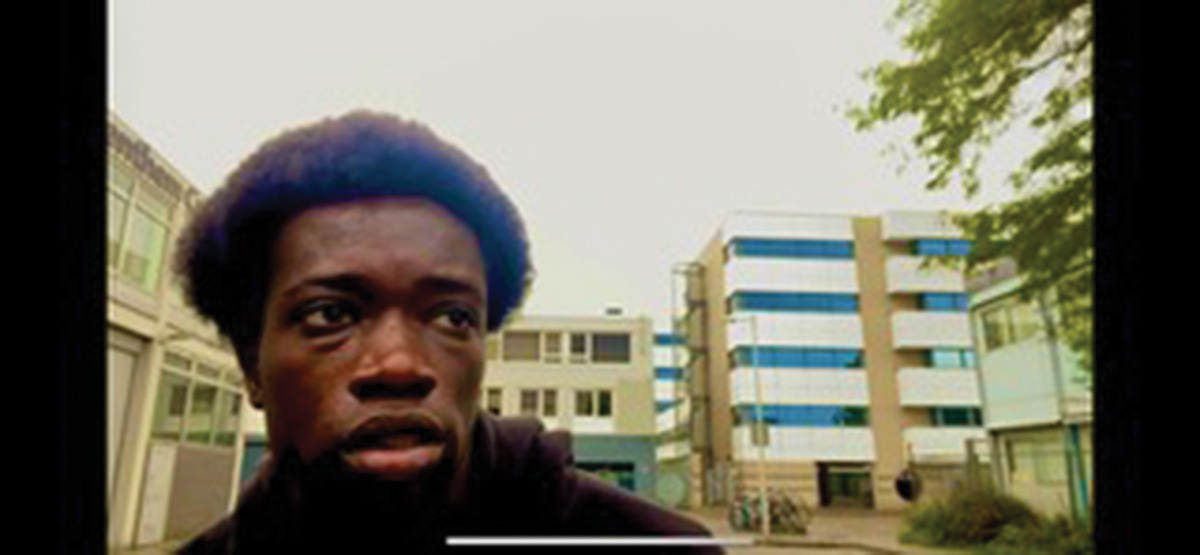
The Other is a thought provoking video work that takes viewers on a journey through the intricate realms of estrangement, the search for identity, and the indelible marks left by colonial history in our society. At its core, this video work delves into the intricate and often unsettling emotion of estrangement—the feeling of disconnection from oneself and one's surroundings. It poetically explores the ways in which external influences, societal pressures, and personal quests for self-discovery can blur the lines between self and 'other,' giving rise to a compelling examination of identity. Against the backdrop of these personal and emotional explorations, "The Other" unearths the deep-rooted colonial history that continues to shape our collective consciousness. It sheds light on the suppressed narratives, silenced voices, and uncomfortable truths that underlie our societies.
Carla Chibude Seidemann is an interdisciplinary artist specializing in film and photography. Currently enrolled in the VAV-Moving Image Programme at Gerrit Rietveld Academie. A standout accomplishment in their career is the self-publishing of "Visual Diaries," a research magazine that explores the intersections of art, culture, and society, encouraging readers to foster empathy towards their surroundings and to be part of a broader conversation. www.visualdiaries.info In addition to their academic pursuits, Carla Chibude Seidemann has gained practical experience as an assistant at Zaafar Jewelry NY, contributing their creative insights to the world of design. Through their work in film and photography, Carla Chibude Seidemann aims to capture the nuances of human emotion and the intricacies of the human experience.
Ginan Seidl
Sebastian Seifert, Santiago BARTOLOME
Catalogue : 2023FRACTAL LISTENING | Multimedia concert | 4k | color | 50:0 | Poland, Argentina | 2022
Sebastian Seifert, Santiago BARTOLOME
FRACTAL LISTENING
Multimedia concert | 4k | color | 50:0 | Poland, Argentina | 2022
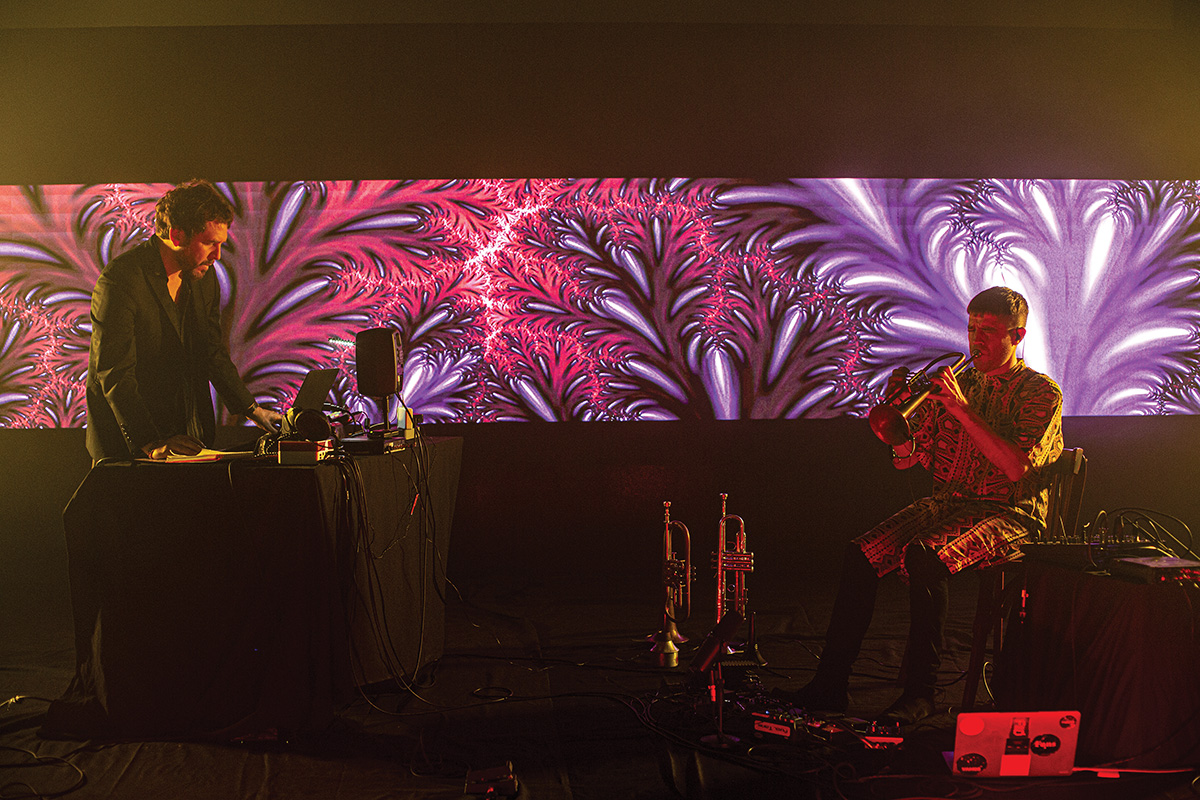
There is in nature, a mysterious and complex mathematical system that repeats itself over and over again, an underlying geometric pattern in forms as disparate as clouds, mountains, trees or our own circulatory system. Its distinctive feature is self-similarity, the same configuration that is repeated at different scales, branching out infinitely. There are those who believe that it is “God’s fingerprint”, “the absolute truth of the universe”.
Sebastián Seifert is a multimedia artist, designer and music producer. He has lived and worked in Barcelona since 2002. His career has developed at interdisciplinary points of convergence, maintaining digital electronic poetics as the support, concept and format of his productions. He has an International Master’s Degree in Media and Interactive Systems at the Autonomous University of Barcelona and ESDI (2002) and the Design, Image and Sound Career at the University of Buenos Aires (UBA). In the field of media art, he has developed net-art projects, interactive installations and multimedia performances, serving as curator of these languages ??at the «la Caixa» Foundation (Barcelona) from 2003 to 2011. With the audiovisual project “Microfeel ”, the artist highlights his transdisciplinary vocation, creating worlds that combine visuals and sound. He has taken his audiovisual concert to festivals like MUTEK (ES/AR/MX), SONAR, SZIGET, CTM, FILE and AMURAL, among others.
Sibi Sekar
Catalogue : 2022Of Other Spaces | Video | 4k | color | 24:0 | India | 2021
Sibi Sekar
Of Other Spaces
Video | 4k | color | 24:0 | India | 2021
Through episodes that display a high degree of idiosyncrasy, we follow a stranger who creates an imaginary order which serves to stress his inexistence elsewhere. The film is a personal documentary that represents a constellation of past time and suspended time while attempting to explore the Foucauldian phrase 'a placeless place'.
Sibi Sekar was born on April 29th, 1997 in Chennai, Tamil Nadu, India. Sibi fell in love with cinema at an early age upon viewing the works of artists such as Luis Buñuel and Sergei Parajanov. Sibi began making experimental films and directed a few short films ("Thoughts Out Of Season", “Night Train Light On Track“, “Teal City” and "Representation") while doing his postgraduation in Humanities and Social Sciences. He launched the SSSW banner during the 2020 pandemic and made a few more short films ("On Floating Bodies", "The Tale of the Entry/Exit", "you are, i am" and "Of Other Spaces") under said banner. They have been screened at over thirty festivals across five continents. He usually works on explorative films that are primarily an ascetic representation of resistance and the thematic dispositions of his films concern the symbolic depiction of being, nothingness and the transcendental space.
Lina Selander, Oscar Mangione
Catalogue : 2025Moon Tapestry | Video | 16mm | color | 13:19 | Sweden | 2024
Lina Selander, Oscar Mangione
Moon Tapestry
Video | 16mm | color | 13:19 | Sweden | 2024
Title: Moon Tapestry Year: 2024 16 mm transferred to DV-tape and to digital file 13:09 min Color Sound A 19th-century French hand-painted wallpaper from Medborgarhuset, the house for the citizens in Stockholm, forms the basis of this piece. It was filmed using 16 mm film transferred to DV-tape and processed through a broken post-production machine from the 1990s. The installation explores a variation of the Endymion mythology, where the god Hypnos falls in love with Endymion, causing him to keep his eyes open during sleep. This allows Hypnos to continuously gaze at the young man's face. The installation embodies a technological sedimentation or a pastoral utopia, representing the moon as a gigantic pixel. It explores the dimensions of a square, representation, subject, room, limit, surface, and the definition of front and back.
Lina Selander’s films and installations can be read as compositions or thought models, where ideas and conditions are weighed and tested. She examines the relationships between memory and perception, photography and film, language and image. The precise, rhythmic editing and use of sound create their own temporality and a strong inner pressure. Selander’s oeuvre recurrently explores a fascination for the phenomena and technologies that make images possible, thereby enabling history to be documented. Montage is used in the films to juxtapose images, while entailing a potential loss of content. Image meets text in a flow where meaning arises from the ostensibly unrelated, like echoes through and between the works. Selander’s works constitute a dense archive of observations, occasionally in dialogue with other films, art or literature. Their subject matters often stem from historic or ideological junctions, where one system or physical place collapses and something new begins to emerge. Lina Selander (b. 1973) lives and works in Stockholm, Sweden. Selander’s work has been shown at Kunst Haus Wien, Iniva (Institute of International Visual Arts), London; Index – The Swedish Contemporary Art Foundation, Stockholm; Moderna Museet, Stockholm; VOX - Centre de l’image contemporaine, Montréal and in international group shows such as Venice Biennale 2015; Kyiv Biennale 2015; Seoul Media City Biennale 2014; Manifesta 2012 in Genk, Belgium; Bucharest Biennale 2010; and at Haus der Kulturen der Welt, Berlin.
Catalogue : 2025The Sun to me is Dark | Experimental film | hdv | color | 8:38 | Sweden | 2024
Lina Selander, Oscar Mangione
The Sun to me is Dark
Experimental film | hdv | color | 8:38 | Sweden | 2024
This animation highlights the technological remnants of what is left behind. It is a simplistic creation consisting of color and rhythm. It incorporates X-ray images, figures from Pompeii, and footage of a turtle in Syria. This creation story symbolizes the ability to generate something new and release it, akin to a primordial soup of pixels. The animation emphasizes the constant act of looking, viewing, perceiving, and receiving images. It portrays the relationship between the photographic technique, the apparatus itself, "the machine," and the complexities of distortion in perception and imagination. The film was created using a broken special effects machine from the 1990s, resulting in the destruction, overexposure, underexposure, abstraction, and, ultimately, in the freedom of the material.
Lina Selander’s films and installations can be read as compositions or thought models, where ideas and conditions are weighed and tested. She examines the relationships between memory and perception, photography and film, language and image. The precise, rhythmic editing and use of sound create their own temporality and a strong inner pressure. Selander’s oeuvre recurrently explores a fascination for the phenomena and technologies that make images possible, there by enabling history to be documented. Montage is used in the films to juxtapose images, while entailing a potential loss of content. Image meets text in a flow where meaning arises from the ostensibly unrelated, like echoes through and between the works. Selander’s works constitute a dense archive of observations, occasionally in dialogue with other films, art or literature. Their subject matters often stem from historic or ideological junctions, where one system or physical place collapses and something new begins to emerge. Lina Selander (b. 1973) lives and works in Stockholm, Sweden. Selander’s work has been shown at Kunst Haus Wien, Iniva (Institute of International Visual Arts), London; Index – The Swedish Contemporary Art Foundation, Stockholm; Moderna Museet, Stockholm; VOX - Centre de l’image contemporaine, Montréal and in international group shows such as Venice Biennale 2015; Kyiv Biennale 2015; Seoul Media City Biennale 2014; Manifesta 2012 in Genk, Belgium; Bucharest Biennale 2010; and at Haus der Kulturen der Welt, Berlin.
Catalogue : 2020Överföringsdiagram nr 2 | Experimental film | 16mm | color | 10:30 | Sweden | 2019
Lina Selander, Oscar Mangione
Överföringsdiagram nr 2
Experimental film | 16mm | color | 10:30 | Sweden | 2019
Man sees himself as nature’s interpreter and tamer. But nature does not care about meaning, and its power cannot actually be controlled. It therefore remains silent in the face of man’s increasingly reckless experiment, the catastrophic effects of which will ultimately afflict man himself. The camera follows a panda at Schönbrunner Zoo surrounded by pictures of the Great Wall of China. Silently the panda holds a bamboo brush to paper, makes some marks with ink—pictures—and is rewarded with carrots. How shall we interpret this artistic gesture? The video proceeds to a control room at a never-used nuclear power plant that illustrates yet another despotic panorama, one with the same silence and latent violence. The images are transferred from one context to another, created and recreated in relation to one another. To question what it means is only human, but in the long run probably irrelevant. Text: Lisa Rosendahl
Lina Selander (b. 1973 in Stockholm) lives and works in Stockholm, Sweden. Selander’s films and installations can be read as compositions or thought models, where ideas and conditions are explored and weighed. She examines relationships between memory and perception, photography and film, and language and image. Lina Selander’s solo shows include Kunst Haus Wien; Argos – Centre for Art and Media, Brussels; Iniva, London; Moderna Museet, Stockholm; VOX – Centre de l’image contemporaine, Montréal. She was the Swedish representative at the Venice Biennale 2015. A selection of her group shows include: The Kyiv Biennale 2015; Seoul Media City Biennale 2014; Manifesta 2012 in Belgium. ++++ Oscar Mangione (b. 1971) works with Lina Selander and has participated with her in several exhibitions. From 2006 to 2012 he edited and wrote for the magazine and art project Geist and took part in numerous exhibitions, performances and projects in venues such as the Reykjavík Arts Festival, the Museum of Modern Art in Stockholm and the Venice Biennale.
Catalogue : 2019Diagram of Transfer No. 1 | Experimental video | hdv | color and b&w | 8:30 | Sweden | 2018
Lina Selander, Oscar Mangione
Diagram of Transfer No. 1
Experimental video | hdv | color and b&w | 8:30 | Sweden | 2018
Artifacts from a Maoist life intersects with machines grinding books, the piecing together of destroyed DDR documents and children undergoing education. A comment on the earlier work “When the Sun Sets It’s All Red, Then It Disappears” from 2008.
Catalogue : 2016The Offspring Resembles the Parent | Experimental film | hdv | color and b&w | 13:44 | Sweden | 2015
Lina Selander, Oscar Mangione
The Offspring Resembles the Parent
Experimental film | hdv | color and b&w | 13:44 | Sweden | 2015
The Offspring Resembles the Parent (2015) is a new film made for the 2015 Venice Biennale. Like Selander’s earlier works, it takes as its starting point a specific event or situation of crisis within society—in this case the current economic state and our increasingly crumbling faith in the monetary systems, with links to the European situation during World War I and the interwar years. A major part of the film’s imagery consists of Notgeld—emergency banknotes—often colourful and with a strong visual impact, printed on paper or fabric. Their obviously fictitious character—they represent gigantic figures— points to the imperceptible flows within today’s digital economies. Not unlike language, economic value is built on an agreement, a mutual understanding. The fictitious reality of finance only reveals its relation to the human, the body, to work and to nature in a situation of crisis in which the human conditions and connections to colonialism and warfare become clear.
Lina Selander is one of Sweden’s most innovative moving image artists. Her films and installations often focus on junctures in history where a system or physical place collapses and something new begins to emerge; the narrative of mechanical cinema giving way to that of digital video, or a political or economic system plummeting into a new one. Her works revolve around images as memories, imprints and representations. Selander’s process is similar to that of the scientist or poet. Each work constitutes a dense archive of facts and observations, occasionally in dialogue with other films, works of art or literature. The precise, rhythmic editing and use of sound in her films generate a unique temporality and strong internal pressure, and take intuitive leaps between associations and meanings. Selander’s work has been shown at Index, The Swedish Contemporary Art Foundation, Moderna Museet, VOX - centre de l’image contemporaine, Montréal and in international group shows, biennales and festivals, for example in the Venice Biennale 2015, The Kiev Biennale, Seoul Media Art Biennale 2014, Manifesta 9-European Biennal of Contemporary Art 2012, and the Bucharest Biennale 4, 2010. .... Oscar Mangione works with Lina Selander and has participated with her in several exhibitions. From 2006 to 2012 he edited and wrote for the magazine and art project Geist and took part in the following exhibitions, performances and projects: Överlämningen, Konsthall C, 2013; Suðurlandsvegur, The Reykjavík Arts Festival, 2012; The Spiral and the Square, Bonniers Konsthall, 2011/12; Geist in Therapy, The Studio, Moderna Museet, 2009; Role Critique, Iaspis at the Venice Biennale, 2009; Geist on Speed, Index, 2008.
Catalogue : 2015Silphium | Video | hdv | black and white | 22:9 | Sweden, Germany | 2014
Lina Selander, Oscar Mangione
Silphium
Video | hdv | black and white | 22:9 | Sweden, Germany | 2014
In the first sequences of Lina Selander´s new film a story is told about the ancient, now extinct, plant silphium. The plant grew on the coast outside the North African town Cyrene—a settlement of Greeks from the overpopulated island of Thera in 630 BC—which became the main town in the Greek colony, situated in today´s Libya. The plant was famous for its medical usage (it was used as a contraceptive and abortifacient) and for its richness in flavour, which made it the base of the colony’s export. Its importance for the economic wealth was so crucial that the image of silphium was imprinted on the coins. When exploitation of the plant led to extinction, the city declined. As is often the case in Selander’s works, the film builds on layers of images and meaning, layers that link history and pre-history to contemporary society, and in which nature as a prerequisite for life is one of the focal points. The human strive for development and expansion, the desire for control over nature, and above all—visual control, depiction and surveillance, is always met by another contradicting force. The nature looks back at us, its eyes empty—a reoccurring image in Selander’s film. In Silphium this double movement of visual and earthly mastery and its opposite—loss of visual control, awareness of vulnerability—is first expressed in a shot of the famous 16th-century painting The Ambassadors by Hans Holbein. The ambassadors are depicted together with the emblems of wealth and superiority of the countries they are the representatives for. A contradicting image is hidden until you view the painting from a specific angle, but when you do a human skull becomes visible, the sign of mortality. Selander lets the image oscillate in and out of visibility; the painted image emerges as in a rupture of light in the dark whilst mumbling voices count—numbers, years maybe. The sound fragment is a loan from Chris Marker´s 1962 film La Jetée—another important point of reference. The films narrative tells the story of how a man is used in time travel experiments in order to save the world. He travels through sediments of memory and images, much in the same way as Selander’s film, only to return to his beginning.
Lina Selander (b. 1973) lives and works in Stockholm, Sweden. She works mainly with moving images in film and video, but also with photography, text and sound. Her works are often installations in which these different medias converge and interrelate to one another. She is interested in the image’s ability and lack of ability to reproduce time, experience and memories and she explores how narration is created and how different techniques transform a story. Her works investigate film as medium, examining its possibilities and limitations as form of expression, and they often raise questions about history, media archaeology and authenticity. Selander’s work has been shown at Index - The Swedish Contemporary Art Foundation, Moderna Museet, Kunsthall Trondheim and in international group shows such as Manifesta 9 in Genk, Belgium and the Bucharest Biennale 2010 and at Haus Kulturen der Welt, Berlin, Seoul International Media Art Biennale and upcoming exhibitions such as Momenta Art, New York, INIVA, London and she also representing Sweden in the 56th Venice Biennale 2015.
Catalogue : 2014To the vision machine | Experimental film | hdv | color and b&w | 28:48 | Sweden | 2013
Lina Selander
To the vision machine
Experimental film | hdv | color and b&w | 28:48 | Sweden | 2013
To the vision machine (2013) 28:45 min. HD-video, color, sound and silence. 16:9 To the vision machine is the beginning of a larger work on the visual inscription`s invisible centre, on the picture as an internal object and its relation to vision and different imaging technologies. The work initiates a search for a code that would make vision redundant, a promised land which it can not hope to enter. The starting point is the atomic bomb over Hiroshima, or more precisely: the detonation of the atomic bomb as a photographic event. The first atomic bomb created a flash that lasted one fifteenth of a millionth of a second. The light penetrated every building and shadows of objects and bodies were exposed and burned onto the city`s surfaces. When bodies and objects turned to ash, their traces were left as unintentional monuments. But the detonation itself can only be witnessed at the expense of one`s eyesight or life. The sound of the whistle and the scene at the end is from the film "The Children of Hiroshima" ("Genbaku no ko", 1952), which shows the Peace Memorial Museum while it is under construction after the U.S. occupation had ended and it was allowed to remember the disaster again.
LINA SELANDER (b. 1973) lives and works in Stockholm, Sweden. Lina Selander works mainly with moving images in film and video, but also with photography, text and sound. Her works are often installations where these different medias and components converge and interrelate to one another. She is interested in the image?s ability and lack of ability to reproduce time, experience and memories and she explores how different narrative forms and techniques transform and change a story. Her works investigate !lm as medium, examining its possibilities and limitations as form of expression, and they often raise questions about history, media archeology and authenticity. Selander?s work has been shown at Index, The Swedish Contemporary Art Foundation, Moderna Museet and in international group shows, biennales and festivals, for example in the Manifesta 9 in Genk, Bucharest Biennale 2010, Institute of Contemporary Art in London and The Netherlands Media Art Institute.
Catalogue : 2013Lenin?s Lamp Glows In the Peasant?s Hut, | Video | hdv | black and white | 23:50 | Sweden | 2011
Lina Selander
Lenin?s Lamp Glows In the Peasant?s Hut,
Video | hdv | black and white | 23:50 | Sweden | 2011
Lina Selander offers a subtle meditation on the long-term historical effects provoked both socially and ethically by the Soviet utopia of the production of energy, summarised in Lenin?s slogan from 1920: ?Communism is Soviet Power plus the electrification of the whole country?. The elements of Lenin?s Lamp equally reject an idea of films, photographs or videos as neutral accretions of visual information. The elements of this film are to be seen both as material witnesses of the experience of modernisation and as agents of the very same history. From Dziga Vertov?s film The Eleventh Year (1928) to and video recordings from the Chernobyl disaster and the ghost city of Pripyat to images of fossils in museums and prehistorical landscapes, Selander?s images consist of sensory materials.
LINA SELANDER (b. 1973) lives and works in Stockholm, Sweden. Lina Selander works mainly with moving images in film and video, but also with photography, text and sound. Her works are often installations where these different medias and components converge and interrelate to one another. She is interested in the image?s ability and lack of ability to reproduce time, experience and memories and she explores how different narrative forms and techniques transform and change a story. Her works investigate !lm as medium, examining its possibilities and limitations as form of expression, and they often raise questions about history and authenticity. Selander?s work has been shown at Index, The Swedish Contemporary Art Foundation, Bonniers Konsthall, Moderna Museet and in international group shows, biennales and festivals, for example in the Manifesta 9 in Genk, Bucharest Biennale 2010, Institute of Contemporary Art in London, The Netherlands Media Art Institute in Amsterdam and Transmediale 05 in Berlin where she received an honourable mention from the jury.
Catalogue : 2012Around the Cave of the Double Tombs | Experimental film | hdcam | black and white | 16:41 | Sweden | 2010
Lina Selander
Around the Cave of the Double Tombs
Experimental film | hdcam | black and white | 16:41 | Sweden | 2010
The film takes its starting point in several research trips to the West Bank, especially to the city of Hebron. We are confronted with photographs, and with still images, depicting ? in a rather abstract and distanced manner ? various situations: a model of ancient Jerusalem in a Museum, a check-point with its massive security architecture squeezed into a historical building, houses, walls, objects. In between, sequences of moving image appear that show a chain link fence above a shopping alley in Hebron, built to protect Palestinians from settlers throwing stones at them. The continuous, but halting, camera movement facing the horizontal fence disturbs our perception and sense of orientation. Still and moving images alternate with short texts, establishing a rhythm that does not only connect ? without always explaining ? what is seen, but introduces a narrative that articulates the interrogation of image and text. Contrary to a conventional image of Palestine and the conflict as emphasized ? and exploited ? by the mass media and contrary to dominant documentary practices, Selander turns away from a documentary exposition and instead ?reflects on and projects layers of control, dream and confinement, both in relation to the place and its history and to problem of showing and saying it? (Selander).
LINA SELANDER (b. 1973) lives and works in Stockholm, Sweden. Lina Selander works mainly with moving images in film and video, but also with photography, text and sound. Her works are often installations where these different medias and components converge and interrelate to one another. She is interested in the image?s ability and lack of ability to reproduce time, experience and memories and she explores how different narrative forms and techniques transform and change a story. Her works investigate film as medium, examining its possibilities and limitations as form of expression, and they often raise questions about history and authenticity. Selander?s work has been shown at Bonniers Konsthall, Moderna Museet and Index Foundation and in international group shows, biennales and festivals, for example in the Bucharest Biennale 2010, Institute of Contemporary Art in London, The Netherlands Media Art Institute in Amsterdam and Transmediale 05 in Berlin where she received an honourable mention from the jury. She has also received the Maria Bonnier Dahlin Foundation Grant (2005) and The Edstrand Foundation Art Prize (2008). She is also represented in the next Manifesta Biennal, 2012 in Belgium.
Catalogue : 2010När solen går ner är den alldeles röd, sen försvinner den | Video | dv | color | 9:10 | Sweden | 2008
Lina Selander
När solen går ner är den alldeles röd, sen försvinner den
Video | dv | color | 9:10 | Sweden | 2008
Lina Selander?s work When the sun sets it?s all red, then it disappears takes Jean-Luc Godard?s 1967 film La Chinoise as its starting point. It examines the relationship between political, utopian and emotional expressions in words and images, it explores the revolutionary zeal of a time and the desire to start all over again. La Chinoise is a film in the making, a film that tells the story of a revolutionary and truth-seeking common narrative while at the same time trying to be a part of it, sharing its inherent expressions and problems. Lina Selander?s film is also a work in the making, engaging and evolving around Godard?s film and the questions it addresses and responds to. But it is also a film about photography and storytelling. Most of the photographs in the series of stills are from the 1968 student revolts in Paris and Stockholm, taken at meetings and manifestations. But they also show other motifs, such as a close-up of a growing blob of moisture on a news reel showing Chairman Mao swimming in the Yellow River, personal photos and some stills from La Chinoise. All images have been photographed with flash and all photos have a white circular reflection on them which may represent or constitute a common space where the spectator?s space and that of the motif overlap, but where they are also defined as separate ? a blinding dazzle or hole in the image which ultimately blocks any final narrative and forces itself into the motifs and events that are being documented.
Lina Selander works mainly with moving images in film and video, but also with photography, text and sound. Her works are often installations where these different medias and components converge and interrelate to one another. She is interested in the image?s ability and lack of ability to reproduce time, memories and experience and she explores how different narrative forms and techniques transform and change a story. Her works investigates film as medium, examining its possibilities and limitations as form of expression. Lina Selander?s work have been shown at Gävle Art Center, Bonniers Konsthall, 300 m3 Art Space and Moderna Museet as well as in several group shows and festivals abroad, for example the Transmediale 05 in Berlin where she received an honorable mention. She has also received the Maria Bonnier Dahlin prize for young artists and The Edstrand Foundation Art Prize 2008.
Catalogue : 2009Timmarna som rymmer formen (et par dagar i Portbou | Experimental video | dv | color and b&w | 15:0 | Sweden | 2007
Lina Selander
Timmarna som rymmer formen (et par dagar i Portbou
Experimental video | dv | color and b&w | 15:0 | Sweden | 2007
The film shows motives from the Spanish-French border town of Portbou, where the philosopher Walter Benjamin took his own life the night between the 27th and the 28th of September 1940. The border had closed the day before he arrived and was opened again the day after his death. The images, both moving and stills, are accompanied by a voice that tells from different stories of refugee-hood: fragments, details, thoughts. Both the video and the sound are looped, but of different duration, this brings about a multitude of relations between word and image which both exposes and bridges the distance between them. A continuously shift of perspective that show that a comprehensive narrative is never possible. Eventually, the images are perhaps more related to the voice than to the stories, or the story, it tells. The title, The Hours That Hold the Form, is a quotation from One-Way Street by Walter Benjamin, and the text continues: have passed in the house of dreams. The images from Portbou, where I spent ten days in the summer of 2005, witness to such hours, they are documentations of simple things: a restaurant, the old Custom House, the railway station, tracks, trains, the Benjamin museum... At the same time they are form, ordered by a more or less open system of significance, the film itself and the varying relations to the stories. In one way, the images of the film are simple containers of any form, in another way they are precisely the form the become. It is a border which is explored both documentarily and abstractly in the meeting between history and present, between meaning and silence.
Lina Selander works mainly with moving images in film and video, but also with photography, text and sound. Her works are often installations where these different medias and components converge and interrelate to one another. She is interested in the image?s ability and lack of ability to reproduce time, memories and experience and she explores how different narrative forms and techniques transform and change a story. Her works investigates film as medium, examining its possibilities and limitations as form of expression. Lina Selanders work have been shown at Gävle Art Center, 300 m3 Art Space, Bonniers Konsthall and Modena Museet as well as in several group shows and festivals abroad, for example the Transmediale 05 in Berlin where she received an honourable mention. She has also received the Edstrand Foundation Award Price and Maria Bonnier Dahlin prize for young artists. Lina lives and works in Stockholm.
Catalogue : 2006Reconstruction | Art vidéo | dv | color and b&w | 7:0 | Sweden | 2000
Lina Selander
Reconstruction
Art vidéo | dv | color and b&w | 7:0 | Sweden | 2000
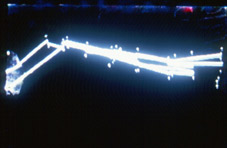
Reconstruction Inststamatic pictures - sewn in and reversed. These images were all very ordinary with typical scenes from a family album: vacations, trips abroad, family gatherings etc. The sewing threads in the pictures - coast sewn to ocean, clouds to sky or people sewn to each other marks a way of codifying the emotional structures and relations in the images, thus controlling an interpretation of them and highlighting (while at the same time trying to bridge) the gap between image and reality. The sewing threads and the holes from the needle in the images emerged as the essence of an intense and hidden reality, containing a truth which was lacking in the original images. The reversed images show this unveiled truth. I then used the reversed images with the stitches, holes and threads, and inverted in order to return to the negative, basic photographic image, as a musical score for a digital composition. The red dot reading the diagram like figures and transforming them into sound becomes a staging of the act of remembering. It reads the repressed and hidden, and what hides behind the screen memory.
Born: 1973 in Stockholm, lives and works in Stockholm, Sweden Education: Valand School of Fine Arts, Gothenburg, Royal University College of Fine Arts, Stockholm, School of Photography and Film at Gothenburg University. Lina Selander works with film, photography, text and sound. Recurrent topics in her works are the metamorphosis of time and memory, their dissolving, compulsiveness and intensity. She works with, and shows from different angles, the self-reference of images, both still and moving. The video works of Lina Selander are about a merging of abstract with narration, she decomposes and recomposes film as narrative structure. She wants the works to stage their own theoretic essence and being, and in doing so, to unveil a field where new meaning can emerge. Her works has been shown in Moderna Museet, Fylkingen, Galleri Charlotte Lund, Stockholm and Galleri 300m3,Gothenburg. In feb.2005 She was awarded an Honourable Mention in the Transmediale.05 in Berlin.
Lina Selander
Catalogue : 2025Moon Tapestry | Video | 16mm | color | 13:19 | Sweden | 2024
Lina Selander, Oscar Mangione
Moon Tapestry
Video | 16mm | color | 13:19 | Sweden | 2024
Title: Moon Tapestry Year: 2024 16 mm transferred to DV-tape and to digital file 13:09 min Color Sound A 19th-century French hand-painted wallpaper from Medborgarhuset, the house for the citizens in Stockholm, forms the basis of this piece. It was filmed using 16 mm film transferred to DV-tape and processed through a broken post-production machine from the 1990s. The installation explores a variation of the Endymion mythology, where the god Hypnos falls in love with Endymion, causing him to keep his eyes open during sleep. This allows Hypnos to continuously gaze at the young man's face. The installation embodies a technological sedimentation or a pastoral utopia, representing the moon as a gigantic pixel. It explores the dimensions of a square, representation, subject, room, limit, surface, and the definition of front and back.
Lina Selander’s films and installations can be read as compositions or thought models, where ideas and conditions are weighed and tested. She examines the relationships between memory and perception, photography and film, language and image. The precise, rhythmic editing and use of sound create their own temporality and a strong inner pressure. Selander’s oeuvre recurrently explores a fascination for the phenomena and technologies that make images possible, thereby enabling history to be documented. Montage is used in the films to juxtapose images, while entailing a potential loss of content. Image meets text in a flow where meaning arises from the ostensibly unrelated, like echoes through and between the works. Selander’s works constitute a dense archive of observations, occasionally in dialogue with other films, art or literature. Their subject matters often stem from historic or ideological junctions, where one system or physical place collapses and something new begins to emerge. Lina Selander (b. 1973) lives and works in Stockholm, Sweden. Selander’s work has been shown at Kunst Haus Wien, Iniva (Institute of International Visual Arts), London; Index – The Swedish Contemporary Art Foundation, Stockholm; Moderna Museet, Stockholm; VOX - Centre de l’image contemporaine, Montréal and in international group shows such as Venice Biennale 2015; Kyiv Biennale 2015; Seoul Media City Biennale 2014; Manifesta 2012 in Genk, Belgium; Bucharest Biennale 2010; and at Haus der Kulturen der Welt, Berlin.
Catalogue : 2025The Sun to me is Dark | Experimental film | hdv | color | 8:38 | Sweden | 2024
Lina Selander, Oscar Mangione
The Sun to me is Dark
Experimental film | hdv | color | 8:38 | Sweden | 2024
This animation highlights the technological remnants of what is left behind. It is a simplistic creation consisting of color and rhythm. It incorporates X-ray images, figures from Pompeii, and footage of a turtle in Syria. This creation story symbolizes the ability to generate something new and release it, akin to a primordial soup of pixels. The animation emphasizes the constant act of looking, viewing, perceiving, and receiving images. It portrays the relationship between the photographic technique, the apparatus itself, "the machine," and the complexities of distortion in perception and imagination. The film was created using a broken special effects machine from the 1990s, resulting in the destruction, overexposure, underexposure, abstraction, and, ultimately, in the freedom of the material.
Lina Selander’s films and installations can be read as compositions or thought models, where ideas and conditions are weighed and tested. She examines the relationships between memory and perception, photography and film, language and image. The precise, rhythmic editing and use of sound create their own temporality and a strong inner pressure. Selander’s oeuvre recurrently explores a fascination for the phenomena and technologies that make images possible, there by enabling history to be documented. Montage is used in the films to juxtapose images, while entailing a potential loss of content. Image meets text in a flow where meaning arises from the ostensibly unrelated, like echoes through and between the works. Selander’s works constitute a dense archive of observations, occasionally in dialogue with other films, art or literature. Their subject matters often stem from historic or ideological junctions, where one system or physical place collapses and something new begins to emerge. Lina Selander (b. 1973) lives and works in Stockholm, Sweden. Selander’s work has been shown at Kunst Haus Wien, Iniva (Institute of International Visual Arts), London; Index – The Swedish Contemporary Art Foundation, Stockholm; Moderna Museet, Stockholm; VOX - Centre de l’image contemporaine, Montréal and in international group shows such as Venice Biennale 2015; Kyiv Biennale 2015; Seoul Media City Biennale 2014; Manifesta 2012 in Genk, Belgium; Bucharest Biennale 2010; and at Haus der Kulturen der Welt, Berlin.
Catalogue : 2020Överföringsdiagram nr 2 | Experimental film | 16mm | color | 10:30 | Sweden | 2019
Lina Selander, Oscar Mangione
Överföringsdiagram nr 2
Experimental film | 16mm | color | 10:30 | Sweden | 2019
Man sees himself as nature’s interpreter and tamer. But nature does not care about meaning, and its power cannot actually be controlled. It therefore remains silent in the face of man’s increasingly reckless experiment, the catastrophic effects of which will ultimately afflict man himself. The camera follows a panda at Schönbrunner Zoo surrounded by pictures of the Great Wall of China. Silently the panda holds a bamboo brush to paper, makes some marks with ink—pictures—and is rewarded with carrots. How shall we interpret this artistic gesture? The video proceeds to a control room at a never-used nuclear power plant that illustrates yet another despotic panorama, one with the same silence and latent violence. The images are transferred from one context to another, created and recreated in relation to one another. To question what it means is only human, but in the long run probably irrelevant. Text: Lisa Rosendahl
Lina Selander (b. 1973 in Stockholm) lives and works in Stockholm, Sweden. Selander’s films and installations can be read as compositions or thought models, where ideas and conditions are explored and weighed. She examines relationships between memory and perception, photography and film, and language and image. Lina Selander’s solo shows include Kunst Haus Wien; Argos – Centre for Art and Media, Brussels; Iniva, London; Moderna Museet, Stockholm; VOX – Centre de l’image contemporaine, Montréal. She was the Swedish representative at the Venice Biennale 2015. A selection of her group shows include: The Kyiv Biennale 2015; Seoul Media City Biennale 2014; Manifesta 2012 in Belgium. ++++ Oscar Mangione (b. 1971) works with Lina Selander and has participated with her in several exhibitions. From 2006 to 2012 he edited and wrote for the magazine and art project Geist and took part in numerous exhibitions, performances and projects in venues such as the Reykjavík Arts Festival, the Museum of Modern Art in Stockholm and the Venice Biennale.
Catalogue : 2019Diagram of Transfer No. 1 | Experimental video | hdv | color and b&w | 8:30 | Sweden | 2018
Lina Selander, Oscar Mangione
Diagram of Transfer No. 1
Experimental video | hdv | color and b&w | 8:30 | Sweden | 2018
Artifacts from a Maoist life intersects with machines grinding books, the piecing together of destroyed DDR documents and children undergoing education. A comment on the earlier work “When the Sun Sets It’s All Red, Then It Disappears” from 2008.
Catalogue : 2016The Offspring Resembles the Parent | Experimental film | hdv | color and b&w | 13:44 | Sweden | 2015
Lina Selander, Oscar Mangione
The Offspring Resembles the Parent
Experimental film | hdv | color and b&w | 13:44 | Sweden | 2015
The Offspring Resembles the Parent (2015) is a new film made for the 2015 Venice Biennale. Like Selander’s earlier works, it takes as its starting point a specific event or situation of crisis within society—in this case the current economic state and our increasingly crumbling faith in the monetary systems, with links to the European situation during World War I and the interwar years. A major part of the film’s imagery consists of Notgeld—emergency banknotes—often colourful and with a strong visual impact, printed on paper or fabric. Their obviously fictitious character—they represent gigantic figures— points to the imperceptible flows within today’s digital economies. Not unlike language, economic value is built on an agreement, a mutual understanding. The fictitious reality of finance only reveals its relation to the human, the body, to work and to nature in a situation of crisis in which the human conditions and connections to colonialism and warfare become clear.
Lina Selander is one of Sweden’s most innovative moving image artists. Her films and installations often focus on junctures in history where a system or physical place collapses and something new begins to emerge; the narrative of mechanical cinema giving way to that of digital video, or a political or economic system plummeting into a new one. Her works revolve around images as memories, imprints and representations. Selander’s process is similar to that of the scientist or poet. Each work constitutes a dense archive of facts and observations, occasionally in dialogue with other films, works of art or literature. The precise, rhythmic editing and use of sound in her films generate a unique temporality and strong internal pressure, and take intuitive leaps between associations and meanings. Selander’s work has been shown at Index, The Swedish Contemporary Art Foundation, Moderna Museet, VOX - centre de l’image contemporaine, Montréal and in international group shows, biennales and festivals, for example in the Venice Biennale 2015, The Kiev Biennale, Seoul Media Art Biennale 2014, Manifesta 9-European Biennal of Contemporary Art 2012, and the Bucharest Biennale 4, 2010. .... Oscar Mangione works with Lina Selander and has participated with her in several exhibitions. From 2006 to 2012 he edited and wrote for the magazine and art project Geist and took part in the following exhibitions, performances and projects: Överlämningen, Konsthall C, 2013; Suðurlandsvegur, The Reykjavík Arts Festival, 2012; The Spiral and the Square, Bonniers Konsthall, 2011/12; Geist in Therapy, The Studio, Moderna Museet, 2009; Role Critique, Iaspis at the Venice Biennale, 2009; Geist on Speed, Index, 2008.
Catalogue : 2015Silphium | Video | hdv | black and white | 22:9 | Sweden, Germany | 2014
Lina Selander, Oscar Mangione
Silphium
Video | hdv | black and white | 22:9 | Sweden, Germany | 2014
In the first sequences of Lina Selander´s new film a story is told about the ancient, now extinct, plant silphium. The plant grew on the coast outside the North African town Cyrene—a settlement of Greeks from the overpopulated island of Thera in 630 BC—which became the main town in the Greek colony, situated in today´s Libya. The plant was famous for its medical usage (it was used as a contraceptive and abortifacient) and for its richness in flavour, which made it the base of the colony’s export. Its importance for the economic wealth was so crucial that the image of silphium was imprinted on the coins. When exploitation of the plant led to extinction, the city declined. As is often the case in Selander’s works, the film builds on layers of images and meaning, layers that link history and pre-history to contemporary society, and in which nature as a prerequisite for life is one of the focal points. The human strive for development and expansion, the desire for control over nature, and above all—visual control, depiction and surveillance, is always met by another contradicting force. The nature looks back at us, its eyes empty—a reoccurring image in Selander’s film. In Silphium this double movement of visual and earthly mastery and its opposite—loss of visual control, awareness of vulnerability—is first expressed in a shot of the famous 16th-century painting The Ambassadors by Hans Holbein. The ambassadors are depicted together with the emblems of wealth and superiority of the countries they are the representatives for. A contradicting image is hidden until you view the painting from a specific angle, but when you do a human skull becomes visible, the sign of mortality. Selander lets the image oscillate in and out of visibility; the painted image emerges as in a rupture of light in the dark whilst mumbling voices count—numbers, years maybe. The sound fragment is a loan from Chris Marker´s 1962 film La Jetée—another important point of reference. The films narrative tells the story of how a man is used in time travel experiments in order to save the world. He travels through sediments of memory and images, much in the same way as Selander’s film, only to return to his beginning.
Lina Selander (b. 1973) lives and works in Stockholm, Sweden. She works mainly with moving images in film and video, but also with photography, text and sound. Her works are often installations in which these different medias converge and interrelate to one another. She is interested in the image’s ability and lack of ability to reproduce time, experience and memories and she explores how narration is created and how different techniques transform a story. Her works investigate film as medium, examining its possibilities and limitations as form of expression, and they often raise questions about history, media archaeology and authenticity. Selander’s work has been shown at Index - The Swedish Contemporary Art Foundation, Moderna Museet, Kunsthall Trondheim and in international group shows such as Manifesta 9 in Genk, Belgium and the Bucharest Biennale 2010 and at Haus Kulturen der Welt, Berlin, Seoul International Media Art Biennale and upcoming exhibitions such as Momenta Art, New York, INIVA, London and she also representing Sweden in the 56th Venice Biennale 2015.
Catalogue : 2014To the vision machine | Experimental film | hdv | color and b&w | 28:48 | Sweden | 2013
Lina Selander
To the vision machine
Experimental film | hdv | color and b&w | 28:48 | Sweden | 2013
To the vision machine (2013) 28:45 min. HD-video, color, sound and silence. 16:9 To the vision machine is the beginning of a larger work on the visual inscription`s invisible centre, on the picture as an internal object and its relation to vision and different imaging technologies. The work initiates a search for a code that would make vision redundant, a promised land which it can not hope to enter. The starting point is the atomic bomb over Hiroshima, or more precisely: the detonation of the atomic bomb as a photographic event. The first atomic bomb created a flash that lasted one fifteenth of a millionth of a second. The light penetrated every building and shadows of objects and bodies were exposed and burned onto the city`s surfaces. When bodies and objects turned to ash, their traces were left as unintentional monuments. But the detonation itself can only be witnessed at the expense of one`s eyesight or life. The sound of the whistle and the scene at the end is from the film "The Children of Hiroshima" ("Genbaku no ko", 1952), which shows the Peace Memorial Museum while it is under construction after the U.S. occupation had ended and it was allowed to remember the disaster again.
LINA SELANDER (b. 1973) lives and works in Stockholm, Sweden. Lina Selander works mainly with moving images in film and video, but also with photography, text and sound. Her works are often installations where these different medias and components converge and interrelate to one another. She is interested in the image?s ability and lack of ability to reproduce time, experience and memories and she explores how different narrative forms and techniques transform and change a story. Her works investigate !lm as medium, examining its possibilities and limitations as form of expression, and they often raise questions about history, media archeology and authenticity. Selander?s work has been shown at Index, The Swedish Contemporary Art Foundation, Moderna Museet and in international group shows, biennales and festivals, for example in the Manifesta 9 in Genk, Bucharest Biennale 2010, Institute of Contemporary Art in London and The Netherlands Media Art Institute.
Catalogue : 2013Lenin?s Lamp Glows In the Peasant?s Hut, | Video | hdv | black and white | 23:50 | Sweden | 2011
Lina Selander
Lenin?s Lamp Glows In the Peasant?s Hut,
Video | hdv | black and white | 23:50 | Sweden | 2011
Lina Selander offers a subtle meditation on the long-term historical effects provoked both socially and ethically by the Soviet utopia of the production of energy, summarised in Lenin?s slogan from 1920: ?Communism is Soviet Power plus the electrification of the whole country?. The elements of Lenin?s Lamp equally reject an idea of films, photographs or videos as neutral accretions of visual information. The elements of this film are to be seen both as material witnesses of the experience of modernisation and as agents of the very same history. From Dziga Vertov?s film The Eleventh Year (1928) to and video recordings from the Chernobyl disaster and the ghost city of Pripyat to images of fossils in museums and prehistorical landscapes, Selander?s images consist of sensory materials.
LINA SELANDER (b. 1973) lives and works in Stockholm, Sweden. Lina Selander works mainly with moving images in film and video, but also with photography, text and sound. Her works are often installations where these different medias and components converge and interrelate to one another. She is interested in the image?s ability and lack of ability to reproduce time, experience and memories and she explores how different narrative forms and techniques transform and change a story. Her works investigate !lm as medium, examining its possibilities and limitations as form of expression, and they often raise questions about history and authenticity. Selander?s work has been shown at Index, The Swedish Contemporary Art Foundation, Bonniers Konsthall, Moderna Museet and in international group shows, biennales and festivals, for example in the Manifesta 9 in Genk, Bucharest Biennale 2010, Institute of Contemporary Art in London, The Netherlands Media Art Institute in Amsterdam and Transmediale 05 in Berlin where she received an honourable mention from the jury.
Catalogue : 2012Around the Cave of the Double Tombs | Experimental film | hdcam | black and white | 16:41 | Sweden | 2010
Lina Selander
Around the Cave of the Double Tombs
Experimental film | hdcam | black and white | 16:41 | Sweden | 2010
The film takes its starting point in several research trips to the West Bank, especially to the city of Hebron. We are confronted with photographs, and with still images, depicting ? in a rather abstract and distanced manner ? various situations: a model of ancient Jerusalem in a Museum, a check-point with its massive security architecture squeezed into a historical building, houses, walls, objects. In between, sequences of moving image appear that show a chain link fence above a shopping alley in Hebron, built to protect Palestinians from settlers throwing stones at them. The continuous, but halting, camera movement facing the horizontal fence disturbs our perception and sense of orientation. Still and moving images alternate with short texts, establishing a rhythm that does not only connect ? without always explaining ? what is seen, but introduces a narrative that articulates the interrogation of image and text. Contrary to a conventional image of Palestine and the conflict as emphasized ? and exploited ? by the mass media and contrary to dominant documentary practices, Selander turns away from a documentary exposition and instead ?reflects on and projects layers of control, dream and confinement, both in relation to the place and its history and to problem of showing and saying it? (Selander).
LINA SELANDER (b. 1973) lives and works in Stockholm, Sweden. Lina Selander works mainly with moving images in film and video, but also with photography, text and sound. Her works are often installations where these different medias and components converge and interrelate to one another. She is interested in the image?s ability and lack of ability to reproduce time, experience and memories and she explores how different narrative forms and techniques transform and change a story. Her works investigate film as medium, examining its possibilities and limitations as form of expression, and they often raise questions about history and authenticity. Selander?s work has been shown at Bonniers Konsthall, Moderna Museet and Index Foundation and in international group shows, biennales and festivals, for example in the Bucharest Biennale 2010, Institute of Contemporary Art in London, The Netherlands Media Art Institute in Amsterdam and Transmediale 05 in Berlin where she received an honourable mention from the jury. She has also received the Maria Bonnier Dahlin Foundation Grant (2005) and The Edstrand Foundation Art Prize (2008). She is also represented in the next Manifesta Biennal, 2012 in Belgium.
Catalogue : 2010När solen går ner är den alldeles röd, sen försvinner den | Video | dv | color | 9:10 | Sweden | 2008
Lina Selander
När solen går ner är den alldeles röd, sen försvinner den
Video | dv | color | 9:10 | Sweden | 2008
Lina Selander?s work When the sun sets it?s all red, then it disappears takes Jean-Luc Godard?s 1967 film La Chinoise as its starting point. It examines the relationship between political, utopian and emotional expressions in words and images, it explores the revolutionary zeal of a time and the desire to start all over again. La Chinoise is a film in the making, a film that tells the story of a revolutionary and truth-seeking common narrative while at the same time trying to be a part of it, sharing its inherent expressions and problems. Lina Selander?s film is also a work in the making, engaging and evolving around Godard?s film and the questions it addresses and responds to. But it is also a film about photography and storytelling. Most of the photographs in the series of stills are from the 1968 student revolts in Paris and Stockholm, taken at meetings and manifestations. But they also show other motifs, such as a close-up of a growing blob of moisture on a news reel showing Chairman Mao swimming in the Yellow River, personal photos and some stills from La Chinoise. All images have been photographed with flash and all photos have a white circular reflection on them which may represent or constitute a common space where the spectator?s space and that of the motif overlap, but where they are also defined as separate ? a blinding dazzle or hole in the image which ultimately blocks any final narrative and forces itself into the motifs and events that are being documented.
Lina Selander works mainly with moving images in film and video, but also with photography, text and sound. Her works are often installations where these different medias and components converge and interrelate to one another. She is interested in the image?s ability and lack of ability to reproduce time, memories and experience and she explores how different narrative forms and techniques transform and change a story. Her works investigates film as medium, examining its possibilities and limitations as form of expression. Lina Selander?s work have been shown at Gävle Art Center, Bonniers Konsthall, 300 m3 Art Space and Moderna Museet as well as in several group shows and festivals abroad, for example the Transmediale 05 in Berlin where she received an honorable mention. She has also received the Maria Bonnier Dahlin prize for young artists and The Edstrand Foundation Art Prize 2008.
Catalogue : 2009Timmarna som rymmer formen (et par dagar i Portbou | Experimental video | dv | color and b&w | 15:0 | Sweden | 2007
Lina Selander
Timmarna som rymmer formen (et par dagar i Portbou
Experimental video | dv | color and b&w | 15:0 | Sweden | 2007
The film shows motives from the Spanish-French border town of Portbou, where the philosopher Walter Benjamin took his own life the night between the 27th and the 28th of September 1940. The border had closed the day before he arrived and was opened again the day after his death. The images, both moving and stills, are accompanied by a voice that tells from different stories of refugee-hood: fragments, details, thoughts. Both the video and the sound are looped, but of different duration, this brings about a multitude of relations between word and image which both exposes and bridges the distance between them. A continuously shift of perspective that show that a comprehensive narrative is never possible. Eventually, the images are perhaps more related to the voice than to the stories, or the story, it tells. The title, The Hours That Hold the Form, is a quotation from One-Way Street by Walter Benjamin, and the text continues: have passed in the house of dreams. The images from Portbou, where I spent ten days in the summer of 2005, witness to such hours, they are documentations of simple things: a restaurant, the old Custom House, the railway station, tracks, trains, the Benjamin museum... At the same time they are form, ordered by a more or less open system of significance, the film itself and the varying relations to the stories. In one way, the images of the film are simple containers of any form, in another way they are precisely the form the become. It is a border which is explored both documentarily and abstractly in the meeting between history and present, between meaning and silence.
Lina Selander works mainly with moving images in film and video, but also with photography, text and sound. Her works are often installations where these different medias and components converge and interrelate to one another. She is interested in the image?s ability and lack of ability to reproduce time, memories and experience and she explores how different narrative forms and techniques transform and change a story. Her works investigates film as medium, examining its possibilities and limitations as form of expression. Lina Selanders work have been shown at Gävle Art Center, 300 m3 Art Space, Bonniers Konsthall and Modena Museet as well as in several group shows and festivals abroad, for example the Transmediale 05 in Berlin where she received an honourable mention. She has also received the Edstrand Foundation Award Price and Maria Bonnier Dahlin prize for young artists. Lina lives and works in Stockholm.
Catalogue : 2006Reconstruction | Art vidéo | dv | color and b&w | 7:0 | Sweden | 2000
Lina Selander
Reconstruction
Art vidéo | dv | color and b&w | 7:0 | Sweden | 2000
Reconstruction Inststamatic pictures - sewn in and reversed. These images were all very ordinary with typical scenes from a family album: vacations, trips abroad, family gatherings etc. The sewing threads in the pictures - coast sewn to ocean, clouds to sky or people sewn to each other marks a way of codifying the emotional structures and relations in the images, thus controlling an interpretation of them and highlighting (while at the same time trying to bridge) the gap between image and reality. The sewing threads and the holes from the needle in the images emerged as the essence of an intense and hidden reality, containing a truth which was lacking in the original images. The reversed images show this unveiled truth. I then used the reversed images with the stitches, holes and threads, and inverted in order to return to the negative, basic photographic image, as a musical score for a digital composition. The red dot reading the diagram like figures and transforming them into sound becomes a staging of the act of remembering. It reads the repressed and hidden, and what hides behind the screen memory.
Born: 1973 in Stockholm, lives and works in Stockholm, Sweden Education: Valand School of Fine Arts, Gothenburg, Royal University College of Fine Arts, Stockholm, School of Photography and Film at Gothenburg University. Lina Selander works with film, photography, text and sound. Recurrent topics in her works are the metamorphosis of time and memory, their dissolving, compulsiveness and intensity. She works with, and shows from different angles, the self-reference of images, both still and moving. The video works of Lina Selander are about a merging of abstract with narration, she decomposes and recomposes film as narrative structure. She wants the works to stage their own theoretic essence and being, and in doing so, to unveil a field where new meaning can emerge. Her works has been shown in Moderna Museet, Fylkingen, Galleri Charlotte Lund, Stockholm and Galleri 300m3,Gothenburg. In feb.2005 She was awarded an Honourable Mention in the Transmediale.05 in Berlin.
Lina Selander, Oscar Mangione
Catalogue : 2017The Ceremony | Video | hdv | color | 16:18 | Sweden | 2016
Lina Selander, Oscar Mangione
The Ceremony
Video | hdv | color | 16:18 | Sweden | 2016
The opening of the film «The Ceremony» shows the image from the title page of Olof Rudbeck the Elder’s «Atlantica» from 1679, were Rudbeck reveals Sweden as the sunken Atlantis. Written during the era of the Swedish Empire, the archaeological novel «Atlantica» is a marvel of non-specialization and heterogeneous connections, largely based on speculative etymologies and sound correspondences. In «The Ceremony», in a similar audacious manner, identities, histories and places appear and disappear: freed from reality’s hold, in layer upon layer of image, text and sound, like abandoned or yet to be built cities: Tutankhamen’s crypt and unbroken seal, Bredäng (suburb of Stockholm where the artists live), the strange entrance to the old Stasi headquarters in Berlin, other places, tombs and prisons. All connected by subterranean passages through which an alien time runs; incompatible, turning endlessly into itself.
Lina Selander (b. 1973) lives and works in Stockholm, Sweden. Lina Selanders work often focus on junctures in history where a system or physical place collapses and something new begins to emerge; the narrative of mechanical cinema giving way to that of digital video, or a political or economic system plummeting into a new one. Her works revolve around images as memories, imprints and representations. Selander’s work has been shown at Iniva (Institute of International Visual Arts), London; Index – The Swedish Contemporary Art Foundation, Stockholm; Moderna Museet, Stockholm; VOX - Centre de l’image contemporaine, Montré al and in international group shows such as the Venice Biennale 2015; Kyiv Biennale 2015; Seoul Media City Biennale 2014; Manifesta 2012 in Genk, Belgium; Bucharest Biennale 2010; and at Haus der Kulturen der Welt, Berlin.Oscar Mangione (b. 1971) works with Lina Selander and has participated with her in several exhibitions. From 2006 to 2012 he edited and wrote for the magazine and art project Geist and took part in numerous exhibitions, performances and projects in venues such as the Reykjavík Arts Festival, the Museum of Modern Art in Stockholm and the Venice Biennale.
Ekaterina Selenkina
Catalogue : 2022Obkhodniye puti | Experimental fiction | 16mm | color | 73:0 | Russia | 2021
Ekaterina Selenkina
Obkhodniye puti
Experimental fiction | 16mm | color | 73:0 | Russia | 2021
A sprawling meditation on the choreography of bodies in Moscow’s urban landscape, Detours depicts a new way of dealing illicit drugs via the Darknet, the layering of the physical and the virtual realities, as well as a poetics, and politics, of space. Taking place in sleepy neighbourhoods, among the concrete walls of high-rises, behind garages and amidst abandoned railroads, the film alternately follows and loses track of Denis, the treasureman who hides stashes of drugs all over the city.
Ekaterina Selenkina is a filmmaker, artist and curator born in St. Petersburg, Russia in 1992. Her work showed at Venice International Film Critics’ Week, Viennale, Thessaloniki International Film Festival, Garage Museum of Modern Art, Camerimage, Pacific Meridian, Message to Man, New Holland Island International Debut Film Festival, REDCAT arts center, among others. Together with Zaina Bseiso, Luis Gutiérrez Arias and Joie Estrella Horwitz, she is a member of the film collective called Bahía Colectiva and co-curator of Adrift Residency. She received her MFA in Film/Video from California Institute of the Arts and is currently based in Moscow.
Antoine Sement
Catalogue : 2006Sleep | Animation | | color | 1:0 | France | 2005

Antoine Sement
Sleep
Animation | | color | 1:0 | France | 2005
??Sleep?? makes reference to the eponymous video by Andy Warhol. Playing the role of John Giomo, I live my sleep as a refuge good for inaction. So forth, I avoid physical constraints and the productivity logics of the current world. The irruption of the tutelary figure of Warhol won?t last to break this quiet alienation, shaking me and asking me to wake up and work (?Wake up, it?s time to work and be famous?). By reflection game, a forgotten Art History sneaks in the repetitive logic by a linear conception of progress. The cylindrical specificity of the video could also foreshadow the dreamed back of welfare intercity unrelenting between repression and regression in a nightmare like atmosphere.
Born in 1979 in Versailles. After having an education in literature, option in plastic arts in high school, I integrated the Ecole des Beaux Arts of Rouen where I obtained my Diplôme National Superieur d?Expression Plastique this year. The work I developed uses drawing and video animation to illustrate the theme of doubt and difficulty to create. Making grotesque games with the art history, I give a free hand to interpretations of my incertitude and inhibitions. When I left the Beaux Arts, I took part in the exhibition ?Sommeil? a the Chapelle du Genêteil in Château-Gontier.
Semiconductor, Jarman + Gerhardt
Catalogue : 2006200 Nanowebbers | Experimental video | dv | color | 2:49 | United Kingdom | 2005
Semiconductor, Jarman + Gerhardt
200 Nanowebbers
Experimental video | dv | color | 2:49 | United Kingdom | 2005
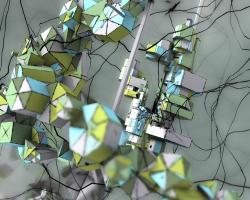
For ?200 Nanowebbers?, Semiconductor have created a molecular web that is generated by Double Adaptor?s actual music. Via custom-made scripts, the melodies and rhythms spawn a nano scale environment that shifts and contorts to the resonance; revealing glimpses of tiny developing and interacting particles. As the layers of sound build and self destruct, the web constructs more complex elements that warp with the music?s pace and energy.
Semiconductor make Sound Films which reveal our physical world in flux; cities in motion, shifting landscapes and systems in chaos. Since 1999 UK artists Ruth Jarman and Joseph Gerhardt have been exploring many processes of digital animation to produce experimental films and live animation. Central to these works is the role of sound, which becomes synonymous with the image, as it creates, controls and deciphers it; exploring resonance, through the natural order of things. Finely crafted digital work is combined with analogue processes that tailor the randomness and errors within computer systems as co-conspirator. These works are exhibited in galleries, festivals, cinemas and biennials worldwide; in addition they are presented as surround sound installations. Recent exhibitions include; Venice Biennale; EMAF Germany, Lyon Museum of Modern Art; France and Inhabituel; Milan. Semiconductors latest contribution to the genre of live cinema is their dedicated live performance software Sonic Inc; a real-time 3D sculpting tool, where creations are realised by specific sound inputs and user interaction, producing dynamic audio created, and controlled environments on the fly. Recent performances include: Transmediale; Berlin, Tate Britain; London and Images Festival; Toronto. Currently, they are based at the Space Science Laboratories at UC Berkeley making research for future art work.
Marinella Senatore
Noe Sendas, X
Catalogue : 2009THE INDIFFERENT | Experimental video | dv | color and b&w | 12:34 | Portugal | 2008
Noe Sendas, X
THE INDIFFERENT
Experimental video | dv | color and b&w | 12:34 | Portugal | 2008
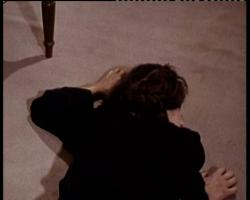
This video work is a re-edition of very short fragments taken from several films, based on a simple apprehension: the time for the deepest emotion is often not coincident with its related event. A man walks in a street goes into a building, runs away through onto the main street, and stops in a garden square, just to go back to the same street and making his actions a perfect loop. The usage of color and black & White film allows to differentiate between what is ?real? and what are projections/dreams/ghosts.
NOÉ SENDAS (1972) Short Biography Noé Sendas (born in Brussels, 1972, lives and works in Berlin) began presenting his work halfway through the nineties. His participation in several exhibitions, especially in ?En Garde!? (Culturgest, Porto 2002-03), Sendas resorts to different means of expression: video, sculpture, sound, drawing and sound. Explicit and implicit references to artists and literary, cinematic, or musical creations are part of his raw materials. Quotes from Shakespeare and Beckett are present, for example, as well as different movie director?s -Godard among them- and Coltrane. Specific concerns about the reflection and practice of visual arts can also be added to his repertoire. These include: the body, as an entity that is simultaneously theoretical and material; the observer?s perception mechanisms; or the discursive potential of exhibition methods. Selected Solo Exhibitions: 2008 ?The Hunter? Cristina Guerra Contemporary art, Lisbon; 2007 ?The Collector?, EDP Foundation, Lisbon; 2006 ?Private Eye?, Invaliden I, Berlin; 2005 ?Neither?, Barbara Blickensdorff Gallery, Berlin; 2004 ?Lady Macbeth?, Project Room ARCO, Madrid; 2003 ?Ophelia?, CAV-Visual Art Centre, Coimbra Pt; 2002 ?En Garde!? Culturgest Oporto, Pt; 2001 ?Noé Sendas?, Haagsmeent Museum, Hague; 2000 ?Noé Sendas 1999-2000? Kunstlerhaus Bethanien, Berlin; 1999 ?Continuous Session? CAM-Calouste Gulbenkian Foundation, Lisbon Selected Group Exhibitions: 2008 ?Difference what difference?? Art Forum, Berlin; 2007 ?Iberoamertica?, Casa America, Madrid; 2006 ?En Voyage?, Le Plateau, Paris; 2005 ?Del Zero al 2005 Perspectivas del arte en Portugal? Marcelino Botin Foundation, Santander, Spain; ?Portugal: Algumas Figuras?, Alameda Art Laboratory (LAA), Mexico City. 2003 ?Outras Alternativas: Nuevas Experiencias Visuais en Portugal?, MARCO, Museu de Arte Contemporãnea de Vigo; 2002 ?Arte Portugués: Argumentos de Futuro?, MEIAC Collection, ICO Foundation, Madrid; 2001 ?Situation Zero?, Yerba Buena Center, S. Francisco; 2000 ?The Mnemosyne Project? Encontros de Fotografia 2000, Coimbra, Portugal; Tage Der Dunkelheit und Des Lichts Kunst Museum Bonn, Bonn, Germany; 1998 Ein Leuchtturm ist ein trauriger und glucklicher Ort , Akademie der kunst, Berlin
Catalogue : 2007Take Off | Experimental video | dv | color | 4:2 | Portugal | 2005
Noe Sendas
Take Off
Experimental video | dv | color | 4:2 | Portugal | 2005
The starting point of this work is the battle between a fictional character's visions and fears versus memories in a plane during take off. It combines a collection of photographs and original footage of a plane crash with a re-filmed and re-edited fragment of the last sequence of Michael Powell's Peeping Tom. The Metaphors of Fear Written by Nuno Crespo We might take refugee in an image when we feel we are in danger, giving it the power to minimize the pain, to soften our imagination, this is something that has always been known: the old catharses concept can prove it. Certain objects that have this quality become talismans and have the power to untie internal knots: the ones felt in one's chest or in one's heart - we might call these internal knots fear, anguish, or strange feelings that one does not know how to deal with but wants to untie and dominate. It's the fear of being in a plane, of its unexpected metallic and roaring noises, to be in it, in the sky, something not so appropriated for an earthly body to whom the earth is its natural habitat. With the take off the fall becomes present, the fall into an unknown land where only destiny with its mysterious and invisible powers is able to determine and to anticipate. To crystallize these fears and anguishes into an image belongs to the field of the arts, and results in the construction of meaning to which we can tribute certain evidences, or if we prefer, illuminations: as a result, to become aware of one's fear can become a deeper understanding of one's own intimacy. Fear presents itself as an aesthetic category - to find its mirror image will always be an incomplete task: no image can correspond to it entirely; it is always a mediation trial, being more precise, a domestication tryout. The strategy of not overrunning fear, but to go along living with it, is the artist's task. What makes Noé Sendas keep working is the dynamic and always incomplete process, the not knowing when and if the roaring motor of the plane stops, to give form to the suspicion that something might happen.
Noé Sendas was born in Brussels in 1972 and studied at Ar.Co, in Lisbon. His education also involves periods of study at foreign schools such as the Royal College of Arts, in London, and the school of the Art Institute of Chicago, as well as residencies, particular note given to the one in the Kunstlerhaus Bethanien. Halfway through the nineties he began presenting his work, and the last two years have witnessed the blossoming of his career. He has participated in several exhibitions, a notable one being En Garde!, Porto 2002-03, a solo exhibition with an anthological matrix that allowed an understanding of the artist's trajectory and realized a personal inclination previously only indicated. Sendas uses various means of expression, including video, sculpture, sound, drawing, and sound. Explicit and implicit references to artists and literary, and cinematic or musical creations are part of his raw materials. He employs quotes from Shakespeare and Beckett as well as from different movie directors, Godard and Coltrane among them. Specific concerns about the reflection and practice of visual arts can also be added to his repertoire. These include: the body, as an entity that is simultaneously theoretical and material; the observer's perception mechanisms; or the discursive potential of exhibition methods. Sendas's creative process is rooted in an intellectual device based on an association of materials of different origins. However, the subjacent logic isn't merely one of appropriation, but the definition of a new authorship. This methodology shares elective affinities with strategies employed by DJs and with a common instrument in current pop music, the sampler, since it configures an appropriation of themes that will be used to construct new sounds rather than an eventual collage.
Catalogue : 2006Lady Macbeth | Experimental video | dv | color | 7:0 | Portugal | 2003
Noe Sendas
Lady Macbeth
Experimental video | dv | color | 7:0 | Portugal | 2003
NOÉ SENDAS Lady Macbeth Written by Joao Pinharanda Noé Sendas, in his video, quotes the Shakespearean characters of Macbeth and his wife. Using an obsessive photographic self-representation, the artist brings us face to face with the limits of visibility and representation, with the limits of the ethical and political existence of Man. In the visual montage the face, in forced expressions of pain and fear, is often duplicated by mirrors (that function as water mirrors) and sends (it/us) back an image from which we cannot free ourselves. Moments of darkness and of intense video flashes follow at a random pace, independent of the continuous sonority established by the stage dialogues of the theatre piece. In these, Noé Sendas mixes the lines from the two cinema versions of Macbeth: by Orson Welles and by Polanski. The sea is heard, the distressing cries of the sea-birds and the dialogue of the characters on the brink of breakdown. Lady Macbeth tries unsuccessfully to wash off the blood they were stained with following the succession of murders on which their Power was based. Metaphor becomes reality.
Noé Sendas (Brussels, 1972) studied at Ar.Co, in Lisbon, his education also involve periods of study at foreign schools, like the Royal College of Arts, in London and the school of the Art Institute of Chicago, as well as residencies (particular note should be given to the one in the Kunstlerhaus Bethanien). Halfway through the nineties he began presenting his work, and the last two years have witnessed the blossoming of his career. His participation in several exhibitions, especially in En garde! Porto 2002-03), a solo exhibition with an anthological matrix that allowed an understanding of the artists trajectory and realized a personal inclination previously only indicated. Sendas resorts to different means of expression: video, sculpture, sound, drawing and sound. Explicit and implicit references to artists and literary, cinematic, or musical creations are part of his raw materials. Quotes from Shakespeare and Beckett are present, for example, as well as different movie directors-Godard among them-and Coltrane. Specific concerns about the reflection and practice of visual arts can also be added to his repertoire. These include: the body, as an entity that is simultaneously theoretical and material; the observer?s perception mechanisms; or the discursive potential of exhibition methods. Sendas?s creative process is rooted in an intellectual device based on an association of materials of different origins. However, the subjacent logic isn?t merely one of appropriation, but the definition of a new authorship. This methodology shares elective affinities with strategies employed by DJs and with a common instrument in current pop music, the sampler, since it configures an appropriation of themes that will be used to construct new sounds rather than an eventual collage.
Noe Sendas
Catalogue : 2009THE INDIFFERENT | Experimental video | dv | color and b&w | 12:34 | Portugal | 2008
Noe Sendas, X
THE INDIFFERENT
Experimental video | dv | color and b&w | 12:34 | Portugal | 2008
This video work is a re-edition of very short fragments taken from several films, based on a simple apprehension: the time for the deepest emotion is often not coincident with its related event. A man walks in a street goes into a building, runs away through onto the main street, and stops in a garden square, just to go back to the same street and making his actions a perfect loop. The usage of color and black & White film allows to differentiate between what is ?real? and what are projections/dreams/ghosts.
NOÉ SENDAS (1972) Short Biography Noé Sendas (born in Brussels, 1972, lives and works in Berlin) began presenting his work halfway through the nineties. His participation in several exhibitions, especially in ?En Garde!? (Culturgest, Porto 2002-03), Sendas resorts to different means of expression: video, sculpture, sound, drawing and sound. Explicit and implicit references to artists and literary, cinematic, or musical creations are part of his raw materials. Quotes from Shakespeare and Beckett are present, for example, as well as different movie director?s -Godard among them- and Coltrane. Specific concerns about the reflection and practice of visual arts can also be added to his repertoire. These include: the body, as an entity that is simultaneously theoretical and material; the observer?s perception mechanisms; or the discursive potential of exhibition methods. Selected Solo Exhibitions: 2008 ?The Hunter? Cristina Guerra Contemporary art, Lisbon; 2007 ?The Collector?, EDP Foundation, Lisbon; 2006 ?Private Eye?, Invaliden I, Berlin; 2005 ?Neither?, Barbara Blickensdorff Gallery, Berlin; 2004 ?Lady Macbeth?, Project Room ARCO, Madrid; 2003 ?Ophelia?, CAV-Visual Art Centre, Coimbra Pt; 2002 ?En Garde!? Culturgest Oporto, Pt; 2001 ?Noé Sendas?, Haagsmeent Museum, Hague; 2000 ?Noé Sendas 1999-2000? Kunstlerhaus Bethanien, Berlin; 1999 ?Continuous Session? CAM-Calouste Gulbenkian Foundation, Lisbon Selected Group Exhibitions: 2008 ?Difference what difference?? Art Forum, Berlin; 2007 ?Iberoamertica?, Casa America, Madrid; 2006 ?En Voyage?, Le Plateau, Paris; 2005 ?Del Zero al 2005 Perspectivas del arte en Portugal? Marcelino Botin Foundation, Santander, Spain; ?Portugal: Algumas Figuras?, Alameda Art Laboratory (LAA), Mexico City. 2003 ?Outras Alternativas: Nuevas Experiencias Visuais en Portugal?, MARCO, Museu de Arte Contemporãnea de Vigo; 2002 ?Arte Portugués: Argumentos de Futuro?, MEIAC Collection, ICO Foundation, Madrid; 2001 ?Situation Zero?, Yerba Buena Center, S. Francisco; 2000 ?The Mnemosyne Project? Encontros de Fotografia 2000, Coimbra, Portugal; Tage Der Dunkelheit und Des Lichts Kunst Museum Bonn, Bonn, Germany; 1998 Ein Leuchtturm ist ein trauriger und glucklicher Ort , Akademie der kunst, Berlin
Catalogue : 2007Take Off | Experimental video | dv | color | 4:2 | Portugal | 2005
Noe Sendas
Take Off
Experimental video | dv | color | 4:2 | Portugal | 2005
The starting point of this work is the battle between a fictional character's visions and fears versus memories in a plane during take off. It combines a collection of photographs and original footage of a plane crash with a re-filmed and re-edited fragment of the last sequence of Michael Powell's Peeping Tom. The Metaphors of Fear Written by Nuno Crespo We might take refugee in an image when we feel we are in danger, giving it the power to minimize the pain, to soften our imagination, this is something that has always been known: the old catharses concept can prove it. Certain objects that have this quality become talismans and have the power to untie internal knots: the ones felt in one's chest or in one's heart - we might call these internal knots fear, anguish, or strange feelings that one does not know how to deal with but wants to untie and dominate. It's the fear of being in a plane, of its unexpected metallic and roaring noises, to be in it, in the sky, something not so appropriated for an earthly body to whom the earth is its natural habitat. With the take off the fall becomes present, the fall into an unknown land where only destiny with its mysterious and invisible powers is able to determine and to anticipate. To crystallize these fears and anguishes into an image belongs to the field of the arts, and results in the construction of meaning to which we can tribute certain evidences, or if we prefer, illuminations: as a result, to become aware of one's fear can become a deeper understanding of one's own intimacy. Fear presents itself as an aesthetic category - to find its mirror image will always be an incomplete task: no image can correspond to it entirely; it is always a mediation trial, being more precise, a domestication tryout. The strategy of not overrunning fear, but to go along living with it, is the artist's task. What makes Noé Sendas keep working is the dynamic and always incomplete process, the not knowing when and if the roaring motor of the plane stops, to give form to the suspicion that something might happen.
Noé Sendas was born in Brussels in 1972 and studied at Ar.Co, in Lisbon. His education also involves periods of study at foreign schools such as the Royal College of Arts, in London, and the school of the Art Institute of Chicago, as well as residencies, particular note given to the one in the Kunstlerhaus Bethanien. Halfway through the nineties he began presenting his work, and the last two years have witnessed the blossoming of his career. He has participated in several exhibitions, a notable one being En Garde!, Porto 2002-03, a solo exhibition with an anthological matrix that allowed an understanding of the artist's trajectory and realized a personal inclination previously only indicated. Sendas uses various means of expression, including video, sculpture, sound, drawing, and sound. Explicit and implicit references to artists and literary, and cinematic or musical creations are part of his raw materials. He employs quotes from Shakespeare and Beckett as well as from different movie directors, Godard and Coltrane among them. Specific concerns about the reflection and practice of visual arts can also be added to his repertoire. These include: the body, as an entity that is simultaneously theoretical and material; the observer's perception mechanisms; or the discursive potential of exhibition methods. Sendas's creative process is rooted in an intellectual device based on an association of materials of different origins. However, the subjacent logic isn't merely one of appropriation, but the definition of a new authorship. This methodology shares elective affinities with strategies employed by DJs and with a common instrument in current pop music, the sampler, since it configures an appropriation of themes that will be used to construct new sounds rather than an eventual collage.
Catalogue : 2006Lady Macbeth | Experimental video | dv | color | 7:0 | Portugal | 2003
Noe Sendas
Lady Macbeth
Experimental video | dv | color | 7:0 | Portugal | 2003
NOÉ SENDAS Lady Macbeth Written by Joao Pinharanda Noé Sendas, in his video, quotes the Shakespearean characters of Macbeth and his wife. Using an obsessive photographic self-representation, the artist brings us face to face with the limits of visibility and representation, with the limits of the ethical and political existence of Man. In the visual montage the face, in forced expressions of pain and fear, is often duplicated by mirrors (that function as water mirrors) and sends (it/us) back an image from which we cannot free ourselves. Moments of darkness and of intense video flashes follow at a random pace, independent of the continuous sonority established by the stage dialogues of the theatre piece. In these, Noé Sendas mixes the lines from the two cinema versions of Macbeth: by Orson Welles and by Polanski. The sea is heard, the distressing cries of the sea-birds and the dialogue of the characters on the brink of breakdown. Lady Macbeth tries unsuccessfully to wash off the blood they were stained with following the succession of murders on which their Power was based. Metaphor becomes reality.
Noé Sendas (Brussels, 1972) studied at Ar.Co, in Lisbon, his education also involve periods of study at foreign schools, like the Royal College of Arts, in London and the school of the Art Institute of Chicago, as well as residencies (particular note should be given to the one in the Kunstlerhaus Bethanien). Halfway through the nineties he began presenting his work, and the last two years have witnessed the blossoming of his career. His participation in several exhibitions, especially in En garde! Porto 2002-03), a solo exhibition with an anthological matrix that allowed an understanding of the artists trajectory and realized a personal inclination previously only indicated. Sendas resorts to different means of expression: video, sculpture, sound, drawing and sound. Explicit and implicit references to artists and literary, cinematic, or musical creations are part of his raw materials. Quotes from Shakespeare and Beckett are present, for example, as well as different movie directors-Godard among them-and Coltrane. Specific concerns about the reflection and practice of visual arts can also be added to his repertoire. These include: the body, as an entity that is simultaneously theoretical and material; the observer?s perception mechanisms; or the discursive potential of exhibition methods. Sendas?s creative process is rooted in an intellectual device based on an association of materials of different origins. However, the subjacent logic isn?t merely one of appropriation, but the definition of a new authorship. This methodology shares elective affinities with strategies employed by DJs and with a common instrument in current pop music, the sampler, since it configures an appropriation of themes that will be used to construct new sounds rather than an eventual collage.
Leniko Sennoma
Catalogue : 2026Augen Ohne Blick | Experimental film | mov | color | 81:3 | Germany | 2025
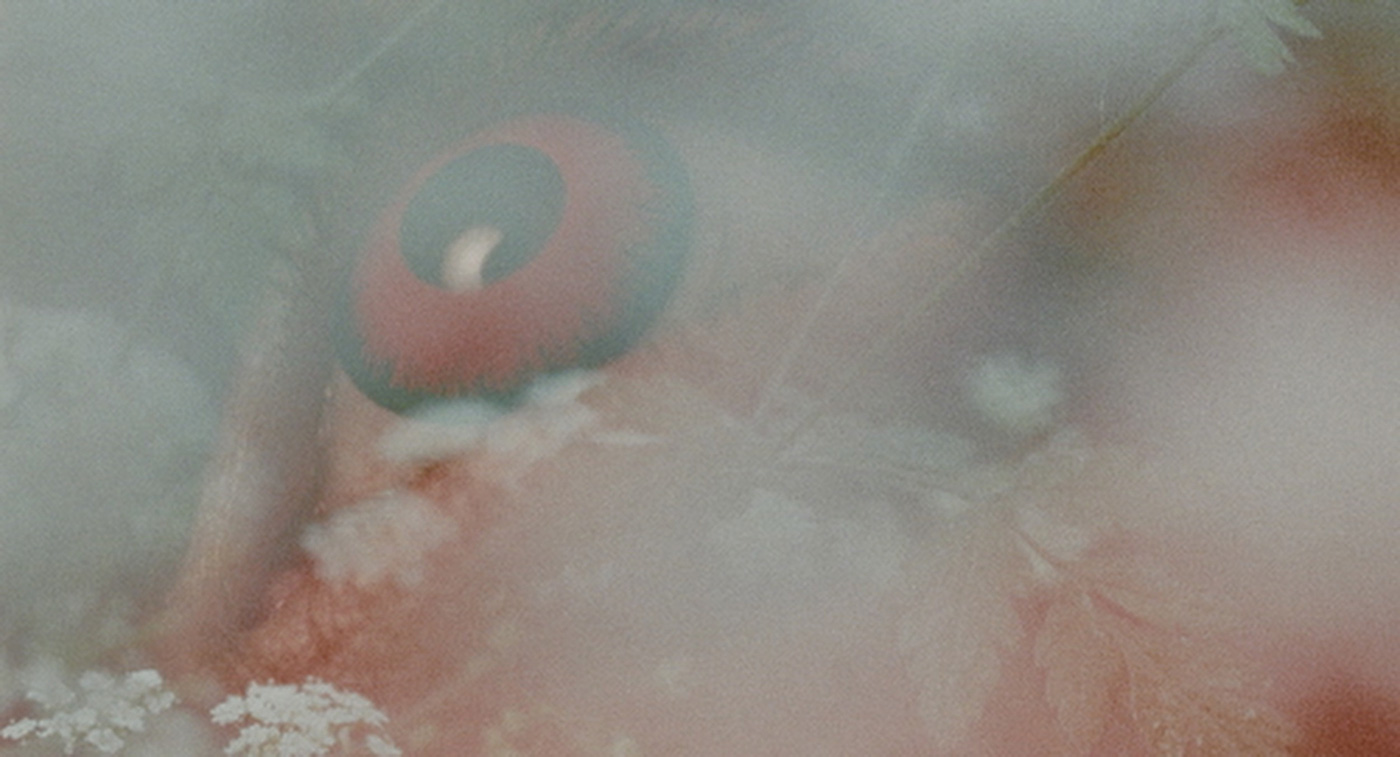
Leniko Sennoma
Augen Ohne Blick
Experimental film | mov | color | 81:3 | Germany | 2025
Eyes Without Gaze is an experimental film that challenges conventional storytelling, inspired by Chantal Akerman’s focus on atmosphere and space over direct action. Blending animation, 16mm, poetry, video art, video clips, and digital formats, it constructs a fragmented, dreamlike narrative. The film explores life under patriarchal capitalism, folklore, and symbolism, while depicting sexual violence without retraumatization, presenting survivors as autonomous individuals seeking justice. At its center is Maria, a Greek immigrant navigating financial hardship, desire, and a search for justice. Inspired by “Vasilisa the Beautiful,” her journey toward a mysterious needle leads her to confront a man from her past and a fateful choice.
Leniko Sennoma is a Berlin-based film and installation artist whose work challenges the boundaries between reality and dream. Their art focuses on themes such as social justice, intersectional feminism, and the dismantling of systemic oppression. They combine techniques of lucid dreaming and archetypical symbolism to question the status quo of neoliberal information society. Their art is an ongoing search for possibilities of collective liberation, the dismantling of systemic oppression, and the creation of political collaboration. By developing an audiovisual-metaphorical language that works with the synchresis of image, sound, and material aesthetics, they create hypnotic environments that appear simultaneously gentle and eerie. Influenced by their studies in epistemology, theoretical, feministic, analytical philosophy and film theory, their works play with the consciousness of the viewer, generating a broad spectrum of associations, emotions and contrasts. Sennoma’s video-/installations and short films have been shown in numerous galleries, museums and festivals across continents, including Zilberman Gallery Berlin Germany, Gallery 062 Chicago USA, Gallery SA-KURA Nagoya Japan, Inflamável Film Festival Santa Caterina Brazil and Internationale Kurzfilmtage Oberhausen, Germany.
Shireen Seno
Catalogue : 2022To Pick a Flower | Experimental doc. | hdv | color and b&w | 16:57 | Philippines | 2021
Shireen Seno
To Pick a Flower
Experimental doc. | hdv | color and b&w | 16:57 | Philippines | 2021
My mother used to tell me that our dining table was as old as I am. I wonder how old the tree was when it was cut down to be turned into our table. I am fascinated in this kind of transmutation from the natural world to the human one, and how a tree takes on new lives long after it has been cut down. This video essay incorporates archival photographs from the American Colonial Era in the Philippines (1898–1946), exploring the sticky relationship between humans and nature and their entanglements with empire. Taking plants and trees as starting points, it aims to reflect on the intertwined roots of photography and capitalism in the Philippines.
Shireen Seno is an artist and filmmaker based in Manila whose work addresses memory, history, and image-making, often in relation to the idea of home. A recipient of the 2018 Thirteen Artists Award from the Cultural Center of the Philippines, she is known for her films which have won awards at Rotterdam, Shanghai, Olhar de Cinema, Vladivostok, Jogja-Netpac, and Lima Independiente and have screened at festivals including New Directors/New Films, Yebisu International Festival of Art & Alternative Visions, NYFF Currents, and institutions such as Tate Modern, UCCA Center for Contemporary Art, NTU Center for Contemporary Art Singapore, National Museum of Modern and Contemporary Art, Korea, and Portikus.
Shireen Seno
Catalogue : 2020A Child Dies, a Child Plays, a Woman is Born, a Woman Dies, a Bird Arrives, a Bird Flies Off | Video | hdv | color | 4:46 | Philippines | 2018
Shireen Seno
A Child Dies, a Child Plays, a Woman is Born, a Woman Dies, a Bird Arrives, a Bird Flies Off
Video | hdv | color | 4:46 | Philippines | 2018
"A child dies, a child plays, a woman is born, a woman dies, a bird arrives, a bird flies off", is a voyeuristic glimpse of both local birds and migratory ones that make the Philippine marshlands their home for a time.
Shireen Seno is a lens-based artist whose work addresses memory, history, and image-making, often in relation to the idea of home. She was born to a Filipino family in Japan, where she spent most of her childhood. She has had two solo exhibitions and is a 2018 recipient of the 13 Artists Award from the Cultural Center of the Philippines. Her photo zine Trunks, produced while in residency at Objectifs Centre for Photography and Filmmaking, has been exhibited widely. She started out in film shooting stills for Lav Diaz before going on to direct her debut feature, Big Boy (2012), shot entirely on Super 8. It premiered at Rotterdam and won Best First Film at the Festival de Cine Lima Independiente. Her second film, Nervous Translation (2018), is about a girl who finds out about a pen that can translate the thoughts and feelings of nervous people. It premiered in Hivos Tiger Competition in Rotterdam and won the NETPAC Award for Best Asian Film. Other awards include: Critics’ Prize at Olhar de Cinema - Curitiba International Film Festival, Asian New Talent Award for Best Script Writer at Shanghai International Film Festival, Jury Special Mention at Pacific Meridian International Film Festival of Asia-Pacific Countries in Vladivostok, and Silver Hanoman at Jogja-Netpac Asian Film Festival. It also screened at MoMA as part of New Directors/New Films, Tate Modern as part of their Artists’ Cinema program, and at the Tokyo Photographic Art Museum for Yebisu International Festival for Art & Alternative Visions.
Anne Katrine Senstad
Catalogue : 2012The Locker Plant Projections | Experimental video | hdv | color | 8:21 | Norway, USA | 2011
Anne Katrine Senstad
The Locker Plant Projections
Experimental video | hdv | color | 8:21 | Norway, USA | 2011
The Locker Plant Projections is part of a site specific projection video series of my video-installation piece Colour Kinesthesia. The Projections of the abstract colors and the act of projecting in itself become the vehicle for the merging of colors with the environment and that existential and poetic narrative of enlightening our surroundings. In this piece the known Donald Judd building in Marfa, TX - The Locker Plant, is subject to the projections, as well as the South Western Texas Railroad and local trees. In merging the movement of colors with an archetypal architectural form, passing people and natural life activity during the night, we experience an added level to the notion of spatial relations, time and volume. The music of J G Thirlwell, known from Foetus, Manoriexia and Wiseblood - creates a cinematic mood to the minimalist references. The Locker Plant is a former butcher and meat packing plant, one of a group of buildings Donald Judd acquired in Marfa, TX - it is now part of The Chinati foundation.
Anne Katrine Senstad is a multidisciplinary Norwegian artist who lives and works in New York. She works with light, installation, photography, video, site specific and land art. She was educated at Parsons School of Design and The New School for Social Research in New York. She is currently working with the internationally renowned architecture firm Snøhetta, where she has been awarded the public art commission for their first completed U.S. building ? a performing arts center in Bowling Green, Ohio, The Wolfe Center for the Arts at BGSU. Senstad will be creating a monumental mural consisting of 39 photographic, aluminum and Plexiglas panels extending over 28 feet high and 86 feet long (8 x 28 meters). The monumental mural piece entitled The Eternal is scheduled to officially open December 2011. She has exhibited widely internationally at Zendai Moma in Shanghai, ThisisNotAgallery in Buenos Aires, Utsikten Kunstsenter and Stiftelsen 3,14 in Norway, Bjorn Ressle Gallery, Gallery Nine5 and Elga Wimmer Gallery in NY, Pink Gallery in Seuol and KK Projects in New Orleans amongst others. Her work is represented in Gallery, Institutions, corporate and private collections.
Kevin Sepp
Catalogue : 2026GOODBYE REGINA | Experimental doc. | 16mm | color | 8:48 | Germany | 2025
Kevin Sepp
GOODBYE REGINA
Experimental doc. | 16mm | color | 8:48 | Germany | 2025
The Italian Alpine region of South Tyrol is not known for its tuning scene, but it does exist. A small group of young men have found each other to express their love of their home in their own way. Their Japanese sports cars glide oddly through historic villages, along the Alpine slopes and through breathtaking nature. GOODBYE REGINA is a farewell letter from the director to his grandmother, who grew up in these mountains. It explores the connection between the old and the new, without juxtaposing the two. In a landscape where seemingly nothing changes, the machines seem to be part of the creatures that emerge from this nature. The result is some kind of nature documentary, a collection of impressions away from the tourist postcard images.
Kevin Sepp is a director and editor based in Berlin. Coming from a humanities background, he is a self-taught filmmaker whose interest in short, visually rich storytelling led him to work in commercial film. Alongside commissioned projects, he continues to explore new possibilities through independent work. Collaborations with musicians and other artists strongly influence his sense of sound on screen and shape the atmosphere of his work. His films have been featured at festivals such as the Berlin Commercial and Berlin Music Video Awards, as well as on platforms like Directors’ Library, Sleek Magazine and Crack Magazine.
Katia Sepulveda
Catalogue : 2019Songwashing | Video | hdv | color | 5:0 | Germany | 2018
Katia Sepulveda
Songwashing
Video | hdv | color | 5:0 | Germany | 2018