Catalogue > List by artist
Browse the entire list of Rencontre Internationales artists since 2004. Use the alphabetical filter to refine your search. update in progress
Sarah Vanagt
Catalogue : 2023Les Porteurs | Documentary | dcp | color and b&w | 31:0 | Belgium | 2022
Sarah Vanagt
Les Porteurs
Documentary | dcp | color and b&w | 31:0 | Belgium | 2022
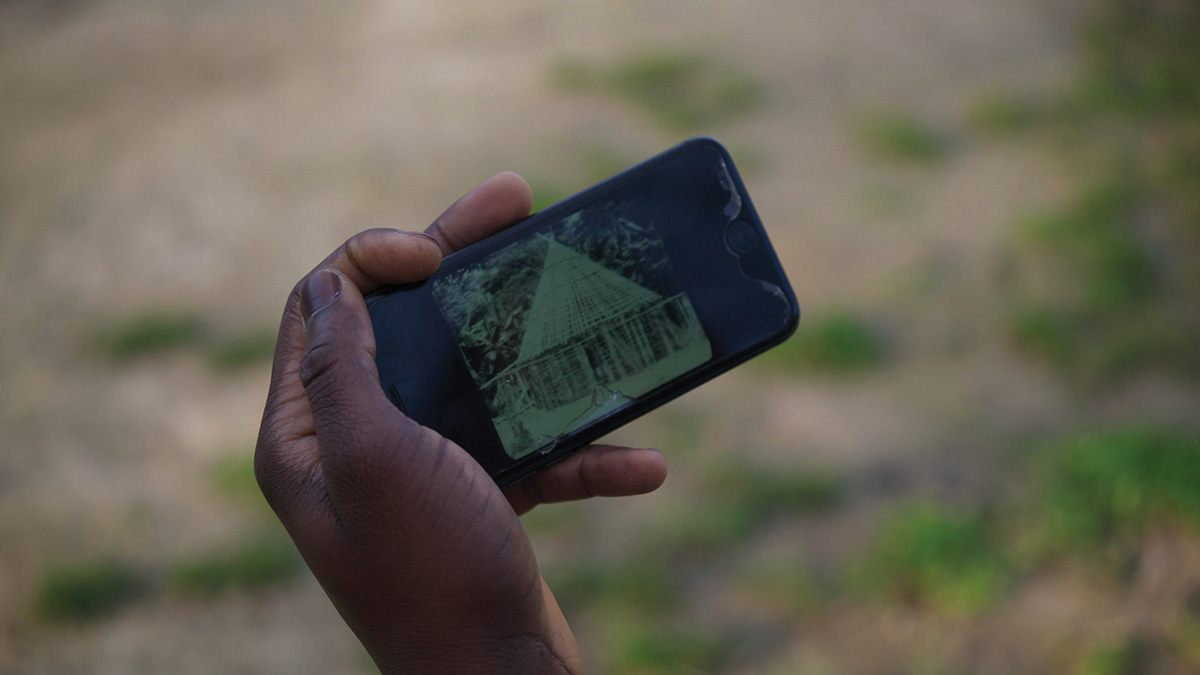
I'm going on a journey and I'm taking with me: an elephant bone to stir in the food, a feather to catch winged termites, eight butterflies, a rope made from fragrant roots... and 150 metres of exposed but undeveloped film destined for the Ministry of Colonies.
Sarah Vanagt (1976) makes documentaries, video installations and photos, in which she combines her interest for history with her interest for (the origins of) cinema. Her work includes films such as After Years of Walking (2003), Little Figures (2003), Begin Began Begun (2005), Boulevard d'Ypres (2010), The Corridor (2010), Dust Breeding (2013); and video installations such as Les Mouchoirs de Kabila (2005), Power Cut (2007), Ash Tree (2007). Her work is shown at film festivals (FidMarseille, Viennale, Doclisboa, Idfa Amsterdam, Rencontres Internationales Paris/Madrid/Berlin, Hors Pistes Centre Pompidou), and in museums (Frankfurter Kunstverein, Fact Liverpool, NGBK Berlin, Shedhalle Zürich). The silent short film Girl with a fly (2013) was first shown at the 5th Biennale of Moscow. The films In Waking Hours (2015) and Still Holding Still (2015) premiered at the International Film Festival Rotterdam. The installation Showfish was presented in M HKA, the Museum for Contemporary Art of Antwerp in October 2016. Vanagt's new film DIVINATIONS had its Belgian avant-première at the opening night of the festival Courtisane in Ghent (3 April 2019).
Catalogue : 2014Elevage de poussière | Documentary | hdv | color | 47:0 | Belgium | 2013
Sarah Vanagt
Elevage de poussière
Documentary | hdv | color | 47:0 | Belgium | 2013
What is the value of images as objective testimonies of a conflict? In her new work, Sarah Vanagt turns her attention to an important chapter in recent European history: the International Criminal Tribunal for the former Yugoslavia in The Hague. Élevage de poussière / Dust Breeding draws its source material from the accounts of expert and witnesses, as well as from the multitude of documents (photos and videos) derived from the still ongoing trial of Radovan Karadzic.
Sarah Vanagt makes documentaries, video installations and photos, in which she combines her interest for history with her interest for (the origins of) cinema.
Sarah Vanagt
Catalogue : 2020Divinations | Documentary | hdv | color | 30:0 | Belgium | 2019
Sarah Vanagt
Divinations
Documentary | hdv | color | 30:0 | Belgium | 2019
What kind of futures can be read in the impersonal fragments of our reality? It’s a question that inevitably gains attention and importance when it’s posed to those who the future, pre-eminently, belongs to. Already in her debut film, Little Figures (2003), Sarah Vanagt gauged the historical imagination of children by inviting immigrant children to improvise an imaginary conversation between three historical figures, immortalized as statues, in Brussels. Fifteen years and many transformations later, she decided to reverse the question and ask children to read the future in the elusive imprints of their city. Onto countless abstract patterns, brought to life with the help of an old magic lantern, children from Brussels, Athens and Sarajevo project their own impressions, dreams and fears. The result is a form of “magical reading”, as the perception of unforeseen correspondences and constellations that confront us with the undercurrent of the present.
Sarah Vanagt (1976) makes documentaries, video installations and photos, in which she combines her interest for history with her interest for (the origins of) cinema. Her work includes films such as After Years of Walking (2003), Little Figures (2003), Begin Began Begun (2005), Boulevard d'Ypres (2010), The Corridor (2010), Dust Breeding (2013); and video installations such as Les Mouchoirs de Kabila (2005), Power Cut (2007), Ash Tree (2007). Her work is shown at film festivals (FidMarseille, Viennale, Doclisboa, Idfa Amsterdam, Rencontres Internationales Paris/Madrid/Berlin, Hors Pistes Centre Pompidou), and in museums (Frankfurter Kunstverein, Fact Liverpool, NGBK Berlin, Shedhalle Zürich). The silent short film Girl with a fly (2013) was first shown at the 5th Biennale of Moscow. The films In Waking Hours (2015) and Still Holding Still (2015) premiered at the International Film Festival Rotterdam. The installation Showfish was presented in M HKA, the Museum for Contemporary Art of Antwerp in October 2016. Vanagt's new film DIVINATIONS had its Belgian avant-première at the opening night of the festival Courtisane in Ghent (3 April 2019).
Catalogue : 2012The Corridor | Documentary | hdcam | color | 6:45 | Belgium | 2010
Sarah Vanagt
The Corridor
Documentary | hdcam | color | 6:45 | Belgium | 2010
For five days Sarah Vanagt and cinematographer Annemarie Lean-Vercoe followed a donkey during its weekly visits to old people in nursing homes in England. From home to home, from room to room. Time and again the donkey was welcomed with open arms, with songs, gentle strokes, childhood stories, poems, and laughter. It was only when the donkey entered the room of Norbert, a man who had lost his ability to speak, that an altogether different encounter took place. Even though Vanagt initially followed the donkey?s steps in search of reminiscences brought about by the animal?s mute presence, she came home with an altogether different film. While editing, the film became shorter and shorter, as if the words that had accompanied the donkey?s visits became a distraction. What is left is perhaps a bas-relief disguised as a painting, disguised as a film. The donkey visits to residential homes are an initiative of The Donkey Sanctuary in Sidmouth, England.
Sarah Vanagt (1976) studied history at the universities of Antwerp, Sussex and Groningen, and film at the National Film and Television School (UK). She makes documentaries, video installations and photos. Her graduation film AFTER YEARS OF WALKING (2003) looks at the rewriting of Rwandan history after the genocide of 1994. In LITTLE FIGURES (2003), a short experimental documentary film, three immigrant children in Brussels play the role of three historical statues. The documentary film BEGIN BEGAN BEGUN (2005) and the video-installation LES MOUCHOIRS DE KABILA (2005) both focus on the play-world of children growing up in the war-torn border zone between Rwanda and the Democratic Republic of Congo, and look at the way in which children deal with death, the recent wars and elections. The short film FIRST ELECTIONS (2006) is a single-screen version of LES MOUCHOIRS DE KABILA. In 2007 Vanagt first presented POWER CUT at the Kunstenfestivaldesarts in Brussels. The installation consists of short videos and photos made by three Congolese street children, and of voice-recordings by two young soldiers who took part in the recent wars in Congo and Rwanda. The single-channel version of this installation is called SILENT ELECTIONS (2009). In HEAD (2007), the installation Vanagt made for the Young Belgian Painters Award, she combined super 8 footage of the ancient city of Pompei with images of newborn babies. The video installation ASH TREE (2007) is based on Mary Shelly`s childhood. A 5-year old girl wanders on a graveyard in London while she spells the letters on the graves. The child`s first contact with the alphabet is at once her first contact with death. Since 2006 Vanagt works on a series of photos of special graveyards and monuments in Europe. The photo series SOLAR CEMETERY (2009), about solar panels on a Spanish cemetery, was made with a camera obscura, and presented on solar-powered light boxes. BOULEVARD D`YPRES / IEPERLAAN (2010) is an experimental documentary shot in the street where Vanagt lives. She turned an empty storehouses into a film studio, and invited her neighbours ? a mix of refugees, shopkeepers, newcomers ? to come and tell a story, a fairy tale. Vanagt`s most recent film, the short piece THE CORRIDOR (2010) focuses on the mute encounter between a donkey and an old man in an English nursing home. Currently Vanagt is working on a film based on pencil rubbings made in the International Criminal Tribunal for the Former Yugoslavia.
Sarah Vanagt
Catalogue : 2016In Waking Hours | Experimental doc. | hdv | color | 18:13 | Belgium | 2015
Sarah Vanagt, Katrien Vanagt
In Waking Hours
Experimental doc. | hdv | color | 18:13 | Belgium | 2015
With the publication of the Ophthalmographia in 1632, the Amsterdam physician Vopiscus Fortunatus Plempius sheds new light on the age-old question of how seeing works. His answer is an invitation to experiment: Enter with me into a darkened room and prepare the eye of a freshly slaughtered cow. He emphasizes that anyone may carry out this experiment, at home, "demanding little effort and expense." “And you, standing in the darkened room, behind the eye, shall see a painting that perfectly represents all objects from the outside world,” promises Plempius. In the short film In Waking Hours we see historian Katrien Vanagt - who studied the Latin writings of this Plempius - cloaked in the skin of a 21st-century disciple of Plempius. Her cousin, filmmaker Sarah Vanagt, is there and captures how this modern "Plempia" meticulously follows her teacher`s instructions. Thus, in a dark kitchen in Brussels, they become witnesses at the birth of images upon the eye.
Sarah Vanagt (1976) makes documentaries, video installations and photos, in which she combines her interest for history with her interest for (the origins of) cinema. Her work includes films such as After Years of Walking (2003), Little Figures (2003), Begin Began Begun (2005), Boulevard d`Ypres (2010), The Corridor (2010), Dust Breeding (2013); and video installations such as Les Mouchoirs de Kabila (2005), Power Cut (2007), Ash Tree (2007). Her work is shown at film festivals (FidMarseille, Viennale, Doclisboa, Idfa Amsterdam, Rencontres Internationales Paris/Madrid/Berlin, Hors Pistes Centre Pompidou), and in museums (Frankfurter Kunstverein, Fact Liverpool, NGBK Berlin, Shedhalle Zürich). The silent short film Girl with a fly (2013) was first shown at the 5th Biennale of Moscow. The film In Waking Hours (2015) premiered at the International Film Festival Rotterdam. Vanagt`s most recent film Still holding still (2015) was first shown at Idfa Amsterdam, after its Belgian première on 22 October 2015 (Beursschouwburg, Brussels).
Catalogue : 2007Little Figures | Experimental fiction | dv | color and b&w | 15:47 | Belgium | 2003
Sarah Vanagt
Little Figures
Experimental fiction | dv | color and b&w | 15:47 | Belgium | 2003
In "Little Figures" Sarah Vanagt once again plays around with her passion for history, perspective, and social commitment. Setting out from a location, the 'Kunstberg', but specifically the three statues located there, Vanagt puts together a story in which migrant children stir up a conversation between the statues, in an often surprising and witty tone, being (un)able to situate them historically. It is no coincidence that colonialism and the crusades pop up as references. The scene has a decelerated, halted aspect, which reinforces the feeling of recollection, and it makes headway for the arising associations.
Born in 1976, Sarah Vanagt studied History at the universities of Antwerp, Groningen, and Brighton. Apart from a passion for history, she has one for film as well. Sarah Vanagt looked for a combination and found it by carrying out historical research from the practice of film. In order to develop a cinematic language of her own she started training at the London National Film and Television School (documentary direction department). During that time she worked mainly with refugee children from Rwanda and their perception of and relation to the past. This resulted in the graduation project "After years of walking" (2003). Her work has been shown at IDFA in Amsterdam, Tate Modern in London, MNCARS in Madrid, and Transmediale in Berlin. She lives and works in Brussels.
Sarah Vanagt
Catalogue : 2019Alle de tranen / Toute larme / Every Tear | Experimental doc. | hdv | color | 30:0 | Belgium | 2017
Sarah Vanagt
Alle de tranen / Toute larme / Every Tear
Experimental doc. | hdv | color | 30:0 | Belgium | 2017
In the 17th century, Antoni Van Leeuwenhoek, a draper from Delft, begins to make glass lenses, in order to better study the quality of his textile. He melts, drips and grinds small beads of glass. His tiny lenses are so bright and have such magnifying power that the draper seems to have entered a new dimension. Is he the first to see little moving “animals” in a drop of water? How to describe something that nobody ever saw before? In the film `Every Tear`, Sarah Vanagt starts a journey into her home city of Brussels, with Leeuwenhoek’s microscope in hand. She picks up bits and pieces on her road, and tries to find out what the first microscopic images may have looked like. She replaces the lens of her camera by the 17th-century lens. As she is filming, she wonders why we always look for shapes that we already know, whenever we are in the eye of the unknown.
Home News Work & Screenings Online Films About Contact Balthasar produces and presents the work of filmmaker Sarah Vanagt. Sarah Vanagt (1976) makes documentaries, video installations and photos, in which she combines her interest for history with her interest for (the origins of) cinema. Her work includes films such as After Years of Walking (2003), Little Figures (2003), Begin Began Begun (2005), Boulevard d`Ypres (2010), The Corridor (2010), Dust Breeding (2013); and video installations such as Les Mouchoirs de Kabila (2005), Power Cut (2007), Ash Tree (2007). Her work is shown at film festivals (FidMarseille, Viennale, Doclisboa, Idfa Amsterdam, Rencontres Internationales Paris/Madrid/Berlin, Hors Pistes Centre Pompidou), and in museums (Frankfurter Kunstverein, Fact Liverpool, NGBK Berlin, Shedhalle Zürich). The silent short film Girl with a fly (2013) was first shown at the 5th Biennale of Moscow. The films In Waking Hours (2015) and Still Holding Still (2015) premiered at the International Film Festival Rotterdam. The installation Showfish was presented in M HKA, the Museum for Contemporary Art of Antwerp in October 2016. Vanagt`s new film DIVINATIONS (2019) has it`s Belgian avant-premiere during the festival Courtisane in Ghent (3 April 2019)
Catalogue : 2013The Wave | Experimental doc. | hdv | color | 20:0 | Belgium, France | 2012
Sarah Vanagt, Vermeire Katrien
The Wave
Experimental doc. | hdv | color | 20:0 | Belgium, France | 2012
In "The Wave" the archaeological gaze of the viewer is set in motion: a mass grave from the Spanish Civil War (1936?39) opens and closes itself. In 2011 we placed a camera above the spot where nine victims were buried after their execution by Franco?s supporters in June 1939. On day one of the excavation, a digging crane gently loosened the top layer of soil, until the archaeologists came across a skull with a bullet hole. Then the archaeologists continued their work by hand. The skeletons appeared, then disappeared, as if a strong wind blew that removed the sand and uncovered death, a primal truth.
Sarah Vanagt studied history at the universities of Antwerp, Sussex and Groningen, and film at the National Film and Television School (UK). She makes documentaries, video installations and photos, in which she combines her interest for history with her interest for (the origins of) cinema. Her graduation film AFTER YEARS OF WALKING (2003) looks at the rewriting of Rwandan history after the genocide of 1994. In LITTLE FIGURES (2003), a short experimental documentary film, three immigrant children in Brussels play the role of three historical statues. The documentary film BEGIN BEGAN BEGUN (2005) and the video-installation LES MOUCHOIRS DE KABILA (2005) both focus on the play-world of children growing up in the war-torn border zone between Rwanda and the Democratic Republic of Congo, and look at the way in which children deal with death, the recent wars and elections. The short film FIRST ELECTIONS (2006) is a single-screen version of LES MOUCHOIRS DE KABILA. In 2007 Vanagt first presented POWER CUT at the Kunstenfestivaldesarts in Brussels. The installation consists of short videos and photos made by three Congolese street children, and of voice-recordings by two young soldiers who took part in the recent wars in Congo and Rwanda. The single-channel version of this installation is called SILENT ELECTIONS (2009). In HEAD (2007), the installation Vanagt made for the Young Belgian Painters Award, she combined super 8 footage of the ancient city of Pompei with images of new-born babies. The video installation ASH TREE (2007) is based on Mary Shelly`s childhood. A 5-year old girl wanders on a graveyard in London while she spells the letters on the graves. The child`s first contact with the alphabet is at once her first contact with death. Since 2006 Vanagt works on a series of photos of special graveyards and monuments in Europe. The photo series SOLAR CEMETERY (2009), about solar panels on a Spanish cemetery, was made with a camera obscura, and presented on solar-powered light boxes. BOULEVARD D`YPRES / IEPERLAAN (2010) is an experimental documentary shot in the street where Vanagt lives. She turned an empty store houses into a film studio, and invited her neighbours ? a mix of refugees, shopkeepers, newcomers ? to come and tell a story, a fairy tale. The short piece THE CORRIDOR (2010) focuses on the mute encounter between a donkey and an old man in an English nursing home. In October 2011 Katrien Vermeire en Vanagt filmed the exhumation of a mass grave of Franco victims in Spain. Based on the material they brought home from Spain they made a film (20`), a photo series and two wrapped flipbooks (title The Wave, 2012). Currently Vanagt is working on a film based on pencil rubbings made in the International Criminal Tribunal for the Former Yugoslavia in The Hague (premiere in May 2013).
Robin Vanbesien
Catalogue : 2020The Wasp and the Weather | Experimental doc. | 4k | color | 18:45 | Belgium | 2019
Robin Vanbesien
The Wasp and the Weather
Experimental doc. | 4k | color | 18:45 | Belgium | 2019
From an archive of poetry written by youngsters at the former youth centre Rzoezie (Amazigh for “wasp”, ‘78-‘06) in Mechelen (Belgium), the original authors and contemporary poets revisit, recite and discuss their selection of poems, probing their resonance in today’s social and political “weather”.
Robin Vanbesien is a Brussels based filmmaker, artist and cultural worker whose films, installations and performances inhabit an explorative search for a ‘co-elaborative’ feeling and thinking that is social and material. His debut film, Under These Words (Solidarity Athens 2016), and the associated book, Solidarity Poiesis: I Will Come and Steal You, constitute an account of the social poetics of solidarity work. His work has been shown at various venues internationally (a.o. Contour Biennale, transmediale, Lumiar Cité, Athens Biennale, Sculpture International Rotterdam).
Loïc Vanderstichelen, Simon BACKES
Catalogue : 2007Gregoire House | Experimental fiction | dv | color | 31:30 | Belgium | 2005
Loïc Vanderstichelen, Simon BACKES
Gregoire House
Experimental fiction | dv | color | 31:30 | Belgium | 2005
"Gregoire House" is a TVfilm that proposes hypothetical variations on the life of Doctor Charles Grégoire, a practitioner in Brussels. Originally based on a few biographical documents, the film actually proposes a purely fictional reconstitution, in the authentic, modernist style, detached house that the doctor had had built for himself in Uccle, in the Brussels area in the 1930's, and which is the work of the famous architect Henry Van De Velde.
Loïc Vanderstichelen was born in Belgium in 1973. He graduated from the Ecole de Recherche Graphique (ISLAP-ERG, Brussels) in 1998. Afterwards he earned a post-graduate degree at the "Jan van Eyck Akademie" in Maastricht, Holland. He has produced numerous films and videos, both alone and in collaboration. He recently contributed to the film, "La Ricarda - A flux tendu", co-produced with Michel François, Ann Veronica Janssens, François Curlet, Harald Thys & Jos De Gruyter, Jordi Colomer,... Simon Backès was born in France in 1972. He graduated from the Directing department of the Institut National Supérieur des Arts du Spectacle (INSAS, Bruxelles) in 1999. He has made several films and videos, both alone and in collaboration. He is currently filmimg "Stolen Art, a particular collection", a feature-length documentary.
Loic Vanderstichelen, Loïc Vanderstichelen et Jean-Paul Jacquet
Catalogue : 2023OK boomer | Fiction | 4k | color | 10:15 | Belgium | 2022
Loic Vanderstichelen, Jean-Paul Jacquet
OK boomer
Fiction | 4k | color | 10:15 | Belgium | 2022
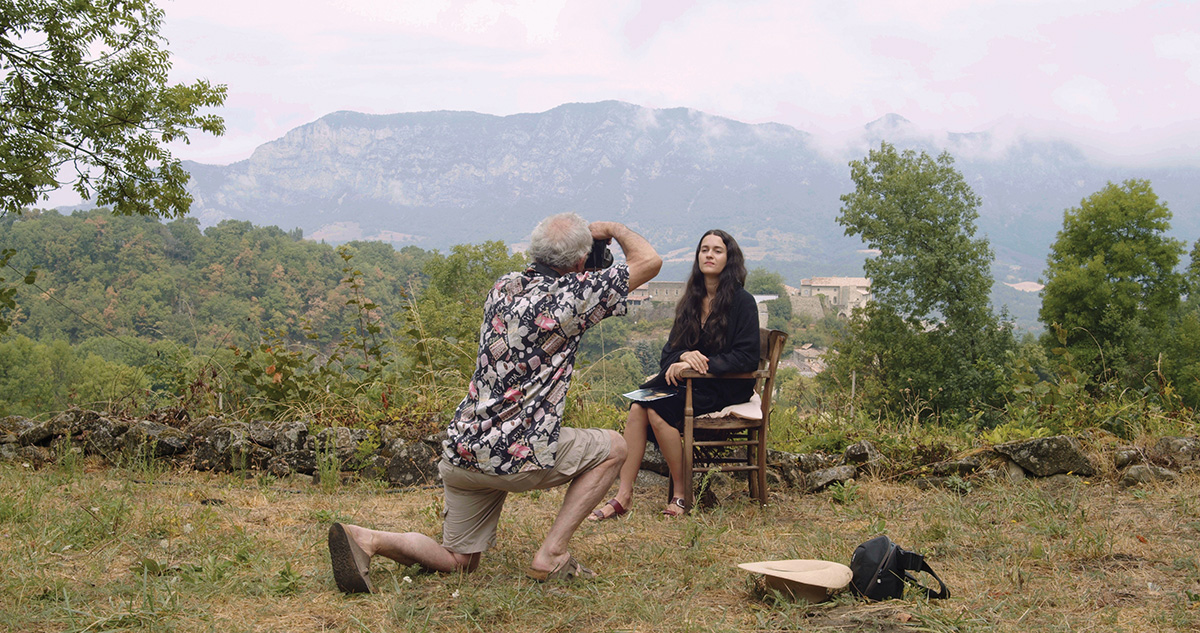
C'est de l'été dernier que date le retour probable du lyrisme. Personne n'y pensait plus, on lui avait substitué la forme épique, on s'en était vite lassé et depuis on pataugeait dans celle dont je ne sais plus qui avait eu la pas très bonne idée de l'appelé dramatique. Tellement dramatique que tout était calme, jusqu'à cette après-midi à la campagne où nous pûmes constater les signes avant-coureurs de ce lyrisme tant convoité de quand l'artiste pre?sente son objet en rapport imme?diat avec lui-me?me. Il nous incombait dès lors d'adapter cette intuition remarquable vers quelque chose de plus rationnel et trouver un titre était la première chose à faire pour authentifier tout cela. D'où le trajet à la poste.
Loïc Vanderstichelen est un cinéaste qui vit et travaille à Bruxelles. Il réalise des films seuls ou en collaboration depuis 1993. Jean-Paul Jacquet est un historien de l’art qui vit et travaille à Bruxelles.
Catalogue : 2016La cascade | Experimental fiction | 4k | color | 17:40 | Belgium | 2015
Loic Vanderstichelen, Loïc Vanderstichelen | Jean-Paul Jacquet
La cascade
Experimental fiction | 4k | color | 17:40 | Belgium | 2015
Norbert Piron, chercheur à l`IRPA (Institut Royal du Patrimoine Artistique), est mandaté par le musée des Beaux-Arts de Verviers afin de répertorier la collection destinée au nouveau Musée en construction et de préparer l`exposition inaugurale. Proche de la retraite, il fait de cette commande le point d`orgue de sa carrière. Épaulé par son assistant, l`universitaire Randy Paniandy, il analyse minutieusement les œuvres et tire des conclusions. Face au pragmatisme de Géraldine Leroy, responsable de la communication des Musées de Verviers, son point de vue scientifique se heurte à des sentiments émotionnels exacerbés qui le conduiront à une confusion mentale. Alors qu`il se trouve dans le creux de la vague, déstabilisé face à La Cascade de Gustave Courbet, une nymphe, vient lui apporter la solution à tous ses problèmes : une technologie révolutionnaire qui offre au regardeur l`ubiquité, la possibilité d`une hyper vision réaliste.
Loïc Vanderstichelen est un cinéaste indépendant qui vit et travaille à Bruxelles. Jean-Paul Jacquet un historien de l`art qui vit et travaille à Bruxelles.
Catalogue : 2012Singulier Pluriel | Experimental fiction | 0 | color | 22:0 | Belgium, France | 2011
Loic Vanderstichelen, Azilys Romane
Singulier Pluriel
Experimental fiction | 0 | color | 22:0 | Belgium, France | 2011
"Singulier Pluriel" is the name of a foster care for disabled people, located in Roubaix, in the north of France. An anachronistic character wanders amongst the inhabitants in the coloured rooms of the institution. It is a movie made up of sequences behind closed doors.
Azilys Romane, born in Dourdan, 13th March 1978, works and lives in Brussels. She studied photography at La Cambre School in Brussels then turned towards movie studies, that allow her to combine image and writing. Her intimist and contemplative work essentially consists of portraits. Time is suspended and a great attention is granted to the details (in the waiting of a revelation, of an exchange between the one who films and the one who is filmed). Loïc Vanderstichelen, born in Ieper, 1st August 1973, works and live in Brussels. He directs movies on his own or in collaboration (with Simon Backès, Michel François,...) since 1994. His films are generally self-produced. Loïc Vanderstichelen teaches at La Cambre School and at the School of Art of Uccle. He works at the same time as an editor in european institutions.
Catalogue : 2011L'ILE MYSTÉRIEUSE | Experimental fiction | | color | 19:0 | Belgium, France | 2009
Loic Vanderstichelen, MICHEL FRANCOIS
L'ILE MYSTÉRIEUSE
Experimental fiction | | color | 19:0 | Belgium, France | 2009
"Des amis nous ont dit qu`ils les auraient vu sur le continent`
Loïc Vanderstichelen Né en 1973 Vit et travaille à Bruxelles Réalise seul ou en collaboration des films sur support vidéo depuis 1994 Travaille parallelement comme monteur dans les institutions européennes ------------------- Michel François Né en 1956 Vit et travaille à Bruxelles
Catalogue : 2008La Ricarda | Experimental film | 0 | color | 20:0 | Belgium, Spain | 2006
Loic Vanderstichelen, Joerg Bader, Joël Benzakin, Lucia Bru, Jordi Colomer, François Curlet, Jos de Gruyter & Harald Thys, Pierre Droulers, Michel François, Ann Veronica Janssens, Simon Siegmann, Loïc Vanderstichelen, Richard Venlet, Angel Vergara
La Ricarda
Experimental film | 0 | color | 20:0 | Belgium, Spain | 2006
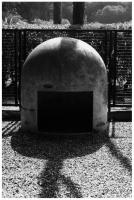
In July 2006 Michel François launched a film project. He invited 13 artists to come to Barcelona and make a video at the La Ricarda estate, in La Casa Gomis; everyone could film a sequence of images inspired by this particular place, in all freedom, with or without actors. This extraordinary villa was designed by the architect Antoni Bonet in the 1950s. Situated in the middle of pinewoods, it was once a hideaway-meeting place for the artists of its time (i.e. Tapiès, Cage, Miro). Nowadays it is no longer possible to live there ? immediately next-door are the ever-growing Barcelona airport, the city?s burgeoning suburbs, and the ocean. A conflicting, but nevertheless very interesting location, was hereby found for this initiative. The inbuilt challenge brought by this invitation was the exploration of the possibilities on offer in the making of a communal film; in so-doing the different personalities, characters, and disciplines (visual arts, choreography, filmmaking, scenography) would necessarily be transcended, to create a new, indefinable work of art. The only limitations were the time and place in which to bring these people together. There were no restrictions during the on-location filming process. The individual recordings proceeded to nourish one another, and a script slowly appeared. An almost self-maintaining working process was in place, and this continued after the arrival home. Back in Brussels, the various differences within the filmed material were found to be at odds with one another, resistant to fit together. But it is was precisely that inner resistance that has made the film into a powerful creation. In trying to compose, decompose, and recompose again, a fusion of singularities and forgotten sequences was shaped into a new whole, and «La Ricarda» began to reveal itself. Gradually different personalities appear, chasing after one another but never actually meeting. They become one with the architecture, which is itself given a new life. La Casa Gomis has become a ?character?; it is filled with ghosts, breathing out different shapes, animated into one being, offering itself as an uncertain personality with many possible backgrounds and storylines, including all the audio-visual outbursts necessary for it?s survival. We see a place that is slowly decaying, but not giving up, in spite of the passage of time.
Loic Vanderstichelen, MICHEL FRANCOIS
Catalogue : 2023OK boomer | Fiction | 4k | color | 10:15 | Belgium | 2022
Loic Vanderstichelen, Jean-Paul Jacquet
OK boomer
Fiction | 4k | color | 10:15 | Belgium | 2022
C'est de l'été dernier que date le retour probable du lyrisme. Personne n'y pensait plus, on lui avait substitué la forme épique, on s'en était vite lassé et depuis on pataugeait dans celle dont je ne sais plus qui avait eu la pas très bonne idée de l'appelé dramatique. Tellement dramatique que tout était calme, jusqu'à cette après-midi à la campagne où nous pûmes constater les signes avant-coureurs de ce lyrisme tant convoité de quand l'artiste pre?sente son objet en rapport imme?diat avec lui-me?me. Il nous incombait dès lors d'adapter cette intuition remarquable vers quelque chose de plus rationnel et trouver un titre était la première chose à faire pour authentifier tout cela. D'où le trajet à la poste.
Loïc Vanderstichelen est un cinéaste qui vit et travaille à Bruxelles. Il réalise des films seuls ou en collaboration depuis 1993. Jean-Paul Jacquet est un historien de l’art qui vit et travaille à Bruxelles.
Catalogue : 2016La cascade | Experimental fiction | 4k | color | 17:40 | Belgium | 2015
Loic Vanderstichelen, Loïc Vanderstichelen | Jean-Paul Jacquet
La cascade
Experimental fiction | 4k | color | 17:40 | Belgium | 2015
Norbert Piron, chercheur à l`IRPA (Institut Royal du Patrimoine Artistique), est mandaté par le musée des Beaux-Arts de Verviers afin de répertorier la collection destinée au nouveau Musée en construction et de préparer l`exposition inaugurale. Proche de la retraite, il fait de cette commande le point d`orgue de sa carrière. Épaulé par son assistant, l`universitaire Randy Paniandy, il analyse minutieusement les œuvres et tire des conclusions. Face au pragmatisme de Géraldine Leroy, responsable de la communication des Musées de Verviers, son point de vue scientifique se heurte à des sentiments émotionnels exacerbés qui le conduiront à une confusion mentale. Alors qu`il se trouve dans le creux de la vague, déstabilisé face à La Cascade de Gustave Courbet, une nymphe, vient lui apporter la solution à tous ses problèmes : une technologie révolutionnaire qui offre au regardeur l`ubiquité, la possibilité d`une hyper vision réaliste.
Loïc Vanderstichelen est un cinéaste indépendant qui vit et travaille à Bruxelles. Jean-Paul Jacquet un historien de l`art qui vit et travaille à Bruxelles.
Catalogue : 2012Singulier Pluriel | Experimental fiction | 0 | color | 22:0 | Belgium, France | 2011
Loic Vanderstichelen, Azilys Romane
Singulier Pluriel
Experimental fiction | 0 | color | 22:0 | Belgium, France | 2011
"Singulier Pluriel" is the name of a foster care for disabled people, located in Roubaix, in the north of France. An anachronistic character wanders amongst the inhabitants in the coloured rooms of the institution. It is a movie made up of sequences behind closed doors.
Azilys Romane, born in Dourdan, 13th March 1978, works and lives in Brussels. She studied photography at La Cambre School in Brussels then turned towards movie studies, that allow her to combine image and writing. Her intimist and contemplative work essentially consists of portraits. Time is suspended and a great attention is granted to the details (in the waiting of a revelation, of an exchange between the one who films and the one who is filmed). Loïc Vanderstichelen, born in Ieper, 1st August 1973, works and live in Brussels. He directs movies on his own or in collaboration (with Simon Backès, Michel François,...) since 1994. His films are generally self-produced. Loïc Vanderstichelen teaches at La Cambre School and at the School of Art of Uccle. He works at the same time as an editor in european institutions.
Catalogue : 2011L'ILE MYSTÉRIEUSE | Experimental fiction | | color | 19:0 | Belgium, France | 2009
Loic Vanderstichelen, MICHEL FRANCOIS
L'ILE MYSTÉRIEUSE
Experimental fiction | | color | 19:0 | Belgium, France | 2009
"Des amis nous ont dit qu`ils les auraient vu sur le continent`
Loïc Vanderstichelen Né en 1973 Vit et travaille à Bruxelles Réalise seul ou en collaboration des films sur support vidéo depuis 1994 Travaille parallelement comme monteur dans les institutions européennes ------------------- Michel François Né en 1956 Vit et travaille à Bruxelles
Catalogue : 2008La Ricarda | Experimental film | 0 | color | 20:0 | Belgium, Spain | 2006
Loic Vanderstichelen, Joerg Bader, Joël Benzakin, Lucia Bru, Jordi Colomer, François Curlet, Jos de Gruyter & Harald Thys, Pierre Droulers, Michel François, Ann Veronica Janssens, Simon Siegmann, Loïc Vanderstichelen, Richard Venlet, Angel Vergara
La Ricarda
Experimental film | 0 | color | 20:0 | Belgium, Spain | 2006
In July 2006 Michel François launched a film project. He invited 13 artists to come to Barcelona and make a video at the La Ricarda estate, in La Casa Gomis; everyone could film a sequence of images inspired by this particular place, in all freedom, with or without actors. This extraordinary villa was designed by the architect Antoni Bonet in the 1950s. Situated in the middle of pinewoods, it was once a hideaway-meeting place for the artists of its time (i.e. Tapiès, Cage, Miro). Nowadays it is no longer possible to live there ? immediately next-door are the ever-growing Barcelona airport, the city?s burgeoning suburbs, and the ocean. A conflicting, but nevertheless very interesting location, was hereby found for this initiative. The inbuilt challenge brought by this invitation was the exploration of the possibilities on offer in the making of a communal film; in so-doing the different personalities, characters, and disciplines (visual arts, choreography, filmmaking, scenography) would necessarily be transcended, to create a new, indefinable work of art. The only limitations were the time and place in which to bring these people together. There were no restrictions during the on-location filming process. The individual recordings proceeded to nourish one another, and a script slowly appeared. An almost self-maintaining working process was in place, and this continued after the arrival home. Back in Brussels, the various differences within the filmed material were found to be at odds with one another, resistant to fit together. But it is was precisely that inner resistance that has made the film into a powerful creation. In trying to compose, decompose, and recompose again, a fusion of singularities and forgotten sequences was shaped into a new whole, and «La Ricarda» began to reveal itself. Gradually different personalities appear, chasing after one another but never actually meeting. They become one with the architecture, which is itself given a new life. La Casa Gomis has become a ?character?; it is filled with ghosts, breathing out different shapes, animated into one being, offering itself as an uncertain personality with many possible backgrounds and storylines, including all the audio-visual outbursts necessary for it?s survival. We see a place that is slowly decaying, but not giving up, in spite of the passage of time.
Loic Vanderstichelen, Loïc Vanderstichelen | Jean-Paul Jacquet
Catalogue : 2023OK boomer | Fiction | 4k | color | 10:15 | Belgium | 2022
Loic Vanderstichelen, Jean-Paul Jacquet
OK boomer
Fiction | 4k | color | 10:15 | Belgium | 2022
C'est de l'été dernier que date le retour probable du lyrisme. Personne n'y pensait plus, on lui avait substitué la forme épique, on s'en était vite lassé et depuis on pataugeait dans celle dont je ne sais plus qui avait eu la pas très bonne idée de l'appelé dramatique. Tellement dramatique que tout était calme, jusqu'à cette après-midi à la campagne où nous pûmes constater les signes avant-coureurs de ce lyrisme tant convoité de quand l'artiste pre?sente son objet en rapport imme?diat avec lui-me?me. Il nous incombait dès lors d'adapter cette intuition remarquable vers quelque chose de plus rationnel et trouver un titre était la première chose à faire pour authentifier tout cela. D'où le trajet à la poste.
Loïc Vanderstichelen est un cinéaste qui vit et travaille à Bruxelles. Il réalise des films seuls ou en collaboration depuis 1993. Jean-Paul Jacquet est un historien de l’art qui vit et travaille à Bruxelles.
Catalogue : 2016La cascade | Experimental fiction | 4k | color | 17:40 | Belgium | 2015
Loic Vanderstichelen, Loïc Vanderstichelen | Jean-Paul Jacquet
La cascade
Experimental fiction | 4k | color | 17:40 | Belgium | 2015
Norbert Piron, chercheur à l`IRPA (Institut Royal du Patrimoine Artistique), est mandaté par le musée des Beaux-Arts de Verviers afin de répertorier la collection destinée au nouveau Musée en construction et de préparer l`exposition inaugurale. Proche de la retraite, il fait de cette commande le point d`orgue de sa carrière. Épaulé par son assistant, l`universitaire Randy Paniandy, il analyse minutieusement les œuvres et tire des conclusions. Face au pragmatisme de Géraldine Leroy, responsable de la communication des Musées de Verviers, son point de vue scientifique se heurte à des sentiments émotionnels exacerbés qui le conduiront à une confusion mentale. Alors qu`il se trouve dans le creux de la vague, déstabilisé face à La Cascade de Gustave Courbet, une nymphe, vient lui apporter la solution à tous ses problèmes : une technologie révolutionnaire qui offre au regardeur l`ubiquité, la possibilité d`une hyper vision réaliste.
Loïc Vanderstichelen est un cinéaste indépendant qui vit et travaille à Bruxelles. Jean-Paul Jacquet un historien de l`art qui vit et travaille à Bruxelles.
Catalogue : 2012Singulier Pluriel | Experimental fiction | 0 | color | 22:0 | Belgium, France | 2011
Loic Vanderstichelen, Azilys Romane
Singulier Pluriel
Experimental fiction | 0 | color | 22:0 | Belgium, France | 2011
"Singulier Pluriel" is the name of a foster care for disabled people, located in Roubaix, in the north of France. An anachronistic character wanders amongst the inhabitants in the coloured rooms of the institution. It is a movie made up of sequences behind closed doors.
Azilys Romane, born in Dourdan, 13th March 1978, works and lives in Brussels. She studied photography at La Cambre School in Brussels then turned towards movie studies, that allow her to combine image and writing. Her intimist and contemplative work essentially consists of portraits. Time is suspended and a great attention is granted to the details (in the waiting of a revelation, of an exchange between the one who films and the one who is filmed). Loïc Vanderstichelen, born in Ieper, 1st August 1973, works and live in Brussels. He directs movies on his own or in collaboration (with Simon Backès, Michel François,...) since 1994. His films are generally self-produced. Loïc Vanderstichelen teaches at La Cambre School and at the School of Art of Uccle. He works at the same time as an editor in european institutions.
Catalogue : 2011L'ILE MYSTÉRIEUSE | Experimental fiction | | color | 19:0 | Belgium, France | 2009
Loic Vanderstichelen, MICHEL FRANCOIS
L'ILE MYSTÉRIEUSE
Experimental fiction | | color | 19:0 | Belgium, France | 2009
"Des amis nous ont dit qu`ils les auraient vu sur le continent`
Loïc Vanderstichelen Né en 1973 Vit et travaille à Bruxelles Réalise seul ou en collaboration des films sur support vidéo depuis 1994 Travaille parallelement comme monteur dans les institutions européennes ------------------- Michel François Né en 1956 Vit et travaille à Bruxelles
Catalogue : 2008La Ricarda | Experimental film | 0 | color | 20:0 | Belgium, Spain | 2006
Loic Vanderstichelen, Joerg Bader, Joël Benzakin, Lucia Bru, Jordi Colomer, François Curlet, Jos de Gruyter & Harald Thys, Pierre Droulers, Michel François, Ann Veronica Janssens, Simon Siegmann, Loïc Vanderstichelen, Richard Venlet, Angel Vergara
La Ricarda
Experimental film | 0 | color | 20:0 | Belgium, Spain | 2006
In July 2006 Michel François launched a film project. He invited 13 artists to come to Barcelona and make a video at the La Ricarda estate, in La Casa Gomis; everyone could film a sequence of images inspired by this particular place, in all freedom, with or without actors. This extraordinary villa was designed by the architect Antoni Bonet in the 1950s. Situated in the middle of pinewoods, it was once a hideaway-meeting place for the artists of its time (i.e. Tapiès, Cage, Miro). Nowadays it is no longer possible to live there ? immediately next-door are the ever-growing Barcelona airport, the city?s burgeoning suburbs, and the ocean. A conflicting, but nevertheless very interesting location, was hereby found for this initiative. The inbuilt challenge brought by this invitation was the exploration of the possibilities on offer in the making of a communal film; in so-doing the different personalities, characters, and disciplines (visual arts, choreography, filmmaking, scenography) would necessarily be transcended, to create a new, indefinable work of art. The only limitations were the time and place in which to bring these people together. There were no restrictions during the on-location filming process. The individual recordings proceeded to nourish one another, and a script slowly appeared. An almost self-maintaining working process was in place, and this continued after the arrival home. Back in Brussels, the various differences within the filmed material were found to be at odds with one another, resistant to fit together. But it is was precisely that inner resistance that has made the film into a powerful creation. In trying to compose, decompose, and recompose again, a fusion of singularities and forgotten sequences was shaped into a new whole, and «La Ricarda» began to reveal itself. Gradually different personalities appear, chasing after one another but never actually meeting. They become one with the architecture, which is itself given a new life. La Casa Gomis has become a ?character?; it is filled with ghosts, breathing out different shapes, animated into one being, offering itself as an uncertain personality with many possible backgrounds and storylines, including all the audio-visual outbursts necessary for it?s survival. We see a place that is slowly decaying, but not giving up, in spite of the passage of time.
Loic Vanderstichelen, Jean-Paul Jacquet
Catalogue : 2023OK boomer | Fiction | 4k | color | 10:15 | Belgium | 2022
Loic Vanderstichelen, Jean-Paul Jacquet
OK boomer
Fiction | 4k | color | 10:15 | Belgium | 2022
C'est de l'été dernier que date le retour probable du lyrisme. Personne n'y pensait plus, on lui avait substitué la forme épique, on s'en était vite lassé et depuis on pataugeait dans celle dont je ne sais plus qui avait eu la pas très bonne idée de l'appelé dramatique. Tellement dramatique que tout était calme, jusqu'à cette après-midi à la campagne où nous pûmes constater les signes avant-coureurs de ce lyrisme tant convoité de quand l'artiste pre?sente son objet en rapport imme?diat avec lui-me?me. Il nous incombait dès lors d'adapter cette intuition remarquable vers quelque chose de plus rationnel et trouver un titre était la première chose à faire pour authentifier tout cela. D'où le trajet à la poste.
Loïc Vanderstichelen est un cinéaste qui vit et travaille à Bruxelles. Il réalise des films seuls ou en collaboration depuis 1993. Jean-Paul Jacquet est un historien de l’art qui vit et travaille à Bruxelles.
Catalogue : 2016La cascade | Experimental fiction | 4k | color | 17:40 | Belgium | 2015
Loic Vanderstichelen, Loïc Vanderstichelen | Jean-Paul Jacquet
La cascade
Experimental fiction | 4k | color | 17:40 | Belgium | 2015
Norbert Piron, chercheur à l`IRPA (Institut Royal du Patrimoine Artistique), est mandaté par le musée des Beaux-Arts de Verviers afin de répertorier la collection destinée au nouveau Musée en construction et de préparer l`exposition inaugurale. Proche de la retraite, il fait de cette commande le point d`orgue de sa carrière. Épaulé par son assistant, l`universitaire Randy Paniandy, il analyse minutieusement les œuvres et tire des conclusions. Face au pragmatisme de Géraldine Leroy, responsable de la communication des Musées de Verviers, son point de vue scientifique se heurte à des sentiments émotionnels exacerbés qui le conduiront à une confusion mentale. Alors qu`il se trouve dans le creux de la vague, déstabilisé face à La Cascade de Gustave Courbet, une nymphe, vient lui apporter la solution à tous ses problèmes : une technologie révolutionnaire qui offre au regardeur l`ubiquité, la possibilité d`une hyper vision réaliste.
Loïc Vanderstichelen est un cinéaste indépendant qui vit et travaille à Bruxelles. Jean-Paul Jacquet un historien de l`art qui vit et travaille à Bruxelles.
Catalogue : 2012Singulier Pluriel | Experimental fiction | 0 | color | 22:0 | Belgium, France | 2011
Loic Vanderstichelen, Azilys Romane
Singulier Pluriel
Experimental fiction | 0 | color | 22:0 | Belgium, France | 2011
"Singulier Pluriel" is the name of a foster care for disabled people, located in Roubaix, in the north of France. An anachronistic character wanders amongst the inhabitants in the coloured rooms of the institution. It is a movie made up of sequences behind closed doors.
Azilys Romane, born in Dourdan, 13th March 1978, works and lives in Brussels. She studied photography at La Cambre School in Brussels then turned towards movie studies, that allow her to combine image and writing. Her intimist and contemplative work essentially consists of portraits. Time is suspended and a great attention is granted to the details (in the waiting of a revelation, of an exchange between the one who films and the one who is filmed). Loïc Vanderstichelen, born in Ieper, 1st August 1973, works and live in Brussels. He directs movies on his own or in collaboration (with Simon Backès, Michel François,...) since 1994. His films are generally self-produced. Loïc Vanderstichelen teaches at La Cambre School and at the School of Art of Uccle. He works at the same time as an editor in european institutions.
Catalogue : 2011L'ILE MYSTÉRIEUSE | Experimental fiction | | color | 19:0 | Belgium, France | 2009
Loic Vanderstichelen, MICHEL FRANCOIS
L'ILE MYSTÉRIEUSE
Experimental fiction | | color | 19:0 | Belgium, France | 2009
"Des amis nous ont dit qu`ils les auraient vu sur le continent`
Loïc Vanderstichelen Né en 1973 Vit et travaille à Bruxelles Réalise seul ou en collaboration des films sur support vidéo depuis 1994 Travaille parallelement comme monteur dans les institutions européennes ------------------- Michel François Né en 1956 Vit et travaille à Bruxelles
Catalogue : 2008La Ricarda | Experimental film | 0 | color | 20:0 | Belgium, Spain | 2006
Loic Vanderstichelen, Joerg Bader, Joël Benzakin, Lucia Bru, Jordi Colomer, François Curlet, Jos de Gruyter & Harald Thys, Pierre Droulers, Michel François, Ann Veronica Janssens, Simon Siegmann, Loïc Vanderstichelen, Richard Venlet, Angel Vergara
La Ricarda
Experimental film | 0 | color | 20:0 | Belgium, Spain | 2006
In July 2006 Michel François launched a film project. He invited 13 artists to come to Barcelona and make a video at the La Ricarda estate, in La Casa Gomis; everyone could film a sequence of images inspired by this particular place, in all freedom, with or without actors. This extraordinary villa was designed by the architect Antoni Bonet in the 1950s. Situated in the middle of pinewoods, it was once a hideaway-meeting place for the artists of its time (i.e. Tapiès, Cage, Miro). Nowadays it is no longer possible to live there ? immediately next-door are the ever-growing Barcelona airport, the city?s burgeoning suburbs, and the ocean. A conflicting, but nevertheless very interesting location, was hereby found for this initiative. The inbuilt challenge brought by this invitation was the exploration of the possibilities on offer in the making of a communal film; in so-doing the different personalities, characters, and disciplines (visual arts, choreography, filmmaking, scenography) would necessarily be transcended, to create a new, indefinable work of art. The only limitations were the time and place in which to bring these people together. There were no restrictions during the on-location filming process. The individual recordings proceeded to nourish one another, and a script slowly appeared. An almost self-maintaining working process was in place, and this continued after the arrival home. Back in Brussels, the various differences within the filmed material were found to be at odds with one another, resistant to fit together. But it is was precisely that inner resistance that has made the film into a powerful creation. In trying to compose, decompose, and recompose again, a fusion of singularities and forgotten sequences was shaped into a new whole, and «La Ricarda» began to reveal itself. Gradually different personalities appear, chasing after one another but never actually meeting. They become one with the architecture, which is itself given a new life. La Casa Gomis has become a ?character?; it is filled with ghosts, breathing out different shapes, animated into one being, offering itself as an uncertain personality with many possible backgrounds and storylines, including all the audio-visual outbursts necessary for it?s survival. We see a place that is slowly decaying, but not giving up, in spite of the passage of time.
Loic Vanderstichelen, Azilys Romane
Catalogue : 2023OK boomer | Fiction | 4k | color | 10:15 | Belgium | 2022
Loic Vanderstichelen, Jean-Paul Jacquet
OK boomer
Fiction | 4k | color | 10:15 | Belgium | 2022
C'est de l'été dernier que date le retour probable du lyrisme. Personne n'y pensait plus, on lui avait substitué la forme épique, on s'en était vite lassé et depuis on pataugeait dans celle dont je ne sais plus qui avait eu la pas très bonne idée de l'appelé dramatique. Tellement dramatique que tout était calme, jusqu'à cette après-midi à la campagne où nous pûmes constater les signes avant-coureurs de ce lyrisme tant convoité de quand l'artiste pre?sente son objet en rapport imme?diat avec lui-me?me. Il nous incombait dès lors d'adapter cette intuition remarquable vers quelque chose de plus rationnel et trouver un titre était la première chose à faire pour authentifier tout cela. D'où le trajet à la poste.
Loïc Vanderstichelen est un cinéaste qui vit et travaille à Bruxelles. Il réalise des films seuls ou en collaboration depuis 1993. Jean-Paul Jacquet est un historien de l’art qui vit et travaille à Bruxelles.
Catalogue : 2016La cascade | Experimental fiction | 4k | color | 17:40 | Belgium | 2015
Loic Vanderstichelen, Loïc Vanderstichelen | Jean-Paul Jacquet
La cascade
Experimental fiction | 4k | color | 17:40 | Belgium | 2015
Norbert Piron, chercheur à l`IRPA (Institut Royal du Patrimoine Artistique), est mandaté par le musée des Beaux-Arts de Verviers afin de répertorier la collection destinée au nouveau Musée en construction et de préparer l`exposition inaugurale. Proche de la retraite, il fait de cette commande le point d`orgue de sa carrière. Épaulé par son assistant, l`universitaire Randy Paniandy, il analyse minutieusement les œuvres et tire des conclusions. Face au pragmatisme de Géraldine Leroy, responsable de la communication des Musées de Verviers, son point de vue scientifique se heurte à des sentiments émotionnels exacerbés qui le conduiront à une confusion mentale. Alors qu`il se trouve dans le creux de la vague, déstabilisé face à La Cascade de Gustave Courbet, une nymphe, vient lui apporter la solution à tous ses problèmes : une technologie révolutionnaire qui offre au regardeur l`ubiquité, la possibilité d`une hyper vision réaliste.
Loïc Vanderstichelen est un cinéaste indépendant qui vit et travaille à Bruxelles. Jean-Paul Jacquet un historien de l`art qui vit et travaille à Bruxelles.
Catalogue : 2012Singulier Pluriel | Experimental fiction | 0 | color | 22:0 | Belgium, France | 2011
Loic Vanderstichelen, Azilys Romane
Singulier Pluriel
Experimental fiction | 0 | color | 22:0 | Belgium, France | 2011
"Singulier Pluriel" is the name of a foster care for disabled people, located in Roubaix, in the north of France. An anachronistic character wanders amongst the inhabitants in the coloured rooms of the institution. It is a movie made up of sequences behind closed doors.
Azilys Romane, born in Dourdan, 13th March 1978, works and lives in Brussels. She studied photography at La Cambre School in Brussels then turned towards movie studies, that allow her to combine image and writing. Her intimist and contemplative work essentially consists of portraits. Time is suspended and a great attention is granted to the details (in the waiting of a revelation, of an exchange between the one who films and the one who is filmed). Loïc Vanderstichelen, born in Ieper, 1st August 1973, works and live in Brussels. He directs movies on his own or in collaboration (with Simon Backès, Michel François,...) since 1994. His films are generally self-produced. Loïc Vanderstichelen teaches at La Cambre School and at the School of Art of Uccle. He works at the same time as an editor in european institutions.
Catalogue : 2011L'ILE MYSTÉRIEUSE | Experimental fiction | | color | 19:0 | Belgium, France | 2009
Loic Vanderstichelen, MICHEL FRANCOIS
L'ILE MYSTÉRIEUSE
Experimental fiction | | color | 19:0 | Belgium, France | 2009
"Des amis nous ont dit qu`ils les auraient vu sur le continent`
Loïc Vanderstichelen Né en 1973 Vit et travaille à Bruxelles Réalise seul ou en collaboration des films sur support vidéo depuis 1994 Travaille parallelement comme monteur dans les institutions européennes ------------------- Michel François Né en 1956 Vit et travaille à Bruxelles
Catalogue : 2008La Ricarda | Experimental film | 0 | color | 20:0 | Belgium, Spain | 2006
Loic Vanderstichelen, Joerg Bader, Joël Benzakin, Lucia Bru, Jordi Colomer, François Curlet, Jos de Gruyter & Harald Thys, Pierre Droulers, Michel François, Ann Veronica Janssens, Simon Siegmann, Loïc Vanderstichelen, Richard Venlet, Angel Vergara
La Ricarda
Experimental film | 0 | color | 20:0 | Belgium, Spain | 2006
In July 2006 Michel François launched a film project. He invited 13 artists to come to Barcelona and make a video at the La Ricarda estate, in La Casa Gomis; everyone could film a sequence of images inspired by this particular place, in all freedom, with or without actors. This extraordinary villa was designed by the architect Antoni Bonet in the 1950s. Situated in the middle of pinewoods, it was once a hideaway-meeting place for the artists of its time (i.e. Tapiès, Cage, Miro). Nowadays it is no longer possible to live there ? immediately next-door are the ever-growing Barcelona airport, the city?s burgeoning suburbs, and the ocean. A conflicting, but nevertheless very interesting location, was hereby found for this initiative. The inbuilt challenge brought by this invitation was the exploration of the possibilities on offer in the making of a communal film; in so-doing the different personalities, characters, and disciplines (visual arts, choreography, filmmaking, scenography) would necessarily be transcended, to create a new, indefinable work of art. The only limitations were the time and place in which to bring these people together. There were no restrictions during the on-location filming process. The individual recordings proceeded to nourish one another, and a script slowly appeared. An almost self-maintaining working process was in place, and this continued after the arrival home. Back in Brussels, the various differences within the filmed material were found to be at odds with one another, resistant to fit together. But it is was precisely that inner resistance that has made the film into a powerful creation. In trying to compose, decompose, and recompose again, a fusion of singularities and forgotten sequences was shaped into a new whole, and «La Ricarda» began to reveal itself. Gradually different personalities appear, chasing after one another but never actually meeting. They become one with the architecture, which is itself given a new life. La Casa Gomis has become a ?character?; it is filled with ghosts, breathing out different shapes, animated into one being, offering itself as an uncertain personality with many possible backgrounds and storylines, including all the audio-visual outbursts necessary for it?s survival. We see a place that is slowly decaying, but not giving up, in spite of the passage of time.
Loic Vanderstichelen, Joerg Bader, Joël Benzakin, Lucia Bru, Jordi Colomer, François Curlet, Jos de Gruyter & Harald Thys, Pierre Droulers, Michel François, Ann Veronica Janssens, Simon Siegmann, Loïc Vanderstichelen, Richard Venlet, Angel Vergara
Catalogue : 2023OK boomer | Fiction | 4k | color | 10:15 | Belgium | 2022
Loic Vanderstichelen, Jean-Paul Jacquet
OK boomer
Fiction | 4k | color | 10:15 | Belgium | 2022
C'est de l'été dernier que date le retour probable du lyrisme. Personne n'y pensait plus, on lui avait substitué la forme épique, on s'en était vite lassé et depuis on pataugeait dans celle dont je ne sais plus qui avait eu la pas très bonne idée de l'appelé dramatique. Tellement dramatique que tout était calme, jusqu'à cette après-midi à la campagne où nous pûmes constater les signes avant-coureurs de ce lyrisme tant convoité de quand l'artiste pre?sente son objet en rapport imme?diat avec lui-me?me. Il nous incombait dès lors d'adapter cette intuition remarquable vers quelque chose de plus rationnel et trouver un titre était la première chose à faire pour authentifier tout cela. D'où le trajet à la poste.
Loïc Vanderstichelen est un cinéaste qui vit et travaille à Bruxelles. Il réalise des films seuls ou en collaboration depuis 1993. Jean-Paul Jacquet est un historien de l’art qui vit et travaille à Bruxelles.
Catalogue : 2016La cascade | Experimental fiction | 4k | color | 17:40 | Belgium | 2015
Loic Vanderstichelen, Loïc Vanderstichelen | Jean-Paul Jacquet
La cascade
Experimental fiction | 4k | color | 17:40 | Belgium | 2015
Norbert Piron, chercheur à l`IRPA (Institut Royal du Patrimoine Artistique), est mandaté par le musée des Beaux-Arts de Verviers afin de répertorier la collection destinée au nouveau Musée en construction et de préparer l`exposition inaugurale. Proche de la retraite, il fait de cette commande le point d`orgue de sa carrière. Épaulé par son assistant, l`universitaire Randy Paniandy, il analyse minutieusement les œuvres et tire des conclusions. Face au pragmatisme de Géraldine Leroy, responsable de la communication des Musées de Verviers, son point de vue scientifique se heurte à des sentiments émotionnels exacerbés qui le conduiront à une confusion mentale. Alors qu`il se trouve dans le creux de la vague, déstabilisé face à La Cascade de Gustave Courbet, une nymphe, vient lui apporter la solution à tous ses problèmes : une technologie révolutionnaire qui offre au regardeur l`ubiquité, la possibilité d`une hyper vision réaliste.
Loïc Vanderstichelen est un cinéaste indépendant qui vit et travaille à Bruxelles. Jean-Paul Jacquet un historien de l`art qui vit et travaille à Bruxelles.
Catalogue : 2012Singulier Pluriel | Experimental fiction | 0 | color | 22:0 | Belgium, France | 2011
Loic Vanderstichelen, Azilys Romane
Singulier Pluriel
Experimental fiction | 0 | color | 22:0 | Belgium, France | 2011
"Singulier Pluriel" is the name of a foster care for disabled people, located in Roubaix, in the north of France. An anachronistic character wanders amongst the inhabitants in the coloured rooms of the institution. It is a movie made up of sequences behind closed doors.
Azilys Romane, born in Dourdan, 13th March 1978, works and lives in Brussels. She studied photography at La Cambre School in Brussels then turned towards movie studies, that allow her to combine image and writing. Her intimist and contemplative work essentially consists of portraits. Time is suspended and a great attention is granted to the details (in the waiting of a revelation, of an exchange between the one who films and the one who is filmed). Loïc Vanderstichelen, born in Ieper, 1st August 1973, works and live in Brussels. He directs movies on his own or in collaboration (with Simon Backès, Michel François,...) since 1994. His films are generally self-produced. Loïc Vanderstichelen teaches at La Cambre School and at the School of Art of Uccle. He works at the same time as an editor in european institutions.
Catalogue : 2011L'ILE MYSTÉRIEUSE | Experimental fiction | | color | 19:0 | Belgium, France | 2009
Loic Vanderstichelen, MICHEL FRANCOIS
L'ILE MYSTÉRIEUSE
Experimental fiction | | color | 19:0 | Belgium, France | 2009
"Des amis nous ont dit qu`ils les auraient vu sur le continent`
Loïc Vanderstichelen Né en 1973 Vit et travaille à Bruxelles Réalise seul ou en collaboration des films sur support vidéo depuis 1994 Travaille parallelement comme monteur dans les institutions européennes ------------------- Michel François Né en 1956 Vit et travaille à Bruxelles
Catalogue : 2008La Ricarda | Experimental film | 0 | color | 20:0 | Belgium, Spain | 2006
Loic Vanderstichelen, Joerg Bader, Joël Benzakin, Lucia Bru, Jordi Colomer, François Curlet, Jos de Gruyter & Harald Thys, Pierre Droulers, Michel François, Ann Veronica Janssens, Simon Siegmann, Loïc Vanderstichelen, Richard Venlet, Angel Vergara
La Ricarda
Experimental film | 0 | color | 20:0 | Belgium, Spain | 2006
In July 2006 Michel François launched a film project. He invited 13 artists to come to Barcelona and make a video at the La Ricarda estate, in La Casa Gomis; everyone could film a sequence of images inspired by this particular place, in all freedom, with or without actors. This extraordinary villa was designed by the architect Antoni Bonet in the 1950s. Situated in the middle of pinewoods, it was once a hideaway-meeting place for the artists of its time (i.e. Tapiès, Cage, Miro). Nowadays it is no longer possible to live there ? immediately next-door are the ever-growing Barcelona airport, the city?s burgeoning suburbs, and the ocean. A conflicting, but nevertheless very interesting location, was hereby found for this initiative. The inbuilt challenge brought by this invitation was the exploration of the possibilities on offer in the making of a communal film; in so-doing the different personalities, characters, and disciplines (visual arts, choreography, filmmaking, scenography) would necessarily be transcended, to create a new, indefinable work of art. The only limitations were the time and place in which to bring these people together. There were no restrictions during the on-location filming process. The individual recordings proceeded to nourish one another, and a script slowly appeared. An almost self-maintaining working process was in place, and this continued after the arrival home. Back in Brussels, the various differences within the filmed material were found to be at odds with one another, resistant to fit together. But it is was precisely that inner resistance that has made the film into a powerful creation. In trying to compose, decompose, and recompose again, a fusion of singularities and forgotten sequences was shaped into a new whole, and «La Ricarda» began to reveal itself. Gradually different personalities appear, chasing after one another but never actually meeting. They become one with the architecture, which is itself given a new life. La Casa Gomis has become a ?character?; it is filled with ghosts, breathing out different shapes, animated into one being, offering itself as an uncertain personality with many possible backgrounds and storylines, including all the audio-visual outbursts necessary for it?s survival. We see a place that is slowly decaying, but not giving up, in spite of the passage of time.
Wanda Vanderstoop
Catalogue : 2007Vtape | 0 | 0 | | 0:0 | Canada | 2007

Wanda Vanderstoop
Vtape
0 | 0 | | 0:0 | Canada | 2007
Founded in Toronto in 1980, V tape is an international resource, distribution, and exhibition centre for video and new arts. Over the years, V tape has amassed an impressive quantity of works. Today, its collection gathers together more than 5000 titles, from the beginning of the 70s up to now, and 900 artists. V tape is an association, an organization led by great names of the Canadian artistic scene, like Kim Tomczak and Lisa Steele. It is an association created by artists for artists, the true vocation of which is to support creation and the artists. it is a support that includes the diffusion and distribution of works by the popularization of new arts for the viewers, either amateur or professional. In 1994 V tape was associated with the Aboriginal Film and Video Art Alliance for the promotion of Aboriginal artists. Since then, V tape, in partnership with other associations, has multiplied its projects supporting the Aboriginal scene, organizing workshops and a festival, the Aboriginal Media Arts Festival, "imagineNative". Since 1995 and its move to a new location V tape has started to accentuate a new function - exhibiting video and new arts. In addition to regular exhibitions on its premises, V tape exhibits its collection internationally in museums, galleries, universities, libraries, and festivals. V tape equally possesses an important research centre accessible to everyone, which is specialized in video and new arts as which has a online data bank (http://vtape.org/). Since recently, the association offers the possibility, in cooperation with the Virtual Museum Canada (VMC), to have access to virtual exhibitions on the Video Art in Canada Internet site (http://videoart.virtualmuseum.ca/).
In 1990, Wanda Vanderstoop joined the V tape team as Director of Communication. She learned a new way of promoting her work and that of others, an organic and decentralized way, far from models and corporations. Today Wanda is the General Director of V tape, but she is also a singer and musician for Mad Love, an urban folk group in which she shares the stage with her two sisters, Audrey and Linda.
David Varela
Catalogue : 2013Último Retrato | Experimental doc. | dv | color | 10:0 | Spain | 2011
David Varela
Último Retrato
Experimental doc. | dv | color | 10:0 | Spain | 2011
Epilogue for an unknown man. On the way to Nirvana.
DAVID VARELA, scriptwriter, director, poet, worked as a lighting technician and cameraman in cinema, television and advertising. After starting his first documentary, Deconstruction / Deconstrucción, he spent a year in India shooting Banaras me (2010), and the shorts Last portrait and No Men´s Children (2011). He also started Ganguiana, a diary shaped documentary, currently in progress.
Noémi Varga
Catalogue : 2018A legvidámabb barakk (The Happiest Barrack) | Experimental doc. | 4k | color | 15:53 | Hungary, United Kingdom | 2017
Noémi Varga
A legvidámabb barakk (The Happiest Barrack)
Experimental doc. | 4k | color | 15:53 | Hungary, United Kingdom | 2017
The Happiest Barrack is an experimental documentary, a chronicle of my maternal grandmother`s life in Soviet Hungary. It serves as a memento of times past and as a reminder of how socialism colonized the soul`s of a generation.
Noemi Varga is a filmmaker based between London and Budapest. She is a recent graduate of the Royal College of Art, where she specialised in Moving Image. Her work is mainly preoccupied with exploring the boundaries of conventional documentary filmmaking, applying the tools of cinematic storytelling to all her subjects.
Rolando Vargas, Catherine CELY
Catalogue : 2007Automovil | Experimental doc. | dv | black and white | 3:51 | Colombia | 2004
Rolando Vargas, Catherine CELY
Automovil
Experimental doc. | dv | black and white | 3:51 | Colombia | 2004
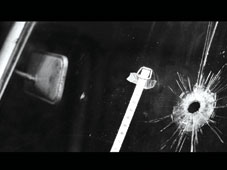
"Automóvil" is the first work in a series called "MI" compounded by seven video art fragments that work with archive photographic material in cellulose acetate plates of the forensic Colombian institution dated 1953 to 1979. It revolves around two fundamental questions: How do we interact with the archive material produced as a consequence of our violence? How do we make legible the small fragments as a memory conservation task? The M.I. series is an alternate history, antagonistic to the one of television, due to the fact that it has no interest in the criminal history, in a reductive sense of the term. Its real interest is in the Remains, the multiple senses present in the reserves that have resisted the approbatory capacity and that are capable of integrating in a more ample category, one that allows the comprehension of other situations and agents. The M.I. series works with the interstices of the historical material, where the criminal event is abandoned. It is more interested in the detail, the particularity, the sign, whether or not related to a fact or specific event. The image that is treated in this sense becomes independent from the expedient. It recovers its own life due to the lost link with ancient history, and proves itself through own existence.
Catherine and Rolando have been working together since 2001. In their projects they use archival material, producing experimental works in the video art genre. Their first work was a documentary film called "Exiliados en Exilio", about concentration camps in Colombia during second world war, produced with grants from the Colombian and French governments. The MI series has been screened at several festivals, including EMAF, Transmediale, MediaArt Friesland, and II Inter-American Biennial of Video Art.
Helena Estrela Vasconcelos
Catalogue : 2017Heroísmo | Fiction | 4k | color | 21:38 | Portugal | 2016
Helena Estrela Vasconcelos
Heroísmo
Fiction | 4k | color | 21:38 | Portugal | 2016
A boy lives alone, at night, in an abandoned mall.
Helena Estrela Vasconcelos was born in 1993, in Porto. Finished in 2015 a degree in Cinema in Escola Superior de Teatro e Cinema de Lisboa. She was the co-producer in the film “A Rapariga de Berlim” which won the section “Novi?ssimos” at IndieLisboa 2015. “Heroismo”, her first film, premiere at Nacional Competition in Indie Lisboa 2016. She currently lives in Porto, where she is developing research for future film projects.
Miguel Clara Vasconcelos
Marlon Vasquez, David SANCHEZ
Catalogue : 2007Doña Ana | Animation | dv | color | 1:44 | Colombia | 2005
Marlon Vasquez, David SANCHEZ
Doña Ana
Animation | dv | color | 1:44 | Colombia | 2005
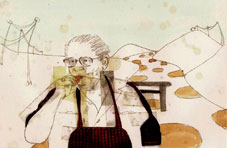
Mrs. Ana is an old woman who sells medicinal plants in the city of Medellín, Colombia, and through the action of eating strawberries and talking about their properties displays the wide world of knowledge that exists in the spirit of popular culture.
Marlon Vasquez is a 26 year old filmmaker from Colombia. He graduated with a Visual Arts degree from the National University of Colombia. He has made several short independent films and visual artistic projects. His awards include Special Mention at the III Bienal Interamericana de Video Art, Banco Interamericano de Desarrollo Washington, 2006; and Special Mention in Slow Food Film Festival, 2006 Piedmont - Italy. He was selected as a Talent 2006 for the Berlinale Talent campus #4 Berlin, Germany 2006, and in 2005 he was selected to represent Colombia in the art encounter "Dream Project Public Art for Equality" in Cork, Ireland, European Capital of Culture. He won Best Video for "Golfie", II International Sample of Electronical Art, Bogota, 2004, and was nominated for Best Video for "Homeless", Medellín Vision festival, organized by Universidad Pontificia Bolivariana, 2003.
Lesia Vasylchenko
Catalogue : 2022Postcard From A Nonexisting City | Animation | mov | color | 8:32 | Ukraine | 2021
Lesia Vasylchenko
Postcard From A Nonexisting City
Animation | mov | color | 8:32 | Ukraine | 2021
“Postcard From a Nonexisting City” is a video work that explores the Soviet imaginary and its relation to the future. The work features a virtual rendering of an architectural landscape that contrasts physical and temporal scales and stamps function as graphic messengers of a political and cultural transition. Constructed between the frameworks of speculative architecture, philately and the politics of time, “Postcard From a Nonexisting City” is a work that reflects on temporal arrangements and geopolitical effects produced by space communication technologies.
Lesia Vasylchenko is a Kyiv-born artist based in Oslo. Her practice spans between installation, moving image and photography. Vasylchenko is a co-curator of the artist-run gallery space Podium and a founder of STRUKTURA. Time, a cross-disciplinary initiative for research and practice within the framework of visual arts, media archaeology, literature, and philosophy. She holds a degree in Journalism from the Taras Shevchenko National University of Kyiv and Fine Arts from Oslo National Academy of the Arts. Her works have been shown among others at Louvre Museum, Paris; Haus der Kulturen der Welt, Berlin; Haugar Art Museum, Tønsberg; Tenthaus Gallery, Oslo; The Wrong New Digital Art Biennale.
Lesia Vasylchenko
Catalogue : 2021Zaraz | Experimental fiction | mov | color and b&w | 15:46 | Ukraine, Norway | 2020
Lesia Vasylchenko
Zaraz
Experimental fiction | mov | color and b&w | 15:46 | Ukraine, Norway | 2020
"ZaraZ" is a sci-fi video essay within the framework of experimental cinema, chronopolitics, and philosophy. In the post-communist era, after the fall of the Berlin Wall and the collapse of the Soviet Union, discourses of the end of history emerged. Instead of past-present-future structure, we are witnessing a temporal shift into the Now, which is continuously melting into the future present. “ZaraZ” reflects on the consequences of acceleration and alienation in modern societies. It portrays brutalist architecture sites, built to implement a “promise” for a brighter future into public spaces; and urban landscapes damaged by industrialisation and economic growth. Nostalgia for the future is expressed in disintegrating architectural forms of public and private spaces, and the possibility of multiple presents emerging out of multiple pasts. "ZaraZ" investigates speculative temporalities of the city and explore relations between time and architecture; virtual, real, and actual; current modes of how we instrumentalize history and memory. In a world of a single urban temporal synchronicity, the question remains: What Times are responsible for the production of imagined futures?
Lesia Vasylchenko is a Kyiv-born artist based in Oslo. Her practice spans between installation, moving image and photography. Vasylchenko is a co-curator of the artist-run gallery space Podium and a founder of STRUKTURA. Time, a cross-disciplinary initiative for research and practice within the framework of visual arts, media archaeology, literature, and philosophy. She holds a degree in Journalism from the Taras Shevchenko National University of Kyiv and Fine Arts from Oslo National Academy of the Arts. Her works have been shown among others at Haugar Art Museum; Tenthaus Oslo; Berlin Transnational Queer Underground; The Wrong New Digital Art Biennale; Korea Queer Film Festival.