Catalogue > List by artist
Browse the entire list of Rencontre Internationales artists since 2004. Use the alphabetical filter to refine your search. update in progress
Eva L'hoest
Catalogue : 2021The Inmost Cell | Video | 0 | color | 11:8 | Belgium | 2020
Eva L Hoest
The Inmost Cell
Video | 0 | color | 11:8 | Belgium | 2020
The Inmost Cell is a new video work by Eva L’Hoest which takes its narrative from the traditional tales of the Daugava river and the ruins of its underwater islands, flooded on the creation of the Riga dam. Through the combination of various digital processes, L'Hoest turns her photographic reportage of the outskirts of Riga into three-dimensional fluid architectures. These lost elements of Latvian culture mark a site of synthesis between humans, nature and man-made ruins. In a fusion of the rural and the maritime landscape referencing the calenture, a maritime mirage where the sea becomes an inviting grassy field, the artist imbues the images with a shifting, hallucinatory quality. Across slow, contemplative tracking movements, its different realities merge as forms fall one after the other, and passageways are created between places and memory.
Eva L’Hoest (1991, Belgium) explores how all types of mental images, in particular memory and reminiscence, are able to reappear in a technological form.Piece by piece, the artist appropriates contemporary technology to reveal both their nature as extensions for capturing the world and their potential as an artistic medium. Her work was recently exhibited at FRAC Grand Large (Dunkerque), “Shapeshifters” at the Malmö Museum, the Riga International Biennial “And suddenly it all blossoms” curated by Rebecca Lamarche-Vadel, the Lyon Biennale “Where Water Comes Together with Other Water” curated by Palais de Tokyo, Lyon (France); The triennale of Okayama Art Summit 2019 “IF THE SNAKE” curated by Pierre Huyghe, Okayama (Japon); “Suspended time, Extended space”, Casino Luxembourg.
Catalogue : 2018Under Automata | Experimental film | 4k | black and white | 10:49 | Belgium | 2017
Eva L Hoest
Under Automata
Experimental film | 4k | black and white | 10:49 | Belgium | 2017
Sleepers manually scanned in 3D during a flight over the Atlantic Ocean. This project used a last generation of video game sensor camera turned into a 3D scan. The shooting device was exclusively made during the flight, in the tension of being catch by autority.
Eva L'Hoest (1991, Belgium), focuses primarily on the exploration of memory and its strange and minute lingering reality. She tracks the often blurred and non-specific ways in which reminiscence appears. Working on the outer edge of perception where it becomes affect and emotion; starting out with accidents of light like “the operator of a memory who interprets, distorts selects or sometimes saturates and alters the images”*, Eva L’Hoest is an artist whose intuition plays a decisive role. Intuition as a working method, a decisional process in the literal sense given that intuito, i.e. “the regard”, is its etymological Latin root. Her work defines “a single plastic modality which is that of a clouded form, a migratory form, as if the subjects in question had all been taken in a transitory state between construction and deconstruction, reconstruction and erasure”*.
Marcellvs L.
Catalogue : 2006man.road.river. | Art vidéo | dv | color | 9:27 | Brazil | 2004
Marcellvs L.
man.road.river.
Art vidéo | dv | color | 9:27 | Brazil | 2004
A man. A road. A river.
Marcellvs L. has an extensive background, including an academic education, music lessons since his childhood, and lots of reading. Even nowadays, the artist dedicates a few hours a day to studying the piano. His preferences range from Hungarian composers Béla Bartók (1881-1945) and Gyorgy Liget (1923) to Erik Satie (1866-1925) and Claude Debussy (1862-1918). His interest in music is not restricted to the universe of instrumental and classical music, as it includes more popular genres, such as rock and experimental music. His reading preferences are literature and philosophy, especially Nietzsche and Deleuze. Marcellvs? ongoing interest in music and intense reading pace comprise his initial background, after which it also includes cinema and video. This dual interest in music and image, in addition to an old friendship with the members of the pexbaA band, have led Marcellvs closer and closer to image production. Thus, over approximately four years, from 2000 until 2003, the artist presented himself along with the band. In some of the gigs, band members were hidden behind a front stage screen. Marcellvs presented himself together with pexbaA in the Projeto Rock Contemporâneo (Contemporary Rock Project) at SESC Ipiranga, São Paulo (2002), in the III Festival Eletrônika Telemig Celular at Palácio das Artes, Belo Horizonte (2002), in the SXSW Festival ? South by Southwest, Austin, Texas, USA (2002), and in the Projeto Rumos Itaú Cultural ? Cartografia Musical Brasileira (Itaú Cultural Pathways Project ? Brazilian Musical Cartography) at Itaú Cultural, São Paulo (2001), among others. During his college days at PUC-MG?s Faculdade de Comunicação e Artes (Communication and Arts College), the artist began researching videorhizomes as part for his graduation project, under the guidance of Professor André Brasil. With his videorhizomes, Marcellvs participated in a series of festivals and exhibitions such as ?Brésil, Brésils?, in the Videoformes Festival, at Clermont-Ferrand, France (2005); ?Abre Alas?, at Galeria A Gentil Carioca, Rio de Janeiro (2005); ?Do micro ao macro: novas políticas e imagens? (From micro to macro: new policies and images), exhibited during the 6th Belo Horizonte International Short Film Festival, in Belo Horizonte (2004); Laboratorio Arte Alameda, in Mexico City (2004); ?Uma mágica por minuto? (One magic per minute), Universidade de Passo Fundo, in Rio Grande do Sul (2004); Laisle.com Video Art Exhibition, Museu de Arte Moderna (Modern Art Museum), in Rio de Janeiro (2004); ?Investigações Contemporâneas? (Contemporary Investigations), exhibition at the 14th Videobrasil International Electronic Art Festival), in São Paulo (2003), ?Entre a casa e a metrópole? (Between the house and the metropolis), at the XXVI Intercom Congress, in Belo Horizonte (2003), among others. The Deleuzian thematic is also present in another enticing piece of work: the video ?Deleuze while a living model? (2003). In this piece, the image of Deleuze in a TV monitor is smeared with red lipstick. The video took part in the Southern Competitive Show at the 14th Videobrasil International Electronic Art Festival, in São Paulo (2003); in the Muestra de Cortometrajes de Minas Gerais (Minas Gerais Short Film Exhibition), at the Auditorio de la FUNCEB, Fundación Centro de Estudos Brasileiros (Brazilian Study Center Foundation), in Buenos Aires (2004); in the Cine Esquema Novo (New Scheme Cinema), at Usina do Gasômetro, in Porto Alegre, (2004); in the 7th Tiradentes Cinema Exhibition, at Centro Cultural Yves Alves, in Minas Gerais (2004), among others. The video also won the main prize at Festival do Livre Olhar (FLO ? Free Look Festival), at Santander Cultural, in Porto Alegre (2003), as well as the best video award at the 5th Competitive Exhibition of Images in Motion, at Casa do Conde de Santa Marinha, in Belo Horizonte (2003). Of all videorhizomes, ?Man.Road.River?, also know as ?Rizoma 0778?, is the most widely known, winning awards in several exhibitions and festivals. The video won the Grand Prize at the 51st Oberhausen International Short Film Festival (2005), the Best Experimental Film award at the Mostra do Filme Livre 2005 (Free Film Exhibition), at Centro Cultural Banco do Brasil, Rio de Janeiro, and the award in the Ousadia e Risco category (Daring and Risk) in the Festival do Livre Olhar (FLO), at Santander Cultural, Porto Alegre (2003). Recently, the artist has also received a scholarship fund from the Museu de Arte da Pampulha (Pampulha Art Museum), Belo Horizonte, and will be featured in an exhibition in the second semester of 2005 at Paço das Artes, in São Paulo. (by eduardo de jesus, dossier videobrasil marcellvs l.)
Marcellvs L.
Catalogue : 20080434 | Art vidéo | | color | 6:56 | Brazil | 2006
Marcellvs L.
0434
Art vidéo | | color | 6:56 | Brazil | 2006
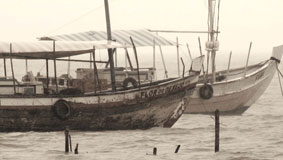
0434 focuses on two boats anchored at sea which slowly move in uncanny synchrony, composing a casual choreography that suggests a dialog or a strange courtship ritual. The video is a one piece of the on going series VideoRhizome.
The video and sound artist Marcellvs L. was born 1980 in Belo Horizonte (Brazil), he lives and works in Berlin. His particular and radical production that gets into dialogue with the electronic arts? universe attracts attention by the intensity with which it associates philosophical concepts to the electronic images and sounds. His work places itself in a zone of undiscernibility, which turns it inapprehensible by this or that audiovisual genre creating its own discursive universe.
James L. Sansing
Catalogue : 2026A Light Unseen | Video | 4k | color | 9:55 | USA | 2024
James L. Sansing
A Light Unseen
Video | 4k | color | 9:55 | USA | 2024
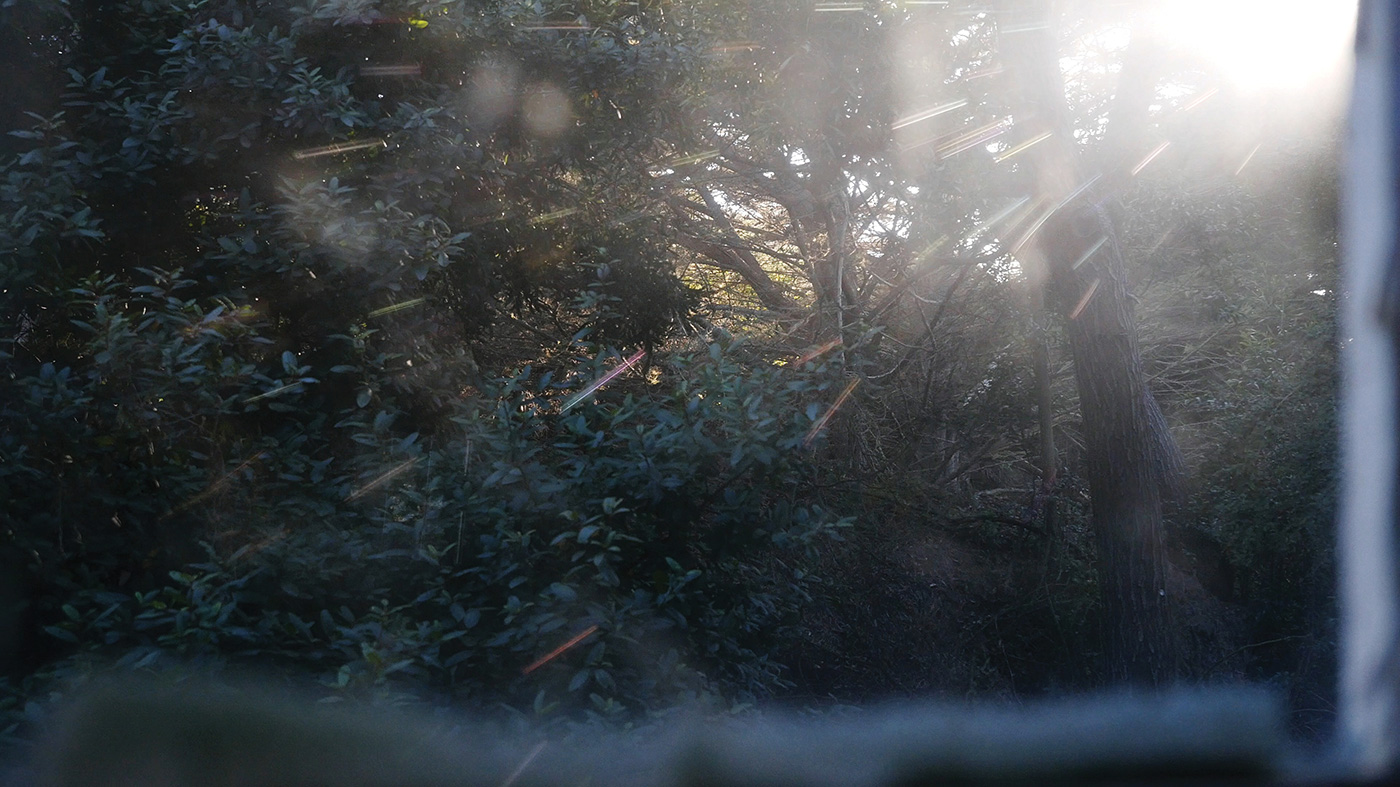
Light glinting off spider webs, seem unremarkable, but there is a world of color and composition invisible to the human eye revealed by this experimental film. These are not artifacts caused by camera optics, this is the natural world.
James Sansings films have shown all over the world. Including New York (NYFF , anthology film archive) , San Francisco (SFIFF, Pacific Film Archive). Ann Arbor (aaff) Rotterdam (Iffr), As well as in Berlin, Buenos Aires, LA, Chicago, Toronto, and others. He has won a Princess Grace Foundation Award, Pollock Krasner Grant, Eastman Kodak film grant, Pirkle Jones Fund, Sustainable Arts Grant, Audience awards at AAFF and SFAI and others. He graduated from the San Francisco Art Institute, where he studied with filmmakers George Kuchar, Craig Baldwin, Ernie Gehr, Janis Lipzin, Lawrence Jordan and Al Wong
Eva La Cour
Catalogue : 2017Composite / De-Composited | Experimental film | 16mm | color | 3:0 | Denmark, Belgium | 2015
Eva La Cour
Composite / De-Composited
Experimental film | 16mm | color | 3:0 | Denmark, Belgium | 2015
COMPOSITE / DE-COMPOSITED juxtaposes picturesque visions of authenticity in urban space with narratives of the High Arctic and the 20th century phantasmagoric medium of film. The short 16mm film is shot at a construction site in Brussels characterized by facadisme. In architecture, this is when a building is demolished and rebuilt from within while the exterior of the building is preserved. The film recording is merged with an account of mine extraction in mountain formations on Svalbard, and together the two elements form the story of creating an image: The film subtly addresses the relationship between planetary raw material and the landscape-as-image. Or, the relationship between the façade as raw material and the city as scenery.
Eva la Cour is a Danish visual artist and researcher with a background in fine arts as well as visual anthropology. She works with audio-visual and spatial forms of montage and display, performance and text, always negotiating with the surroundings in which her work actualizes. This reflects her general interest in notions such as fieldwork, skilled vision and mediation, which she particularly has investigated in relation to landscapes of narratives and raw materials in the Arctic terrain on Svalbard. Currently Eva la Cour lives and works in both Copenhagen and Gothenburg, where she is an artistic practice-based PhD candidate at Valand Academy of Art.
La Decanatura, Elkin Calderón Guevara & Diego Piñeros García
Catalogue : 2018Pluralia tantum bon bril | Experimental video | hdv | color | 4:49 | Colombia | 2017
La Decanatura, Elkin Calderón Guevara & Diego Piñeros García
Pluralia tantum bon bril
Experimental video | hdv | color | 4:49 | Colombia | 2017
SYNOPSIS A Colombian video-contribution between the collective La Decanatura and the queer-artist Federica Burns presents the creation of the universe - the big bang - in a new way: Their work aims to subvert the lopsided vision of the white male sovereignty in the representation of the Creator in order to devise a god of ambiguity. As a hybrid being this god is neither male nor female but genderless, mestizo, playful, and plural has put on make-up and is dancing with a fire produced with a "Bon Bril" (kitchen steel wool sponges ) that is used as a fireworks in popular neighborhoods in Colombia and Brazil. Title: PLURALIA TANTUM BON BRIL Director: LA DECANATURA (Diego Piñeros GarcÃa & Elkin Calderón) Production: LA DECANATURA (Diego Piñeros GarcÃa & Elkin Calderón) Camera: Johannes Förster Edition: LA DECANATURA (Diego Piñeros GarcÃa & Elkin Calderón) Actor: Abner Wagner a.k.a Federica Burns Makeup artist: MartÃn Ortegón Duration: 5 min Technical details: Recorded in 4K, final Version in Full HD, 1920 x 1080 stereo
LA DECANATURA. Collective formed by artists Elkin Calderón Guevara and Diego Piñeros GarcÃa that seeks to generate new approaches to art from historical approaches and "foreign" disciplines that inquire hegemonic forms of knowledge and power. LA DECANATURA has been the winner of different awards for the development of artistic projects such as the Residence in Switzerland, Villa Ruffieaux of the Coincidence Program, Pro Helvetia, 2018. Plataforma Bogota Scholarship in art, Science and Technology 2017/18. They have exhibited individually at the Museum of Modern Art in Medellin, Caja Negra (Black Box) 2017. Also they have participated in the Regional Salon for Artists in the Central Zone 2015 and in the National Artists Salon, 2016. Their work "Centro Espacial Satelital de Colombia" has been shown in important festivals, winner of one of the prizes of the Videobrasil Festival 2017 and is part of the Art Collection of the Banco de la República in Colombia.
La Ribot
Catalogue : 2025Differentness | Experimental fiction | 4k | color | 31:8 | Spain, Portugal | 2022
La Ribot, Raquel Freire
Differentness
Experimental fiction | 4k | color | 31:8 | Spain, Portugal | 2022
From the depths of our imagination, a forest appears, inhabited by plants, human beings and their fantasies. In this millenary forest, the space is shared with the wind. This place full of tales and fables evokes a reality close to a vivid dream. What is shown is a testimony of the desire to live and to dance. Differentness is based on the show Happy Island, choreography by La Ribot with company Dançando com a Diferença. Creation September 2018 at Grütli – Centre de production et de diffusion des Arts vivants, in the framework of La Bâtie-festival de Genève.
Born in Madrid, La Ribot is based in Geneva and works internationally. « La Ribot is a choreographer, dancer, and visual artist. She began working in the 1980s, towards the end of Spain’s transition to democracy, and has gone on to profoundly change the field of contemporary dance. She defies the frameworks and formats of the stage and the museum, borrowing freely from the vocabularies of theatre, visual art, performance, film and video to instigate a conceptual shift in choreography. Her solo works, collective explorations, experiments with amateurs, installations and moving images are the many facets of a protean practice that constantly focuses on the rights of the body. » — Marcella Lista, writer and chief curator of the New Media Collection, Centre Pompidou, Paris (2020) La Ribot’s choreographic and visual work has won numerous awards, including the Golden Lion for her entire career at the Venice Dance Biennale in 2020, the Grand Prix Suisse de danse awarded by the Federal Office of Culture in 2019, the Premio en Artes Plásticas de la Comunidad de Madrid (Spain) in 2018, the Medalla de Oro al Merito en las Bellas Arte in Spain in 2015, and the Premio Nacional de Danza awarded by the Spanish Ministry of Culture in 2000. Her choreographic work has been shown at the Tate Modern (London), Théâtre de la Ville and Centre Pompidou (Paris), Reina Sofia Museum (Madrid), Festival d’Automne in Paris, the Aïchi Triennale (Nagoya, Japan), Museu Serralves (Porto), Art Unlimited - Art Basel, S.M.A.K. (Ghent) and MUAC (Museo Universitario de Arte Contemporáneo, Mexico DF), among others. Her visual work is part of the private and public collections of the Reina Sofia Museum (Madrid), Centre Pompidou (Paris), CNAP - Centre national des arts plastiques (Paris), MUSAC (Museo de Arte Contemporáneo de Castilla y León), Artium (Centro - Museo vasco de arte contemporáneo), the FRAC Lorraine and Franche-Comté, FMAC - Collection d’art contemporain de la Ville de Genève...
Catalogue : 2015Film noir 001 | Video | hdv | color | 12:48 | Spain | 2014
La Ribot
Film noir 001
Video | hdv | color | 12:48 | Spain | 2014
Commencé en 2014, FILM NOIR est un projet en évolution, en plusieurs parties, qui explore une fascination à long terme de La Ribot: la figure de l'extra, "surnuméraire" ou l'acteur de fond. Les pièces de La Ribot 40 Espontáneos, 2004, et PARAdistinguidas, 2011, par exemple, invitaient des extras (des bénévoles locaux, normalement avec peu ou aucune expérience théâtrale) au centre de la scène dans de nouvelles œuvres d’art vivant pour le théâtre. En revanche, FILM NOIR regarde en arrière dans l'histoire du cinéma et utilise la vidéo pour explorer la dynamique cinématographique du monde des extras. Premier de la série, FILM NOIR 001, 2014, se penche sur les extras dans Spartacus (1960) et El Cid (1961) - "papier de tournesol" humain dont les actions et les attitudes révèlent les idéologies contrastées des deux productions. Actuellement en cours, FILM NOIR 002 et 003 élargissent l'enquête sur d'autres films et d'autres questions.
L’artiste et chorégraphe La Ribot est née à Madrid. En 1986, elle co-fonde le groupe Bocanada Danza et le co-dirige jusqu’à sa dissolution en 1989. Deux ans après, elle commence à travailler sous le nom de La Ribot et elle inaugure le « striptease » humoristique Socorro! Gloria!, une pièce qui attire un nouveau public et qui lui inspire sa série solo intitulée 13 Pièces distinguées. Más distinguidas, la seconde série des Pièces distinguées, est inaugurée à Madrid à la fin de l’année 1997. Suivi d’autres série des pièces : Still Distinguished, 2000 et PARAdistinguidas, 2011. Panoramix, la version anthologique de trois heures rassemblant les trente-quatre premières Pièces distinguées, est inaugurée en 2003 à la Tate Modern et a voyagé ensuite dans d’autres galeries européennes, telles la Reina Sofía de Madrid ou le Centre Georges Pompidou à Paris. En 2000, La Ribot amorce son travail vidéo, et expérimente plus particulièrement l’utilisation du plan-séquence, tourné du point de vue du corps impliqué dans une performance. Cette approche a irrigué de nombreuses œuvres depuis les années 2000, dont l’installation Despliegue, 2001, et le travail complexe mené avec la pièce Mariachi 17, 2009. La même année, elle prend comme base Mariachi 17 afin de mettre en place Llámame Mariachi, un nouveau travail mêlant vidéo et performance live des trois interprètes. En 2004, La Ribot arrive à Genève, en Suisse. Elle y fonde et co-dirige entre 2004 et 2008 Art/Action, un département destiné à l’enseignement et à la recherche du live art basé à la Haute École d’Art et de Design (HEAD) de Genève. Les années 2000 voient aussi le développement de la pièce participative de grande envergure 40 Espontáneos, 2004 ; lancée en 2006 à l’Art Unlimited de Bâle, la pièce Laughing Hole ; et Gustavia, 2008, un duo conçu et joué avec la danseuse, chorégraphe et directrice du Centre National de la Danse de France, Mathilde Monnier. En 2011, elle lance PARAdistinguidas, une nouvelle série des Pièces distinguées conçue pour cinq danseuses et vingt « figurants » volontaires ; en 2012 elle achève EEEXEEECUUUUTIOOOOONS!!!, une commande chorégraphique majeure du Ballet de Lorraine à Nancy, en France. Également en 2012, le MUAC (Mexico City’s Contemporary Art University Museum), a inauguré son espace d’exposition de live art en proposant une exposition monographique sur son œuvre. Le travail vidéo de La Ribot est présenté au sein de collections privées et publiques dans toute l’Europe et elle continue à développer et présenter son travail à l’internationale. Elle a participé à des exhibitions au Japon, Seoul, Korée du Sud et Mexico: en 2012, le MUAC (Mexico City’s Contemporary Art University Museum), a inauguré son espace d’exposition de live art en proposant une exposition monographique sur son œuvre. En 2014, aux côtés du compositeur et pianiste Carles Santons, elle a produit Beware of Imitations!, un vidéo hommage à la danseuse américaine Loie Fuller. Elle poursuit son travail à l’international depuis sa base située à Genève, en Suisse, où elle vit avec le chorégraphe suisse Gilles Jobin.
La Ribot
Catalogue : 2016Film noir 001 // 002 // 003 | Video | hdv | color and b&w | 28:0 | Spain, Switzerland | 2015
La Ribot
Film noir 001 // 002 // 003
Video | hdv | color and b&w | 28:0 | Spain, Switzerland | 2015
Dans FILM NOIR 001 (2014), La Ribot fait apparaître les extras de deux péplums, «Spartacus» de Stanley Kubrick et «Le Cid» d’Anthony Mann, tournés dans l’Espagne des années 60. Témoignage des mouvements politiques et sociaux de cette époque, le film construit le fond de l’histoire à travers des corps anonymes. Dans FILM NOIR 002 (2015), la série continue avec les corps de figurants ou travailleurs de plusieurs films, nous laissant ainsi contempler la splendeur de leur jeu. Dans FILM NOIR 003 (2015), l’aspect spatial et chorégraphique nous saute aux yeux. Musicalement organisés, les figurants remplissent l’espace du fond, créant un ballet sensuel et drôle, parfois catastrophique, toujours impeccable.
L’artiste et chorégraphe La Ribot est née à Madrid. En 1986, elle co-fonde le groupe Bocanada Danza et le co-dirige jusqu’à sa dissolution en 1989. Deux ans après, elle commence à travailler sous le nom de La Ribot et elle inaugure le striptease humoristique Socorro! Gloria!, une pièce qui attire un nouveau public et qui lui inspire sa série solo intitulée «13 Pièces distinguées». «Más distinguidas», la seconde série des Pièces distinguées, est inaugurée à Madrid à la fin de l’année 1997. Suivi d’autres série des pièces : «Still Distinguished», 2000 et «PARAdistinguidas», 2011. «Panoramix», la version anthologique de trois heures rassemblant les trente-quatre premières Pièces distinguées, est inaugurée en 2003 à la Tate Modern et a voyagé ensuite dans d’autres institutions européennes, telles la Reina Sofía de Madrid ou le Centre Pompidou à Paris. En 2000, La Ribot amorce son travail vidéo, et expérimente plus particulièrement l’utilisation du plan-séquence, tourné du point de vue du corps impliqué dans une performance. Cette approche a irrigué de nombreuses oeuvres depuis les années 2000, dont l’installation «Despliegue», 2001, et le travail complexe mené avec la pièce «Mariachi 17», 2009. La même année, elle prend comme base «Mariachi 17» afin de mettre en place «Llámame Mariachi», un nouveau travail mêlant vidéo et performance live des trois interprètes. En 2004, La Ribot arrive à Genève, en Suisse. Elle y fonde et co-dirige entre 2004 et 2008 Art/Action, un département destiné à l’enseignement et à la recherche du live art basé à la Haute École d’Art et de Design (HEAD) de Genève. Les années 2000 voient aussi le développement de la pièce participative de grande envergure «40 Espontáneos», 2004 ; lancée en 2006 à l’Art Unlimited de Bâle, la pièce «Laughing Hole» ; et «Gustavia», 2008, un duo conçu et joué avec la danseuse, chorégraphe et directrice du Centre National de la Danse de France, Mathilde Monnier. En 2011, elle lance «PARAdistinguidas», une nouvelle série des Pièces distinguées conçue pour cinq danseuses et vingt figurants volontaires ; en 2012 elle achève «EEEXEEECUUUUTIOOOOONS!!!», une commande chorégraphique majeure du Ballet de Lorraine à Nancy, en France. Le travail vidéo de La Ribot est présenté au sein de collections privées et publiques dans toute l’Europe et elle continue à développer et présenter son travail à l’international. Elle a participé à des expositions au Japon, en Corée du Sud et à Mexico: en 2012, le MUAC (Mexico City’s Contemporary Art University Museum) a inauguré son espace d’exposition de live art en proposant une exposition monographique sur son oeuvre. En 2014, aux côtés du compositeur et pianiste Carles Santons, elle a produit «Beware of Imitations!», une vidéo hommage à la danseuse américaine Loie Fuller. Elle poursuit son travail à l’international depuis sa base située à Genève, en Suisse, où elle vit avec le chorégraphe suisse Gilles Jobin.
La Ribot, Raquel Freire
Catalogue : 2025Differentness | Experimental fiction | 4k | color | 31:8 | Spain, Portugal | 2022
La Ribot, Raquel Freire
Differentness
Experimental fiction | 4k | color | 31:8 | Spain, Portugal | 2022
From the depths of our imagination, a forest appears, inhabited by plants, human beings and their fantasies. In this millenary forest, the space is shared with the wind. This place full of tales and fables evokes a reality close to a vivid dream. What is shown is a testimony of the desire to live and to dance. Differentness is based on the show Happy Island, choreography by La Ribot with company Dançando com a Diferença. Creation September 2018 at Grütli – Centre de production et de diffusion des Arts vivants, in the framework of La Bâtie-festival de Genève.
Born in Madrid, La Ribot is based in Geneva and works internationally. « La Ribot is a choreographer, dancer, and visual artist. She began working in the 1980s, towards the end of Spain’s transition to democracy, and has gone on to profoundly change the field of contemporary dance. She defies the frameworks and formats of the stage and the museum, borrowing freely from the vocabularies of theatre, visual art, performance, film and video to instigate a conceptual shift in choreography. Her solo works, collective explorations, experiments with amateurs, installations and moving images are the many facets of a protean practice that constantly focuses on the rights of the body. » — Marcella Lista, writer and chief curator of the New Media Collection, Centre Pompidou, Paris (2020) La Ribot’s choreographic and visual work has won numerous awards, including the Golden Lion for her entire career at the Venice Dance Biennale in 2020, the Grand Prix Suisse de danse awarded by the Federal Office of Culture in 2019, the Premio en Artes Plásticas de la Comunidad de Madrid (Spain) in 2018, the Medalla de Oro al Merito en las Bellas Arte in Spain in 2015, and the Premio Nacional de Danza awarded by the Spanish Ministry of Culture in 2000. Her choreographic work has been shown at the Tate Modern (London), Théâtre de la Ville and Centre Pompidou (Paris), Reina Sofia Museum (Madrid), Festival d’Automne in Paris, the Aïchi Triennale (Nagoya, Japan), Museu Serralves (Porto), Art Unlimited - Art Basel, S.M.A.K. (Ghent) and MUAC (Museo Universitario de Arte Contemporáneo, Mexico DF), among others. Her visual work is part of the private and public collections of the Reina Sofia Museum (Madrid), Centre Pompidou (Paris), CNAP - Centre national des arts plastiques (Paris), MUSAC (Museo de Arte Contemporáneo de Castilla y León), Artium (Centro - Museo vasco de arte contemporáneo), the FRAC Lorraine and Franche-Comté, FMAC - Collection d’art contemporain de la Ville de Genève...
Catalogue : 2015Film noir 001 | Video | hdv | color | 12:48 | Spain | 2014
La Ribot
Film noir 001
Video | hdv | color | 12:48 | Spain | 2014
Commencé en 2014, FILM NOIR est un projet en évolution, en plusieurs parties, qui explore une fascination à long terme de La Ribot: la figure de l'extra, "surnuméraire" ou l'acteur de fond. Les pièces de La Ribot 40 Espontáneos, 2004, et PARAdistinguidas, 2011, par exemple, invitaient des extras (des bénévoles locaux, normalement avec peu ou aucune expérience théâtrale) au centre de la scène dans de nouvelles œuvres d’art vivant pour le théâtre. En revanche, FILM NOIR regarde en arrière dans l'histoire du cinéma et utilise la vidéo pour explorer la dynamique cinématographique du monde des extras. Premier de la série, FILM NOIR 001, 2014, se penche sur les extras dans Spartacus (1960) et El Cid (1961) - "papier de tournesol" humain dont les actions et les attitudes révèlent les idéologies contrastées des deux productions. Actuellement en cours, FILM NOIR 002 et 003 élargissent l'enquête sur d'autres films et d'autres questions.
L’artiste et chorégraphe La Ribot est née à Madrid. En 1986, elle co-fonde le groupe Bocanada Danza et le co-dirige jusqu’à sa dissolution en 1989. Deux ans après, elle commence à travailler sous le nom de La Ribot et elle inaugure le « striptease » humoristique Socorro! Gloria!, une pièce qui attire un nouveau public et qui lui inspire sa série solo intitulée 13 Pièces distinguées. Más distinguidas, la seconde série des Pièces distinguées, est inaugurée à Madrid à la fin de l’année 1997. Suivi d’autres série des pièces : Still Distinguished, 2000 et PARAdistinguidas, 2011. Panoramix, la version anthologique de trois heures rassemblant les trente-quatre premières Pièces distinguées, est inaugurée en 2003 à la Tate Modern et a voyagé ensuite dans d’autres galeries européennes, telles la Reina Sofía de Madrid ou le Centre Georges Pompidou à Paris. En 2000, La Ribot amorce son travail vidéo, et expérimente plus particulièrement l’utilisation du plan-séquence, tourné du point de vue du corps impliqué dans une performance. Cette approche a irrigué de nombreuses œuvres depuis les années 2000, dont l’installation Despliegue, 2001, et le travail complexe mené avec la pièce Mariachi 17, 2009. La même année, elle prend comme base Mariachi 17 afin de mettre en place Llámame Mariachi, un nouveau travail mêlant vidéo et performance live des trois interprètes. En 2004, La Ribot arrive à Genève, en Suisse. Elle y fonde et co-dirige entre 2004 et 2008 Art/Action, un département destiné à l’enseignement et à la recherche du live art basé à la Haute École d’Art et de Design (HEAD) de Genève. Les années 2000 voient aussi le développement de la pièce participative de grande envergure 40 Espontáneos, 2004 ; lancée en 2006 à l’Art Unlimited de Bâle, la pièce Laughing Hole ; et Gustavia, 2008, un duo conçu et joué avec la danseuse, chorégraphe et directrice du Centre National de la Danse de France, Mathilde Monnier. En 2011, elle lance PARAdistinguidas, une nouvelle série des Pièces distinguées conçue pour cinq danseuses et vingt « figurants » volontaires ; en 2012 elle achève EEEXEEECUUUUTIOOOOONS!!!, une commande chorégraphique majeure du Ballet de Lorraine à Nancy, en France. Également en 2012, le MUAC (Mexico City’s Contemporary Art University Museum), a inauguré son espace d’exposition de live art en proposant une exposition monographique sur son œuvre. Le travail vidéo de La Ribot est présenté au sein de collections privées et publiques dans toute l’Europe et elle continue à développer et présenter son travail à l’internationale. Elle a participé à des exhibitions au Japon, Seoul, Korée du Sud et Mexico: en 2012, le MUAC (Mexico City’s Contemporary Art University Museum), a inauguré son espace d’exposition de live art en proposant une exposition monographique sur son œuvre. En 2014, aux côtés du compositeur et pianiste Carles Santons, elle a produit Beware of Imitations!, un vidéo hommage à la danseuse américaine Loie Fuller. Elle poursuit son travail à l’international depuis sa base située à Genève, en Suisse, où elle vit avec le chorégraphe suisse Gilles Jobin.
André S. Labarthe
Catalogue : 2006Georges Bataille, à perte de vue | Experimental doc. | betaSP | color and b&w | 49:0 | France | 1997

André S. Labarthe
Georges Bataille, à perte de vue
Experimental doc. | betaSP | color and b&w | 49:0 | France | 1997
Un « voyageur » enquête sur la vie et l??uvre de Georges Bataille : le portrait qu?André S. Labarthe livre de l?écrivain se distingue autant de la biographie filmée que du commentaire érudit. Il se présente comme un inventaire où expériences et moments fondateurs de l?existence côtoient éclats et fulgurances de l??uvre. Le montage articule des séquences tournées aujourd?hui sur les quelques principaux lieux de l?itinéraire de Georges Bataille (Reims, Le Puy de Dôme, Vézelay, Orléans, Paris), des plans parcourant ses manuscrits, ses ouvrages édités et des revues créées à son initiative (Documents, Acéphale, Critique), et des images mettant en scène des motifs obsessionnels ou des « visions » de son univers. Le commentaire d?André S. Labarthe, dit par Jean-Claude Dauphin, alterne avec des lectures et quelques enregistrements sonores de la voix de Georges Bataille. Pierre Klossowski et Jacques Pimpaneau interviennent également dans ce film. Sélective et partiale, l?enquête d?André S. Labarthe extrait quelques clefs propres à saisir le noyau sensible d?une pensée radicale.
Né le 18 décembre 1931 à Oloron Sainte-Marie (Pyrénées-Atlantiques) Après des études universitaires en philosophie,il intègre la revue des Cahiers du cinéma courant des années 50. Il passe à la réalisation et à la production quand il démarre avec Jeanine Bazin la série Cinéastes de notre temps de 1964 à 1970. Parallèlement, il collabore à l`émission Cinéma Cinémas de 1982 à 1987 ainsi qu`à de nombreux magazines télé consacrés à la danse, la peinture, au théâtre et dernièrement à la littérature, avec la collection Un siècle d`écrivains. La Société des gens de lettres lui a décerné en 1984 le Grand Prix de la télévision pour l`ensemble de son oeuvre. En 1990, il remet en chantier sa collection de portraits de cinéastes renommée Cinéma, de notre temps. Il est également auteur de quelques ouvrages sur le cinéma et la peinture
Catalogue : 2006Ushio amagatsu, éléments de doctrine | Experimental doc. | betaSP | color | 73:0 | France | 1993

André S. Labarthe
Ushio amagatsu, éléments de doctrine
Experimental doc. | betaSP | color | 73:0 | France | 1993
Au Japon, le blanc est la couleur du deuil. Les danseurs de butô s`enduisent le corps de poudre blanche et la poétisation de l`espace qui caractérise les pièces de la compagnie Sankai Juku est comme un cadavre exquis, au sens littéral du terme. Pour Amagatsu, fondateur de la compagnie, la danse butô est à la fois vie et mort.
Né le 18 décembre 1931 à Oloron-Sainte-Marie, André S. Labarthe est un critique cinématographique, producteur, réalisateur et scénariste français. Après des études universitaires en philosophie,il intègre la revue des Cahiers du cinéma courant des années 50. Il passe à la réalisation et à la production quand il démarre avec Jeanine Bazin la série Cinéastes de notre temps de 1964 à 1970. Parallèlement, il collabore à l`émission Cinéma Cinémas de 1982 à 1987 ainsi qu`à de nombreux magazines télé consacrés à la danse, la peinture, au théâtre et dernièrement à la littérature, avec la collection Un siècle d`écrivains. La Société des gens de lettres lui a décerné en 1984 le Grand Prix de la télévision pour l`ensemble de son oeuvre. En 1990, il remet en chantier sa collection de portraits de cinéastes renommée Cinéma, de notre temps. Il est également auteur de quelques ouvrages sur le cinéma et la peinture.
Brandon Labelle
Catalogue : 2006Surface tension | Création sonore | 0 | | 56:0 | United Kingdom | 2005
Brandon Labelle
Surface tension
Création sonore | 0 | | 56:0 | United Kingdom | 2005
"Surface Tension" est une anthologie réalisée par Ken Ehrlich, Brandon LaBelle et Stephen Vitiello. Ces différentes oeuvres sonores s`inscrivent dans une réflexion sur le lieu même de la création. A la recherche des interrelations avec un lieu, la façon dont il influence et répond à une création sonore. Le lieu se fait tour à tour ville ou corps. Entre extérieur et intérieur, non organique et organique. Ce programme a été diffusé dans le métro à Paris, station Carrefour Pleyel, lors des 10èmes Rencontres internationales Paris/Berlin. La diffusion du programme sur WPS1 prolonge cette question de l`espace public et des réseaux.
Brandon LaBelle vit et travaille à Los Angeles. Musicien, performeur, critique, plasticien des sons, éditeur, il est à l`intersection des différents champs artistiques, mixant ces diverses pratiques dans un travail singulier articulant le sonore à l`espace social. Par le biais de micro contacts, le corps humain devient une source sonore complexe, l`espace où se déroule son action s`impose comme un instrument à part entière. Il construit ses performances sonores en fonction du site et des objets trouvés sur place, found-art relevant d`une démarche tout à la fois très conceptuelle et dans un jeu d`improvisation. La musique de Brandon LaBelle révèle le contexte social dans laquelle elle s`inscrit, ou plus exactement c`est le contexte même qui est donné comme événement musical ; déplacement de la notion d`auteur sur un espace social agissant. " Techné " se présente comme la trace d`un processus où le corps physique entre en interaction avec une architecture par le biais de micro contacts. La technologie est l`interface de ce contact construit sur le désir et la contrainte architecturale du lieu (et son inconscient). Enregistrement d`une poétique situationniste où le projet politique donne la forme même, un bruit radical.
Cyrill Lachauer
Philipp Lachenmann
Catalogue : 2012Alice.M | Video installation | hdv | color | 9:30 | Germany, France | 2010
Philipp Lachenmann
Alice.M
Video installation | hdv | color | 9:30 | Germany, France | 2010
A short absurd fairy tale taking place on a historical site of modernism, with references to Lewis Caroll and George Lucas. A young man enters a futuristic building, the headquarters of the Communist Party of France PCF in Paris. In the subterraneous grand assembly hall he encounters relics of the past that shaped/described history. Simultaneously on the roof of the building a hooded figure scans the premises` structure while down below the white concrete overground dome of the hall transforms into the moon. Alice in Wonderland in a conflictive version - playing out a poetic discourse on surrealism & socialism where science fiction, architecture, and literature are dialectically intertwined with the human psyche. The title Alice.M relates phonetically as "alism" to the ending of certain "ism" terms, such as e.g. "surrealism", "socialism", "idealism", "dualism".
Philipp Lachenmann (*1963 Munich, lives in Berlin) studied filmmaking at Munich?s Academy for Film and Television and art history and philosophy at the Ludwig Maximilians University. He received a scholarship from the German Academic Exchange Program (DAAD) for New York in 1998 and in 2003 a grant for the Villa Aurora in Los Angeles. From 2000 to 2003 he was awarded a post-graduate fellowship at the Academy of Media Arts Cologne (KHM), and several travel & work grants. Selected exhibitions include the Goethe Institute Paris, the Museum K21 Düsseldorf, the Transmediale Berlin, the Reina Sofia Madrid, the Kunst-Werke Berlin, the Nationalgalerie im Hamburger Bahnhof Berlin, and the Deichtorhallen, Hamburg. Screenings at MIT Short Film Festival Boston, IFFR International Filmfestival Rotterdam, SIFF Seattle International Film Festival, SFIFF San Francisco International Film Festival, NYFF New York Film Festival, HKIFF Hongkong International Film Festival. For 2012 Lachenmann received a one year grant at the Villa Massimo in Rome.
Thomas Lacoste
Catalogue : 2013NOTRE MONDE | Documentary | hdv | color and b&w | 1:59 | France | 2012
Thomas Lacoste
NOTRE MONDE
Documentary | hdv | color and b&w | 1:59 | France | 2012
?Silencio!? The ticking of La Bande Passante`s clock announces the beginning of the show: time stands still. The audience takes place in the theater. ?Quiet? camera rolling? action!?: a tracking shot reveals a row of lenses and microphones, before joining their point of view. The camera, wavering between documentary and fiction, ushers us into the movie, inviting us not to believe but to see and hear. With this movie, Thomas Lacoste offers us a deep breath, away from the relentless political turmoil. Carrying Marie Ndiaye?s words, Marianne Denicourt?s ?staggening murmur? invites us to watch and listen closely to those who continue to dream our world. Featuring over 35 guest speakers (philosophers, sociologists, economists, magistrates, doctors, scholars and writers), Our World establishes a communication forum and urges us to accept Jean-Luc Nancy?s invitation to work towards ?a shared thought?. However, far from an ideal, unfathomable world, practical solutions to the current dysfunctions and dead-ends are drawn up. Education, health, justice, labour law, culture, economy, international politics, sexual and racial discrimination, democracy: their symptoms are not only diagnosed, many cures are prescribed. Yet, more than a free space of expression, Our world fosters exchanges. Marianne Denicourt, ?the woman with a camera?, takes us from the studio to the theater, where the guest speakers address a live audience. Faces and cameras farther than the eye can see invite us to join in their gaze, while Marianne Denicourt?s whisper prompts us to listen carefully. In praise of a liberated political discourse, Our World sounds the alarm: politics are a public matter; each and everyone of us, ought to reinvest ?Our World?. Thomas Lacoste rejects a unilateral perspective by opposing a symphony of voices that urge us to become more involved in politics - preferably in novel ways. « Let`s invent Our World! »
Thomas Lacoste is a filmmaker, publisher and essayist. Founder and director of the international critical thinking review The Ordinary Passer-by (Le Passant Ordinaire, 1994, www.passant-ordinaire.com), of the Passer-by Editions (Les Éditions du Passant, 1997), The Other campaign (L?Autre campagne, 2006, www.lautrecampagne.org) and La Bande Passante (2009, www.labandepassante.org), an international network dedicated to critical thinking, alternative actions and contemporary creations. He directed more than fifty films and interviews, among which the « ciné-frontières » Our World (Notre Monde, 120?, 2012, Agat/LBP/Sister), Clandestin Ulysses, the identity excesses (Ulysse Clandestin, les dérives identitaires, 93?, 2011, LBP), Bad Days Will End, 40 years of justice in France (Les Mauvais Jours Finiront, 40 ans de justice en France, 126?, 2009, LBP), Universities, the big night (Universités, le grand soir, 68?, 2007, LBP) and Refutations (68?, 2007, LBP). In 2012, a DVD box set (Montparnasse films) including 47 of his movie-interviews was released, and a retrospective of his « ciné-frontières » was screened at the cinema Reflet Médicis in Paris.
Petr Laden
Catalogue : 2019Tomorrow will be the same | Experimental fiction | hdv | color | 66:0 | Russia | 2018
Petr Laden
Tomorrow will be the same
Experimental fiction | hdv | color | 66:0 | Russia | 2018
Humanity died of unstoppable lust. Time stopped. Only two stayed alive. They fill and form the emptiness around with quite sounds and pauses. Their destiny is to save humanity with the help of Petty and Gimmy living in their heads. It is a musical post-apocalyptic movie. First part of mini-series discovering the territory of russian contemporary art music in form of popular genre films (post-apocalyptic, horror, space opera, etc.). Film is based on real characters: Kirill Shirokov (composer) and Sasha Elina (music performer), founders of `the same` ensemble, specialized in performing quite music related to certain space and time. During the film they perform music pieces from ‘every day melodies’ series composed by Kirill Shirokov. Interaction of time and space in perception of the spectator constructs the center point of the video.
Artist and circus performer. Born 1982 in Moscow. Graduated Moscow Lomonosov State University department of Physics (2005), Moscow Rodchenko school of photography and multimedia (2009). Cofounder and member of Upward! community and Vidiot art group. Curator of ex-Brown stripe apartment gallery. Founder and program curator of the 7th Floor Radio. Part of Great Circus of Failure. Main media: video film, performance, site-specific installation.
Catalogue : 2018Tomorrow Will Be the Same | Experimental film | 4k | color | 66:0 | Russia | 2017
Petr Laden
Tomorrow Will Be the Same
Experimental film | 4k | color | 66:0 | Russia | 2017
Like august flies, trying to escape certain death, people before the apocalypse started to copulate, mindlessly and robotically. Insatiable lust reigned over senseless flesh. Slaps, slurps and moans echoed across lands. It lasted for a long time, until every single one was completely exhausted. Then time stopped. The final pause had come. Only two people remained untouched. Having merged, like Salmacis and Hermaphroditus, in music that gave them eternal life, they wander timeless, empty spaces. Their destiny to save humanity. But humanity means nothing to them as it had failed to happen. Main characters of the movie, Kirill Shirokov and Sasha Elina, are real musicians and founders of “the same” ensemble, specialized in performing quite music related to certain space and time. During the film they perform music from "every day melodies" series composed by Kirill Shirokov. In this way the film uses fictional form to discover reality of interactions inside Russian contemporary art music. The movie is the first part of mini-series discovering the territory of contemporary art music.
Born 1982 in Moscow. Graduated Moscow Lomonosov State University department of Physics (2005), Moscow Rodchenko School of Photography and Multimedia (2009). Co-founder and member of Upward! community and Vidiot art group. Curator of ex-Brown stripe apartment gallery. Founder and program curator of the 7th Floor Radio. Main media: video film, performance, site-specific installation.
Benoît Laffiché
Catalogue : 2007Kolkata | Experimental doc. | dv | color | 12:55 | France, India | 2005
Benoît LaffichÉ
Kolkata
Experimental doc. | dv | color | 12:55 | France, India | 2005
The city of Kolkata (Calcutta) was not touched by the tidal wave on December 26th 2004. The video document "Kolkata" was filmed throughout the first days of January 2005. It is a serene work with meditative depth, which can seem to take place a thousand miles away from where the catastrophe happened, but it carries the fine but persistent imprint of an underlying tension. The water is everywhere, discreet, flowing and running. It is the trace of the cameraman's unconscious at work, like an internal retort. It is not a documentary, journalism even less, but really an artistic production, with its own particular rhythm and breath. The fixed shots open up a space of time, of observation, and, of dreaming to the viewer. It is precisely this simplicity in the structure that at the same time guarantees the freedom of our gaze and a profound respect of what is on film. Benoit Laffiché thus shares with us his idea of the artist´s role, the first task is, to his eyes, allotted to him: give people something to see, to think about and to exchange.
Benoît Laffiché's work applies to global exchanges, migratory fluxes, otherness, and to cartography. To film, to photograph, is to meet the other and to offer him an image of his environment, a memory of his social times, a narrative that happens creates a distance. It's about looking at the other so that we can understand this other that we are. His work escapes from the ethnographic position which the American critic Hal Foster very justly criticizes for not having sufficiently questioned the ethnographic authority. This is not Laffiché's preoccupation. His purpose is elsewhere. For him, art, taking in account social and political questions, can manage to sufficiently hold onto its autonomy and distance in order to say something that only it can say. How, as close to reality as possible, does art affirms itself as such, surely sometimes mimetic, but never fusional? Laffiché's images do not impose anything, not a single injunction, just underlined ideas.
Jérémy Laffon
Catalogue : 2006Cache-Cache Salade | Experimental fiction | dv | color | 3:30 | France | 2004
Jérémy Laffon
Cache-Cache Salade
Experimental fiction | dv | color | 3:30 | France | 2004
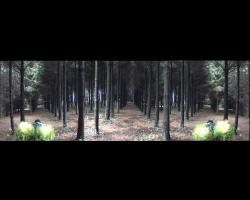
This video extracted from a serial work where lettuce is used as a main element of the composition "Cache-Cache Salade" wants to be read as an absurd story, a dream-like extract somehow strange and unhealthy, because with no immediate origins, neither possibilities of identification. The video starts with a fiddled panoramic frame, where a cloned character emerges jumping, miming a kid walking in the woods - straight from a children story. The sound wrapping takes parts in the dream-like and mysterious story. The character seems taken then in a hide and seek game, where he is himself attacked, tracked, and becomes a prey every time he is exposed to the outside sight (out of frame). Or is he himself, the predator? Hiding to hunt down the "beast"? The outside sight, suggested by barking out form frame, is also the one of the viewer/voyeur observing the scene. Let's note that this is by the character's behaviour, hiding and running alternatively between the trees, that a metaphoric link is created with the outside. The essential doesn't stand in the action as the only narration, but in that kind of hypnotic fascination brought by the image itself almost static - and by the impression of a moment giving up elsewhere, in a out of time. The poetry is here preserved by the persistence for the arbitrary, the image assures itself and refined only little by little its possible interpretation.
Born in 1978 (in France), Jérémy Laffon begins his artistic research by an exclusive pictorial and poetic work, then enlarges little by little his expression field to other supports such as carving, photography, performance (and happenings), but also video, still conserving a poetic unity revealing some of his influences (such as Incohérents', Fluxs', Francis Alys', Fischli & Weiss', Paul McCarthy, etc.). While collaborating on a regular basis with various artistic associations (during exhibitions or venues) the artist experiments his concepts and his creative processes (implementing them sometime in unappropriate spaces for that prospect, such as music festival or down the street). These concepts constitute today a singular language, gravitating around flow phenomenon, transitory and grotesque but always keeping an obsessive rigor and an irony toward the process of creation and the relation with the viewer. Defining himself as an usurper, professional novice and dressing himself with very different characters such as "the wanderer", "the dullar", "the stuffer", or the "pom-pom boy", Jérémy Laffon declines the role of the intruder, has an iconoclast sight on culture, while questioning key notions such as "power", money" or "manipulation".
Arnaud Laffond
Catalogue : 2021stay home | Animation | mp4 | color | 4:10 | France | 2020
Arnaud Laffond
stay home
Animation | mp4 | color | 4:10 | France | 2020
"Stay Home" is a graphic logbook, which I try to keep by putting my feelings into it during this quarantine. How I perceive it and there feel from day to day. By putting my own experiences and the feelings of people around me that I have on the phone or other social networks. It is a very singular moment of life, which I think will mark and change our society. The apprehension of after is very important, even worrying. How will it be after confinement? A normal life? This is a summary of my 55 days.
Arnaud Laffond is a video artist, plastic digitalis workbench based in Lyon. His work is characterized by the creation of virtual environments and materials generated by computer. The color, as the material brute, is numerically sculptured, treated and altered to be reborn in vibrating and bright architecture. His works are situated on the verge of science fiction, halfway between abstraction and the representationalism , utopia and dystopia, architecture and landscape. He works with diverse aspects of video, such as installation, animated gif and impression
Paolo Laganà
Catalogue : 2023Eine neue Nacht | Fiction | 4k | black and white | 28:55 | Italy, Germany | 2022
Paolo LaganÀ
Eine neue Nacht
Fiction | 4k | black and white | 28:55 | Italy, Germany | 2022
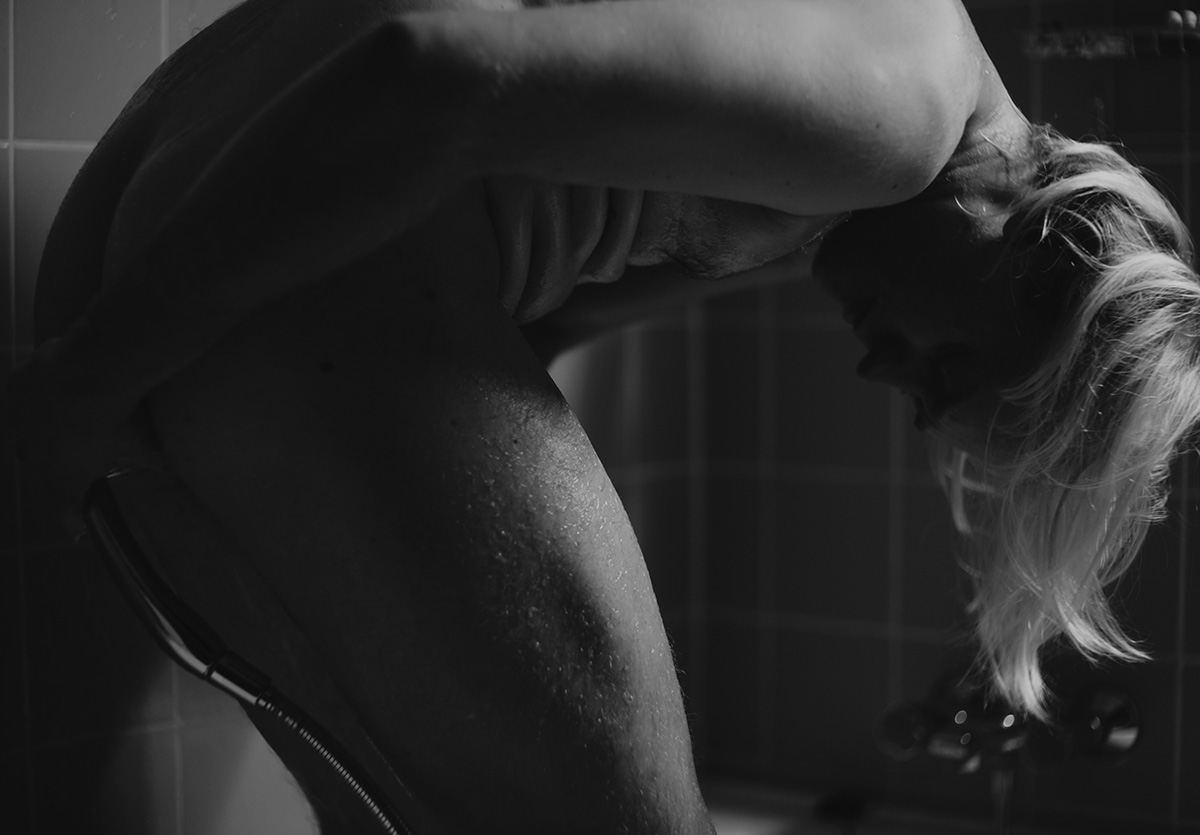
Following a passionate encounter with a young man, Karl finds himself filled with reservations and suspicion as the latter unexpectedly leaves from his apartment. Yet, the ensuing night presents Karl with a chance to reassess his perception.
Paolo Laganá was born in 1986 in Italy. Their artistic practice revolves around queer culture and themes of identity. They are currently based in Berlin, studying Film Editing at the Deutsche Film- und Fernsehakademie Berlin (dffb). Paolo's passion for filmmaking began early, leading them to create several short experimental films on Super 8. They spent several years in Bucharest, Romania, gaining experience in various roles on film sets and collaborating with many figures from the Romanian new wave. Paolo is the recipient of a scholarship for artistic merit from the German National Academic Foundation. Their film "A New Night" was produced independently, outside their academic studies.
Virginie Laganière, Jean-Maxime DUFRESNE
Catalogue : 2023Fragile Monument | Experimental video | 4k | color | 10:30 | Canada | 2022
Virginie LaganiÈre, Jean-Maxime DUFRESNE
Fragile Monument
Experimental video | 4k | color | 10:30 | Canada | 2022
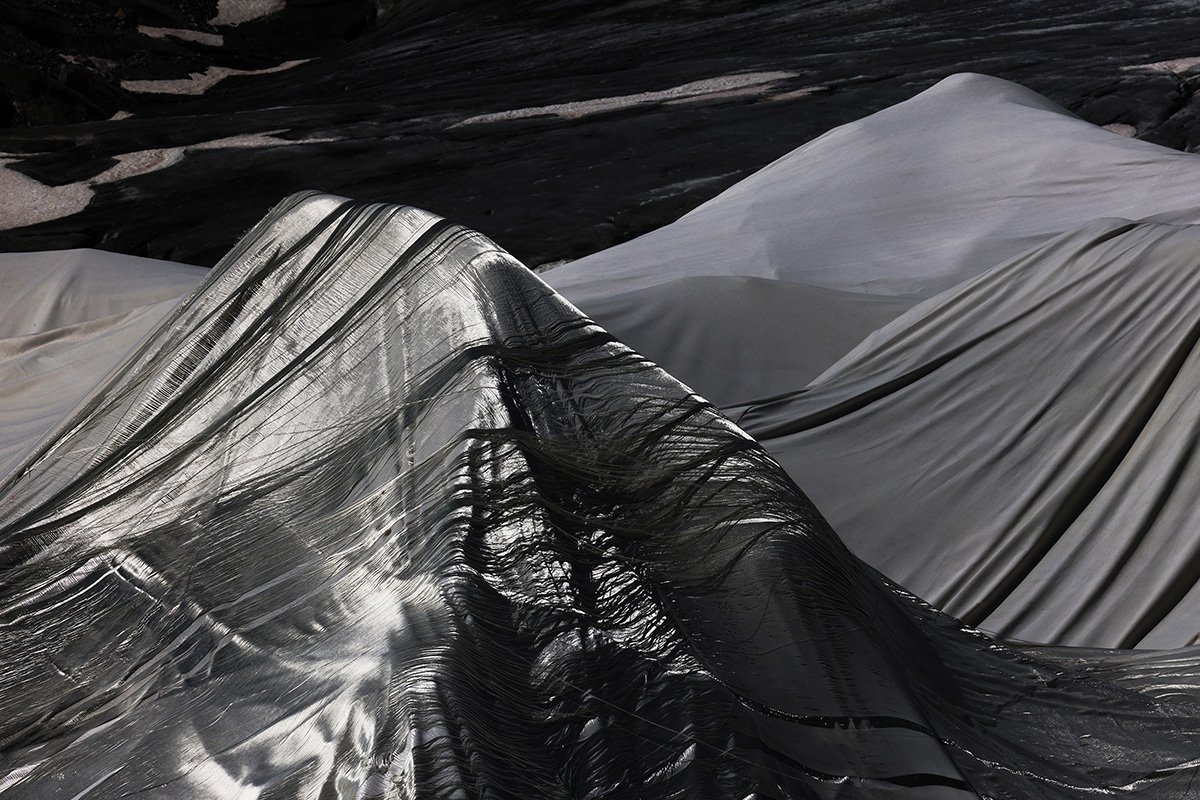
Culminating at 3600 meters, the Rho?ne Glacier has become an object of scientific study and an important touristic site of the Swiss Alps. An eloquent indication of a predicted disappearance, part of the ablation zone of the glacier is covered with geotextile mosaics to protect it from solar radiation. If these reflective covers can potentially reduce the acceleration of the glacial retreat, this practice remains disputed by the scientific community. Evocative of an enigmatic setting, of shrouds or temporary refuges, the deployment of these survival blankets represents an anthropic attempt to control the landscape in a context of climatic upheaval. In an immersive work of image and sound, Fragile Monument explores the scales of temporality specific to the glacier, the water, the mineral environment and their entanglement with human rhythms. By questioning models of future ecologies, the work focuses on our complex relationship with an altered nature, where states of hybridity, vulnerability and the sublime are interlaced.
In parallel to their individual practices, Virginie Laganière and Jean-Maxime Dufresne’s artistic collaboration has focused on the transformations of our built, natural and technological territories and their social realities. Anthropological in nature, their approach is based on a research methodology developed during residencies abroad. At the confluence of documentary and fictional approaches, the situated research and observations feed into a work of the image as an object of investigation exploring different forms of narrativity and visibility. This is evidenced by their multifaceted installations in which video, sound art and photography interact with sculptural elements and architectural displays.?? Supported by the Conseil des arts et des lettres du Québec and the Canada Council for the Arts, their work has been presented in exhibitions, festivals and residencies in Quebec and internationally. These include the Festival International du Film sur l’Art, the Galerie de l’UQAM, the Musée d’art de Joliette, Tokyo Arts and Space, the Studio du Québec in Rome, the EXiS Experimental Film and Video Festival in Seoul, the Inside-Out Art Museum in Beijing and the Helsinki International Artist Programme. In 2021-2022, they developed a new research entitled Radiant Mountain at La Becque’s Principal Residency Program in Switzerland.
Stéphanie Lagarde