Catalogue > List by artist
Browse the entire list of Rencontre Internationales artists since 2004. Use the alphabetical filter to refine your search. update in progress
Vanja Sandell Billström, Pagano, Lucia
Catalogue : 2025Diskret Matematik | Experimental fiction | 4k | color | 15:20 | Sweden | 2024
Vanja Sandell BillstrÖm, Lucia Pagano
Diskret Matematik
Experimental fiction | 4k | color | 15:20 | Sweden | 2024
A passage between two buildings, a nail salon, a stairwell, a badminton hall, an atrium, a hospital culvert. Life takes place. With the small details of existence in focus, rather than the larger narratives and conflicts, fragments are connected to a possible outcome. In mathematics, the word discrete is used to describe objects that are not continuous and separated from each other. Discrete mathematics is applied in a number of different areas such as encryption, databases, game theory, graph theory and algorithms.
Lucia Pagano and Vanja Sandell Billström were educated at the Lodz Film School and at the Royal Institute of Art in Stockholm. Discrete Mathematics is their second film as a duo which further explores methods developed in their previous film Park. Park was nominated to the Best Swedish Short at Göteborg Film Festival 2020, Tempo Short Award, 1KM Film Award, and winner of the Tempo Sound Award the same year. Previously they have shown their work at festivals and art venues around the world.
Catalogue : 2021Park | Documentary | mov | color | 14:58 | Sweden | 2020
Vanja Sandell BillstrÖm, Pagano, Lucia
Park
Documentary | mov | color | 14:58 | Sweden | 2020
Scenes of people in motion. Some are working, others spend their leisure time. The sound of airplanes and subways reminds us of the city behind the piece of created nature. A short documentary with scenes from the parks of Stockholm taking place during one year.
Lucia Pagano (b. 1984) is a filmmaker and artist educated at the Film School in Lodz, and at the Royal Institute of Art in Stockholm. Her films focus on details in everyday life, often by observing seemingly meaningless fragments of reality, sometimes to absurdity. Her films have been shown at festivals around the world, like Sao Paolo, San Francisco, Kiev, and Warsaw and has been awarded or been honorary mentioned at film festivals in LA, Oberhausen, Stockholm, and at Nordic Panorama. Vanja Sandell Billström (f. 1983) is a filmmaker and artist educated at the Royal Institute of Art in Stockholm. She works both with documentary, staged situations and video installations. The films often revolve around everyday situations, and with characters that seemingly spontaneously reflect on everyday conditions or the situation that the film itself requires. Sandell Billström has earlier been nominated for the Guldbagge award, Best Swedish Short and exhibited at Göteborg Konsthall, Supermarket Art Fair, Box Gallery and Färgfabriken. ”Park” is their first film that they have directed together and it was nominated for Best Swedish Short at the Göteborg Film Festival, the Tempo Short Award, 1KM Film and won the Tempo Sound Award 2020.
Aurora Sander
Catalogue : 2020À la carte | Animation | mp4 | color | 12:44 | Norway, Germany | 2019
Aurora Sander
À la carte
Animation | mp4 | color | 12:44 | Norway, Germany | 2019
A narrator takes you on a deep dive into the art world. What mechanisms are driving this ecosystem, or rather: which participants? The animation film "À la carte" takes a humorous look at the food chain in the art field and the challenges we face.
The artist duo consisting of Ellinor Aurora Aasgaard and Bror Sander Berg Størseth constantly serve up fresh perspectives on the world, tongue in cheek, jaws scraping off the ground. In their particular case form does not follow function, but function at least contains the word fun. The objects produced by the duo are caught in between form and function, art and design, discourse and disgust. For instance: portable paintings whose support structure doubles as shipping crates, and a mobile sculpture serving you social lubrication. Or high heeled shoes with built in brushes for an easy clean, and seats reserved for magazine covers. Aurora Sander reacts to the intrinsic structures of the art world, of socialization, distribution, value creation, judgement, and accruement, to turn some tables, but making sure the tables look damned good on the way round. The references in the work of Aurora Sander are plentiful, and the usual appropriation of low culture you traditionally would find in the art is repurposed with a refined knowledge of not just the art world, but also an interest in merchandizing and hanging out, dipping low. Their artistic strategies are closely linked to design, theater, and fashion; fields that art is struggling to keep at bay. Art historian Benjamin Buchloh describes this relationship as one where high art constantly appropriates images, strategies, and mechanisms from low culture, not in order to assimilate the two, but rather to reaffirm art's position in the hierarchy. Aurora Sander seems to confuse the hierarchy, and the identity of the duo, who might be mistaken for a singular artist, a case of mistaken identity, might range from a Disney princess to an emerging artist trying to make it in the cruel marketplace of the art world. Aurora Sander's strategy of confusion, fusion, fiction and friction, seems to be the duo's strength, making objects and creating characters that belong in the art world, but have no idea how they got there.
Talena Sanders
Catalogue : 2019Between my flesh and the world's fingers | Experimental doc. | 16mm | color and b&w | 31:0 | USA | 2018
Talena Sanders
Between my flesh and the world's fingers
Experimental doc. | 16mm | color and b&w | 31:0 | USA | 2018
Mary MacLane, the Wild Woman of Butte, Montana, published her diaries in 1902 and 1917. As an out queer and proto-feminist at the turn of the century, MacLane became notorious upon the publication of her 1902 diary, I Await the Devil’s Coming. She was whisked away from the industrial hellscape of her copper mining Montana hometown to a life in the public eye as an author, journalist, female film pioneer and always a provocateur - sending up social norms throughout her career, with a special focus on staid notions about women and sexuality. Between my flesh and the world’s fingers is an experimental essay and diary film primarily based on her published diaries and her film work. Though the film is not directly a personal film, the production is founded in part in the act of a woman telling her own story through that of another woman, a trailblazing figure from the past.
Talena Sanders makes moving image works that explore the development of individual and collective senses of identity in affinity groups. Her films and videos are informed by an interest in presenting the many ways that social institutions can shape individuals lives on both the broader geopolitical level and the most intimate, personal scales. A common starting point for developing new projects begins with an interest in interrogating narratives from histories and how historical records can influence senses of identity, especially as it relates to ideas of national and regional character. She believes there are endless means to present and interrogate materials from the real on the spectrum from nonfiction to narrative production approaches. Her work often places historical found/archival footage and audio in dialogue with contemporary media captured on location to question constructs of privilege and power in who gets authorized to tell the story of a shared experience. She holds an MFA from Duke University’s Experimental and Documentary Arts program and a BFA from the University of Kentucky. Her work has been screened, exhibited, and collected internationally, including at the New York Film Festival`s Views from the Avant-Garde, FID Marseille, Montreal International Documentary Festival, Fronteira Festival, Viennale, DokuFest Kosovo, BFI London Film Festival, and Southeastern Center for Contemporary Art. Her first feature documentary, Liahona, is distributed by Documentary Educational Resources and Doc Alliance. She has previously taught film and video production and film studies at Duke University and the University of Montana. She is currently an Assistant Professor of Communication and Media Studies at Sonoma State University.
Vladlena Sandu
Catalogue : 2025No Nation Without Culture | Experimental doc. | hdv | color | 16:0 | Russia, Netherlands | 2022
Vladlena Sandu
No Nation Without Culture
Experimental doc. | hdv | color | 16:0 | Russia, Netherlands | 2022
Chechnya, Grozny, spring 2021. The city's landscapes are filled with portraits of Putin, Kadyrov Senior, and Kadyrov Junior. They watch me from every corner, infiltrating my thoughts. It’s almost impossible to believe and accept. I perceive the totalitarianism these portraits convey, viewing them intentionally through a distorted lens. I film the streets of my hometown, Grozny, from behind the tinted windows of a car, knowing that such actions put me at risk of persecution. I document a moment when fascism begins to take root in Russia—a time when, after 30 years of the Chechen people's struggle for independence, the focus shifts to indoctrinating children. In 2022, over 12,000 soldiers from Kadyrov's army are sent to war in Ukraine.
Vladlena Sandu was born in Crimea, Ukraine (USSR), in 1982 and grew up in Grozny, Chechnya, during four years of war. She graduated from VGIK in 2016 with a degree in film directing. In 2019, she completed a postgraduate degree in Art at VGIK in Aesthetics, publishing several academic articles. In 2019 graduated Boris Yukhananov's Studio for theater direction. Her works have been presented at international festivals such as the Rotterdam Film Festival, Berlinale, DocLisboa, GoEast, Movies That Matter, ZagrebDox, Geneva International Film Festival, DOK Leipzig, and others, earning international awards. At the start of the Russian war against Ukraine in March 2022, Sandu fled Russia and is now based in Amsterdam. There, she completed No Nation Without Culture about regime in Chechnya, which won Best Short Film at GoEast IFF 2023. In 2023, she also directed the autobiographical performance The Rainbow Cinema and received the Best Amsterdam Fringe 2023 Award.
Fette Sans
Catalogue : 2023La Reprise (Dérive) [extrait] | Experimental video | mp4 | black and white | 15:0 | France, Germany | 2022
Fette Sans
La Reprise (Dérive) [extrait]
Experimental video | mp4 | black and white | 15:0 | France, Germany | 2022
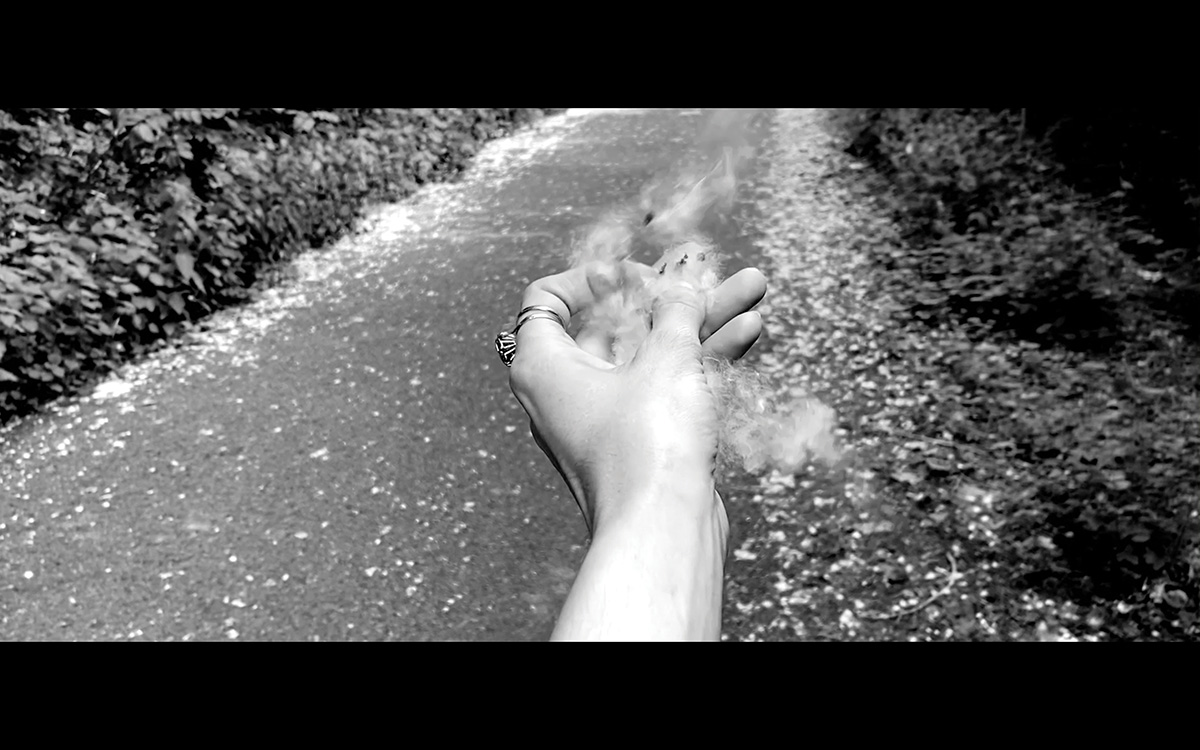
La Reprise (Dérive) is an exercise in continuity and distortion. This experimental film began on June 20, 2020. As of September 3, 2023, it is 168 min / weeks long. Every week, a subsequent minute is produced by combining scenes shot that week with archival material from the past years. Footage and sound are consistently recorded with the same single device (an iPhone). The film may distort, but there is always a presumption that something exists, or did exist, which is what was recorded. The sequences are neither true nor false, they integrate various degrees of theatricality and authenticity. They become portraits of an agitated immersion in the perpetual process of being, of this unpredictable yet systematic gathering and indexing. They are the record of close observations. I am a passenger, a witness to recurrences and patterns. This continuous collage of archives is the tension. The narrative is disconnected from the sum of its parts and elaborates on successes and failures. In this regard, the film is in a constant state of being finished, rather than interminably in progress. While its length progressively evolves, it also always is its final duration. This work is meant to continue until my death.
Fette Sans is based in Zagreb and in Berlin. She has a conceptual and interdisciplinary practice that includes the production of images, writing, performances, online gestures, film-making, discussions, and installations. Games of dissociative identities and the stories we tell ourselves to collect evidence of what has happened are recurring components in her work. She is interested in the ambiguity of what constitutes an image’s residue. Concerned with social systems, representation, and technology, she develops obsessive rituals, collaborations, and speculative narratives to question these issues. Rituals are interesting because there are ways of expressing repetition and the longing for security while accepting the risks associated with the very act of ceremonial reiterations: boredom itself.
Catalogue : 2015La Reprise | Video | hdv | black and white | 40:3 | France, Germany | 2014
Fette Sans
La Reprise
Video | hdv | black and white | 40:3 | France, Germany | 2014
La Reprise is an ongoing exercise begun on April 21, 2013. Every week, a subsequent minute is produced consisting of scenes shot that week along with archival material from the past years. Footage and sound are consistently recorded with the same single device. The film may distort, but there is always a presumption that something exists, or did exist, which is what was recorded. The sequences are neither true nor false, they integrate various degrees of theatricality and authenticity. They become portraits of an agitated immersion in the perpetual process of systematic indexing and gathering, and of close observations. [I am a passenger, a witness to recurrences and patterns.] This continuous collage of archives is the tension. The narrative is disconnected from the sum of its parts, and elaborates on successes and failures. Each screening becomes a unique occasion to view the film as the succession of each 1min weekly film is added every time.
At the beginning of the work, there is writing - perhaps a story, then there are photographs, films, and installations. Fette Sans was born in France. She lived in Los Angeles for about ten years where she ran an artist space, then moved to Berlin in 2010. Her work aims at questioning authenticity and the precious. What is representation without narrative? What is the role of light in memory? Panic. Repeat. Overwhelm. Serendipity plays an important role in her interaction with the characters and materials she gathers. She collects and re-interprets, referencing previous gestures and leaving these traces available for more examinations.
Gabriel Sanson
Catalogue : 2020Empathie | Experimental fiction | 4k | color and b&w | 8:42 | France | 2019
Gabriel Sanson
Empathie
Experimental fiction | 4k | color and b&w | 8:42 | France | 2019
An ape metamorphoses into an Angel of Melancholy and leaves his island for Saturn, the sombre planet.
Gabriel Sanson, born in Paris in 1993, has directed several shorts, that premiered at the Biennale of Venice.
Larissa Sansour, Ashery Oreet
Catalogue : 2012Falafel Road | Experimental doc. | hdcam | color | 61:0 | Palestine, United Kingdom | 2011
Larissa Sansour, Ashery Oreet
Falafel Road
Experimental doc. | hdcam | color | 61:0 | Palestine, United Kingdom | 2011
During February 2010, Jerusalem born artists Oreet Ashery and Larissa Sansour had twenty meals in twenty falafel eateries in London, one on each day. The meals were open for the public to join in eating and debate, and functioned as art events, laboratories, performances, therapy sessions and oral history hubs. All the meals were filmed with a small Flip camera on a rotating cheeseboard and were edited together into one-hour of raw and immediate film. Ashery and Sansour opened each meal with the question: Did Israel steal the falafel from the Palestinians? This seemingly silly and controversial question, was a precursor to an investigation into the intentional and systematic hijacking and eradication of Palestinian cultural history by the state of Israel.
Oreet Ashery is a Jerusalem born, London based visual artist, cultural activist and educationist, engaged in solo and collaborative practices. Ashery works across performance, still and moving image, objects and facilitation to create situations that explore the relationships between politics, culture and representation. Ashery?s work is presented extensively in an international context, and discussed in numerous publications and books, in various languages. Recently Ashery had published three books: The Novel of Nonel and Vovel, with the artist Larissa Sansour, Charta; the monograph Dancing with Men, Live Art Development Agency; and the Artangel commission Staying, dream, bin, soft stud and other stories. Sansour?s work is interdisciplinary and borrows heavily from the language of film and pop culture. References and details ranging from sci-fi and spaghetti westerns to horror films converge with Middle East politics and social issues to create intricate parallel universes in which a new value system can be decoded. Sansour?s work has been exhibited worldwide in international biennials, galleries, museums, film festivals and on the internet and is featured in many art publications. Larissa Sansour was born in Jerusalem and lives and works in London, UK.
Larissa Sansour, Søren LIND
Catalogue : 2017In The Future, They Ate From the Finest Porcelain | Experimental fiction | hdv | color | 28:30 | Palestine, Denmark | 2015
Larissa Sansour, Søren LIND
In The Future, They Ate From the Finest Porcelain
Experimental fiction | hdv | color | 28:30 | Palestine, Denmark | 2015
In the Future They Ate From the Finest Porcelain resides in the cross-section between sci-fi, archaeology and politics. Combining live motion and CGI, the film explores the role of myth for history, fact and national identity. A narrative resistance group makes underground deposits of elaborate porcelain – suggested to belong to an entirely fictional civilization. Their aim is to influence history and support future claims to their vanishing lands.
Larissa Sansour Larissa Sansour was born in 1973 in East Jerusalem, Palestine, and studied fine arts in London, New York and Copenhagen. Her work is interdisciplinary, immersed in the current political dialogue and utilises video, photography, installation, the book form and the internet. Central to her work is the tug and pull between fiction and reality. Recent solo exhibitions include Turku Art Museum in Finland, Photographic Center in Copenhagen, Galerie Anne de Villepoix in Paris, Kulturhuset in Stockholm, Lawrie Shabibi in Dubai, Sabrina Amrani in Madrid and DEPO in Istanbul. Sansour’s work has featured in the biennials of Istanbul, Busan and Liverpool. She has exhibited at venues such as Tate Modern, London; Centre Pompidou, Paris; LOOP, Seoul; Al Hoash, Jerusalem; Queen Sofia Museum, Madrid; Centre for Photography, Sydney; Cornerhouse, Manchester; Townhouse, Cairo; Maraya Arts Centre, Sharjah, UAE; Empty Quarter, Dubai; Galerie Nationale de Jeu de Paume, Paris; Iniva, London; Institut du Monde Arabe, Paris; Third Guangzhou Triennial, Guangzhou , China; Louisiana Museum of Contemporary Art, Denmark; House of World Cultures, Berlin, and MOCA, Hiroshima. Sansour currently lives and works in London, UK. Soren Lind Soren Lind (b. 1970) is a Danish author. He writes children’s books and literary fiction. With a background in philosophy, Lind wrote books on mind, language and understanding before turning to fiction. He has published a novel and two collections of short stories as well as four children’s books. In addition to his literary production, Lind is also a visual artist and writes short film scripts. Lind lives and works in London, UK. Sansour/Lind Larissa Sansour and Soren Lind have worked together on numerous occasions. Lind usually provides the scripts for Sansour’s films, just as he contributed a sci-fi story for Sansour’s 20
Larissa Sansour, Søren Lind
Catalogue : 2021al Mukhtabar | Experimental video | 4k | black and white | 28:0 | Palestine, United Kingdom | 2019
Larissa Sansour, Søren Lind
al Mukhtabar
Experimental video | 4k | black and white | 28:0 | Palestine, United Kingdom | 2019
In Vitro is set in the aftermath of an eco-disaster. An abandoned nuclear reactor under the biblical town of Bethlehem has been converted into an enormous orchard. Using heirloom seeds collected in the final days before the apocalypse, a group of scientists are preparing to replant the soil above. In the hospital wing of the underground compound, the orchard’s ailing founder, 70-year-old Dunia is lying in her deathbed, as 30-year-old Alia comes to visit her. Alia is born underground as part of a comprehensive cloning program and has never seen the town she’s destined to rebuild.
Larissa Sansour Larissa Sansour is a Palestinian artist/director. Central to her work is the tug and pull between fiction and reality. In her recent works, she uses science fiction to address social and political issues. Working mainly with film, Sansour also produces installations, photos and sculptures. Sansour’s work is shown in film festivals and museums worldwide. In 2019, she represents Denmark at the 58th Venice Biennial. She has shown her work at Tate Modern, MoMA, Centre Pompidou and the Istanbul Biennial as well as the Berlinale, Rotterdam International Film Festival and BFI London Film Festival. Recent solo exhibitions include Bluecoat in Liverpool, Dar El-Nimer in Beirut and Nikolaj Kunsthal in Copenhagen. Sansour lives and works in London. Søren Lind Soren Lind (b. 1970) is a Danish author, director and scriptwriter. With a background in philosophy, Lind wrote books on mind, language and understanding before turning to film and fiction. He has published novels, shorts story collections and several children’s books. Lind screens and exhibits his films at museums, galleries and film festivals worldwide. Recent venues and festivals include the 58th Venice Biennial, MoMA (US), Barbican (UK), Nikolaj Kunsthal (DK), Berlinale (D), International Film Festival Rotterdam (NL) and BFI London Film Festival (UK). He lives and works in London.
Catalogue : 2008happy days | Art vidéo | dv | color | 2:59 | Palestine | 2006
Larissa Sansour
happy days
Art vidéo | dv | color | 2:59 | Palestine | 2006
Happy Days is a video that exposes everyday Palestinian life under Israeli occupation. In the video, a collage of footage shot on location in the occupied territories is accompanied by the theme music from the seventies sitcom ?Happy Days?. The piece provides imagery different from that of news footage. The contrasting music underlines the general public?s apathy when confronted with world conflict. The idea is to subjugate international politics to a format normally associated with entertainment and thereby call attention to the blurry boundary between the two.
Born 1973 in Jerusalem, Sansour studied Fine Art in Copenhagen, London and New York, and earned her MFA from New York University. Her work is interdisciplinary, immersed in the current political dialogue and utilizes video art, digital photography, experimental documentary and the internet. Sansour?s work has been exhibited worldwide in galleries, museums as well as film festivals. Her most notable shows include the Tate Modern in London, UK, the National Museum of Queen Sofia in Madrid, Spain and an upcoming show at Arken Musem of Modern Art in Denmark. Sansour is an International board member at the new concept school Chaos Pilots where she contributes with her writing on arts, politics and education. She lives and works in Copenhagen, Denmark.
Larissa Sansour
Larissa Sansour
Catalogue : 2021al Mukhtabar | Experimental video | 4k | black and white | 28:0 | Palestine, United Kingdom | 2019
Larissa Sansour, Søren Lind
al Mukhtabar
Experimental video | 4k | black and white | 28:0 | Palestine, United Kingdom | 2019
In Vitro is set in the aftermath of an eco-disaster. An abandoned nuclear reactor under the biblical town of Bethlehem has been converted into an enormous orchard. Using heirloom seeds collected in the final days before the apocalypse, a group of scientists are preparing to replant the soil above. In the hospital wing of the underground compound, the orchard’s ailing founder, 70-year-old Dunia is lying in her deathbed, as 30-year-old Alia comes to visit her. Alia is born underground as part of a comprehensive cloning program and has never seen the town she’s destined to rebuild.
Larissa Sansour Larissa Sansour is a Palestinian artist/director. Central to her work is the tug and pull between fiction and reality. In her recent works, she uses science fiction to address social and political issues. Working mainly with film, Sansour also produces installations, photos and sculptures. Sansour’s work is shown in film festivals and museums worldwide. In 2019, she represents Denmark at the 58th Venice Biennial. She has shown her work at Tate Modern, MoMA, Centre Pompidou and the Istanbul Biennial as well as the Berlinale, Rotterdam International Film Festival and BFI London Film Festival. Recent solo exhibitions include Bluecoat in Liverpool, Dar El-Nimer in Beirut and Nikolaj Kunsthal in Copenhagen. Sansour lives and works in London. Søren Lind Soren Lind (b. 1970) is a Danish author, director and scriptwriter. With a background in philosophy, Lind wrote books on mind, language and understanding before turning to film and fiction. He has published novels, shorts story collections and several children’s books. Lind screens and exhibits his films at museums, galleries and film festivals worldwide. Recent venues and festivals include the 58th Venice Biennial, MoMA (US), Barbican (UK), Nikolaj Kunsthal (DK), Berlinale (D), International Film Festival Rotterdam (NL) and BFI London Film Festival (UK). He lives and works in London.
Catalogue : 2008happy days | Art vidéo | dv | color | 2:59 | Palestine | 2006
Larissa Sansour
happy days
Art vidéo | dv | color | 2:59 | Palestine | 2006
Happy Days is a video that exposes everyday Palestinian life under Israeli occupation. In the video, a collage of footage shot on location in the occupied territories is accompanied by the theme music from the seventies sitcom ?Happy Days?. The piece provides imagery different from that of news footage. The contrasting music underlines the general public?s apathy when confronted with world conflict. The idea is to subjugate international politics to a format normally associated with entertainment and thereby call attention to the blurry boundary between the two.
Born 1973 in Jerusalem, Sansour studied Fine Art in Copenhagen, London and New York, and earned her MFA from New York University. Her work is interdisciplinary, immersed in the current political dialogue and utilizes video art, digital photography, experimental documentary and the internet. Sansour?s work has been exhibited worldwide in galleries, museums as well as film festivals. Her most notable shows include the Tate Modern in London, UK, the National Museum of Queen Sofia in Madrid, Spain and an upcoming show at Arken Musem of Modern Art in Denmark. Sansour is an International board member at the new concept school Chaos Pilots where she contributes with her writing on arts, politics and education. She lives and works in Copenhagen, Denmark.
Roberto Santaguida
Catalogue : 2023Avenuers (ep. 3) | Documentary | 16mm | black and white | 28:0 | Canada | 2021
Roberto Santaguida
Avenuers (ep. 3)
Documentary | 16mm | black and white | 28:0 | Canada | 2021
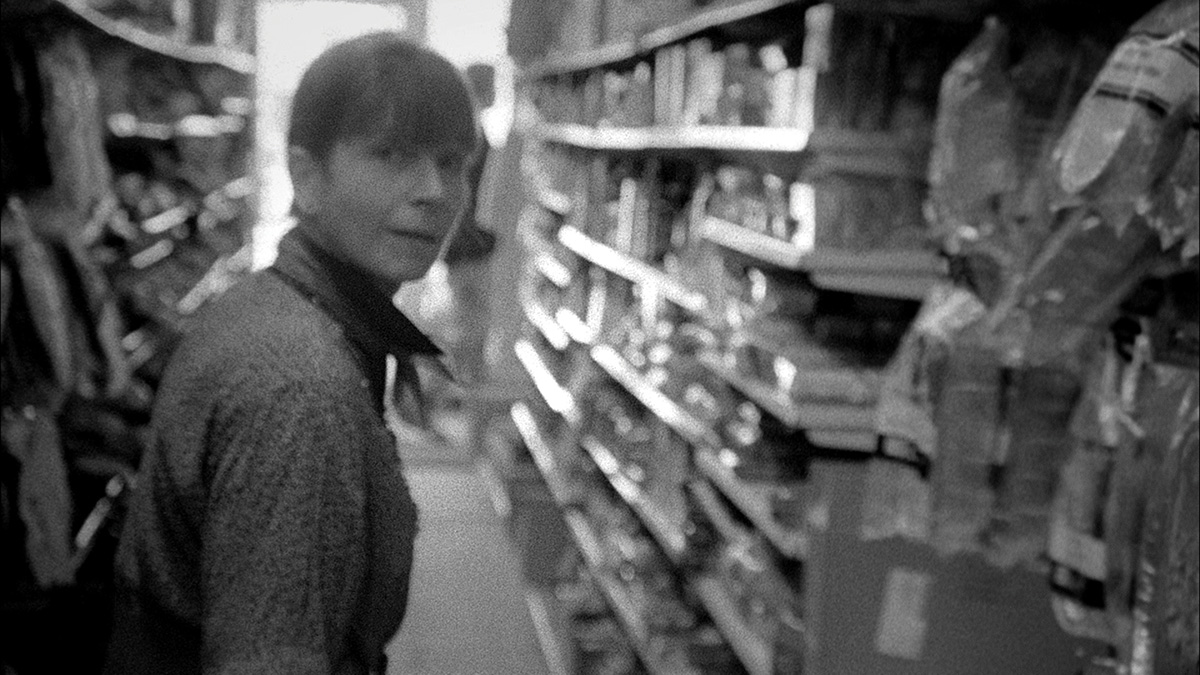
Six avenues, in south-central Montreal, revisited.
Since completing his studies in film production at Concordia University, Roberto Santaguida’s films and videos have been shown at more than 400 international festivals, including Tampere Film Festival (Finland), CPH: DOX, Copenhagen International Documentary Film Festival (Denmark), Contemporary Art Festival Sesc_Videobrasil (Brazil), Flickers' Rhode Island International Film Festival (United States), transmediale (Germany), and Message to Man (Russia). Roberto is the recipient of the K.M. Hunter Artist Award, the Chalmers Arts Fellowship and a fellowship from Akademie Schloss Solitude in Germany.
Ruben Santiago
Catalogue : 2008Daily | Experimental video | dv | color | 2:41 | Portugal, Spain | 2006
Ruben Santiago
Daily
Experimental video | dv | color | 2:41 | Portugal, Spain | 2006
Catalogue : 2008Future | Experimental video | dv | color | 3:3 | Portugal, Spain | 2005
Ruben Santiago
Future
Experimental video | dv | color | 3:3 | Portugal, Spain | 2005
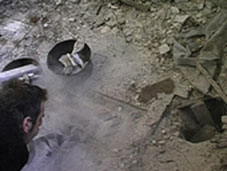
Under layers of dust and forgotten memories I hide a time to come. Hide it? I still don´t know. Maybe I'm just recovering those things that will never be.
Born in Spain in 1974, Ruben Santiago's work goes from large scale installations to net art projects, public space actions, process based works, records. and publications. Over the past years, the use of moving image and sound has framed a continuous line of investigation for him, either overlapping it with other disciplines or being conceived at an autonomous level. His work has been exhibited in many international galleries and institutions. Currently, he is artist-in-residence at Hangar Centre de Producció, Barcelona. Exception, memory, and crime are keywords in his works.
Catalogue : 2006Monogamy home edit | Art vidéo | dv | color | 3:7 | Portugal, Spain | 2004
Ruben Santiago
Monogamy home edit
Art vidéo | dv | color | 3:7 | Portugal, Spain | 2004
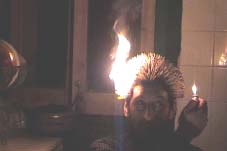
From my former kitchen I face you 1800 matches in my head.
Ruben Santiago was born in Galicia (Spain) in 1974. He lives and works between Barcelona and Porto (Portugal). Originally trained as a sculptor though studies at the Universidad Complutense, Madrid and the Escola Massana, Barcelona, Ruben Santiago?s career has evolved, with projects that have derived toward the moving image through records, installations and video and film projections.
Catalogue : 2006Monogamy outdoors | Art vidéo | dv | color | 2:24 | Portugal, Spain | 2004
Ruben Santiago
Monogamy outdoors
Art vidéo | dv | color | 2:24 | Portugal, Spain | 2004
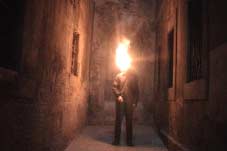
A narrow dirty street of Barcelona. This was my neighborhood for a while. 1800 matches in my head. Such was my first monogamy.
Ruben SANTIAGO was born in Galicia (Spain)in 1974. He lives and works between Barcelona and Porto(Portugal) Originally trained as a sculptor though studies at the Universidad Complutense, Madrid and the Escola Massana, Barcelona, Ruben Santiago?s career has evolved with projects that have derived toward the moving image through records, installations and video and film projections.
Mauro Santini
Catalogue : 2020Megrez (Vaghe stelle) | Video | 4k | color | 7:20 | Italy | 2019
Mauro Santini
Megrez (Vaghe stelle)
Video | 4k | color | 7:20 | Italy | 2019
“Vaghe stelle” is a seven-chaptered film, conceived as a musical album and composed of seven movements, which can be watched singly (like songs), or in the established order (like a record) or also mixing the films creating new combinations or possible narrations. The ‘songs’ are seven as the principal stars of the Ursa Major. It will be a nocturnal wandering with the starry sky as a reference: an earthly pilgrimage looking for epiphanies or the drift of a hypothetical interstellar trip.
Since 2000, Mauro Santini (Fano, Italy, 1965) has composed a series of video diaries, stories told in the first person about time, memory and the search for oneself. One of these, ‘Da lontano’, won the Italian competition at the 2002 Torino Film Festival. He has participated at the international film festivals of Locarno, Venezia, Oberhausen, Jeonju, Annecy, Rencontres Internationales Paris/Berlin, DocLisboa, Cinémas Différents Paris, Alchemy, Montpellier, Pesaro etc In 2006, he made the feature film Flòr da Baixa and participated in 2008 with different works at “La cité des yeux, une saison italienne”, about Italian avant-garde cinema from 1968 to 2008, which was organized by the Cinémathèque Française in Paris and curated by Nicole Brenez and Federico Rossin.
Catalogue : 2019Vaghe Stelle - Mizar | Experimental video | 4k | color | 11:0 | Italy | 2017
Mauro Santini
Vaghe Stelle - Mizar
Experimental video | 4k | color | 11:0 | Italy | 2017
“Vaghe stele” is a seven-chaptered film, conceived as a musical album and composed of seven movements, which can be watched singly (like songs), or in the established order (like a record) or also mixing the films creating new combinations or possible narrations. The “songs” are seven as the principal stars of the Ursa Major. It will be a nocturnal wandering with the starry sky as a reference: an earthly pilgrimage looking for epiphanies or the drift of a hypothetical interstellar trip.
Since 2000, Mauro Santini (Fano, Italy, 1965) has composed a series of video diaries, stories told in the first person about time, memory and the search for oneself. One of these, “Da lontano”, won the Italian competition at the 2002 Torino Film Festival. He has participated at the international film festivals of Locarno, Venezia, Oberhausen, Jeonju, Annecy, Rencontres Paris/Berlin, DocLisboa, Cinémas Différents Paris, Montpellier, Pesaro etc In 2006, he made the feature film Flòr da Baixa and participated in 2008 with different works at “La cité des yeux, une saison italienne”, about Italian avant-garde cinema from 1968 to 2008, which was organized by the Cinémathèque Française in Paris and curated by Nicole Brenez and Federico Rossin.
Catalogue : 2018Alkaid (Vaghe stelle) | Experimental video | 4k | color | 6:12 | Italy | 2017
Mauro Santini
Alkaid (Vaghe stelle)
Experimental video | 4k | color | 6:12 | Italy | 2017
“ Vaghe stelle ” is a seven-chaptered film, conceived as a musical album and composed of seven movements, which can be watched singly (like songs), or in the established order (like a record) or also mixing the films creating new combinations or possible narrations. The “ songs ” are seven as the principal stars of the Ursa Major. It will be a nocturnal wandering with the starry sky as a reference: an earthly pilgrimage looking for epiphanies or the drift of a hypothetical interstellar trip.
Since 2000, Mauro Santini (Fano, Italy, 1965) has composed a series of video diaries, stories told in the first person about time, memory and the search for oneself. One of these, “ Da lontano ”, won the Italian competition at the 2002 Torino Film Festival. He has participated at the international film festivals of Locarno, Venezia, Oberhausen, Jeonju, Annecy, Rencontres Paris/Berlin, DocLisboa, Cinémas Différents Paris, Montpellier, Pesaro etc In 2006, he made the feature film Flòr da Baixa and participated in 2008 with different works at “ La cité des yeux, une saison italienne ”, about Italian avant-garde cinema from 1968 to 2008, which was organized by the Cinémathèque Française in Paris and curated by Nicole Brenez and Federico Rossin.
Catalogue : 2011Notturno | Experimental film | dv | color | 7:0 | Italy | 2009
Mauro Santini
Notturno
Experimental film | dv | color | 7:0 | Italy | 2009
An indefinite image appears: a journey begins, a drift in the dark, in an unknown sea, waiting for a landing at the end of the night. ?I have always tried to use shaky shots, unusable leaders or time dilation of fragments to find testimony of a past that has been lived. In Notturno, this search continues within the image, penetrating it, running the pleasurable risk of getting lost inside it.? Mauro Santini
Mauro Santini (Fano, Italy, 1965) since 2000 has composed a series of video diaries, stories told in the first person about time, memory and the search for oneself. One of these, ?Da lontano?, won the Italian competition at the 2002 Torino Film Festival. He has participated at the international film festivals of Locarno, Oberhausen, Jeonju, Annecy, DocLisboa, Cinémas différents in Paris, Rencontres Paris/Berlin/Madrid, Montpellier, Pesaro and Bellaria. In 2006, he made the feature film Flòr da Baixa and in 2008 he participated with different works at the festival La cité des yeux, une saison italienne, about Italian avant-garde cinema from 1968 to 2008, which was organized by the Cinémathèque française of Paris and curated by Nicole Brenez.
Catalogue : 2009cosa che fugge | Experimental video | dv | black and white | 5:0 | Italy | 2008
Mauro Santini
cosa che fugge
Experimental video | dv | black and white | 5:0 | Italy | 2008
Le corp d`une femme devient un voyage, paysage qui coule; le temps marque et transforme un visage: une vie se passe et s`enfuit.
Mauro Santini est né à Fano (Italie) en 1965. Après avoir achevé des études artistiques , il se consacre à la photographie et la vidéo. Depuis 2000, il a composé une série de vidéos-journal intime, sans scénario, qui parlent à la première personne du temps, de la mémoire et de la recherche de lui-même. Ces vidéos ont participé à de nombreux festivals à Locarno, Jeonju (Corée du Sud), Oberhausen, Montpellie, Pesaro, Bellaria (Italie), aux Rencontres Paris/Berlin/Madrid, à Cinémas Différents de Paris, à Doclisboa de Lisbonne.
Catalogue : 2008Desalento | Experimental video | dv | color | 50:0 | Italy | 2006
Mauro Santini
Desalento
Experimental video | dv | color | 50:0 | Italy | 2006
`Desalento` is the story of a love lost in a Lisbon hotel and of a journey to Rio de Janeiro. It`s a diary about absence and solitude; about something that is missing, always and everywhere.
Mauro Santini was born in Fano in 1965. Since 2000 he has composed a series of video-diaries ? without any screenplays, narrated in the first person, that deal with time, memory and the search for self ? that have participated at numerous festivals (Locarno, Jeonju, Oberhausen, Torino, Rencontres Paris/Berlin/Madrid, Montpellier, Annecy, DocLisboa, Pesaro).
Catalogue : 2007Rio de Janeiro | Experimental video | dv | color | 32:0 | Italy | 2005
Mauro Santini
Rio de Janeiro
Experimental video | dv | color | 32:0 | Italy | 2005
In "Rio de Janeiro" we find ourselves within the limits of video-art and daily-life video. Short out of focus, trembling, almost with texture scenes show us the perspectives of a city that could be anywhere.
Mauro Santini, born in Fano in 1965, works with graphics and photography after having studied art. He has been making videos for over ten years and in 2000 he opened with "Dove sono stato" a series of travel video diaries; a personal archive of images and sounds where the diary aspect and travel documentary are laid one up to the other and narration through images gets fused with modes of video art. With "Da lontano" he won first prize at the Turin Film Festival 2002 in the section Italian Competition. "Fermo nel tempo" and "Petite Mémoire", presented at Locarno in 2003, followed the direction of memorial inquiry. In "Da qui, sopra il mare", time becomes a narrative element and research gets to a temporal unicum, without distinction between memory and present.
Vasco Braga Santos
Catalogue : 2006Bars & Tone | Art vidéo | dv | color | 1:10 | Portugal | 2004

Vasco Braga Santos
Bars & Tone
Art vidéo | dv | color | 1:10 | Portugal | 2004
Time, color, and volume marks, from a television emission are the initial point. This concepts manipulationis used too create visual reading, sound and time errors. Target marks loose their sense, the loop development sugests an action ending that never hapens, proposing suspense.
Vasco Braga Santos Born in Lisbon 08-January 1980 2005- Begans Master in Artistic Education at Faculdade de Belas Artes da Universidade de Lisboa (Fbaul) 2004 - Finishes College in Fine Arts at Escola Superior de Arte e Design (ESAD) Classified with 16 (0-20) 2005 Vídeo Galeria Cubic- Lisboa Exibithion ?Near Step? Video Centro Cultural de Paredes de Coura XVII Bienal de Cerveira Vídeo Lisboa Vídeo Show 2005, ETICVídeo Sevilha Festival Zemos 98 Participation in Zemos 98 Fest, Informative Selection 2004 Group Exibithion Caldas da Rainha ESAD04 Exposição Colectiva Porto Labor.04 Colectiv Exibithion in Fernando Santos Galeria, Oficina e Padaria Independente
Davor Sanvincenti
Catalogue : 2019Skoro nista: i dalje noc | Experimental film | 16mm | color and b&w | 12:0 | Croatia | 2017
Davor Sanvincenti
Skoro nista: i dalje noc
Experimental film | 16mm | color and b&w | 12:0 | Croatia | 2017
Film revolves around a light bulb like the Earth around the Sun. Light makes the film visible. In the orbit of the film tragedy and our reality, the image resists the cruelty of the experiment.
Davor Sanvincenti (1979) is a multimedia artist specifically interested in audiovisual phenomenology and anthropology of visual culture, particularly focused on the conditions and forms of human senses and perceptions. His artistic practice takes shape in the variety of media - film and video, photography, physical light and sound installations and live media performances. His work plays with the concept of illusion, exploring the possible boundaries of perception and the construction of experience. In 2010, he was recipient of the Radoslav Putar Award for the best Croatian artist under 35. Davor Sanvicenti`s work has been exhibited and presented internationally, including festivals like Rotterdam, Music Biennale - Zagreb, Rencontres Internationales - Paris/Berlin/Madrid, Device_Art Triennale - Montreal, LOOP - Barcelona, World Film Festival - Bangkok, 25FPS - Zagreb, VideoEX - Zurich and venues including Centre Georges Pompidou, Paris; ZKM, Karlsruhe; Lincoln Center, New York; Universal Museum Joanneum, Graz; Museo de Arte Contemporanea, Oaxaca; Camera Austria, Graz; FRAC Pays de la Loire, Carquefou; MoCA, Zagreb; NIU, Barcelona; La Triennale, Milano; Filmoteca Española, Madrid; Glassbox, Paris; Haus der Kulturen der Welt, Berlin.
Catalogue : 2011The River | Experimental video | betaSP | black and white | 7:30 | Croatia | 2009
Davor Sanvincenti
The River
Experimental video | betaSP | black and white | 7:30 | Croatia | 2009
Through multiple crackling structures The River spreads audiovisual resources to create atmospheres that combine narrative and aesthetic concepts beyond one photography, Versus, captured with 82 years old camera-box which portrays the social landscape that is devoid of any romanticism. The work investigates and examines the human like the unforeseeable active presence between the nature and technology, analogue and digital, static and dynamic. It explores and reveals a research for the essence of seeing and hearing, for ontology of the audiovisual landscape.
Davor Sanvincenti a.k.a. Messmatik (b.1979) is a Croatian multimedia artist. Over the last years he has been specifically interested in a field of audiovisual research and anthropology of visual culture, particularly oriented on the conditions and forms of human senses and perceptions, developing experimental videos and immersive installations which are at the intersection of video and performing arts. He explores aesthetical and qualitative capabilities of different media as direct communication with the spectator which becomes an inevitable part of the work, a reflecting contemplative-physical structure. He is recipient of several art awards, including the Radoslav Putar Award 2010 for the best Croatian artist under 35. His physical video installation "1001" is part of the AV collection of the Museum of Contemporary Art in Zagreb.
Joaquim Sapinho
Abtin Sarabi
Catalogue : 2021PARCELLES S7 | Experimental doc. | hdv | color | 27:47 | Iran, Senegal | 2020
Abtin Sarabi
PARCELLES S7
Experimental doc. | hdv | color | 27:47 | Iran, Senegal | 2020
Burning entrails of the fields suddenly appeared at down. Here man is alone. In this loneliness, the shadow of sugar cane flows into eternity.
Abtin Sarabi was born in 1984 in Tehran. He is a filmmaker, photographer, visual artist. From adolescence, Abtin Sarabi developed a photographic style tending more towards that of documentaries and sociology, rather than staged photography. After studying oriental philosophy, painting and photography at the University of Art and Architecture of Tehran, from where he graduated in 2009, Abtin turned to video art and cinema. During four years’ study at the School of Fine Arts (Beaux-Arts) in Toulouse, France, he directed short films, art videos and several series’ of analog photography. Abtin obtained a Higher National Diploma in Plastic Arts in 2014. He continued his research for two years in Fresnoy, The National Studio of Contemporary Arts in Tourcoing, France, where he obtained his Post (graduate) diploma (2016). His creations, strongly imbued with pictorial art, are Often akin to “ poetic cinema “, no doubt because of the constant presence of a symbolic dimension and references to mythology.
Denis Saraginovski, Stevceska SLOBODANKA, Talevski SASHO
Catalogue : 2006Let's talk about? | Experimental video | dv | color | 7:0 | Macedonia | 2003
Denis Saraginovski, Stevceska SLOBODANKA, Talevski SASHO
Let's talk about?
Experimental video | dv | color | 7:0 | Macedonia | 2003
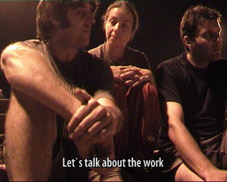
OPA&HA are faced with the difficult task of being on camera while saying something important concerning contemporary arts, particularly regarding their role in the Macedonian contemporary art scene. The video shows their struggle.
OPA&HA is a collaborative team made up of three authors: Denis Saraginovski, (born 1971 in Macedonia; studied at The Faculty of Fine Arts, Skopje; visual artist and freelance videographer), Slobodanka Stevceska (born in 1971 in Macedonia; studied at The Faculty of Fine Arts, Skopje; visual artist and art instructor) and Sasho Talevski (born in 1967 in Macedonia; studied at The Faculty of Philosophy, Skopje; conceptual artist, writer, and journalist). The OPA&HA (Obsessive Possessive Aggression and Chronically Arrogance) collaboration started working in 2002 on projects that involve action, performance, video, mockumentaries, site specific works, etc. Some examples of their projects are: Professional Site Specific Installers, Don?t miss the MISS, Reality Macedonia, etc. Their work is focused on the position/relation of the artist in/with different social or cultural systems. They treat political, social and cultural issues with humor and an approach that criticizes local concerns and situations. In 2004, they received the annual award for Best Young Macedonian Artist, DENES. They have exhibited in several countries in Europe, as well as in the USA.
Paula Saraste
Catalogue : 2025Let us Stay for a While | Experimental fiction | 4k | color | 30:38 | Finland | 2022

Paula Saraste
Let us Stay for a While
Experimental fiction | 4k | color | 30:38 | Finland | 2022
Let us Stay for a While takes its inspiration from Jean-Luc Nancy’s proposal that we could remain exposed to and think about what is happening to us. It is we who are arriving and leaving and we who encounter catastrophic events. In the film the aeroplane as a symbol of human technical development – the human-machine – is destroyed, and a new kind of time begins. Let us Stay for a While is a story about a weekend on a remote island. The protagonists witness a mystical aeroplane accident and rescue one of the survivors. Inexplicable things start to happen, the protagonists are thrown back to an altered mood and the island doesn’t seem to want them to leave. The idea of nature as something veiled is thematized in the film – a mystical stone has been found on the island – and the protagonists’ understanding of each other is only partial. The work stands at the confluence of psychological thriller and less traditional dramaturgy. The island as a location has a special relation to time. In the film it exists as a time-space, a temporalization between expectations of the end of the present age and narrative flashbacks on the level of dialogue.
Paula Saraste (b.1981) is a Helsinki based visual artist who works with film, photography and performance. The themes of her works are often related to the relationship between the past and the present as well as fear and identity, and they talk about broader questions beyond their psychological level. Saraste has an MfA degree from the Finnish Academy of Fine Arts (2016). Her works have been exhibited in solo, joint and group exhibitions, such as Photography Gallery Hippolyte, gallery Myyma?la?2 and Forum Box in Helsinki, Galerie Heike Arndt and HilbertRaum in Berlin and Aomori Contemporary Art Centre, Japan. In addition, she has participated in numerous group exhibitions and screenings in Finland and abroad.
Nina Sarnelle
Catalogue : 2026Breath Work | Experimental doc. | mov | color | 63:0 | USA | 2025
Nina Sarnelle
Breath Work
Experimental doc. | mov | color | 63:0 | USA | 2025
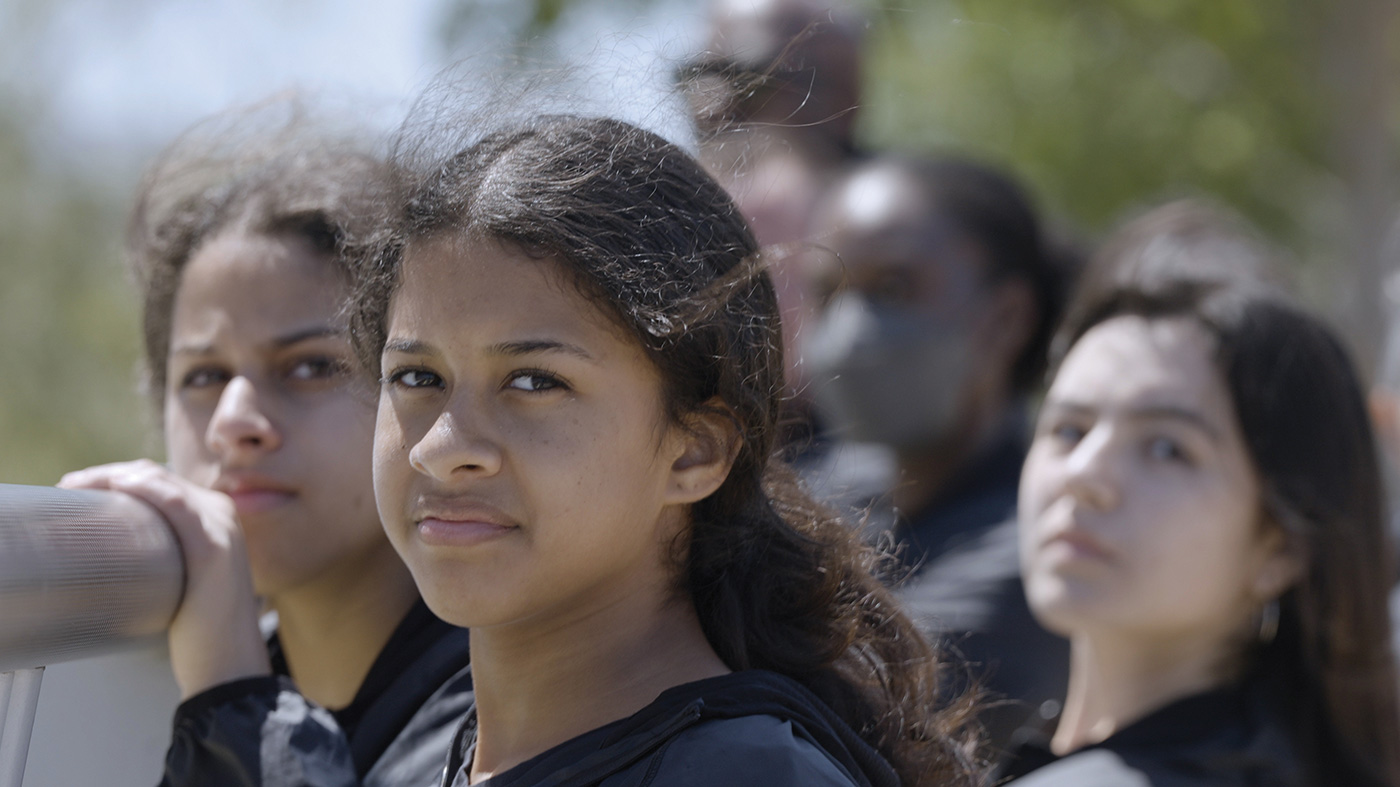
When we vocalize, we share and transform air, placing our bodies into critical relation to one another and the non-human world. Breath Work is an experimental community opera that explores air as a medium for resistance. Part documentary, part performative ritual, it takes place in Long Beach, California—an area filled with oil production and one of the largest ports in the world, where 25% of all imported goods enter the USA.Shipping infrastructure, railyards, freeways and oil refineries provide a striking backdrop for scenes of solidarity and grief staged by a cast and crew of 13 untrained local community members aged 11-65. Breath Work weaves together their creativity and their voices with personal stories of respiratory disease and environmental racism.
Nina Sarnelle (they/she) makes research projects, participatory performances, music composition, video and sculpture; their work interfaces with sites of neocolonialism(s), ecological destruction and labor exploitation in strange and intimate ways. They earned a BA from Oberlin College and an MFA from Carnegie Mellon University, and recently had a solo video exhibition at the New Museum: https://www.newmuseum.org/exhibitions/view/screens-series-nina-sarnelle Their work has also shown at Hammer Museum (LA), Getty Center (LA), Forum des Images (Paris), Haus der Kulturen der Welt (Berlin), Whitechapel Gallery (London), La Gaîté Lyrique (Paris), Ballroom Marfa (TX), MoMA (NY), Istanbul Modern (Turkey), Neuer Berliner Kunstverein (Berlin), Museum of Art, Architecture & Technology (Lisbon), Fundacion PROA (Buenos Aires), Black Cube (Denver), Southern Exposure (San Francisco), Recess (NY), UNSW Galleries (Sydney), Project 88 (Mumbai), Kevin Space (Vienna), Garage MCA, Moscow, Villa Croce Contemporary Art Museum (Genova), Mwoods (Beijing), Human Resources (LA) and others; and been featured in Art Forum, Frieze, Art in America, Vogue Italy, Huffington Post, SFMoMA, Creators Project, FlashArt, and Hyperallergic. www.ninasarnelle.com