Catalogue > List by artist
Browse the entire list of Rencontre Internationales artists since 2004. Use the alphabetical filter to refine your search. update in progress
Patrick Bernatchez
Catalogue : 2013- | Performance | | | 30:0 | Canada | 2012
Patrick Bernatchez
-
Performance | | | 30:0 | Canada | 2012
.
.
Patrick Bernatchez
Catalogue : 2010i feel cold today | Experimental fiction | 16mm | | 14:0 | Canada | 2007

Patrick Bernatchez
i feel cold today
Experimental fiction | 16mm | | 14:0 | Canada | 2007
TWO TEXTS ABOUT "I Feel Cold Today": -1- Catherine Dean, Curator, group exhibition « The Boundary Layer » [www.theboundarylayer.ca], The Prairie Art Gallery [http://prairiegallery.com], Grande Prairie (Alberta, Canada), Fall 2009: "An iconic modern office space fills with snow in Patrick Bernatchez?s I Feel Cold Today, and there is a sense of foreboding and anxiety as we wonder what has caused the abandonment of this building. Normally carefully heated and cooled, sealed against the outside elements, only a catastrophe could have caused this breached in an office building?s defenses. [?] the entry of nature has begun the process of decay, although in Bernatchez?s work the feeling is funeral rather than commemorative. With its sci-fi atmosphere, dramatic soundtrack and suspensful editing, I Feel Cold Today?s interior implies emptiness on a large scale in the urban world beyond these walls." -2- Excerpt from "An Allegorical Diagnostic of an Imminent Cataclysm - Chrysalides", an ongoing project by Patrick Bernatchez, Text By Bernard Schütze, 2009 (read complete version on www.patrickbernatchez.com, in TEXTES/TEXTS Section): ?(?) In this ambitious cinematic project [The Chrysalides Trilogy incl. The Whole Fashion Plaza] Bernatchez scrutinized the building?s interior body (and the various bodies that it is a synecdoche of). In this approach the film camera is used as an instrument to artistically visualize what is ordinarily not apparent. The first film I Feel Cold Today (16 mm film, digital video transfer, colour, sound, 2007) consists of a series of lateral traveling shots that lead us up the building?s elevator and into a deserted office space. The locale is slowly being submerged by a wind-blown snow that gradually builds up to ever greater heights. A foreboding scene that signals a civilized world being overtaken by primordial elements reclaiming territories once sheltered from the storms. A vision of things to come, a post apocalyptic landscape after a coming ice age, or an ice age that is still with us? Bernatchez gives us no indications of anything in particular and leaves it entirely up to the spectator to make what s/he may of this doom-laden atmosphere. (?)?
BIO/RESUMÉ: - Patrick Bernatchez [www.patrickbernatchez.com] is born in 1072 in Montreal, Quebec (Canada). - His work has been presented since 2000 in Quebec, in Canada, and since a few years in Europe, United States. - After an art residency [www.iaab.ch] in Basel (Switzerland) in 2008-2009, Patrick Bernatchez is now working at Künstlerhaus Bethanien [www.bethanien.de] in Berlin (Germany) for a year ; both with support from Conseil des arts et des lettres du Québec [www.calq.gouv.qc.ca]. - Since 2008, the artist has been part of Les Rencontres Internationales Paris/Berlin/Madrid/? [http://art-action.org]. - In 2009, Patrick Bernatchez had a solo at: PREFIX ? ICA ? Institute of Contemporary Art, Toronto [www.prefix.ca]; EXPRMNTL, Toulouse [www.exprmntl.fr]; Galerie Donald Browne, Montreal [www.galeriedonaldbrowne.com]; Stedelijk museum`s-Hertogenbosch ? SM?S, Hertogenbosch [www.sm-s.nl]; Galerie West, Den Haag [www.galeriewest.nl]; Galerie Bertrand Grimont, Paris [www.bertrandgrimont.com]. - This Fall (2009), with Bertrand Grimont, the artist has been part of SLICK ? Contemporary Art Fair [www.slick-paris.com] at CENTQUATRE Art Centre, Paris [www.104.fr]. - Next solo shows will be presented at : .e.space généric [http://espacegeneric.blogspot.com], Claye-Souilly (Seine-et-Marne, France) en déc. 2009-janv. 2010; .Galerie Studio Bethanien, Künstlerhaus Bethanien, Berlin [www.bethanien.de] in April-May 2010; - The piece "I Feel Cold Today" has been screened in the Frigidarium du Musée de Cluny ? musée national du Moyen Âge in the occasion of NUIT BLANCHE, Paris [www.nuitblanche.paris.fr] event, 8th edition, Oct.3, 2009. - "I Feel Cold Today" has been/will be also screened or exhibited at: .Experimenta Utopia Now, Media Art Biennial [www.experimenta.org], Melbourne and then national tour in 2010-2011; ."CUE: Artists? Videos" (2010) - Cultural Olympic Games program, Vancouver Art Gallery [www.vanartgallery.bc.ca]; ."The Boundary Layer" (2009), The Prairie Art Gallery, Grande Prairie, Canada [www.prairiegallery.com]; etc.
Catalogue : 2010Trilogie Chrysalides | Experimental fiction | 16mm | color | 38:0 | Canada | 2009
Patrick Bernatchez
Trilogie Chrysalides
Experimental fiction | 16mm | color | 38:0 | Canada | 2009
Patrick Bernatchez puise son inspiration dans différentes sources - le cinéma, l?imagerie populaire, la musique ? et nous livre une sorte d?opéra postmoderne à la fois merveilleux, exubérant et angoissant.
Catalogue : 2009Chrysalide-Empereur | Art vidéo | 35mm | color | 10:0 | Canada | 2008
Patrick Bernatchez
Chrysalide-Empereur
Art vidéo | 35mm | color | 10:0 | Canada | 2008
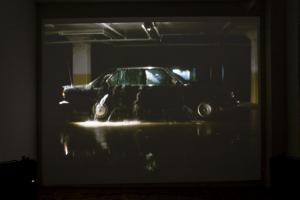
The scene takes place in the darkness of the underground parking of a factory building. An individual, alone in his car, finishes his last meal and smokes a cigarette in the silent air. During this time, water accumulates in the interior of the vehicle. The camera scans this moment, in a circular motion and uninterrupted until the overflow. A slow abysmal descent.
Patrick Bernatchez lives and works in Montreal (Quebec, Canada). Over the past few years, he has developed a multiform step characterized by an esthetic union of the marvelous and the monstrous; he explores photography, the installation and video as well as drawing and painting, his media of predilection. The topics of the body, change, sex, death and the resurrection are explored with exuberance and a lyrical combination of phantasmagoric and that what is nightmarish. His interest is in the ?chronicle of a death announced? through the immutable run of time: that of living beings, individuals, and partners. He is interested in the features of a certain social schizophrenia between figuration and abstraction. These features are transmitted as well by pictorial, photographic, filmic compositions as in the form of sculptural and sound installations.
Mareike Bernien
Catalogue : 2010as found | Experimental doc. | dv | color and b&w | 15:0 | Germany | 2009
Mareike Bernien, Kerstin Schroedinger
as found
Experimental doc. | dv | color and b&w | 15:0 | Germany | 2009
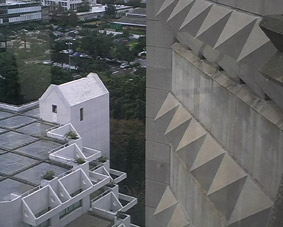
Die Videoarbeit ?As found? versucht die Bewegung von einer gesellschaftlichen Vorstellung, die sich auf etwas Fernes oder Zukünftiges bezieht, zu einer in der Gegenwart veorteten Inszenierung von Gesellschaft nachzuvollziehen. Die ?As-found-Ästhetik? brutalistischer Architektur in Israel steht dabei im Mittelpunkt des Filmes, wobei deren Prinzipien ? z.B. vorgefundene Markierungen eines Ortes in die Entwurfsplanung miteinzubeziehen ? im Film als Technik der Zitation selbst aufgegriffen werden. Dazu werden insbesondere zwei Filme herangezogen: ?Ortsbesichtigung in Palästina? von Pasolini und ?Ici et ailleurs? von Godard/Miéville, die beide auf der Suche nach Übersetzungen zwischen einem Hier und Anderswo, Projektion und Reflexion sind, um zu einem Ort Beziehungen herstellen zu können und darin Widersprüche formulieren zu können. Zudem werden die in der Architektur vorgegeben / angelegten Blickverhältnisse untersucht. Kamera und Architektur testen sich gegenseitig in ihren Abbildungs- und Repräsentationsstrategien. Die Videoarbeit ist eine essayistische Collage aus akustischem und visuellem Film.
Mareike Bernien,Hamburg, Berlin Kerstin Schroedinger,Hamburg,London
Catalogue : 2008Testbild | Experimental video | dv | color | 12:0 | Germany | 2007
Mareike Bernien
Testbild
Experimental video | dv | color | 12:0 | Germany | 2007
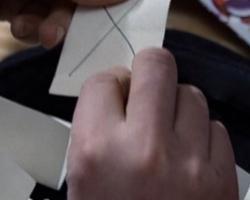
A voice speaks with the attitude of an audio guide, as it is known from gallery visits, trade show tours or Internet presentations. The spokeswoman takes the attitude of an observing, describing blind guide, who states again and again to know the place from which she is speaking. She works consciously with blind places and options, which refer to a potential of the picture, but also leave it always fragmented and incomplete. The parallel running video track is based on an editing procedure, in which found film sequences are filmed again, in their cut-out in- creased and with a simulated camera. The highly informative narrative film picture experiences an emptying of content, which draws the cinematic storyline into fragments. Similar to a screen saver, the gaze of the camera slides apparently unyieldingly away over the scenes. Sometimes this movement can appear in connection with the spoken text as an offer, contradiction or substitute. By the repetition and recombination of different sequences, possibilities of textual linkages are offered. They resemble however rather test procedures, in which language and picture cannot be depicted onto each other, but receive asymmetrical processes.
Mareike Bernien lives and works in Hamburg and Berlin.
Mareike Bernien, Gerbaulet, Alex
Catalogue : 2023Sonne Unter Tage | Experimental doc. | hdv | color | 39:0 | Germany | 2022
Mareike Bernien, Gerbaulet, Alex
Sonne Unter Tage
Experimental doc. | hdv | color | 39:0 | Germany | 2022
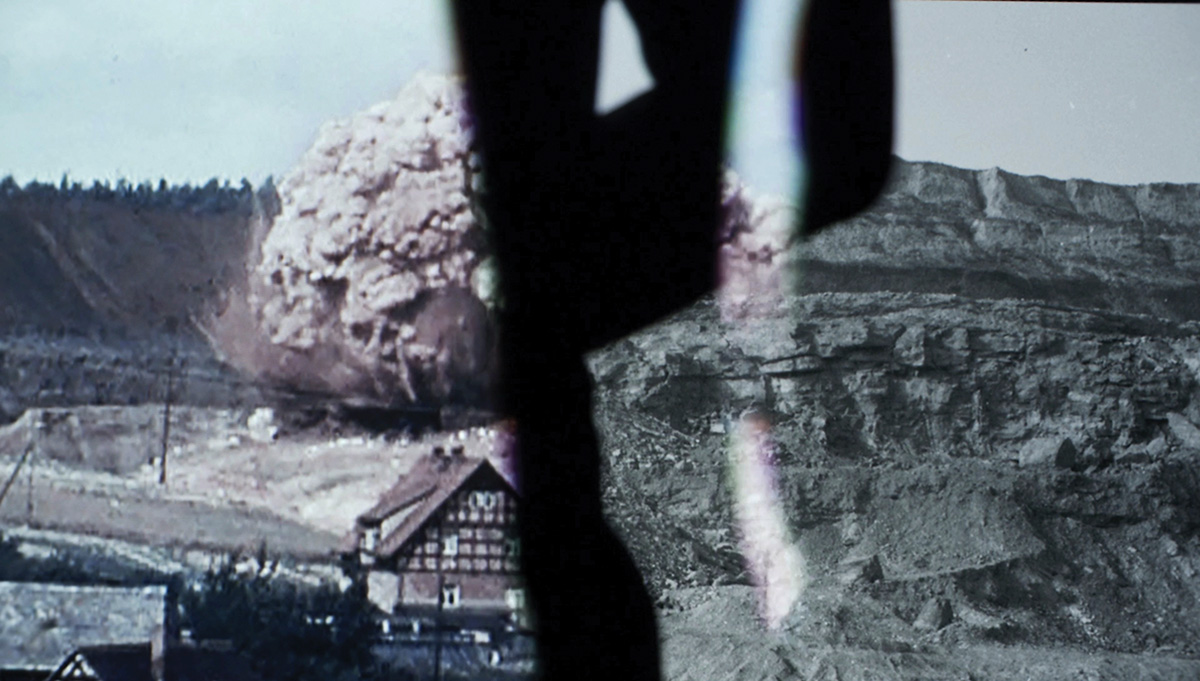
A gravel path on the edge of a village. Between fields, across to a fence. Drawn into the map of former uranium mining areas in Saxony and Thuringia. From 1946 to 1990, the Soviet corporation SAG Wismut mined uranium there for the USSR's nuclear weapons program. Above ground, socialism shines towards the future, below, the ancient rocks radiate through the torn up earth. The GDR environmental movement throws a spotlight on the way. Night. Darkness. A group of people, a flashlight, a shovel. X-ray film is buried in the gravel. The ground exposes the film, leaving a trail of its invisible rays. The film SUN UNDER GROUND follows this trace horizontally through today's landscapes, marked by mining and redevelopment, and vertically through the ground as an archive. Deep drilling through space and time traces the sedimented narratives that surround the element of uranium materially, metaphorically, and geopolitically. How does it haunt the landscape? How does it connect with the ghost of socialism? What stories and biographies surround its excavation sites? How does it radiate into its recording media? How can the spectrum of the visible be shifted to bring its invisible radiation into the image, to make it audible or palpable?
Mareike Bernien is a Berlin based artist, filmmaker and teacher in the field of filmic research and critical archival practices. Since 2018 she has been part of the production platform pong film. 2020-21 she was a fellow in the Berlin Artistic Research Grant Programme/gkfd. With a media-archaeological approach, her artistic works question ideological certainties of representation, their material-technological preconditions and historical continuities. Her current films include: DEPTH OF FIELD (2017) and SUN UNDER GROUND (2022) both co-directed with Alex Gerbaulet. Alex Gerbaulet is a Berlin based artist, filmmaker and producer. Since 2014 she has been part of the production platform pong film. 2020-21 she was a fellow in the Berlin Artistic Research Grant Programme/gkfd. In her artistic work she explores, among other things, the imageability of reality and memory. Her films move between video art, essay and documentary film, between activist impetus and fictionalizing reflection. Her recent films include: THE SLEEPER (2018), as well as DEPTH OF FIELD (2017) and SUN UNDER GROUND (2022) both co-directed with Mareike Bernien.
Mareike Bernien, Kerstin Schroedinger
Catalogue : 2010as found | Experimental doc. | dv | color and b&w | 15:0 | Germany | 2009
Mareike Bernien, Kerstin Schroedinger
as found
Experimental doc. | dv | color and b&w | 15:0 | Germany | 2009
Die Videoarbeit ?As found? versucht die Bewegung von einer gesellschaftlichen Vorstellung, die sich auf etwas Fernes oder Zukünftiges bezieht, zu einer in der Gegenwart veorteten Inszenierung von Gesellschaft nachzuvollziehen. Die ?As-found-Ästhetik? brutalistischer Architektur in Israel steht dabei im Mittelpunkt des Filmes, wobei deren Prinzipien ? z.B. vorgefundene Markierungen eines Ortes in die Entwurfsplanung miteinzubeziehen ? im Film als Technik der Zitation selbst aufgegriffen werden. Dazu werden insbesondere zwei Filme herangezogen: ?Ortsbesichtigung in Palästina? von Pasolini und ?Ici et ailleurs? von Godard/Miéville, die beide auf der Suche nach Übersetzungen zwischen einem Hier und Anderswo, Projektion und Reflexion sind, um zu einem Ort Beziehungen herstellen zu können und darin Widersprüche formulieren zu können. Zudem werden die in der Architektur vorgegeben / angelegten Blickverhältnisse untersucht. Kamera und Architektur testen sich gegenseitig in ihren Abbildungs- und Repräsentationsstrategien. Die Videoarbeit ist eine essayistische Collage aus akustischem und visuellem Film.
Mareike Bernien,Hamburg, Berlin Kerstin Schroedinger,Hamburg,London
Catalogue : 2008Testbild | Experimental video | dv | color | 12:0 | Germany | 2007
Mareike Bernien
Testbild
Experimental video | dv | color | 12:0 | Germany | 2007
A voice speaks with the attitude of an audio guide, as it is known from gallery visits, trade show tours or Internet presentations. The spokeswoman takes the attitude of an observing, describing blind guide, who states again and again to know the place from which she is speaking. She works consciously with blind places and options, which refer to a potential of the picture, but also leave it always fragmented and incomplete. The parallel running video track is based on an editing procedure, in which found film sequences are filmed again, in their cut-out in- creased and with a simulated camera. The highly informative narrative film picture experiences an emptying of content, which draws the cinematic storyline into fragments. Similar to a screen saver, the gaze of the camera slides apparently unyieldingly away over the scenes. Sometimes this movement can appear in connection with the spoken text as an offer, contradiction or substitute. By the repetition and recombination of different sequences, possibilities of textual linkages are offered. They resemble however rather test procedures, in which language and picture cannot be depicted onto each other, but receive asymmetrical processes.
Mareike Bernien lives and works in Hamburg and Berlin.
Caitlin Berrigan
Catalogue : 2025Imaginary Explosions, episode 3, Artifice | Experimental doc. | 16mm | color | 22:27 | USA, Germany | 2023
Caitlin Berrigan
Imaginary Explosions, episode 3, Artifice
Experimental doc. | 16mm | color | 22:27 | USA, Germany | 2023
'Artifice' stars the only artificial volcano to survive its own eruption: a model replica of Vesuvius from the grounds of a pleasure palace built by an 18th-century German prince. Gardens as models of worldbuilding and empires are the subject of this queer cli-fi that mixes facts with speculation. A media archaeology of how we model earth and atmosphere runs through its images, samples, and sounds—culminating in a dazzling yet foreboding explosion of forms. The film is shot on location in Germany at the Schloss Sanssouci Potsdam, Schloss Solitude Stuttgart, and the Wörlitzer Park Dessau. 'Artifice' is the third episode in the Imaginary Explosions cosmology, which translates aesthetic forms of communication across sensory modalities while being in relation to inhuman alterities and non-normative bodies. How can we understand and interpret the inhuman world? How can we practice other ways of being in a body? Focusing on communication with geologic subjects through technologies and mutual alliances, the cosmology explores how human and mineral subjectivities are entangled, emphasizing moments when the earthly asserts its agency in the political sphere.
Caitlin Berrigan works as a visual artist and writer to explore poetics and queer science fiction as world-making practices through sculptural instruments, moving images, and new technologies. Her extensive speculative cosmology, Imaginary Explosions, blends research science with art and fiction alongside emerging media instruments and new technologies. The episodic series centers geological animacies as transfeminist scientists cooperate with the desires of the mineral earth to simultaneously erupt all volcanoes. The work has been the subject of a book (Broken Dimanche Press, 2018) solo shows at JOAN Los Angeles (2023) and Art in General (2019) reviewed in Artforum, and a world premiere in the Berlinale Forum Expanded Exhibition (2020). Berrigan has presented her work at the Whitney Museum, Henry Art Gallery, Harvard Carpenter Center, Union Docs, Ashkal Alwan, and the European Media Arts Festival among other international venues. Her experimental writings are published by e-flux, Georgia, MARCH, Duke University Press and Broken Dimanche Press. She has received fellowships and residencies from Creative Capital, the Humboldt Foundation, Skowhegan, Graham Foundation, and Akademie Schloss Solitude. She earned a Master’s from MIT’s program for Art, Culture and Technology and a B.A. from Hampshire College.
Emily Berry Mennerdahl, Jonas Böttern HILLSIDE PROJECTS
Catalogue : 2025Listening, to Kins | Video | 4k | color | 46:46 | Sweden | 2024

Emily Berry Mennerdahl, Jonas Böttern HILLSIDE PROJECTS
Listening, to Kins
Video | 4k | color | 46:46 | Sweden | 2024
Listening, to Kins is a performance of listening to 279 vultures. Seated on a chair, dressed in a brown suit, one member from HP (Hillside Projects) actively listens to a wake of vultures' tumultuous feast on a carcass, a macabre yet tender act of eating and being eaten, a recycling of life. The performance took place on 25 January 2023 at Jatayu Vulture Restaurant, a vulture conservation project located in Kawasoti in southern Nepal. The sounds from the feast: hissing, kicking and flapping have, in turn, been transcribed as words that phonetically imitate, resemble, or suggest the sound that they describe, also known as onomatopoeia. The transcribed onomatopoetic words are then presented as subtitles accompanying the video, creating a playful and slightly absurd narration of the act of eating the dead. T?his video was produced through generous support during an artist residency in 2023 with PhotoKTM5 at Jatayu Vulture Restaurant in Kawasoti, Nepal, organised by photo.circle Nepal, a platform for photography based in Kathmandu founded in 2007. *Since the 1980s, the vulture population in Nepal and India has declined by 98% due to unintentional poisoning through the consumption of carcasses containing Diclofenac, a painkiller given to cattle to work harder and longer and increase milk production. Jatayu Vulture Restaurant is a local community conservation project in Kawasoti, Nepal, working to increase the vulture population. Old animals (not treated with Diclofenac) are taken care of and served to wild vultures upon their natural death.
HP (Hillside Projects) is an artistic entity formed by Emily Berry Mennerdahl (1980) and Jonas Böttern (1977). HP is based in Stockholm. HP’s main interest is in performance and the role of the performer, with an emphasis on the discursive possibilities of telling tales and the resisting of single narratives. Through a conceptual approach and a performative methodology, HP creates works where birds, most often, serve as the main protagonists. The works take their form as video and public performances alongside text, sound and imagery. In their making, the tales of birds expand into larger narratives where socio-political layers and existential emotions unravel alongside notions of life’s many cycles, transition, eating and being eaten, and dust. We are all stardust. At times, the tales HP tells appear tragic, yet HP believes that absurdities, humour and intimacy are all essential elements in telling the tragic. Quite recently, HP has begun to shift its gaze upon itself, questioning its members’ roles in telling tales. Who are they to tell a story, and which stories are theirs to tell? How do they tell the stories in relation to each other and in relation to their audience? HP also actively explores the concept of an audience. An audience in movement, an audience that is not alive, an intimate audience, a large audience, and one not physically present. HP asks what an audience is and what it can be. HP intermittently collaborates with others as part of its artistic vision and occasionally engages in smaller curatorial spurs. It aims to create works that can unravel in environments such as, but not limited to, an ambulating stage, participatory walks, research contexts, screenings, community halls and exhibitions. HP’s videos are distributed by FilmForm - The Art Film and Video Archive and Vidéographe Montréal. HP has taken part in artist residencies such at IASPIS (SE),Clark House Initiative-Mumbai, Box Autumn Studios at Galleri Box-Gothenburg, Banff Centre Canada, TCG Nordica Kunming-China as well as shown their works in exhibitions and screenings at amongst others Röda Sten konsthall, Dazibao Montréal, Galleri54 Gothenburg, Oberhausen Film Festival Germany, Bonniers Konsthall etc. RThey have been awarded grants from the Swedish Arts Council, Konstakademin as well as private stipends.
Valerie Bert, Valérie Bert
Catalogue : 2014/ l'autre / | Experimental fiction | hdv | color | 0:0 | France | 2013
Valerie Bert
/ l'autre /
Experimental fiction | hdv | color | 0:0 | France | 2013
Lors d`un pique nique, deux femmes sont réunies. L`une d`elle partage avec l`autre des notions sur les questions de l`argent et de l`amour.
Valérie Bert a d`abord été présente dans le champ de l`art contemporain sous la forme de performances, de pratique multimédia, ou de vidéos. Depuis quelques années, elle travaille plus particulièrement autour de projets de films de format courts et longs. Son travail questionne les notions d`économie, de politique et d`utopie.
Catalogue : 2013avant le changement d'équipe | Experimental fiction | hdv | color | 24:0 | France | 2012
Valerie Bert, Valérie Bert
avant le changement d'équipe
Experimental fiction | hdv | color | 24:0 | France | 2012
Before the Turnover Through money flow, petty thieving and the interacting between three characters, ?Before the Team Changed? is a look into the concepts of value, economy, subservience and desire. In an apartment, three characters (Vera, Alex, Sylvain) interact behind closed doors. In this trio, each one is interdependent of the others. The trio develops around exchanging and the values attached to what is exchanged. Vera lives in an apartment with Alex, live-in housekeeper and friend. The two women engage in a peculiar business deal with a man, Sylvain, who comes by everyday with an envelope containing money from misdemeanors. Alex has to describe in details every petty theft to Vera, and she pays him twice the value of the stolen amount. In this trio, each person is linked to the others, the individuals are not more than servants to the system , prisoners of their own greed and desire. When Sylvain leaves this organization, there?s a snag, a slight interruption that puts the system in danger.
Valerie Bert
Catalogue : 2014/ l'autre / | Experimental fiction | hdv | color | 0:0 | France | 2013
Valerie Bert
/ l'autre /
Experimental fiction | hdv | color | 0:0 | France | 2013
Lors d`un pique nique, deux femmes sont réunies. L`une d`elle partage avec l`autre des notions sur les questions de l`argent et de l`amour.
Valérie Bert a d`abord été présente dans le champ de l`art contemporain sous la forme de performances, de pratique multimédia, ou de vidéos. Depuis quelques années, elle travaille plus particulièrement autour de projets de films de format courts et longs. Son travail questionne les notions d`économie, de politique et d`utopie.
Catalogue : 2013avant le changement d'équipe | Experimental fiction | hdv | color | 24:0 | France | 2012
Valerie Bert, Valérie Bert
avant le changement d'équipe
Experimental fiction | hdv | color | 24:0 | France | 2012
Before the Turnover Through money flow, petty thieving and the interacting between three characters, ?Before the Team Changed? is a look into the concepts of value, economy, subservience and desire. In an apartment, three characters (Vera, Alex, Sylvain) interact behind closed doors. In this trio, each one is interdependent of the others. The trio develops around exchanging and the values attached to what is exchanged. Vera lives in an apartment with Alex, live-in housekeeper and friend. The two women engage in a peculiar business deal with a man, Sylvain, who comes by everyday with an envelope containing money from misdemeanors. Alex has to describe in details every petty theft to Vera, and she pays him twice the value of the stolen amount. In this trio, each person is linked to the others, the individuals are not more than servants to the system , prisoners of their own greed and desire. When Sylvain leaves this organization, there?s a snag, a slight interruption that puts the system in danger.
Thomas Bertay, Pacôme THIELLEMENT
Catalogue : 2012Le Manège cosmique du dieu-peur | Experimental fiction | dv | color and b&w | 71:0 | France | 2011
Thomas Bertay, Pacôme THIELLEMENT
Le Manège cosmique du dieu-peur
Experimental fiction | dv | color and b&w | 71:0 | France | 2011
"Un Semblant de Monde" is an unpublished subroutine that lengths 1 hour and 11 minutes, bringing together 4 episodes amongst the latest directed to this day from the series "Le Dispositif". "Le Dipositif" is a video program of direction, explicitation and conditioning which will consist of a corpus of 52 movies at its completion in 2012, forming a totality of duration of more than 8 hours (50 episodes have been directed to this day). The project of a "reconstituted man" was evoked many times in History : it would be the fact of the divine bicameral voice - represented in turns by the face of the Fox, of the Butterfly and of the Sea Horse - and this one would epiphanize under the form of Bird-Men, distant representatives of a humanity with non-established origins (mazdean Fravartis, Angels, Little Queens...). Recently, the idea men of the New Cities, ignoring Knowledge, confused the unfinished world of the Bird-Men with their reality down here and experimented its sinister consequences. In the contemporary world, a man never appears that by pieces. "Le Dispositif" produces an electric current and a vibratory frequency which suggests re-ordering the scattered multitude of pieces of men to make spring in you The Second Memory.
Thomas Bertay founds, runs and directs the production house Sycomore Films since its creation in 1999. At the same time author, film director and video artist, he specializes on post-production and works on numerous projects since then (fictions, documentaries, video art). He co-produces and signs the editing of Nico Papatakis' latest movie, "Gloria Mundi",which is released in 2005. He collaborates with the film directors and artists Jean-Jacques Beineix, Mickael Raeburn, François Lunel, Manuel Pradal, Valérie Pavia, ZEVS, Philippe Meste, Anne Jaffrenou, Marie Cuisset, Aude Py, Nicolas Nakamoto, Frédéric Nicolas? He is the co-author with Pacôme Thiellement of the collection "Le Dispositif", a series of experimental videos which have been several times shown in exhibitions (Centre Pompidou, Espace Ricard, Le Denfert-Rochereau, Beaux-Arts de Toulouse, La Gaîté Lyrique?)and in two retrospectives, one of them at the Palais de Tokyo in winter 2009, the other one at the PCF on the occasion of the festival "Politiques 0" in October 2010. In parallel with these activities, he is responsible of the Médias section of the "Musica Falsa" journal directed by Bastien Gallet between 1998 and 2002, and the author of several short essays in the art and literature journal "Spectre" between 1999 and 2002. Pacôme Thiellement has first distinguished himself in the world of comics, directing from 1987 to 1991 the fanzine "Réciproquement", "Alph'art" Fanzine at Angoulême in 1990. He founds and directs the literary journal Spectre from 1998 to 2003. Three films have been co-directed with Thomas Bertay on the occasion of this experimental journal (DVD edited by Sycomore Films, "J'apporte la Guerre", 2005). He is the author of seven books of exegetic, hermeneutic, theophanic and burlesque inspiration : Poppermost ? Considérations sur la mort de Paul McCartney (MF, 2002), Economie Eskimo ? Le Rêve de Zappa (MF, 2005), Mattt Konture (L?Associaton, 2006), L?Homme électrique ? Nerval et la vie (MF, 2008), Cabala ? Led Zeppelin occulte (Hoëbeke, 2009), La Main gauche de David Lynch (P.U.F., 2010) et Les Mêmes yeux que Lost (Léo Scheer, 2011). He published some texts in numerous magazines (R de Réel, Vertige, L?Eprouvette, Le Tigre), magazines (Rock & Folk, Chronic?art, Standard, Les Cahiers du Cinéma), collective books (Fresh Théorie, Ecrivains en série, Le Ciel vu de la Terre), gave lectures and took part in debates at Palais de Tokyo, at Centre Pompidou, at Grand Palais, at Beaux Arts de Lyon, at l?Espace Ricard? His books have been welcomed by critics (Fluctuat.net, Les Inrockuptibles, Les Cahiers du Cinéma, Positif, France Culture, France Inter, France 3, Le Magazine des Livres, Artpress?). Chronic'art consecrated him the cover of one of their issues and his last essay, "La Main gauche de David Lynch has been considered by Technikart as the best non-fiction book published in 2010. He is the co-author with Thomas Bertay of the "Dispositif", a collection of about fifty experimental films which have been shown several times (Centre Pompidou, Espace Ricard, Le Denfert-Rochereau, Beaux-Arts de Toulouse, La Gaîté Lyrique?)
Markus Bertuch, bertuch
Catalogue : 2008Walperloh | Video installation | dv | color | 7:30 | Germany | 2006

Markus Bertuch, bertuch
Walperloh
Video installation | dv | color | 7:30 | Germany | 2006
?Walperloh? shows three young men situated in Estern Germany amongst a pre-fabricated housing development. The historical inscriptions of the landscape connect with the characters.The situation and the relationship between the men refer to a semantic field that refuses concrete attributions. Quiet, sparce takes creat personal closeness without any real determination: a non-space full of undefined melancholy and tenderness. The density of the description creates an open space of association that doesn?t terminate into narration and allows for distance despite ist closeness.
Markus Bertuch, born 1974 in Arnstadt, lives and works in Berlin; 1999 ? 2001 studied design at Werkakademie Kassel, studied Fine Arts and Visual Communications at School of Art Kassel. Since 2003 several participations in international exhibitions and festivals (selection): Kunstfilmbiennale - Köln 2007, Lucas-Cranach-Preis für Video Kunst - Kunstverein Kronach 2007, 60° Festival del film Locarna - Locarna 2007, ?To be continued - Was macht Video Anders?? Galerie Anita Beckers - Frankfurt/Main 2007
Sebastian Betancur Montoya, Abi Green
Catalogue : 2022Fata Morgana | Video | hdv | color | 12:18 | Colombia, United Kingdom | 2021
Sebastian Betancur Montoya, Abi Green
Fata Morgana
Video | hdv | color | 12:18 | Colombia, United Kingdom | 2021
Us, humans, the one species present in every latitude of the earth have never really settled, from hunters and gatherers to refugees and expats. Throughout human history reasons for exploration vary; trade, fear, ambition, or curiosity. Still nomads, our quest to chart every reachable corner has been fundamental to the dissemination of symbolic structures growing from wealth and power into different forms around the globe. Fata Morgana balances between that primal urge to explore the unknown and the instinctive need to make a home and belong... Pulling or being pulled? Coming, going or returning? The physicality of struggle, disappearance and emergence within this piece becomes a metaphor reflecting on Poetics and Politics, Geography and Geometry, Dreams and Death, as well as memories of Future and Past. With the uncertainty and hope of new beginnings across the ocean, the transient figures glimmer and nearly blend into their surroundings, flirting with symbolisms of ritual: the platonic geometry, immersion/ascension, and their perpetual journey. These travellers move oblivious of any limits but their own, challenging the very notion of borders; which are, anyway, invisible and futile drawings of power onto an ever-shifting landscape defiant of any divisions. Inspired by the artists own attempts of somehow always carrying home with them, the piece is a video loop meditating on the emotional ebb and flow of the many departures and the inevitability of a return. A return home, that whether it be a place, memory, feeling, or a word it is always a reflection of oneself.
SEBASTIAN BETANCUR MONTOYA: A common conceptual thread legible in his artwork is the constant preoccupation for the body[ies] and its relation with[in] the surrounding space and its limits/conditions; the themes of home, language, migration, belonging and uprooting have become unavoidable for someone as him, who has lived on the move, away from his birth place half of his life. Sebastián´s work has been part of exhibitions, publications, art residencies, and art fairs in Colombia, The Bahamas, Qatar, Russia, and Germany and participated in other events such as The 2015 Oslo Architecture Triennial, the 2015 Kuwait pavilion for the Venice Biennale, NYT art for tomorrow 2016, and the 2018 Istanbul design Biennial. ABI GREEN: Born and raised in London, she was educated at Fine Arts College, Chelsea College of Arts and went on to graduate with a BA (Hons) in Photography from Middlesex University London. Abi’s work has been featured on Vogue and Vogue Italia online, Le Book and It’s Nice That. Nominated to exhibit at the D&AD, New Blood Awards, London, in 2009 and Mother London’s, Open Book in 2015, she has also been published both in the UK and the Middle East, including magazines such as Notion, Crack, Elle and Twenty-six. Driven by interests in colour, light art, and sculptural objects, she is often influenced by surrealism, modern and industrial design, which enhances her contemporary visual style. Her projects carefully balance a minimalist approach with a graphic, colourful aesthetic resulting in a distinctive eye-popping quality. A key part of her image-making is the humorous twist that underpins her creative concepts, with this unique approach she hopes to leave her audience with a taste of her playful nature.
Vicky Betsou
Vicky Betsou
Catalogue : 2011field | Art vidéo | dv | color | 3:45 | Greece | 2009
Vicky Betsou
field
Art vidéo | dv | color | 3:45 | Greece | 2009
A man spreads lime on a field in August, to prepare the earth for the autumn sowing. His action recorded and extracted from the surroundings and realistic conditions, becomes a ritual of a human caressing the land at dusk, reminding us of our relation and dependence to earth. The image obscured and slowed down confronts the viewer with an enigmatic time fragment of a ritual dance.
Vicky Betsou is a visual artist, working mainly with video installations. She lives and works in Athens. She studied Biology at Athens University, painting at Athens School of Fine Arts (ASFA) and completed her MA in Digital Arts at ASFA (2000). She has been a teaching assistant in Multimedia and Video-art courses at ASFA since 2001 and in 2006 she was elected a Lecturer and is teaching Video Art in the graduate and postgraduate program at the same Institute. She has participated in research programs concerning Art and new Media and collaborated in E-Learning projects on Art education. Her work mainly addresses the complicated notion of time and memory, blurring the boundaries between objective and subjective time, emphasizing on the construction of temporal structures or the composition of time loops, engaged in the construction of multiple, multilevel narrations. Her work has been presented in solo and group exhibitions and festivals in Greece and abroad.
Vicky Betsou
Catalogue : 20066:31 | Experimental video | dv | black and white | 6:31 | Greece | 2003
Vicky Betsou
6:31
Experimental video | dv | black and white | 6:31 | Greece | 2003
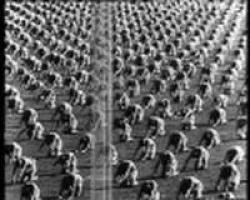
Vicky Betsou has used archival footage of newsreels of the 20th century in the video ?6.31?, in order to construct a personal narrative and interpretation of history and memory. Characterized by fragmentation (which is also present at the original material) this video ends up in a collage of time fragments, parts of a collective memory arising in an unexpected, subjective order, which are free to the viewer to invest them with signification in their own way.
Vicky Betsou is a visual artist, working mainly with video (videoinstallations and one channel). She was born in Preveza in 1971 and lives and works in Athens, Greece. In 1991 she leaves her studies in Biology (University of Athens) and studies painting and schenography at Athens School of Fine Arts (ASFA). In 1994 she studies for one semester at Ecole National Superieure des Beaux Arts de Paris (Erasmus scholarship) and starts using video and computer as medium in her artistic work. In 2000 she graduates with distinctions from the «MA program in Digital Arts» of ASFA and the Department of Computer Engineers of NTUA, Athens. Since 2001, she is a teaching assistant at the ?MA program in Digital Arts? ? ASFA, in Multimedia and Video-art courses, and has participated in research programs concerning Art and new Media. She has presented her work (video and installations) at several festivals and exhibitions in Greece and abroad. She has also created stage designs for theater and television, and has been teaching video and experimental animation to children and teenagers.
David Bex
Catalogue : 2006Inspecteur Rredick | Experimental fiction | dv | color | 30:22 | France | 2005
David Bex
Inspecteur Rredick
Experimental fiction | dv | color | 30:22 | France | 2005
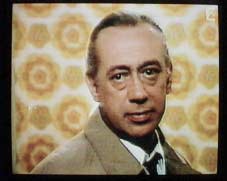
This is a new inspector Rredick investigation. Nothing is said but all is known. Then, there is just to watch one another, to listen on another and to wait, the lie going on. When the words are gone, once read on faces. People live together, side by side, and that?s it. Sometime, they dream. A man dies, the first word is said. The death language is born
Born in 1972, august 13th, in a region called the Lot, in France. After university formation in cinema, he goes at L?École nationale supérieure Louis Lumière. He achieved his graduation work in 2003: « Temps Atomique » was screened for the first Paris Berlin International cinema festival first edition. Since, he essentially works on soap operas extracted images manipulation. ?Inspecteur Rredick? is his first opus.
Luis Bezeta
Catalogue : 2012Morma Jeane es Marilyn | Video | hdv | color | 2:45 | Spain | 2011
Luis Bezeta
Morma Jeane es Marilyn
Video | hdv | color | 2:45 | Spain | 2011
Arseny Bezrukov
Catalogue : 2023Decay | Experimental fiction | 16 mm | black and white | 11:20 | Mongolia, Russia | 2023
Arseny Bezrukov
Decay
Experimental fiction | 16 mm | black and white | 11:20 | Mongolia, Russia | 2023
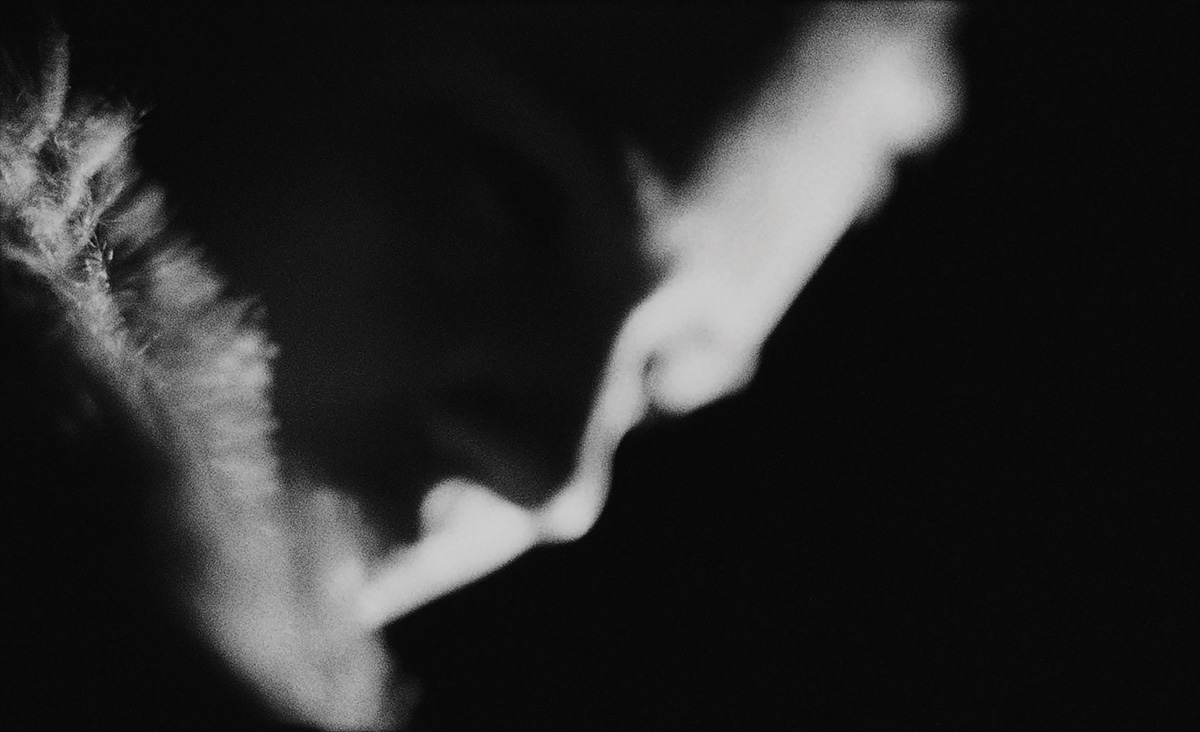
Three presentable young people in complicated relationships went to a villa deep in the forest on a winter night, experiencing frustration, anger, and loathing, but still, a strange desire to get closer, which will never be satisfied.
Russian dissident. Former architect. Left career to become an independent filmmaker. Currently works in Mongolia. Studied at Saint Petersburg School of New Cinema. Studied at N. Novgorod University of Architecture and Civil Engineering. Has Mongolian origin.
Grégory Bétend
Catalogue : 2019La nuit des rois | Experimental doc. | mov | color | 16:30 | France, Brazil | 2018
Grégory BÉtend
La nuit des rois
Experimental doc. | mov | color | 16:30 | France, Brazil | 2018
José Costa is a ghost-writer, penning stories to order for his paymasters. One night in Recife, he walks through a popular spiritual festival with its roots in Brazil’s colonial past. As a ghost-writer, he must remain hidden in the shadows, an anonymous and silent voice. Tonight, amidst the popular beliefs and magic, there is a chance to rewrite history.
Born in France, Grégory Bétend graduated from the ENSBA (National Art School) in Lyon and the Lussas film school. He directed "Checkpoint Charlie" and "Nu", that went to several festivals like the FID Marseille, the Etats généraux du documentaire (as opening film), the Clermont-Ferrand International Short Film Festival, among others. His work was also exhibited at the Centre Pompidou Paris, the Kunstverein Tiergarten art centre in Berlin, among others. He is the author of the books "En 1799 l’entrée était déjà là" and "Ora", and also publishes in journals (Vacarme, Le nouveau recueil).
Monica Bhasin
Catalogue : 2006Temporary loss of consciousness | Experimental doc. | dv | color and b&w | 35:0 | India | 2005
Monica Bhasin
Temporary loss of consciousness
Experimental doc. | dv | color and b&w | 35:0 | India | 2005
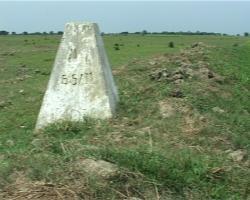
?Temporary loss of consciousness? alludes to the recurring displacement of populations in the Indian subcontinent from the time of Partition (1947) to the present. The film explores the ideas of borders, boundaries, limits and forbidden spaces that generate vast expanses of wastelands of human emotion and action. Treated as a poetic essay the film traces these ideas through the voices of those that live in exile in the Indian subcontinent. It has been shot in New Delhi apart from the borders of India - Pakistan and India and Bangladesh. Falling in the genre of Experimental Documentary, the film constructs meaning through juxtaposition of several elements like found footage of Independence/Partition, constructed narratives spoken in the respective languages of the affected populace and abstractions of abandoned spaces or spaces of refuge. Characters from ?Toba Tek Singh?, a short story by Saadat Hasan Manto, are woven into the structure and the spoken narratives are poetic in character, speaking of longing and belonging, home and honour, loss and betrayal, boundaries and crossings. This film emerged, not just from a desire to express the trauma and disjunction of people experiencing political borders, but to express it in the way I visually felt it to be most resonant of the emotional landscape.
Monica Bhasin is a filmmaker/editor who graduated from the Department of Film Video and New Media at the School of the Art Institute of Chicago, Chicago, USA in 2004. She is previously a graduate of the Mass Communication Research Center, Jamia Millia Islamia University (1992) New Delhi, India. For the last twelve years she has mostly been working as an editor for several documentary films in Delhi like Present Imperfect Future Tense, Born at Home, In the Eye of the Fish, Some Roots Grow Upwards, Autumn?s Final Country etc. Monica started making her own videos at the School of the Art Institute of Chicago in 2001. Her first two short pieces as a student were Room and Seams Elsewhere. She has just completed her first non-fiction film called temporary loss of consciousness. The film explores displacement and the futility of borders in the conditions created by Partition of the Indian continent during and after 1947. Monica is currently based in New York.
Palash Bhattacharjee
Catalogue : 2025A Bridge and Beyond the Bridge | Experimental video | hdv | color | 3:8 | Bangladesh | 2024
Palash Bhattacharjee
A Bridge and Beyond the Bridge
Experimental video | hdv | color | 3:8 | Bangladesh | 2024
Built during British colonial rule in 1930, the Kalurghat Bridge serves as a vital connection between the north and south of the greater Chittagong district of Bangladesh, bisected by the Karnaphuli River. Historically, this bridge facilitated communication between regions in south Chittagong, bridging the gap from British India. From the circle of my family ancestors, many left the southern part of Chittagong from the British period, particularly the partition period, to the Pakistan period and settled in different parts of this subcontinent. Then, during the liberation war of Bangladesh in 1971, some people in Bangladesh-India border areas took shelter for some time and worked in various ways for the freedom of the country. From the post-independence period to the present, many people from this southern region migrated to other countries outside the subcontinent for different purposes and reasons, including re-settlement in Chittagong City and Dhaka. These familial and local stories are not linear. Through different layered images on the bridge, the video features a female narrator, embodying the collective familial past. The narrative within the video is a fictionalised merge drawn from different stories and correspondences, further exploring familial history and connection.
Palash Bhattachajee has undergone a shift in his artistic journey, transitioning from academically focused printmaking toward multi-media, experimental art-practice via a close encounter with performance art activism. He takes critical interest in closely reading filmic genres and their performative idioms. The photo/videographic style and the eclectic selection of objects in his works are influenced by the cerebral matrix of contrapuntal, non-narrative aspect of deconstructed storytelling adopted from global cinema. Based and born in Chittagong, Bangladesh, he received his Master’s and Bachelor's degrees from the Department of Fine Arts, Chittagong University. He was awarded the Asia Pacific Fellowship Residency from MMCA Residency Goyang in 2011 and received a grant from Seoksu Art Project of Stone & Water, South Korea, in 2010. His works have been widely exhibited in Bangladesh, including at Chobi Mela 2021, Dhaka Art Summit 2012-2020, Asian Art Biennale 2012-2022, Dhaka, and internationally, including ‘Legacies of Crossings’, Shahnaz Gallery, London, UK 2024; NOmade Biennial, Art Center Gallery Elblag, Poland, 2023; Warehouse421, Abu Dhabi, UAE, 2022; Colomboscope, Colombo, Sri Lanka, 2022; ‘The Oceans and the Interpreters’ and ‘The Deep City’, Hong-Gah Museum, Taiwan, 2020; ‘Seven Exhibitions’ at Exhibit 320, New Delhi, India, 2018; and many more.