Catalogue > List by artist
Browse the entire list of Rencontre Internationales artists since 2004. Use the alphabetical filter to refine your search. update in progress
Théodora Barat
Catalogue : 2012On anything at all except the dark pavement | Video | hdv | color | 5:0 | France | 2011
Théodora Barat
On anything at all except the dark pavement
Video | hdv | color | 5:0 | France | 2011
Or anything at all except the dark pavement is a tracking shot by night shot in 16mm at a Franco-Belgian border. A plan sequence in two parts. First a guarded advance into the city. An opening in the night, with neon lights as guides. The city, already vague, fades away. Obscurity follows but the lights prevent it from taking over. They redraw the contours, announcing other ?skylines?. Little by little the actions take over, isolated details from films, memories of journeys, a tribute to nocturnal outings and to roadside architecture. A fantasized vision of roadside lanscape.
Theodora Barat studied at Nantes school of art. « Fed » by trips to United States and American cinema of the fifties, her work made for installation and specially video installation. She realised in 2008 Froissée (Crumpled), the first of a serie dealing with Film Noir and its city?s representation. Underwold (2009) and Projection Frontale (Head-on Projection, 2009) will follow. This year, she direct her first film, a plan sequence in 16mm, shown both as installation and film.
Theodora Barat
Catalogue : 2025(Atomic) Four Corners | Documentary | 4k | color | 25:0 | France, USA | 2024
Theodora Barat
(Atomic) Four Corners
Documentary | 4k | color | 25:0 | France, USA | 2024
In New Mexico USA, a group confronts the environmental racism engendered by nuclear research and uranium mining. Fighting against government narratives that conceal this reality in museums and tourist sites, women refuse to be silenced.
Born in 1985 in the Paris region, Théodora Barat is a visual artist and a director. She studied at the Beaux-Arts de Nantes before joining the Fresnoy – Studio National des Arts Contemporains and was a resident at the Villa Medici last year. She’s now a teacher at the Beaux-Arts de Nantes. Her work, around sculpture and video installation, has been presented at the Nuit Blanche (Paris), Cneai (Paris), the Emily Harvey Foundation and the Elizabeth Foundation for the Arts (New York), the Friche de la Belle de Mai (Marseille), Mains d’Oeuvres (Paris), Glassbox (Paris), and the CAC Vilnius (Lithuania), as well as in video programming at the Palais de Tokyo. She directed two previous documentaries in 2018 (“Pay Less Monument”, shot in New Jersey, USA and winner if the Audit talent award 2016) and in 2021 (“Off Power”, shot in Hong Kong), both selected at Cinéma du réel.
Theodora Barat
Catalogue : 2014Panorama zero | Experimental film | | color | 9:26 | France | 2013
Theodora Barat
Panorama zero
Experimental film | | color | 9:26 | France | 2013
Panorama zero is a nocturnal progression in an uncertain space. The film begins in a thick dakness, then the surrending space begins to unveil, to be more and more constructed and luminous. Panorama zero traces a path between and sudden lumnious elements, and reveals the impossibility to map this space, giving a blurry and sibylline impression, a feeling.
Théodora Barat, born in 1985. Lives and works in Pantin, France. Her work between Art and Cinema is made for installation, video and film. She studied in Nantes School of Art, before entering Le Fresnoy - Studio national des arts contemporains, where she directs her first film Or anything at all except the dark pavement, shown both as installation and film. She has been the winner of the Côté Court artist`s residency for 2012-2013, during which she directed Panorama zero.
Rosa Barba
Catalogue : 2018From Source to Poem | Experimental film | 35mm | color | 12:0 | Italy, Germany | 2016
Rosa Barba
From Source to Poem
Experimental film | 35mm | color | 12:0 | Italy, Germany | 2016
"From Source to Poem" is an invitation to think about the spaces in which history and cultural production is preserved in order to be passed on to future generations. On the one hand, it pursues Barba’s research initiated with "The Hidden Conference" (2010-2015) “a three-part film work exploring museum storages and whose title refers to imaginary conversations taking place between artworks inside these invisible spaces” on the other hand, it is a reflection about the obsession of preserving any output of western culture in any possible medium. "From Source to Poem" shifts the focus from artworks into archival storage: Shot at the National Audio-Visual Conservation Center of the Library of Congress in Culpeper, Virginia, and at an enormous solar power plant in the Mojave Desert in California, it juxtaposes images from the largest media archive worldwide with a study of rhythm, and images of cultural with those of industrial production. The film exposes the preservation of cultural outputs, but also their digitisation for the future. A vast number of the archive’s holdings are sound material; a sonic memory which is recovered and mixed in the soundtrack as a mean to set in motion otherwise unlikely dialogues. Filmed and screened on 35mm film, the work itself is preserved in one of the most durable archival forms.
Rosa Barba’s work is a subtle interrogation into and co-option of industrial cinema-as-subject, via various kinds of what might be understood as “stagings”—of “the local,” the non-actor, gesture, genre, information, expertise and authority, the mundane—and removals from a social realism within which they were observed, and which qualifies them as components of the work, to be framed, redesigned, represented. The effect of which her work contests and recasts truth and fiction, myth and reality, metaphor and material to a disorientating degree, which ultimately extends into a conceptual practice that also recasts the viewer’s own staging as an act of radical and exhilarating reversal – from being the receiver of an image (a subject of control) to being in and amongst its engine room/s, looking out. (Ian White)
Rosa Barba
Catalogue : 2022Inside the Outset: Evoking a Space of Passage | Experimental film | 35mm | color | 0:0 | Italy, Cyprus | 2021
Rosa Barba
Inside the Outset: Evoking a Space of Passage
Experimental film | 35mm | color | 0:0 | Italy, Cyprus | 2021
Inside the Outset: Evoking a Space of Passage is a project by artist and filmmaker Rosa Barba following an invitation by Point Centre for Contemporary Art in Nicosia and curator Mirjam Varadinis to propose and realize a project in Cyprus. The work proposed by the artist in 2013, started in 2014 and consists of two parts: a film and a long-term open-air cinema installation. The project was then presented to the Italian Council and received the first prize at the international competition (Third Edition) in 2018, and was awarded a grant from DGAAP (Directorate General for Contemporary Art and Architecture and Urban Peripheries), Italy. Barba’s film is exclusively shot in Cyprus, including underwater shots of the Mazotos shipwreck, as well as aerial shots from archaeological sites. It is an investigation into the loaded, transforming topography that is already palpable in the landscape, before we actually understand what language it creates for our society. In that, the film follows Barba’s artistic approach to examine liminal states which manifest in between contested spaces, both mentally and geographically, in order to allow for a new perspective. The inaugural screening took place in Autumn 2021 at the open-air cinema installation in the Buffer Zone.
Rosa Barba (b. 1972 in Italy) lives and works in Berlin. Rosa Barba studied at the Academy of Media Arts in Cologne and at the Rijksakademie van Beeldende Kunsten in Amsterdam. Barba’s work is represented in numerous international collections such as Collezione MAXXI Arte, Rome, Italy; Collezione FRAC Piemonte, Vercelli, Italy; Hamburger Bahnhof, Berlin; Lemaître Collection, London; Louisiana Museum of Modern Art, Humlebæk, Denmark; Museo di arte moderna e contemporanea di Trento e Rovereto, Rovereto; Museo Centro de Arte Reina Sofía, Madrid, Kunsthaus Zürich, MACBA Barcelona, Mambo Bologna, Sammlung zeitgenössischer Kunst der Bundesrepublik Deutschland Germany and Jumex, Mexico City. She has participated in group shows amongst others at MASS MoCA, USA; Akademie der Künste, Berlin; Kunstmuseum Liechtenstein, Vaduz; La Cinémathèque Française, Paris; WIELS, Brussels; Museo Nacional Centro de Arte Reina Sofia, Madrid; Swiss Institute, New York; 8th Berlin Biennale for Contemporary Art International Triennial of New Media Art 2014, Beijing, China; 19th Biennale of Sydney; International Biennial of Contemporary Art of Cartagena de Indias, Colombia; 2010 Liverpool Biennial; 52nd and 53rd Venice Biennale; 2nd Thessaloniki Biennale of Contemporary Art; Biennial of Moving Images, Geneva.
Rosa Barba
Catalogue : 2020Aggregate States of Matters | Experimental doc. | 4k | color | 21:22 | Italy | 2019
Rosa Barba
Aggregate States of Matters
Experimental doc. | 4k | color | 21:22 | Italy | 2019
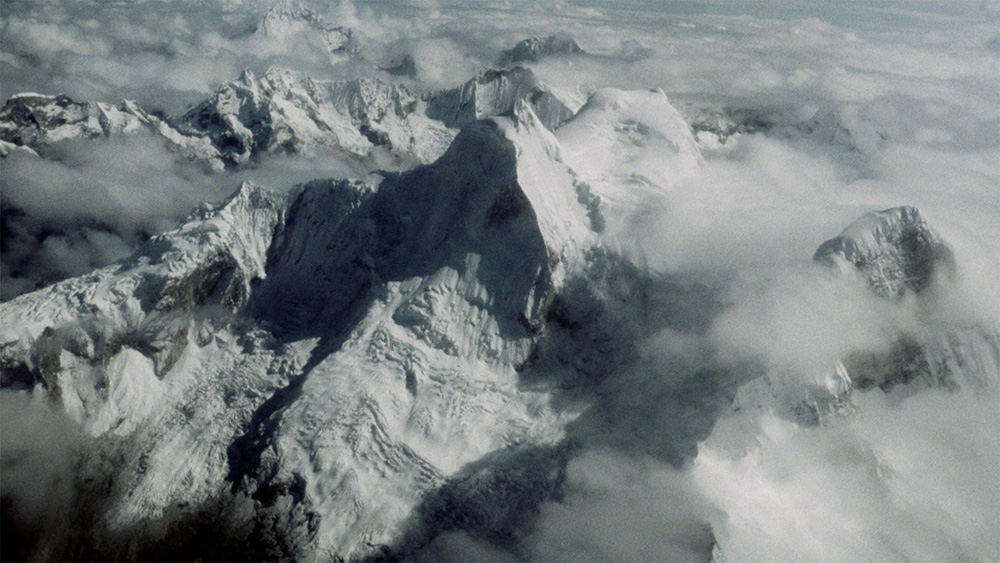
Aggregate States of Matters Rosa Barba 18' Bright Future Ammodo Tiger Short Competition Aggregate States of Matters highlights the ambiguous relationship between humans and nature. For her new 35mm film shot in Peru, Rosa Barba worked with communities that are affected by the melting of a glacier and geological time becoming exposed. Barba shows the slow disappearance of the glacier and the perception of this fact within the Quechuan population in the Andes. While exploring different local myths, she outlines the possibility of translating ancient knowledge into the present time.
Rosa Barba (b. 1972 in Italy) lives and works in Berlin. Rosa Barba studied at the Academy of Media Arts in Cologne and at the Rijksakademie van Beeldende Kunsten in Amsterdam. Barba’s work is represented in numerous international collections such as Collezione MAXXI Arte, Rome, Italy; Collezione FRAC Piemonte, Vercelli, Italy; Hamburger Bahnhof, Berlin; Lemaître Collection, London; Louisiana Museum of Modern Art, Humlebæk, Denmark; Museo di arte moderna e contemporanea di Trento e Rovereto, Rovereto; Museo Centro de Arte Reina Sofía, Madrid, Kunsthaus Zürich, MACBA Barcelona, Mambo Bologna, Sammlung zeitgenössischer Kunst der Bundesrepublik Deutschland Germany and Jumex, Mexico City. She has participated in group shows amongst others at MASS MoCA, USA; Akademie der Künste, Berlin; Kunstmuseum Liechtenstein, Vaduz; La Cinémathèque Française, Paris; WIELS, Brussels; Museo Nacional Centro de Arte Reina Sofia, Madrid; Swiss Institute, New York; 8th Berlin Biennale for Contemporary Art International Triennial of New Media Art 2014, Beijing, China; 19th Biennale of Sydney; International Biennial of Contemporary Art of Cartagena de Indias, Colombia; 2010 Liverpool Biennial; 52nd and 53rd Venice Biennale; 2nd Thessaloniki Biennale of Contemporary Art; Biennial of Moving Images, Geneva.
Maddi Barber, June Crespo
Catalogue : 2025Cambium | Experimental doc. | 16mm | color | 44:30 | Spain | 2024
Maddi Barber, Marina Lameiro
Cambium
Experimental doc. | 16mm | color | 44:30 | Spain | 2024
CAMBIUM, the cellular stratum of trees, it’s a cambial membrane that runs along the trunk and roots, producing growth. In the Navarrese Pyrenees a community has decided to cut down a pine forest in order to recover ancient fields for cultivation and animal grazing. Structured in two parts, the film traces the change of a territory traversed by practices of violence and care for the land.After the abandonment of the villages during the 1960s in the Arce Valley, the Government of Franco planted pines in the fields that were used for grazing as part of a state programme of reforestation and forestry. More than 50 years later, in Lakabe, a village repopulated in the 1980s, they have decided to cut down the pines and recover their meadows for livestock. Through different data capture and image technologies, CAMBIUM explores, together with the inhabitants of the area, a territory in transformation.
Maddi Barber studied audiovisual communication at the University of the Basque Country and did a master's degree in visual anthropology at the University of Manchester. In 2019 she created the production company Pirenaika, with which she has produced some of her films as well as those of other artists and filmmakers from the nearby context such as Gerard Ortin, Ainhoa Gutiérrez and Irati Gorostidi. Her latest co-production, CONTADORES, by Irati Gorostidi, had its international premiere at the Semaine de la Critique in Cannes. She is currently participating in Tabakalera's Ikusmira Berriak residency, where she is developing the feature-length fiction film CLAROS DE BOSQUE. Marina Lameiro is a filmmaker and producer. She holds a degree in Audiovisual Communication from the URJC and a master's degree in Creative Documentary from IDEC-UPF and a postgraduate degree in Audiovisual Editing from the same university. She was part of the Collaborative Studio (CoLab) of UnionDocs in New York City as an artist-in-residence. In 2018 he released her first feature film YOUNG & BEAUTIFUL which, among other awards, won the Special Audience Award at the Punto de Vista Festival in 2018, was nominated for the Feroz Awards and has been screened in more than 20 countries. In 2021 she released DARDARA, her second feature film, which entered the list of the 10 most-seen films in cinemas after its premiere at the Punto de Vista Festival.
Catalogue : 2023CORE | Experimental film | mov | color | 21:22 | Spain | 2022
Maddi Barber, June Crespo
CORE
Experimental film | mov | color | 21:22 | Spain | 2022
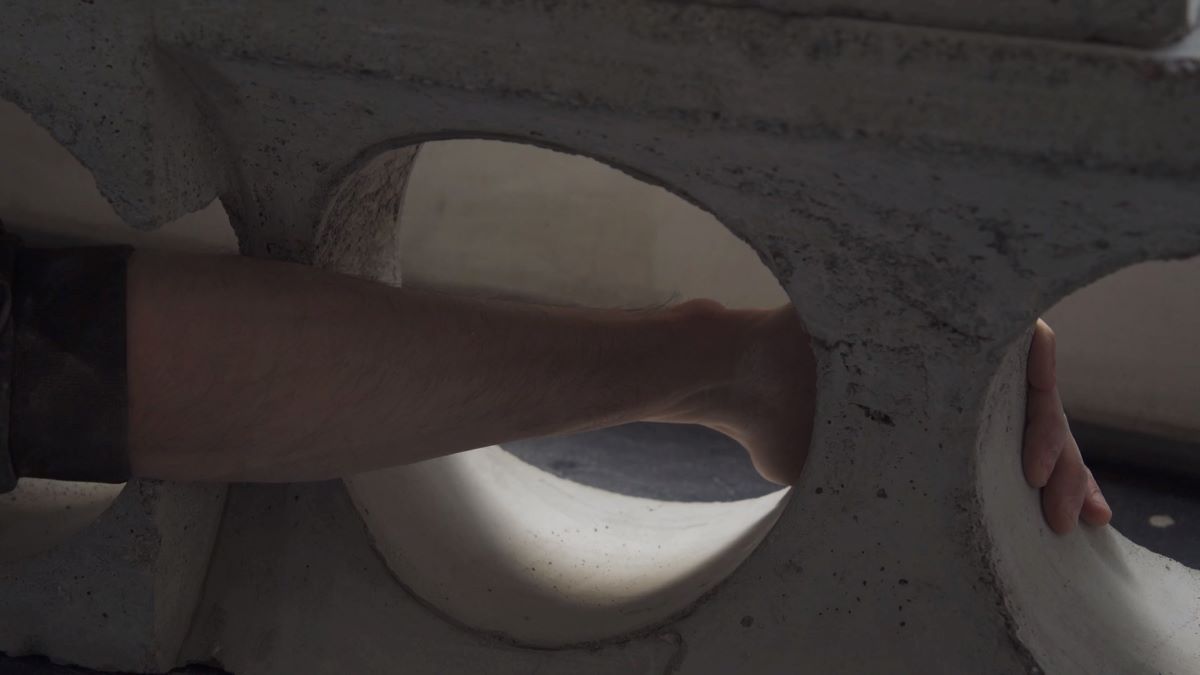
Someone is sleeping. A conveyor belt moves stones in an underground place. The stones fall through a hole in the shape of a mouth. Some hands go through a piece of concrete. Someone operates a knob that crushes the stone. In CORE, we document the different states through which the material passes: stone, dust, liquid and solid. Moving between the surface of things and underneath them, we interweave two apparently distant processes: hands traversing and manipulating cement sculptures and the process of extracting and transforming stones in a quarry. An encounter and friction between materials that is in turn the result of the meeting and negotiation of two languages, the sculptural and the cinematographic.
JUNE BIO June Crespo (Pamplona 1982) graduated in Fine Arts from the University of the Basque Country in 2005 and participated in the De Ateliers residency programme (Amsterdam 2015-2017). Her solo exhibitions include: entre alguien y algo (2022) and Ser dos (2017) at CarrerasMugica gallery, Bilbao; Helmets (2020) at Artium, Vitoria-Gasteiz; Voy, sí (2020) Heinrich Ehrhardt gallery, Madrid and No Osso (2019) at Uma Certa Falta de Coêrencia, Oporto. She has recently participated in group exhibitions such as: The Milk of Dreams, Venice Biennale 2022; Fata Morgana, Jeu de Paume (Paris) or El sentido de la Escultura at the Miró Foundation (Barcelona). MADDI BIO Maddi Barber (Valle de Arce, 1988) has a degree in Audiovisual Communication and an MA in Visual Anthropology from the University of Manchester. Her work has been shown at festivals such as Visions du Réel, FidMarseille, San Sebastian (Zabaltegi), Curtocircuito, Zinebi, Ji.hlava, Porto Post Doc and Las Palmas, among others. They have also been exhibited in museums and centres such as La Panera, Artium and the Oteiza Museum. She is currently working on the development of his first feature film, "Claros de bosque".
Maddi Barber, Marina Lameiro
Catalogue : 2025Cambium | Experimental doc. | 16mm | color | 44:30 | Spain | 2024
Maddi Barber, Marina Lameiro
Cambium
Experimental doc. | 16mm | color | 44:30 | Spain | 2024
CAMBIUM, the cellular stratum of trees, it’s a cambial membrane that runs along the trunk and roots, producing growth. In the Navarrese Pyrenees a community has decided to cut down a pine forest in order to recover ancient fields for cultivation and animal grazing. Structured in two parts, the film traces the change of a territory traversed by practices of violence and care for the land.After the abandonment of the villages during the 1960s in the Arce Valley, the Government of Franco planted pines in the fields that were used for grazing as part of a state programme of reforestation and forestry. More than 50 years later, in Lakabe, a village repopulated in the 1980s, they have decided to cut down the pines and recover their meadows for livestock. Through different data capture and image technologies, CAMBIUM explores, together with the inhabitants of the area, a territory in transformation.
Maddi Barber studied audiovisual communication at the University of the Basque Country and did a master's degree in visual anthropology at the University of Manchester. In 2019 she created the production company Pirenaika, with which she has produced some of her films as well as those of other artists and filmmakers from the nearby context such as Gerard Ortin, Ainhoa Gutiérrez and Irati Gorostidi. Her latest co-production, CONTADORES, by Irati Gorostidi, had its international premiere at the Semaine de la Critique in Cannes. She is currently participating in Tabakalera's Ikusmira Berriak residency, where she is developing the feature-length fiction film CLAROS DE BOSQUE. Marina Lameiro is a filmmaker and producer. She holds a degree in Audiovisual Communication from the URJC and a master's degree in Creative Documentary from IDEC-UPF and a postgraduate degree in Audiovisual Editing from the same university. She was part of the Collaborative Studio (CoLab) of UnionDocs in New York City as an artist-in-residence. In 2018 he released her first feature film YOUNG & BEAUTIFUL which, among other awards, won the Special Audience Award at the Punto de Vista Festival in 2018, was nominated for the Feroz Awards and has been screened in more than 20 countries. In 2021 she released DARDARA, her second feature film, which entered the list of the 10 most-seen films in cinemas after its premiere at the Punto de Vista Festival.
Catalogue : 2023CORE | Experimental film | mov | color | 21:22 | Spain | 2022
Maddi Barber, June Crespo
CORE
Experimental film | mov | color | 21:22 | Spain | 2022
Someone is sleeping. A conveyor belt moves stones in an underground place. The stones fall through a hole in the shape of a mouth. Some hands go through a piece of concrete. Someone operates a knob that crushes the stone. In CORE, we document the different states through which the material passes: stone, dust, liquid and solid. Moving between the surface of things and underneath them, we interweave two apparently distant processes: hands traversing and manipulating cement sculptures and the process of extracting and transforming stones in a quarry. An encounter and friction between materials that is in turn the result of the meeting and negotiation of two languages, the sculptural and the cinematographic.
JUNE BIO June Crespo (Pamplona 1982) graduated in Fine Arts from the University of the Basque Country in 2005 and participated in the De Ateliers residency programme (Amsterdam 2015-2017). Her solo exhibitions include: entre alguien y algo (2022) and Ser dos (2017) at CarrerasMugica gallery, Bilbao; Helmets (2020) at Artium, Vitoria-Gasteiz; Voy, sí (2020) Heinrich Ehrhardt gallery, Madrid and No Osso (2019) at Uma Certa Falta de Coêrencia, Oporto. She has recently participated in group exhibitions such as: The Milk of Dreams, Venice Biennale 2022; Fata Morgana, Jeu de Paume (Paris) or El sentido de la Escultura at the Miró Foundation (Barcelona). MADDI BIO Maddi Barber (Valle de Arce, 1988) has a degree in Audiovisual Communication and an MA in Visual Anthropology from the University of Manchester. Her work has been shown at festivals such as Visions du Réel, FidMarseille, San Sebastian (Zabaltegi), Curtocircuito, Zinebi, Ji.hlava, Porto Post Doc and Las Palmas, among others. They have also been exhibited in museums and centres such as La Panera, Artium and the Oteiza Museum. She is currently working on the development of his first feature film, "Claros de bosque".
George Barber
Catalogue : 2006What's that sound? | Experimental video | dv | color | 4:0 | United Kingdom | 2004
George Barber
What's that sound?
Experimental video | dv | color | 4:0 | United Kingdom | 2004
George Barber doffs his cap to the 20th anniversary of Scratch Video with What`s That Sound?, a mesmerizing montage of questions, answers, and the cries and screams of people caught in a disaster movie. The work uses as its starting point, the film Airport `77 where, improbably, a jumbo jet sinks to the bottom of the sea. What follows is a clever amalgamation of absurd linguistics, cries and shouts, highlighting the artist`s permanent fascination with speech, and human reaction to out-of-the-ordinary situations.
Courtesy Video Data bank
www.vdb.org
"What`s that Sound?" is a piece started in 1989 but not finished until 2004. The piece is a re-working of "Airport 77" disaster movie. The Artist focuses on a scene where the occupants of a plane, stranded at the bottom of the sea, are listening desperately for any signs of rescue. Vincent Price and Jack Lemmon star. Slowly a link is made between the audience listening - and those on the plane listening. We struggle like them to hear and are drawn in. The extraneous sounds of life start to become part of the work."
Courtesy www.luxonline.org
"George Barber was born in Guyana in 1958. He studied at St Martins and Slade Schools of Art, London. He was a founder member of ZG Magazine and a leading figure in the Scratch Video phenomenon of the 80s, which exploited newly available video-editing technologies and their potential for rhythmic-editing and moving-image collage. His current work is visually striking and sometimes disturbing, and often concerned with human behavior in unusual situations. He was once described by Art Monthly as, "The Henry Ford of independent video." Courtesy Video data bank
Nora Barbier
Catalogue : 2018Les Yeux bleus cheveux noirs | Experimental fiction | hdv | color | 14:31 | France | 2017
Nora Barbier
Les Yeux bleus cheveux noirs
Experimental fiction | hdv | color | 14:31 | France | 2017
Deux amis se filment dans Shanghai. Librement inspiré du livre éponyme de Marguerite Duras, Les Yeux bleus cheveux noirs est un film sur le regard,le désir : une lutte silencieuse dans laquelle la retenue l’emporte sur ce qui est livré.
Nora Barbier est née en 1988. Après des études en philosophie contemporaine (Philmaster ENS et EHESS) et en études de genre (M2 de l’Université Paris 8 Saint-Denis), elle a travaillé comme attachée de production de cinéma pour Capricci. Sa première exposition personnelle, Life is so Easy, a eu lieu au Bazaar Compatible Program à Shanghai en 2016.
Olivo Barbieri
Catalogue : 2008site specific_LAS VEGAS 05 | Experimental film | 35mm | color | 12:30 | Italy, Canada | 2005
Olivo Barbieri
site specific_LAS VEGAS 05
Experimental film | 35mm | color | 12:30 | Italy, Canada | 2005
Las Vegas is the apotheosis of the desert town. Visiting Las Vegas in the mid-1960s was like visiting Rome in the late 1940s... "Learning from Las Vegas" Venturi, Brown, Izenour. The M.I.T. Press, 1972,1977. Thirty three years after the publication of Robert Venturi?s seminal treatise on architecture, ?Learning from Las Vegas?, how does the city of Las Vegas appear today? Las Vegas 1905-2005: one hundred years after it?s foundation, what form has Las Vegas, the most important city for tourism and mass entertainment in the world, seemingly impermeable to the various energy crises (petroleum, water, electricity) and terrorism which face the world today, taken? "site specific_LAS VEGAS 05" is an artistic project, a work in progress, the second stop of a voyage which involve, after Rome, Shanghai.
Olivo Barbieri (Italy 1954) begins to exhibit his work in 1978. Beginning in the year 1989, he regularly travels to Orient, in particular, to China. In 1993, 1995, and 1997, he takes part in the Biennial in Venice and in numerous other international events devoted to contemporary visual arts. In 1996, he holds a retrospective exhibit of his work at the Folkwang Museum in Essen. In 2003 he exibited in "Strangers" the first Triennial of photography and video organized by ICP (International Centre of Photography) New York. In 2003 start the project site specific_ who will involve several cities: Roma, Montreal, Amman, Las Vegas, Los Angeles, Shanghai, Sevilla, etc. For the site specific_ series he realized 3 films: site specific_ROMA 04, site specific_LAS VEGAS 05, site specific_SHANGHAI 04. In 2005 he started new series of film Seascape # e Riversacape #. In 2006 he was invited from BIACS (Sevilla Biennial) to realize a new film, Se villa → ( ∞ ) 06. Barbieri?s images may be viewed in museums, universities and art collections in Europe and USA. During the same period of time, several volumes on the artist?s his work are published: Paesaggi in Miniatura, Art& Udine 1991. Notte, Art&, Udine 1991. Olivo Barbieri seit 1978, Museum Folgwan, Essen 1996. Artificial Illuminations, Smithsonian, Washington, D.C., 1998. Virtual Truths, Silvana Editoriale, Milano 2001. Notsofareast, Donzelli, Roma 2002. Site Specific_Roma 04, Zoneattive, Roma 2004. Site Specific_Las Vegas 05, Wonder Inc., Toronto 2005, site specific_SHANGHAI 04, Editrice Quinlan, Bologna 2006, site specific_NYC 07, APM edizioni, 2007.
Rita Barbosa
Catalogue : 20232ª Pessoa | Video | 4k | color | 16:0 | Portugal | 2022
Rita Barbosa
2ª Pessoa
Video | 4k | color | 16:0 | Portugal | 2022
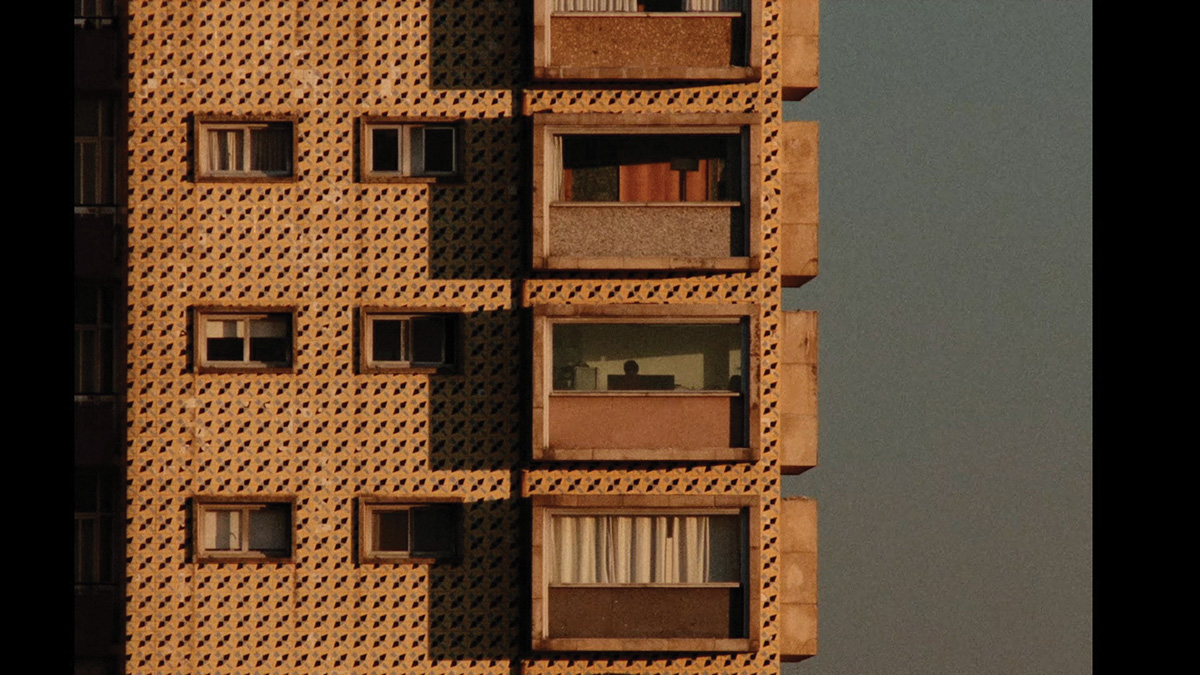
One day, an old water pipe caused a ceiling leak. On this ceiling, toxic mushrooms of the order Polyporales would grow. Sitting on the toilet, the lady of this house looks up and observes that magical and mysterious fungus, which is not an animal, nor a plant. The mushroom is the future, she thought.
1979. Graduated in Digital Arts, in Sound and Image Course, by the School of Arts of UCP (2002). She completed her training with courses and workshops such as the Maine Media Workshops Photography Management Workshop. She wrote and performed her first short film FRIENDS AFTER DARK [2016], that had it international premiere at the 69th Locarno Film Festival, and was screened at film festivals such as Curtas de Vila do Conde, Márgenes, Curtas de Verin, SACO - Oviedo Contemporary Audiovisual Week, FICA - Aguilar del Campo Film Festival, Cinema Jove, Luso Brasileiro de Santa Maria da Feira, and in other exhibitions of which Bilbao Arte stands out. She wrote and staged the film-performance AMIGOS IMAGINÁRIOS [2018], with the collaboration of Rui Lima, Sérgio Martins and Jonathan Saldanha, with a premiere scheduled at Teatro Rivoli (2019). In theater, dance and performance she collaborated in the creation, set design, visual design, video and dramaturgy of several projects, including TRÊS DEDOS ABAIXO DO JOELHO (2012), by Tiago Rodrigues, that won Best Play in 2012 by the SPA, presented internationally in Kunsten Festival Des Arts, De Internationale Keuze and Rotterdamse Schouwburg, STAGE, Théâtre de la Ville, Théâtre des Abbesses, Emilia Romagna Theater Fondazione, among others. She collaborated in the plays: SABOTAGEM (2015), by Lígia Soares, Miguel Castro Caldas and Sílvia Pinto Coelho; O ESPLÊNDIDO (2014), by Andresa Soares. She participated also in other performance projects, such as CELEBRAÇÃO (2012), a dance and performance program presented at Culturgest. She is a TV commercial director for Take It Easy since 2006, where she has made severaladvertisements brand campaigns: Compal, Luso, Matinal, Gallo, Médis, Banco Popular, Terra Nostra, Lidl, CGD, Optimus, ANF, Staples, PT, TMN, Planta, Unitel, Milaneza, RTP, etc. She directed documentary and experimental videos such as: ESFORÇOZINHO DA GENICA, SKATE NO PALÁCIO, POP FISH e GET BENT [2005], this one presented at the exhibition "J'en Rêve" at the Cartier Foundation Paris and at the festivals Imago, Video-Lisboa, Impakt Festival and Courtisane.
Perry Bard, Sullivan Richard
Catalogue : 2018No Flak | Video | hdv | color | 7:14 | Canada, USA | 2017
Perry Bard, Sullivan Richard
No Flak
Video | hdv | color | 7:14 | Canada, USA | 2017
No Flak is a text animation that links the attitudes of Dada and the Theatre of the Absurd to the present moment. In the aftermath of an election where the internet offers the opportunity for rants on social media and absurd tweets from the U.S. president, the work scours past and present for bits of humor and philosophy
No FLAK is a collaboration with Richard Sullivan Born in Quebec City, living in NY, Perry Bard’s work is fueled by observations of her immediate environment and their interpretations in a global context. The space between fact and fiction, the role of technology, control of media, its proliferation in public space, play out in installations and videos presented internationally: at MoMA’s Documentary Fortnight, Toronto, Moscow, Rotterdam, IDFA International Film Festivals, at museums including Guggenheim Museum NY/Berlin, MoMA PS1, Reina Sofia, MOCA Zagreb and Bucharest. Her work was included in Sao Paolo, Montreal and Cartagena Biennials. Man With A Movie Camera:The Global Remake, a crowd sourced mashup of Vertov’s1929 film was named by Google one of the 106 most creative uses of the internet, won Honorary Mentions at Ars Electronica, Transitio_MX, Liedts-Meesen, was presented at Transmediale, File, Share media festivals, installed in over 70 venues including public LED displays in the UK and Australia. Richard Sullivan is a filmmaker working and living in New York City. His films have been shown at the Collective for Living Cinema, Millennium, Anthology Film Archives in NYC, the Reina Sofia Museum in Madrid and the Ann Arbor film Festival amongst others.
Jessica Bardsley
Catalogue : 2023Life Without Dreams | Experimental doc. | 16mm | color and b&w | 13:30 | USA | 2022
Jessica Bardsley
Life Without Dreams
Experimental doc. | 16mm | color and b&w | 13:30 | USA | 2022
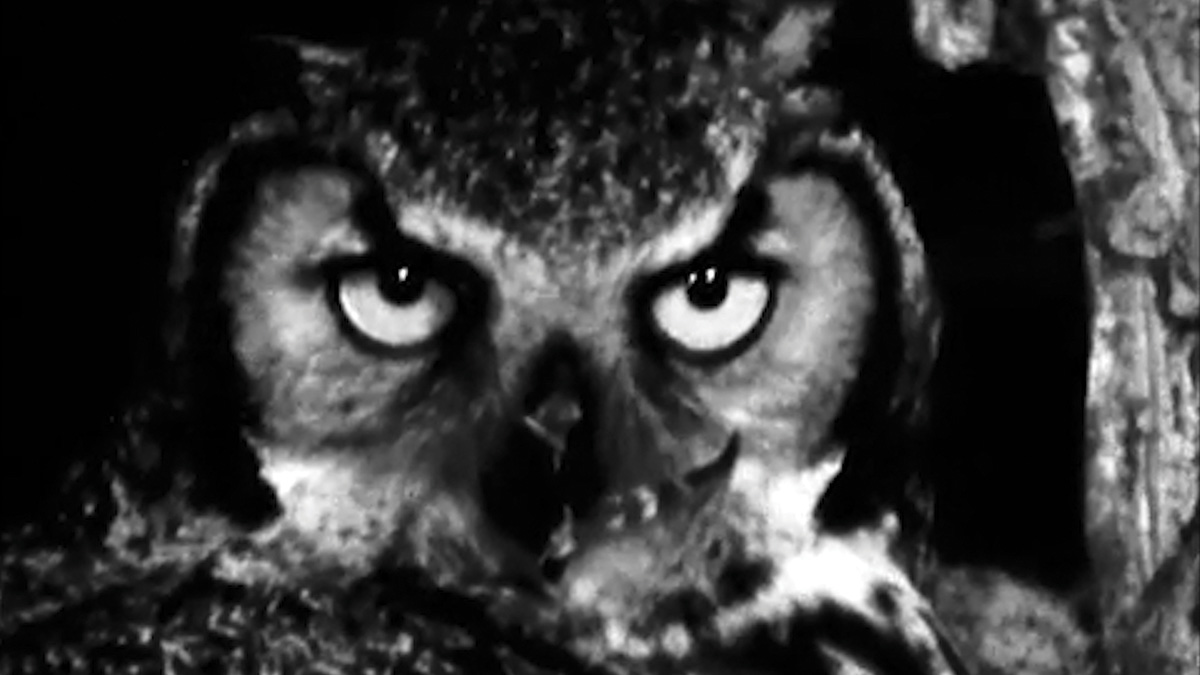
LIFE WITHOUT DREAMS is set in the outer space of consciousness, where the surfaces of far-out planetary bodies form the terrain for an exploration of 24/7 capitalism, insomnia, and the disappearance of darkness due to light pollution.
Jessica Bardsley is an artist-scholar working across film, writing, and studio art. Her films have screened within the U.S. and internationally at festivals like CPH:DOX, Sundance, Visions du Réel, EMAF, RIDM, True/False, and on the Criterion Channel. She is the recipient of various awards, including a Princess Grace Award, Grand Prize at 25FPS, the Eileen Maitland Award at the Ann Arbor Film Festival, Best Short Film at Punto de Vista, and numerous Harvard Film Study Center fellowships. Her first feature film, The Cave Without a Name, was a finalist for the 2022-2023 Venice Biennale's Cinema College. Her research and writing have been supported by the Radcliffe Institute for Advanced Study, the Terra Foundation for American Art, and the Henry Luce Foundation/American Council of Learned Societies. She received a Ph.D. in Film and Visual Studies from Harvard University and an M.F.A. from the School of the Art Institute of Chicago. She is Assistant Professor of Experimental Film and Media at NYU's Tisch School of the Arts.
Catalogue : 2013The Blazing World | Experimental doc. | dv | black and white | 20:0 | USA | 2012
Jessica Bardsley
The Blazing World
Experimental doc. | dv | black and white | 20:0 | USA | 2012
Inflected with a feminist sensibility, The Blazing World is an essay film composed of a variety of visual and sonic stolen materials. Through an associative logic, The Blazing World enacts a meditation on shoplifting, depression, gender, Winona Ryder, and the filmmaker`s own experiences with stealing and mental health. Stealing by women becomes a form of rebellion against social and economic oppression, while also failing to provide the mental and emotional solace sought after in the accumulation of goods.
My moving image works have screened internationally at the European Media Arts Festival, Images Festival, Kassel Dokfest, Big Sky Documentary Film Festival, Antimatter Film Festival, Jihlava International Documentary Film Festival, Rooftop Films, and more. My experimental documentary The Art of Catching was awarded a 2010 Princess Grace Award in Film, as well as Director?s Choice Award at the 2011 Black Maria Film and Video Festival, Grand Prix at 25FPS Experimental Film and Video Festival, and a nomination for the New Visions Award at the 2011 Copenhagen International Documentary Film Festival (CPH:DOX). Additionally, I have been the recipient of numerous fellowships, grants and scholarships, including a 2011 Flaherty Film Seminar Student Fellowship. Currently I am a 2012-2013 Artist Resident with HATCH Project, a program of the Chicago Artists Coalition.
Scott Barley
Catalogue : 2019Sleep Has Her House | Experimental doc. | mp4 | color | 90:0 | United Kingdom | 2017
Scott Barley
Sleep Has Her House
Experimental doc. | mp4 | color | 90:0 | United Kingdom | 2017
The shadows of screams climb beyond the hills. It has happened before. But this will be the last time. The last few sense it, withdrawing deep into the forest. They cry out into the black, as the shadows pass away, into the ground. Through long static takes, the film develops a contemplative, hypnotic experience, akin to paintings that move, mixing live action and still photography (shot on iPhone) and hand-drawn images.
Scott Barley is a British artist and filmmaker from South Wales, UK. His work has been screened across Europe and The Americas, including The Institute of Contemporary Arts London, BFI Southbank, Sheffield Doc Fest, Doclisboa, Karlovy Vary IFF, Dokufest, EYE Filmmuseum, Vancouver International Film Centre, Museum of Modern Art Rio, Museum of Contemporary Art Buenos Aires, and Fronteira International Documentary & Experimental Film Festival. His work has been associated with the Remodernist and Slow Cinema movements. His films are primarily concerned with the Anthropocene, nature, cosmology, phenomenology, and mysticism, and have been compared with the sensibilities of Stan Brakhage, Philippe Grandrieux, Béla Tarr, Maya Deren, and Jean Epstein.
Amie Barouh
Catalogue : 2025Okinawa | Video installation | mov | color | 27:32 | France, Japan | 2023
Amie Barouh
Okinawa
Video installation | mov | color | 27:32 | France, Japan | 2023
The video installation okinawa was born of a dialogue between Amie Barouh, artist and filmmaker, and Elodie Royer, curator and researcher, as part of her current work linking the practices of women artists rooted in different territories affected by disasters and environmental upheaval in Japan. It was with this in mind that the film was shot during fieldwork in Okinawa, encountering artists and damaged places, activists and shamans, all of whom share a deep connection with their living environments. Through the voices, faces and landscapes encountered, Okinawa is both a dreamlike journey into the spatial and temporal depths of this archipelago and a testimony to its geopolitical and environmental stakes - from the daily lives of its inhabitants to protests against American bases, from evenings shared over karaoke to struggles to preserve ecosystems threatened by the ever-increasing militarization of this territory. With, in order of appearance, the voices of the Henoko blue collective canoeing against the expansion of military bases on the sea in Oura Bay, photographer Ishikawa Mao, Perry of the US Marine Corps, artist and video-maker Yamashiro Chikako, Sawa Koyado, a shaman in Kudakajima, and Yanchii, a mechanic in Ginowan.
Amie Barouh defends an experimental documentary that gives a voice to people living on the margins, such as the Roma community. Her work is openly a filmed diary, in keeping with the idea that all knowledge is situated, and that all cinema, no matter how informative, is necessarily subjective. Motivated more by affinities than by a dogmatic desire to “make cinema”, Amie Barouh's films, somewhere between documentaries and visual essays, aim above all to convey an experience, taken as such, and often start from an event marking the artist's life, like an encounter. Amie Barouh does not simply observe those she films. She lives with them, or has forged a special bond with them. Driven by curiosity and the desire to meet members of the Roma community, the artist was “adopted” by a family and integrated their camp in the Paris suburbs. After living with them for 2 years, she began to film them. Not seeking to mask the marks of subjective expression, Amie Barouh's videos break completely with the illusion of documentary objectivity. The artist not only brings her personal history into play, but also her own body in the subject matter of her documentaries. This is particularly true of Je peux changer mais pas à 100% (I can change, but not 100%), a work that recounts her failed love affair with Bobby, a Romanian Roma crack addict who lives on the streets by petty theft. Amie Barouh's films are always driven by the search for the right proximity to the people whose images she captures. The “right” distance, however, is always unstable, much to the viewer's delight. The camera, the artist's third eye and third arm, negotiates in real time the nature of the relationships she - as a documentarian, but above all as a person - has with her subjects. The subjective staging and editing embrace her heartfelt impulses, resulting in images that are at times impressionistic, at times realistic, capturing the complexity of documenting worlds to which we don't belong. Julie Ackermann
Catalogue : 2021Je peux changer mais pas à 100% | Documentary | mov | color | 40:24 | France | 2019
Amie Barouh
Je peux changer mais pas à 100%
Documentary | mov | color | 40:24 | France | 2019
Le film commence par une promesse amoureuse: je peux changer. Une promesse trop souvent entendue, une promesse que l’on sait fausse d’avance. Amie est tombée profondément amoureuse de Bobby, un jeune homme Rom roumain, qui vit dans la rue et qui aime par-dessus tout l'héroïne. Ensemble, ils ont vécu, entre le parking de la Gare de Lyon et des petits hôtels parisiens, une folle histoire d’amour, qui n’a pourtant pas réussi à faire changer Bobby. Car il aime la liberté de la rue, où il a grandi, la seule forme de foyer qu’il connaisse. Amie, jeune femme franco-japonaise élevée dans un milieu d’artistes cosmopolites, a fait de ce chagrin d’amour une chronique déchirante sur leur relation impossible. "Je peux changer mais pas à 100%" est un récit d’une intimité brutale, hors norme, qui nous invite à découvrir les sous-sols impénétrables et la communauté qui y habite, sans préjugés. Complètement démunie par l’échec de son amour, qui n’a pas été suffisamment fort pour faire changer Bobby, la réalisatrice utilise le cinéma comme seul moyen pour soigner sa blessure. Ou, peut-être, pour écrire une lettre d’amour déchirante à celui qui ne lit pas, mais qui parle toutes les langues. Et nous, nous en sommes les témoins privilégiés.
Amie Barouh est née à Tokyo (Japon) en 1993. Elle s'installe à Paris (France) en 2010, où elle étudie la peinture à l'école des Beaux-Arts. C'est aussi dans la capitale française qu'elle découvre la culture Rom. Elle fait la rencontre d'une famille, et se fait accepter dans la communauté. Parallèlement à ses études aux Beaux-Arts, elle vit dans un camps de Rom sous le pont de Jointville-Le-Pont (France), et commence rapidement à apprendre le romani et le roumain. Un jour, un des membres de la famille lui demande de filmer un mariage. Depuis, elle utilise la caméra comme moyen d'expression. "Je peux changer, mais pas à 100%" est son premier film.
Amie Barouh
Catalogue : 2026Shuruuk | Experimental doc. | 0 | color | 34:57 | France | 2024

Amie Barouh
Shuruuk
Experimental doc. | 0 | color | 34:57 | France | 2024
Shards of the world and fragments of life, between Japan and the Rom’s community, come together and respond to each other in a frenetic montage that is both gentle and rebellious. The title comes from a Tunisian newspaper called El Shuruuk, and I started making this edit at that time, recreating my story in the daily newspaper. I took some images that I documented for 5 years, across the world. I started to make an edit, regardless of the logic of narration, mixing places and time. Shuruuk means dawn, but it can be translated literally as rising in the east, like this movement of population, from east to west.
Antoine Barraud
Catalogue : 2010RIVER OF ANGER | Experimental doc. | dv | color and b&w | 38:0 | France | 2008
Antoine Barraud
RIVER OF ANGER
Experimental doc. | dv | color and b&w | 38:0 | France | 2008
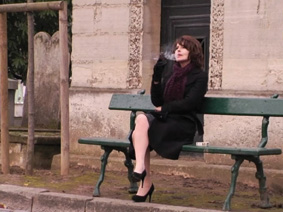
The legendary U.S. underground film-maker recalls his old dreams and this invocation causes a flood, a river of words?
Antoine Barraud
Cecilia Barriga
Catalogue : 2007El origen de la violencia | Experimental video | dv | color | 1:0 | Spain | 2004
Cecilia Barriga
El origen de la violencia
Experimental video | dv | color | 1:0 | Spain | 2004
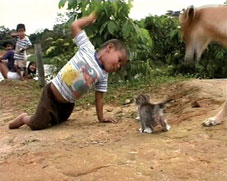
A little boy who is playing with a cute little cat, suddenly transforms his pleasure for the game into an uncontrolled act of hate. This one-minute video makes us reflect upon the origin of violence.
Cecilia Barriga was born in Chile. In 1977, she moved to Madrid, Spain. For the last 20 years, she has worked in different visual formats, such as film, video art, documentary, and feature film. Her most important works are: in 1991, "Meeting two queens", a master experimetal piece shown in MOMA, New York, Whitney Museum, Reina Sofia, Guggenheim Museum, and also in many universities around the world; and in 2000, "Time's up!", a feature film with commercial releases in Paris, Madrid, and many festivals, including San Sebastian International Film festival. Among her recent works are "El camino de Moises" (2004), a documentary which was a remarkable success on Spanish Television; "The origin of violence" (2006), was shown in the most important art museums in Spain.
Daniel Barroca
Catalogue : 2006Verdun | Experimental video | dv | black and white | 9:0 | Portugal | 2003
Daniel Barroca
Verdun
Experimental video | dv | black and white | 9:0 | Portugal | 2003
Verdun is a video made of fragments of images from the 1st World War. Is disturbing the silence of empty landscapes. It?s as a narrative of the emptiness after the destruction and of what?s left of absent people. It?s about the experience of loosing visibility and finding a new one in the loss, and in what rests in that loss.
Daniel Barroca was born at Lisbon in 1976. Studied Visual Arts at the School of Art and Design of Caldas da Rainha in Portugal from 1996 to 2001 and in Ar.Co in 2002. Won the Prize for the Young Creation in Visual Arts 2003-04 of the Union Latine. During the last trimester of 2004, lived and worked at the Spanish Academy in Rome. In the last years participated in several exhibitions and video festivals in Portugal, Italy, France and Norway.