Catalogue > List by artist
Browse the entire list of Rencontre Internationales artists since 2004. Use the alphabetical filter to refine your search. update in progress
Horst Baur
Catalogue : 2007Heroes | Experimental video | dv | color | 4:45 | Germany | 2006
Horst Baur
Heroes
Experimental video | dv | color | 4:45 | Germany | 2006
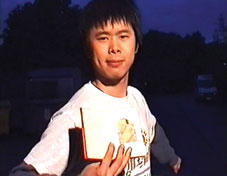
30 years after the end of the great proletarian Cultural Revolution, Chinese people from Munich, Germany, as well as those from Changsha, China, were asked to pose with the Maoist bible, as had been done during the revolution. There were friends, students, artists, and passers-by (China). They were free to choose a Maoist bible from among 40 different editions in which the official photo had been replaced with an image of Mao drawn by an Occidental artist. The artists included Andy Warhol, Gerhard Richter, KP Brehmer, Jörg Immendorff ...
Horst Baur was born in Munich, Germany, in 1954. From 1973-80 he studied philosophy and Catholic theology. From 1978-93 he collaborated on the avant-garde theater scene in Munich. He followed studies in editing from 1980-82, and in 1982-82 he was also co-editor of the journal "Fliegenpilz". Since 1987 he has worked on videos and performances, and since 2000, mail art.
Clara Bausch
Catalogue : 2019Wald | Experimental film | 16mm | color | 6:22 | Germany | 2017
Clara Bausch
Wald
Experimental film | 16mm | color | 6:22 | Germany | 2017
Over the course of a year, WALD (2017) returns to a forest glade. The film witnesses the vegetation changing in different seasons. A house can be seen dimly in the distance. A panorama pan scans the space. The view upwards, at eye level and to the ground - 360° - 3 perspectives. The pan is shot with a 16mm Bolex by hand. The camera itself becomes the main actor of the film, which is underlined by the way it is shot but also by the montage of the film. Original sound accompanies the images, but is interrupted by the adhÄn of a muezzin, the rustling of leaves, the buzzing of bees - these strong sound elements appear and disappear at the same moment. WALD (2017) by Clara Bausch, 16mm, 24 fps, optical Sound, no Dialogue, 6 Min
Clara Bausch works multi and interdisciplinary. Throughout her observation, Bausch creates narratives to thematize questions of identity and freedom. Bausch develops concepts resulting in films, photographs, works on paper, objects and drawings. She is co-founder of LaborBerlin, a platform for exchange and discourse on working with analogue film.
Catalogue : 2016And the Smile is Red on Red | Experimental film | 16mm | color and b&w | 7:17 | Germany, Egypt | 2014
Clara Bausch
And the Smile is Red on Red
Experimental film | 16mm | color and b&w | 7:17 | Germany, Egypt | 2014
Cairo. We look at newspapers, which show occasions of the revolution in 2011. The film fragments encounters with Sama Waly, Reda El Sayed, Sarah Rifky and Islam Azzazzi in the summer of 2014. The film is produced with the help of Analogue Zones # 3, a collaborative project between Cimatheque Cairo, LabA and LaborBerlin.
Clara Bausch (1982) lives and works in Berlin. She is an artist and filmmaker. In 2009 she graduated at University of the Arts Berlin, UdK, her studies of fine arts, with professor Lothar Baumgarten. In her artistic practice she is dealing with situations, perception of information, constructed realities, light and time. She works in the fields of film, photography, drawing and installation. Clara Bausch is member of the association LaborBerlin e.V. since 2006. She has organized and conducted projects, workshops and screenings in several european cities. Bausch`s works and films have been presented in exhibitions, screenings and festivals. Grants 2013 Kurzfilmförderung , BKM; 2013 Residenz, Levitation, Centrum, Berlin; 2012 A-I-R Residency, CCA, Zamek Ujazdowski, Warschau; 2010 Residenz, Schule 21 e.V., Bremen; 2006 ERASMUS-Programm, London
Catherine Bay
Catalogue : 2013Blanche Neige épisode 2 | Video | hdv | color | 5:52 | France | 2012
Catherine Bay
Blanche Neige épisode 2
Video | hdv | color | 5:52 | France | 2012
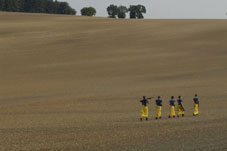
Depuis 2002, le projet Blanche-Neige évolue à travers une série d?interventions : performances, conférences, spectacles et manifestations. Ici, Blanche-Neige investit l?espace filmique. Parés d?un costume et d?une perruque en latex prémoulées, designées par Roël Stassart, les interprètes battent la campagne en escadrons dans une mise en scène reprenant les codes du western et du film de guerre. L?utilisation du format Cinémascope et du grand angle permet d?aborder la place du corps dominé par les grands espaces, et renvoie la figure de Blanche Neige à l?immensité du paysage. Le personnage de Blanche-Neige, démultiplié et décontextualisé, fait se télescoper des sensations liées à la féérie enfantine et au cauchemar publicitaire. « Dans ce travail, explique Catherine Baÿ, il est question de réactiver un possible imaginaire autour d?une figure hypermédiatisée devenue objet de consommation courante et de proposer un spectacle populaire. » Ce travail sur la déformation du mythe donne lieu à un film hybride interrogeant le rapport entre industrie de l?image et imaginaire collectif.
Après des études de théâtre (École Jacques Lecoq, Philippe Gaulier, Antoine Vitez), d`ethnologie (Jean Rouch) et de danse (notamment avec Marcia Barcello, Philippe Decouflé, Milly Nichols), elle développe, depuis une dizaine d`années son travail de chorégraphe et de metteur en scène. Son parcours la conduit à se promener à travers les formes (chorégraphie, performances, mise en scène, vidéos, cabaret) et à collaborer avec des artistes de différents champs d`expression. De 1987 à 1994, C. B. orchestre des performances et des événements dans différents types d`espace : piscines, boîtes de nuit, friches industrielles et les galeries Yvon Lambert , Anne de Villepoix, .. Elle collabore notamment avec les plasticiens Combas, Jean-Charles Blais, Sylvia Bossu, les architectes Laurence Bourgeois et Pascale Lecoq, les acteurs-danseurs Alain Rigout, Amy Garmon et Laurence Levasseur. Depuis 1994, elle développe un travail spécifique sur les codes de représentation. Elle dissèque les écarts entre le corps intime et le corps social dans Relief ou le discours sur l`éloquence en portant un regard critique sur les postures des hommes politiques lors des élections de 1995. Ainsi parlait Eliane et Lulu, qu`elle élabore avec Marco Berrettini et Kolatch, joue sur la confrontation scénique de corps singuliers. En 1999, elle chorégraphie Nains mode d`emploi, spectacle qui se déroule en vitrine. C. B. y élabore un dispositif scénique complexe qui instaure un dialogue entre un écran vidéo et des acteurs. Le motif du bouffon y est exacerbé et concentre l`approche satyrique du monde de la chorégraphe. Elle travaille actuellement à la création de nouvelles interventions de "Blanche-Neige" et une création en cours " Jack in the box ". Aujourd`hui s?est renforcé par l?expérience acquise avec le projet Blanche-Neige une méthode spécifique à celle du travail avec le "Performer". Elle a donc mis au point la méthode A235. Cette méthode se développe sous forme de workshop. Le premier s` est déroulé en juillet 2009 à Micadanse (Paris) et se poursuivra à la fondation Gilbert Brownstone (Paris) courant 2010. Parallèlement à ses créations, Catherine Baÿ dirige artistiquement et coproduit différentes structures qui ont pris domicile dans ses bureaux du 41 rue du Faubourg Saint-Martin à Paris. Qu`il s`agisse du Cabaret "Nue & Habillé? de 1994, de la vitrine ?Window? crée avec les frères Stassart en 1999, de la galerie ?The Window 41? dirigée actuellement par Charlotte Batifol et Yann Perol, ou du Laboratoire A235, chacune de ses structures sont de véritable plates-formes d`échanges et de création. Elles ont permis et permettent encore de créer des événements en marge des institutions classiques et de s`interroger sur le dynamisme possible entre la production, la diffusion et la création.
Catalogue : 2007Blanche Neige épisode 1 | Experimental video | dv | color | 10:0 | France | 2006
Catherine Bay
Blanche Neige épisode 1
Experimental video | dv | color | 10:0 | France | 2006
"Blanche Neige Episode #1" is the first video realization independant of the "Blanche Neige" (Snow White) series. Several Snow Whites cross a landscape and the frame of the image. The "Blanche Neige" project was initiated in Paris in November 2002, and evolved into interventions and videos. The Snow Whites, through performances, conferences, and demonstrations multiply throughout the world. Snow White, a character from another world, sneaks into our own like a virus, invades a space, adapts it to its needs, and quickly leaves it. Snow White can be seen in a multitude of different spaces and situations, in the city or in the country, in an art gallery, on a boat, alone, in a group. Snow White is never exactly the same, but never totally different either. In this project, Catherine Bay interrogates our relation to the image. The project was presented in Paris, at the Brownstone Foundation and at the Cartier Foundation; in Milan at the Uovo Festival; in Moscow at the Kliazma Festival; in Rome during the Nuit Blanche; in Lausanne at the Arsenic Theatre; in Beaubourg at Vidéodanse; and at the Parc de la Villette. Les Rencontres Internationales Paris/Berlin have invited Catharine Bay to Podewil in Berlin and the Grande Halle de la Villette. The next intervention of the Snow Whites will be held at the Mac/val Museum on September 16, 2007.
Laura Bazalgette
Catalogue : 2018A Kind of Bright Shadow | Experimental fiction | hdv | color | 14:27 | France | 2017
Laura Bazalgette
A Kind of Bright Shadow
Experimental fiction | hdv | color | 14:27 | France | 2017
Une jeune femme s’enfonce progressivement dans la forêt. Le temps s’écoule. La nuit tombe. Bruissante de sons, profonde et suffocante, la nature disparaît peu à peu au profit d`une expérience sensible où l`invisible tente de se manifester. Le film envisage la forêt dans sa densité poétique et pénètre dans l’espace mental de la jeune femme où réel et irréel s’entremêlent. Plusieurs mondes se déploient en un mouvement continu tandis qu’elle, vivante et incertaine, agit au coeur de cette surface opaque et primitive.
Laura Bazalgette est née en 1983. Elle vit et travaille entre Paris et Bordeaux. Sa pratique englobe de multiples disciplines et tout particulièrement la réalisation, la mise en scène, le montage et la scénographie. Son travail questionne la notion de ligne narrative et articule une dramaturgie où coexistent fiction et réalité, visible et invisible, nature et artifice. La subjectivité, le temps, la plasticité d’une situation, sont autant de sujets de réflexions qui irriguent sa recherche. Elle réalise plusieurs films : A kind of bright shadow (2017), REM (2013, installation présentée à la Manufacture Atlantique), Intérieur (2012, Rencontres Internationales Paris-Berlin), L’exercice de la raison (2008). Depuis 2013, elle développe une recherche axée sur les écritures contemporaines avec la compagnie Fond Vert. En 2017, elle écrit et met en scène BEDFORD PARK (Manufacture Atlantique, Festival International des Arts de Bordeaux). En 2013, elle met en scène SÉRIES, performance d’après F. van Dixhoorn (Manufacture Atlantique, La Loge, Stichting Perdu). En septembre 2016, elle travaille auprès de Rodolphe Congé et Joris Lacoste sur le spectacle RENCONTRE AVEC UN HOMME HIDEUX d’après D.Foster Wallace (Théâtre de la Cité Internationale, Festival d’Automne).
Catalogue : 2013INTÉRIEUR | Video | hdv | color | 6:58 | France | 2011
Laura Bazalgette
INTÉRIEUR
Video | hdv | color | 6:58 | France | 2011
Un village bordé d?un fleuve. Deux hommes, « le Vieillard » et « l?Étranger », marchent le long de la berge, dans l?obscurité. Ils se suivent et ne se connaissent pas. Flotte dans l?eau le corps d?une jeune fille. Morte. Noyée. Ensemble ils la découvrent. Il va maintenant falloir annoncer (énoncer) le drame. Attente. Dans la maison de la « petite morte » que les deux hommes observent depuis le jardin, se trouvent le père, la mère, les deux filles et l?enfant. Au coin du feu. Apaisés et doux. Ils ne savent pas. Le « Vieillard » et « l?Étranger », sont inquiets, agités. Ils tentent de retracer l?événement, de mettre en mot l?indicible terreur qui les saisit. Silence. « Le Vieillard » s?avance vers la demeure. Il frappe à la porte. Le père lui ouvre la porte. Il entre. Il le dit. NOTE D?INTENTIONS « Le poète dramatique est obligé de faire descendre dans la vie réelle, dans la vie de tous les jours, l?idée qu`il se fait de l?inconnu. Il faut qu?il nous montre de quelle façon, sous quelle forme, dans quelles conditions, d?après quelles lois, à quelle fin agissent sur notre destinée les puissances supérieures, les influences inintelligibles, les principes infinis, dont, en tant que poète, il est persuadé que l?univers est plein. » ? Maeterlinck « Le tournage s?est principalement déroulé en appartement, dans un espace de quatre mètres, sur trois. Un film en habitat avec une caméra vidéo. Il m?a semblé passionnant de mettre en frottement le lieu intime, la maison, le foyer, et la zone fictive du projet de film. Un terrain organique, apprivoisé, transformable. Les possibilités sont multipliées. Face à la problématique très concrète d?être au plus proche de mes moyens et d?y adapter le projet, il s?agissait pour moi d?inventer une autre manière d?agir. J?ai ainsi souhaité travailler avec un seul acteur qui incarnerait tous les personnages de la fiction, et par là, questionner l?artifice et le vraisemblable. Permettre le glissement du vrai au faux. J?ai donc choisi de travailler plastiquement le visage de l?acteur, de le traficoter légèrement. Créer des looks radicaux, francs et universels. Des types. Trouver le vêtement, la matière signifiante. Transformer les apparences et les identités. D?emblée comme un aveu de tricherie. De cette modification du réel, surgit un fort sentiment d?étrangeté. Il s?agit pour moi de rejoindre entièrement la FICTION DRAMATIQUE et de toucher au mystère. Un studio de cinéma fait main. Un chantier cinématographique, avec ses effets spéciaux et son montage. Expérimenter le glissement de la littérature au cinéma. Adapter. » Laura Bazalgette
Après une formation au Conservatoire National de Région de Bordeaux (2001-2003), Laura Bazalgette intègre l?École Florent en 2003 où elle travaille avec Sandrine Lanno. En 2005, elle poursuit sa formation à l?Atelier Théâtral de Création dirigé par Stéphane Auvray-Nauroy. De 2005 à 2007 elle assiste Sandrine Lanno, Bruno Blairet et Cyril Anrep au sein de L?Ecole Florent. Elle participe également à plusieurs stages de formations avec Michel Fau, Jean-Michel Rabeux, Robert Cantarella, Katell Djian, Frédéric Fisbach, Frédéric Maragnani, Renaud Cojo, Jan Fabre. Depuis Janvier 2007, elle développe un travail axé sur les écritures contemporaines. Elle met en scène Outrage au public de Peter Handke (2005), Le Fils de Jon Fosse (2007) et réalise le film L?Exercice de la raison d?après le texte de Jean-Luc Lagarce (2008). En février 2010, suite à une résidence au Centquatre (Paris), elle crée le spectacle Atteintes à sa vie de Martin Crimp . En juin 2011, elle réalise le film Intérieur, d?après le texte de Maurice Maeterlinck, 1er film du projet All By Myshelves (adaptation cinématographique d??uvres littéraires). Elle réalise de nombreux assistanats : auprès de Frédéric Maragnani et la compagnie Travaux Publics (Plage, Baroufs) et auprès de Christophe Huysman pour le spectacle L?Orchestre perdu. Elle est actuellement en répétitions sur sa prochaine création théâtrale qui s?intitule « Séries » et qui se jouera en février 2013.
Bazin
Catalogue : 2026L'étoffe dont sont tissés les rêves | Experimental doc. | mov | color | 46:14 | France | 2025
Bazin
L'étoffe dont sont tissés les rêves
Experimental doc. | mov | color | 46:14 | France | 2025
L’étoffe dont sont tissés les rêves Depuis 20 ans je photographie dans le Morvan. Ce film constitue une part du travail réalisé, montrant la complexité de cette région unique en France. Ma voix parle pour huit personnes avec qui Christiane Vollaire a fait des entretiens en 2022. C'est un film photographique, une expérimentation documentaire, reprenant l'idée de Chris Marker dans la Jetée, mais sans histoire, sans fantastique, sans voix-off narrative. La voix donne la parole à des néoruraux qui s'expriment sur l'image, la photographie, et leurs désirs de création. Les fragments musicaux construisent une histoire parcellaire de la musique minimaliste, de Beetoven à Charlemagne Palestine, en passant par Frank Zappa dans son interprétation de Bartok. Des silences sont ménagés, pour regarder les portraits d'entretiens : les personnes ne posent pas pour le photographe, elles échangent avec leur intervieweuse.
Philippe Bazin (France) est photographe et développe depuis le début des années 1980 un travail prenant en compte les relations que nous entretenons avec les différents phénomènes institutionnels encadrant et organisant souvent notre existence. Son travail sur les visages a été publié en 2009 dans La Radicalisation du monde. Philippe Bazin travaille essentiellement sur les relations entre esthétique et politique face aux processus de globalisation, cherchant à reconstruire du commun lors de rencontres où les personnes dites subalternes sont considérées pour leurs compétences réflexives. Le monde rural est devenu un champ de travail important, notamment dans un milieu rural déserté comme le Morvan. Philippe Bazin a reçu le Prix Niépce en 1999, est lauréat de la Villa Medicis Hors-les-Murs en 2001 et allocataire d’une bourse de recherche du Centre National des Arts Plastiques (France) en 2009. Il prépare un livre réunissant les 18 projets réalisés en collaboration avec la philosophe Christiane Vollaire. Il est membre du comité scientifique de la revue Focales, Université de Saint-Etienne. www.philippebazin.fr
Magnus Bärtås
Catalogue : 2015Miraklet i Tensta (Theoria) | Experimental doc. | hdv | color | 16:36 | Sweden | 2014
Magnus BÄrtÅs
Miraklet i Tensta (Theoria)
Experimental doc. | hdv | color | 16:36 | Sweden | 2014
Theoria is the Greek word for talking about something witnessed. If, during ancient times, someone during a travel experienced an extraordinary event a theoria was performed when the witness returned home. Philosophers talked in terms of "ritualized visuality" that received a political significance where the person lived, and the important part of a theoria was the social situation when the witness shared his experiences. The theoria that is dealt with in the film is based on the events that took place in a suburb of Stockholm, Tensta, in August 2012. A young girl borrowed her mother’s smartphone and took a photograph of a peculiar cloud in the sky. The image, that started to circulate on social media, was interpreted as an apparition of the Virgin Mary by many residents of Tensta. Thousands of people gathered in the local Syrian Orthodox church and again the miracle was witnessed, both in the condensation in the windows and in the trees outside the church. The story of the miracle in Tensta disappeared very quickly from mainstream media, but lived on different online discussion sites. In the film seven local residents perform a whispering reading of a manuscript written from these online discussions. The reading is combined with documentary footages from the church. The textual quality is emphasized and contrasted to the ecstatic situation and the documentary images where viewer has to ask her self what she is really seeing.
Magnus Bärtås is an artist, writer and professor of fine arts at Konstfack in Stockholm working with text, video, objects and installation. His dissertation in artist research, You Told Me – Work stories and video essays, was published in May 2010. Together with Fredrik Ekman he has published three books of essays. Their latest book, Alla monster måste dö (“All monsters must die”), was nominated to the Swedish national August prize. In 2010 his video essay Madame & Little Boy won the grand prize at Oberhausen International Short Film Festival. Recent exhibitions include “The Miracle in Tensta”, Tensta Konsthall, The 9th Gwangju Biennale 2012, and “ABCDEFGHI” at Marabouparken, Stockholm, 2013.
Catalogue : 2010Madame & Little Boy | Experimental doc. | | color | 28:0 | Sweden | 2009
Magnus BÄrtÅs
Madame & Little Boy
Experimental doc. | | color | 28:0 | Sweden | 2009
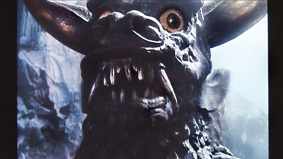
In 1978 the legendary South Korean actress Choi Eun-Hee was kidnapped in Hong Kong by North Korean agents and brought to Pyongyang. Two weeks later her ex-husband, the director Shin Sang-Ok, was abducted to North Korea as well. After spending five years in the country the couple was offered a ?contract? which included a public statement declaring their willful defection to North Korea, a major film budget, enormous resources in terms of equipment and extras, and furthermore a re-marriage. Two years later the artist-pair managed to escape, after having directing and producing a number of films in North Korea, eventually taking political asylum in the United States. Not yet finished was Pulgasari (1985), a Japanese-style monsterfilm based on a Korean legend and made in the vein of Godzilla. Madame & Little Boy is a video essay where historical lines and the circles of repetition in the life story of Choi Eun-Hee (Madame Choi) are examined. The genealogy of the monsters from Godzilla, via Pulgasari to Galgameth (Shin?s remake of Pulgasari in Hollywood) is interpreted as deliberate messages about atomic weapons.
As an experiment with situated narration this video essay takes a standpoint against documentarism and common documentary practice. The story of Madame and Little Boy (the code name of the Hiroshima bomb) is narrated by the American musician Will Oldham (aka Bonnie ?Prince? Billy) in a studio building next to The Nike Missile Site outside San Francisco. The studio building becomes place for viewing and talking back to images: the surrounding American landscape, the missile site (?a petrified monster?) where atomic weapons were kept in secrecy, clips from Shin Sang-ok?s production together with footages from North Korea. This site, serving as an intersection of the present and past, is also the meeting place with the gaze of Choi Eun-hee, filmed in a hotel in Seoul.
Magnus Bärtås, Behzad Khosravi Noori
Catalogue : 2025On Hospitality – Layla Al Attar and Hotel Al Rasheed | Experimental doc. | digital | color | 18:0 | Sweden | 2024
Magnus Bärtås, Behzad Khosravi Noori
On Hospitality – Layla Al Attar and Hotel Al Rasheed
Experimental doc. | digital | color | 18:0 | Sweden | 2024
On Hospitality is a necromantic documentary where the Iraqi artist Layla Al-Attar returns from the dead to tell the story of how a Swedish company built a luxurious hotel in Baghdad, ordered by Saddam Hussein for the 1983 summit of the Non-Alignment Movement. War changed all the plans. Layla made a mosaic at the entrance of the hotel, depicting George Bush’s face, and her house was hit by an American missile.
Magnus Bärtås is an artist, writer and filmmaker, and has exhibited at Gwangju Biennial, Göteborgs Konsthall and Moderna Museet, Stockhom among other venues. He won the grand prize at Oberhausen International Short Film Festival in 2010 with Madame & Little Boy. Behzad Khosravi Noori is an artist, writer and filmmaker working between Karachi and Stockholm. Bärtås and Khosravi-Noori won the 1st Prize of the Jury of the Ministry of Culture and Science of North Rhine-Westphalia at Oberhausen International Short Film Festival with On Hospitality – Layla al Attar and Hotel al Rasheed in 2024.
Emilia Beatriz
Catalogue : 2025barrunto | Experimental doc. | 16mm | black and white | 70:0 | | 2024

Emilia Beatriz
barrunto
Experimental doc. | 16mm | black and white | 70:0 | | 2024
“barrunto” is a word used in Puerto Rico to refer to a bodily unrest, an omen or a forecast sensed via signals present in the environment (such as when rain is forecast through aches and pains or when ants emerge anticipating an earthquake). “barrunto” is a way of thinking with surface and subconscious, underfoot and underground. From its deep vibration tracks to the nonlinear narrative, barrunto is a film that attempts to activate sensations and modes of being with the world and in connection beyond western frameworks of knowledge, a sensorial translation meant to be 'felt' more than 'understood'. An intimate exploration of grief and resistance in shifting landscapes of loss, from the streets to the bed; in sites of displacement, nuclear contamination, and military occupation from Scotland to Puerto Rico; from the bottom of the ocean all the way to the planet Uranus. Informed by poetry and theories of quantum entanglement across diasporic distance, BARRUNTO is a speculative narrative using digital, archival, and 16mm film hand-processed in “grief tea.” . Made in collaboration with Shanti LaLita, Claude Nouk, Alicia Matthews, Harry Josephine Giles, Nicole Cecilia Delgado, Sharif Elsabagh, Andrés Nieves, Ángela Ginorio, Bea Webster, Ciaran Stewart y muchxs más.
Emilia Beatriz is an artist and access worker from Puerto Rico’s diaspora, based in Glasgow. Emilia’s practice is concerned with the stories that absence and rupture tell, as experienced through entangled histories of bodies and land. Emilia engages translation across senses; moving at the pace of island time, sick time, moss time. Informed by Aurora Levins Morales’ ‘historian as healer’ methodology, Emilia’s films weave historical and speculative narratives —grounded in oral history and community archiving— centering dreaming, action, and griefwork attuned to climate and place. BARRUNTO is Emilia’s first single-screen film for cinema contexts. Emilia is co-founder of Collective Text, a disabled-led group who collaborate on creative captioning, audio description and interpretation. BARRUNTO is their first feature and first film for cinema contexts
Edouard Beau
Catalogue : 2010SEARCHING FOR HASSAN | Doc. exp�rimental | | color | 60:0 | France, Iraq | 2009
Edouard Beau
SEARCHING FOR HASSAN
Doc. exp�rimental | | color | 60:0 | France, Iraq | 2009
/Users/edouardbeau/Desktop/Rencontres Internationales Paris Madrid Berlin/synopsis searching forFR ANG.doc
Denis-paul Beaubois
Catalogue : 2007Terminal Vision Project 2, The Fall From Raiatea | Video | dv | color | 4:0 | Australia | 2006

Denis-paul Beaubois
Terminal Vision Project 2, The Fall From Raiatea
Video | dv | color | 4:0 | Australia | 2006
The fall from Raiatea focuses on the act of falling. The cameras are released, as opposed to thrown, from the 29th floor of one of the Waterloo towers in Sydney. Its own weight drags it towards the ground. As it falls it echoes the collapse of grand ideals. In this case the fall of modernism and mass democratized housing. The fall as a release (as opposed to an act of misadventure) was an important aspect in the creation of this work. There is an optimism and an allure of freedom which comes with surrendering oneself to forces outside our control. Once power surges through the cameras circuitry, the act of experiencing (as opposed to recording) begins. The camera reacts to its surroundings and continues to do so until it is eventually destroyed. Its multiple viewpoint is designed to eradicate the singular point of view that suggests the experience of one person. With five cameras simultaneously recollecting the same fall, the viewer is the only point of stillness in the equation. It is the world around us falling as we remain still.
Denis-Paul Beaubois was born in Mauritius in 1970 and currently resides in Sydney, Australia. Denis has worked as a video and performance artist in Australia and internationally for the past 11 years. His works have been screened/performed in festivals and galleries in Europe, USA, South America, Asia and Australia, most notably winning the 1998 Bonn Videonale in Germany, and receiving the Special Award for the Mediunkunst preis 2001 at ZKM, also in Germany. Recently his work has been exhibited at SCAPE 2006 Biennial of Art in Public Space in Christchurch, New Zealand and at Glass Kulture Koldo Mitxelena in San Sebastian, Spain.
Catalogue : 2006Terminal Image1- The fall from Matavai | Video | dv | color | 1:30 | Australia | 2004
Denis-paul Beaubois
Terminal Image1- The fall from Matavai
Video | dv | color | 1:30 | Australia | 2004
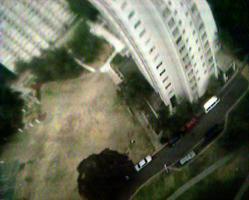
In the Fall from Matavai, the action of falling (physically and symbolically) is explored. The work is seen as a release to forces outside our control. Each step, tainted by the passing of history, reflects oppositional forces against a dominant vision. The fall from Matavai explores the remnants of past hopes, and their grand ideals, which have long since been discredited by history. The fall, in this case, is the collapse of modernism, the dream of mass democratised housing gone wrong. The work also explores the recorded image as ?Terminal Vision? where physical event is destroyed in order to consolidate itself with the process of recording.
Born in Mauritius 1970 Has worked as video and performance artist in Australia and internationally for the past 11 years. He is a member of performance ensemble GravityFeed and has worked with. the Post Arrivalists and Gekidan Kaitaisha. His works have been screened / performed internationally in festivals and galleries such as; 1997: The Cleveland Festival of Performance Art as a featured Artist (USA). 1998: Bonn Videonale, (Germany) where he was awarded first prize. EMAF (Germany). Fimform (Germany). Dokumentar festival (Germany).1999: Arco Electronico (Spain). Artist Unlimited eV Bielefeld (Germany). 2000: Darklight film festival (Ireland). Canberra Contemporary Artspace (AUST). Center For Contemporary Photography, Melbourne (AUS). Linden Arts Center, Victoria (AUST). 2001: ZKM, received Special award for the Mediunkunst preis 2001 (Germany). 2002: Kunsthaus Zurich. 2003: Museum Ludwig Koeln (Germany). 2004: Transmediale (Germany). D Art04 Sydney Film Festival. (AUST).2005: Adelaide Film Festival (Aust), ParaSite Art Space (Hong-Kong).
Catalogue : 2006Hope # 1 | Art vidéo | dv | color and b&w | 36:39 | Australia | 0
Denis-paul Beaubois
Hope # 1
Art vidéo | dv | color and b&w | 36:39 | Australia | 0
The camera is treated as a ?life form? as opposed to a tool which selectively gathers information. When activated it records its environment and continues to do so until destroyed. The transmitted image reacts to the physicality of the event resulting in a broken signal, which intermittently interrupts the image. As the throws become more vigorous and greater damage is sustained by the camera, the interruption to the image becomes more pronounced. Hope#1 is part of a series of works which explore the politics of the recorded image through physicality and destruction. It questions current representations of a sterile screen based reality which monopolises the airwaves. The work makes use of transmission and reception technology to explore the dissemination of information as power. A model is suggested, which parallels inclusion within the reception area with existence. Access to information delineates a border between the informed and the uninformed. Those who fall outside the range of reception are marginalised and perhaps do not exist. The broken, intermittent signal, transmitted by the units, is akin to ?being at the edge of existence?. The intermittent signal fosters uncertainty by revealing snippets of facts, partial information. The dictum of ?ignorance being bliss? is not possible when one locates oneself on the boundary. The intermittent signal is a tool of potential panic or misinformation. The receiver is aware of part of the information and it is the uncertainty created through this structure which leads to disruption. ?To be at the edge of existence? is to locate oneself at the junction between information and oblivion. The work attempts to locate the physical extremity of a signal and by doing so delineates a boundary between inclusion and exclusion. Within this model the question of ?who is placed in the marginalised position?? is raised. Is it the ?transmitter? who is robbed of a voice, or is it the potential receiver who falls outside of the signal range (or does not possess the means to harness the signal), and thereby is excluded from information? To be at the edge of existence is to be subjected to the interrupted / intermittent signal. Who or what determines the boundary? Physically the boundary of the signal is related to power. Metaphorically the boundary is race, class, gender and political belief. Hope # 1 occurred outside of the Australian High Court in Canberra, the final / Terminal place of Judgement in the Australian Judicial system.
Born in Mauritius 1970 Has worked as video and performance artist in Australia and internationally for the past 11 years. He is a member of performance ensemble GravityFeed and has worked with. the Post Arrivalists and Gekidan Kaitaisha. His works have been screened / performed internationally in festivals and galleries such as; 1997: The Cleveland Festival of Performance Art as a featured Artist (USA). 1998: Bonn Videonale, (Germany) where he was awarded first prize. EMAF (Germany). Fimform (Germany). Dokumentar festival (Germany).1999: Arco Electronico (Spain). Artist Unlimited eV Bielefeld (Germany). 2000: Darklight film festival (Ireland). Canberra Contemporary Artspace (AUST). Center For Contemporary Photography, Melbourne (AUS). Linden Arts Center, Victoria (AUST). 2001: ZKM, received Special award for the Mediunkunst preis 2001 (Germany). 2002: Kunsthaus Zurich. 2003: Museum Ludwig Koeln (Germany). 2004: Transmediale (Germany). D Art04 Sydney Film Festival. (AUST).2005: Adelaide Film Festival (Aust), ParaSite Art Space (Hong-Kong).
Christophe Beaucourt
Catalogue : 2007Slowsand in inaccuracies of the mind machine | Animation | dv | color | 1:40 | France | 2005
Christophe Beaucourt
Slowsand in inaccuracies of the mind machine
Animation | dv | color | 1:40 | France | 2005
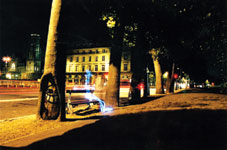
In their urban solitude, blue luminous characters come to temporize the night.
Christophe Beaucourt has been created fixed and animated images since 1997, the year in which he started to work as a cameraman for snowboarding videos and as a photographer in the press (snowboard, skateboard, bmx). In parallel with his activities as a television cameraman/editor, he has been working on road art since 2001, first at "Graff it!" as a photographer and journalist, then as a collaborator for two years with the agency "sipa". He has taken part in works such as "stencil project" and "graffiti urban wallpaper". He has also directed experimental documentaries on road art which have been selected at various festivals.
Martin Beauregard
Catalogue : 2018Another Day after Eternity | Video installation | 4k | color | 8:38 | Canada | 2017
Martin Beauregard
Another Day after Eternity
Video installation | 4k | color | 8:38 | Canada | 2017
L'oeuvre rend visible une forme de résurgences de l'expèrience traumatique au sein de la création d'environnements 3D représentatifs de la vie domestique. Sans jamais montrer l'horreur des évènements, elle participe de processus de recontextualisation et réinterprétation d'archives web d'attentats terroristes, ceux survenus notamment à Paris (2016), Bruxelles (2016) et Istambul (2017). Elle engage l'expression d'une temporalité humaine écartelée entre la réalité de l'événement et sa médiation faisant signe quelque part entre la vie, le son et l'image.
Martin Beauregard est artiste professionnel et professeur-chercheur-créateur à l’Université du Québec en Abitibi-Témiscamingue. Martin Beauregard est diplémé de l’Université du Québec à Montréal (PhD en études et pratiques des arts) et de l’Université Paris 1 Panthéon Sorbonne (PhD en arts plastiques et musicologie), ainsi que de l’école des Beaux-arts de Bordeaux (Master en arts et médias). Son travail artistique a été présenté dans de nombreuses institutions, notamment au Musée des beaux-arts de Montréal (Montréal, Canada), Location One (New York, Etats-Unis), au Capc Musée d’art contemporain de Bordeaux (Bordeaux, France) et à l’Asahi Art Square (Tokyo, Japon).
Yann Beauvais, BARROS Edson
Catalogue : 2011meeting paul in buffalo | Experimental film | dv | color | 3:10 | France | 2010
Yann Beauvais
meeting paul in buffalo
Experimental film | dv | color | 3:10 | France | 2010
Une brève visite à Buffalo à l`occasion d`une projection de mes films invité par Paul Sharits. Quelques fragments initialement tournés en super 8 dans les années 80
Yann Beauvais est né en 1953, il vit et travaille à Paris et São Paulo. Il est cinéaste, critique et curateur. Il est l'auteur d'une trentaine de films courts et d'installations. Il est cofondateur de Light Cone, structure dédiée à la diffusion et la sauvegarde du cinéma expérimental qui est aujourd'hui, avec plus de 3500 films à son catalogue, la plus importante coopérative européenne de diffusion du cinéma expérimental. Il a enseigné l'esthétique et l'histoire du cinéma expérimental au Studio Le Fresnoy, à l'Université Paris 3 - Sorbonne Nouvelle et à l'Université de Floride. Il a été conservateur et programmateur à l'American Center et est intervenu au Centre Pompidou, au Musée d'art moderne de la Ville de Paris ainsi qu'au Musée du Jeu de Paume. Ses articles, publiés dans diverses revues, ont été rassemblées dans le recueil "Poussière d?image, paru en 1998, aux Éditions Paris expérimental.
Catalogue : 2010Kopru-Sokagi | Experimental film | dv | color | 32:30 | France | 2009
Yann Beauvais, BARROS Edson
Kopru-Sokagi
Experimental film | dv | color | 32:30 | France | 2009
Un voyage à travers la Cappadoce, au printemps dernier. Les strates des paysages et les couches souterraines façonnent la perception de l` environnement. Captures multiples de photos et films au moyen d`un téléphone portable et d`une caméra. Rencontres fortuites. Toutes ces strates géologiques visibles et souterraines sont actualisées au montage lequel multiplie les surimpressions en fonction des textures, matières, ou accidents. Les processus de montage désorientent l`?il et l`oreille.
yann beauvais vit et travaille à Paris et São Paulo, enseigne à l`école des Beaux Arts de Mulhouse. Cinéaste, critique. Edsons Barrus vit et travaille à São Paulo et Paris. En résidence à l`Espace multimédia Ganter, pour développer le Projet Chien Mulâtre, en partenariat avec l`UTBM Belfort.
Yann Beauvais
Catalogue : 2011meeting paul in buffalo | Experimental film | dv | color | 3:10 | France | 2010
Yann Beauvais
meeting paul in buffalo
Experimental film | dv | color | 3:10 | France | 2010
Une brève visite à Buffalo à l`occasion d`une projection de mes films invité par Paul Sharits. Quelques fragments initialement tournés en super 8 dans les années 80
Yann Beauvais est né en 1953, il vit et travaille à Paris et São Paulo. Il est cinéaste, critique et curateur. Il est l'auteur d'une trentaine de films courts et d'installations. Il est cofondateur de Light Cone, structure dédiée à la diffusion et la sauvegarde du cinéma expérimental qui est aujourd'hui, avec plus de 3500 films à son catalogue, la plus importante coopérative européenne de diffusion du cinéma expérimental. Il a enseigné l'esthétique et l'histoire du cinéma expérimental au Studio Le Fresnoy, à l'Université Paris 3 - Sorbonne Nouvelle et à l'Université de Floride. Il a été conservateur et programmateur à l'American Center et est intervenu au Centre Pompidou, au Musée d'art moderne de la Ville de Paris ainsi qu'au Musée du Jeu de Paume. Ses articles, publiés dans diverses revues, ont été rassemblées dans le recueil "Poussière d?image, paru en 1998, aux Éditions Paris expérimental.
Catalogue : 2010Kopru-Sokagi | Experimental film | dv | color | 32:30 | France | 2009
Yann Beauvais, BARROS Edson
Kopru-Sokagi
Experimental film | dv | color | 32:30 | France | 2009
Un voyage à travers la Cappadoce, au printemps dernier. Les strates des paysages et les couches souterraines façonnent la perception de l` environnement. Captures multiples de photos et films au moyen d`un téléphone portable et d`une caméra. Rencontres fortuites. Toutes ces strates géologiques visibles et souterraines sont actualisées au montage lequel multiplie les surimpressions en fonction des textures, matières, ou accidents. Les processus de montage désorientent l`?il et l`oreille.
yann beauvais vit et travaille à Paris et São Paulo, enseigne à l`école des Beaux Arts de Mulhouse. Cinéaste, critique. Edsons Barrus vit et travaille à São Paulo et Paris. En résidence à l`Espace multimédia Ganter, pour développer le Projet Chien Mulâtre, en partenariat avec l`UTBM Belfort.
Yann Beauvais
Catalogue : 2023evanescent nsw | Experimental film | 16mm | | 7:35 | France, Brazil | 2023
Yann Beauvais
evanescent nsw
Experimental film | 16mm | | 7:35 | France, Brazil | 2023
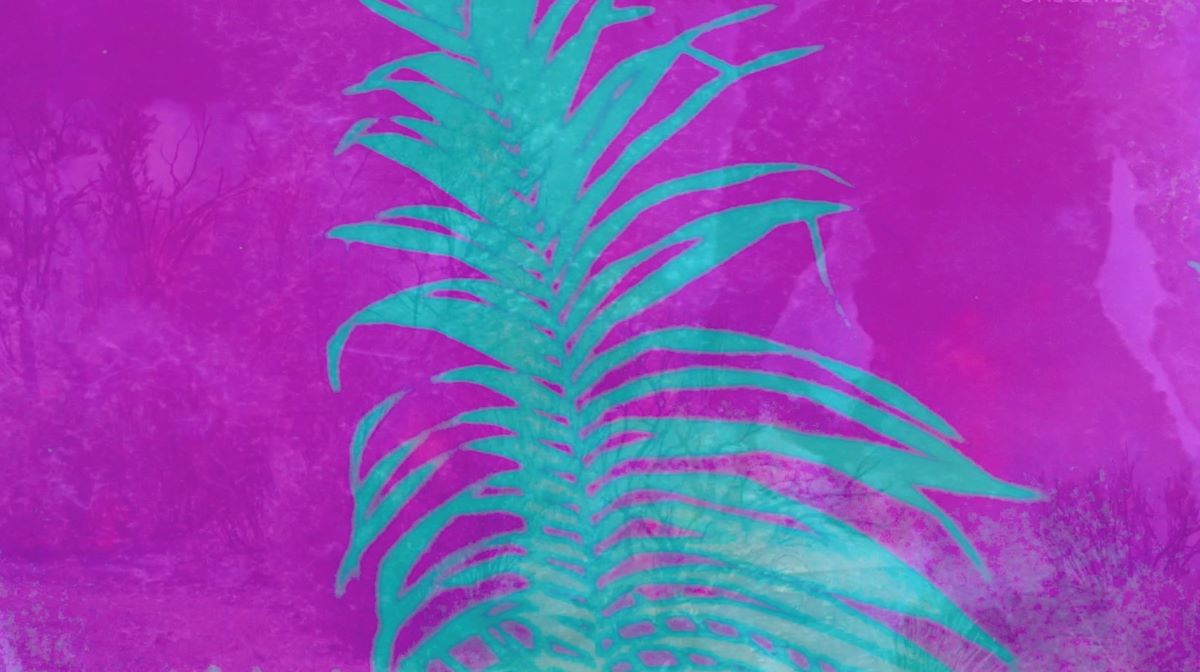
Document initialement filmé en 16mm dans la nouvelle galles du sud en août 97. Refilmé à la tireuse optique en modifiant la vitesse et l’aspect chromatique, puis laisser décomposer avec le négatif original pendant plusieurs années dans une autre région tropicale. La région a subit de nombreux incendies suite au changement climatique depuis l’époque ou je l’avais brièvement filmée. Le film fait écho à ces transformations dans sa matière même mais aussi avec des found footages et des sons divers.
Ayelet Bechar, Jonathan Ben Efrat, Hanna Musleh, Sobhi al-Zobaidi
Catalogue : 2008Stories from the Middle East | Documentary | betaSP | color | 55:0 | Israel, Palestine | 2006
Ayelet Bechar, Jonathan Ben Efrat, Hanna Musleh, Sobhi al-Zobaidi
Stories from the Middle East
Documentary | betaSP | color | 55:0 | Israel, Palestine | 2006
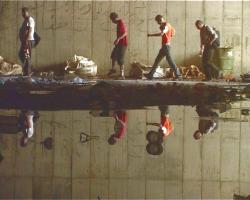
A project commissioned by the World Health Organization. Four short films portraying lives of Palestinians and Israelis, inspired by the WHO definition of health: ?Health is a state of complete physical, mental and social well-being and not merely the absence of disease or infirmity? (WHO Constitution 1948). The first film, `The Mall` reveals the surreal routine of an abandoned Israeli shopping mall, which is home to hundreds of Palestinian illegal workers. In `Missing Gaza`, a group of Gazans living in Ramallah in the west bank meet for lunch in a friends? house to talk about the people and the places in Gaza, whom they miss so much. `Power` is the story of a young Bedouin man from a village which receives no basic services from the state of Israel. He decides to volunteer to serve in the Israeli army, believing that by doing so he will help bring electricity to his home and save his sick little sister. And finally, `Journey with Naba? takes us through the complexity of life in the Dheisheh refugee camp through the story of Naba, a 12-year-old boy on his way to meet his imprisoned brother.
Ayelet Bechar is a documentary film maker and journalist. She is a graduate of the Tel Aviv University department of Film and Television, and of the Columbia University Graduate School of Journalism in New York. Ayelet lives in Tel Aviv, Israel with her family. This year she is a Nieman Fellow at Harvard University.
Catalogue : 2008Stories from the Middle East | Documentary | betaSP | color | 55:0 | Israel, Palestine | 2006
Ngee Ann Polytechnic, Jonathan Ben Efrat, Hanna Musleh, Sobhi al-Zobaidi
Stories from the Middle East
Documentary | betaSP | color | 55:0 | Israel, Palestine | 2006
A project commissioned by the World Health Organization. Four short films portraying lives of Palestinians and Israelis, inspired by the WHO definition of health: ?Health is a state of complete physical, mental and social well-being and not merely the absence of disease or infirmity? (WHO Constitution 1948). The first film, `The Mall` reveals the surreal routine of an abandoned Israeli shopping mall, which is home to hundreds of Palestinian illegal workers. In `Missing Gaza`, a group of Gazans living in Ramallah in the west bank meet for lunch in a friends? house to talk about the people and the places in Gaza, whom they miss so much. `Power` is the story of a young Bedouin man from a village which receives no basic services from the state of Israel. He decides to volunteer to serve in the Israeli army, believing that by doing so he will help bring electricity to his home and save his sick little sister. And finally, `Journey with Naba? takes us through the complexity of life in the Dheisheh refugee camp through the story of Naba, a 12-year-old boy on his way to meet his imprisoned brother.
Ayelet Bechar is a documentary film maker and journalist. She is a graduate of the Tel Aviv University department of Film and Television, and of the Columbia University Graduate School of Journalism in New York. Ayelet lives in Tel Aviv, Israel with her family. This year she is a Nieman Fellow at Harvard University.
Sarah Beddington
Catalogue : 2011Lost in Space | Art vidéo | 0 | color | 5:55 | United Kingdom | 2009
Sarah Beddington
Lost in Space
Art vidéo | 0 | color | 5:55 | United Kingdom | 2009
`Lost in Space`, 2009, 16mm film in colour, 5:55 min, with sound `Lost in Space` was filmed at an abandoned U.S. nuclear missile base and is part of Beddington?s investigation into capsular architecture of the Cold War period. The strange flying saucer-like object, lying abandoned on an old baseball court, was part of a now defunct radar system used to pinpoint co-ordinates for a nuclear-charged missile launch during the 1960s. In the film the object is approached cautiously thus giving it a certain presence that is heightened by shots of moving clouds and swaying vegetation. Sarah Beddington makes films that often investigate environments from the past as a starting point from which to look at the present. With `Lost in Space`, as in all of her other work, there is a sense of anticipation of waiting for something to happen. The meticulously observed compositions of her shots from an unmoving camera encourage the viewer to slow down and observe details of stillness and watching, light and shadow that turn this object of surveillance, once part of a system of power and fear, into an abject one that is now being surveyed. This relic from a utopian future that never happened becomes a surreal sundial for another era.
Sarah Beddington is a British artist and filmmaker, currently based in Paris, whose work is documentary in nature and investigates the intersection between the social, the personal and the political. Working in a variety of media, she records unique social and aesthetic circumstances that can manifest themselves in unanticipated ways. Her work revolves around the juxtaposition of the historical and the contemporary, often in relation to specific places, journeys and migration. Whether using installation, film or video, Beddington constructs parallel moments which, existing within a non-linear, non-narrative time, often have a dream-like quality. Solo exhibitions include Places of Laughter and of Crying, Bloomberg SPACE, London (2008); Crossing, DAC, New York (2008); Panoptiscope, Petrie Museum of Egyptian Archaeology, UCL, London (2006); Parallel Lines and Other Stories, Artlab, Berlin (2005). Group exhibitions include Liverpool Biennale: Future Movements (2010); Les Rencontres Internationales, Reina Sofia Museum, Madrid (2009); Eastern Standards: Western Artists in China, MASS MoCA (2009); Vanishing Point, Wexner Center for the Arts, Columbus, Ohio; About Time, Nordjyllands Kunstmuseum, Denmark. Her work is represented in a number of public and private collections including Arts Council England.
Catalogue : 2009Brief Encounter | Video installation | dv | color | 2:46 | United Kingdom, USA | 2007
Sarah Beddington
Brief Encounter
Video installation | dv | color | 2:46 | United Kingdom, USA | 2007
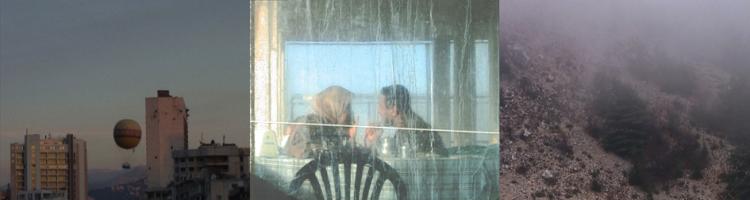
`Brief Encounter` (2006), TRT 2:50 min, three-channel PAL digital video, no audio `Brief Encounter` uses three simultaneous images to reflect on the fragility of current life in Lebanon. The central image was filmed in West Beirut. A couple is seen at a café table beyond a divide created by a dirty piece of plastic sheeting. The man is dressed in army uniform, the woman?s head is covered with a hijab. They face one another, talk and laugh, move ever closer and finally briefly hold hands. The left hand image shows a tethered hot air balloon slowly rising slowly until it can go no further, into a post-sunset sky beyond the Holiday Inn in Beirut. This high-rise building, close to the Mediterranean, still shows the scars of mortar fire from the civil war that ended in 1990. The right hand image shows a cedar tree, the motif of Lebanon that is present on the flag. In this shot the tree is a symbolically immature specimen, intermittently shrouded in a mist that undermines its materiality.
Sarah Beddington is a British artist based in London and New York whose multi-disciplinary work examines the intersection between the personal, the political and the social to be found at the periphery. None of her film and video works are staged, they are non-narrative observations, verging on the documentary, recorded from an unmoving camera. The works are characterised by meticulous framing, sensuous imagery and suspense reminiscent of film noir - a sensibility informed by her practise as a painter. Under her detached gaze, cultural and visual fragments coalesce into poetic tableaux. With seemingly disconnected sequences, Beddington builds an eloquent insight into a world that appears to run parallel to our everyday understanding of it. Solo exhibitions include ?Crossing?, DAC, New York (2008); `Places of Laughter and of Crying`, Bloomberg SPACE, London (2008); `Panoptiscope`, Petrie Museum, UCL, London (2006); `Parallel Lines and Other Stories`, Artlab, Berlin (2005). Group exhibitions include `Eastern Standards: Western Artists in China`, MASS MoCA (until March 2009); `Vanishing Point`, Wexner Center for the Arts, Columbus, Ohio; `About Time`, Nordjyllands Kunstmuseum, Denmark; `Panoramica`, The Rufino Tamayo Museum, Mexico City. Her work is represented in a number of public and private collections including Arts Council England.
Roger Beebe
Catalogue : 2020Amazonia | Experimental doc. | super8 | color | 24:37 | USA | 2019
Roger Beebe
Amazonia
Experimental doc. | super8 | color | 24:37 | USA | 2019
“Amazonia” is a "desktop cinema" essay on one of the key sites where the virtual world of e-commerce transforms physical space—and physical labor: the Amazon.com fulfillment centers where the millions of items available for purchase with the click of a mouse await our orders. The film visits the four cities where Amazon’s four original fulfillment centers were located to meditate on the impacts of our online purchases on the people and places “at the other end of the internet.”
Roger Beebe is a filmmaker whose work since 2006 consists primarily of multiple projector performances and essayistic videos that explore the world of found images and the "found" landscapes of late capitalism. He has screened his films around the globe at such unlikely venues as the CBS Jumbotron in Times Square and McMurdo Station in Antarctica as well as more likely ones including Sundance and the Museum of Modern Art. Beebe is also a film programmer: he ran Flicker, a festival of small-gauge film in Chapel Hill, NC, from 1997-2000 and was the founder and Artistic Director of FLEX, the Florida Experimental Film Festival from 2004-2014. He is currently a Professor in the Department of Art at the Ohio State University.
Roger Beebe
Catalogue : 2008TB TX DANCE | Experimental film | 16mm | black and white | 2:30 | USA | 2006
Roger Beebe
TB TX DANCE
Experimental film | 16mm | black and white | 2:30 | USA | 2006
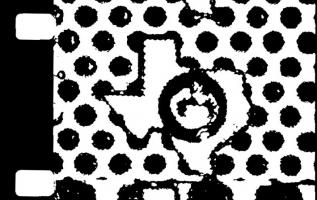
The background of the image is made of patterns of dots directly laser printed on clear leader. That background also doubles as an optical soundtrack with different pitches created by the different density of dots. The dots were inspired by the stockings Toni Basil (?Antonia Christina Basilotta?) wore in Bruce Conner?s ?Breakaway? in 1966, which also serves as the source footage for the dancer in the film. Toni Basil herself is a source of inspiration for all 30-somethings who haven?t yet made enough of their lives. (She was 39 when ?Mickey? was a hit in 1982.) This film was commissioned at Cinematexas in 2005 over a meal of pulled pork and peach cobbler. This film is also known as ?32.37? (the price of that meal). From the Lunchfilm series: curator Mike Plante has lunch with a filmmaker and then gets a film for the cost of the lunch in trade. Some rules are written on a napkin. Here are the rules for this commission: Reference dance. Reference Texas. Have an autograph in it. Mention Toni Basil.
Roger Beebe is a professor of film and media studies at the University of Florida. His work has been shown around the globe at such unlikely venues as McMurdo Station in Antarctica and the CBS Jumbotron in Times Square and at more likely ones including the Museum of Modern Art, Ann Arbor, NY Underground, and Rotterdam. From 1997-2000 he ran Flicker, a bi-monthly festival of small gauge film in Chapel Hill, NC, and he is currently artistic director of FLEX, the Florida Experimental Film/Video Festival.
Catalogue : 2007S A V E | Experimental film | 16mm | color and b&w | 5:0 | USA | 2006

Roger Beebe
S A V E
Experimental film | 16mm | color and b&w | 5:0 | USA | 2006
A disused gas station offers a curious imperative: "Save". A riddle posed in the form of architecture: what is there to save? One more instalment in the history of Americans pointing their cameras at gas stations; an attempt to figure out something about where we've been, where we're headed, and what's been left behind. The first part of "S A V E" was edited entirely on camera.
Roger Beebe is a professor of film and media studies at the University of Florida. His work has been shown around the globe at such unlikely venues as McMurdo Station in Antarctica and the CBS Jumbotron in Times Square, and at more likely ones including Ann Arbor, NY Underground, and Rotterdam. From 1997-2000 he ran 'Flicker', a bi-monthly festival of small gauge film in Chapel Hill, NC, and he is currently artistic director of FLEX, the Florida Experimental Film/Video Festival.
Amanda Beech
Catalogue : 2018Covenant Transport, Move or Die | Experimental fiction | hdv | color | 22:47 | United Kingdom, USA | 2015
Amanda Beech
Covenant Transport, Move or Die
Experimental fiction | hdv | color | 22:47 | United Kingdom, USA | 2015
1. Covenant Transport, Move or Die in its original form is a multi-channel video installation, presented here as one screen from this format. The work speaks directly to the mutual fantasies of mobility and non-place that have occupied the capitalist liberal imaginary as well as the world of leftist politics and contemporary art. The work features five characters that occupy the site of a wasteland making up a workerist crew of manager, worker, programmer, consumer, and dealer. In this parallel reality, derived from and cluttered with the detritus of our life as we know it, they program and mobilize the unrelenting movements of economies, states, culture and people. Using game show style methods of consensus building they wade through the terrain of global capitalist power to transcend the political stagnation of technology, industry and the mire of our present.
Amanda Beech is an artist and writer. Her work entangles narratives of power, reason and cause from philosophical theory, literature and real political events, exploring how the myths that seem necessary for an account of human agency are lived with, but can also be supplanted by a realist politics. Through entangling narratives of power and agency from philosophical theory, noir-ish narratives of TV shows like 24, CSI, the hard-boiled writing of James Ellroy and real political events, her artwork, in video, print and sculpture manifest an argument for a propositional art that executes another form of force to surpass the notion that art simply reflects and reproduces the status quo. The work traverses the aesthetic and philosophical paradigms of institutional, individualistic, metaphysical, rational and mythological authorities to propose a new realist politics of the artwork itself that can surpass the tragic consciousness and the ideal skepticism that has mutually championed and debilitated the value of art in Modern and contemporary culture. In this hard critique of liberal and neo-liberal cultural politics her work examines and produces the condition of language as force and the force of language with the weight of a commitment to a future
Sergio Belinchón
Catalogue : 2011AVALANCHA | Art vidéo | 16mm | color | 7:0 | Spain, Germany | 2008
Sergio BelinchÓn
AVALANCHA
Art vidéo | 16mm | color | 7:0 | Spain, Germany | 2008
Avalancha is the story of a group of people hidden in the woods, they start running out of it and try to trespass a fence with handmade ladders, they jump and run into the woods, and the loop starts, they are hidden in the woods? Based on the events that happened in the border of Morocco and Spain, when several big groups of people tried to trespass the border fence. The press called this event as "avalanche". The film was shot in Germany, in a former fence separating East and West Germany, with german actors, trying to mix equal situations but not being obvious, there is no information about all this in the video. This is just a choreography based on a situation. I filmed the action from 3 different points of view that we can see simultaneously in 3 screens, one for the fence, one for the woods and one for the whole action. The video is presented as a continuous loop as the real fences problem is also a loop.